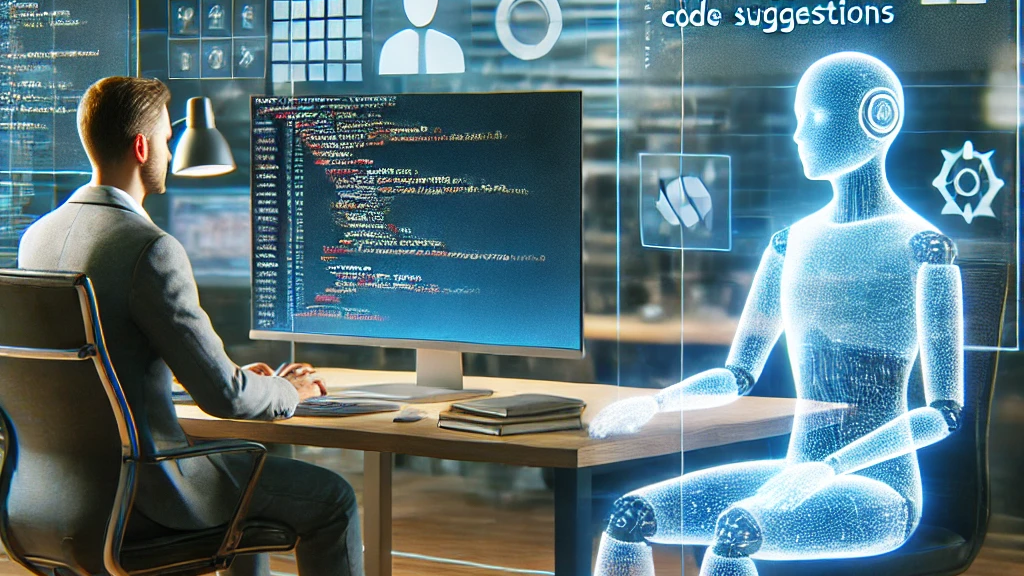
Introduction: Why Collaboration Is Now the Interview
For more than a decade, technical interviews optimized for a single question:
“Can this person solve the problem alone?”
That question made sense when:
- Engineers coded mostly in isolation
- Tools were limited
- Speed and correctness were dominant signals
In 2026, that question is outdated.
Modern engineering work, especially in ML, backend, and platform roles, is fundamentally collaborative, and often AI-augmented.
So companies changed what they test.
AI pair-programming interviews didn’t emerge to be kinder or more realistic.
They emerged because solo coding stopped predicting on-the-job success.
Why Pair-Programming Interviews Replaced Traditional Coding Rounds
Hiring teams observed a recurring pattern:
- Strong solo coders struggled in team environments
- Fast problem solvers resisted feedback
- High-scoring candidates introduced fragile systems
- Collaboration failures caused more incidents than technical gaps
Meanwhile, AI copilots eliminated the need to test:
- Syntax recall
- Boilerplate generation
- Trivial implementation speed
So interviews evolved to test what remained scarce:
Human judgment in collaborative problem-solving.
Pair-programming interviews, often with AI tools enabled, are designed to surface that judgment.
What Candidates Get Wrong About These Interviews
Most candidates assume:
- They are being scored on how much code they write
- Using AI help is “cheating”
- Silence equals focus
- Taking control shows leadership
- Asking questions signals weakness
These assumptions are wrong, and costly.
In pair-programming interviews, how you collaborate often matters more than what you code.
The Core Shift: From Output to Interaction
In traditional interviews:
- Output = signal
In AI pair-programming interviews:
- Interaction = signal
Interviewers evaluate:
- How you clarify requirements
- How you respond to suggestions
- How you explain tradeoffs
- How you recover from mistakes
- How you use AI as a collaborator, not a crutch
Code is still important, but it is no longer the primary lens.
Why AI Changed the Scoring Model
AI copilots altered interviews in two fundamental ways:
1. Code Quality Became Less Differentiating
If everyone can:
- Generate boilerplate
- Recall APIs
- Write syntactically correct code
Then those skills stop separating candidates.
Interviewers shifted to:
- Decision quality
- Reasoning transparency
- Collaboration patterns
2. Human Judgment Became More Visible
AI tools surface options.
Humans choose among them.
Interviewers now watch:
- Whether you blindly accept AI output
- Whether you question suggestions
- Whether you explain why you accept or reject them
This makes decision-making observable in real time.
What Interviewers Are Really Testing
Despite the name, AI pair-programming interviews are not about:
- Pairing well socially
- Being agreeable
- Talking constantly
They test five core capabilities:
- Shared understanding
- Collaborative reasoning
- Decision articulation
- Error recovery
- Trust-building behavior
These are the same skills required to:
- Debug production incidents
- Review code
- Design systems
- Mentor peers
- Work effectively with AI tools
Why Strong Engineers Sometimes Fail These Rounds
Many failures happen because candidates:
- Try to “perform” competence
- Optimize for control
- Treat AI as an answer engine
- Avoid explaining thought process
- Resist interviewer input
Interviewers interpret this as:
- Low coachability
- High ego risk
- Poor collaboration under pressure
None of this shows up in solo coding tests.
It shows up immediately in pair-programming.
A Crucial Reframe Before You Continue
An AI pair-programming interview is not asking:
“Can you solve this problem?”
It is asking:
“Can we solve problems with you?”
That difference changes everything.
What This Blog Will Cover
This guide will break down:
- How collaboration is actually scored
- What interviewers watch moment-by-moment
- Common failure patterns candidates don’t notice
- How AI usage helps or hurts your evaluation
This is not about becoming more extroverted.
It’s about becoming predictably collaborative under pressure.
Key Takeaway Before Moving On
In 2026, engineering interviews are no longer tests of isolation.
They are simulations of shared problem-solving, with humans and AI.
Once you understand how collaboration is scored, these interviews stop feeling vague and start feeling navigable.
Section 1: The Scoring Rubric Behind AI Pair-Programming Interviews
AI pair-programming interviews feel vague to many candidates because the scoring rubric is rarely stated out loud.
But it exists and it is surprisingly consistent across companies.
Interviewers are not grading you on “vibes” or personality. They are scoring observable collaboration behaviors that predict how you’ll work with humans and AI in real teams.
Below is the rubric most interviewers implicitly use.
Dimension 1: Shared Understanding (Highest Weight)
This is the most important signal.
Interviewers watch how you:
- Clarify requirements
- Restate the problem in your own words
- Align on goals before coding
- Confirm assumptions with your pair
Strong signals:
- “Let me restate the problem to make sure we’re aligned…”
- “Are we optimizing for correctness or simplicity here?”
- “I’m assuming X does that match your expectation?”
Weak signals:
- Jumping straight into code
- Treating the prompt as fixed and complete
- Making silent assumptions
Why this matters:
Teams fail more often from misalignment than from lack of skill. Interviewers know this.
Dimension 2: Collaborative Reasoning (Not Solo Brilliance)
Interviewers evaluate whether you think with your pair, or merely next to them.
They look for:
- Explaining your thinking out loud
- Inviting input at decision points
- Responding constructively to suggestions
- Building on ideas instead of discarding them
Strong signals:
- “There are two approaches, here’s why I lean toward this one.”
- “That’s a good point; let’s test that assumption.”
- “If we do it this way, we trade off X for Y.”
Weak signals:
- Long silent coding stretches
- Defensive responses to feedback
- Treating suggestions as interruptions
This aligns closely with how interviewers assess ML and system reasoning more broadly, as described in How Interviewers Evaluate ML Thinking, Not Just Code.
Dimension 3: Decision Articulation
AI tools make options cheap.
Choosing wisely is the signal.
Interviewers score how you:
- Explain decisions before and after making them
- Justify tradeoffs
- Reject alternatives thoughtfully
- Accept AI suggestions selectively
Strong signals:
- “The copilot suggests this, but it adds complexity we don’t need.”
- “I’ll go with the simpler approach given the time constraint.”
- “Let’s defer optimization until correctness is clear.”
Weak signals:
- Accepting AI output blindly
- Changing direction without explanation
- Treating choices as obvious
Decision articulation turns invisible thinking into visible signal.
Dimension 4: Error Handling and Recovery
Mistakes are expected.
What’s scored is how you respond.
Interviewers watch:
- Whether you notice errors quickly
- How you debug collaboratively
- Whether you stay calm under correction
- How you incorporate feedback
Strong signals:
- “I think this edge case breaks, let’s fix it.”
- “Good catch. I missed that condition.”
- “Let’s add a quick test to confirm.”
Weak signals:
- Defensiveness
- Ignoring bugs to keep moving
- Blaming the tool or the prompt
Recovery behavior predicts on-call and incident response quality.
Dimension 5: Use of AI as a Teammate (Not an Oracle)
In 2026, AI is expected, not forbidden.
Interviewers evaluate how you use it.
Strong signals:
- Asking AI for boilerplate or alternatives
- Reviewing and editing AI-generated code
- Explaining why you accept or reject suggestions
Weak signals:
- Copy-pasting without review
- Treating AI output as authoritative
- Hiding AI usage or overusing it
Interviewers want to see human judgment layered on top of AI assistance.
Dimension 6: Communication Economy
Talking more does not score higher.
Interviewers assess:
- Relevance of commentary
- Timing of explanations
- Ability to pause and listen
- Respect for cognitive load
Strong signals:
- Explaining decisions at natural checkpoints
- Pausing to let the pair think
- Asking focused questions
Weak signals:
- Narrating every keystroke
- Talking over your partner
- Over-explaining trivial steps
Clear, economical communication signals seniority.
Dimension 7: Ownership Without Dominance
Interviewers want to see initiative, but not control.
Strong signals:
- Proposing next steps
- Taking responsibility for gaps
- Moving the session forward collaboratively
Weak signals:
- Taking over the keyboard entirely
- Ignoring partner input
- Waiting passively for direction
The ideal balance:
Confident guidance + visible openness
How Scores Are Actually Combined
Interviewers rarely assign numeric scores per dimension.
Instead, they ask themselves:
- “Would I enjoy solving problems with this person?”
- “Did they make the session easier or harder?”
- “Did collaboration improve solution quality?”
Candidates who score well consistently:
- Make thinking visible
- Invite alignment
- Use AI thoughtfully
- Recover gracefully
Candidates who struggle often:
- Optimize for speed
- Code silently
- Perform competence instead of collaborating
Why This Rubric Feels Invisible to Candidates
Because:
- It’s behavioral, not technical
- Feedback is rarely explicit
- Candidates focus on code output
- Collaboration signals are subtle
But interviewers see them clearly.
Section 1 Summary
AI pair-programming interviews are scored on:
- Shared understanding
- Collaborative reasoning
- Decision articulation
- Error recovery
- Thoughtful AI usage
- Communication economy
- Ownership without dominance
Code correctness matters, but collaboration determines the outcome.
Section 2: Common Failure Patterns in AI Pair-Programming Interviews (and Why They Happen)
The most surprising thing about AI pair-programming interviews is who fails them.
It’s often not junior candidates.
It’s not underprepared candidates.
It’s frequently strong individual contributors who have passed traditional coding interviews many times before.
They fail not because they can’t solve the problem, but because they solve it in ways that don’t translate to collaborative trust.
Below are the most common failure patterns interviewers see, and why they happen.
Failure Pattern 1: Silent Execution (“Let Me Just Code This”)
This is the single most common failure mode.
Candidates:
- Understand the problem
- Start coding immediately
- Stay silent for long stretches
- Surface decisions only when asked
From the candidate’s perspective:
“I’m being efficient and focused.”
From the interviewer’s perspective:
“I don’t know how this person thinks or collaborates.”
AI pair-programming interviews require visible reasoning. Silence removes signal.
Why this happens:
- Traditional interviews rewarded speed
- Candidates were taught not to “waste time talking”
- Many engineers are used to solo flow states
Why it fails:
- Interviewers cannot score invisible thinking
- Silence is interpreted as low collaboration, not competence
Failure Pattern 2: Dominating the Session to Show Leadership
Some candidates try to “lead” by:
- Taking control of the keyboard
- Rejecting suggestions quickly
- Driving straight to a solution
- Minimizing discussion
They believe this signals seniority.
It doesn’t.
It signals low coachability.
Interviewers want leadership through alignment, not control.
Why this happens:
- Misunderstanding leadership as authority
- Fear of appearing passive
- Past success with assertive styles
Why it fails:
- Teams don’t need dictators
- Interviewers are testing trust, not command
- Dominance suppresses collaboration signals
Failure Pattern 3: Over-Reliance on AI Suggestions
AI copilots are allowed, and expected.
But some candidates:
- Accept AI output verbatim
- Don’t review or modify suggestions
- Can’t explain why the code works
- Treat AI as an oracle
Interviewers interpret this as:
“This person delegates thinking to tools.”
Why this happens:
- Habitual use of AI in daily work
- Time pressure
- Misreading expectations
Why it fails:
- Interviewers are testing human judgment layered on AI
- Blind acceptance removes decision-making signal
This mirrors a broader pattern in modern interviews, where candidates are evaluated on how they reason with AI, not around it, similar to what’s discussed in AI-Powered Mock Interviews: Do They Work and How to Use Them Ethically.
Failure Pattern 4: Over-Explaining Everything
The opposite of silence is also dangerous.
Some candidates:
- Narrate every keystroke
- Explain trivial syntax
- Fill every pause with talk
- Over-index on sounding knowledgeable
This creates cognitive overload.
Interviewers stop listening.
Why this happens:
- Nervousness
- Overcompensation
- Fear of being misunderstood
Why it fails:
- Collaboration requires signal economy
- Over-explaining obscures important decisions
- Senior engineers communicate selectively
Failure Pattern 5: Defensive Reactions to Feedback
Interviewers intentionally:
- Suggest alternatives
- Point out flaws
- Ask “what if” questions
Some candidates respond by:
- Defending initial choices aggressively
- Justifying instead of reflecting
- Ignoring suggestions and moving on
This is interpreted as ego risk.
Why this happens:
- Interview pressure
- Past environments that punished mistakes
- Misreading feedback as criticism
Why it fails:
- Teams value adaptability
- Interviewers test how you respond when wrong
- Defensive behavior predicts poor incident response
Failure Pattern 6: Treating the Interviewer as an Adversary
Some candidates unconsciously treat the interviewer as:
- A judge
- A blocker
- Someone to impress or outsmart
They optimize for performance, not partnership.
Interviewers notice.
Why this happens:
- Years of adversarial interview framing
- Competitive mindset
- Anxiety
Why it fails:
- Pair-programming interviews simulate teammates, not exams
- Adversarial behavior reduces trust
Failure Pattern 7: Avoiding Decisions to Stay “Safe”
Some candidates hedge constantly:
- “We could do X… or Y… or Z…”
- “It depends…”
- “I’m not sure…”
Without committing.
Interviewers don’t expect perfect decisions, but they do expect decisions.
Why this happens:
- Fear of being wrong
- Over-awareness of tradeoffs
- Lack of confidence under pressure
Why it fails:
- Real work requires imperfect decisions
- Avoidance reads as indecision, not thoughtfulness
Failure Pattern 8: Treating Collaboration as Performance
Perhaps the most subtle failure is performative collaboration.
Candidates:
- Ask questions they already know answers to
- Over-praise suggestions
- Mirror interviewer language unnaturally
- Act “collaborative” instead of being collaborative
Interviewers sense inauthenticity quickly.
Why this happens:
- Over-coaching
- Scripted prep
- Fear of being judged
Why it fails:
- Trust requires authenticity
- Real collaboration is responsive, not rehearsed
Why These Patterns Persist
These failures persist because:
- Feedback is rarely explicit
- Candidates focus on code output
- Collaboration scoring is invisible
- Traditional prep materials don’t cover interaction dynamics
Candidates often leave thinking:
“I solved the problem, why didn’t I pass?”
Because solving the problem is no longer the bar.
Section 2 Summary
Common failure patterns in AI pair-programming interviews include:
- Silent execution
- Dominating behavior
- Blind AI reliance
- Over-explaining
- Defensive feedback handling
- Adversarial mindset
- Indecision
- Performative collaboration
None of these indicate low ability.
They indicate misalignment with how collaboration is scored.
Once corrected, many candidates pass without changing their technical skill at all.
Section 3: How AI Usage Helps or Hurts Your Evaluation in Pair-Programming Interviews
By 2026, AI usage in interviews is no longer controversial.
What is controversial, quietly, is how candidates use it.
Interviewers are not asking:
“Did this candidate use AI?”
They are asking:
“What does this candidate’s AI usage reveal about their judgment?”
AI does not blur evaluation in pair-programming interviews.
It sharpens it.
The Core Principle Interviewers Use
AI is treated as a force multiplier.
It amplifies:
- Good judgment → very visible strength
- Weak judgment → immediate red flag
Candidates who understand this use AI in ways that increase trust.
Candidates who don’t often undermine themselves without realizing it.
When AI Usage Helps Your Evaluation
Let’s start with what works.
Positive Signal 1: Using AI to Accelerate the Obvious
Strong candidates use AI for:
- Boilerplate code
- Syntax reminders
- Standard library usage
- Generating quick alternatives
They then:
- Review the output
- Modify it
- Explain why it fits (or doesn’t)
Interviewers interpret this as:
“This person knows where human thinking matters, and where it doesn’t.”
This is exactly how high-performing engineers use AI on the job.
Positive Signal 2: Verbalizing Why You Accept or Reject AI Suggestions
One of the strongest signals in 2026 interviews is meta-reasoning.
Strong candidates say things like:
- “The AI suggests recursion, but iteration is clearer here.”
- “This solution works, but it hides an edge case.”
- “Let’s simplify what the AI gave us.”
This transforms AI usage into a decision-making demonstration.
Interviewers can now score:
- Technical judgment
- Tradeoff awareness
- Code review instincts
All at once.
Positive Signal 3: Using AI as a Thought Partner
Some candidates use AI to:
- Ask for alternative approaches
- Validate assumptions
- Surface edge cases
Then they evaluate those ideas collaboratively.
Interviewers see:
- Curiosity
- Intellectual humility
- Collaborative reasoning
This aligns closely with how modern teams work and why pair-programming interviews exist in the first place.
Positive Signal 4: Transparency About AI Usage
Strong candidates never hide AI usage.
They:
- Say when they’re using it
- Explain why
- Own the final decision
This builds trust.
Interviewers are far more skeptical of candidates who appear to “magically” produce perfect code without explanation.
When AI Usage Hurts Your Evaluation
Now for the failure modes.
Negative Signal 1: Blind Acceptance of AI Output
The fastest way to lose points is to:
- Paste AI-generated code
- Not read it
- Be unable to explain it
Interviewers interpret this as:
“This person delegates thinking to tools.”
That is a hard no for senior and mid-level roles.
Negative Signal 2: Using AI to Avoid Decision-Making
Some candidates use AI to:
- Escape ambiguity
- Avoid choosing between options
- Defer judgment
For example:
“Let’s just go with what the AI says.”
This is devastating.
AI pair-programming interviews exist specifically to surface human decision-making under ambiguity.
Avoiding it defeats the purpose.
Negative Signal 3: Overusing AI to Fill Silence
Nervous candidates sometimes:
- Ask AI for everything
- Constantly regenerate code
- Replace thinking with prompts
This signals:
- Low confidence
- Shallow understanding
- Tool dependence
Interviewers prefer silence + thinking over noise + AI.
Negative Signal 4: Treating AI as Authority in Disagreements
If AI disagrees with your pair or interviewer and you respond with:
“But the AI says this is better…”
You’ve already lost the point.
Interviewers expect you to:
- Evaluate AI output
- Weigh it against human input
- Make a judgment call
Appealing to AI authority undermines collaboration.
Negative Signal 5: Hiding AI Usage Entirely
Some candidates fear that using AI looks like cheating.
So they:
- Use it quietly
- Don’t explain its role
- Present outputs as their own
This creates a mismatch:
- Code quality looks high
- Reasoning visibility looks low
Interviewers sense this immediately.
Transparency always beats concealment.
The Hidden Evaluation Layer: AI Reveals Your Defaults
AI doesn’t just help you code.
It reveals:
- Whether you default to convenience or correctness
- Whether you review or trust blindly
- Whether you explain or just execute
- Whether you own decisions or outsource them
This is why AI usage is such a powerful evaluation tool.
It externalizes judgment.
Why This Is Ethically Important
Interviewers are not testing whether you can use AI.
They are testing whether you use it responsibly.
This mirrors broader hiring expectations around ethical AI usage, similar to what’s discussed in AI-Powered Mock Interviews: Do They Work and How to Use Them Ethically.
How you collaborate with AI is now a proxy for:
- Professional maturity
- Risk awareness
- Team trustworthiness
A Simple Rule That Always Works
If you remember nothing else, remember this:
AI can generate options.
You must generate decisions.
When that separation is clear, AI helps.
When it isn’t, AI hurts.
Section 3 Summary
In AI pair-programming interviews:
- AI helps when it accelerates execution and surfaces options
- AI hurts when it replaces judgment
- Transparency builds trust
- Blind acceptance destroys credibility
- Explaining AI-assisted decisions scores highly
Interviewers are not afraid of AI.
They are evaluating you through it.
Section 4: Strong vs Weak Collaboration , Real Pair-Programming Examples
Candidates often leave pair-programming interviews thinking:
“The solution was correct. I don’t know what went wrong.”
What went wrong is usually how the solution was reached.
Interviewers score collaboration moment-by-moment. The differences between a strong and weak performance are subtle, but decisive.
Below are realistic scenarios showing how those differences play out.
Example 1: Starting the Session
Scenario: You’re given a problem to design and implement a rate limiter.
Weak collaboration
- Candidate reads silently
- Starts coding immediately
- Assumes requirements
- No alignment check
What the interviewer sees:
- Risk of misalignment
- Low shared understanding
- Solo execution mindset
Strong collaboration
- Candidate says:
“Before coding, let me restate the goal to confirm we’re aligned. Are we optimizing for correctness or simplicity?” - Clarifies constraints
- Confirms assumptions
What the interviewer sees:
- Proactive alignment
- Low risk of rework
- Team-ready behavior
Scoring difference:
This alone can swing a borderline candidate to a pass.
Example 2: Responding to a Suggestion
Scenario: The interviewer suggests an alternative data structure.
Weak collaboration
- Candidate says:
“That won’t work.” - Continues coding original approach
- No explanation
What the interviewer sees:
- Defensive behavior
- Low coachability
- Ego risk
Strong collaboration
- Candidate says:
“That’s interesting. If we used that structure, we’d gain X but lose Y. Given the constraints, I’d still lean toward the original, but I see the tradeoff.”
What the interviewer sees:
- Respectful engagement
- Decision articulation
- Trustworthy reasoning
Scoring difference:
Same decision. Completely different signal.
Example 3: Using AI During the Interview
Scenario: You ask an AI copilot to generate a helper function.
Weak collaboration
- Pastes AI code silently
- Doesn’t review it
- Can’t explain logic when asked
What the interviewer sees:
- Delegated thinking
- Tool dependence
- Low ownership
Strong collaboration
- Says:
“I’ll ask the AI for a quick draft, but I want to sanity-check edge cases.” - Reviews output aloud
- Simplifies or adjusts code
What the interviewer sees:
- Responsible AI usage
- Human judgment layered on tools
- Strong modern engineering signal
Scoring difference:
AI usage improves the score in the second case.
Example 4: Encountering a Bug
Scenario: A test case fails unexpectedly.
Weak collaboration
- Candidate ignores it temporarily
- Says: “It should work.”
- Moves on
What the interviewer sees:
- Risk blindness
- Fragile debugging behavior
- Poor production instincts
Strong collaboration
- Candidate pauses and says:
“Good catch, this breaks on edge input. Let’s fix it before moving on.” - Explains fix clearly
What the interviewer sees:
- Ownership
- Calm recovery
- Strong on-call instincts
Scoring difference:
Recovery behavior often matters more than the bug itself.
Example 5: Managing Silence
Scenario: You need time to think.
Weak collaboration
- Long silence
- No verbal signal
- Interviewer unsure what’s happening
What the interviewer sees:
- Unclear reasoning
- Disengagement
- Lost signal
Strong collaboration
- Candidate says:
“I’m thinking through edge cases, give me a moment.” - Pauses briefly
- Resumes with clarity
What the interviewer sees:
- Controlled pacing
- Communication awareness
- Confidence under pressure
Scoring difference:
Same silence. Different framing. Different score.
Example 6: Handling Disagreement
Scenario: You and the interviewer disagree on approach.
Weak collaboration
- Candidate defends aggressively
- Treats disagreement as threat
- Doubles down
What the interviewer sees:
- Conflict risk
- Low adaptability
- Difficult teammate
Strong collaboration
- Candidate says:
“I see why that approach works. My concern is X. If that’s acceptable, your approach is simpler.”
What the interviewer sees:
- Emotional maturity
- Tradeoff reasoning
- High trust potential
Example 7: Ending the Session
Scenario: Time is almost up.
Weak collaboration
- Rushes code
- Tries to squeeze features
- No reflection
What the interviewer sees:
- Prioritization issues
- Anxiety-driven behavior
Strong collaboration
- Candidate says:
“Given time, I’ll stop here. Next steps would be X and Y, but correctness comes first.”
What the interviewer sees:
- Scope control
- Judgment under constraint
- Senior-level prioritization
Why These Differences Matter So Much
Interviewers aren’t memorizing your code.
They’re asking themselves:
- Did this person make collaboration easier?
- Did they reduce cognitive load?
- Would I want to debug with them at 2 a.m.?
Small interaction choices compound quickly.
Two candidates can write identical code and receive opposite outcomes.
How to Self-Correct Mid-Interview
If you realize you’re slipping into weak patterns:
- Slow down
- Verbalize intent
- Invite alignment
- Acknowledge feedback
- Reframe decisions
Interviewers reward course correction.
It signals self-awareness, a rare and valuable trait.
Section 4 Summary
Strong collaboration looks like:
- Early alignment
- Respectful engagement
- Explicit decision reasoning
- Calm recovery
- Thoughtful AI usage
- Clear pacing
- Scope control
Weak collaboration often:
- Solves the problem
- Fails the interview
Because collaboration, not correctness, is the signal.
Conclusion: Pair-Programming Interviews Are Trust Simulations, Not Coding Tests
AI pair-programming interviews exist for one reason:
Teams fail more often due to collaboration breakdowns than technical gaps.
Modern interview loops reflect that reality.
In 2026, these interviews are not asking whether you can:
- Recall syntax
- Code quickly
- Produce perfect solutions
They are asking whether you can:
- Align on goals
- Reason collaboratively
- Make decisions under ambiguity
- Use AI responsibly
- Recover from mistakes
- Build trust in real time
Code is still required, but it is no longer the primary signal.
Interviewers evaluate how your presence affects the shared problem-solving experience.
Strong candidates:
- Make thinking visible
- Invite alignment
- Explain decisions
- Use AI thoughtfully
- Recover calmly
- Balance ownership with openness
Weak candidates often:
- Code silently
- Perform competence
- Over-control or over-explain
- Treat AI as an oracle
- Avoid or resist feedback
Once you reframe these interviews as collaboration simulations, they stop feeling subjective.
They become navigable.
FAQs on AI Pair-Programming Interviews (2026 Edition)
1. Are AI tools allowed in pair-programming interviews?
Yes. In many companies, they are expected.
2. Will using AI hurt my chances?
Only if it replaces your judgment or transparency.
3. Should I narrate everything I do?
No. Explain decisions, not keystrokes.
4. Is silence bad in these interviews?
Unexplained silence is. Brief, signposted thinking time is fine.
5. How much should I involve the interviewer?
Treat them like a teammate-align, invite input, and collaborate.
6. Do interviewers expect perfect solutions?
No. They expect thoughtful decision-making and recovery.
7. What’s the biggest mistake candidates make?
Coding without making reasoning visible.
8. How do I show leadership without dominating?
Propose direction, then invite discussion.
9. Is it okay to disagree with the interviewer?
Yes, if you explain tradeoffs respectfully.
10. What if I make a mistake?
Acknowledge it calmly and fix it. Recovery matters more than perfection.
11. Should I avoid AI to be safe?
No. Avoiding AI can hide judgment just as much as overusing it.
12. How do interviewers score collaboration?
Through alignment, reasoning, responsiveness, and trust-building behaviors.
13. Can strong solo coders fail these interviews?
Yes, if they don’t adapt to collaborative evaluation.
14. How should I prepare for these interviews?
Practice explaining decisions aloud while coding with others (and with AI).
15. What mindset shift helps the most?
Stop performing competence. Start practicing collaboration.
Final Takeaway
AI pair-programming interviews are not about proving you’re the smartest person in the room.
They’re about showing that working with you makes the room better.
Once you optimize for shared understanding, visible reasoning, and thoughtful AI usage, these interviews become less intimidating, and far more fair.
Collaboration is the signal.
And in 2026, it’s one of the strongest ones hiring teams have.