
Section 1: Why Optimization Became the Biggest Challenge in Modern AI Systems
AI Systems Are No Longer Judged Only by Model Performance
For years, machine learning progress was measured primarily through benchmark accuracy. Companies competed aggressively to build larger models with higher reasoning capability, stronger prediction quality, and broader generalization performance. In 2026, however, the priorities of AI engineering teams are changing rapidly.
Modern AI systems are no longer evaluated only by intelligence. Organizations now care equally about cost efficiency, inference speed, scalability, latency, infrastructure sustainability, and operational reliability. A highly accurate model that is too expensive or too slow to operate at production scale is increasingly viewed as commercially impractical.
This shift is happening because AI systems are moving beyond research environments into massive real-world production deployments. Enterprise copilots, recommendation systems, autonomous agents, multimodal search platforms, and conversational applications now serve millions of users continuously. Infrastructure costs for these workloads can become enormous if systems are not optimized carefully.
ML engineers are therefore becoming operational optimization specialists rather than only model developers. Their responsibilities increasingly involve balancing competing objectives across speed, accuracy, compute usage, latency, and infrastructure cost simultaneously.
For example, larger models often improve reasoning quality but dramatically increase inference expense and response time. Smaller models may reduce operational costs while sacrificing contextual performance. Engineers continuously evaluate these tradeoffs when designing production AI systems.
Another major factor is user expectations. AI products increasingly compete on responsiveness and usability, not just intelligence. Users expect conversational systems, recommendation engines, and intelligent assistants to respond almost instantly. Even highly capable models lose value if inference latency creates poor user experiences.
As a result, optimization has become one of the most important disciplines in modern machine learning engineering.
Cost Optimization Is Becoming a Core Engineering Priority
One of the biggest realities of large-scale AI deployment is that running intelligent systems continuously is extremely expensive. Training large models already requires enormous compute infrastructure, but inference often becomes an even larger long-term operational expense because production systems serve requests constantly.
This is especially true for enterprise AI products operating globally. Conversational assistants, autonomous workflows, recommendation systems, and retrieval-based applications may process millions of requests every day across distributed infrastructure environments.
ML engineers therefore spend increasing amounts of time optimizing computational efficiency. Organizations now measure not only model quality but also metrics such as cost-per-inference, token efficiency, GPU utilization, throughput optimization, and infrastructure scalability.
One major optimization strategy involves model routing. Many modern AI systems dynamically choose between smaller and larger models depending on task complexity. Lightweight models handle simpler requests while larger reasoning systems activate only when necessary. This dramatically reduces infrastructure cost without sacrificing overall user experience.
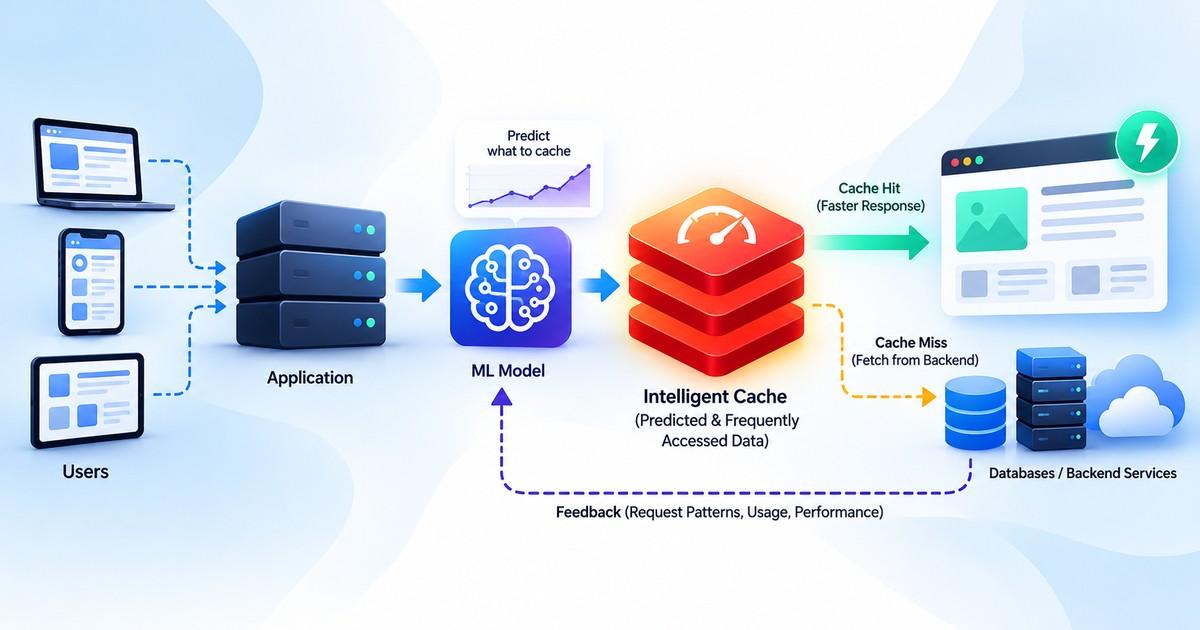
Another increasingly important strategy is semantic caching. AI systems often receive highly repetitive or semantically similar requests. Engineers build caching architectures capable of retrieving previously generated outputs instead of recomputing expensive inference operations repeatedly.
Quantization has also become a major optimization technique. By reducing numerical precision inside neural network computations, engineers significantly reduce memory usage and inference cost while preserving acceptable performance quality.
The growing importance of infrastructure efficiency closely aligns with trends explored in Scalable ML Systems for Senior Engineers – InterviewNode, where operational scalability and intelligent infrastructure optimization are becoming critical engineering capabilities.
Optimization is therefore becoming deeply connected to business sustainability itself.
Speed Optimization Is Now Critical for User Experience
Inference latency has become one of the defining competitive metrics for modern AI products. Earlier software applications often relied on deterministic backend systems where latency optimization focused mainly on networking and database performance. AI-native systems introduce entirely new runtime bottlenecks involving inference computation, retrieval orchestration, memory coordination, and distributed reasoning workflows.
Users interacting with AI systems increasingly expect near real-time responses. Conversational assistants, coding copilots, enterprise search systems, and recommendation platforms must deliver outputs almost instantly to remain usable in production workflows.
This creates enormous engineering pressure around runtime optimization.
ML engineers increasingly optimize batching systems, retrieval pipelines, token generation strategies, memory coordination layers, and distributed inference orchestration continuously during production operation. Small reductions in latency can dramatically improve user engagement and workflow efficiency.
One important trend involves speculative decoding and inference acceleration strategies. Modern runtime systems increasingly predict likely token sequences ahead of time, reducing generation delay during conversational interactions.
Another major optimization area involves retrieval architecture. Retrieval-augmented generation systems often rely on vector databases and contextual retrieval pipelines before inference occurs. Engineers optimize these retrieval systems aggressively because poor retrieval latency can significantly degrade overall response speed.
Distributed inference infrastructure is becoming increasingly important as well. AI systems now route requests dynamically across multiple inference clusters globally to minimize latency while balancing infrastructure load.
This operational complexity means modern ML engineering increasingly overlaps with distributed systems engineering and infrastructure optimization.
Accuracy Optimization Is Becoming More Sophisticated
While speed and cost optimization are increasingly important, accuracy remains critical because AI systems must still deliver reliable outputs under real-world production conditions.
However, optimizing accuracy in 2026 looks very different from earlier machine learning eras. Traditional model development often focused heavily on offline benchmark performance. Modern AI systems increasingly require runtime accuracy optimization involving retrieval quality, orchestration logic, contextual grounding, and adaptive inference coordination.
Retrieval-augmented generation became one of the most important strategies for improving runtime accuracy. Instead of relying entirely on static model knowledge, systems dynamically retrieve contextual information from external sources before generating outputs.
Another major trend involves ensemble reasoning systems. Some AI products increasingly coordinate multiple models together during inference to improve reliability, validation, and reasoning consistency.
Observability engineering is also becoming central to accuracy optimization. ML teams increasingly monitor hallucination rates, retrieval quality, reasoning consistency, and runtime degradation continuously in production environments.
This shift demonstrates that modern AI optimization extends far beyond training better models alone. Engineers increasingly optimize intelligent systems holistically across infrastructure, runtime orchestration, retrieval coordination, latency, and operational reliability simultaneously.
Key Takeaways
Modern AI systems are optimized not only for intelligence but also for cost efficiency, speed, and scalability.
Inference cost optimization is becoming a major engineering priority because production AI systems are expensive to operate.
Latency optimization directly affects user experience and product competitiveness.
Accuracy optimization increasingly depends on runtime orchestration and retrieval quality rather than model size alone.
ML engineering is evolving into a discipline centered around balancing performance, infrastructure efficiency, and operational scalability simultaneously.
Section 2: How ML Engineers Reduce AI Infrastructure Costs at Scale
Inference Costs Are Becoming the Biggest Financial Challenge in AI
One of the biggest operational realities in modern artificial intelligence is that inference has become extraordinarily expensive at scale. Earlier machine learning systems often focused heavily on training costs because building large neural networks required significant compute infrastructure. In 2026, however, many organizations spend even more money serving AI systems continuously in production environments.
Enterprise copilots, recommendation engines, autonomous agents, search systems, and multimodal AI products process millions of requests daily. Each request may involve retrieval pipelines, vector database lookups, orchestration layers, memory coordination, and large-scale inference computation operating simultaneously. Without careful optimization, infrastructure costs can grow unsustainably fast.
This is why cost optimization has become one of the most important responsibilities for modern ML engineers. Companies increasingly evaluate engineering success not only through model quality but also through metrics such as cost-per-request, GPU utilization efficiency, throughput scaling, and inference sustainability.
One major challenge is that larger models consume significantly more computational resources. More parameters generally improve reasoning capability and contextual understanding, but they also increase latency, energy consumption, and runtime infrastructure cost. Engineers therefore constantly balance model capability against operational efficiency.
Another important factor involves user growth. AI-native applications scale rapidly once deployed successfully, creating massive spikes in infrastructure demand. A conversational system serving thousands of users may become financially manageable, but the same architecture may become prohibitively expensive once usage grows into the millions.
ML engineers are therefore increasingly focused on infrastructure-aware model deployment strategies rather than only improving benchmark accuracy. Runtime efficiency has become a direct business concern because operational AI cost now influences profitability, pricing models, and long-term scalability across the entire industry.
The shift toward infrastructure-conscious ML engineering is fundamentally changing how intelligent systems are designed and deployed.
Model Compression and Quantization Are Becoming Standard
One of the most important ways ML engineers reduce operational AI costs is through model compression techniques. Instead of running extremely large models in their original high-precision formats, engineers increasingly optimize models to reduce memory usage and inference overhead while maintaining acceptable performance quality.
Quantization has become one of the most widely used optimization strategies. Neural networks traditionally operate using high-precision floating-point computation, which requires significant memory and computational bandwidth. Quantization reduces the numerical precision of model parameters, dramatically lowering compute requirements while preserving most reasoning capability.
This optimization allows AI systems to run more efficiently on GPUs, TPUs, and specialized inference hardware. Reduced memory usage also improves batching performance, allowing infrastructure systems to process more requests simultaneously.
Another major optimization strategy is distillation. In this approach, a smaller “student” model learns from the outputs of a larger “teacher” model. The resulting lightweight model often retains much of the original reasoning capability while requiring far fewer infrastructure resources during inference.
Pruning techniques are also increasingly common. Engineers remove unnecessary neural network parameters and redundant connections that contribute little to final model quality. This reduces inference complexity while improving runtime efficiency.
These optimizations are becoming especially important for enterprise deployment because organizations increasingly prioritize infrastructure sustainability alongside raw model capability. A slightly less accurate model that reduces inference cost dramatically may provide far greater commercial value than an extremely large but operationally expensive system.
Edge AI deployment accelerated this trend even further. Mobile devices, IoT systems, robotics platforms, and real-time operational environments require highly optimized models capable of running efficiently under strict hardware and power constraints.
The growing importance of runtime efficiency closely aligns with broader trends explored in MLOps vs. ML Engineering: What Interviewers Expect You to Know in 2025, where operational scalability and deployment optimization are becoming core ML engineering competencies.
Modern ML engineers are therefore becoming experts not only in training models but also in reducing infrastructure overhead intelligently.
Dynamic Model Routing Is Improving Efficiency Dramatically
One of the biggest innovations in production AI optimization is dynamic model routing. Instead of sending every user request to the largest and most expensive model available, organizations increasingly build intelligent orchestration systems capable of selecting models dynamically based on task complexity.
This approach dramatically reduces infrastructure cost.
Simple tasks such as formatting requests, summarization, classification, or lightweight retrieval operations may use smaller, faster, and cheaper models. More complex reasoning workflows activate larger frontier models only when necessary.
This creates a layered inference architecture where computational resources are allocated adaptively during runtime.
Another major advantage involves latency optimization. Smaller models generally respond much faster than larger systems, improving user experience for straightforward interactions while preserving advanced reasoning capability for more difficult tasks.
ML engineers increasingly build routing frameworks capable of evaluating prompt complexity, confidence scores, contextual requirements, and operational constraints before selecting inference pathways dynamically.
Some organizations also use hybrid orchestration architectures combining local lightweight models with cloud-based frontier systems. This reduces infrastructure cost while improving responsiveness for common tasks.
Semantic caching systems are becoming equally important. Many AI systems repeatedly receive highly similar requests across large user populations. Instead of recomputing expensive inference workflows continuously, engineers increasingly cache semantically similar outputs and retrieve them dynamically during runtime.
This dramatically reduces GPU utilization and inference overhead at scale.
Another optimization trend involves token efficiency engineering. Large language model inference costs scale heavily with token usage, so engineers increasingly optimize prompt structures, retrieval context size, memory management, and orchestration logic to reduce unnecessary token generation.
The future of AI cost optimization will likely depend heavily on increasingly intelligent runtime orchestration systems capable of balancing cost, speed, and reasoning quality dynamically.
Infrastructure Optimization Is Becoming a Strategic Engineering Skill
As AI deployment expands globally, infrastructure optimization itself is becoming one of the most strategically valuable engineering disciplines in the technology industry.
Modern ML engineers increasingly collaborate closely with infrastructure teams, distributed systems specialists, and platform engineers to optimize GPU utilization, inference scaling, networking efficiency, storage throughput, and orchestration reliability continuously.
Observability systems are becoming especially important. Engineers now monitor inference latency, token consumption, throughput efficiency, GPU utilization, retrieval quality, and runtime failures continuously during production operation.
This operational visibility allows teams to identify inefficiencies rapidly and optimize infrastructure dynamically under changing workloads.
The future of machine learning engineering will therefore likely revolve not only around model development but also around operational optimization at global scale.
Key Takeaways
Inference infrastructure costs are becoming one of the largest operational challenges in AI deployment.
Quantization, distillation, and pruning help reduce memory usage and computational overhead significantly.
Dynamic model routing allows organizations to balance reasoning quality with infrastructure efficiency.
Semantic caching and token optimization reduce unnecessary inference computation at scale.
Infrastructure optimization is becoming one of the most important long-term skills for modern ML engineers.
Section 3: How ML Engineers Improve AI Speed Without Sacrificing Accuracy
Latency Has Become One of the Most Important Metrics in AI Products
In 2026, speed is no longer considered a secondary optimization goal for machine learning systems. Inference latency has become one of the defining success metrics for modern AI products because user expectations have changed dramatically. People interacting with conversational assistants, recommendation systems, coding copilots, enterprise search platforms, and autonomous workflows now expect responses almost instantly.
Even highly intelligent systems lose value when response times become too slow. Users quickly abandon AI products that feel sluggish or inconsistent during real-world workflows. This means ML engineers increasingly optimize not only for model capability but also for runtime responsiveness and operational efficiency.
One major reason latency optimization became so important is the rise of interactive AI systems. Earlier machine learning models often operated asynchronously in the background through recommendation engines, ranking systems, or batch prediction workflows. Modern AI products increasingly operate directly within user interactions where delays become immediately visible.
Large language models intensified this challenge because inference generation is computationally expensive. Producing tokens sequentially across large neural networks requires enormous runtime compute resources, especially for advanced reasoning tasks and long-context workflows.
ML engineers therefore spend increasing amounts of time optimizing runtime inference pipelines. They reduce token generation delays, improve retrieval efficiency, optimize batching systems, and coordinate distributed inference infrastructure carefully to maintain low-latency experiences.
Another important factor is business competitiveness. Many AI products now compete not only on intelligence but also on responsiveness. Faster systems often create significantly better user retention and workflow adoption rates even when underlying reasoning quality differences are relatively small.
This operational pressure is transforming ML engineering into a discipline deeply connected with distributed systems optimization, networking efficiency, and runtime orchestration.
Retrieval Optimization Is Improving Both Speed and Accuracy
One of the most important innovations in modern AI systems is retrieval-augmented generation, often called RAG. Instead of relying entirely on static model knowledge, AI systems increasingly retrieve relevant contextual information dynamically before generating responses.
Retrieval systems improve accuracy because models operate with fresher and more contextually grounded information. However, retrieval introduces additional infrastructure overhead that can increase latency significantly if systems are not optimized carefully.
ML engineers therefore focus heavily on retrieval optimization strategies.
Vector databases became central to this architecture because they allow semantic search across large-scale information systems efficiently. Modern retrieval pipelines increasingly use embedding-based similarity search to identify highly relevant contextual information quickly before inference begins.
Another major optimization area involves context filtering. Retrieval systems may identify large amounts of relevant information, but excessive context increases inference latency and token usage. Engineers therefore design ranking systems capable of prioritizing only the most useful contextual signals dynamically.
Caching is becoming increasingly important as well. Many retrieval requests are highly repetitive across users and workflows. ML engineers build semantic caching systems capable of storing and reusing previously retrieved context, dramatically reducing retrieval overhead during production inference.
Hybrid retrieval architectures are also growing rapidly. Some systems combine keyword search, vector retrieval, ranking models, and memory systems together to improve both retrieval precision and runtime speed simultaneously.
Another important optimization trend involves pre-fetching and asynchronous retrieval coordination. Infrastructure systems increasingly retrieve likely contextual information ahead of time before users complete requests, reducing perceived latency during interaction workflows.
The growing importance of retrieval optimization closely aligns with trends explored in Recommendation Systems: Cracking the Interview Code, where runtime retrieval quality and intelligent ranking systems increasingly define modern ML product performance.
Modern AI systems are therefore becoming retrieval-driven operational architectures rather than purely model-centric products.
Distributed Inference Infrastructure Is Accelerating Runtime Performance
As AI products scale globally, distributed inference infrastructure has become one of the most important areas of optimization for ML engineers. Modern systems increasingly operate across multiple GPU clusters, cloud regions, edge environments, and orchestration layers simultaneously.
This distributed infrastructure allows organizations to reduce latency significantly by routing inference requests dynamically based on geographic location, workload pressure, and runtime availability.
One major challenge involves balancing throughput and responsiveness. Larger inference batches improve GPU utilization efficiency but can increase latency for individual users. Engineers continuously optimize batching strategies to maintain strong infrastructure efficiency without degrading user experience.
Another important area is speculative decoding and inference acceleration. Some modern AI systems predict likely token sequences in advance, allowing generation systems to produce outputs more efficiently during runtime interactions.
Quantized inference engines also improve speed dramatically. Lower numerical precision reduces memory overhead and computational complexity, allowing GPUs and specialized accelerators to process inference workloads faster while maintaining acceptable reasoning quality.
Edge inference is becoming increasingly important as well. Certain workloads now run closer to users through localized infrastructure environments optimized for low-latency reasoning. This is especially important for robotics, autonomous systems, mobile AI applications, and real-time operational workflows.
Observability systems are critical for distributed inference optimization. Engineers continuously monitor token generation speed, throughput efficiency, GPU utilization, retrieval latency, memory coordination, and runtime failures across infrastructure environments.
These telemetry systems help ML teams identify bottlenecks quickly and optimize infrastructure behavior dynamically under changing workloads.
The future of AI performance optimization will likely depend heavily on increasingly intelligent orchestration systems coordinating distributed inference infrastructure globally.
Key Takeaways
Inference latency has become one of the most important competitive metrics for AI products.
Retrieval optimization improves both runtime speed and reasoning accuracy simultaneously.
Distributed inference infrastructure allows organizations to reduce latency globally at production scale.
Observability systems help ML engineers monitor and optimize runtime performance continuously.
The future of AI optimization depends heavily on balancing speed, cost efficiency, and model quality intelligently during runtime orchestration.
Section 4: The Future of AI Optimization and the New Role of ML Engineers
ML Engineers Are Becoming Runtime Optimization Specialists
One of the biggest shifts happening across the machine learning industry is the evolution of the ML engineer role itself. Earlier generations of ML engineering focused heavily on model experimentation, feature engineering, offline evaluation, and benchmark improvement. In 2026, however, production optimization has become equally important as model development.
Modern AI systems operate continuously across large-scale production environments serving millions of users simultaneously. This means ML engineers increasingly spend time optimizing runtime orchestration, inference efficiency, retrieval quality, observability systems, and infrastructure scalability rather than focusing exclusively on training larger models.
This shift is happening because AI systems are becoming operational products instead of research prototypes. Enterprise copilots, recommendation engines, autonomous agents, conversational search systems, and multimodal applications all require strong runtime performance under real-world conditions. A model with excellent benchmark performance but poor operational scalability often fails commercially.
As a result, ML engineers increasingly collaborate with infrastructure teams, distributed systems engineers, platform architects, and runtime orchestration specialists. The boundaries between machine learning engineering and infrastructure engineering are becoming significantly less rigid.
Another major trend is that optimization itself is becoming increasingly dynamic. Earlier machine learning systems often relied on static deployment configurations where infrastructure remained relatively fixed after deployment. Modern AI products increasingly adapt continuously during runtime.
Inference routing systems dynamically select models depending on workload complexity. Retrieval pipelines optimize context based on latency constraints. Distributed orchestration frameworks balance throughput and responsiveness across infrastructure environments automatically.
This means ML engineers increasingly operate as runtime optimization specialists responsible for balancing cost, speed, accuracy, and scalability simultaneously.
The future of ML engineering will likely revolve heavily around intelligent operational coordination rather than isolated model development alone.
AI Systems Are Moving Toward Adaptive Runtime Architectures
One of the most important trends shaping AI optimization in 2026 is the rise of adaptive runtime systems. Earlier AI architectures often treated models as static inference engines operating identically across all requests. Modern systems increasingly adapt dynamically depending on user behavior, workload pressure, latency constraints, and contextual complexity.
This adaptive architecture dramatically improves efficiency.
For example, some modern AI systems automatically reduce context size during high-traffic periods to maintain responsiveness. Others dynamically switch between lightweight and advanced models depending on prompt complexity and confidence scores.
Retrieval systems are becoming adaptive as well. Instead of retrieving fixed amounts of contextual information, modern orchestration frameworks increasingly prioritize relevant context selectively depending on task requirements and runtime constraints.
Another major optimization trend involves speculative inference coordination. Runtime systems increasingly predict likely outputs and prepare infrastructure resources proactively before requests complete. This reduces perceived latency significantly during conversational interactions.
Edge inference is also becoming part of adaptive AI architecture. Certain workloads increasingly execute closer to users through localized inference environments while more computationally expensive reasoning tasks route dynamically toward centralized GPU clusters.
Observability systems are becoming critical for enabling these adaptive workflows. ML teams continuously monitor inference latency, retrieval efficiency, hallucination rates, throughput scaling, token usage, and infrastructure utilization during runtime operation.
This operational telemetry allows orchestration systems to optimize behavior dynamically under changing workloads.
The growing importance of runtime adaptation closely aligns with trends explored in The Rise of ML Infrastructure Roles: What They Are and How to Prepare, where operational AI optimization and intelligent infrastructure coordination are becoming major engineering disciplines.
The future of AI optimization will increasingly depend on infrastructure systems capable of adapting continuously during inference rather than operating through static execution pipelines.
Accuracy Optimization Is Becoming More Context-Aware
Another major evolution in AI optimization is the growing realization that accuracy is not a single universal metric. Earlier ML systems often focused heavily on generalized benchmark performance. Modern AI systems increasingly optimize for contextual reliability depending on specific operational environments.
This means ML engineers increasingly build systems capable of evaluating confidence dynamically during runtime.
Some AI architectures now route low-confidence reasoning tasks toward more advanced models or additional retrieval workflows automatically. Others use ensemble reasoning systems where multiple models validate outputs collaboratively before final responses are generated.
Grounding systems are becoming increasingly important as well. Retrieval-augmented generation architectures allow models to reason using external knowledge dynamically rather than relying only on static pretraining information. This significantly improves factual reliability in enterprise environments.
Another important trend involves domain-specific optimization. Healthcare systems, cybersecurity platforms, financial applications, and developer tooling environments increasingly use highly specialized orchestration workflows optimized for accuracy within bounded operational contexts.
This shift demonstrates that future AI optimization will likely become highly context-sensitive rather than relying only on generalized model capability.
ML engineers increasingly optimize systems holistically across infrastructure efficiency, retrieval quality, runtime orchestration, and contextual reliability simultaneously.
Key Takeaways
ML engineers are increasingly becoming runtime optimization and infrastructure coordination specialists.
Adaptive AI architectures dynamically optimize inference behavior depending on workload and latency constraints.
Accuracy optimization is becoming context-aware through retrieval systems, ensemble reasoning, and confidence-based orchestration.
Observability and operational telemetry are central to modern AI optimization workflows.
The future of AI will likely depend more on intelligent optimization and runtime efficiency than model scale alone.
Conclusion
The future of artificial intelligence is no longer being shaped only by bigger models or stronger benchmark scores. In 2026, the real competitive advantage increasingly comes from optimization, the ability to make AI systems faster, cheaper, more scalable, and more reliable under real-world production conditions.
Modern AI systems now operate at enormous scale across enterprise copilots, recommendation engines, autonomous agents, conversational platforms, retrieval systems, and multimodal applications serving millions of users globally. These workloads create unprecedented infrastructure pressure involving GPU utilization, inference latency, token efficiency, orchestration complexity, and operational cost management.
As a result, ML engineers are evolving far beyond traditional model-building responsibilities. Earlier machine learning engineering focused heavily on feature engineering, model experimentation, and offline evaluation. Today’s ML engineers increasingly act as infrastructure-aware optimization specialists responsible for balancing cost, speed, and accuracy simultaneously.
One of the biggest shifts happening across the industry is the growing importance of runtime optimization. AI systems increasingly rely on adaptive orchestration frameworks capable of dynamically selecting models, optimizing retrieval pipelines, managing token usage, balancing inference workloads, and coordinating distributed infrastructure environments continuously during runtime.
Cost optimization has become especially important because inference workloads are extremely expensive at scale. Quantization, distillation, semantic caching, dynamic model routing, and infrastructure-aware orchestration are now foundational techniques for maintaining commercially sustainable AI systems.
Latency optimization is equally critical. Users increasingly expect conversational AI systems and intelligent applications to respond almost instantly. ML engineers therefore optimize retrieval systems, distributed inference infrastructure, batching workflows, and runtime coordination aggressively to improve responsiveness while maintaining strong reasoning quality.
Accuracy optimization is also evolving significantly. Modern AI systems increasingly depend on retrieval augmentation, grounding architectures, confidence-aware inference routing, and ensemble reasoning systems to improve reliability in production environments. Accuracy is no longer treated as a purely offline benchmark problem. It has become a runtime systems challenge deeply connected to orchestration quality and contextual retrieval.
Another important trend is the rise of infrastructure-centric machine learning engineering. ML engineers increasingly collaborate closely with distributed systems teams, platform engineers, runtime orchestration specialists, and observability infrastructure groups. The boundaries between machine learning engineering and infrastructure engineering are rapidly disappearing.
Observability is becoming one of the most important operational capabilities in modern AI systems. Engineers continuously monitor hallucination rates, retrieval quality, inference latency, token consumption, throughput efficiency, and infrastructure behavior dynamically during production operation.
Perhaps the biggest long-term lesson from this transformation is that scaling models alone is no longer enough. The future of AI will likely be defined by organizations capable of operationalizing intelligence efficiently through scalable infrastructure, adaptive runtime systems, and intelligent orchestration frameworks.
The next generation of successful ML engineers will therefore not simply be model builders. Increasingly, they will be architects of intelligent operational systems optimized continuously for speed, cost efficiency, scalability, and reliability.
Frequently Asked Questions
1. Why is AI optimization becoming so important in 2026?
AI systems now serve millions of users continuously, making infrastructure cost, latency, scalability, and runtime efficiency critical business concerns.
2. What does AI optimization involve?
AI optimization involves improving inference speed, reducing infrastructure cost, increasing scalability, and maintaining high accuracy during production workloads.
3. Why are inference costs so high?
Large language models and modern AI systems require enormous computational resources, especially when serving millions of real-time inference requests globally.
4. What is model quantization?
Quantization reduces numerical precision inside neural networks to lower memory usage and improve inference speed while preserving acceptable model performance.
5. What is model distillation?
Distillation trains smaller “student” models using larger “teacher” models to retain reasoning capability while reducing infrastructure overhead.
6. What is semantic caching?
Semantic caching stores previously generated outputs or retrieval results to avoid recomputing expensive inference operations repeatedly.
7. Why is inference latency important?
Users expect near real-time responses from AI systems. High latency negatively affects user experience, adoption, and workflow productivity.
8. What is dynamic model routing?
Dynamic model routing allows AI systems to select different models depending on task complexity, balancing infrastructure cost with reasoning quality.
9. How do retrieval systems improve AI accuracy?
Retrieval systems provide contextual information dynamically during inference, helping models generate more grounded and accurate outputs.
10. What role do vector databases play in optimization?
Vector databases support semantic retrieval workflows by enabling fast similarity search across embeddings and contextual information systems.
11. Why is observability important in AI systems?
Observability helps engineers monitor inference behavior, hallucinations, latency, token usage, retrieval quality, and runtime reliability continuously.
12. What is distributed inference infrastructure?
Distributed inference infrastructure routes AI workloads across multiple compute clusters and cloud regions to improve scalability and reduce latency.
13. Are smaller AI models becoming more important?
Yes. Smaller optimized models are increasingly valuable because they reduce infrastructure cost while maintaining strong runtime performance.
14. What skills do ML engineers need for optimization roles?
Distributed systems knowledge, runtime orchestration, observability engineering, infrastructure scalability, retrieval optimization, and inference tuning are highly valuable.
15. What is the future of AI optimization?
The future points toward adaptive runtime systems capable of balancing cost, speed, accuracy, retrieval quality, and infrastructure efficiency dynamically during production operation.