Section 1: Build Skills That Outlast Individual Technologies
The Fastest-Changing Technologies Should Not Define Your Career
Artificial intelligence evolves at an extraordinary pace.
Every year introduces new foundation models, programming frameworks, deployment tools, orchestration platforms, and AI development libraries. Engineers who focus exclusively on mastering a single technology often discover that another tool replaces it only months later.
This does not mean learning new technologies is unimportant.
It means long-term career success depends on developing skills that remain valuable regardless of which specific tools dominate the market.
Software engineering principles provide one example.
Well-designed system architecture, clean code, debugging, distributed systems, API design, testing, and performance optimization remain valuable even as AI technologies continue changing.
Similarly, understanding machine learning fundamentals, including optimization, probability, model evaluation, feature engineering, and statistical reasoning, provides knowledge that transfers across different frameworks and model architectures.
Rather than building a career around individual tools, successful AI engineers build careers around enduring engineering principles.
Strong Software Engineering Creates Better AI Engineers
Many people assume AI careers focus primarily on machine learning.
In reality, modern AI applications are fundamentally software systems.
Enterprise AI assistants connect to APIs.
AI agents coordinate workflows.
Retrieval systems access organizational knowledge.
Cloud infrastructure manages large-scale inference.
Monitoring platforms track production performance.
Each of these components depends heavily on software engineering expertise.
Organizations increasingly seek professionals who understand both artificial intelligence and software development.
This combination allows engineers to build production-ready AI applications rather than isolated prototypes.
As AI adoption continues accelerating, software engineering remains one of the strongest long-term investments an aspiring AI professional can make.
Learn Systems, Not Just Models
Modern AI applications rarely consist of a standalone language model.
Instead, they combine multiple technologies into intelligent production systems.
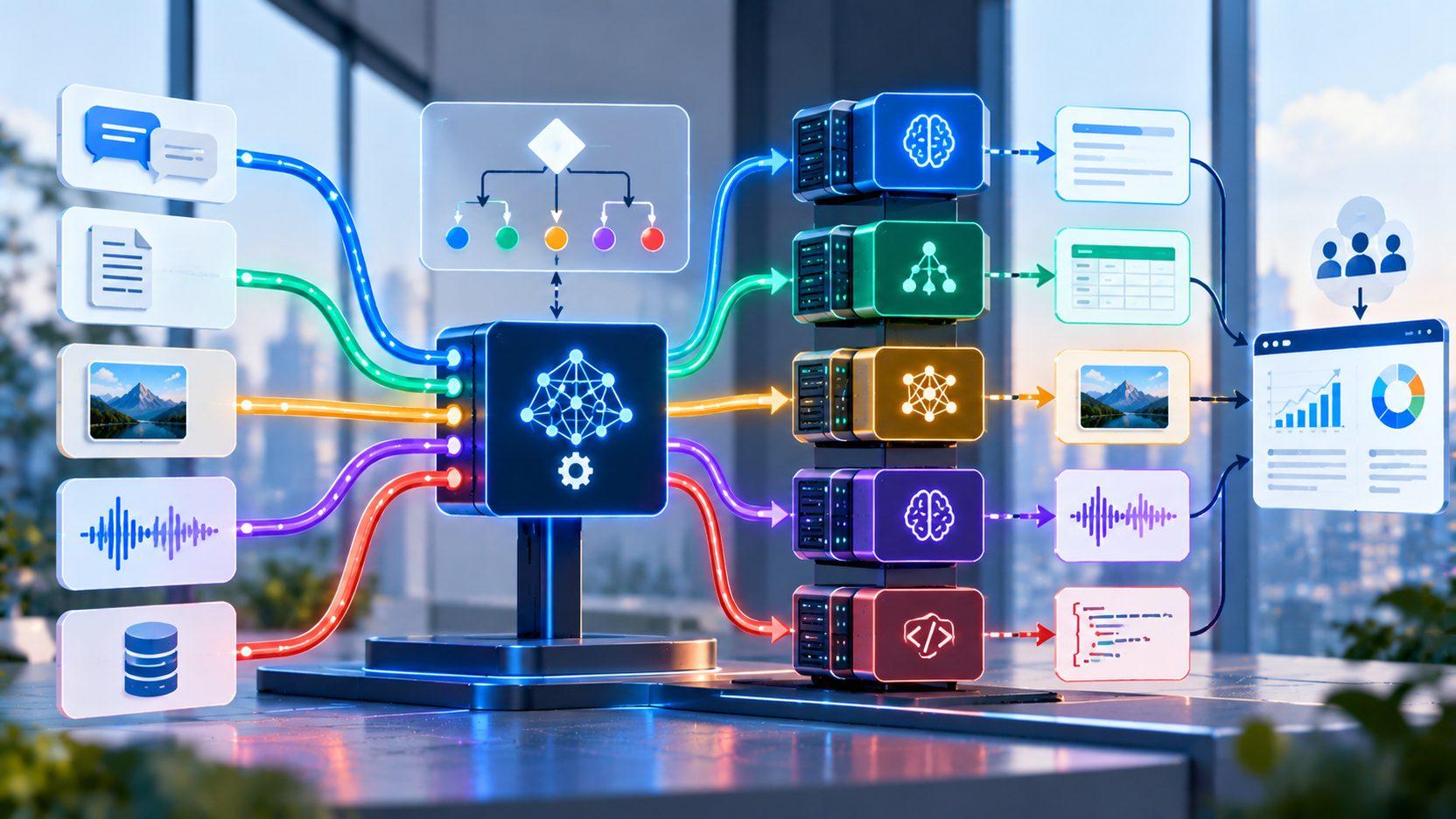
These systems include retrieval architectures, memory frameworks, orchestration layers, enterprise APIs, cloud infrastructure, vector databases, security controls, observability platforms, and deployment pipelines.
Understanding how these components interact is becoming more valuable than understanding any single model architecture.
Organizations increasingly hire engineers capable of designing complete AI ecosystems that operate reliably under real-world business conditions.
The importance of developing end-to-end engineering skills is explored in "From Model to Product: How to Discuss End-to-End ML Pipelines in Interviews," which explains how successful AI engineers think beyond model development and learn to build scalable, production-ready AI systems that deliver measurable business value.
This systems perspective enables engineers to adapt more easily as AI technologies evolve.
Continuous Learning Is the Most Valuable Career Skill
Perhaps the single most important characteristic of successful AI engineers is adaptability.
Artificial intelligence will continue changing throughout the coming decade.
New reasoning models will emerge.
Infrastructure platforms will evolve.
Deployment practices will mature.
Enterprise architectures will become increasingly sophisticated.
Rather than viewing this constant change as a challenge, successful engineers embrace it as part of their profession.
They regularly experiment with emerging technologies.
They build personal projects.
They read research papers selectively.
They study production architectures.
They learn from real-world deployments.
Most importantly, they remain curious.
Continuous learning allows engineers to remain valuable regardless of how quickly technology changes.
Instead of becoming experts in yesterday's tools, they become experts at learning tomorrow's technologies.
Key Takeaway
Building a long-term AI career requires focusing on enduring engineering principles rather than short-lived technologies. Strong software engineering, systems thinking, production AI expertise, and continuous learning provide a foundation that remains valuable as frameworks, models, and development tools continue evolving. Engineers who invest in adaptable skills rather than temporary trends will be best positioned to succeed throughout the next decade.
Section 2: Develop the Skills Employers Will Still Need Ten Years From Now
Production AI Skills Will Outlast Individual AI Models
One of the biggest misconceptions about building an AI career is that success depends on mastering the latest model or framework.
While staying current with new technologies is important, history shows that individual tools change far more quickly than the engineering principles behind them.
Over the past decade, the AI ecosystem has evolved dramatically. New deep learning frameworks have emerged, model architectures have improved, deployment platforms have matured, and entirely new categories of AI applications have appeared. Despite these changes, organizations have consistently valued engineers who know how to build reliable production systems.
This trend is becoming even stronger.
Today's employers are looking for professionals who understand how AI applications function after deployment rather than simply how models are trained.
For example, building an enterprise AI assistant involves designing retrieval pipelines, integrating APIs, implementing authentication, managing inference infrastructure, monitoring performance, handling failures, and continuously updating organizational knowledge.
Each of these responsibilities exists independently of which language model powers the application.
As foundation models continue improving, production engineering becomes even more valuable because organizations can replace models while keeping the surrounding infrastructure largely unchanged.
This means engineers who understand production AI architecture are building skills that remain useful regardless of how rapidly model technology evolves.
Rather than investing all their effort in learning one model, successful professionals learn how complete AI systems operate in real-world environments.
Problem-Solving Will Always Be More Valuable Than Memorization
Artificial intelligence is making information more accessible than ever before.
Documentation, code examples, research papers, and implementation guides are available instantly through search engines and AI assistants. As a result, employers increasingly care less about whether engineers can memorize algorithms and more about whether they can solve unfamiliar problems effectively.
Real-world engineering rarely involves repeating textbook examples.
Every organization has different business requirements, infrastructure constraints, regulatory obligations, and customer expectations.
AI engineers therefore spend much of their time designing solutions rather than recalling information.
They analyze requirements.
Identify bottlenecks.
Evaluate trade-offs.
Select appropriate architectures.
Optimize system performance.
Balance cost, latency, reliability, and scalability.
These decisions require structured thinking rather than memorization.
For example, deploying an AI application may involve deciding whether to use Retrieval-Augmented Generation, selecting an appropriate vector database, determining how long-term memory should be managed, designing fallback mechanisms, and choosing between cloud-hosted and on-premises infrastructure.
There is rarely one perfect answer.
Instead, successful engineers evaluate multiple alternatives before selecting the approach that best satisfies business objectives.
This ability to reason through complex engineering challenges remains valuable regardless of how AI technology changes over time.
Communication and Business Understanding Differentiate Senior Engineers
Many aspiring AI professionals focus almost exclusively on technical skills.
While technical expertise is essential, long-term career growth increasingly depends on communication and business understanding.
Organizations invest in AI to solve business problems.
Reducing operational costs.
Improving customer experience.
Accelerating software development.
Increasing productivity.
Enhancing decision-making.
Expanding revenue opportunities.
AI engineers therefore spend significant time working with product managers, executives, designers, legal teams, security specialists, and business stakeholders.
They explain technical trade-offs.
Translate business objectives into engineering requirements.
Present architectural decisions.
Estimate implementation complexity.
Measure project success.
These responsibilities become increasingly important as engineers move into senior and leadership positions.
Technical excellence alone rarely leads large AI initiatives.
Successful projects require engineers who can communicate effectively with both technical and non-technical audiences.
The growing importance of connecting technical expertise with measurable business outcomes is explored in "Beyond the Model: How to Talk About Business Impact in ML Interviews," which explains how modern AI professionals distinguish themselves by demonstrating business thinking alongside strong engineering skills.
As AI becomes central to business strategy, engineers who understand both technology and organizational priorities will continue advancing more rapidly than those focused solely on implementation.
Build a Portfolio That Demonstrates Adaptability
One of the strongest indicators of long-term career success is the ability to demonstrate continuous growth.
Employers increasingly value candidates who show evidence of learning new technologies, experimenting with emerging architectures, and solving practical engineering problems.
A strong portfolio reflects this adaptability.
Rather than presenting only academic machine learning projects, experienced AI engineers build applications that resemble real production systems.
They create AI assistants connected to external knowledge sources.
Develop Retrieval-Augmented Generation pipelines.
Build intelligent agents capable of completing workflows.
Deploy applications using cloud infrastructure.
Implement monitoring and observability.
Optimize inference performance.
Integrate APIs and enterprise services.
These projects demonstrate far more than familiarity with machine learning algorithms.
They show an ability to design, deploy, and maintain complete AI systems.
Over time, a portfolio becomes more than a collection of technical projects.
It becomes evidence that an engineer can adapt to changing technologies while consistently applying strong engineering principles.
That adaptability is one of the most valuable qualities employers seek in an AI professional preparing for a career that will remain relevant throughout the next decade.
Key Takeaway
A future-proof AI career is built on skills that extend beyond individual models or frameworks. Production engineering, structured problem-solving, business communication, and continuous learning remain valuable regardless of how rapidly AI technology evolves. Engineers who demonstrate adaptability through real-world projects and maintain a balance between technical expertise and business understanding will be well positioned to thrive as artificial intelligence continues transforming the technology industry.
Section 3: Build a Career Around Business Impact, Not Just Technical Expertise
The Most Successful AI Engineers Solve Business Problems
One of the biggest career shifts happening in artificial intelligence is the growing emphasis on business impact.
A decade ago, many organizations evaluated AI professionals primarily on technical capability. Building accurate models, improving benchmark scores, and publishing research were often considered the highest measures of success.
Today, employers are asking different questions.
Can this engineer automate an expensive workflow?
Can they improve customer satisfaction?
Can they reduce infrastructure costs?
Can they increase employee productivity?
Can they deploy AI safely across the organization?
These questions reflect a broader change in how businesses view AI.
Artificial intelligence is no longer simply a technology initiative.
It is a business transformation initiative.
As a result, AI engineers are expected to think beyond algorithms and understand how intelligent systems create measurable value.
For example, building an enterprise AI assistant is not successful simply because it produces technically impressive responses.
Its success depends on whether employees spend less time searching for information, complete tasks more efficiently, reduce repetitive work, and make better decisions.
Similarly, an AI-powered customer support platform is evaluated by improvements in response time, customer satisfaction, operational efficiency, and service quality rather than only by language model performance.
Engineers who consistently connect technical decisions with business outcomes become significantly more valuable because they contribute directly to organizational success rather than simply delivering software.
Adaptability Will Matter More Than Specialization
Artificial intelligence is evolving faster than almost any previous technology.
Every year introduces new foundation models, development frameworks, deployment platforms, orchestration tools, and enterprise AI architectures.
Trying to specialize exclusively in one technology creates risk.
Technologies change.
Engineering principles endure.
Successful AI professionals therefore build adaptable careers rather than technology-dependent careers.
Instead of identifying themselves solely as experts in one framework or one model, they develop transferable skills that remain valuable regardless of how the AI landscape changes.
They understand distributed systems.
They learn cloud infrastructure.
They study software architecture.
They improve system design.
They strengthen debugging skills.
They gain experience with production operations.
When new AI technologies emerge, these engineers adapt quickly because they already possess the engineering foundation needed to understand new tools.
This adaptability also allows professionals to move across industries.
An engineer who understands production AI systems can contribute to healthcare, finance, cybersecurity, manufacturing, retail, education, or enterprise software without rebuilding their career from the beginning.
Over the next decade, adaptability is likely to become one of the strongest predictors of long-term career success.
Building a Personal Brand Creates Long-Term Career Opportunities
Technical skills open doors.
Professional visibility creates opportunities.
As AI continues growing, employers increasingly evaluate engineers beyond resumes alone.
Open-source contributions, technical blogs, conference presentations, GitHub repositories, engineering case studies, and educational content all demonstrate expertise in ways that traditional resumes cannot.
A strong professional reputation also compounds over time.
Engineers who regularly share technical knowledge often attract opportunities for leadership, consulting, speaking engagements, startup collaboration, mentorship, and advanced engineering roles.
Building a personal brand does not require becoming a full-time content creator.
It simply means consistently demonstrating curiosity, technical depth, and a willingness to contribute to the engineering community.
For example, documenting lessons learned while building an AI application or explaining how a production deployment was optimized often provides significant value to other engineers while simultaneously strengthening professional credibility.
The importance of demonstrating practical engineering expertise rather than simply listing technical skills is explored in "ML Engineer Portfolio Projects That Will Get You Hired in 2025," which explains how production-oriented projects, real-world implementations, and measurable engineering outcomes help candidates stand out in an increasingly competitive AI job market.
Over time, this visibility becomes a powerful career asset that extends well beyond individual job applications.
Career Longevity Comes From Continuous Reinvention
Perhaps the greatest advantage of working in artificial intelligence is that the field continuously creates new opportunities.
Engineers who entered the industry working on recommendation systems later expanded into deep learning.
Many then moved into MLOps.
Today, countless professionals are transitioning into Large Language Models, AI agents, Context Engineering, Retrieval-Augmented Generation, enterprise AI platforms, and multimodal systems.
This pattern is likely to continue throughout the coming decade.
Entirely new engineering disciplines will emerge.
New categories of intelligent software will appear.
Infrastructure will become increasingly autonomous.
Enterprise AI architectures will continue evolving.
Rather than resisting these changes, successful AI professionals embrace them.
They periodically reassess their skills.
They identify emerging trends.
They experiment with new technologies before they become mainstream.
They remain curious even after becoming experienced engineers.
This mindset of continuous reinvention is one of the defining characteristics of long-lasting careers in technology.
Engineers who consistently learn, adapt, and expand their expertise rarely become obsolete because they evolve alongside the industry itself.
Key Takeaway
Building an AI career that remains relevant for the next decade requires far more than mastering today's technologies. Engineers who focus on solving business problems, developing adaptable engineering skills, building a strong professional reputation, and continuously reinventing themselves will remain valuable as AI continues evolving. Long-term career success belongs to professionals who combine technical excellence with business understanding, continuous learning, and the ability to grow alongside one of the fastest-changing industries in the world.
Section 4: Preparing for the Future: How to Stay Relevant as AI Continues to Evolve
The Future Belongs to Engineers Who Learn Faster Than Technology Changes
The pace of innovation in artificial intelligence is unlikely to slow down.
Every year introduces more capable foundation models, better inference engines, improved AI agents, advanced multimodal systems, and entirely new approaches to building intelligent applications. While these technological advances create exciting opportunities, they also mean that technical knowledge has a shorter lifespan than ever before.
This reality changes how successful engineers approach their careers.
Rather than attempting to master every new framework or tool, they focus on developing the ability to learn quickly. They understand that today's popular technologies may eventually be replaced, but the ability to understand new concepts, evaluate emerging architectures, and apply them to real-world problems will remain valuable throughout their careers.
Continuous learning therefore becomes more than a professional habit.
It becomes a competitive advantage.
Successful AI engineers dedicate time to experimenting with new technologies, reading technical articles, studying production architectures, contributing to engineering communities, and building personal projects that expose them to evolving tools and methodologies.
Instead of reacting to industry changes after they become mainstream, they prepare for them early.
Over the next decade, engineers who consistently invest in learning will remain adaptable regardless of how the AI landscape evolves.
AI Leadership Will Require More Than Technical Expertise
As organizations expand their AI capabilities, technical expertise alone will no longer define career progression.
Senior AI professionals will increasingly influence technology strategy, product direction, engineering culture, and organizational transformation.
This requires a broader set of capabilities.
Future AI leaders must understand how intelligent systems affect business operations, customer experiences, regulatory compliance, cybersecurity, and organizational productivity.
They must be able to evaluate technical trade-offs while communicating effectively with executives, product managers, designers, legal teams, and business stakeholders.
Leadership in AI also requires responsible decision-making.
Engineers must consider fairness, transparency, governance, security, reliability, and long-term maintainability alongside technical performance.
Organizations increasingly recognize that successful AI deployment depends as much on strategic thinking as it does on engineering excellence.
Professionals who develop leadership, communication, mentoring, and decision-making skills alongside technical expertise will be better positioned to guide enterprise AI initiatives as they become increasingly business-critical.
The Most Valuable Engineers Will Build Complete AI Ecosystems
Artificial intelligence is rapidly moving beyond standalone applications.
Modern AI products increasingly consist of interconnected ecosystems that combine language models, Retrieval-Augmented Generation, long-term memory, AI agents, enterprise APIs, vector databases, orchestration frameworks, monitoring platforms, cloud infrastructure, and governance systems.
Building these environments requires engineers who think holistically.
Rather than optimizing individual components in isolation, they design complete systems that remain scalable, secure, reliable, and adaptable as business requirements evolve.
This systems-first mindset is becoming one of the defining characteristics of senior AI engineers.
The growing importance of designing complete AI ecosystems is explored in "How Fortune 500 Companies Are Deploying AI at Enterprise Scale," which explains how enterprise AI platforms integrate cloud infrastructure, retrieval architectures, governance, observability, and intelligent workflows to support thousands of users across large organizations.
As enterprises continue investing in AI, professionals capable of architecting these complex environments will remain among the industry's most sought-after engineers.
Long-Term Career Success Will Be Defined by Adaptability and Impact
The technology industry has experienced multiple waves of transformation.
Mainframe computing gave way to personal computers.
The internet reshaped software development.
Cloud computing transformed infrastructure.
Mobile devices changed application design.
Artificial intelligence is now driving another major technological shift.
History shows that engineers who thrive during these transitions are rarely those who focus exclusively on individual technologies.
Instead, they consistently adapt, expand their expertise, and learn how emerging technologies solve real-world problems.
The same principle applies to AI.
Engineers who build strong software engineering foundations, understand production systems, communicate effectively, think strategically, and continuously update their skills will remain valuable regardless of how specific AI technologies evolve.
Career longevity comes from creating measurable impact rather than simply accumulating technical knowledge.
Organizations will continue investing in professionals who improve business performance, build reliable products, mentor engineering teams, and help companies navigate technological change.
For aspiring AI engineers, this is perhaps the most encouraging lesson.
The goal is not to predict every future technology.
The goal is to become the kind of engineer who can succeed regardless of what technology comes next.
Key Takeaway
Building an AI career that remains relevant for the next decade requires more than learning today's tools. Continuous learning, leadership development, systems thinking, and a focus on delivering measurable business impact will become increasingly important as AI evolves. Engineers who embrace adaptability, build complete production-ready AI systems, and continuously expand their expertise will remain at the forefront of one of the most dynamic and influential fields in technology.
Conclusion
Artificial intelligence is transforming the technology industry at a pace few could have predicted. Every year brings more capable models, smarter AI agents, improved development frameworks, and new enterprise applications. While these innovations create exciting opportunities, they also make one reality increasingly clear: long-term career success will not be determined by mastering today's tools alone.
The engineers who remain relevant throughout the next decade will be those who continuously evolve alongside the technology.
Building a future-proof AI career begins with developing a strong technical foundation. Software engineering, system design, cloud computing, distributed systems, data engineering, machine learning fundamentals, and production infrastructure provide knowledge that remains valuable even as individual frameworks and models change. These core engineering principles enable professionals to adapt quickly whenever new technologies emerge.
Equally important is developing expertise beyond model development.
Modern AI systems are no longer standalone machine learning models. They combine Retrieval-Augmented Generation (RAG), long-term memory, enterprise APIs, vector databases, orchestration frameworks, AI agents, observability platforms, security controls, and scalable cloud infrastructure into sophisticated production ecosystems. Engineers who understand how these components work together will continue to be highly sought after as organizations expand AI adoption.
However, technical knowledge alone is no longer sufficient.
Organizations increasingly hire AI professionals who understand business objectives, communicate effectively with stakeholders, and design systems that deliver measurable value. The ability to connect technical decisions with customer experience, operational efficiency, productivity improvements, and business growth has become one of the defining characteristics of senior AI engineers.
Continuous learning is perhaps the most important career strategy of all.
Artificial intelligence will continue evolving throughout the coming decade. New reasoning models, deployment architectures, inference platforms, multimodal systems, and autonomous agents will reshape the engineering landscape repeatedly. Engineers who embrace curiosity, build practical projects, study production systems, and regularly expand their knowledge will remain adaptable regardless of how the industry changes.
Another defining characteristic of successful AI professionals is their willingness to think in systems rather than individual technologies.
Instead of becoming experts in a single framework, they understand how complete AI ecosystems are designed, deployed, monitored, secured, and maintained. This systems-oriented mindset allows them to solve increasingly complex engineering challenges while remaining flexible as tools continue evolving.
Perhaps the most encouraging aspect of building an AI career today is that opportunities continue expanding across every industry.
Artificial intelligence is no longer limited to technology companies. Healthcare, finance, manufacturing, retail, education, logistics, government, and countless other sectors are investing heavily in intelligent systems. This broad adoption creates long-term demand for engineers capable of building practical, reliable, and scalable AI solutions.
Ultimately, staying relevant is not about predicting which framework will dominate five years from now.
It is about becoming the kind of engineer who can learn new technologies quickly, solve meaningful business problems, collaborate across disciplines, and continuously deliver value regardless of how artificial intelligence evolves.
The future will belong to engineers who combine technical excellence with adaptability, business understanding, and lifelong learning. Those qualities, not any individual programming language, framework, or foundation model, will define the most successful AI careers of the next decade.
Frequently Asked Questions
1. How can I build an AI career that stays relevant for the next decade?
Focus on developing strong software engineering fundamentals, machine learning knowledge, cloud computing skills, system design expertise, and production AI experience while committing to continuous learning as the AI ecosystem evolves.
2. Should I specialize in one AI framework?
It's beneficial to become proficient with current frameworks, but your long-term focus should be on transferable engineering principles that remain valuable even as frameworks and tools change.
3. Is software engineering still important for AI careers?
Yes. Modern AI applications are software systems that require APIs, cloud infrastructure, databases, distributed systems, monitoring, testing, and deployment pipelines. Strong software engineering skills remain one of the biggest career advantages.
4. Which AI skills are likely to remain valuable in the future?
Machine learning fundamentals, system design, Retrieval-Augmented Generation (RAG), AI infrastructure, cloud computing, distributed systems, MLOps, vector databases, observability, security, and enterprise AI architecture are all expected to remain highly relevant.
5. How important is continuous learning in AI?
Continuous learning is essential. AI technologies evolve rapidly, and engineers who consistently update their skills are better positioned to adapt to new models, frameworks, and production architectures.
6. Should I focus on research or production engineering?
Both are valuable, but demand for production AI engineering is growing rapidly as organizations move from AI experimentation to enterprise-scale deployment. Understanding how to build reliable production systems is increasingly important.
7. How can I gain practical AI experience without working at an AI company?
Build end-to-end projects, contribute to open-source repositories, create AI applications using public APIs, participate in hackathons, write technical blogs, and document your engineering process through GitHub projects and technical case studies.
8. Is mathematics still important for AI engineers?
Yes. Understanding linear algebra, probability, statistics, optimization, and model evaluation helps engineers make informed design decisions, although production engineering also requires strong software development and infrastructure skills.
9. What role does cloud computing play in AI Engineering?
Cloud computing provides the infrastructure needed to deploy, scale, monitor, and manage AI applications. Knowledge of cloud-native services, containers, orchestration, and distributed computing is increasingly valuable.
10. How can I stand out when applying for AI engineering roles?
Demonstrate practical experience through production-style projects, explain the business impact of your work, showcase system design skills, contribute to open-source projects, and maintain a portfolio that reflects continuous learning and technical growth.
11. Are AI agents and Retrieval-Augmented Generation (RAG) worth learning?
Yes. AI agents, RAG, long-term memory systems, context engineering, and enterprise AI architectures are becoming core components of modern AI applications and are increasingly requested in engineering roles.
12. What soft skills are important for long-term AI career success?
Communication, collaboration, leadership, business understanding, problem-solving, adaptability, and the ability to explain complex technical concepts clearly are all essential for career growth.
13. Can software engineers transition into AI Engineering?
Absolutely. Software engineers already possess valuable programming, architecture, debugging, and system design skills. Learning machine learning, LLMs, cloud AI services, and production AI architecture provides a strong pathway into AI Engineering.
14. Will AI replace AI engineers?
AI will automate parts of software development and engineering workflows, but it is far more likely to augment AI engineers than replace them. Engineers will increasingly focus on designing systems, solving complex business problems, governing AI applications, and integrating intelligent technologies into production environments.
15. What is the single most important lesson for building a future-proof AI career?
The most important lesson is to build adaptable engineering skills instead of chasing individual technologies. Engineers who continuously learn, understand production systems, solve real business problems, and evolve alongside the industry will remain valuable regardless of how artificial intelligence changes in the years ahead.