Introduction
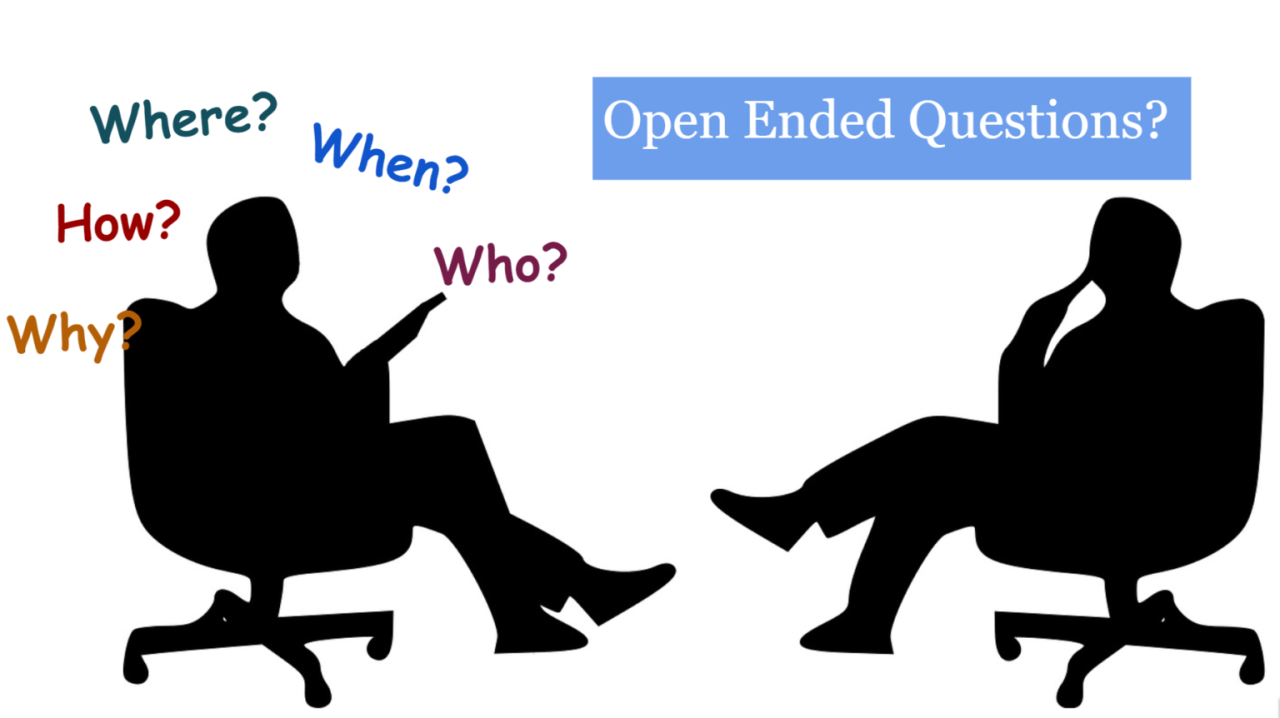
Open-ended ML interview problems are where interviews are most often decided, and where candidates feel the least prepared.
These are the questions that sound deceptively simple:
- “How would you build a recommendation system for X?”
- “How would you detect fraud in this scenario?”
- “Design an ML solution for this ambiguous problem.”
There is no single correct answer. No clear stopping point. No obvious algorithm to reach for.
And that is exactly the point.
By 2026, open-ended ML questions have become a primary evaluation tool across ML, Data Science, and Applied AI interviews. Interviewers rely on them because they expose what closed-form questions cannot:
- How you reason under ambiguity
- How you structure problems before solving them
- How you make tradeoffs with incomplete information
- How you communicate uncertainty and judgment
Candidates who approach these questions as puzzles to “solve” often fail. Candidates who treat them as decision-making simulations tend to pass, even when their final design is imperfect.
Why Open-Ended ML Problems Feel So Hard
Most ML preparation trains candidates to:
- Recall definitions
- Apply known algorithms
- Optimize well-specified objectives
Open-ended questions remove all three comforts:
- The problem is underspecified
- The objective is ambiguous
- Constraints are hidden
Candidates freeze not because they lack knowledge, but because they don’t know where to start.
Common internal reactions include:
- “What does the interviewer want?”
- “Should I jump into models?”
- “Am I expected to cover everything?”
- “What if I miss something important?”
Interviewers are watching how you handle this uncertainty.
What Interviewers Are Actually Evaluating
Despite appearances, interviewers are not evaluating:
- Whether you choose the “best” model
- Whether your design is exhaustive
- Whether you cover every edge case
They are evaluating whether you can:
- Frame the problem correctly
- Ask the right clarifying questions
- Identify constraints and risks early
- Make reasonable assumptions explicit
- Trade off simplicity vs. performance
- Explain decisions clearly under pressure
In other words, open-ended ML problems are compressed versions of real ML work.
Interviewers are asking themselves:
If this person were dropped into a messy, real-world ML problem, would they make it better, or more chaotic?
The Biggest Mistake Candidates Make
The most common failure mode is jumping to solutions too early.
Candidates often respond with:
- “I’d use a deep learning model…”
- “I’d start with XGBoost…”
- “I’d train a transformer…”
This immediately raises red flags.
Why?
Because in real ML work:
- The model choice is rarely the first decision
- Data availability dominates feasibility
- Metrics define success more than architecture
- Constraints kill elegant solutions
Interviewers interpret premature modeling as a lack of judgment, even if the model itself is reasonable.
Why “There’s No Right Answer” Is Misleading
Candidates are often told:
“There’s no right answer to open-ended questions.”
That advice is incomplete.
There may not be a single correct solution, but there are clearly wrong approaches.
Interviewers quickly downgrade candidates who:
- Don’t clarify the problem
- Ignore constraints
- Optimize irrelevant metrics
- Over-engineer prematurely
- Fail to prioritize
Open-ended questions are not unstructured. They are loosely structured on purpose.
Your task is to impose structure.
What Strong Candidates Do Differently
Strong candidates approach open-ended ML problems with a consistent pattern:
- They slow down
- They ask clarifying questions
- They restate the problem in their own words
- They identify assumptions explicitly
- They propose a simple baseline first
- They discuss tradeoffs before complexity
- They adapt when interviewers change constraints
They do not rush to impress. They aim to be safe, clear, and adaptable.
Interviewers trust candidates who behave this way, even if the final design is not perfect.
Why Example Solutions Matter
Most resources explain what to do:
- “Clarify requirements”
- “Think about data”
- “Consider evaluation”
That advice is abstract.
This blog goes further by showing:
- How strong answers actually sound
- How candidates structure responses verbally
- Where interviewers interrupt and why
- How to recover when you miss something
Each example solution is written in interview-style language, not documentation language.
Who This Blog Is For
This guide is designed for:
- ML Engineers
- Data Scientists
- Software Engineers transitioning into ML
- Candidates preparing for FAANG / Big Tech interviews
- Anyone who freezes on open-ended ML questions
You do not need to be an expert in every domain. You need a repeatable way to think.
The Core Mindset Shift
As you read this blog, keep one principle in mind:
Open-ended ML interview problems are not about solving, they are about structuring.
If you can structure ambiguity, interviewers will forgive imperfection.
If you cannot, even correct ideas will sound unsafe.
Section 1: How Interviewers Score Open-Ended ML Problems
Open-ended ML interview problems feel subjective because the scoring rubric is rarely stated out loud. Interviewers do not share a checklist, but they are absolutely using one.
Understanding that rubric is the fastest way to improve your performance, because it shifts your focus from finding the right answer to sending the right signals.
The Hidden Truth: Interviewers Are Scoring Behavior, Not Designs
When interviewers ask an open-ended ML question, they are not grading your final architecture. They are observing how you think in motion.
Specifically, they are looking for evidence of:
- Structured reasoning under ambiguity
- Judgment about tradeoffs and risk
- Practical awareness of constraints
- Communication clarity
- Adaptability to new information
Your answer is evaluated continuously, not at the end.
The Five Dimensions Interviewers Score
Across companies and roles, open-ended ML answers are typically scored along five dimensions. You don’t need to name them, but your behavior must demonstrate them.
1. Problem Framing (Do You Understand the Real Question?)
Interviewers listen carefully to your first 60-90 seconds.
Strong signals:
- You restate the problem in your own words
- You clarify goals and success criteria
- You ask 1-2 targeted clarifying questions
Weak signals:
- Jumping directly to models
- Treating the problem as fully specified
- Asking many unfocused questions
A strong opening sounds like:
“Before designing a solution, I’d like to clarify what success looks like and any constraints around latency or scale.”
This immediately signals maturity.
2. Assumptions & Constraints (Do You See the Hidden Boundaries?)
Open-ended questions intentionally omit constraints. Interviewers want to see if you surface them yourself.
They listen for awareness of:
- Data availability and quality
- Latency and throughput
- Cost and scalability
- Error asymmetry
- Privacy or regulatory limits
Strong candidates say:
“I’ll make a few assumptions and adjust if they’re incorrect.”
Weak candidates assume ideal conditions silently.
Interviewers downgrade candidates who design perfect solutions for imaginary worlds.
3. Decision-Making & Tradeoffs (Do You Choose Deliberately?)
This is the highest-weighted dimension.
Interviewers are not looking for optimal solutions, they are looking for defensible choices.
Strong signals:
- Explicit tradeoffs (“simplicity vs. accuracy”)
- Justification for baselines
- Awareness of alternatives and why they were not chosen
Weak signals:
- “I’d use X because it’s state-of-the-art”
- No discussion of downsides
- Over-engineering early
A strong candidate says:
“I’d start with a simple baseline to validate signal before adding complexity.”
This consistently scores well.
4. Evaluation & Risk Awareness (Do You Know How This Can Fail?)
Interviewers listen closely to how you talk about evaluation.
Strong signals:
- Metric choice tied to objectives
- Awareness of misleading metrics
- Discussion of offline vs. online mismatch
- Mention of failure modes
Weak signals:
- Reporting metrics without interpretation
- No mention of edge cases
- Assuming offline success implies production success
This dimension overlaps strongly with expectations discussed in Model Evaluation Interview Questions: Accuracy, Bias–Variance, ROC/PR, and More, where candidates are evaluated on skepticism rather than optimism.
5. Communication & Adaptability (Can You Collaborate Under Pressure?)
Open-ended problems are conversations, not monologues.
Interviewers observe:
- Do you pause and check alignment?
- Do you respond calmly to follow-ups?
- Do you adjust when assumptions change?
Strong candidates:
- Acknowledge new constraints without defensiveness
- Reframe decisions when prompted
- Keep answers structured
Weak candidates:
- Argue with interviewer constraints
- Double down on earlier answers
- Ramble or freeze
This dimension often decides borderline cases.
What Interviewers Are Not Scoring
It’s equally important to know what doesn’t matter as much as candidates think.
Interviewers are not heavily scoring:
- Fancy architectures
- Exact hyperparameters
- Exhaustive coverage
- Perfect completeness
They assume details can be learned. Judgment is harder to teach.
How Scoring Actually Feels From the Interviewer’s Side
Interviewers often leave open-ended ML interviews thinking one of two things:
- “I trust how this person thinks.”
- “I’m not confident this person would make safe decisions.”
That gut feeling is the cumulative result of the five dimensions above.
Candidates rarely fail because of a single mistake. They fail because their answers consistently signal:
- Unstructured thinking
- Premature optimization
- Lack of risk awareness
- Poor adaptability
Conversely, candidates often pass even with imperfect solutions because their reasoning feels safe and intentional.
A Crucial Insight: Early Signals Matter Disproportionately
Your first few minutes carry outsized weight.
If you:
- Clarify the problem
- State assumptions
- Propose a baseline
Interviewers relax and engage.
If you:
- Jump straight to modeling
- Ignore constraints
- Sound overconfident
Interviewers become skeptical and probe harder.
This dynamic explains why some interviews feel adversarial and others feel collaborative.
Section 1 Summary: How to Think About Scoring
Open-ended ML interview problems are scored like this:
- Structure beats cleverness
- Judgment beats sophistication
- Awareness beats completeness
- Adaptability beats confidence
If you optimize for these signals, you do not need perfect answers.
Section 2: A Step-by-Step Framework to Tackle Any Open-Ended ML Question
Open-ended ML interview questions feel difficult because candidates try to invent a solution on the fly. Strong candidates don’t do that. They apply a fixed mental framework, regardless of the problem domain.
Interviewers recognize this immediately. Answers feel calm, structured, and deliberate, even when the problem itself is complex.
This section gives you that framework.
You do not need to memorize it verbatim. You need to internalize the sequence.
The Core Principle
Never try to “solve” an open-ended ML problem. Structure it first.
Your job in the first several minutes is not to impress, it is to reduce ambiguity.
Step 1: Restate the Problem in Your Own Words (30-60 seconds)
This is the single highest-leverage step, and the most skipped.
Before proposing anything, restate the problem to confirm alignment.
What interviewers listen for
- Do you understand the goal?
- Do you separate means (ML) from ends (outcome)?
- Do you clarify scope?
Strong example
“Let me restate the problem to make sure I understand it correctly. We’re trying to predict X in order to achieve Y, under Z constraints.”
Why this matters
- It slows you down
- It gives the interviewer a chance to correct assumptions
- It establishes structure immediately
Candidates who skip this step often spend the rest of the interview solving the wrong problem.
Step 2: Clarify Objectives, Metrics, and Constraints (1-2 minutes)
Open-ended ML problems are underspecified on purpose. Interviewers want to see if you surface what’s missing.
You should ask a small number of targeted questions, not a scattershot list.
High-signal clarifying questions
- “What does success look like for this system?”
- “Are false positives or false negatives more costly?”
- “Are there latency or scale constraints?”
- “Is this a batch or real-time use case?”
What not to do
- Ask everything at once
- Ask implementation-level questions too early
- Assume ideal conditions silently
Strong candidates explicitly say:
“I’ll make reasonable assumptions and adjust if needed.”
This signals adaptability.
Step 3: Identify the Simplest Viable Baseline (Not the Best Model)
This is where many candidates fail.
They jump straight to:
- Deep learning
- Complex ensembles
- “State-of-the-art” approaches
Interviewers interpret this as poor judgment.
Instead, propose a baseline.
Strong framing
“I’d start with a simple baseline to validate signal and establish a reference point.”
Your baseline might be:
- A heuristic
- A linear model
- A rules-based approach
- A historical average
The specific choice matters less than why you chose it.
This principle is reinforced across system design interviews, including End-to-End ML Project Walkthrough: A Framework for Interview Success, where starting simple consistently scores higher.
Step 4: Discuss Data Before Models
Data dominates feasibility. Interviewers expect you to treat it that way.
Key areas to cover
- What data exists (or might exist)
- Label availability and quality
- Potential leakage
- Data freshness
- Coverage gaps
Strong candidates say
“Before optimizing the model, I’d validate that the data actually contains signal for this task.”
Weak candidates talk about architectures without mentioning labels.
This is a major red flag.
Step 5: Choose Models After Constraints Are Clear
Only now should you discuss modeling options.
Even here, the goal is not to impress, it is to show tradeoff awareness.
Good structure
- Start with a simple model
- Explain when you’d add complexity
- Mention alternatives briefly
- Call out downsides
Example
“If the baseline performs well but struggles with nonlinearity, I’d consider a tree-based model, trading interpretability for performance.”
This shows controlled escalation, not enthusiasm-driven design.
Step 6: Explain Evaluation and Failure Modes Explicitly
Interviewers care deeply about how you evaluate success, and how you expect things to fail.
You should always cover:
- Metric choice and justification
- Offline vs. online mismatch
- Edge cases
- Error costs
Strong candidates say
“I’d monitor not just the primary metric, but also segments where failures are costly.”
Candidates who omit evaluation often receive weak scores, even with strong designs.
Step 7: Close With Monitoring, Iteration, and Next Steps
You don’t need to finish everything. You need to land the plane.
End by explaining:
- How you’d monitor the system
- How you’d iterate safely
- What risks you’d watch first
This signals ownership.
Strong closing
“I’d start with this approach, monitor these risks closely, and only add complexity once the system proves stable.”
Interviewers remember strong closings.
How Long Should This Take in an Interview?
A rough pacing guide:
- Problem framing + clarification: 2-3 minutes
- Baseline + data discussion: 3-5 minutes
- Modeling + evaluation: 4-6 minutes
- Monitoring + iteration: 2-3 minutes
You should not try to cover everything exhaustively. Interviewers will guide depth.
Common Failure Patterns This Framework Prevents
Using this structure avoids:
- Jumping to models too early
- Overengineering
- Ignoring data and labels
- Forgetting evaluation
- Rambling without direction
If your answers feel shorter but clearer, you’re doing it right.
Section 2 Summary
Strong candidates don’t invent solutions, they apply a repeatable structure.
If you:
- Frame first
- Clarify constraints
- Start simple
- Prioritize data
- Justify tradeoffs
- Acknowledge failure modes
Then even imperfect solutions sound safe and hireable.
Section 3: Example Open-Ended ML Interview Problems (with Walkthrough Solutions)
Open-ended ML interview questions only feel abstract until you see how strong candidates actually answer them. In this section, we’ll walk through three high-frequency open-ended ML interview problems, using the framework from Section 2 and narrating answers the way interviewers expect to hear them.
These are not “perfect” solutions. They are safe, structured, and hireable solutions.
Example 1: “Design a Fraud Detection System for an Online Payments Platform”
Step 1: Problem Restatement
“Let me restate the problem. We want to detect potentially fraudulent transactions so that we can prevent financial loss while minimizing friction for legitimate users.”
This immediately frames tradeoffs, loss prevention vs. user experience.
Why this matters to interviewers
It shows you understand fraud is not a pure classification problem; it’s a cost-sensitive decision system.
Step 2: Clarifying Questions
Strong candidate asks:
- “Are false positives or false negatives more costly here?”
- “Is this real-time decisioning or post-transaction review?”
- “Do we have historical fraud labels, and how delayed are they?”
Interviewers often answer partially. That’s fine, you proceed with assumptions.
“I’ll assume this is near-real-time scoring with delayed but reasonably reliable labels.”
Step 3: Baseline Approach
“I’d start with a simple baseline, possibly a logistic regression or rules-based system, to validate whether our features have signal before adding complexity.”
This scores highly because it:
- Avoids overengineering
- Establishes a benchmark
- Signals production realism
Step 4: Data Reasoning
Strong candidates discuss:
- Transaction features (amount, velocity, location changes)
- User history aggregation
- Label noise (chargebacks vs. true fraud)
- Leakage risks (post-transaction signals)
Interviewers often interrupt here to ask:
“What kind of leakage would you worry about?”
Strong response:
“Anything that wouldn’t be available at decision time, like outcomes of downstream investigations.”
Step 5: Model and Tradeoffs
“If the baseline struggles with nonlinear patterns, I’d consider a tree-based model, trading interpretability for recall.”
Notice:
- No obsession with deep learning
- Explicit tradeoff explanation
Step 6: Evaluation
“Accuracy wouldn’t be sufficient. I’d focus on precision-recall tradeoffs at specific thresholds tied to review capacity and financial risk.”
Step 7: Monitoring & Iteration
“I’d monitor data drift, alert volume, and precision decay, especially since fraud patterns adapt over time.”
Why this answer works
It’s cautious, cost-aware, and iterative. Interviewers trust this.
Example 2: “How Would You Build a Recommendation System for a New Feature?”
Step 1: Problem Framing
“Before designing a recommender, I’d want to clarify the goal. Are we optimizing engagement, discovery, or long-term retention?”
Interviewers love this question because it reframes the problem before modeling.
Step 2: Constraints and Assumptions
Strong candidate asks:
- “Is this personalized or popularity-based initially?”
- “Do we have interaction history, or is this a cold-start scenario?”
Assumption:
“I’ll assume limited historical data and a cold-start problem.”
Step 3: Baseline First
“I’d start with a non-personalized baseline, such as trending or editorially curated items, to establish a performance floor.”
This avoids the common mistake of jumping straight to collaborative filtering.
Step 4: Data Strategy
Strong candidates discuss:
- Implicit feedback (clicks, views)
- Exposure bias
- Logging requirements
- Feedback loops
Interviewers often ask:
“How would you avoid reinforcing popularity bias?”
Good answer:
“By mixing exploration into recommendations and monitoring diversity metrics.”
Step 5: Model Evolution
“Once we have enough interaction data, I’d move toward a simple collaborative filtering approach, then possibly a learning-to-rank model if scale justifies it.”
Again, controlled escalation.
Step 6: Evaluation
“Offline metrics like NDCG help early, but I’d rely on online A/B tests to measure actual user impact.”
This shows awareness of offline–online mismatch.
Step 7: Failure Modes
“I’d watch for feedback loops, cold-start degradation, and short-term engagement hurting long-term retention.”
Why this answer works
It balances ML, product thinking, and risk awareness.
Example 3: “Design an ML System to Detect Toxic Content on a Platform”
Step 1: Problem Restatement
“We’re trying to detect toxic content to reduce harm while minimizing incorrect censorship.”
This explicitly surfaces ethical tradeoffs, which interviewers care about.
Step 2: Clarification
Strong candidate asks:
- “Is this real-time moderation or post-hoc review?”
- “Are humans in the loop?”
- “How sensitive is the definition of toxicity?”
Step 3: Baseline
“I’d start with a simple keyword or rules-based filter to catch obvious cases while collecting data for a learned model.”
This is realistic and safe.
Step 4: Data Challenges
Strong candidates mention:
- Label subjectivity
- Cultural context
- Annotation consistency
- Adversarial language evolution
Interviewers often probe here.
Step 5: Model Choice
“For nuanced cases, I’d consider a text classifier fine-tuned on labeled data, with thresholds tuned conservatively.”
No overclaiming. No hype.
Step 6: Evaluation and Risk
“False positives are especially costly here, so I’d bias toward higher precision and use human review for borderline cases.”
This shows responsible ML thinking.
Step 7: Monitoring
“I’d monitor false positive appeals, drift in language patterns, and calibration across different user groups.”
What These Examples Have in Common
Strong answers consistently:
- Start with framing, not models
- Make assumptions explicit
- Propose simple baselines
- Tie metrics to cost and risk
- Anticipate failure modes
- Adapt when interrupted
Weak answers usually fail by:
- Jumping to architecture
- Ignoring data realities
- Treating metrics as absolute
- Sounding overconfident
Section 3 Summary
You do not need perfect designs to pass open-ended ML interviews.
You need predictable structure and safe judgment.
If your answers sound like the walkthroughs above, even imperfectly, you are sending the right signals.
Section 4: Common Mistakes in Open-Ended ML Interviews (and How to Recover)
Open-ended ML interviews are rarely failed because of a single wrong idea. They are failed because of unmanaged mistakes.
Interviewers expect candidates to make imperfect assumptions, miss constraints, or go down suboptimal paths. What they evaluate is how you notice, correct, and recover. Candidates who recover well often pass, even after visible missteps.
This section breaks down the most common mistakes and gives exact recovery strategies you can use mid-interview.
Mistake 1: Jumping Straight to a Model
What it looks like
- “I’d use a transformer…”
- “I’d train XGBoost…”
- “I’d build a deep learning model…”
Why interviewers downgrade this
It signals premature optimization and weak problem framing. Interviewers worry you’ll over-engineer without understanding constraints.
How to recover (in the moment)
Pause and reframe:
“Actually, before committing to a model, I should clarify the objective and constraints to make sure this approach is appropriate.”
Then:
- Restate the problem
- Ask one clarifying question
- Propose a baseline
This recovery often improves your score, because it shows self-correction.
Mistake 2: Treating the Problem as Fully Specified
What it looks like
- No clarifying questions
- Silent assumptions
- Designing for ideal conditions
Why interviewers downgrade this
Open-ended problems are intentionally underspecified. Not surfacing ambiguity suggests lack of real-world experience.
How to recover
Explicitly acknowledge assumptions:
“I realize I assumed real-time inference, if that’s incorrect, the design would change.”
Interviewers appreciate candidates who surface and adjust assumptions, even late.
Mistake 3: Overengineering Too Early
What it looks like
- Complex architectures at step one
- Distributed systems without scale justification
- Advanced techniques before baselines
Why interviewers downgrade this
It signals poor prioritization and unnecessary risk.
How to recover
De-escalate deliberately:
“Given uncertainty around data quality, I’d actually start simpler to establish a baseline and reduce risk.”
This shows judgment, not retreat.
Mistake 4: Ignoring Data and Labels
What it looks like
- Long modeling discussion
- No mention of label quality
- No mention of leakage
Why interviewers downgrade this
In real ML systems, data issues dominate failure modes. Ignoring them is a major red flag.
How to recover
Insert a data checkpoint:
“I should pause and talk about the data, label quality and leakage will strongly affect any approach here.”
Then mention:
- Label noise
- Data availability
- Temporal leakage risks
This aligns your answer with production reality.
Mistake 5: Using Metrics Without Explaining Consequences
What it looks like
- “I’d optimize AUC.”
- “I’d use F1.”
- “Accuracy would work.”
Why interviewers downgrade this
Metrics without context suggest shallow evaluation thinking.
How to recover
Reframe metrics as decisions:
“That metric alone might be misleading. I’d choose it only if error costs are symmetric, otherwise I’d adjust.”
Mistake 6: Rambling Without Structure
What it looks like
- Long, unstructured explanations
- Jumping between topics
- Losing the interviewer
Why interviewers downgrade this
It signals inability to collaborate or communicate clearly.
How to recover
Pause and re-anchor:
“Let me structure this into three parts: data, modeling, and evaluation.”
This single sentence can dramatically improve perception.
Mistake 7: Defensiveness When Challenged
What it looks like
- Arguing with interviewer constraints
- Justifying earlier answers aggressively
- Ignoring new information
Why interviewers downgrade this
It signals rigidity and poor collaboration.
How to recover
Acknowledge and adapt:
“That’s a good constraint, given that, I’d revise my approach.”
Adaptability is often scored higher than correctness.
Mistake 8: Treating Failure as a Weakness
What it looks like
- “Everything worked well.”
- Avoiding discussion of risk
- No mention of failure modes
Why interviewers downgrade this
It sounds unrealistic and unreflective.
How to recover
Normalize failure:
“This approach would likely fail initially due to X, which I’d address by Y.”
Interviewers trust candidates who anticipate failure.
Mistake 9: Freezing When You Don’t Know
What it looks like
- Long silence
- Panic
- Guessing randomly
Why interviewers downgrade this
They need to see reasoning, not recall.
How to recover
Say:
“I don’t know the exact answer, but here’s how I’d reason through it.”
Then:
- State assumptions
- Outline a decision process
- Propose validation steps
This is often scored positively.
Mistake 10: Ending Without Closure
What it looks like
- Abrupt stopping
- No summary
- No next steps
Why interviewers downgrade this
It signals lack of ownership.
How to recover
Close deliberately:
“I’d start with this approach, monitor these risks, and iterate once we see real data.”
Strong closings leave strong impressions.
A Critical Insight: Recovery Is a Positive Signal
Interviewers do not expect perfect answers.
They expect:
- Self-awareness
- Correction
- Adaptation
- Calm under pressure
Candidates who recover well often outperform those who never make mistakes but sound brittle.
Section 4 Summary
Open-ended ML interviews are not pass/fail on ideas, they are pass/fail on behavior.
You will:
- Miss something
- Make assumptions
- Be challenged
What matters is whether you:
- Notice
- Adjust
- Reframe
- Move forward calmly
That ability is exactly what these interviews are designed to test.
Conclusion
Open-ended ML interview problems are not designed to trick you. They are designed to simulate real ML work in compressed time.
In the real world, ML problems rarely arrive fully specified. Objectives are ambiguous, data is imperfect, constraints appear late, and decisions must be made with incomplete information. Open-ended interview questions recreate that environment to answer a single question:
Can this person think clearly, safely, and collaboratively when there is no obvious right answer?
Throughout this blog, a consistent pattern emerges. Candidates who fail open-ended ML interviews do not fail because they lack knowledge. They fail because they:
- Rush to solutions without framing the problem
- Optimize for sophistication rather than suitability
- Ignore data realities and evaluation risks
- Treat metrics as truths instead of proxies
- Freeze or become defensive when challenged
Candidates who succeed behave very differently. They:
- Slow down and structure the problem
- Ask targeted clarifying questions
- Make assumptions explicit
- Start with simple baselines
- Discuss tradeoffs and failure modes
- Adapt calmly when constraints change
These behaviors signal judgment, which is the hardest skill to teach and the most valuable to hire.
Another important insight is that interviewers are not evaluating perfection, they are evaluating recoverability. Strong candidates notice mistakes and correct them mid-answer. Weak candidates either double down or panic. The ability to recover gracefully is often the deciding factor in borderline interviews.
This is why preparation for open-ended ML questions should focus less on memorizing architectures and more on practicing structured thinking out loud. If your reasoning is clear, your decisions are defensible, and your communication is calm, interviewers will trust you, even if your final design is incomplete.
This approach aligns closely with broader interview frameworks such as End-to-End ML Project Walkthrough: A Framework for Interview Success, where candidates who impose structure under ambiguity consistently outperform those who chase optimality.
At the end of the day, open-ended ML interview problems are not about finding the best solution. They are about demonstrating that you can make reasonable decisions when certainty is unavailable.
If you can do that, you will pass far more interviews than you fail.
Frequently Asked Questions (FAQs)
1. Why do companies ask open-ended ML interview questions?
Because they reveal how candidates think, prioritize, and adapt, skills that are critical in real ML work and hard to assess with closed-form questions.
2. Is there ever a “right” answer to these questions?
Rarely. Interviewers care more about your reasoning, assumptions, and tradeoffs than the final design.
3. How many clarifying questions should I ask?
Usually one to three targeted questions. Asking none or asking too many both hurt your signal.
4. What if the interviewer doesn’t answer my clarifying questions?
State your assumptions explicitly and proceed. Interviewers want to see that behavior.
5. Should I always start with a baseline model?
Yes. Starting simple signals judgment, risk awareness, and production realism.
6. Is it bad to mention advanced models like deep learning?
No, but only after constraints and data justify them. Premature complexity is a red flag.
7. How much detail is too much detail?
If you’re covering implementation specifics before clarifying objectives, you’re going too deep too early.
8. What if I realize halfway through that my approach is flawed?
That’s a good moment to recover. Acknowledge it and adjust. Interviewers reward self-correction.
9. How should I talk about metrics in open-ended problems?
Tie metrics directly to objectives and error costs. Avoid listing metrics without explanation.
10. What’s the biggest red flag in open-ended ML interviews?
Jumping straight to a model without framing the problem or clarifying constraints.
11. How should I handle interviewer pushback or new constraints?
Acknowledge them calmly and adapt your design. Defensiveness hurts more than changing your approach.
12. Do I need real production ML experience to do well here?
No. You need structured reasoning, risk awareness, and honest assumptions.
13. How should I practice open-ended ML questions effectively?
Practice out loud, time yourself, and focus on structure, not completeness.
14. What if I don’t know a domain-specific detail?
Say you don’t know and explain how you’d reason, validate, or find the answer.
15. How do I know if my answer is strong enough?
If your answer feels calm, structured, and adaptable, and the interviewer is engaged, you’re sending the right signals.