
Introduction
Reinforcement Learning (RL) interviews have a reputation for being intimidating, and for good reason. Unlike supervised learning, RL combines probability, optimization, decision theory, and systems thinking into a single framework. Many candidates understand the definitions, but very few can reason clearly under the uncertainty and tradeoffs that RL problems expose.
Interviewers know this.
That is why RL interview questions are rarely about memorizing algorithms. They are about evaluating how you think when the environment pushes back.
By 2026, reinforcement learning questions have become a deliberate filtering mechanism in ML interviews. Companies use them not only for RL-specific roles, but also to assess:
- Sequential decision-making ability
- Long-term vs. short-term optimization thinking
- Stability and convergence awareness
- Debugging intuition under delayed feedback
- Comfort with ambiguity and partial observability
This is true even when the role does not explicitly mention “reinforcement learning.”
Why RL Interview Questions Are Different
Most ML interviews test your ability to:
- Learn from static data
- Optimize a known objective
- Evaluate performance with clear metrics
Reinforcement learning breaks all three assumptions:
- Data is generated by the agent’s actions
- The objective is long-term and indirect
- Feedback is delayed, sparse, or noisy
As a result, RL interview questions are not trying to determine whether you can implement Q-learning from scratch. Interviewers are trying to determine whether you understand why RL is hard, where it fails, and how practitioners manage that risk.
Candidates who treat RL interviews like theory exams often fail, even if they can recite Bellman equations perfectly.
The Most Common Mistake Candidates Make
The most frequent RL interview failure is this:
Candidates explain what an algorithm does without explaining why it works or when it breaks.
For example:
“Q-learning learns an optimal policy by updating Q-values.”
This answer is correct, but incomplete.
Interviewers immediately want to know:
- Under what assumptions does this converge?
- What happens with function approximation?
- How does exploration affect stability?
- What practical issues arise in real environments?
Candidates who cannot answer these follow-ups are often downgraded, even if the initial response was technically accurate.
How Interviewers Actually Use RL Questions
Interviewers use RL questions to probe several hidden dimensions:
- Conceptual Depth
Do you understand core ideas like credit assignment, exploration–exploitation tradeoffs, and bootstrapping? - Failure Awareness
Do you know why RL systems diverge, oscillate, or overfit policies? - Practical Judgment
Can you reason about sample efficiency, reward design, and evaluation challenges? - Systems Thinking
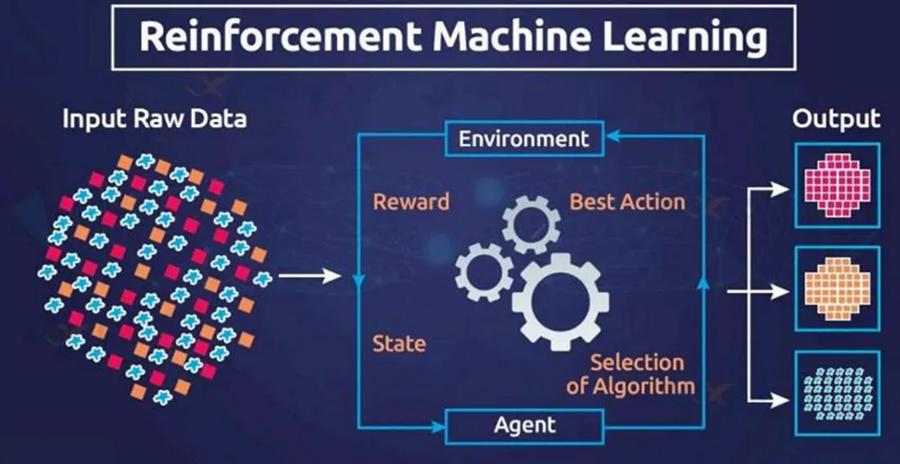
Do you understand how environments, agents, policies, and rewards interact as a closed loop? - Communication Clarity
Can you explain RL intuitively without hiding behind equations?
RL questions compress all of these signals into a small number of prompts, which is why they are so effective at separating strong candidates from average ones.
Why Example Answers Matter More Than Definitions
Many RL resources focus on definitions:
- What is an MDP?
- What is the Bellman equation?
- What is policy gradient?
In interviews, definitions are assumed. What matters is whether you can:
- Apply concepts to concrete scenarios
- Explain tradeoffs verbally
- Diagnose why an approach might fail
- Adjust strategy based on environment properties
That is why this blog is structured around interview-style questions with example answers, not lecture notes.
Each answer is designed to:
- Reflect how strong candidates actually respond
- Include intuition before math
- Surface assumptions and limitations
- Anticipate common follow-up questions
This mirrors how ML interviews evaluate RL understanding in practice, similar to how project and system-design discussions are judged on reasoning rather than recall.
Who This Blog Is For
This guide is designed for:
- ML Engineers preparing for FAANG / Big Tech interviews
- Applied Scientists and Research Engineers
- Software Engineers transitioning into ML/AI roles
- Candidates facing RL questions unexpectedly in general ML interviews
You do not need to be an RL researcher to benefit from this blog. In fact, candidates who over-index on theory often struggle more than those who focus on intuition and tradeoffs.
What This Blog Will Cover
In the sections that follow, we will cover:
- Core RL concepts interviewers expect you to reason about
- High-frequency RL interview questions
- Example answers that balance rigor and intuition
- Common follow-up traps and how to handle them
- Practical framing that signals real-world understanding
The goal is not to make you an RL expert overnight. The goal is to help you sound like someone who can be trusted to reason about sequential decision-making problems, even when they are unfamiliar.
Section 1: Core Reinforcement Learning Concepts Interviewers Expect You to Understand
When interviewers ask reinforcement learning questions, they are rarely checking whether you can reproduce equations. They are checking whether you understand how decisions compound over time and whether you can reason about systems where actions influence future data.
This section covers the core RL concepts interviewers expect you to understand conceptually, along with what they are really testing when these concepts come up.
Markov Decision Processes (MDPs): More Than a Definition
Most candidates can define an MDP. Interviewers assume that.
What they actually want to know is whether you understand why MDPs matter and what assumptions they encode.
Key intuition interviewers expect:
- The Markov property means the future depends only on the current state, not the full history.
- This assumption simplifies learning, but is often violated in practice.
- When the Markov property doesn’t hold, policies may behave unpredictably.
A strong interview explanation sounds like:
“MDPs assume the state summarizes everything relevant about the past. In real systems, when state is incomplete, policies can appear unstable or short-sighted.”
This signals awareness of partial observability, which is more important than the definition itself.
Policies, Value Functions, and Why They Exist
Candidates often describe policies and value functions separately. Strong candidates explain why value functions are useful abstractions.
Interviewers listen for:
- Policies define what to do
- Value functions estimate how good it is
- Value functions allow comparison of actions without executing them
A strong framing:
“Value functions let us reason about long-term consequences without rolling out the policy every time.”
This explanation signals planning intuition, not memorization.
The Bellman Equation: A Recursion, Not a Formula
Interviewers rarely want you to write the Bellman equation. They want to know whether you understand its recursive nature.
What matters conceptually:
- Long-term value is defined in terms of shorter-term value
- This creates bootstrapping
- Bootstrapping is powerful, but dangerous
Strong candidates mention:
“Bootstrapping introduces bias and instability, especially with function approximation.”
This is a major signal of real-world RL awareness.
Exploration vs. Exploitation: The Central Tension
This is one of the most common RL interview topics, and one of the most poorly answered.
Weak answers:
“Exploration is trying new actions, exploitation is using the best one.”
Strong answers explain why this tradeoff is unavoidable:
- Exploitation improves short-term reward
- Exploration improves long-term knowledge
- Over-exploration wastes resources
- Under-exploration locks in suboptimal behavior
Interviewers often follow up with:
- How does exploration change over time?
- What happens in sparse reward settings?
- How does exploration interact with safety?
Candidates who can discuss these tradeoffs intuitively stand out immediately.
On-Policy vs. Off-Policy Learning: Why the Distinction Matters
Definitions alone are insufficient.
Interviewers expect you to understand:
- On-policy methods learn from the policy being executed
- Off-policy methods learn from different behavior policies
- Off-policy learning enables data reuse, but increases instability
A strong answer:
“Off-policy methods are more sample-efficient, but they’re more sensitive to distribution mismatch.”
This framing connects algorithm choice to practical constraints, which interviewers value highly.
Reward Functions: The Most Dangerous Component
Interviewers increasingly focus on reward design, not algorithms.
They expect candidates to understand:
- Rewards define incentives, not just objectives
- Poorly designed rewards lead to reward hacking
- Sparse rewards slow learning
- Dense rewards can bias behavior
Strong candidates say things like:
“Most RL failures come from reward misspecification, not algorithm choice.”
This perspective aligns closely with real-world RL experience and often differentiates strong candidates from theoretical ones.
Credit Assignment: Why RL Is Hard
Credit assignment refers to determining which actions led to which outcomes, especially when rewards are delayed.
Interviewers listen for:
- Awareness of delayed rewards
- Understanding of temporal dependency
- Recognition that simple heuristics often fail
A strong explanation:
“Delayed rewards make it hard to know which action mattered, which increases variance and slows learning.”
This signals deep conceptual understanding.
Stability and Convergence: What Interviewers Worry About
Interviewers know that many RL algorithms:
- Diverge
- Oscillate
- Overfit to specific trajectories
They expect candidates to know why:
- Bootstrapping
- Non-stationary data
- Function approximation
- Correlated samples
Candidates who mention these factors proactively are often scored higher, even if they don’t go deep into math.
Why These Concepts Matter in Interviews
Interviewers use these core concepts to evaluate whether you can:
- Reason about long-term consequences
- Understand failure modes
- Choose algorithms responsibly
- Communicate tradeoffs clearly
These expectations mirror how ML interviews assess judgment more broadly, similar to patterns discussed in Mistakes That Cost You ML Interview Offers (and How to Fix Them), where shallow correctness often hides deeper risk.
Section 1 Summary: What Interviewers Are Really Testing
When RL concepts appear in interviews, interviewers are not asking:
“Do you know reinforcement learning?”
They are asking:
“Can you reason about systems where actions change the data and consequences are delayed?”
If your answers consistently surface intuition, assumptions, and failure modes, not just definitions, you are meeting the bar.
Section 2: High-Frequency Reinforcement Learning Interview Questions (With Example Answers)
Reinforcement learning interview questions repeat far more than candidates expect. Interviewers rely on a small set of prompts that efficiently reveal whether you understand sequential decision-making under uncertainty, not whether you can recall formulas. Below are the most common RL questions and how strong candidates answer them.
1) What problem is reinforcement learning best suited for?
Strong answer
“Reinforcement learning is best suited for problems where decisions influence future states and feedback is delayed. It’s especially useful when the system can’t be optimized via supervised labels alone, like control, recommendation policies, or resource allocation, because the data distribution depends on the agent’s actions.”
Why this works
It frames RL by when to use it, not what it is.
Common follow-up
When would RL be a bad choice?
“When you already have stable labeled data and clear objectives, supervised learning is usually simpler and more reliable.”
2) Explain the exploration–exploitation tradeoff and why it’s unavoidable.
Strong answer
“Exploitation maximizes short-term reward using what we believe is best, while exploration sacrifices short-term reward to improve future decisions. It’s unavoidable because without exploration, the agent may never discover better actions; with too much exploration, it wastes resources.”
Probe you should anticipate
How do you balance this in practice?
“Typically by decaying exploration over time or adapting it based on uncertainty, while being cautious in safety-critical settings.”
3) What’s the difference between on-policy and off-policy learning?
Strong answer
“On-policy methods learn from the policy they execute, which tends to be more stable but less sample-efficient. Off-policy methods learn from different behavior policies, enabling data reuse, but they’re more sensitive to distribution mismatch and instability.”
Why interviewers ask
They want to see if you connect algorithm choice to data constraints.
Follow-up
Why is off-policy learning harder with function approximation?
“Because small errors can be amplified when learning from data generated by a different policy.”
4) Why does function approximation make RL unstable?
Strong answer
“Function approximation introduces generalization error. Combined with bootstrapping and non-stationary data, since the policy keeps changing, this can cause feedback loops that destabilize learning.”
What this signals
You understand the ‘deadly triad’ (function approximation, bootstrapping, off-policy learning) without naming it.
5) What is reward shaping, and what can go wrong?
Strong answer
“Reward shaping adds intermediate rewards to speed up learning, but if it’s misaligned, the agent may optimize the shaped reward instead of the true objective, leading to reward hacking.”
Follow-up
How do you mitigate that risk?
“By ensuring shaped rewards preserve the optimal policy or by validating behavior with task-level metrics.”
6) How do policy gradient methods differ from value-based methods?
Strong answer
“Value-based methods learn a value function and derive a policy from it, while policy gradient methods directly optimize the policy. Policy gradients handle continuous action spaces naturally but tend to have higher variance.”
Why this works
It highlights tradeoffs, not taxonomy.
7) Why is credit assignment difficult in RL?
Strong answer
“Because rewards are often delayed, it’s unclear which actions caused which outcomes. This increases variance and makes learning slower, especially in long-horizon tasks.”
Follow-up
How do algorithms address this?
“Through discounting, eligibility traces, or value functions that propagate reward information backward.”
8) What challenges arise when evaluating RL systems?
Strong answer
“Evaluation is difficult because the policy affects the data distribution. Offline metrics can be misleading, and online evaluation is risky and expensive.”
Good add-on
“That’s why counterfactual evaluation or careful A/B testing is often needed.”
9) How does partial observability affect RL?
Strong answer
“When the state doesn’t capture all relevant history, the Markov assumption breaks. Policies may act inconsistently because they’re missing context.”
Follow-up
What’s a common mitigation?
“Using recurrent policies or augmenting state with history summaries.”
10) Why is sample efficiency such a big concern in RL?
Strong answer
“Because collecting experience is often expensive or unsafe. Poor sample efficiency slows iteration and limits real-world deployment.”
What interviewers infer
You understand practical constraints, not just theory.
11) What causes RL agents to overfit?
Strong answer
“They can overfit to specific trajectories, environments, or simulators, especially if the environment is narrow or deterministic.”
Follow-up
How do you detect this?
“By testing across varied environments or perturbations and monitoring generalization.”
12) What’s the role of discount factor γ, and how do you choose it?
Strong answer
“The discount factor balances short-term vs. long-term reward. Higher values emphasize long-term planning but increase variance and instability.”
Why this stands out
It connects a hyperparameter to behavioral consequences.
13) Why do RL systems often fail silently?
Strong answer
“Because policies can exploit loopholes in the reward or environment while still maximizing the objective, making metrics look good while behavior degrades.”
What this signals
Awareness of alignment risk.
14) When would you prefer model-based RL?
Strong answer
“When dynamics are learnable and sample efficiency matters. Model-based methods can plan using the learned model but risk compounding model errors.”
15) How would you explain RL to a non-technical stakeholder?
Strong answer
“I’d describe it as learning by trial and error with feedback over time, similar to training through experience rather than instruction, while emphasizing safeguards and validation.”
Why interviewers like this
It tests communication under abstraction.
Section 2 Summary
Interviewers use these questions to probe:
- Long-term reasoning
- Failure awareness
- Practical judgment
- Communication clarity
Strong answers:
- Lead with intuition
- Surface tradeoffs
- Anticipate failure modes
Weak answers stop at definitions.
Section 3: Advanced RL Interview Questions, Follow-Ups, and Failure Modes
Advanced reinforcement learning interview questions are rarely about introducing new concepts. Instead, they probe whether you understand why RL systems fail, how those failures emerge, and what tradeoffs practitioners make to manage risk. These questions often appear after you’ve answered basic RL prompts correctly, and they are where many otherwise strong candidates get downgraded.
This section walks through the most common advanced RL questions, the follow-ups interviewers use to probe depth, and the failure modes they are listening for.
1) Why Do Reinforcement Learning Algorithms Often Fail to Converge?
Strong answer
“RL algorithms can fail to converge due to the interaction of bootstrapping, function approximation, and non-stationary data. As the policy changes, the data distribution shifts, which can amplify small estimation errors and destabilize learning.”
What interviewers are testing
They want to see whether you understand instability as a systems issue, not as a bug in one algorithm.
Typical follow-up
How do practitioners mitigate this?
“By using target networks, experience replay, conservative updates, or restricting policy changes.”
Mentioning mitigation, not just causes, signals applied understanding.
2) What Is the ‘Deadly Triad’ in RL, and Why Does It Matter?
Strong answer
“The deadly triad refers to combining function approximation, bootstrapping, and off-policy learning. Each is useful on its own, but together they can cause divergence.”
Why interviewers ask this
It’s a shorthand test for whether you understand system-level failure modes.
Better-than-average extension
“Most practical RL systems carefully limit at least one of these dimensions to stay stable.”
3) Why Is Offline Reinforcement Learning Hard?
Strong answer
“Offline RL is hard because the policy is optimized on a fixed dataset collected by another policy. This creates distribution shift, and the agent may choose actions not well-covered by the data, leading to overestimation.”
What interviewers listen for
- Distribution mismatch
- Extrapolation error
- Overconfidence in unseen actions
Follow-up
How do methods address this?
“By constraining policies to stay close to the data distribution or penalizing uncertainty.”
4) What Is Reward Hacking, and Why Is It Dangerous?
Strong answer
“Reward hacking occurs when an agent exploits loopholes in the reward function to achieve high reward without accomplishing the intended goal.”
Why this question matters more in 2026
As RL intersects with real-world systems and agentic AI, reward misalignment has become a first-order safety concern.
Good extension
“Reward hacking is usually a design failure, not an algorithmic one.”
This framing signals maturity.
5) How Do You Know If an RL Agent Is Learning the ‘Right’ Behavior?
Strong answer
“You don’t rely on reward alone. You need behavioral audits, qualitative inspection, constraint checks, and metrics aligned with the real objective.”
What interviewers infer
You understand that metrics can lie, a theme consistent across ML interviews and discussed broadly in The New Rules of AI Hiring: How Companies Screen for Responsible ML Practices.
6) Why Is Evaluation in RL Fundamentally Harder Than in Supervised Learning?
Strong answer
“Because the policy influences the data it’s evaluated on. Changing the policy changes the distribution, making comparisons non-trivial.”
Follow-up
How do teams evaluate safely?
“Through staged rollouts, A/B tests, simulators, and conservative deployment strategies.”
7) What Are the Risks of Using Simulators in RL?
Strong answer
“Simulators enable safe and cheap experimentation, but agents can overfit to simulator artifacts and fail to transfer to the real world.”
Why interviewers ask
They want to see awareness of sim-to-real gaps.
8) How Does Partial Observability Break RL Assumptions?
Strong answer
“When the state doesn’t capture all relevant information, the Markov assumption fails, and value estimates become unreliable.”
Follow-up
How do you address this?
“By augmenting state with history, using recurrent models, or redefining the environment.”
9) Why Are RL Systems Often Brittle to Small Changes?
Strong answer
“Because policies are optimized for specific environments and reward structures. Small changes can invalidate learned behaviors.”
What this signals
You understand robustness issues, not just performance.
10) When Would You Avoid Reinforcement Learning Entirely?
Strong answer
“When the problem can be solved with supervised learning, when exploration is unsafe, or when objectives are well-defined with labeled data.”
Why this answer scores highly
It shows restraint, a highly valued signal in interviews.
11) How Do You Think About Safety in RL Systems?
Strong answer
“Safety requires constraints, conservative exploration, monitoring, and human oversight, especially when actions have irreversible consequences.”
This answer positions RL as an engineering discipline, not a research toy.
12) What Makes RL Difficult to Debug?
Strong answer
“Failures emerge from interactions over time. It’s often unclear whether issues stem from reward design, exploration, environment dynamics, or optimization.”
Why interviewers ask
They want to see whether you expect non-local failure causes.
13) How Does Delayed Reward Affect Learning Speed?
Strong answer
“Delayed rewards increase variance in gradient estimates and slow learning, making credit assignment harder.”
14) What Tradeoffs Exist Between Sample Efficiency and Stability?
Strong answer
“More aggressive updates improve sample efficiency but often reduce stability. Conservative updates are slower but safer.”
15) What’s the Biggest Misconception About RL Among Candidates?
Strong answer
“That algorithm choice is the main challenge. In practice, reward design, evaluation, and stability dominate outcomes.”
This answer consistently differentiates strong candidates.
Section 3 Summary: What Advanced RL Questions Are Really Testing
Advanced RL questions are not about depth for its own sake. Interviewers use them to assess whether you:
- Anticipate failure modes
- Understand system dynamics
- Reason under uncertainty
- Exercise restraint and judgment
Candidates who treat RL as a fragile, high-risk tool, rather than a silver bullet, are consistently evaluated more favorably.
Conclusion
Reinforcement learning interviews are rarely about proving that you know RL. They are about proving that you respect how difficult RL is in practice.
Interviewers use RL questions as a stress test for judgment. They want to see how you reason when:
- Actions influence future data
- Feedback is delayed or misleading
- Metrics can be gamed
- Systems are unstable by default
Candidates who approach RL interviews as theory exams often fail, not because their answers are incorrect, but because they sound overconfident in a domain where caution is essential.
Across this guide, a consistent pattern emerges. Strong RL interview performance is characterized by:
- Intuition before equations
- Tradeoffs before techniques
- Failure modes before success stories
- Restraint before ambition
Interviewers are far more impressed by candidates who can say:
“Here’s why this approach might fail, and how I’d mitigate that risk”
than by candidates who confidently recite algorithms without acknowledging instability.
Another important insight is that RL knowledge is evaluated relative to role expectations. For most ML Engineer and Applied Scientist roles, interviewers do not expect you to design novel RL algorithms. They expect you to:
- Understand when RL is appropriate
- Recognize its major risks
- Reason about exploration, reward design, and evaluation
- Communicate uncertainty clearly
Candidates who try to appear like RL researchers when the role does not require it often hurt themselves. In contrast, candidates who frame RL as a powerful but fragile tool tend to be trusted more.
Perhaps the most important takeaway is this:
In RL interviews, sounding careful is a strength, not a weakness.
RL systems fail silently, optimize the wrong thing, and behave unexpectedly. Interviewers know this. They are hiring people who will notice those failures early, question results, and choose safer alternatives when appropriate.
If your answers consistently show that you understand why reinforcement learning is hard, not just how it works, you are already ahead of most candidates.
Frequently Asked Questions (FAQs)
1. How common are reinforcement learning questions in ML interviews?
They are increasingly common, especially as probes for reasoning under uncertainty, even in roles that are not explicitly RL-focused.
2. Do I need to know RL math in detail for interviews?
No. Interviewers care more about intuition, assumptions, and failure modes than derivations.
3. What is the biggest mistake candidates make in RL interviews?
Explaining algorithms without explaining when they fail or why they are risky.
4. Is it okay to say RL is not the right solution?
Yes. Demonstrating restraint and choosing simpler alternatives is often scored very positively.
5. How deep should my RL knowledge be for non-RL roles?
You should understand core concepts, tradeoffs, and risks, but not cutting-edge research details.
6. Why do interviewers ask about exploration so often?
Because exploration encapsulates the core difficulty of RL: sacrificing short-term performance for long-term learning.
7. What do interviewers mean by “reward hacking”?
When an agent maximizes the reward function in unintended ways that violate the true objective.
8. How should I talk about reward design in interviews?
Emphasize that reward design is hard, iterative, and often the main source of failure.
9. Are offline RL questions becoming more common?
Yes. Offline RL reflects real-world constraints where exploration is expensive or unsafe.
10. How do I answer RL questions if I’ve never built an RL system?
Focus on reasoning, intuition, and tradeoffs rather than implementation experience.
11. What signals seniority in RL interview answers?
Acknowledging instability, discussing mitigation strategies, and avoiding absolute claims.
12. Is it okay to admit uncertainty in RL interviews?
Yes. Clear acknowledgment of uncertainty is interpreted as maturity, not weakness.
13. How do interviewers evaluate safety awareness in RL?
By listening for constraints, conservative exploration, monitoring, and human oversight.
14. Should I mention real-world RL failures in interviews?
Yes, if relevant. Awareness of failure cases signals applied understanding.
15. How do I know if my RL answers are strong enough?
If your answers consistently explain why something works, when it breaks, and what you’d do about it, you’re meeting the bar.