
SECTION 1 - The New Hiring Reality: Why ML / AI Recruiters Have Shifted Their Lens (2025–2026)
By 2025, the world of ML and AI hiring looks nothing like it did even three years earlier. Recruiters who once cared primarily about LeetCode scores, degrees, and brand-name employers are now optimizing for something far more dynamic: signal in ambiguity. The market has shifted so dramatically that the old playbooks no longer apply. Recruiters are recalibrating their criteria, redesigning assessments, and reevaluating what constitutes a “strong ML candidate.”
The shift didn’t happen overnight. It accumulated from three massive forces that hit simultaneously:
- The explosion of LLMs and agentic AI systems
- The operationalization of ML at unprecedented scale
- The collapse of traditional hiring filters in an AI-saturated world
Together, these forces reshaped how companies think about talent, and more importantly, how they measure it.
In 2025–2026, recruiters are not trying to find ML engineers who know the most algorithms. They’re trying to find ML engineers who can navigate environments that are volatile, ambiguous, accelerating, and deeply integrated with AI-driven tools.
This fundamental shift is why the ML hiring process now feels less like a test and more like an evaluation of your cognitive adaptability, systems thinking, real-world intuition, and ability to operationalize models instead of just building them.
Let’s break down why the lens shifted, because understanding the foundation helps you understand every trend that follows.
AI Is Now Part of the Job - Not the Object of Study
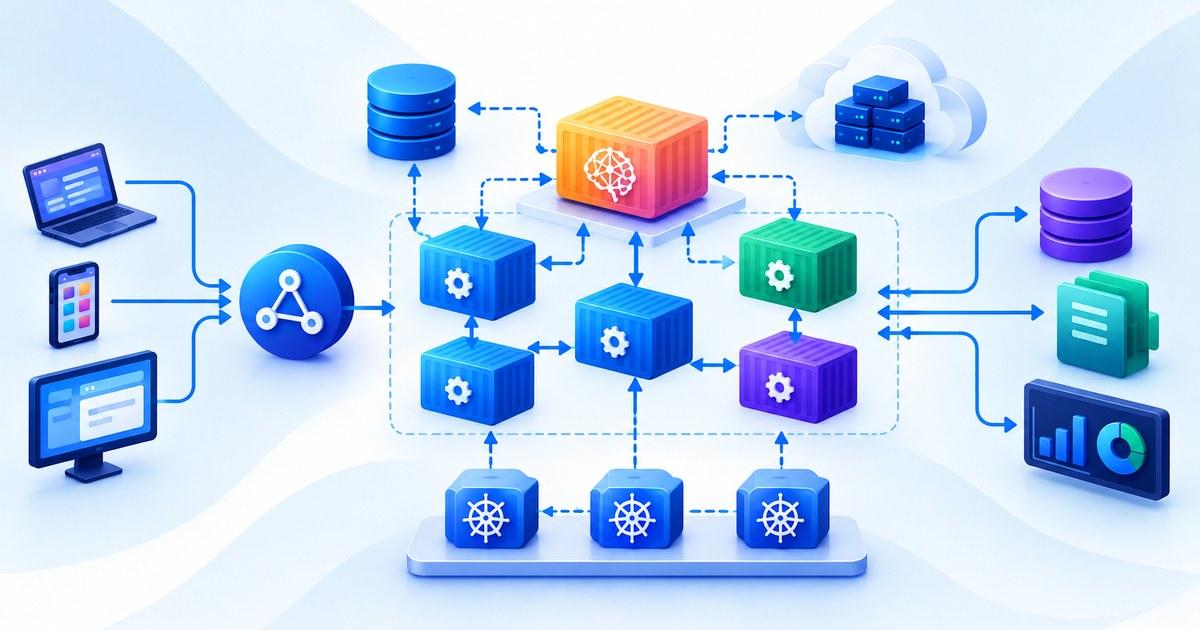
For years, ML engineering involved teams of researchers and engineers building models from scratch, tuning hyperparameters, and piecing together data pipelines manually. But 2025 ML infrastructure looks different:
- LLMs are deeply embedded into business processes
- Feature stores and automated retraining systems are standardized
- Vector databases power retrieval across every enterprise
- Fine-tuning pipelines exist as productized services
- Agents automate orchestration tasks previously done by humans
The job is no longer to “build models.”
The job is to integrate intelligence into systems.
Recruiters know this, so their evaluations have moved accordingly.
Instead of asking:
“Do you know ML theory deeply?”
They now ask:
“Can you design and operate AI-infused systems responsibly at scale?”
This shift is why ML interviews increasingly look like real-world case studies, system design sessions, and scenario-based reasoning assessments. This is the same paradigm shift highlighted in interviews that emphasize contextual thinking, similar to:
➡️The Hidden Metrics: How Interviewers Evaluate ML Thinking, Not Just Code
Knowledge is important, yes, but knowledge that can be applied coherently inside complex AI ecosystems is what truly matters.
Recruiters Now Act More Like Portfolio Managers Than Gatekeepers
In 2018, recruiters filtered candidates by brand names.
In 2020, they filtered by coding assessments.
In 2023, they filtered by ML experience.
In 2025, they filter by future capacity.
Recruiters aren’t just asking:
“Can this candidate do the job today?”
They’re asking:
“Can this candidate grow with capabilities accelerating at AI speed?”
The half-life of ML skills is shorter than ever.
Tools are regenerating faster than job descriptions can be updated.
Product cycles driven by AI are compressing from months into weeks.
Recruiters need people who won't just keep up, they’ll anticipate.
This is why cognitive traits like pattern synthesis, adaptability, systems reasoning, and scenario generation suddenly carry far more weight. Recruiters aren’t just screening for skill; they’re screening for evolutionary potential.
Human + AI Collaboration Is Now the Default Workflow
Another reason hiring criteria changed is that every technical professional now has AI superpowers.
Even entry-level engineers leverage:
- AI copilots
- automated data exploration
- synthetic data tools
- prompt-based debugging
- model evaluation agents
- notebook accelerators
- vector search
- multimodal reasoning tools
This means the baseline has risen for everyone.
Recruiters expect that you can:
- work with AI tools
- supervise them
- evaluate their outputs
- mitigate their failure modes
- combine them with human judgment
Interviewers care less about your ability to solve something blindly and more about your ability to collaborate intelligently with automation.
The Interview Is No Longer a Quiz - It’s a Simulation
The 2025–2026 ML interview is designed to mirror real-world cognitive workflows. That means:
- layered constraints
- changing objectives
- incomplete information
- ambiguous data
- multi-objective optimization
- safety and compliance considerations
- system-level tradeoffs
Recruiters don’t want to know what you remember, they want to know how you think, how you adapt, and how you operate in realistic environments.
That’s why the trends recruiters care about aren’t superficial. They’re deep, structural changes in the nature of ML work.
This opening section sets the stage.
From here, the remaining sections will break down each major ML/AI trend recruiters are prioritizing in 2025–2026, including:
- AI-augmented engineering
- ML systems thinking
- Responsible AI
- Multi-modal expertise
- LLMOps
- Real-time inference
- Agents
- Data-centric ML
- And more…
SECTION 2 - Why Recruiters Are Rewriting the ML Talent Playbook in 2025–2026
To understand why ML recruiters in 2025–2026 are focusing on specific trends, you first have to understand something fundamental: the ML hiring market has completely reorganized itself in the last 18 months. What used to be a predictable, skill-centric screening process has evolved into a dynamic, capability-driven evaluation system powered by AI, changing business priorities, and a radically shifting expectation of what an ML engineer should be able to do.
Recruiters are no longer filtering candidates based on “who knows TensorFlow” or “who can explain bias-variance tradeoff.” They’ve seen thousands of résumés with those bullet points. What differentiates strong ML candidates in 2025–2026 is not what they’ve memorized, but how fast they can adapt, how well they reason, and whether they can operate across a full ML lifecycle that now includes agentic systems, foundation model orchestration, and AI-driven pipelines.
This is the core shift:
ML roles have expanded, so recruiter evaluations have expanded too.
Before 2024, the hiring world could still afford linear thinking. Teams hired specialists, an NLP engineer here, a CV engineer there, maybe a data scientist who knew some SQL and could run experiments. The ML pipeline was fragmented. Responsibilities were modular. Recruiters could match candidates to buckets.
But starting mid-2024 and accelerating into 2025–26, companies realized that fragmentation slows execution. When LLMs, agent-based systems, and multimodal architectures matured, the nature of ML work changed from building models to integrating intelligence into products. That shift triggered one of the biggest hiring recalibrations since deep learning exploded a decade ago.
Recruiters began looking for hybrid thinkers, people who understand modeling, product constraints, deployment realities, and high-level systems reasoning. Someone who can design pipelines, diagnose failures, iterate with agents, and collaborate with engineering teams. Not specialists lost in research rabbit holes. Not generalists who barely know the math. Recruiters now screen for engineers who can bridge, not just build.
And the turning point wasn’t just technological, it was economic. Companies want smaller, more efficient teams capable of delivering high-impact ML systems without depending on large research groups or armies of infra engineers. This means every hire needs to punch above their weight. The recruiter’s job has evolved from filling roles to curating capability ecosystems within teams.
To navigate this new world, recruiters have shifted their assessment lens from “knowledge matching” to capability forecasting:
- Can this candidate operate in ambiguous, fast-changing environments?
- Do they understand how LLMs and agents change product workflows?
- Can they reason end-to-end about ML systems without handholding?
- Do they demonstrate maturity in handling failures, drift, tradeoffs, and model risks?
- Are they able to evaluate, not just implement, AI use cases?
- Can they communicate clearly across technical and non-technical groups?
These questions didn’t dominate ML hiring 3–5 years ago. They dominate today.
Recruiters have also become far more aware of signal vs noise in candidate presentation. Fancy projects, Kaggle medals, or tutorials can be noise. Strong reasoning, system thinking, and ability to evaluate constraints, that’s signal. This is exactly why many companies are now training their recruiters to look beyond the résumé and probe deeper into a candidate’s cognitive architecture, a theme explored in:
➡️The Hidden Metrics: How Interviewers Evaluate ML Thinking, Not Just Code
Because the industry learned a painful lesson between 2022–2024:
Brilliant model builders often fail in practical ML environments.
But strong reasoning-driven engineers rarely fail.
This realization reshaped recruiter screening.
Another major shift is the rise of AI-powered pre-screening tools, which evaluate clarity, communication, reasoning depth, and how well a candidate structures their answers. This means candidates cannot rely solely on technical correctness anymore, their thinking patterns are being recorded, analyzed, and compared across thousands of interviews. Recruiters receive dashboards highlighting attributes like coherence, structured reasoning, ambiguity management, and decision quality.
If you can't explain your own thought process, you can’t pass the AI screen.
But as AI evaluation becomes mainstream, human recruiters have shifted their attention to higher-order capabilities that AI cannot yet measure: judgment, ethical reasoning, cross-functional communication, and long-term adaptability. These traits determine whether a candidate can thrive in companies where AI systems evolve weekly and model updates are continuous, not occasional.
Also, recruiters now operate under pressure from both engineering leadership and product teams. Leaders want hires who can deliver measurable impact within the quarter. Product teams want ML partners, not isolated model owners. Recruiters are increasingly expected to identify candidates with “trajectory potential”, the ability to grow rapidly as AI systems become more autonomous and more integrated into business logic.
This creates a paradox that only a few candidates understand:
Recruiters aren’t hiring who you are today.
They’re hiring who you can become in 18 months.
And trends matter because they signal what kinds of ML engineers will be relevant, and valuable, in that future world.
That’s why the next sections break down the 10 major ML/AI hiring trends shaping recruiter priorities in 2025–2026, trends that determine not only who gets hired, but who accelerates fastest in a rapidly changing industry.
SECTION 3 - Why Trend Alignment Matters More Than Ever: How Recruiters Evaluate ML Candidates in a Shifting Landscape
If you speak with any ML recruiter at Google, Meta, OpenAI, NVIDIA, Snowflake, or the fast-growing AI startups redefining the industry, you will hear the same frustration repeated again and again:
“Most candidates are preparing for the wrong job market.”
It’s not that candidates aren’t smart. It’s not that they lack technical depth. It’s not that they don’t know how to train models, tune hyperparameters, or talk through pipelines.
The real issue is simpler and far more dangerous:
Their skills are anchored to last year’s hiring priorities, not the next two years’.
And in 2025–2026, the gap between "what candidates think recruiters want" and "what recruiters actually prioritize" is widening rapidly. AI has altered hiring velocity, changed the technical bar, created new job archetypes, and introduced new evaluation criteria that didn’t exist five years ago, in some cases, not even two years ago.
Understanding trend alignment isn’t optional anymore. It is one of the highest-leverage advantages a candidate can cultivate.
Let’s break down why recruiters are obsessing over alignment more aggressively than ever and why failing to understand these trends can quietly cost you roles you’re technically qualified for.
Trend Alignment Is Now a Proxy for Learning Velocity
A few years ago, ML hiring emphasized mastery of specific tools and frameworks:
PyTorch vs. TensorFlow, Spark vs. Flink, XGBoost vs. LightGBM.
In 2025–2026, the recruiter’s question has shifted:
“Can this candidate evolve as fast as the field evolves?”
Trend alignment is no longer about knowing the newest model architecture.
It is about demonstrating:
- how fast you learn
- how fast you adapt
- how fast you update mental models
- how fast you integrate new constraints
- how fast you can adjust to industry shifts
Candidates who speak only in "pre-2023 ML language", classical pipelines, old-school experimentation flows, static modeling workflows, unknowingly signal slow learning velocity.
Recruiters want to see a mind that evolves.
A mind that updates.
A mind that keeps pace with the rate of AI advancement.
This is a central reason many mid-career engineers struggle in modern ML interviews: not because they lack experience, but because their frameworks haven't evolved since the last generation of ML problems. This same challenge is explored more deeply in:
➡️Career Pivots in the Age of AI: How to Transition Successfully
The market rewards adaptability, not legacy mastery.
Recruiters Look for Candidates Who Understand the “Why,” Not Just the “What”
Knowing the latest AI trend is not enough.
Understanding why it matters is the real differentiator.
For example, saying:
“Companies are investing heavily in agentic AI.”
…is informational.
But saying:
“Companies are investing heavily in agentic AI because agent workflows reduce operational overhead, adapt to changing inputs more flexibly than static systems, and allow ML teams to scale decision-making with fewer engineers.”
…is interpretive.
Recruiters remember interpretive thinkers.
Not informational repeaters.
Why?
Because interpretive thinking reveals:
- depth
- strategic reasoning
- business understanding
- system-level awareness
- product intuition
These attributes distinguish senior-level candidates from the talent pool, especially in a hiring climate where ML roles increasingly require an engineering–product hybrid mindset.
Trend Awareness Is a Shortcut Signal for Business Impact Thinking
In 2025–2026, no company wants ML engineers who only build models.
They want ML engineers who build outcomes.
Recruiters are filtering aggressively for candidates who think in terms of:
- revenue impact
- operational efficiency
- customer experience
- model deployment realities
- scalability and cost tradeoffs
- compliance and risk mitigation
Trend alignment becomes a powerful proxy for this mindset.
For example, candidates who understand the rise of model distillation and quantization aren’t simply keeping up, they implicitly understand:
- inference cost pressure
- latency targets
- product scaling constraints
- energy consumption concerns
- edge deployment feasibility
They’re not trend-followers.
They’re impact-thinkers.
This is why trend awareness is such a strong hiring signal, it correlates with business fluency, one of the hardest skills to teach and one of the most valuable to employers.
Candidates Who Ignore Trends Sound Outdated - Even If They’re Brilliant
This is one of the most uncomfortable truths in modern ML hiring:
You can be technically excellent and still sound obsolete.
It happens when candidates:
- reference only traditional ML examples
- avoid LLM-related reasoning due to discomfort
- ignore agent systems, tooling improvements, or evaluation frameworks
- speak in static pipeline metaphors
- optimize models instead of optimizing systems
- emphasize offline training instead of continuous learning pipelines
Recruiters don’t reject these candidates because they lack intelligence.
They reject them because their thinking style signals a mismatch with the work companies are hiring for.
Trend awareness is not a “nice to have.”
It’s part of your professional identity.
Trend Alignment Also Helps Candidates Tell More Memorable Stories
A candidate who says:
“I built a recommendation engine.”
…is forgettable.
A candidate who says:
“I built a recommendation engine that leveraged emerging retrieval strategies designed to work with sparse feedback and dynamically shifting user embeddings, the same patterns companies are now exploring in LLM-based retrieval workflows.”
…is unforgettable.
Trend alignment injects context into your narrative.
It frames your experience as current, not historical.
Recruiters don’t want to know what you built.
They want to know how what you built matters today.
SECTION 4 - The Talent Signal Behind Trend Awareness: What Recruiters Infer From How You Interpret ML/AI Shifts
Companies don’t track ML/AI trends just because they’re curious about the future, they track them because your relationship to these trends reveals how you think. When a recruiter asks, “What do you think about Retrieval-Augmented Generation?” or “How do you see model evaluation evolving in the next two years?”, they are not simply checking whether you read the news. They are evaluating your cognitive maturity.
Trend awareness is a talent signal.
It tells interviewers whether you understand the direction of the field, whether you can adapt quickly, and whether your mental models are resilient to change. It helps recruiters determine not just whether you can succeed today, but whether you’ll remain valuable tomorrow.
This is why understanding ML/AI trends is no longer optional.
It is now part of the interview process itself.
Let’s break down the deep psychology of why this matters, and how candidates who can interpret trends intelligently separate themselves from the pack.
Recruiters Use Trend Awareness to Measure Your “Learning Velocity”
One of the hardest qualities to measure in ML talent is learning velocity, how quickly you absorb new information and adapt your approach. In a field as fast-moving as AI, your learning velocity is more important than your current skillset.
Recruiters watch for signs such as:
- Do you understand not just what a trend is, but why it exists?
- Can you articulate the limitations and risks of new technologies?
- Do you connect trends back to older paradigms or fundamentals?
- Do you show curiosity or do you sound like you’re reciting headlines?
A candidate who can speak about trends with nuance signals that they will stay ahead of the curve.
A candidate who cannot signals future skill stagnation.
This means your trend awareness is not evaluated as trivia, it’s evaluated as a predictor of adaptability.
Trend Interpretation Also Reveals Your Mental Models
Experts simplify complexity using mental models, reusable frames that make sense of uncertainty. Recruiters love candidates who use clear mental models because it shows:
- intellectual discipline
- clarity of thought
- strong abstraction ability
- an engineer’s mindset rather than a student’s mindset
When discussing trends, candidates with strong mental models say things like:
- “This trend accelerates an existing pattern rather than replacing it.”
- “This solves X problem but introduces new constraints in deployment.”
- “The real impact isn’t on modeling, it’s on evaluation and data workflows.”
- “This is only viable at scale if latency budgets shrink or infra improves.”
These responses reveal a structured mind, the hallmark of a senior-level candidate.
Meanwhile, surface-level answers signal that the candidate has knowledge but lacks a framework.
This distinction is one reason many mid-career engineers are struggling to transition into AI roles, they haven’t upgraded their mental models to handle the new complexity. This deeper structural gap is explored in:
➡️The AI Gold Rush: Why Software Engineers Should Transition Now
Trend literacy isn’t just knowledge, it’s cognition.
Recruiters Evaluate Whether You Understand Tradeoffs in Emerging Tech
Every trend introduces tradeoffs.
Candidates who can articulate these tradeoffs position themselves as real ML engineers, not enthusiasts.
For example:
Trend: Multi-modal LLMs
Shallow response: “They’re more powerful because they handle images + text.”
High-signal response:
“Multi-modal models unlock more natural interactions, but they introduce heavier inference loads, require paired training data, and complicate evaluation because modality interactions aren’t independent.”
Recruiters are looking for the second type of answer.
The ability to see beyond hype and identify constraints shows:
- maturity
- engineering realism
- critical thinking
- production awareness
Tradeoff recognition is one of the strongest hiring signals in ML interviews.
Trend Awareness Helps Recruiters Evaluate Domain Alignment
Companies don’t want ML generalists anymore, they want ML specialists whose strengths align with the company's roadmap.
Trends help recruiters match candidates to roles:
- If you speak expertly about agentic AI, you may fit autonomy teams.
- If you understand inference optimization, you may fit infra or systems teams.
- If you understand evaluation complexity, you may fit safety or research teams.
- If you study application-level trends, you may fit product ML teams.
Trend discussions quietly reveal where your mind naturally gravitates.
This is how recruiters identify where you will thrive, often before you realize it yourself.
Your Understanding of Trends Reveals Whether You’re “Future-Proof”
Recruiters think in timelines.
They aren’t just asking:
“Can you perform well today?”
They’re also asking:
“Will you still be relevant in 2026?”
“Will you outgrow your role too slowly, or too quickly?”
“Will you adapt when the next shift hits?”
Candidates who understand trends and their implications demonstrate:
- long-term career viability
- ability to evolve with the field
- resilience to technological disruption
This is crucial because AI is currently in a state of compressed evolution, the field changes in months, not years.
Your capacity to interpret trends is evidence that you can handle unpredictable change.
Nuanced Trend Interpretation Shows You Understand Market Forces, Not Just Technology
Great ML candidates show awareness of:
- compute constraints
- data availability
- cost tradeoffs
- deployment friction
- ethical boundaries
- regulatory shifts
- security and privacy risks
- business-level incentives
Because trends don’t exist in a vacuum, they are shaped by real-world economic and strategic forces.
For example:
LLMs are powerful, but most companies cannot afford to train or run them without enormous cost.
Multi-modal models have potential, but many companies lack the data or infra to support them.
Agent-based systems unlock new workflows, but introduce alignment and safety risks.
Candidates who can connect technology to its environment demonstrate genuine expertise.
Recruiters reward this heavily.
Trend Literacy Allows You to Tell More Compelling Career Stories
Trends help you frame:
- why you pursued specific projects
- why you transitioned roles
- what motivates your learning
- how your experience connects to industry evolution
- where your strengths fit in the future landscape
When candidates embed trends into their narratives, their careers suddenly make sense.
A disorganized career becomes purposeful.
A technical resume becomes strategic.
A scattered background becomes a coherent identity.
This helps recruiters remember you, and support you.
Ultimately, Trend Interpretation Is a Test of Your Cognitive Maturity
What recruiters are really measuring is:
- how you think
- how you prioritize
- how you evaluate
- how you connect dots
- how you reason under uncertainty
- how you extract signal from noise
Trends are the canvas.
Your cognition is the content.
Your reasoning is the evaluation.
And this is why trend awareness matters so profoundly in ML/AI hiring.
Conclusion - Why These Trends Matter More Than Ever for ML Candidates
The ML/AI hiring landscape of 2025–2026 isn’t just evolving, it’s accelerating. Recruiters are no longer evaluating candidates purely on technical mastery or past experience. Instead, they're assessing how well engineers anticipate, adapt to, and leverage the trends shaping modern AI ecosystems.
The patterns are clear:
- Models are becoming multi-modal, multi-agent, and deeply embedded in enterprise workflows.
- Companies are shifting from model-building to model-operationalization.
- Ethical, interpretable, and auditable ML is no longer optional, it’s a hiring requirement.
- Recruiters expect candidates to understand not just algorithms, but infrastructure, product impact, compliance, and safety.
- And underlying all of it is a new reality: engineers must learn continuously because the field is rewriting itself in real time.
This isn’t just evolution—it’s a new hiring paradigm.
These trends reveal what recruiters want most:
- engineers who can reason, not memorize
- engineers who can operate across the ML lifecycle
- engineers who understand how AI meets business constraints
- engineers who can design systems with safety and compliance in mind
- engineers who think like owners, not executors
For candidates, this means the path to standing out is clear:
Master fundamentals.
Understand systems.
Track emerging trends.
Think strategically.
Communicate clearly.
Demonstrate adaptability.
The future belongs to ML engineers who don’t just follow the wave of AI, they understand the forces beneath it.
If you align your preparation with these trends, you won’t just be ready for 2025–2026, you’ll be ahead of it.
FAQs
1. Are recruiters really prioritizing trends over traditional ML skills?
Not at all, fundamentals still matter. What’s changed is that recruiters now assess how you integrate fundamentals with emerging technologies. Trend-awareness signals relevance and future-readiness, not trend-chasing.
2. How much should I know about multimodal models to be competitive?
You don’t need to build CLIP or Gemini from scratch. But you should understand:
- what multimodal architectures do
- how embeddings align across modalities
- when multimodality improves outcomes
- how latency and cost constraints evolve
This is enough to show strategic thinking.
3. Are agentic AI systems replacing ML engineers?
No. Recruiters view agentic AI as co-workers, not replacements. They want engineers who can design, supervise, and evaluate agents, and intervene when autonomy introduces risk.
4. How important is MLOps compared to pure modeling?
More important than ever.
Recruiters know:
A model that works only in a notebook is not a product.
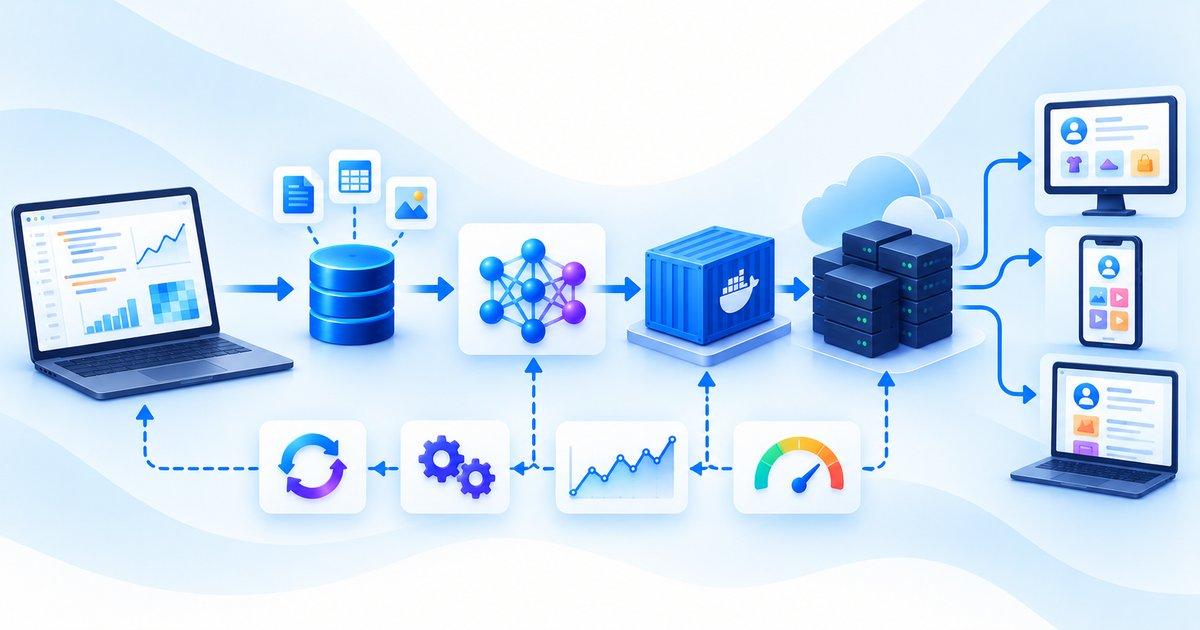
Candidates who understand deployment, monitoring, drift, CI/CD, and observability stand out dramatically.
5. Do I need to specialize in LLMs to get hired?
LLMs are hot, but not mandatory. What matters is understanding:
- prompting basics
- fine-tuning tradeoffs
- retrieval strategies
- evaluation pitfalls
This shows you can work with modern systems even if it's not your core specialty.
6. How can I prove adaptability, which recruiters now prioritize?
Show that you’ve:
- learned new tools quickly
- pivoted during projects
- handled ambiguous requirements
- experimented with new paradigms
Adaptability is demonstrated through stories, not statements.
7. Are ML safety and governance really part of interviews now?
Yes, especially at mid-level and above.
Recruiters want candidates who understand:
- bias mitigation
- privacy concerns
- auditability
- failure modes
- responsible deployment
It signals maturity and business alignment.
8. How do I show strategic thinking about model cost?
Recruiters increasingly ask:
- “How would you reduce inference cost?”
- “How do you balance accuracy vs. latency?”
- “When do you choose a smaller model?”
Good answers show your ability to think beyond accuracy.
9. Do companies expect ML engineers to know distributed training?
Not always, but awareness helps.
Recruiters mainly want candidates who can discuss:
- when distributed training is needed
- training bottlenecks
- cost-performance tradeoffs
This shows systems-level awareness.
10. Is knowing RAG enough for LLM-related interviews?
No.
Recruiters want you to understand:
- retrieval quality
- chunking strategies
- embedding drift
- evaluation pitfalls
- context window constraints
- failure modes
RAG is simple.
RAG that works in production is not.
11. Will AutoML reduce the value of ML engineers?
No, it increases demand for ML engineers who can:
- frame problems
- select constraints
- evaluate tradeoffs
- interpret outputs
- integrate ML into products
AutoML automates the bottom of the stack, not the top.
12. How important is cross-functional communication in hiring now?
Critical.
Recruiters know ML engineers work with:
- product managers
- data teams
- legal/privacy
- platform engineering
- leadership
Your ability to frame ideas clearly is now a hiring differentiator.
13. Should I learn about AI regulations?
At least a basic understanding.
Recruiters increasingly ask about compliance, especially:
- GDPR
- right to explanation
- data retention
- consent issues
- model auditing
You don’t need to be a lawyer, just aware.
14. How do I stay updated on ML hiring trends without burning out?
Use a lightweight system:
- follow a few high-quality newsletters
- read 1–2 papers/month
- track big releases from OpenAI, Google, Meta, Anthropic
- follow MLOps updates
Consistency matters more than intensity.
15. What’s the #1 trend recruiters emphasize across all companies?
Full-lifecycle ML ownership.
Not just training models, but deploying, monitoring, evaluating, and improving them in real-world conditions.
This is the single strongest signal of a hire-ready ML engineer.