
Section 1: Why AI Products Are Moving Beyond Traditional Assistants
The First Wave of AI Products Focused on Assistance
The first major wave of generative AI products was centered around assistance. AI copilots emerged across coding platforms, productivity tools, enterprise software, customer support systems, and search applications. These systems were designed primarily to help users complete tasks faster by generating suggestions, summarizing information, answering questions, and automating repetitive workflows.
AI copilots became popular because they fit naturally into existing software experiences. Instead of replacing users entirely, copilots acted as intelligent collaborators embedded directly into workflows. Developers used coding copilots to generate functions and debug software. Knowledge workers relied on AI assistants for summarization, documentation, and email drafting. Enterprise teams integrated copilots into operational systems to improve productivity without fully automating decision-making.
This human-in-the-loop design made copilots relatively safe and commercially scalable. Users remained responsible for oversight, validation, and final execution while AI systems accelerated specific parts of the workflow.
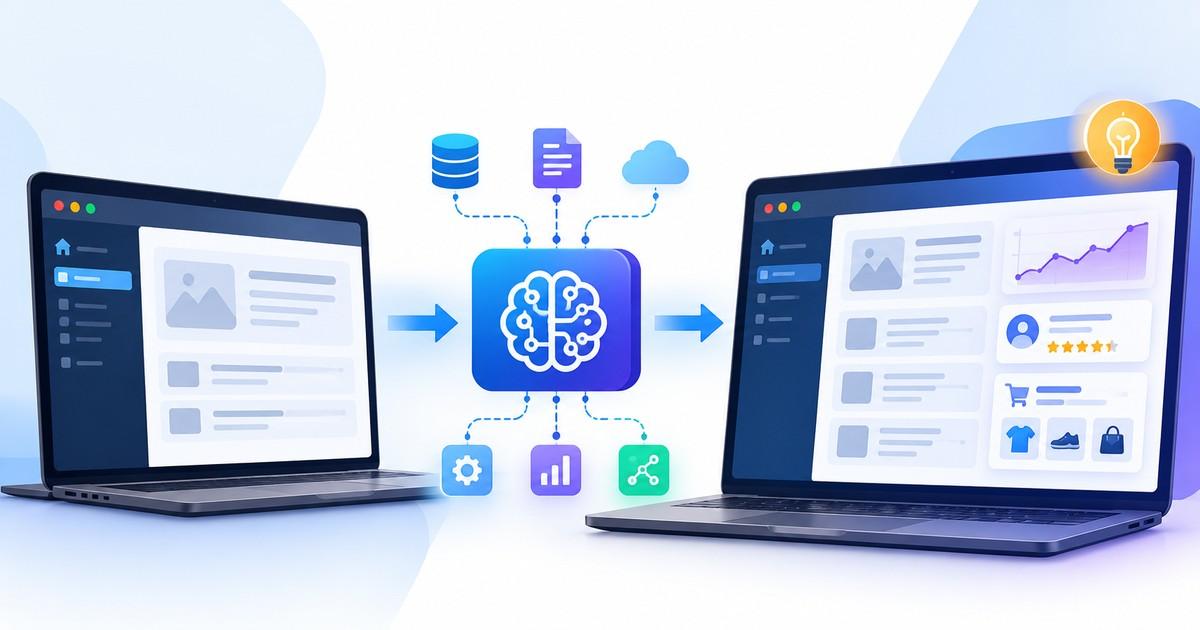
In 2026, however, the AI industry is beginning to move beyond simple assistance toward something far more autonomous. Modern AI systems are increasingly expected not only to suggest actions but also to reason, plan, coordinate tools, retrieve information, execute workflows, and operate independently over extended periods of time.
This shift is driving the rise of autonomous AI agents.
Unlike copilots, autonomous agents are designed to perform tasks with significantly less human intervention. They can break goals into subtasks, retrieve contextual information dynamically, coordinate across software systems, call APIs, manage workflows, and adapt behavior during runtime. Instead of assisting users step-by-step, agents increasingly aim to complete objectives independently.
This transition represents one of the biggest product shifts happening across the AI industry. Companies are now exploring how intelligent systems can evolve from passive assistants into active operational systems capable of autonomous execution.
AI Co-Pilots and Autonomous Agents Solve Different Problems
Although copilots and autonomous agents are often discussed together, they represent fundamentally different product philosophies.
AI copilots are designed around augmentation. Their goal is to improve human productivity by accelerating workflows while keeping people actively involved in decision-making. These systems generally operate reactively, responding to prompts, generating suggestions, and assisting within bounded interactions.
Autonomous agents operate differently. They are increasingly designed around delegation rather than assistance. Instead of waiting for continuous user guidance, agents pursue objectives independently by reasoning through tasks dynamically during runtime.
For example, a coding copilot may suggest functions, generate documentation, or recommend debugging improvements while a developer remains fully responsible for architecture and execution decisions. An autonomous engineering agent, however, may eventually manage entire workflows involving ticket resolution, infrastructure coordination, testing pipelines, deployment orchestration, and runtime monitoring with minimal human involvement.
This distinction is important because autonomous agents introduce far greater operational complexity. They require planning systems, memory architectures, retrieval pipelines, orchestration frameworks, runtime observability, and tool coordination layers capable of managing multi-step workflows continuously.
Another major difference involves accountability. Copilots are generally easier to deploy because humans remain closely involved throughout the workflow. Autonomous agents require significantly stronger reliability guarantees because they increasingly perform actions independently across operational systems.
As a result, many organizations still prefer copilot-style systems for sensitive enterprise environments where oversight and governance remain critical. At the same time, companies are investing aggressively in autonomous infrastructure because the long-term productivity potential is enormous.
The future of AI products will likely involve a spectrum between assistance and autonomy rather than a complete replacement of one model by the other.
Why Large Language Models Accelerated Agent Development
Large language models played a major role in enabling the rise of autonomous agents because they dramatically improved reasoning, contextual understanding, and natural language interaction capabilities.
Earlier automation systems were typically rigid and rule-based. Workflows required predefined logic paths that struggled with ambiguity or changing environments. LLMs introduced far more flexible reasoning systems capable of interpreting instructions, adapting dynamically, and coordinating across unstructured tasks.
This flexibility made it possible to build AI systems that behave more like operational coordinators rather than static automation scripts. Modern agents increasingly retrieve information, reason through goals, interact with APIs, use external tools, maintain contextual memory, and revise plans dynamically during runtime.
Another major advancement involves inference-time orchestration. Autonomous agents increasingly rely on runtime coordination between retrieval systems, planning frameworks, vector databases, memory systems, and external execution tools simultaneously. Intelligence is emerging not only from models themselves but from how runtime systems coordinate reasoning workflows operationally.
This shift aligns closely with broader trends explored in Inference-Time Scaling: Why Runtime Intelligence Matters in 2026, where intelligent behavior increasingly depends on orchestration quality and adaptive runtime coordination rather than model size alone.
Large language models therefore became the foundation for a new generation of AI products capable of operating with greater contextual flexibility and autonomous decision-making.
The Future of AI Products Will Likely Blend Assistance and Autonomy
One of the biggest misconceptions in the AI industry is the assumption that autonomous agents will completely replace copilots. In reality, most successful AI products will likely combine both approaches depending on workflow requirements, operational risk, and user trust.
Highly sensitive environments such as healthcare, finance, cybersecurity, and enterprise operations often require strong human oversight. In these cases, copilots may remain dominant because organizations need transparency and approval mechanisms for critical decisions.
At the same time, repetitive operational workflows with clear execution boundaries are increasingly becoming candidates for autonomous automation. Infrastructure monitoring, scheduling coordination, workflow routing, knowledge retrieval, and operational maintenance tasks are already moving toward agent-driven execution models.
The long-term future of AI products will therefore likely involve layered systems where copilots handle collaborative reasoning while autonomous agents manage bounded execution tasks independently.
This hybrid model represents the next major evolution in intelligent software architecture.
Key Takeaways
The first wave of AI products focused heavily on copilots designed to augment human productivity.
Autonomous agents are increasingly designed to execute workflows independently with reduced human oversight.
Copilots emphasize assistance while agents emphasize delegation and operational autonomy.
Large language models enabled agents by improving reasoning, contextual understanding, and runtime flexibility.
The future of AI products will likely combine both collaborative copilots and bounded autonomous systems together.
Section 2: How Autonomous Agents Are Reshaping Modern ML Product Design
Autonomous Agents Require a Completely Different Product Architecture
One of the biggest reasons autonomous agents represent such a major shift in AI product development is because they require fundamentally different system architectures compared to traditional copilots. Earlier AI copilots were largely designed around reactive interaction patterns. A user submits a prompt, the model generates a response, and the workflow ends after the interaction is complete.
Autonomous agents operate very differently. Instead of responding only to isolated prompts, agents increasingly manage long-running workflows involving planning, execution, memory management, retrieval coordination, and adaptive decision-making over extended runtime sessions.
This introduces enormous operational complexity. Modern autonomous systems often require orchestration frameworks capable of coordinating multiple tools, APIs, retrieval pipelines, vector databases, runtime memory layers, observability systems, and reasoning workflows simultaneously.
For example, a customer support copilot may simply suggest responses to a human operator. An autonomous support agent, however, may retrieve customer history, analyze support tickets, interact with internal databases, coordinate billing workflows, escalate edge cases, and resolve issues independently without continuous human supervision.
This difference changes how AI products are designed architecturally. Engineers building agents increasingly focus on workflow orchestration rather than isolated prompt-response generation. Systems now require memory persistence, runtime planning frameworks, adaptive execution layers, and monitoring pipelines capable of tracking behavior dynamically during operation.
Another major challenge involves state management. Copilots generally function through short-lived interactions where each session remains relatively isolated. Autonomous agents increasingly maintain persistent context across workflows, users, and operational environments. This means runtime systems must manage long-term memory and contextual continuity carefully.
Infrastructure requirements also become more demanding. Agents often operate continuously instead of episodically, requiring scalable orchestration systems capable of managing concurrent tasks, retries, fault recovery, and distributed execution environments.
The result is a major evolution in AI engineering itself. Building autonomous agents increasingly resembles designing distributed operational systems rather than simply integrating language models into existing applications.
Reliability and Observability Are Becoming Critical for Agentic Systems
One of the biggest reasons autonomous agents are difficult to deploy at scale is because reliability requirements increase dramatically when AI systems begin taking actions independently. Copilots generally operate with humans actively supervising outputs and approving execution decisions. Autonomous systems reduce that human oversight, making operational reliability significantly more important.
This creates entirely new engineering challenges. Agents must reason consistently, maintain workflow continuity, recover from runtime failures, avoid hallucinated execution paths, and interact safely with external systems continuously during operation.
Observability has therefore become one of the most important components of agent infrastructure. Companies increasingly build runtime telemetry systems capable of monitoring reasoning quality, execution consistency, tool usage behavior, retrieval accuracy, and orchestration reliability dynamically.
Another major concern involves error propagation. In traditional copilots, incorrect outputs may simply require user correction. In autonomous systems, mistakes can cascade across workflows because agents may execute actions, modify infrastructure, interact with APIs, or trigger downstream automation processes independently.
Engineers therefore design guardrails carefully around agent behavior. Many systems now include validation layers, approval checkpoints, policy enforcement frameworks, and runtime evaluation mechanisms specifically designed to reduce operational risk.
Memory systems introduce additional complexity. Agents maintaining persistent memory across long-running tasks must avoid contextual drift, corrupted state management, and inaccurate retrieval behavior. Poor memory coordination can degrade reasoning quality significantly over time.
Security is equally important. Autonomous agents increasingly interact with enterprise systems, operational databases, developer tooling, financial systems, and customer information environments. Organizations therefore require strong access controls, auditability mechanisms, runtime permissions, and policy enforcement layers before deploying agents broadly.
This operational complexity explains why many organizations are still deploying copilots more aggressively than fully autonomous systems today. Reliability standards for autonomous execution remain significantly harder to achieve.
The growing focus on runtime coordination and operational safety closely aligns with broader infrastructure trends explored in AI Infrastructure in 2026: GPUs, TPUs, and Distributed Training Explained, where scalable intelligent systems increasingly depend on sophisticated distributed runtime infrastructure.
The future of autonomous AI products will depend heavily on solving reliability and observability challenges at scale.
Enterprise Adoption Is Driving the Shift Toward Agentic AI
One of the biggest reasons autonomous agents are gaining momentum is because enterprise organizations increasingly want AI systems capable of executing operational workflows rather than only generating content.
Earlier AI adoption focused heavily on productivity enhancement through summarization, search, content generation, and conversational assistance. Enterprises are now exploring how AI systems can automate operational coordination across internal workflows, infrastructure systems, and business processes directly.
Autonomous agents are particularly attractive for repetitive operational environments involving scheduling, workflow routing, infrastructure monitoring, customer operations, internal knowledge retrieval, and process automation. These workflows often follow semi-structured reasoning patterns that agents can increasingly manage effectively.
Another important factor is labor scalability. Companies increasingly face pressure to improve operational efficiency while managing growing workflow complexity. Autonomous systems offer the potential to automate portions of operational coordination previously requiring continuous human involvement.
Developer tooling is one of the fastest-growing areas for agent adoption. AI engineering agents increasingly assist with infrastructure management, CI/CD coordination, testing workflows, runtime debugging, deployment orchestration, and operational monitoring. These systems operate closer to engineering infrastructure itself rather than functioning purely as conversational interfaces.
Enterprise adoption is also accelerating because orchestration frameworks are improving rapidly. Modern agent systems increasingly combine retrieval pipelines, memory architectures, runtime planning systems, API coordination, and evaluation frameworks into more stable operational environments.
However, most enterprises still deploy agents cautiously. Highly regulated environments such as healthcare, finance, and cybersecurity require stronger governance mechanisms before fully autonomous execution becomes acceptable operationally.
This means the current enterprise transition is gradual rather than absolute. Many organizations deploy layered workflows where agents perform bounded operational tasks while humans maintain oversight for sensitive decisions.
AI Products Are Moving Toward Hybrid Intelligence Systems
One of the most important long-term trends shaping AI products is the emergence of hybrid intelligence architectures combining copilots and autonomous agents together.
Instead of fully replacing human workflows, many successful systems increasingly blend collaboration and autonomy dynamically depending on context. High-risk decisions may involve copilot-style human supervision, while repetitive operational workflows become increasingly automated through bounded agent systems.
This hybrid approach is likely to dominate the near future because it balances productivity gains with operational trust and governance requirements.
The next generation of ML products will therefore likely involve intelligent systems capable of shifting fluidly between assistance and autonomy depending on workflow complexity, reliability requirements, and organizational constraints.
Key Takeaways
Autonomous agents require significantly more complex architectures than traditional AI copilots.
Runtime orchestration, memory systems, observability, and workflow coordination are central to agentic AI systems.
Reliability and security become critical because agents increasingly execute workflows independently.
Enterprise adoption is accelerating because organizations want operational automation rather than simple content generation alone.
The future of AI products will likely involve hybrid systems combining collaborative copilots with bounded autonomous execution.
Section 3: Why AI Co-Pilots and Autonomous Agents Need Completely Different Infrastructure
Co-Pilots Prioritize Interaction While Agents Prioritize Execution
One of the most important differences between AI copilots and autonomous agents is the type of infrastructure required to support them effectively. Although both systems may use similar underlying language models, their operational behavior is fundamentally different.
AI copilots are primarily interaction-driven systems. Their infrastructure is optimized for responsiveness, contextual understanding, conversational quality, and user collaboration. Most copilots operate through relatively short-lived sessions where the user remains actively involved throughout the workflow.
Autonomous agents, however, are execution-driven systems. Their infrastructure must support long-running tasks, persistent memory, workflow orchestration, runtime planning, external tool coordination, and adaptive decision-making over extended periods of time.
This difference changes everything about how systems are architected.
For copilots, the primary engineering concerns often involve inference latency, prompt optimization, retrieval quality, and conversational consistency. Systems are designed to provide fast and contextually useful responses while humans remain responsible for oversight and execution decisions.
Autonomous agents require far more operational infrastructure. They increasingly behave like distributed systems capable of coordinating APIs, monitoring workflows, retrieving contextual information, executing tasks, managing retries, and adapting dynamically when environments change unexpectedly.
For example, a sales copilot may help draft emails or summarize customer interactions for a human representative. An autonomous sales agent may independently manage lead qualification workflows, schedule meetings, update CRM systems, analyze customer signals, and trigger operational actions continuously without human prompting.
This means agent infrastructure increasingly resembles operational middleware rather than conversational software alone. Runtime orchestration becomes one of the most important engineering layers because systems must coordinate reasoning and execution simultaneously.
Another major difference involves infrastructure persistence. Copilot interactions are often session-based and temporary. Agents increasingly require persistent memory systems capable of maintaining contextual continuity across workflows, users, and operational environments.
This shift is pushing AI engineering closer to distributed systems architecture than traditional application development.
Memory and Retrieval Systems Are Becoming Central to Agentic AI
One of the defining characteristics of autonomous agents is that they increasingly depend on persistent memory and dynamic retrieval systems during runtime. Earlier AI copilots generally operated through short contextual windows tied to active conversations. Agents require much deeper contextual continuity because they often manage tasks over long operational periods.
Memory systems therefore become foundational infrastructure components for autonomous AI architectures. Agents increasingly store contextual information involving prior actions, workflow states, operational history, user preferences, execution outcomes, and environmental signals continuously during runtime.
This introduces major engineering challenges. Infrastructure teams must decide how memory is stored, retrieved, prioritized, updated, and synchronized across distributed runtime environments.
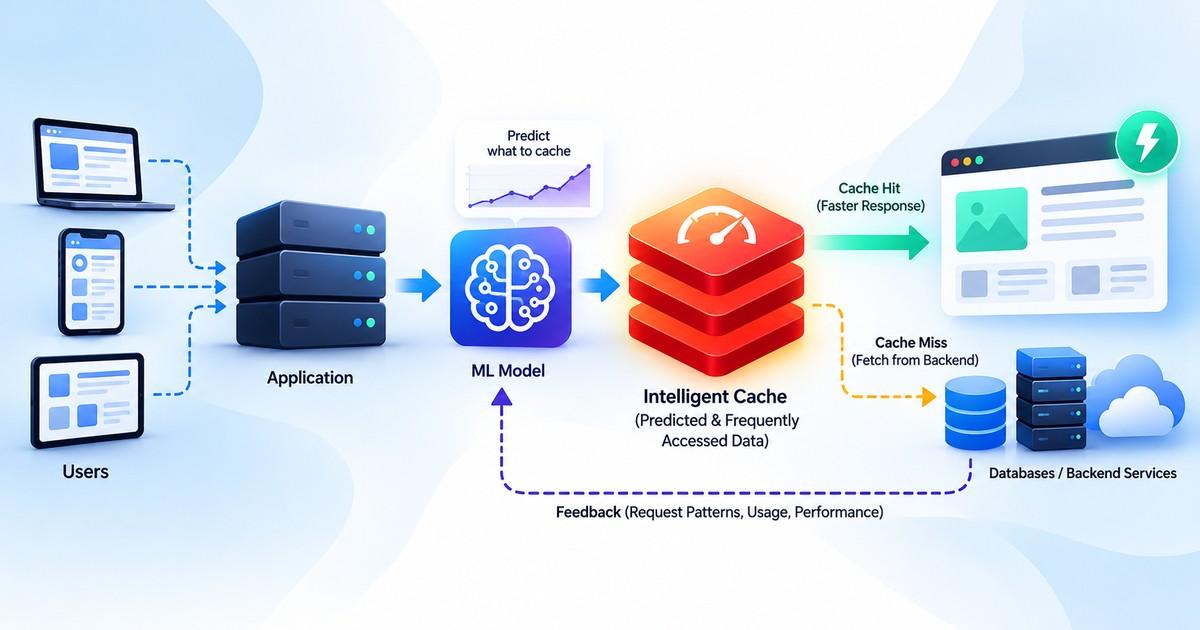
Vector databases have become especially important because agents rely heavily on semantic retrieval during execution workflows. Modern agents dynamically retrieve contextual information from enterprise systems, operational databases, APIs, documentation repositories, and prior reasoning states before making decisions.
Retrieval quality directly affects agent reliability. Poor contextual retrieval can lead to inaccurate reasoning, workflow drift, or failed execution paths. Engineers therefore spend increasing effort optimizing retrieval ranking, memory persistence, context filtering, and semantic search pipelines.
Another major challenge involves memory scaling. As agents operate continuously across multiple workflows, contextual storage requirements grow rapidly. Infrastructure systems must balance long-term memory persistence with retrieval efficiency and runtime latency constraints.
This complexity explains why many organizations increasingly treat agent infrastructure as a dedicated engineering discipline rather than simply an extension of chatbot development.
The growing importance of retrieval orchestration closely aligns with broader infrastructure trends explored in AI Infrastructure Engineering: The Most Important Career Shift in Software Engineering, where runtime coordination and intelligent infrastructure design are becoming central to modern AI systems.
The future of autonomous AI depends heavily on scalable memory and retrieval architectures capable of supporting adaptive runtime intelligence.
Runtime Orchestration Is Becoming the Core Layer of AI Products
As AI systems become more autonomous, runtime orchestration is emerging as one of the most important infrastructure layers in modern ML products. Earlier AI applications often relied on relatively simple request-response workflows. Agents increasingly require multi-step runtime coordination across numerous systems simultaneously.
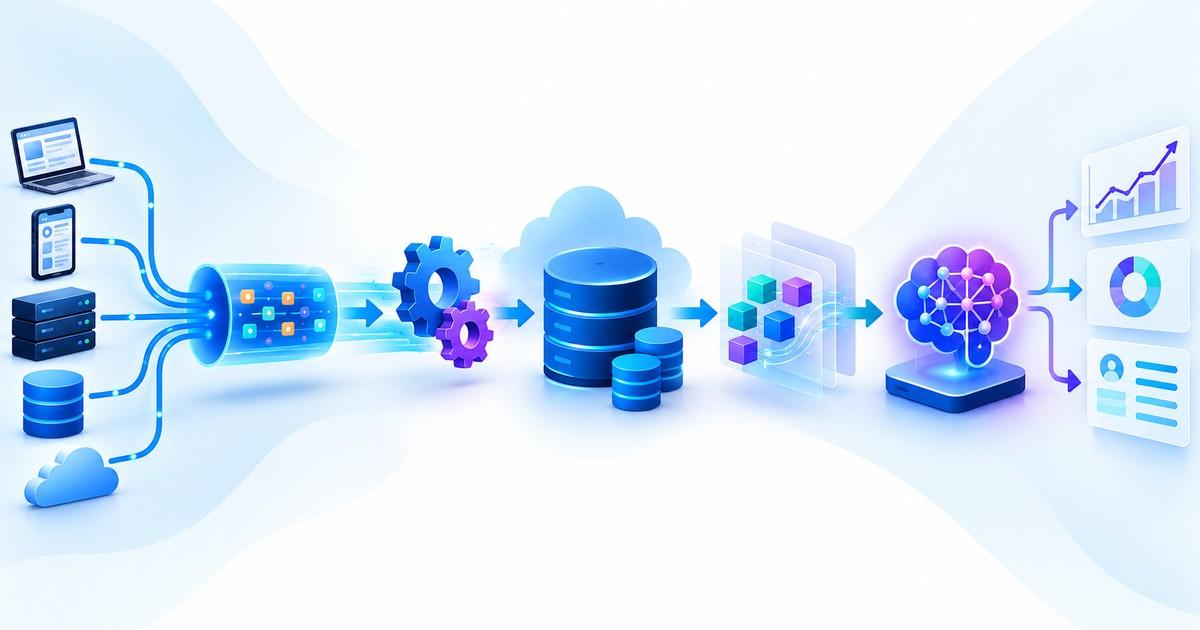
Modern agent frameworks frequently involve planning engines, tool execution systems, retrieval pipelines, observability frameworks, memory architectures, and external APIs operating together continuously during task execution.
This orchestration layer determines how agents prioritize tasks, retrieve information, coordinate workflows, recover from failures, and adapt behavior dynamically during runtime.
Another major challenge involves concurrency management. Enterprise agents increasingly handle multiple workflows simultaneously across distributed infrastructure environments. Runtime systems must therefore coordinate scheduling, execution isolation, resource allocation, and operational consistency carefully.
Fault tolerance becomes equally important. Autonomous systems frequently encounter incomplete information, failed API calls, network interruptions, or changing runtime environments. Engineers increasingly build recovery frameworks capable of retrying workflows, escalating failures, or revising execution plans dynamically.
Observability infrastructure is also becoming essential because agents behave probabilistically rather than deterministically. Runtime telemetry systems monitor reasoning quality, tool usage behavior, execution consistency, workflow latency, and operational anomalies continuously.
Security concerns are growing rapidly as well. Autonomous systems increasingly interact with sensitive enterprise infrastructure, developer environments, operational databases, and financial systems. Organizations therefore require strong permission management, auditability controls, policy enforcement systems, and runtime governance frameworks before deploying agents broadly.
This operational complexity demonstrates why autonomous AI products are evolving into sophisticated distributed systems rather than simple conversational interfaces.
The Future of ML Products Will Be Infrastructure-Heavy
One of the clearest long-term trends in AI product development is that infrastructure complexity will continue increasing as systems become more autonomous. The future of ML products will likely depend less on isolated model capability and more on runtime orchestration quality, retrieval intelligence, observability systems, and distributed execution infrastructure.
Organizations capable of building scalable operational ecosystems for intelligent agents will likely gain major advantages as AI products move from assistance toward autonomous execution.
Key Takeaways
AI copilots and autonomous agents require fundamentally different infrastructure architectures.
Memory systems and retrieval pipelines are becoming central to reliable autonomous AI operation.
Runtime orchestration increasingly determines how agents reason, execute workflows, and recover from failures.
Observability, security, and fault tolerance are critical for scalable agentic systems.
The future of ML products will likely become increasingly infrastructure-heavy as autonomy expands across intelligent systems.
Section 4: Where AI Products Are Heading Over the Next Five Years
Autonomous Agents Will Expand Gradually, Not Instantly
One of the biggest misconceptions surrounding autonomous AI is the belief that agents will suddenly replace copilots and operate independently across every workflow. In reality, the transition toward autonomy will likely happen gradually and unevenly across industries.
Highly regulated environments such as healthcare, finance, cybersecurity, and enterprise operations still require strong human oversight because operational mistakes carry significant financial, legal, and reputational risk. In these environments, copilots will likely remain dominant for many workflows because organizations need humans involved in validation and final decision-making.
At the same time, repetitive operational workflows are increasingly becoming candidates for bounded autonomy. Tasks involving scheduling coordination, infrastructure monitoring, workflow routing, internal documentation management, ticket triaging, and operational automation are already moving toward agent-driven execution models.
This means the future of AI products will likely involve progressive layers of autonomy rather than a sudden replacement of collaborative systems. Companies will continue deploying copilots where trust, transparency, and oversight are critical while expanding autonomous execution gradually in areas where operational boundaries are well defined.
Another important factor is user trust. Many organizations are still uncomfortable allowing AI systems to make high-impact decisions independently without supervision. Building confidence in autonomous execution requires significant improvements in observability, reliability, auditability, and runtime governance.
As infrastructure matures, agents will likely gain more operational responsibility incrementally. The evolution will resemble how cloud automation gradually expanded over time rather than an overnight transformation.
The next generation of AI systems will therefore likely operate along a continuum between assistance and autonomy rather than existing as purely one or the other.
Multi-Agent Systems Will Become Increasingly Common
One of the most important trends shaping the future of AI products is the rise of multi-agent architectures. Instead of relying on a single monolithic agent responsible for every task, organizations increasingly design ecosystems where multiple specialized agents coordinate together dynamically.
This architecture mirrors how modern distributed systems already operate across cloud infrastructure environments. Different services handle different responsibilities while orchestration frameworks coordinate workflows between them. AI products are beginning to evolve in a similar direction.
For example, future enterprise systems may involve separate agents responsible for retrieval operations, planning workflows, compliance validation, infrastructure monitoring, customer communication, and operational execution simultaneously. These systems will increasingly collaborate through runtime orchestration layers rather than functioning independently.
One major reason multi-agent systems are becoming attractive is scalability. Specialized agents often perform better than generalized agents because they operate within bounded contexts optimized for specific workflows. This improves reasoning quality while reducing infrastructure complexity.
Another advantage involves fault isolation. If one agent fails during execution, orchestration frameworks can reroute tasks or escalate workflows dynamically without collapsing the entire system. This creates more resilient operational architectures for enterprise environments.
Communication protocols between agents are also becoming a major engineering focus area. Runtime coordination increasingly involves shared memory systems, retrieval pipelines, workflow state management, and inter-agent reasoning frameworks operating continuously during execution.
This evolution is transforming AI engineering itself. Product teams increasingly build orchestration infrastructure rather than standalone conversational systems. Runtime coordination, distributed execution, memory persistence, and observability are becoming central to AI product architecture.
The growing importance of distributed intelligent systems closely aligns with trends explored in AI Infrastructure in 2026: GPUs, TPUs, and Distributed Training Explained, where large-scale AI increasingly depends on sophisticated distributed infrastructure coordination.
The future of AI products will likely resemble intelligent operational ecosystems rather than isolated assistants.
Enterprise AI Will Prioritize Governance and Reliability
As AI systems become more autonomous, governance and operational reliability will become some of the most important competitive differentiators across the industry.
Earlier AI adoption cycles focused heavily on capability demonstrations and productivity gains. In 2026, enterprises increasingly prioritize whether intelligent systems can operate safely, consistently, and transparently within production environments.
This shift is especially important for autonomous agents because execution risk increases significantly once systems begin interacting independently with operational infrastructure. Enterprises increasingly require strong permission controls, auditability frameworks, policy enforcement systems, and runtime monitoring before deploying agents broadly.
Observability infrastructure is therefore becoming central to enterprise AI adoption. Organizations need visibility into how agents reason, retrieve information, coordinate workflows, and make decisions during runtime execution.
Another major concern involves compliance and regulatory oversight. Industries such as healthcare, finance, legal services, and cybersecurity often require explainability and traceability for operational decisions. AI products that cannot provide strong governance controls may struggle to scale in highly regulated environments.
This means successful AI companies will increasingly compete not only on model intelligence but also on operational maturity. Runtime observability, workflow reliability, security architecture, and governance infrastructure will likely become defining characteristics of enterprise AI platforms.
The future winners in AI may therefore be organizations that build the most trustworthy operational ecosystems rather than simply the most powerful models.
Key Takeaways
Autonomous agents will likely expand gradually alongside copilots rather than replacing them immediately.
Multi-agent architectures are becoming increasingly important for scalable intelligent systems.
Governance, observability, and operational reliability will become major competitive differentiators in enterprise AI.
Future AI products will increasingly function as intelligent operational platforms rather than simple assistants.
The next generation of ML systems will depend heavily on orchestration, runtime coordination, and distributed intelligent infrastructure.
Conclusion
The evolution of AI products in 2026 is no longer centered only around chat interfaces or content generation systems. The industry is rapidly moving toward intelligent operational software powered by AI copilots, autonomous agents, runtime orchestration frameworks, retrieval systems, and distributed execution infrastructure. This transition represents one of the biggest architectural shifts in the history of machine learning products.
AI copilots became the first major commercial success of the generative AI era because they improved productivity while keeping humans directly involved in workflows. These systems accelerated coding, search, documentation, customer support, and enterprise operations by acting as collaborative assistants rather than independent actors. Their success demonstrated that AI could integrate naturally into existing software environments without requiring organizations to fully trust autonomous execution immediately.
Autonomous agents represent the next phase of this evolution. Instead of merely assisting users, agents increasingly aim to execute workflows independently by coordinating APIs, retrieval systems, memory architectures, planning frameworks, and operational tools dynamically during runtime. This introduces a much higher level of operational complexity because AI systems begin behaving more like distributed execution platforms than conversational software.
One of the biggest lessons emerging from this transition is that infrastructure matters as much as model capability. Successful autonomous systems depend heavily on runtime orchestration, observability, memory management, retrieval quality, fault tolerance, and governance frameworks. The future of AI products will likely be defined not only by model intelligence but also by operational reliability and infrastructure maturity.
Another major trend is the rise of hybrid intelligence systems. Most organizations are not replacing humans entirely with autonomous agents. Instead, companies increasingly deploy layered architectures where copilots assist with collaborative reasoning while bounded agents automate repetitive operational tasks under controlled environments.
Enterprise adoption is also reshaping AI priorities significantly. Businesses increasingly care about governance, explainability, observability, and runtime safety rather than pure model experimentation alone. Autonomous systems interacting with infrastructure, customer data, financial systems, or enterprise workflows require strong auditability and operational controls before organizations can trust them broadly.
Multi-agent systems are becoming increasingly important as well. Future AI products will likely involve specialized agents coordinating together through orchestration layers rather than relying on single monolithic systems. This mirrors the broader evolution of distributed systems architecture across cloud computing itself.
The long-term direction of AI products is therefore becoming clearer. Intelligent systems are evolving from passive assistants into adaptive operational platforms capable of coordinating workflows, retrieving contextual knowledge, executing bounded tasks, and continuously adapting during runtime.
The future of machine learning products will likely belong to organizations capable of combining strong model intelligence with scalable infrastructure, reliable orchestration, and trustworthy operational execution.
Frequently Asked Questions
1. What is an AI copilot?
An AI copilot is an intelligent assistant designed to help users complete tasks faster while keeping humans actively involved in decision-making and execution.
2. What is an autonomous AI agent?
An autonomous AI agent is a system capable of planning, reasoning, retrieving information, and executing workflows independently with reduced human supervision.
3. How are copilots different from autonomous agents?
Copilots focus on assistance and collaboration, while autonomous agents focus on delegation and independent workflow execution.
4. Why are autonomous agents more difficult to build?
Agents require complex runtime orchestration, memory systems, retrieval coordination, observability, fault tolerance, and security infrastructure.
5. What role do large language models play in agent systems?
Large language models provide reasoning, contextual understanding, planning flexibility, and natural language interaction capabilities that enable modern agent behavior.
6. Why is runtime orchestration important for autonomous AI?
Runtime orchestration coordinates retrieval pipelines, planning systems, APIs, memory layers, and execution workflows during long-running operational tasks.
7. What are multi-agent systems?
Multi-agent systems involve multiple specialized AI agents coordinating together dynamically through orchestration frameworks to complete workflows.
8. Why are memory systems important for agents?
Agents often manage long-running tasks and require persistent memory to maintain contextual continuity across workflows and runtime environments.
9. What are vector databases used for in agentic AI?
Vector databases support semantic retrieval by storing embeddings used to retrieve relevant contextual information dynamically during execution workflows.
10. Why is observability critical for autonomous systems?
Observability helps monitor reasoning quality, execution consistency, retrieval behavior, runtime failures, and workflow reliability continuously.
11. Are autonomous agents replacing human workers completely?
No. Most organizations are deploying hybrid systems where humans remain involved in oversight, validation, and high-risk decision-making processes.
12. Why do enterprises adopt copilots faster than agents?
Copilots are easier to govern because humans remain directly involved, reducing operational risk and improving trust in sensitive environments.
13. What industries are investing heavily in autonomous AI?
Technology companies, enterprise SaaS platforms, customer operations systems, developer tooling ecosystems, and workflow automation providers are investing aggressively.
14. What engineering skills are important for building AI agents?
Distributed systems knowledge, runtime orchestration, observability engineering, retrieval architecture, infrastructure scalability, and AI systems design are highly valuable.
15. What does the future of AI products look like?
The future points toward hybrid intelligent systems combining copilots, autonomous agents, distributed orchestration, runtime memory, and scalable operational infrastructure.