Section 1: Understanding Database Index Selection and the Foundations of ML-Powered Index Tuning
Why Database Index Selection Matters for Query Performance
Database indexes provide an efficient mechanism for locating records without scanning an entire table. Without a suitable index, a database may perform a sequential scan, examining a large number of rows to identify records satisfying a query condition. As tables grow into millions or billions of records, this operation can consume significant CPU resources, memory bandwidth, and disk I/O.
Consider an e-commerce application containing a table with millions of customer orders. The application frequently executes queries that retrieve orders belonging to a particular customer, filter transactions by date, and calculate the total purchase value for selected customers. If the database has no suitable indexes, these queries may repeatedly scan large portions of the underlying table.
A carefully selected index can significantly reduce the number of records examined. For example, an index on customer_id may accelerate customer-specific lookups, while a composite index involving customer_id and order_date may support queries that filter by customer and sort or filter by order date. The effectiveness of each index depends on the actual SQL predicates, ordering requirements, data distribution, and database execution plan.
Index selection becomes more difficult when a database supports many different query patterns. An index that benefits a frequently executed analytical query may be less useful for a transactional workload. Similarly, an index that reduces read latency may increase write latency because every relevant insertion, deletion, or modification must also update the index.
Indexes also consume storage and memory resources. Large databases may contain numerous candidate indexes, but maintaining all of them is rarely desirable. Some indexes may be redundant, rarely used, or provide little improvement compared with their maintenance cost.
Consequently, database index selection involves balancing multiple objectives rather than simply minimizing the execution time of one SQL statement. Engineers must identify indexes that improve the overall workload while preserving acceptable storage consumption, write throughput, and operational stability.
Understanding Traditional Database Index Types and Their Use Cases
Different index structures support different query patterns. Choosing an appropriate index requires understanding how the database organizes records and how the query optimizer can use that organization during execution.
B-tree indexes are widely used because they support equality comparisons, range conditions, and ordered retrieval. They are particularly useful for queries involving conditions such as WHERE customer_id = 1001, date ranges, and sorting operations. B-tree indexes are supported by major relational database systems, including PostgreSQL and MySQL, although implementation details and optimizer behavior differ.
Hash indexes use hash functions to organize keys into buckets. They are primarily suited to equality-based lookups and generally do not provide the ordered traversal required for efficient range queries. Their suitability depends on the database implementation and the workload.
Composite indexes contain multiple columns and can support queries involving combinations of predicates. For example, a composite index on (customer_id, order_date) may accelerate queries filtering by customer and restricting the date range. Column order matters because the leading columns influence which query predicates can efficiently use the index.
Covering indexes include the columns required by a query, potentially allowing the database to satisfy the request without retrieving additional data from the underlying table. In PostgreSQL, INCLUDE columns can be used to store additional values in an index, while MySQL supports covering access through suitable secondary index definitions.
Partial indexes contain entries only for rows satisfying a specified condition, while expression indexes store values derived from expressions. These can be particularly useful when queries repeatedly filter a specific subset of records or apply functions to indexed columns.
For example, a PostgreSQL partial index might be created as follows:
CREATE INDEX idx_active_orders
ON orders (customer_id, order_date)
WHERE status = 'active';
This index may be useful when queries frequently retrieve active orders for individual customers. However, its benefit depends on predicate matching, data distribution, and the query optimizer's ability to recognize the applicable index.
The important point is that index types cannot be selected independently of workload characteristics. An ML-powered index advisor must understand the relationship between SQL operations, index structures, and the database engine's actual execution behavior.
Why Machine Learning Is Changing Automated Database Index Selection
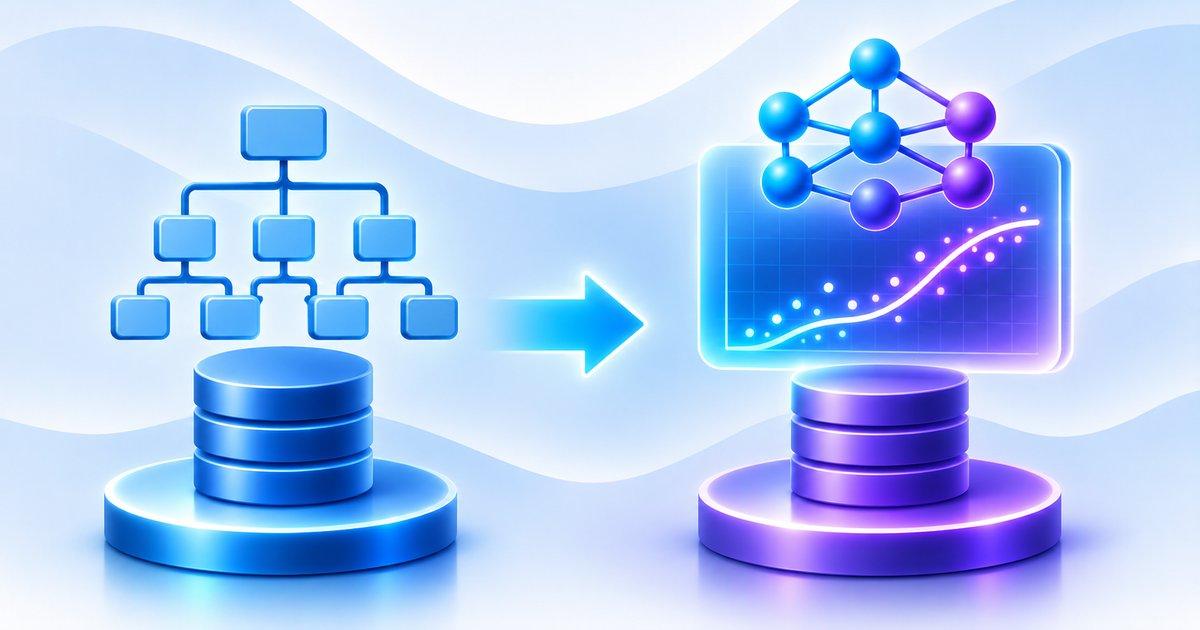
The number of possible index configurations increases rapidly as database schemas and query workloads become more complex. A database with multiple tables, several candidate columns, composite index possibilities, and different index types can produce an enormous search space. Evaluating every possible combination through actual query execution is usually impractical.
Machine learning helps address this challenge by learning which query and database characteristics are associated with useful indexes. Models can analyze SQL predicates, join conditions, sorting requirements, column statistics, historical query latency, and existing index configurations to estimate the benefit of candidate indexes.
Consider a database containing customer, orders, and payment tables. A workload may include queries joining these tables using customer identifiers, filtering orders by date, and aggregating payment amounts. A learned index advisor can analyze these recurring patterns and identify candidate indexes that support frequently executed operations.
A model may estimate that a composite index on (customer_id, order_date) provides greater workload-level benefit than separate indexes on the two columns. It may also recognize that an index on a rarely accessed reporting column offers little improvement relative to its storage and maintenance cost.
The key advantage is that machine learning can learn from actual workload behavior instead of relying only on predefined indexing rules. Supervised learning can predict execution latency or index benefit, while reinforcement learning and contextual bandit methods can explore alternative configurations and use execution feedback to improve recommendations.
However, machine learning should complement the database optimizer rather than independently replace its responsibilities. The optimizer understands database-specific execution rules, while ML models can improve candidate prioritization, benefit estimation, and adaptation to changing workloads.
For engineers interested in the relationship between learned data structures and conventional database indexing, "Learned Index Structures: Replacing Traditional Database Indexes With Machine Learning" provides a related perspective on how machine learning can influence database retrieval architecture.
Key Takeaway
Database index selection is a workload-level optimization problem involving query performance, storage consumption, write overhead, and interactions between different indexes. Traditional indexes such as B-trees, hash indexes, composite indexes, and partial indexes support different query patterns, while database optimizers estimate which structures may improve execution. Machine learning extends traditional index tuning by learning from query characteristics and historical performance measurements, helping identify promising configurations in search spaces that are too large to explore exhaustively. The goal is not to replace database optimization but to make index recommendations more accurate and adaptive.
Section 2: Applying ML-Powered Index Selection to Real-World Database Workloads
Intelligent Index Selection for Transactional Databases and High-Volume Applications
Transactional databases support applications where large numbers of users execute concurrent reads and writes. E-commerce platforms, banking applications, booking systems, and enterprise applications frequently depend on low-latency database operations.
In these environments, index selection must balance read performance with write throughput. A transaction table may receive thousands of new records every second, while applications continuously retrieve records using customer identifiers, transaction status, and timestamps.
Consider a payment application with a query that retrieves recent transactions for a particular customer:
SELECT transaction_id, amount, status
FROM transactions
WHERE customer_id = 2050
AND created_at >= CURRENT_DATE - INTERVAL '7 days'
ORDER BY created_at DESC;
An index on (customer_id, created_at) may support the filtering and ordering requirements. However, whether it provides the best performance depends on the distribution of transactions, table size, query frequency, and the database's execution plan.
An ML-based index advisor can analyze historical executions and identify recurring query patterns. It can estimate how much the candidate index may reduce execution time and compare that benefit with the cost of maintaining the additional index during transaction inserts and updates.
The system can also identify queries that are already performing efficiently. Creating another index for a query that frequently uses an existing covering index may produce little additional benefit while increasing storage and maintenance overhead.
For high-volume transactional systems, recommendations should prioritize the complete workload rather than individual query latency. A candidate index that accelerates one SELECT statement but significantly slows frequently executed INSERT operations may reduce overall system throughput.
ML-powered index selection is therefore most valuable when it understands the interaction between read and write workloads. The objective is to improve application-level database performance while maintaining predictable transactional behavior.
Workload-Aware Index Selection for Analytical Databases and Data Warehouses
Analytical databases process large volumes of data for reporting, aggregation, business intelligence, and historical analysis. Unlike transactional systems, these workloads frequently involve complex joins, large scans, grouping operations, and queries across multiple dimensions.
A data warehouse may contain sales, customer, product, inventory, and transaction tables. Analysts may execute queries that filter records by region, aggregate sales by product category, and sort results by time period. Index selection must therefore consider relationships between filtering, joining, grouping, and sorting operations.
An ML-powered index advisor can analyze the workload over a representative time window and identify which query patterns contribute most to total execution cost. It can then generate candidate indexes for frequently accessed columns and estimate their expected contribution to workload improvement.
For example, an index supporting a frequently executed join between sales and customer tables may provide greater overall benefit than an index that accelerates a single rarely executed report. Workload weighting helps the model prioritize recommendations according to their cumulative impact.
Analytical systems may also use columnar storage, partitioning, compression, and zone maps. In these environments, traditional row-store index assumptions do not necessarily apply. A recommendation system must understand the storage architecture and avoid proposing indexes that are unsupported or unlikely to improve the actual execution path.
Index selection should also account for reporting schedules. A workload executed during a nightly analytics window may have different optimization priorities from one supporting real-time dashboards. Database administrators can use these workload patterns to determine whether certain indexes should be retained, created, or removed.
The broader advantage is that machine learning can connect historical workload behavior with physical database design decisions, helping engineers optimize complex analytical environments without manually reviewing every SQL statement.
Combining Machine Learning With Query Optimizers, Execution Plans, and Automated Tuning
The strongest architecture for ML-powered index selection combines learned predictions with the database engine's existing query optimizer. The optimizer provides knowledge about physical execution strategies, while machine learning contributes additional estimates based on historical workload behavior.
Consider a candidate index proposed for a frequently executed query. The ML model predicts that the index will reduce execution time by 40%. Before implementation, the system can use the database optimizer's what-if capabilities to evaluate how the proposed index changes the estimated execution plan.
The system can then compare the original and hypothetical plans. If the new plan introduces a more efficient access path, reduces expensive sorting operations, or improves join execution, the candidate may be considered promising. However, estimated cost improvements must still be validated against actual execution measurements because optimizer estimates can be inaccurate.
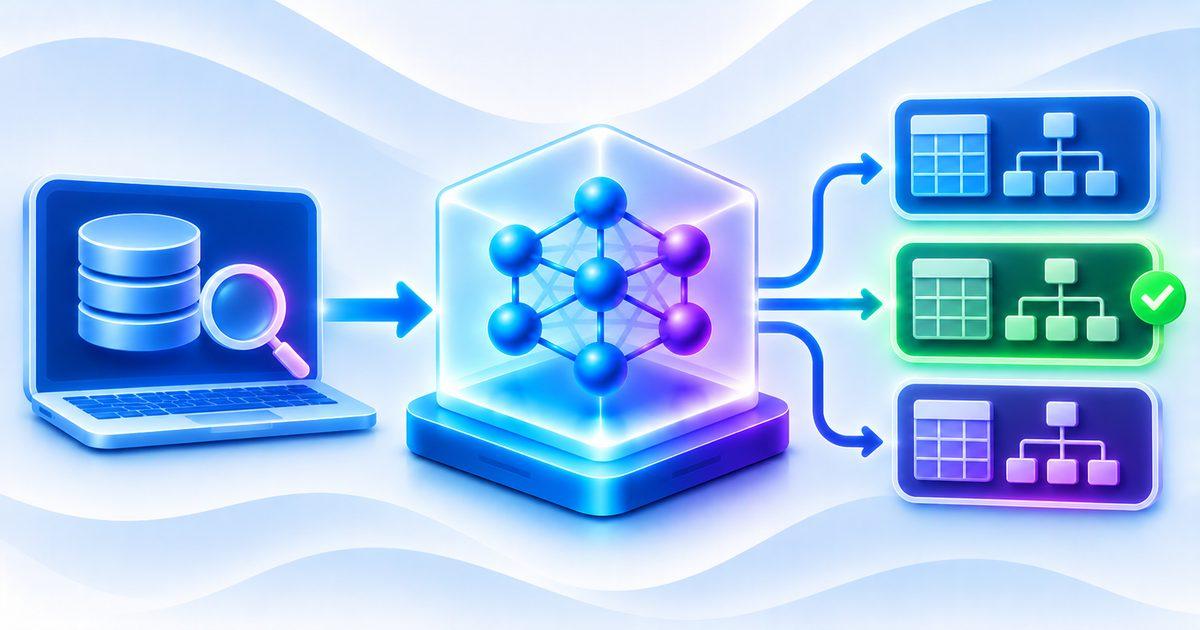
A practical workflow can include SQL workload collection, query normalization, candidate index generation, learned benefit estimation, optimizer-based what-if analysis, configuration selection, controlled index creation, and post-deployment performance monitoring.
Query optimizers may also help identify interactions between indexes. Two indexes that provide individual benefits may be redundant when deployed together, while another combination may provide significantly better workload performance. The recommendation system must therefore evaluate index configurations rather than assuming that individual candidate benefits can simply be added.
Recent research also highlights the importance of detecting query performance regressions caused by index tuning. A newly created index can change the optimizer's plan selection and sometimes make a query slower. Structural analysis of execution-plan changes can help identify these risks before or after deployment.
The overall architecture should preserve the optimizer as the authority responsible for generating executable query plans. Machine learning should improve the quality of index recommendations and candidate selection without bypassing database correctness and execution mechanisms.
For engineers exploring how database systems use learned models beyond index selection, "Learned Query Optimization: How Machine Learning Is Changing Database Query Execution" provides a related perspective on integrating learned intelligence into query optimization workflows.
Key Takeaway
ML-powered index selection can improve transactional databases, analytical platforms, cloud databases, and distributed systems by identifying indexes that match actual workload behavior. The most useful recommendations consider query frequency, execution cost, storage requirements, write overhead, and interactions between multiple indexes. Combining learned benefit estimation with database optimizer analysis and controlled execution provides a stronger approach than relying exclusively on model predictions. Production systems must evaluate the complete workload and verify that new indexes do not introduce regressions elsewhere.
Section 3: Engineering, Benchmarking, and Deploying Reliable ML-Based Database Index Selection Systems
Building Training Datasets and Benchmarking Index Recommendation Models
A reliable index recommendation model requires representative training data containing query workloads, database metadata, index configurations, and observed performance outcomes. Engineers can collect this information from query logs, database monitoring systems, execution plans, workload replay tools, and controlled benchmark environments.
Each training example should describe the database state, SQL query or workload context, candidate index configuration, and resulting performance measurement. Depending on the modeling objective, the target may represent query latency, total workload execution time, estimated index benefit, or the relative ranking of alternative configurations.
Benchmark datasets should include different schema structures and workload characteristics. TPC-H and TPC-DS are useful analytical benchmarks, while TPC-C represents transactional database workloads. Additional real-world traces can help evaluate whether a model generalizes beyond synthetic benchmark environments.
Training and testing must be separated carefully. If queries from the same workload or nearly identical execution patterns appear in both training and test sets, the model may appear more accurate than it actually is. Engineers should evaluate generalization across workload windows, schemas, database sizes, and query templates.
Model evaluation can use regression metrics such as Mean Absolute Error and Root Mean Squared Error when predicting execution latency. Ranking metrics can evaluate whether the model correctly prioritizes beneficial indexes, while classification metrics can measure how accurately it identifies useful and unhelpful candidates.
However, prediction accuracy alone is insufficient. The system must also be evaluated using workload-level execution time, storage consumption, index creation time, write throughput, and the number of query regressions after deployment.
A useful benchmark compares the ML-based advisor with traditional index advisors, optimizer-based what-if evaluation, and manual tuning strategies. The objective is to establish whether machine learning improves actual database outcomes rather than simply producing accurate predictions on historical data.
Designing an End-to-End ML Architecture for Automated Index Selection
A production ML-based index selection system requires several interconnected components. The architecture begins with workload monitoring, which collects SQL statements, execution statistics, query plans, and database configuration information.
A preprocessing layer normalizes SQL statements and extracts relevant query features. It also retrieves schema metadata, column statistics, existing index definitions, and storage characteristics. The resulting representations are passed to the candidate-generation component.
Candidate generation identifies potentially useful index structures based on query predicates, joins, sorting requirements, grouping operations, and available database capabilities. It should avoid generating every possible index because the search space can become extremely large.
The ML prediction service estimates the benefit of each candidate using trained regression, classification, or ranking models. A configuration-selection component then evaluates combinations of indexes while considering storage limits, write overhead, and workload-level performance objectives.
The database optimizer provides an additional validation layer through hypothetical index analysis or what-if cost estimation where supported. Promising configurations can then be tested through controlled execution experiments before they are deployed.
A monitoring component measures actual performance after implementation. It compares observed execution times, query plans, index utilization, storage consumption, and write throughput against the expected results. These observations can be used to update the model and improve future recommendations.
This architecture should support both offline and online tuning. Offline tuning analyzes historical workloads and recommends changes during planned maintenance windows, while online tuning continuously evaluates workload changes and adjusts recommendations. Online systems require stricter safeguards because experimental changes can affect active production traffic.
The architecture also benefits from reproducible data pipelines and model lifecycle management. Engineers can explore "MLOps for Software Engineers: Building, Deploying, and Monitoring Machine Learning Models in Production" for additional context on monitoring model performance and managing production ML systems.
Managing Workload Drift, Prediction Uncertainty, and Index Performance Regressions
Database workloads change continuously. New application releases introduce different SQL statements, customer behavior changes query frequency, and growing datasets alter column distributions and query selectivity. A model trained on historical workload behavior may therefore become less reliable over time.
Workload drift occurs when the distribution of incoming queries changes relative to the training data. For example, an application may initially execute mostly customer lookups but later introduce complex analytical queries involving several tables and aggregations. The model may have limited experience predicting useful indexes for these new patterns.
Data drift can also affect index recommendations. A column that previously contained a large number of distinct values may become dominated by a small number of repeated values. This changes selectivity and can influence whether an index scan remains beneficial.
Prediction uncertainty should be incorporated into candidate evaluation. If a model has little experience with a particular schema or query structure, it should not produce an aggressive recommendation with the same confidence as a well-understood workload. Uncertainty-aware systems can prioritize additional validation for unfamiliar candidates.
Performance regressions are particularly important. Creating an index can change query optimizer decisions, resulting in a different execution plan that performs worse than the original. For example, the optimizer may choose an index scan that causes excessive random I/O when a sequential scan would have been more efficient.
Engineers should monitor query-level and workload-level performance after every index deployment. If the new configuration causes significant degradation, the system should identify affected queries and provide a rollback mechanism.
Index utilization should also be monitored over time. An index that initially supports important queries may become unnecessary after application changes or the introduction of a better composite index. Retaining unused indexes increases storage consumption and write overhead without providing corresponding performance benefits.
Reliable systems therefore require continuous monitoring, drift detection, uncertainty estimation, and controlled index lifecycle management. The model must learn from changing workloads without allowing unvalidated recommendations to destabilize the database.
Key Takeaway
Production ML-based index selection requires representative workload datasets, reliable benefit prediction, candidate configuration search, and continuous performance monitoring. Models must be evaluated using real execution outcomes rather than relying exclusively on estimated costs or historical accuracy. Workload drift, prediction uncertainty, index interactions, and query regressions must be addressed before introducing autonomous index creation. A hybrid architecture combining machine learning, database optimizers, controlled experimentation, and rollback mechanisms provides a practical foundation for intelligent database tuning.
Conclusion
Machine learning for database index selection introduces a more adaptive approach to optimizing query performance. Instead of relying exclusively on manual database administration or predefined indexing rules, ML-powered systems can analyze SQL workloads, query execution plans, database statistics, and historical performance measurements to predict which indexes are likely to provide the greatest benefit.
The process begins with understanding the relationship between SQL queries and physical index structures. B-tree indexes, composite indexes, covering indexes, partial indexes, and other structures support different query patterns, but their effectiveness depends on data distribution, query selectivity, and execution behavior. Choosing the right index requires evaluating these characteristics across the complete workload rather than optimizing individual statements in isolation.
Machine learning provides several capabilities for this process. Supervised regression models can predict query latency and index benefit, classification models can identify potentially useful candidates, and ranking models can prioritize competing configurations. Reinforcement learning and contextual bandits can introduce adaptive recommendations based on actual execution feedback, while uncertainty-aware models help manage unfamiliar workloads and limited observations.
The applications extend across transactional databases, analytical platforms, cloud infrastructure, and distributed systems. By understanding query frequency, storage constraints, write overhead, and execution plans, intelligent index advisors can help database teams reduce unnecessary indexing and prioritize structures that improve overall performance.
However, accurate prediction alone does not guarantee successful deployment. Database workloads change, optimizer estimates can be inaccurate, and newly created indexes can introduce unexpected query performance regressions. Reliable systems must therefore combine learned recommendations with database optimizer validation, controlled execution, continuous monitoring, and rollback mechanisms.
For software engineers, database engineers, and ML engineers, the important opportunity is to connect machine learning with the physical design decisions that influence database performance. Rather than treating index tuning as a static configuration task, organizations can build systems that continuously analyze workloads and adapt indexing strategies as application behavior evolves.
The future of automated database optimization will likely involve increasingly intelligent combinations of learned cost estimation, workload prediction, query-plan analysis, and autonomous index management. The objective is not to create an index for every query, but to identify the smallest and most effective set of indexes that delivers the best overall database performance under real-world operational constraints.
Frequently Asked Questions
1. What is machine learning for database index selection?
Machine learning for database index selection uses historical SQL workloads, query execution plans, and database statistics to predict which indexes can improve query performance. It helps database systems recommend useful index configurations while considering storage consumption and maintenance costs.
2. How does machine learning predict the best index for a SQL query?
Machine learning models analyze query predicates, join conditions, sorting requirements, column statistics, and existing index configurations. They use historical execution measurements to estimate which candidate indexes are likely to reduce query latency or improve overall workload performance.
3. What is automated database index tuning?
Automated database index tuning analyzes query workloads and recommends indexes that can improve database performance. Modern approaches combine query optimizer estimates, workload analysis, machine learning models, and controlled experimentation to identify useful index configurations.
4. Which machine learning algorithms are used for database index selection?
Common approaches include linear regression, Random Forest, gradient-boosted decision trees, neural networks, ranking models, and reinforcement learning. Contextual bandits and uncertainty-aware models can also help systems adapt recommendations as database workloads change.
5. What is the difference between index selection and query optimization?
Index selection determines which physical index structures should exist in a database to support query workloads. Query optimization determines how an individual SQL statement should execute using available indexes, join algorithms, scan methods, and execution plans.
6. How do composite indexes improve database query performance?
Composite indexes organize multiple columns within a single index structure and can support queries involving combinations of filtering and sorting conditions. Their effectiveness depends on column order, query predicates, data distribution, and the database engine's index-access rules.
7. Can machine learning automatically create database indexes?
Yes, ML-powered index tuning systems can recommend candidate indexes and, when integrated with appropriate database controls, automate their creation. Production systems should validate recommendations, evaluate storage and write costs, monitor query performance, and support rollback.
8. How does query execution plan analysis help machine learning select indexes?
Execution plans reveal how a database currently processes queries, including table scans, index scans, joins, and sorting operations. Machine learning models can use this information to identify expensive execution patterns and predict how candidate indexes might improve them.
9. What is index benefit estimation in database tuning?
Index benefit estimation predicts how much a candidate index may improve query or workload performance. It can use optimizer cost estimates, historical execution measurements, or learned models to compare alternative index configurations.
10. How does reinforcement learning support automated index selection?
Reinforcement learning models can evaluate indexing actions and use observed query performance as feedback. By learning from the results of index creation, removal, and configuration changes, these systems can improve recommendations over time while respecting operational constraints.
11. What is the role of query workload analysis in index selection?
Query workload analysis identifies which SQL statements execute most frequently and contribute the greatest cumulative database cost. It helps prioritize indexes that provide meaningful improvements across the complete workload rather than optimizing isolated queries.
12. How can machine learning reduce unnecessary database indexes?
ML-based index advisors can analyze index usage, query patterns, storage consumption, and maintenance costs to identify redundant or low-value indexes. Removing unnecessary indexes can reduce storage requirements and improve write performance, provided that important workload dependencies are checked first.
13. What are the main challenges of ML-powered database index selection?
Major challenges include limited training data, inaccurate optimizer estimates, changing workloads, large candidate search spaces, and interactions between indexes. Systems must also prevent query performance regressions and generalize across different schemas and database configurations.
14. Can ML-based index selection work with PostgreSQL and MySQL?
Yes, machine learning can support index recommendation for both PostgreSQL and MySQL by analyzing SQL workloads, execution plans, schema information, and performance statistics. However, candidate generation and deployment must account for database-specific index types, optimizer behavior, and storage-engine characteristics.
15. What is the future of machine learning in automated database index tuning?
Future systems are likely to combine learned benefit estimation, workload forecasting, uncertainty-aware optimization, and controlled autonomous index management. These capabilities can help databases adapt their physical indexing structures as application workloads and data distributions evolve.