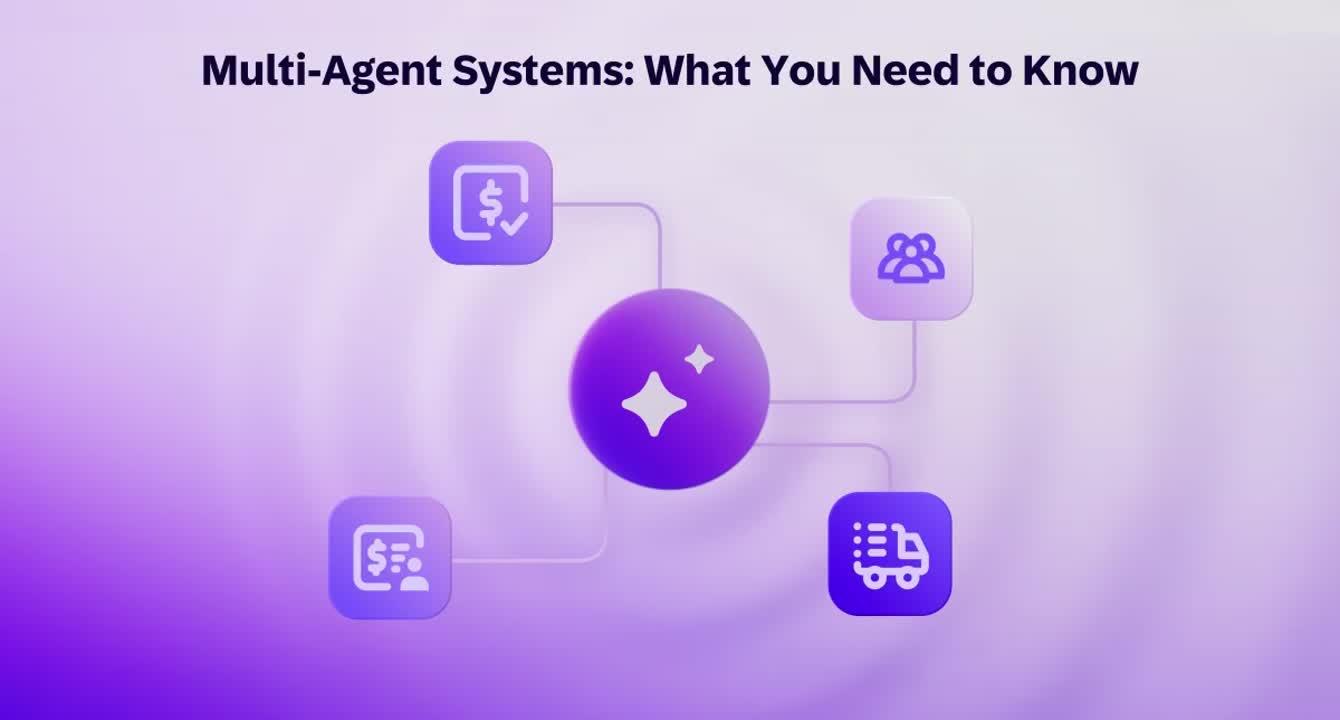
Section 1: Why Multi-Agent Systems Are Becoming Important in AI
The Shift from Single Models to Collaborative Intelligence
For years, machine learning systems were designed around a single-model paradigm. One model received input, processed information, and generated an output. This architecture worked well for many traditional applications such as classification, recommendation, and forecasting. However, as AI systems became more sophisticated, the limitations of isolated models became increasingly clear. At companies like Google, OpenAI, and Meta, engineers are now exploring systems where multiple intelligent agents collaborate to solve complex tasks.
This shift marks the rise of multi-agent systems.
Instead of relying on a single model to handle every aspect of a problem, tasks are distributed across multiple specialized agents. Each agent focuses on a particular responsibility, and together they form a coordinated system capable of handling more dynamic and complex environments.
What Is a Multi-Agent System
A multi-agent system consists of multiple autonomous or semi-autonomous agents that interact with one another to achieve a goal.
Each agent operates with a certain level of independence. It may have its own objectives, memory, reasoning process, or specialized capabilities. Agents communicate, coordinate, and sometimes negotiate with each other in order to complete tasks.
The key idea is distribution of intelligence.
Rather than centralizing all decision-making in a single model, intelligence is spread across multiple components. This creates systems that are more modular, adaptable, and scalable.
Why Single-Agent Systems Are No Longer Enough
Modern AI tasks are becoming increasingly complex.
Applications such as autonomous systems, enterprise automation, research assistants, and AI-native workflows often involve multiple interconnected subtasks. A single model attempting to manage all these responsibilities can become inefficient and difficult to maintain.
For example, one task may require retrieval of information, another may involve reasoning, and another may require validation or planning. Combining all these functions into a single model introduces complexity and reduces flexibility.
Multi-agent systems address this by separating responsibilities.
Different agents can specialize in planning, execution, retrieval, or evaluation. This division of labor improves efficiency and allows systems to scale more effectively.
Coordination as the Core Challenge
The power of multi-agent systems comes from coordination.
Agents must work together coherently rather than operating independently. Poor coordination can lead to redundancy, conflicting decisions, or system instability.
This makes coordination one of the most important aspects of multi-agent design.
Agents need mechanisms for communication, task allocation, and conflict resolution. They must share information effectively while maintaining clear responsibilities.
In many ways, designing a multi-agent system resembles designing an organization.
The challenge is not just creating capable agents, but ensuring that they collaborate efficiently.
Planning and Task Decomposition
One of the major advantages of multi-agent systems is their ability to handle planning and decomposition.
Complex tasks can be broken down into smaller subtasks, with different agents responsible for each stage. This mirrors how human teams solve problems.
For example, one agent may analyze the problem, another may retrieve relevant information, and another may evaluate the results. This structured workflow allows systems to handle tasks that would overwhelm a single model.
Planning becomes particularly important in dynamic environments where tasks evolve over time.
Agents must adapt, coordinate, and update their strategies continuously.
Why Multi-Agent Systems Fit Modern AI Workflows
The rise of AI-native applications has accelerated interest in multi-agent systems.
Modern workflows often involve multiple interacting components, such as retrieval systems, reasoning engines, and execution modules. Multi-agent architectures align naturally with these workflows because they support modularity and specialization.
This modularity also improves maintainability.
Instead of retraining or redesigning an entire system, engineers can update individual agents independently. This makes systems more flexible and easier to scale.
Real-World Relevance of Multi-Agent Systems
Multi-agent systems are no longer just research concepts.
They are increasingly being applied in real-world scenarios such as:
- Autonomous vehicles coordinating traffic decisions
- Enterprise AI assistants managing workflows
- Financial systems handling market interactions
- Robotics systems coordinating tasks
These applications demonstrate the practical value of distributed intelligence.
Why This Matters in Interviews
Multi-agent systems are becoming an important topic in ML interviews because they represent the next evolution of AI system design.
Candidates are increasingly expected to discuss system-level architectures, coordination strategies, and planning mechanisms. Interviewers want to see whether candidates can think beyond isolated models and reason about collaborative systems.
Candidates who only focus on individual models often give incomplete answers.
Strong candidates understand how multiple components interact and how systems are structured to handle complexity.
This expectation is emphasized in “Machine Learning System Design Interview: Crack the Code with InterviewNode”, which highlights the growing importance of system-level reasoning and modular architectures in ML interviews .
The Key Takeaway
Multi-agent systems are becoming essential because modern AI problems are too complex for isolated models. By distributing intelligence across specialized agents, these systems improve scalability, adaptability, and modularity. Coordination and planning are central challenges, and engineers who understand these concepts are better prepared to design next-generation AI systems and succeed in modern ML roles.
Section 2: Coordination Mechanisms in Multi-Agent Systems (Communication, Memory, and Decision Flow)
Why Coordination Determines Whether Multi-Agent Systems Succeed
The effectiveness of a multi-agent system does not depend only on how capable individual agents are. The real challenge lies in how those agents coordinate. At companies like Google, OpenAI, and Meta, engineers are discovering that even highly advanced agents can fail when communication and coordination are poorly designed.
This makes coordination the defining feature of multi-agent systems.
Without coordination, agents behave like disconnected components. They may duplicate work, produce conflicting outputs, or fail to complete tasks efficiently. Coordination transforms a collection of agents into a coherent system.
Communication as the Foundation of Coordination
Communication is the most fundamental coordination mechanism in multi-agent systems.
Agents must exchange information in order to collaborate effectively. This communication may involve sharing task status, intermediate outputs, contextual information, or system goals.
The quality of communication directly affects system performance.
If communication is incomplete or ambiguous, agents may make poor decisions. If communication is excessive, the system may become inefficient and slow.
This creates an important balance.
Agents need enough information to coordinate effectively, but not so much that communication overhead becomes a bottleneck.
Structured vs Dynamic Communication
Different multi-agent systems use different communication strategies.
Some systems rely on highly structured communication, where agents follow predefined protocols and message formats. This improves reliability and predictability.
Other systems use more dynamic communication, allowing agents to exchange information flexibly based on context. This increases adaptability but also introduces complexity.
The choice depends on the application.
Systems operating in stable environments may benefit from structured communication, while systems handling unpredictable tasks may require more flexible interaction mechanisms.
Strong engineers understand that communication design is a tradeoff between control and flexibility.
The Role of Shared Memory
Coordination becomes significantly more difficult without shared context.
This is where memory systems become essential.
Shared memory allows agents to access common information, track system state, and maintain consistency across tasks. Instead of relying solely on direct communication, agents can reference shared knowledge when making decisions.
This improves efficiency.
Agents do not need to repeatedly exchange the same information, and the system can maintain continuity across long workflows.
Memory also enables persistence.
Tasks often span multiple stages and evolve over time. Shared memory ensures that agents retain context and can build on previous work.
Local Memory vs Global Memory
Multi-agent systems often combine local and global memory structures.
Local memory is specific to an individual agent. It stores information relevant to that agent’s responsibilities and reasoning process.
Global memory, on the other hand, is shared across the system. It acts as a central source of truth that multiple agents can access.
Balancing these two forms of memory is important.
Too much reliance on global memory can create bottlenecks and reduce scalability. Too much reliance on local memory can lead to fragmented understanding and inconsistent decisions.
Effective systems carefully manage this balance.
Decision Flow and Task Routing
Coordination also depends on how decisions flow through the system.
In single-agent systems, decision-making is centralized. In multi-agent systems, decisions are distributed across multiple agents, which introduces complexity.
The system must determine:
- Which agent handles which task
- How tasks are delegated
- How outputs are combined
This process is often referred to as task routing.
Efficient task routing ensures that agents are used appropriately and that system resources are optimized. Poor routing can lead to redundant computation or underutilization of specialized agents.
Hierarchical vs Decentralized Coordination
Multi-agent systems can coordinate in different ways.
Some systems use hierarchical coordination, where a central controller assigns tasks and manages workflows. This improves control and predictability.
Other systems use decentralized coordination, where agents interact more independently and make decisions collaboratively.
Hierarchical systems are easier to manage but may become bottlenecks. Decentralized systems are more flexible but harder to control.
The choice depends on system goals and complexity.
Handling Conflicts and Redundancy
When multiple agents operate simultaneously, conflicts can arise.
Agents may produce contradictory outputs, duplicate work, or compete for resources. Coordination mechanisms must address these issues.
This often involves validation layers, arbitration mechanisms, or priority rules.
The goal is to ensure that the system remains coherent even when agents disagree or overlap in functionality.
Conflict management is a critical aspect of scalable multi-agent design.
Feedback Loops in Coordination
Coordination is not static.
Agents must continuously adapt based on new information, changing goals, and system feedback. This creates feedback loops within the system.
For example, one agent’s output may influence another agent’s behavior, which in turn affects future decisions. These interactions create dynamic workflows that evolve over time.
Designing effective feedback loops is essential for maintaining system stability and adaptability.
Why This Matters in Interviews
Coordination mechanisms are becoming increasingly relevant in ML interviews because they reflect the growing complexity of AI systems.
Candidates are expected to discuss how agents communicate, share memory, and coordinate decisions. Interviewers want to see whether candidates can reason about distributed intelligence rather than isolated models.
Candidates who focus only on agent capabilities often give incomplete answers.
Strong candidates explain how coordination mechanisms ensure efficiency, consistency, and scalability.
This expectation is emphasized in “The Hidden Skills ML Interviewers Look For (That Aren’t on the Job Description)”, which highlights the importance of structured system-level reasoning in modern ML interviews .
The Key Takeaway
Coordination mechanisms are the foundation of effective multi-agent systems. Communication, shared memory, decision flow, and feedback loops enable agents to collaborate efficiently and operate as a coherent system. Engineers who understand these mechanisms are better equipped to design scalable multi-agent architectures and handle the complexity of next-generation AI systems.
Section 3: Planning and Task Decomposition in Multi-Agent AI Systems
Why Planning Is the Core Intelligence Layer in Multi-Agent Systems
The true strength of multi-agent systems is not simply that multiple agents exist, it is that they can work together toward a larger objective through planning and task decomposition. At companies like Google, OpenAI, and Meta, engineers are increasingly designing AI systems that behave less like isolated models and more like coordinated teams.
This shift changes how intelligence is structured.
Instead of one model handling everything, the system divides a complex objective into smaller tasks and distributes them across specialized agents. Planning becomes the mechanism that organizes this process.
Without planning, multi-agent systems become chaotic.
Agents may act independently without alignment, leading to inefficiency, duplication, or conflicting outputs. Planning creates order, structure, and coordination.
Task Decomposition as a Strategy for Managing Complexity
Real-world AI problems are rarely simple.
Tasks such as enterprise automation, research assistance, autonomous navigation, or large-scale workflow management involve multiple interconnected steps. Trying to solve all of these within a single model creates complexity that is difficult to manage.
Task decomposition addresses this problem.
The system breaks a large objective into smaller, manageable subtasks. Each subtask is assigned to an agent that specializes in handling that specific responsibility.
This division of labor improves efficiency.
Agents can focus on narrow objectives rather than handling the entire workflow. This reduces cognitive overload within the system and enables more scalable architectures.
How Multi-Agent Planning Differs from Traditional Pipelines
Traditional ML pipelines are generally linear.
Data flows through predefined stages, and the sequence of operations is fixed. While effective for stable workflows, this structure struggles in dynamic environments where tasks evolve over time.
Multi-agent planning is more adaptive.
Agents can make decisions, update plans, and reassign tasks dynamically based on context. The workflow is not rigid, it evolves as the system interacts with new information.
This flexibility is one of the key advantages of multi-agent systems.
Instead of following static rules, the system can adapt its strategy in real time.
Hierarchical Planning and Role Specialization
Many multi-agent systems use hierarchical planning structures.
In these systems, certain agents operate at a higher level, focusing on strategy and coordination, while others handle execution-oriented tasks.
For example, one agent may break down a high-level goal into subtasks, while other agents retrieve information, analyze data, or validate outputs.
This mirrors how human organizations function.
Managers coordinate objectives, while specialized teams execute tasks. Hierarchical planning allows systems to scale more effectively by separating strategic reasoning from operational execution.
Dynamic Task Allocation
One of the most important aspects of planning is task allocation.
The system must decide which agent should handle each task and when tasks should be reassigned. This decision-making process is critical for efficiency.
Dynamic task allocation enables the system to adapt to changing conditions.
For example, if one agent becomes overloaded or fails to complete a task, the system can reroute work to another agent. This improves resilience and flexibility.
Efficient task allocation also reduces redundancy.
By assigning tasks intelligently, the system avoids unnecessary computation and ensures that resources are used effectively.
Planning Under Uncertainty
Real-world environments are unpredictable.
Information may be incomplete, goals may change, and unexpected events may occur. Multi-agent systems must plan under these uncertain conditions.
This introduces additional complexity.
Agents cannot rely solely on predefined workflows. They must continuously evaluate the environment, update plans, and coordinate with other agents.
Planning becomes an iterative process rather than a fixed sequence of steps.
This adaptability is one of the reasons multi-agent systems are increasingly important in modern AI.
Feedback Loops in Planning
Planning in multi-agent systems is closely tied to feedback.
Agents must evaluate whether their actions are moving the system toward its goals. If not, plans may need to be adjusted.
This creates feedback loops within the planning process.
For example, one agent’s output may trigger a change in strategy for another agent. The system continuously updates itself based on outcomes and new information.
Feedback-driven planning improves robustness and allows systems to handle evolving tasks more effectively.
Balancing Autonomy and Coordination
A central challenge in multi-agent planning is balancing autonomy and coordination.
Agents need enough autonomy to make decisions independently, but too much independence can lead to fragmentation and inconsistency.
Conversely, excessive coordination can reduce flexibility and create bottlenecks.
The system must strike the right balance.
Strong multi-agent architectures allow agents to operate independently when appropriate while maintaining alignment with overall system goals.
Why Planning Matters More in AI-Native Workflows
Modern AI-native applications increasingly rely on workflows that involve multiple reasoning steps, retrieval processes, and execution stages.
Single-model systems struggle with these workflows because they are not designed for extended coordination and iterative planning.
Multi-agent systems are better suited to these environments because they can distribute reasoning across multiple specialized agents.
Planning becomes the mechanism that orchestrates this collaboration.
Why This Matters in Interviews
Planning and task decomposition are becoming important topics in ML interviews because they reflect the future direction of AI systems.
Candidates are expected to explain how complex workflows can be structured, how tasks are distributed, and how agents coordinate dynamically.
Candidates who focus only on models often fail to address these system-level challenges.
Strong candidates discuss planning architectures, delegation strategies, and feedback-driven coordination.
This expectation is emphasized in “End-to-End ML Project Walkthrough: A Framework for Interview Success”, which highlights the importance of structured thinking and workflow design in modern ML systems .
The Key Takeaway
Planning and task decomposition are central to effective multi-agent systems. By breaking complex objectives into manageable subtasks and coordinating specialized agents dynamically, these systems can handle workflows that are too complex for isolated models. Engineers who understand planning architectures and adaptive coordination are better prepared to design scalable AI systems and succeed in the next generation of ML roles.
Section 4: Real-World Use Cases of Multi-Agent Systems in AI and ML
Why Multi-Agent Systems Are Moving from Research to Production
For many years, multi-agent systems were largely confined to academic research and simulations. Today, that is changing rapidly. At companies like Google, OpenAI, and Meta, multi-agent architectures are increasingly being explored as practical solutions for complex AI workflows.
The reason is straightforward.
Modern AI applications involve tasks that are too dynamic and interconnected for a single model to handle effectively. Systems now need to retrieve information, reason across multiple steps, validate outputs, adapt to changing conditions, and coordinate long workflows. Multi-agent systems are well suited for these environments because they distribute intelligence across specialized components.
This shift is transforming how AI systems are designed.
AI Research Assistants and Knowledge Workflows
One of the most visible use cases for multi-agent systems is AI-powered research assistance.
Research workflows involve multiple stages: gathering information, filtering sources, summarizing findings, validating claims, and organizing outputs. A single model attempting to manage all of these responsibilities often becomes inefficient or unreliable.
Multi-agent systems improve this process by dividing responsibilities.
One agent may retrieve information, another may evaluate relevance, another may summarize findings, and another may validate accuracy. This specialization improves both efficiency and output quality.
The system behaves more like a coordinated research team than a standalone model.
This approach is increasingly important in enterprise knowledge systems and AI-native productivity tools.
Enterprise Workflow Automation
Enterprise environments involve highly structured yet interconnected workflows.
Tasks such as document processing, customer support, scheduling, compliance verification, and analytics often require multiple stages of reasoning and execution. Traditional automation systems struggle with flexibility because workflows change frequently.
Multi-agent systems address this by enabling modular coordination.
Different agents can handle separate stages of a workflow while adapting dynamically to changing conditions. For example, one agent may classify incoming requests, another may retrieve relevant information, and another may generate responses or trigger actions.
This improves scalability and maintainability.
Instead of redesigning the entire system when workflows change, organizations can update individual agents independently.
Autonomous Vehicles and Distributed Decision-Making
Autonomous systems are another important application area.
In autonomous vehicles, decision-making involves multiple simultaneous processes: perception, route planning, obstacle detection, prediction of surrounding behavior, and motion control.
A single centralized model handling all these tasks introduces bottlenecks and complexity.
Multi-agent architectures distribute responsibilities across specialized systems. Different agents manage perception, planning, and control while continuously coordinating with each other.
This improves responsiveness and robustness.
If one component encounters uncertainty or failure, other components can adapt, allowing the system to maintain stability.
Coordination becomes critical in these environments because decisions must be made in real time.
Financial Systems and Market Coordination
Financial systems involve environments where multiple actors interact dynamically under uncertainty.
Applications such as algorithmic trading, fraud detection, and portfolio management require systems that can analyze market conditions, predict behavior, and respond quickly.
Multi-agent systems are particularly effective here because they naturally model distributed decision-making.
Different agents may specialize in risk analysis, market monitoring, strategy optimization, or execution. These agents interact continuously, adapting to changing market conditions.
This creates systems that are more flexible and resilient than monolithic architectures.
The distributed nature of these systems also aligns well with the decentralized structure of financial markets.
Robotics and Collaborative Task Execution
Robotics is another domain where multi-agent systems are becoming increasingly important.
In collaborative robotics, multiple robots or robotic components must coordinate to complete tasks efficiently. This requires communication, planning, and dynamic adaptation.
For example, in warehouse automation, different robotic agents may handle navigation, inventory movement, and task scheduling. Coordination ensures that tasks are completed without conflicts or inefficiencies.
This distributed approach improves scalability.
Instead of relying on a single controller, the system distributes intelligence across multiple agents, enabling more flexible and efficient operation.
AI-Native Applications and Agentic Workflows
The rise of AI-native applications has accelerated interest in agentic workflows.
These applications often involve long-running tasks that require reasoning across multiple stages. Examples include coding assistants, workflow automation systems, and advanced conversational agents.
Multi-agent systems allow these applications to break tasks into smaller reasoning steps.
One agent may interpret user intent, another may retrieve context, another may generate outputs, and another may verify correctness.
This layered reasoning process improves reliability and adaptability.
It also makes systems easier to maintain because each agent can evolve independently.
Why Multi-Agent Systems Improve Scalability
A major advantage of multi-agent systems is scalability.
Single-agent systems often become bottlenecks as tasks grow more complex. Multi-agent architectures distribute workload across specialized components, reducing pressure on any one model.
This modularity also improves maintainability.
Engineers can update or replace agents individually without redesigning the entire system. This flexibility is especially valuable in rapidly evolving AI environments.
Scalability is therefore not just about performance, it is about adaptability over time.
The Challenges Behind Real-World Deployment
Despite their advantages, multi-agent systems introduce new challenges.
Coordination complexity increases as more agents are added. Communication overhead can reduce efficiency. Conflicts between agents may lead to inconsistent outputs.
Engineers must design mechanisms for memory sharing, task routing, validation, and conflict resolution.
This makes multi-agent systems fundamentally a systems engineering problem rather than just a modeling problem.
Why This Matters in Interviews
Real-world use cases of multi-agent systems are becoming increasingly relevant in ML interviews because they reflect the future direction of AI.
Candidates are expected to discuss how systems coordinate, how tasks are decomposed, and how agents collaborate in dynamic environments.
Candidates who only discuss isolated models often appear outdated in their thinking.
Strong candidates demonstrate system-level reasoning and an understanding of distributed intelligence.
This expectation is emphasized in “The Hidden Metrics: How Interviewers Evaluate ML Thinking, Not Just Code”, which highlights the growing importance of architectural reasoning and practical system design in ML interviews .
The Key Takeaway
Multi-agent systems are increasingly being applied in real-world AI environments, from enterprise automation and autonomous systems to robotics and AI-native workflows. Their strength lies in distributing intelligence across specialized agents that coordinate dynamically to solve complex tasks. Engineers who understand these architectures are better prepared to design scalable AI systems and succeed in the evolving landscape of machine learning.
Conclusion: Multi-Agent Systems Represent the Next Evolution of AI Architectures
The evolution of artificial intelligence is moving beyond isolated models toward systems built on coordination, specialization, and distributed intelligence. Multi-agent systems represent a major step in this transition. At organizations like Google, OpenAI, and Meta, engineers are increasingly exploring architectures where multiple agents collaborate to solve problems that are too complex for a single model to handle effectively.
This shift reflects a broader change in how AI systems are designed.
Traditional systems were centered around one model performing one primary task. While effective for simpler applications, this structure struggles with modern workflows that involve planning, reasoning, retrieval, validation, and execution across multiple stages. Multi-agent systems address this by distributing responsibilities across specialized agents, allowing the system to operate more like a coordinated team.
One of the most important insights is that the value of multi-agent systems comes not from the number of agents, but from how those agents coordinate.
Communication, memory sharing, task routing, and feedback loops are what transform individual components into an intelligent system. Without these mechanisms, multiple agents simply create fragmentation and redundancy. Effective coordination is therefore the foundation of scalable multi-agent design.
Planning and task decomposition are equally critical.
Real-world AI problems are rarely linear. They involve uncertainty, changing conditions, and interconnected subtasks. Multi-agent systems excel in these environments because they can break complex objectives into manageable stages and adapt dynamically as tasks evolve. This makes them particularly well suited for AI-native workflows, enterprise automation, robotics, and research systems.
Another key takeaway is the importance of modularity.
Multi-agent architectures allow systems to evolve more flexibly. Individual agents can be updated, replaced, or specialized without redesigning the entire system. This improves scalability, maintainability, and adaptability, qualities that are increasingly important as AI systems become more complex.
However, these systems also introduce new engineering challenges.
Coordination overhead, conflict resolution, memory consistency, and dynamic planning all require careful system design. This means that multi-agent systems are fundamentally systems engineering problems, not just modeling problems. Engineers must think holistically about workflows, communication patterns, and system stability.
This shift is also reshaping expectations in ML interviews.
Candidates are increasingly evaluated on their ability to reason about architectures, workflows, and distributed intelligence rather than focusing solely on models. This expectation is emphasized in “The Hidden Skills ML Interviewers Look For (That Aren’t on the Job Description)”, which highlights the growing importance of structured system-level reasoning in modern AI roles .
Ultimately, multi-agent systems represent the future direction of intelligent applications.
As AI systems continue to evolve, collaboration between specialized agents will become increasingly central to how complex tasks are solved. Engineers who understand coordination, planning, and distributed intelligence will be better positioned to design scalable AI systems and lead the next generation of machine learning innovation.
Frequently Asked Questions (FAQs)
1. What is a multi-agent system in AI?
A multi-agent system consists of multiple intelligent agents that collaborate to achieve a shared goal.
2. Why are multi-agent systems becoming important?
Because modern AI tasks are too complex for isolated models to handle efficiently.
3. How do multi-agent systems differ from traditional ML systems?
Traditional systems rely on a single model, while multi-agent systems distribute tasks across specialized agents.
4. What is the role of coordination in multi-agent systems?
Coordination ensures that agents communicate effectively and work together coherently.
5. Why is communication important between agents?
It allows agents to share context, delegate tasks, and avoid conflicting actions.
6. What is task decomposition?
It is the process of breaking complex tasks into smaller subtasks handled by different agents.
7. How do multi-agent systems handle planning?
Agents dynamically coordinate workflows and adjust strategies based on changing conditions.
8. What are common real-world applications of multi-agent systems?
Enterprise automation, robotics, autonomous vehicles, financial systems, and AI assistants.
9. What is shared memory in multi-agent systems?
A mechanism that allows agents to access common context and maintain consistency.
10. What are the main challenges in multi-agent systems?
Coordination complexity, communication overhead, conflict resolution, and scalability.
11. How do multi-agent systems improve scalability?
By distributing workloads across specialized components rather than relying on a single model.
12. Are multi-agent systems replacing single-model systems?
Not entirely, but they are becoming increasingly important for complex workflows.
13. Why are multi-agent systems relevant in ML interviews?
Because they reflect modern AI architecture and system-level reasoning.
14. What skills are needed to design multi-agent systems?
System design, workflow planning, distributed coordination, and reasoning about tradeoffs.
15. What is the key takeaway?
The future of AI lies in coordinated systems where specialized agents collaborate dynamically to solve complex problems.
By understanding multi-agent architectures and the principles of coordination and planning, you can align your thinking with the next generation of AI systems and build the system-level expertise increasingly expected in modern ML roles.