Section 1: Why Synthetic Data Is Becoming Essential in ML
From Data Scarcity to Data Engineering
For years, machine learning success has depended heavily on the availability of high-quality labeled data. Engineers spent significant effort collecting, cleaning, and annotating datasets to train models. At companies like Google, Meta, and Amazon, large-scale data pipelines became a competitive advantage.
However, this approach has limits.
In many real-world scenarios, data is scarce, expensive, sensitive, or imbalanced. Collecting labeled data can take months, and in some domains, such as healthcare or finance, it may not even be feasible due to privacy constraints. These challenges have led to increased interest in synthetic data as a practical solution.
Synthetic data shifts the paradigm from data collection to data generation.
What Is Synthetic Data in Machine Learning
Synthetic data refers to data that is artificially generated rather than collected from real-world observations.
It is designed to mimic the statistical properties of real data while avoiding some of the limitations associated with it. This can include generating images, text, tabular data, or time-series data that resemble real-world distributions.
There are different ways to generate synthetic data.
It can be created using simulations, rule-based systems, or machine learning models such as generative adversarial networks (GANs) and large language models. The goal is not to replicate real data exactly, but to create data that is useful for training and evaluating models.
Why Traditional Data Collection Falls Short
Traditional data collection faces several challenges that synthetic data aims to address.
One of the biggest issues is cost. Collecting and labeling data at scale requires significant resources. This is particularly true for tasks that require expert annotation, such as medical imaging or legal document analysis.
Another challenge is privacy.
In many domains, data cannot be freely shared due to regulatory constraints. This limits the availability of datasets and makes it difficult to train models effectively.
Data imbalance is also a common problem.
Real-world datasets often contain far more examples of common cases than rare ones. This can lead to models that perform poorly on edge cases, which are often the most important.
Synthetic data provides a way to address these issues by generating data that is tailored to specific needs.
The Role of Synthetic Data in Modern ML Systems
Synthetic data is not just a workaround, it is becoming a core component of modern ML systems.
Engineers use synthetic data to augment existing datasets, improve model robustness, and simulate scenarios that are difficult to capture in real life. For example, self-driving systems rely heavily on simulated environments to train models on rare or dangerous scenarios.
Synthetic data is also used for testing and validation.
By generating controlled datasets, engineers can evaluate how models behave under different conditions. This helps identify weaknesses and improve system performance.
In AI-native systems, synthetic data plays an even larger role.
Large language models can generate training data, simulate user interactions, and create evaluation datasets. This enables faster iteration and experimentation.
When Synthetic Data Becomes Necessary
Synthetic data is particularly useful in scenarios where real data is limited or problematic.
For example, in healthcare, privacy concerns may restrict access to patient data. Synthetic data can be used to create datasets that preserve statistical properties without exposing sensitive information.
In fraud detection, rare events are difficult to capture in sufficient quantity. Synthetic data can be used to generate examples of fraudulent behavior, improving model performance.
In testing, synthetic data allows engineers to simulate edge cases that may not appear frequently in real-world data.
Understanding when to use synthetic data is a critical skill for ML engineers.
Challenges and Misconceptions
Despite its advantages, synthetic data is not a perfect solution.
One common misconception is that synthetic data can fully replace real data. In practice, synthetic data is most effective when used in combination with real data.
Another challenge is ensuring quality.
If synthetic data does not accurately reflect real-world distributions, it can lead to models that perform poorly in production. Engineers must carefully validate synthetic datasets to ensure they are representative and useful.
There is also the risk of introducing bias.
If the generation process is flawed, it can amplify existing biases or create new ones. This requires careful design and evaluation.
Why This Matters in Interviews
The growing importance of synthetic data is reflected in ML interviews.
Candidates may be asked how they would handle data scarcity, privacy constraints, or imbalanced datasets. They are expected to discuss synthetic data as part of a broader strategy.
Strong candidates understand not just what synthetic data is, but when and how to use it effectively.
This expectation is highlighted in “The Future of ML Interview Prep: AI-Powered Mock Interviews”, which emphasizes the importance of practical problem-solving and real-world data strategies in modern ML roles .
The Key Takeaway
Synthetic data is becoming an essential tool in machine learning, addressing challenges related to data scarcity, privacy, and imbalance. It enables engineers to generate tailored datasets, improve model robustness, and accelerate development. However, it must be used carefully and in combination with real data to ensure effectiveness. Engineers who understand when and how to use synthetic data are better equipped to build modern ML systems.
Section 2: Techniques for Generating Synthetic Data (Simulation, GANs, LLMs, and Rule-Based Methods)
Why Generation Technique Matters More Than Volume
Synthetic data is often misunderstood as a simple scaling tool, generate more data, improve model performance. In reality, the effectiveness of synthetic data depends far more on how it is generated than how much is produced. At companies like Google, Meta, and Amazon, engineers approach synthetic data as a design problem, not just a data problem.
Each generation technique embeds assumptions about the world. If those assumptions are wrong or incomplete, the resulting data can mislead models rather than improve them. This is why understanding generation techniques is essential, because synthetic data is only as good as the process that creates it.
Simulation-Based Data: Controlling the Environment
Simulation is one of the most structured approaches to synthetic data generation.
In this method, engineers explicitly model an environment and generate data by simulating real-world processes. This is widely used in domains where physical or logical systems can be modeled with reasonable accuracy.
For example, in autonomous driving, simulated environments allow engineers to generate scenarios involving rare or dangerous events. Instead of waiting for such events to occur naturally, they can be created on demand.
The strength of simulation lies in control.
Engineers can systematically vary conditions, test edge cases, and ensure coverage of scenarios that would otherwise be difficult to capture. This makes simulation particularly valuable for safety-critical systems.
However, simulation introduces a critical challenge.
The generated data is only as accurate as the simulation itself. If the simulated environment fails to capture real-world complexity, models trained on this data may not generalize well. This disconnect is often referred to as the “reality gap.”
Strong candidates understand that simulation is powerful, but only when its limitations are acknowledged and managed.
GAN-Based Generation: Learning Realistic Distributions
Generative Adversarial Networks (GANs) offer a different approach.
Instead of explicitly modeling the environment, GANs learn to generate data by approximating the distribution of real datasets. They do this through a competitive process between two networks: a generator that produces data and a discriminator that evaluates its authenticity.
This approach allows GANs to produce highly realistic outputs, especially in domains such as images and video.
The key advantage is that GANs can capture complex patterns without requiring explicit rules. They learn directly from data, making them flexible and powerful.
However, GANs come with their own challenges.
Training them can be unstable, and they may fail to capture the full diversity of the data. This can lead to issues such as mode collapse, where the generator produces limited variations.
For engineers, the challenge is not just generating realistic data, but ensuring that the data is diverse and representative.
LLM-Based Generation: Scaling Synthetic Data for Modern Systems
Large language models have introduced a new paradigm in synthetic data generation.
LLMs can generate text, structured data, and even code at scale. This makes them particularly useful for tasks involving natural language, conversational systems, and prompt-based workflows.
One of the key advantages of LLM-based generation is flexibility.
Engineers can control outputs through prompts, generating data for specific scenarios or edge cases. This allows for targeted data creation, which can be particularly useful in low-data settings.
For example, LLMs can simulate user interactions, generate labeled datasets, or create training examples for classification tasks.
However, this flexibility comes with risks.
LLMs may generate incorrect or biased data. They may produce outputs that are plausible but not accurate. Without proper validation, this can introduce errors into the training process.
Engineers must treat LLM-generated data as probabilistic outputs that require filtering and validation, not as ground truth.
Rule-Based Generation: Precision Through Constraints
Rule-based methods represent the most controlled approach to synthetic data generation.
In this approach, engineers define explicit rules or templates that govern how data is generated. This is particularly useful in domains where structure and constraints are well defined.
For example, in tabular data, rules can ensure that generated values fall within valid ranges or follow logical relationships.
The strength of rule-based generation is precision.
Engineers have full control over the data, ensuring that it meets specific requirements. This makes it ideal for testing, validation, and scenarios where correctness is critical.
However, this approach has limitations.
It lacks the ability to capture complex patterns and variability found in real-world data. As systems grow more complex, maintaining rule-based generation can also become challenging.
Strong candidates recognize that rule-based methods are most effective when combined with other approaches.
Combining Techniques for Real-World Systems
In practice, synthetic data generation rarely relies on a single technique.
Engineers often combine multiple methods to balance flexibility, realism, and control. For example, simulation can provide structured scenarios, GANs can enhance realism, LLMs can generate diverse inputs, and rules can enforce constraints.
This hybrid approach reflects the complexity of real-world systems.
No single method can capture all aspects of data. Combining techniques allows engineers to leverage the strengths of each while mitigating their weaknesses.
This also aligns with how modern ML systems are designed, through integration rather than isolation.
Evaluating Synthetic Data Effectiveness
Generating synthetic data is only half the problem. The other half is ensuring that it is useful.
Engineers must evaluate whether synthetic data improves model performance, generalizes to real-world scenarios, and avoids introducing bias.
This requires comparing synthetic data to real data, testing models on both, and monitoring performance in production.
Without proper evaluation, synthetic data can create a false sense of improvement.
Strong candidates emphasize that synthetic data must be validated continuously, not assumed to be correct.
Why This Matters in Interviews
Synthetic data is increasingly relevant in ML interviews because it reflects real-world challenges.
Candidates are expected to understand different generation techniques, their tradeoffs, and when to use them. They must demonstrate the ability to choose the right approach based on the problem context.
Candidates who treat synthetic data as a simple scaling tool often give incomplete answers.
Strong candidates, on the other hand, explain how generation methods work, how they affect model behavior, and how they would ensure data quality.
This perspective is emphasized in “The Future of ML Interview Prep: AI-Powered Mock Interviews”, which highlights the importance of practical problem-solving and data strategy in modern ML roles .
The Key Takeaway
Synthetic data generation is not a one-size-fits-all solution. Simulation, GANs, LLMs, and rule-based methods each offer unique advantages and limitations. The key to using synthetic data effectively lies in choosing the right technique, combining methods when necessary, and rigorously validating the results. Engineers who understand these nuances can leverage synthetic data to build more robust and scalable ML systems.
Section 3: When to Use Synthetic Data (Use Cases, Tradeoffs, and Risks)
Why Synthetic Data Must Be Used Strategically
Synthetic data is one of the most powerful tools available to modern ML engineers, but it is also one of the most misused. The key mistake many engineers make is treating synthetic data as a universal solution rather than a context-dependent strategy. At companies like Google, Meta, and Amazon, synthetic data is used selectively, only where it adds measurable value.
The critical question is not whether synthetic data is useful, but when its benefits outweigh its risks.
Understanding this distinction is what separates strong candidates from average ones in both interviews and real-world systems.
Use Case 1: Solving Data Scarcity Problems
One of the most straightforward use cases for synthetic data is when real data is limited.
In many ML applications, especially early-stage products or niche domains, there simply isn’t enough labeled data to train a robust model. Collecting such data can be expensive, slow, or operationally infeasible.
Synthetic data provides a way to bootstrap these systems.
By generating additional examples, engineers can expand the dataset and improve model generalization. This is particularly useful in domains such as medical imaging, where labeled data requires expert annotation, or in new product features where historical data does not yet exist.
However, this use case comes with a caveat.
Synthetic data must closely resemble real-world distributions. If it does not, models may learn patterns that do not generalize, leading to poor performance in production. This makes validation a critical step in any synthetic data pipeline.
Use Case 2: Covering Rare and Edge Cases
Real-world data is rarely balanced.
Common scenarios dominate datasets, while rare but critical cases are underrepresented. These edge cases are often where systems fail, making them disproportionately important.
Synthetic data is particularly effective in addressing this gap.
Engineers can generate targeted examples of rare events, ensuring that models are exposed to scenarios they would otherwise rarely encounter. This improves robustness and reduces the likelihood of failure in production.
For instance, in fraud detection, synthetic data can simulate fraudulent behaviors that are not frequently observed. In autonomous systems, it can create dangerous or unusual scenarios that would be difficult to capture safely in real life.
This targeted augmentation is one of the most impactful uses of synthetic data.
Use Case 3: Enabling Privacy-Preserving ML
Privacy constraints are a major limitation in many ML applications.
Sensitive data, such as medical records or financial transactions, cannot be freely shared or used due to regulatory requirements. This restricts access to data and slows down development.
Synthetic data offers a way to navigate this constraint.
By generating data that preserves statistical properties without exposing sensitive information, engineers can create datasets that are safe to use and share. This enables experimentation and collaboration without violating privacy.
However, this approach is not risk-free.
If synthetic data is too similar to real data, it may still leak sensitive information. Engineers must ensure that privacy-preserving techniques are applied rigorously and that generated data cannot be traced back to individuals.
Use Case 4: Testing and System Validation
Another critical use of synthetic data is in testing.
Real-world datasets often lack coverage of all possible scenarios, especially extreme or unexpected conditions. This makes it difficult to fully validate system behavior.
Synthetic data allows engineers to create controlled test scenarios.
They can simulate edge cases, stress-test systems, and evaluate performance under different conditions. This is particularly valuable in production systems, where failures can have significant consequences.
For example, engineers can test how a system responds to unusual inputs, adversarial cases, or rare combinations of features. This improves system reliability and helps identify weaknesses before deployment.
Tradeoffs: Realism vs Control
Using synthetic data involves a fundamental tradeoff between realism and control.
Real data is inherently realistic but difficult to manipulate. Synthetic data is highly controllable but may lack the full complexity of real-world distributions.
Engineers must balance these factors carefully.
For example, simulation-based data provides high control but may not capture real-world nuances. GAN-generated data may be realistic but harder to interpret. LLM-generated data offers flexibility but requires validation.
Strong candidates explicitly discuss this tradeoff and explain how they would combine synthetic and real data to achieve the best results.
Risk 1: Distribution Mismatch
One of the most significant risks of synthetic data is distribution mismatch.
If synthetic data does not accurately reflect real-world conditions, models trained on it may perform poorly in production. This can lead to unexpected failures and degraded performance.
This risk is especially high when synthetic data is generated without proper validation.
Engineers must compare distributions, test models on real data, and monitor performance after deployment. Without these steps, synthetic data can create a false sense of confidence.
Risk 2: Bias Amplification
Synthetic data can amplify bias if not handled carefully.
If the generation process is based on biased data or flawed assumptions, it can reinforce existing biases or introduce new ones. This is particularly concerning in applications that affect decision-making, such as hiring or lending.
Engineers must evaluate synthetic data for fairness and ensure that it does not disproportionately represent certain groups or scenarios.
This requires both technical validation and ethical awareness.
Risk 3: Over-Reliance on Synthetic Data
Another common mistake is over-reliance on synthetic data.
While synthetic data is useful, it cannot fully replace real data. Models trained exclusively on synthetic data may lack exposure to real-world variability and fail when deployed.
The most effective approach is to use synthetic data as a complement.
Engineers should combine synthetic and real data, using synthetic data to fill gaps and enhance coverage while relying on real data for grounding and validation.
Why This Matters in Interviews
Understanding when to use synthetic data is a strong signal in ML interviews.
Candidates are expected to demonstrate judgment, not just knowledge. They must explain when synthetic data is appropriate, how it should be used, and what risks it introduces.
Candidates who treat synthetic data as a universal solution often give weak answers.
Strong candidates take a balanced approach. They discuss use cases, acknowledge tradeoffs, and describe how they would validate and integrate synthetic data into a system.
This expectation is emphasized in “End-to-End ML Project Walkthrough: A Framework for Interview Success”, which highlights the importance of making practical, system-level decisions in real-world ML workflows .
The Key Takeaway
Synthetic data is most effective when used strategically. It is valuable for addressing data scarcity, handling rare cases, preserving privacy, and testing systems. However, it comes with risks such as distribution mismatch, bias amplification, and over-reliance. Engineers who understand these tradeoffs and apply synthetic data thoughtfully can build more robust and reliable ML systems.
Section 4: Best Practices for Using Synthetic Data Effectively
Why Synthetic Data Requires Discipline, Not Just Adoption
Synthetic data can significantly improve machine learning systems, but only when used with discipline. Many teams adopt synthetic data quickly, expecting immediate gains, only to encounter issues related to quality, bias, or generalization. At companies like Google, Meta, and Amazon, synthetic data is treated as a carefully engineered component, not a shortcut.
The difference between success and failure lies in how thoughtfully synthetic data is integrated into the system.
Effective use of synthetic data requires clear objectives, rigorous validation, and continuous iteration.
Start with a Clear Objective
The first step in using synthetic data effectively is defining why it is needed.
Synthetic data should not be generated for its own sake. It must address a specific problem, such as data scarcity, imbalance, privacy constraints, or testing requirements. Without a clear objective, synthetic data can introduce noise rather than value.
For example, generating large volumes of data without understanding the target distribution can lead to models that perform well in training but fail in production. Engineers must align synthetic data generation with system goals.
Strong candidates always start by framing the problem before proposing synthetic data as a solution.
Combine Synthetic and Real Data Thoughtfully
One of the most important best practices is to treat synthetic data as a complement, not a replacement.
Real data provides grounding in actual distributions and real-world variability. Synthetic data enhances coverage, fills gaps, and introduces controlled scenarios. The combination of both creates a more robust dataset.
The key is balance.
Too much reliance on synthetic data can distort the dataset, while too little may fail to address existing gaps. Engineers must experiment with different ratios and evaluate performance to find the optimal mix.
This hybrid approach ensures that models benefit from both realism and coverage.
Ensure Distribution Alignment
A critical requirement for synthetic data is that it aligns with real-world distributions.
If synthetic data differs significantly from real data, models may learn patterns that do not generalize. This leads to distribution mismatch, one of the most common causes of failure.
Engineers must validate synthetic data against real data.
This involves comparing statistical properties, feature distributions, and correlations. It also includes testing models trained on synthetic data against real-world datasets.
Ensuring alignment is not a one-time task, it requires continuous monitoring as data evolves.
Focus on Edge Cases and High-Impact Scenarios
Synthetic data is most valuable when used strategically.
Instead of generating generic data, engineers should focus on scenarios that have the highest impact on system performance. These include rare events, edge cases, and failure modes.
For example, in fraud detection, synthetic data can simulate rare fraudulent behaviors. In recommendation systems, it can generate unusual user interactions. In testing, it can create extreme conditions that stress the system.
This targeted approach maximizes the value of synthetic data while minimizing unnecessary noise.
Validate Synthetic Data Rigorously
Validation is one of the most important steps in using synthetic data.
Engineers must ensure that synthetic data is not only realistic but also useful. This involves evaluating how models perform when trained on synthetic data and how they generalize to real-world scenarios.
Validation should include:
- Comparing distributions between synthetic and real data
- Testing model performance on real datasets
- Monitoring performance after deployment
Without rigorous validation, synthetic data can create false confidence and lead to system failures.
Monitor for Bias and Fairness
Synthetic data can introduce or amplify bias if not handled carefully.
If the generation process reflects biased assumptions or data, it can reinforce those biases in the model. This is particularly problematic in applications that affect decision-making.
Engineers must evaluate synthetic data for fairness.
This involves analyzing representation across different groups, testing model behavior, and ensuring that the system does not produce unfair outcomes.
Bias monitoring should be an ongoing process, integrated into the system lifecycle.
Design for Iteration and Feedback
Synthetic data is not static.
As systems evolve, new data requirements emerge. Engineers must continuously update synthetic data generation processes based on feedback and performance metrics.
This creates a feedback loop.
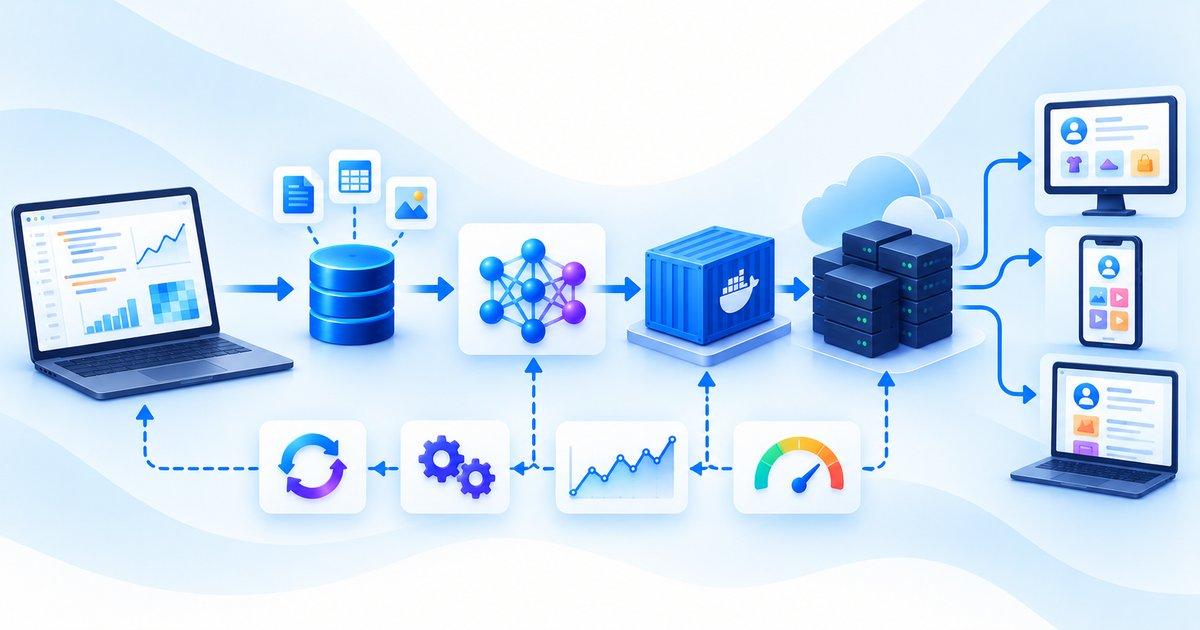
Models generate outputs, performance is evaluated, and synthetic data is adjusted to address weaknesses. Over time, this iterative process improves system robustness.
Designing for iteration ensures that synthetic data remains relevant and effective.
Integrate Synthetic Data into the ML Pipeline
Synthetic data should not be treated as a separate step.
It must be integrated into the overall ML pipeline, including data processing, training, evaluation, and monitoring. This ensures consistency and allows synthetic data to be managed alongside real data.
Integration also enables better tracking and versioning.
Engineers can monitor how synthetic data affects performance, compare different datasets, and refine generation strategies over time.
This system-level integration is essential for scalability.
Why These Practices Matter in Interviews
Best practices for synthetic data are increasingly relevant in ML interviews.
Candidates are expected to demonstrate not just knowledge of synthetic data, but the ability to use it effectively in real-world systems. They must explain how they would generate, validate, and integrate synthetic data while managing risks.
Candidates who focus only on generation techniques often give incomplete answers.
Strong candidates emphasize validation, tradeoffs, and system integration. They show that they understand synthetic data as part of a broader ML system.
This expectation is reinforced in “Skills-Based Hiring in 2025: What ML Job Seekers Need to Know”, which highlights the importance of practical, system-oriented skills in modern ML roles .
The Key Takeaway
Using synthetic data effectively requires clear objectives, careful validation, and continuous iteration. It is most powerful when combined with real data, focused on high-impact scenarios, and integrated into the ML pipeline. Engineers who follow these best practices can leverage synthetic data to build more robust, scalable, and reliable systems.
Conclusion: Synthetic Data Is a Tool - Not a Shortcut
Synthetic data has emerged as one of the most important tools in modern machine learning, but its true value lies in how it is used, not simply in its availability. At companies like Google, Meta, and Amazon, engineers treat synthetic data as a deliberate design choice within the broader ML system.
This distinction matters.
Synthetic data is not a replacement for real data. It is a mechanism to extend, augment, and strengthen datasets in situations where real data alone is insufficient. When used correctly, it enables engineers to address data scarcity, improve robustness, simulate rare scenarios, and operate within privacy constraints.
However, its effectiveness depends on discipline.
One of the most important insights from this discussion is that synthetic data introduces both opportunities and risks. While it allows for greater control and scalability, it also carries the risk of distribution mismatch, bias amplification, and over-reliance. Engineers must approach synthetic data with the same rigor they apply to model development and system design.
Another key takeaway is the importance of integration.
Synthetic data should not be treated as an isolated component. It must be integrated into the full ML lifecycle, including data pipelines, model training, evaluation, and monitoring. This ensures that its impact is measurable and aligned with system goals.
Equally critical is validation.
Synthetic data must be continuously evaluated against real-world conditions. Engineers must verify that it improves model performance, generalizes effectively, and does not introduce unintended consequences. Without validation, synthetic data can create misleading results and degrade system reliability.
This is why strong ML engineers focus on when and how to use synthetic data, rather than simply adopting it.
They understand that synthetic data is most effective when applied strategically, targeting specific gaps, addressing known challenges, and complementing real data. They also recognize that its role evolves over time, requiring iteration and refinement as systems grow.
The field is moving from static datasets to dynamic data strategies, from collection to generation, and from isolated models to integrated systems. Engineers who understand this shift, and can apply synthetic data effectively within it, are better positioned to build scalable, reliable, and high-impact ML systems.
Frequently Asked Questions (FAQs)
1. What is synthetic data in machine learning?
Synthetic data is artificially generated data designed to mimic real-world data for training and testing models.
2. When should synthetic data be used?
It is useful when real data is scarce, imbalanced, sensitive, or insufficient for testing specific scenarios.
3. Can synthetic data replace real data?
No, it is best used alongside real data to enhance coverage and robustness.
4. What are common methods for generating synthetic data?
Simulation, GANs, LLM-based generation, and rule-based approaches.
5. What are the benefits of synthetic data?
It reduces data collection costs, improves coverage, enables privacy-preserving datasets, and supports testing.
6. What are the risks of synthetic data?
Distribution mismatch, bias amplification, and over-reliance.
7. How do you validate synthetic data?
By comparing it to real data, testing model performance, and monitoring production behavior.
8. What is distribution mismatch?
When synthetic data does not accurately reflect real-world data distributions, leading to poor model performance.
9. How can synthetic data improve model robustness?
By exposing models to rare and edge-case scenarios.
10. Is synthetic data useful for privacy-sensitive domains?
Yes, it allows data sharing without exposing sensitive information, if properly designed.
11. What is the role of synthetic data in testing?
It enables controlled testing of edge cases and system behavior under different conditions.
12. Can synthetic data introduce bias?
Yes, if the generation process is flawed or based on biased assumptions.
13. How do LLMs contribute to synthetic data generation?
They can generate large-scale text and structured data for training and evaluation.
14. What is the biggest mistake when using synthetic data?
Relying on it without proper validation or ignoring real-world distributions.
15. What is the key takeaway?
Synthetic data is most effective when used strategically, validated rigorously, and combined with real data.
By approaching synthetic data as a structured and validated component of your ML system, rather than a shortcut, you can unlock its full potential while avoiding common pitfalls, positioning yourself to build stronger models and more reliable systems in modern machine learning environments.