
Section 1: Why Enterprise AI Is Becoming the Next Major Growth Engine for Machine Learning Careers
Enterprise AI Adoption Has Moved Beyond Experimentation
Over the past few years, artificial intelligence has evolved from a promising innovation into a strategic priority for organizations across nearly every industry. What began as pilot projects, internal experiments, and isolated proof-of-concepts is now becoming a large-scale transformation effort inside enterprises worldwide.
Companies are no longer asking whether they should adopt AI.
Instead, they are asking how quickly they can integrate AI into workflows, products, operations, customer experiences, and decision-making processes. This shift is creating an entirely new wave of demand for machine learning engineers and AI professionals.
The reasons are straightforward.
Organizations face increasing pressure to improve productivity, reduce operational costs, enhance customer experiences, accelerate decision-making, and remain competitive in rapidly evolving markets. AI offers solutions across all of these areas.
Enterprise AI systems are now being used to automate document processing, improve customer support, enhance cybersecurity operations, optimize supply chains, personalize user experiences, assist software development teams, support healthcare workflows, and improve business intelligence capabilities.
As adoption expands, technical complexity increases.
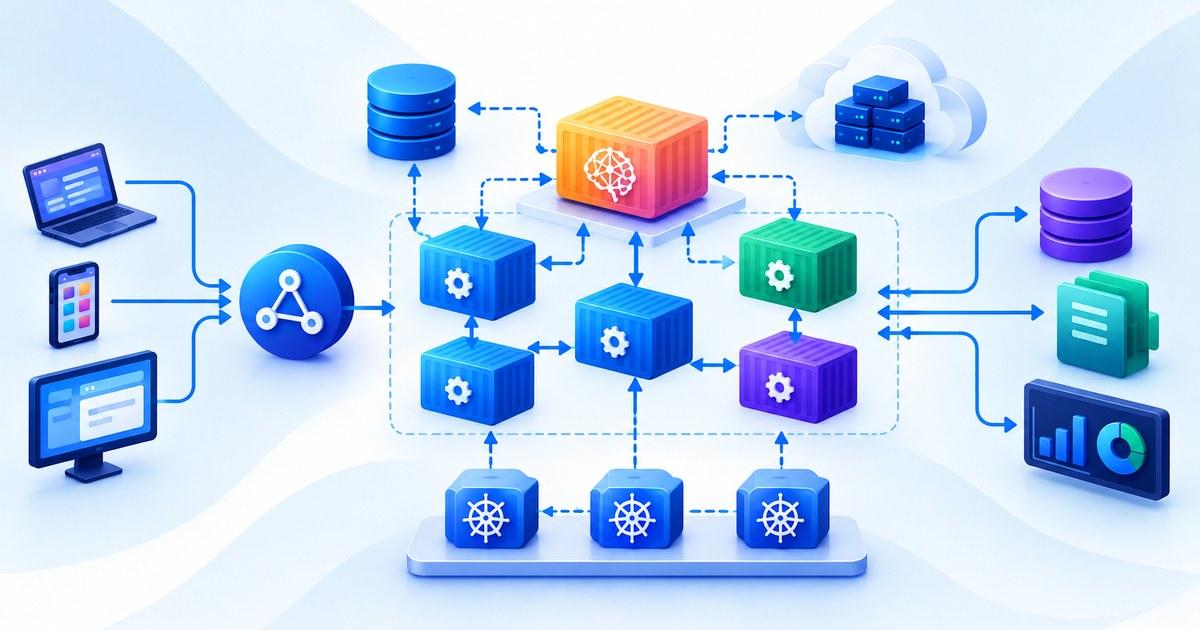
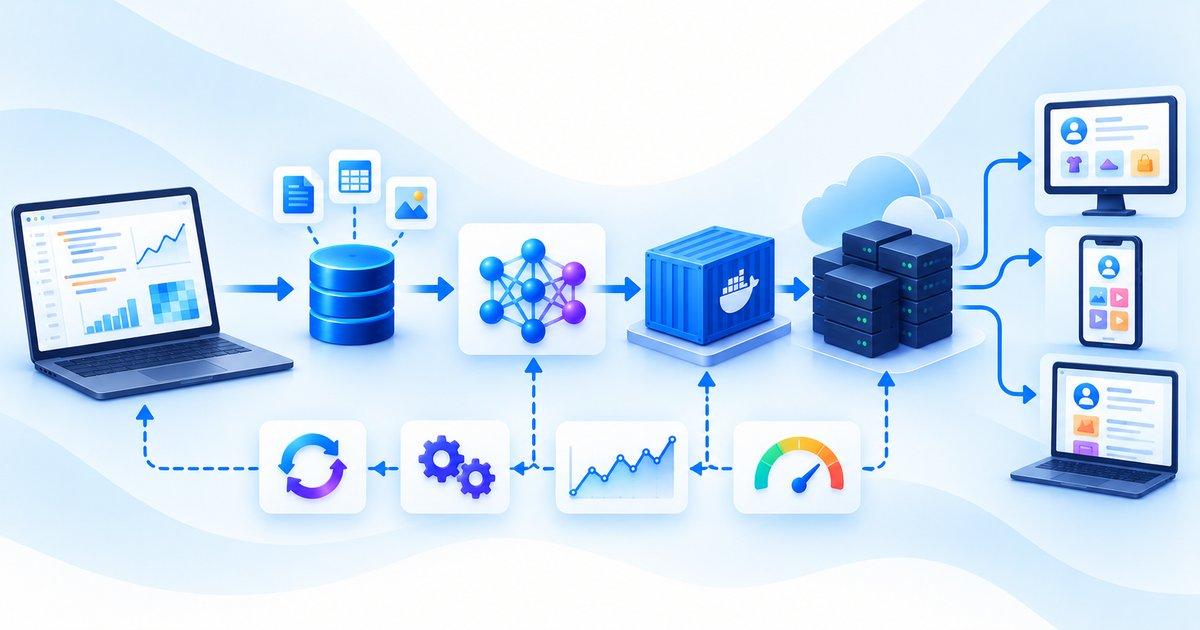
Building enterprise AI systems involves far more than deploying a model. Organizations need engineers who can design retrieval pipelines, manage data infrastructure, optimize inference systems, implement governance controls, build observability frameworks, and integrate AI capabilities into existing business systems.
This growing demand is creating some of the most significant career opportunities ML engineers have seen in years.
AI Is Becoming Core Business Infrastructure
One of the biggest changes happening inside enterprises is that AI is no longer treated as a standalone technology initiative.
Instead, AI is increasingly becoming part of core business infrastructure.
Historically, machine learning projects often existed inside specialized teams with limited organizational impact. Today, AI capabilities are being integrated directly into customer-facing products, internal operations, productivity systems, security platforms, and strategic decision-making processes.
This changes the role of ML engineers dramatically.
Engineers are increasingly responsible for designing systems that interact with critical business functions. Reliability, scalability, governance, security, and operational efficiency become just as important as model performance.
For example, an enterprise AI assistant may need to access internal documentation, retrieve relevant information, enforce security policies, maintain auditability, and integrate with existing workflows.
These requirements create significant engineering challenges.
Another major trend involves AI platform development.
Large organizations increasingly build centralized AI platforms that support deployment, retrieval, observability, model management, evaluation, and governance across multiple business units. ML engineers play a critical role in designing and maintaining these platforms.
As AI becomes infrastructure rather than experimentation, organizations require engineers who understand production systems as well as machine learning.
This shift is expanding career opportunities significantly beyond traditional modeling roles.
Enterprise AI Is Creating Entirely New Engineering Specializations
One of the most important developments in the AI job market is the emergence of new technical specializations.
Earlier machine learning careers often centered around data science, model training, and predictive analytics. Modern enterprise AI environments require a much broader range of expertise.
Organizations increasingly hire engineers focused on retrieval systems, AI infrastructure, model deployment, observability, vector databases, AI governance, agent orchestration, memory systems, inference optimization, and AI platform engineering.
These roles barely existed at scale a few years ago.
Today, they represent some of the fastest-growing opportunities in the industry.
For example, enterprise adoption of retrieval-augmented generation has created demand for engineers capable of designing semantic search systems, retrieval pipelines, ranking architectures, and vector database infrastructures.
Similarly, AI observability has emerged as a major discipline focused on monitoring model performance, hallucinations, latency, infrastructure reliability, and operational risk.
Another rapidly growing area involves AI governance.
As enterprises deploy AI at scale, they increasingly require engineers capable of implementing compliance controls, access management systems, explainability frameworks, and security architectures.
The expansion of enterprise AI infrastructure closely aligns with trends explored in AI Infrastructure Engineering: The Most Important Career Shift in Software Engineering, where infrastructure expertise is becoming one of the most valuable capabilities in modern AI careers.
The result is a much broader and more diverse AI job market than ever before.
ML Engineers Are Becoming Strategic Business Contributors
One of the most significant changes occurring across enterprises is the growing influence of ML engineers within organizations.
Previously, machine learning teams often operated as support functions focused primarily on technical experimentation. Today, AI initiatives increasingly affect revenue growth, operational efficiency, customer satisfaction, and competitive differentiation.
This elevates the importance of engineering roles.
ML engineers are increasingly involved in product strategy, infrastructure planning, operational transformation, and business decision-making. Their work directly influences how organizations leverage AI to create value.
As enterprise adoption accelerates, engineers capable of connecting technical systems to business outcomes will become increasingly valuable.
Key Takeaways
Enterprise AI adoption has moved beyond experimentation and become a strategic business priority.
AI is increasingly being integrated into core operational and product infrastructure.
New engineering specializations are emerging around retrieval, observability, governance, infrastructure, and AI platforms.
Enterprise environments require production-grade AI systems rather than isolated models.
ML engineers are becoming increasingly important contributors to business strategy and operational transformation.
Section 2: The Most In-Demand ML Engineering Roles Emerging from Enterprise AI Adoption
Enterprise AI Is Creating a New Generation of ML Engineering Careers
One of the biggest consequences of enterprise AI adoption is the rapid expansion of specialized machine learning roles. A few years ago, organizations typically hired Data Scientists, Machine Learning Engineers, and occasionally AI Researchers. Today, the landscape is significantly more diverse.
The reason is simple.
Modern enterprise AI systems are much more complex than traditional machine learning applications. Building a recommendation model or predictive analytics solution required a specific set of skills. Building enterprise-scale AI assistants, autonomous workflows, retrieval systems, multimodal platforms, and AI-powered business applications requires expertise across multiple technical domains.
As enterprises invest billions of dollars into AI transformation initiatives, they increasingly seek engineers with specialized skills capable of solving production-scale challenges.
This trend is creating entirely new career opportunities for ML professionals.
Rather than competing for a narrow set of machine learning roles, engineers now have access to a growing ecosystem of AI-focused specializations that combine machine learning, infrastructure, software engineering, and systems design.
The result is one of the most dynamic hiring markets the technology industry has experienced in decades.
AI Infrastructure Engineers Are Becoming Critical to Enterprise Success
One of the fastest-growing roles in enterprise AI is AI Infrastructure Engineering.
Many organizations initially believed deploying AI meant simply integrating a model into an application. However, they quickly discovered that production AI systems require sophisticated infrastructure capable of supporting large-scale workloads.
Modern AI applications often depend on distributed inference systems, vector databases, retrieval pipelines, GPU orchestration platforms, model serving environments, monitoring frameworks, and workflow orchestration systems.
Managing this complexity requires dedicated infrastructure expertise.
AI Infrastructure Engineers focus on building the foundation that allows enterprise AI systems to operate reliably at scale. They design deployment pipelines, optimize inference performance, manage compute resources, implement observability systems, and ensure production reliability.
Another major responsibility involves cost optimization.
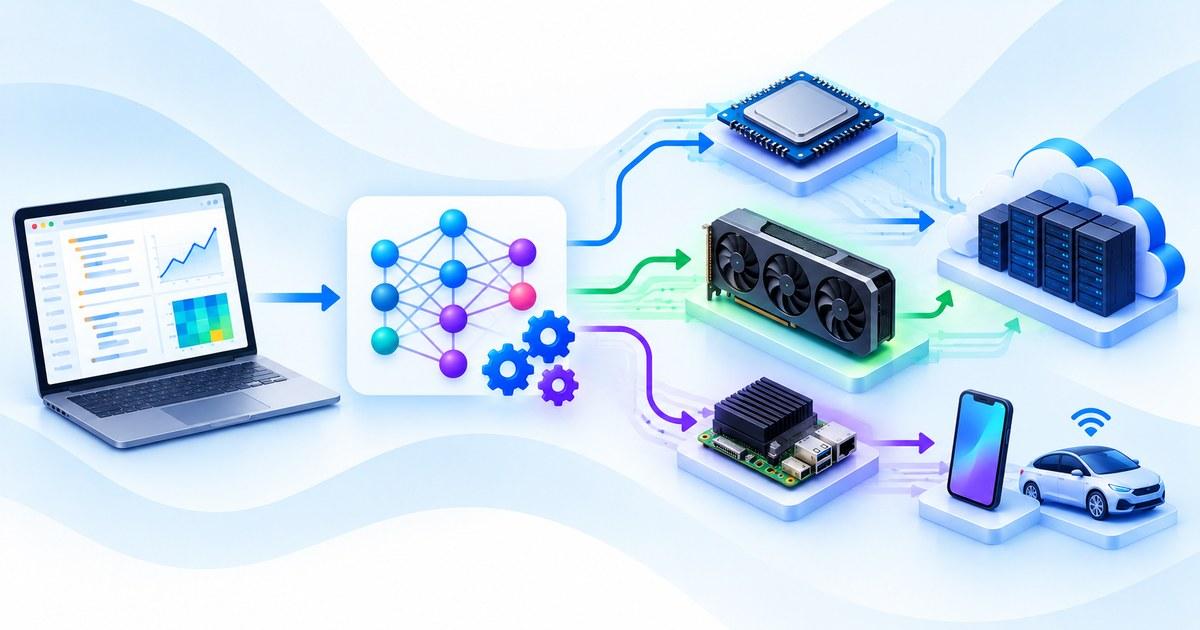
Enterprise AI workloads can become extremely expensive. Engineers increasingly work on reducing inference costs, improving GPU utilization, implementing caching strategies, and optimizing resource allocation across AI platforms.
This role combines elements of machine learning, cloud engineering, distributed systems, DevOps, and platform engineering.
As enterprise AI adoption accelerates, infrastructure expertise is becoming one of the most valuable skill sets in the market.
Organizations increasingly recognize that successful AI deployment depends as much on infrastructure quality as model quality.
Retrieval and Knowledge Engineers Are Seeing Massive Demand
One of the most important developments in enterprise AI has been the rise of retrieval-based systems.
Large language models possess impressive capabilities, but enterprises quickly realized that relying solely on pre-trained model knowledge creates limitations. Businesses need AI systems capable of accessing internal documents, company knowledge bases, operational procedures, policy repositories, customer records, and domain-specific information.
This requirement led to the rapid adoption of Retrieval-Augmented Generation (RAG).
As a result, Retrieval Engineers have become one of the fastest-growing specializations in AI.
These engineers focus on designing systems that retrieve relevant information efficiently and accurately during runtime. Their responsibilities often include semantic search infrastructure, vector databases, embedding systems, ranking architectures, retrieval optimization, indexing strategies, and contextual information management.
Another important area involves enterprise knowledge management.
Organizations increasingly treat internal knowledge as a strategic asset. Retrieval engineers help transform fragmented documentation and institutional expertise into searchable AI-accessible systems.
This role requires a unique combination of machine learning, information retrieval, distributed systems, and search engineering skills.
As enterprises continue building AI-powered knowledge systems, demand for retrieval specialists is expected to grow significantly.
AI Platform Engineers Are Building Internal AI Ecosystems
Another emerging opportunity is AI Platform Engineering.
Large enterprises rarely deploy a single AI application. Instead, they often support dozens or even hundreds of AI initiatives across departments.
Managing these efforts independently creates inefficiency.
To solve this problem, organizations increasingly build centralized AI platforms that standardize deployment workflows, monitoring systems, governance controls, model management processes, and infrastructure resources.
AI Platform Engineers design and maintain these shared ecosystems.
Their work enables development teams across the company to build AI applications more efficiently without recreating infrastructure repeatedly.
Responsibilities often include model deployment frameworks, evaluation systems, experiment tracking platforms, governance controls, monitoring solutions, API management layers, and developer tooling.
Another major focus is scalability.
As AI adoption expands across an organization, platform teams ensure systems remain reliable, secure, and cost-effective.
This role is becoming increasingly important because enterprise AI success often depends on organizational consistency rather than isolated technical achievements.
Companies capable of building strong internal AI platforms can scale innovation significantly faster.
AI Observability and Governance Roles Are Growing Rapidly
One of the biggest lessons enterprises learned from early AI deployments is that monitoring AI systems is fundamentally different from monitoring traditional software.
Conventional software typically behaves deterministically. AI systems operate probabilistically.
This introduces new operational challenges.
Models may hallucinate. Retrieval systems may return irrelevant information. Data distributions may shift. User behavior may change. Performance may degrade gradually rather than fail suddenly.
As a result, AI Observability Engineers have become increasingly valuable.
These professionals build systems that monitor model performance, retrieval quality, latency metrics, hallucination rates, inference costs, user satisfaction signals, and operational reliability.
Another rapidly growing area is AI Governance Engineering.
As enterprises deploy AI in regulated industries, concerns around compliance, security, privacy, explainability, and accountability become critical.
Governance engineers design frameworks that ensure AI systems operate safely and responsibly while meeting legal and organizational requirements.
This includes access controls, audit systems, policy enforcement mechanisms, risk monitoring, and explainability infrastructure.
The growing importance of governance closely aligns with trends explored in How AI Products Are Being Designed for Trust, Transparency, and Control, where enterprises increasingly prioritize reliability and accountability alongside AI capability.
These roles are expected to become standard components of enterprise AI organizations over the coming years.
Enterprise AI Is Expanding Career Paths Beyond Traditional ML Roles
Perhaps the most important shift is that enterprise AI is broadening what it means to work in machine learning.
Engineers no longer need to focus exclusively on model development to build successful AI careers. Infrastructure, retrieval, governance, observability, platform engineering, and operational intelligence are all becoming critical disciplines.
This expansion creates opportunities for professionals from software engineering, cloud infrastructure, backend development, distributed systems, and data engineering backgrounds to transition into AI-focused careers.
As enterprise AI adoption continues accelerating, the diversity of career opportunities will likely expand even further.
Key Takeaways
Enterprise AI adoption is creating specialized ML engineering roles beyond traditional modeling positions.
AI Infrastructure Engineers are increasingly responsible for scalable deployment and operational reliability.
Retrieval Engineers play a critical role in building enterprise knowledge systems and RAG architectures.
AI Platform Engineers help organizations scale AI development through centralized infrastructure.
Observability and Governance Engineers are becoming essential for enterprise-grade AI operations and compliance.
Section 3: How Enterprise AI Is Changing the Skills Companies Expect from ML Engineers
Enterprise AI Is Shifting Hiring Beyond Traditional Model Development
One of the most significant changes happening in the AI job market is that companies are redefining what it means to be a machine learning engineer.
For years, ML engineering was closely associated with model training, feature engineering, hyperparameter tuning, and predictive analytics. While these skills remain valuable, enterprise AI adoption is expanding the scope of responsibilities dramatically.
Organizations are no longer looking only for engineers who can build models.
They increasingly need professionals who can design end-to-end AI systems that operate reliably within complex business environments. Modern AI applications often interact with internal knowledge repositories, cloud infrastructure, security frameworks, workflow automation tools, compliance systems, customer-facing applications, and enterprise databases simultaneously.
This creates new expectations.
ML engineers are increasingly expected to understand software engineering principles, distributed systems, infrastructure design, API integration, monitoring frameworks, and production deployment workflows alongside machine learning concepts.
The reason is simple.
Enterprise AI systems succeed or fail based on operational reliability as much as model accuracy. A highly accurate model provides little value if it cannot scale, integrate with business processes, or meet governance requirements.
Another major trend is the movement toward full-stack AI engineering.
Many organizations increasingly prefer engineers who can contribute across the entire AI lifecycle, including data pipelines, retrieval systems, deployment environments, observability infrastructure, evaluation frameworks, and user-facing applications.
This shift is creating significant opportunities for engineers willing to broaden their technical expertise beyond traditional machine learning boundaries.
Systems Design Is Becoming One of the Most Valuable AI Skills
As enterprise AI systems become more sophisticated, systems design is rapidly becoming one of the most important skills in AI engineering.
Modern enterprise applications rarely depend on a single model.
Instead, they often combine multiple technologies operating together in production. A customer support assistant may use retrieval systems to access documentation, vector databases to store embeddings, large language models for reasoning, monitoring frameworks for observability, and governance systems for compliance.
Designing these architectures requires strong systems thinking.
ML engineers increasingly need to understand how different components interact, where bottlenecks emerge, how failures propagate through systems, and how infrastructure decisions affect performance.
Another important factor is scalability.
Enterprise AI applications frequently serve thousands or millions of users. Engineers must design architectures capable of handling growing workloads while maintaining reliability and cost efficiency.
This introduces challenges involving distributed computing, load balancing, caching strategies, inference optimization, and workflow orchestration.
Another major trend involves AI-native architecture design.
Unlike traditional software systems, AI applications often include probabilistic behavior, dynamic retrieval processes, contextual memory systems, and adaptive workflows. Engineers must account for these characteristics when designing production systems.
This is why system design interviews are becoming increasingly important for AI hiring.
Organizations want engineers who can think beyond individual models and design complete intelligent ecosystems.
The growing importance of systems thinking closely aligns with trends explored in The New Software Engineer: How AI, LLMs, and System Design Are Reshaping Engineering Careers, where modern engineering roles increasingly require architectural thinking alongside technical implementation skills.
As enterprise adoption grows, systems design expertise is becoming a major career differentiator.
Communication and Business Understanding Are Becoming Technical Advantages
One of the most surprising changes in enterprise AI hiring is the increasing importance of communication and business awareness.
Historically, machine learning roles often focused heavily on technical execution. Engineers worked primarily with datasets, models, and infrastructure. Today, enterprise AI initiatives frequently involve collaboration across multiple business functions.
AI projects increasingly affect operations, customer service, compliance, product development, marketing, sales, and executive strategy.
As a result, ML engineers are expected to communicate effectively with stakeholders who may have little technical background.
This ability creates substantial value.
Engineers who can explain technical tradeoffs, communicate risks, justify architectural decisions, and connect AI capabilities to business outcomes often become more influential within organizations.
Another major trend involves product thinking.
Enterprise AI systems are increasingly treated as products rather than technical experiments. Engineers who understand user needs, workflow optimization, adoption challenges, and operational objectives often contribute more effectively to successful deployments.
Another important factor is prioritization.
Not every AI opportunity creates meaningful business value. Organizations increasingly seek engineers capable of identifying high-impact use cases and evaluating whether AI is the appropriate solution for a given problem.
This requires more than technical expertise.
It requires understanding how businesses operate and how technology creates value.
As AI becomes integrated into core business operations, engineers who combine technical depth with business awareness will become increasingly valuable.
Continuous Learning Is Becoming a Core Job Requirement
One of the defining characteristics of enterprise AI is the speed at which technologies evolve.
Large language models improve rapidly. Retrieval architectures continue advancing. Agent frameworks emerge constantly. Infrastructure platforms evolve. Governance requirements change. New deployment strategies appear every year.
This environment rewards engineers who learn continuously.
Organizations increasingly prioritize adaptability because the skills required today may differ significantly from those needed three years from now.
Top ML engineers therefore invest heavily in staying current.
They explore new frameworks, experiment with emerging technologies, participate in technical communities, contribute to open-source projects, and continuously expand their knowledge of production AI systems.
Another major advantage involves career resilience.
Engineers who learn effectively can move into emerging specializations such as AI infrastructure, retrieval engineering, observability, governance, platform engineering, and autonomous systems as market demand evolves.
This flexibility creates long-term career advantages.
The most successful enterprise AI engineers are often those who view learning as a permanent part of their profession rather than an occasional activity.
Enterprise AI Is Creating a New Type of ML Engineer
One of the clearest trends emerging across the industry is that enterprise AI is producing a new generation of machine learning professionals.
These engineers combine machine learning expertise with infrastructure knowledge, systems thinking, product awareness, business understanding, and operational experience.
They are not simply model builders.
They are architects of intelligent business systems.
Key Takeaways
Enterprise AI is expanding ML engineering beyond traditional model development.
Systems design and architectural thinking are becoming critical technical skills.
Communication and business understanding increasingly influence career growth.
Product thinking helps engineers create more valuable AI solutions.
Continuous learning is becoming essential as enterprise AI technologies evolve rapidly.
Section 4: Why Enterprise AI Adoption May Become the Biggest Career Catalyst for ML Engineers
Enterprise AI Is Creating Long-Term Demand Rather Than Short-Term Hype
One of the most important reasons ML engineers should pay attention to enterprise AI is that this transformation is fundamentally different from many previous technology trends.
Over the past decade, the technology industry has experienced numerous waves of innovation. Some generated excitement but produced limited long-term impact. Enterprise AI appears different because it is becoming deeply embedded within how organizations operate.
Companies are not adopting AI as a standalone experiment.
They are integrating AI into customer support systems, software development workflows, cybersecurity operations, knowledge management platforms, document processing systems, sales enablement tools, healthcare applications, financial operations, and strategic decision-making processes.
This creates sustained demand.
Unlike technologies that affect only specific teams, AI is influencing nearly every department within modern organizations. As adoption expands, enterprises require engineers capable of designing, deploying, maintaining, and improving intelligent systems continuously.
Another major factor is operational dependency.
Once organizations integrate AI into mission-critical workflows, they need dedicated engineering teams to ensure reliability, scalability, governance, and ongoing optimization. This creates recurring demand rather than one-time implementation opportunities.
Another important trend involves organizational maturity.
Many enterprises are still in the early stages of AI adoption. Initial deployments often focus on copilots, knowledge assistants, workflow automation, and retrieval systems. Over time, organizations are expected to build increasingly sophisticated AI ecosystems involving autonomous agents, multimodal systems, advanced reasoning frameworks, and enterprise-wide AI platforms.
Each stage creates additional opportunities for ML engineers.
The result is a career environment where demand is likely to remain strong for many years rather than being driven solely by short-term market enthusiasm.
AI-Native Enterprises Need Engineers Who Can Bridge Business and Technology
One of the biggest shifts occurring across enterprises is the growing need for engineers who understand both technical systems and business operations.
Historically, technical teams and business teams often operated separately. Enterprise AI is increasingly eliminating that distinction.
AI systems influence business workflows directly.
An intelligent customer service platform affects support operations. A retrieval-based knowledge system influences employee productivity. An AI-powered sales assistant affects revenue generation. A fraud detection platform impacts risk management.
As a result, organizations increasingly value engineers who understand how technical decisions affect business outcomes.
This creates a significant opportunity for ML engineers.
Those who can connect machine learning capabilities to measurable organizational value often become highly influential within their companies. They help identify high-impact use cases, prioritize initiatives, evaluate tradeoffs, and guide AI strategy.
Another major advantage involves leadership opportunities.
As enterprises expand AI investments, they need technical leaders capable of coordinating across product teams, infrastructure organizations, compliance groups, executives, and operational stakeholders.
Engineers who develop business awareness often progress more quickly into staff, principal, and leadership positions because they can communicate effectively across organizational boundaries.
Another important trend is solution ownership.
Companies increasingly prefer engineers who understand complete business problems rather than only technical components. This broader perspective enables more effective AI implementation and greater organizational impact.
The future of enterprise AI careers will likely reward engineers who can bridge the gap between intelligent systems and business transformation.
Enterprise AI Is Accelerating the Rise of AI-Native Organizations
One of the most fascinating developments in the industry is the emergence of AI-native enterprises.
Traditional organizations often add AI capabilities to existing workflows. AI-native organizations build workflows around AI from the beginning.
This distinction creates entirely new engineering opportunities.
AI-native companies increasingly design products, operations, and customer experiences assuming intelligent systems are available throughout the organization. AI becomes a foundational capability rather than a supporting feature.
These organizations require specialized talent.
Engineers work on retrieval architectures, orchestration systems, agent frameworks, memory infrastructures, AI observability platforms, governance systems, and large-scale deployment environments simultaneously.
Another major trend involves autonomous workflows.
Many enterprises are moving beyond simple automation toward systems capable of planning, reasoning, retrieving information, and executing tasks with minimal human intervention. Building these systems requires engineers who understand both machine learning and operational infrastructure.
Another important development is organizational intelligence.
Companies increasingly seek ways to capture institutional knowledge and make it accessible through AI systems. This creates opportunities in retrieval engineering, knowledge management, semantic search, and memory architecture design.
The rise of AI-native organizations closely aligns with trends explored in How Engineers Prepare for AI-Native Careers at FAANG, OpenAI, Anthropic, and Beyond, where AI systems are becoming central to how modern engineering organizations operate and scale.
This evolution is creating entirely new categories of technical leadership and innovation.
ML Engineers Are Positioned at the Center of Enterprise Transformation
Perhaps the most important takeaway from enterprise AI adoption is that machine learning engineers are increasingly positioned at the center of organizational transformation.
In previous technology cycles, engineers often focused on building software that supported business processes. Today, AI engineers are helping redefine how those processes function.
Their work influences productivity, decision-making, customer experiences, operational efficiency, and competitive advantage.
This creates unprecedented career opportunities.
Another major advantage is versatility.
The skills developed through enterprise AI work, systems design, infrastructure engineering, retrieval architecture, platform development, governance implementation, observability, and business problem-solving, transfer across industries and organizations.
This makes enterprise AI one of the strongest long-term career paths available in technology.
As adoption accelerates globally, ML engineers who develop production expertise, business understanding, and systems thinking will likely find themselves among the most sought-after professionals in the industry.
Key Takeaways
Enterprise AI adoption is creating sustained long-term demand for machine learning engineers.
Organizations increasingly value engineers who understand both technology and business outcomes.
AI-native enterprises are generating entirely new technical opportunities and specializations.
Autonomous workflows, retrieval systems, and organizational intelligence platforms are expanding rapidly.
ML engineers are becoming central contributors to enterprise transformation and strategic innovation.
Conclusion
Enterprise AI adoption is rapidly becoming one of the most important technology transformations of the decade. What began as isolated experiments with machine learning models has evolved into a large-scale movement where organizations are embedding AI into core business processes, customer experiences, operational workflows, and strategic decision-making systems.
This shift is creating unprecedented opportunities for ML engineers.
Unlike earlier phases of AI adoption that focused primarily on model development and data science, modern enterprise AI requires a much broader set of capabilities. Organizations increasingly need professionals who can build retrieval systems, manage AI infrastructure, design scalable platforms, implement governance frameworks, optimize inference environments, and ensure operational reliability across production systems.
As a result, the definition of an ML engineer is changing.
Today's most valuable AI professionals are not simply model builders. They are systems architects capable of connecting machine learning capabilities with business outcomes. They understand how AI integrates into enterprise environments, how intelligent systems scale, how governance requirements influence deployment, and how infrastructure decisions affect reliability and cost.
Another major trend is specialization.
Enterprise AI adoption has created entirely new career paths including AI Infrastructure Engineering, Retrieval Engineering, AI Platform Engineering, Observability Engineering, Governance Engineering, and Autonomous Systems Engineering. These roles barely existed a few years ago, yet they are now among the fastest-growing opportunities in the technology industry.
The growing importance of enterprise AI also means that software engineering fundamentals remain critically valuable. Distributed systems, cloud infrastructure, APIs, system design, security, monitoring, and scalability continue forming the foundation of successful AI deployments. Engineers who combine these skills with machine learning expertise are becoming particularly sought after.
Perhaps the most important development is that AI is becoming core business infrastructure.
Organizations are no longer deploying AI as a side project. They are building products, workflows, and operational systems around intelligent capabilities. This creates long-term demand for engineers capable of maintaining, improving, and expanding these systems over time.
Another significant advantage is career resilience.
As enterprise AI adoption accelerates, engineers gain opportunities to work across industries including healthcare, finance, cybersecurity, manufacturing, retail, logistics, education, and enterprise software. The skills developed through enterprise AI projects transfer effectively across sectors, creating strong long-term career flexibility.
The future of machine learning careers will likely be shaped less by isolated model development and more by the ability to design complete intelligent systems that create measurable business value.
For ML engineers, this represents one of the most exciting periods in the history of the profession. Those who embrace systems thinking, infrastructure expertise, continuous learning, and business awareness will be exceptionally well-positioned as enterprises continue their AI transformation journeys.
Frequently Asked Questions
1. Why is enterprise AI creating so many opportunities for ML engineers?
Organizations across industries are integrating AI into products, operations, workflows, and decision-making processes, creating significant demand for AI talent.
2. How is enterprise AI different from traditional machine learning projects?
Enterprise AI focuses on production systems, scalability, governance, reliability, integration, and business outcomes rather than isolated model development.
3. What are the fastest-growing AI engineering roles?
AI Infrastructure Engineer, Retrieval Engineer, AI Platform Engineer, AI Observability Engineer, Governance Engineer, and Autonomous Systems Engineer are among the fastest-growing roles.
4. What is AI Infrastructure Engineering?
It involves building and managing the platforms, deployment systems, inference environments, and operational infrastructure that support AI applications.
5. Why are retrieval systems important in enterprise AI?
Retrieval systems allow AI applications to access organizational knowledge, documentation, and real-time information during runtime.
6. What is Retrieval-Augmented Generation (RAG)?
RAG combines language models with retrieval systems that fetch relevant information from external knowledge sources before generating responses.
7. What does an AI Platform Engineer do?
AI Platform Engineers build centralized systems that support AI deployment, monitoring, governance, experimentation, and development workflows across organizations.
8. Why is AI observability becoming important?
Enterprise AI systems require monitoring for performance, hallucinations, latency, reliability, user satisfaction, and operational risks.
9. What is AI governance?
AI governance involves ensuring AI systems operate securely, ethically, transparently, and in compliance with organizational and regulatory requirements.
10. Do ML engineers still need strong software engineering skills?
Yes. Enterprise AI systems depend heavily on software engineering, cloud infrastructure, APIs, distributed systems, and scalability principles.
11. How important is systems design for enterprise AI careers?
Systems design is becoming one of the most valuable skills because enterprise AI applications involve multiple interconnected technologies operating together.
12. Can software engineers transition into enterprise AI roles?
Absolutely. Many enterprise AI positions value experience in backend engineering, cloud infrastructure, distributed systems, platform engineering, and DevOps.
13. What industries are hiring enterprise AI engineers?
Healthcare, finance, cybersecurity, retail, manufacturing, logistics, education, telecommunications, and enterprise software companies are actively hiring.
14. How can engineers prepare for enterprise AI opportunities?
Building projects involving retrieval systems, AI infrastructure, deployment pipelines, observability platforms, and enterprise workflows provides valuable experience.
15. What is the future of enterprise AI careers?
The future points toward increasingly specialized roles focused on infrastructure, retrieval, governance, autonomous systems, organizational intelligence, and large-scale AI platform development, making enterprise AI one of the strongest long-term career growth areas in technology.