
Section 1: Why AI Performance Matters More Than Model Accuracy
Artificial intelligence has entered a new phase of maturity. During the early years of machine learning, success was largely determined by how accurately models classified images, translated languages, predicted customer behavior, or generated human-like text. Research papers competed on benchmark scores, organizations celebrated improvements in model precision, and engineering teams invested enormous effort into building larger neural networks capable of solving increasingly sophisticated problems. These advances established the foundation for today's AI revolution, but as enterprises began deploying these models into production, they quickly realized that accuracy alone does not create successful AI products.
An AI system that produces exceptionally accurate responses but requires ten seconds to generate each answer creates a frustrating user experience. Similarly, an enterprise chatbot capable of remarkable reasoning loses practical value if it cannot handle thousands of simultaneous requests, if infrastructure costs exceed business budgets, or if response quality deteriorates under heavy workloads. Modern AI applications operate within environments where speed, reliability, scalability, and operational efficiency directly influence customer satisfaction, business profitability, and long-term adoption. As a result, organizations have shifted their attention from simply building better models to ensuring those models perform consistently in real-world production environments.
This shift mirrors earlier transformations in software engineering. Building cloud applications required more than writing functional code; engineers also had to master scalability, distributed systems, observability, and Site Reliability Engineering (SRE). Likewise, deploying artificial intelligence requires much more than training accurate models. Production AI systems must optimize inference speed, maximize hardware utilization, minimize infrastructure costs, maintain low latency, recover gracefully from failures, and deliver predictable user experiences across millions of interactions every day. AI Performance Engineering has therefore emerged as the discipline responsible for bridging the gap between research-grade models and enterprise-grade AI platforms.
The Shift from Model Accuracy to Production Performance
The evolution of AI engineering illustrates why performance has become such a critical discipline. During the first wave of artificial intelligence adoption, engineering organizations concentrated primarily on developing machine learning models capable of solving specific prediction tasks. Data scientists trained algorithms, optimized hyperparameters, evaluated datasets, and deployed models into relatively controlled production environments. As generative AI expanded the scope of artificial intelligence, engineering responsibilities grew dramatically. AI systems now support conversational assistants, autonomous agents, software development platforms, enterprise search, document analysis, multimodal applications, recommendation engines, and real-time business automation. These workloads demand infrastructure capable of processing enormous volumes of requests while maintaining exceptional responsiveness and operational reliability.
This evolution has fundamentally changed how organizations evaluate success. The distinction between model accuracy and production performance has become increasingly important. Model accuracy measures how well an AI system performs on defined evaluation tasks or benchmark datasets. Production performance evaluates how effectively that same model serves real users under operational conditions. A highly accurate model consuming excessive GPU resources, producing unpredictable latency, or failing to scale economically often delivers less business value than a slightly less accurate model capable of providing rapid, reliable, and cost-efficient responses. Engineering teams therefore optimize for overall system performance rather than isolated model quality.
Changing user expectations reinforce this shift. Consumers and enterprise professionals increasingly interact with AI dozens of times throughout their working day. They expect intelligent assistants to respond almost instantly, generate recommendations continuously, and integrate naturally into productivity tools, customer service platforms, development environments, healthcare systems, financial applications, and business workflows. Delays that might have been acceptable in traditional batch-processing machine learning systems are no longer tolerated within conversational AI experiences. Users compare every AI interaction with platforms such as ChatGPT, Microsoft Copilot, GitHub Copilot, Claude, and Gemini, expecting responses that feel immediate regardless of request complexity. Performance therefore becomes a defining component of user experience rather than simply an infrastructure concern.
Among the most visible performance metrics is latency. Latency measures the time required for an AI system to generate a response after receiving a user request. Even small increases in response time can significantly affect user engagement, particularly in conversational applications where interactions resemble natural dialogue. AI Performance Engineers analyze every stage of the inference pipeline, including request routing, tokenization, model execution, memory access, network communication, response generation, and post-processing, to eliminate unnecessary delays. Reducing latency improves not only user satisfaction but also application usability, enabling AI to function naturally within interactive workflows where responsiveness directly influences productivity.
Readers interested in understanding how AI is reshaping engineering organizations should also explore "Why Every Software Team Will Have an AI Engineer by 2030," which examines how AI-first development is creating entirely new engineering specialties and transforming the future of software teams.
Key Takeaway
AI success is no longer determined solely by model accuracy. Latency, throughput, scalability, cost optimization, GPU utilization, enterprise readiness, and production reliability collectively define whether an AI system delivers meaningful business value. As user expectations continue rising and AI deployments expand globally, performance engineering becomes a strategic discipline that transforms intelligent models into scalable, cost-efficient, and production-ready AI platforms capable of delivering exceptional user experiences.
Section 2: Inside AI Performance Engineering
Once organizations recognize that production performance determines the success of AI systems, the next challenge becomes understanding how to optimize every layer of the AI technology stack. Many people assume AI performance simply means deploying faster GPUs or purchasing more computational resources. In reality, modern AI systems operate as highly complex distributed platforms where performance depends on the interaction of models, inference engines, memory systems, networking infrastructure, orchestration frameworks, hardware accelerators, and software optimization techniques. Even the most powerful AI hardware cannot compensate for inefficient inference pipelines, poorly optimized memory usage, excessive network communication, or ineffective workload scheduling.
This complexity explains why AI Performance Engineering has emerged as a specialized discipline distinct from machine learning engineering. Machine Learning Engineers primarily focus on training models, improving prediction quality, developing algorithms, and building data pipelines. AI Performance Engineers concentrate on ensuring those models execute efficiently once deployed into production. Their objective is to maximize throughput, minimize latency, optimize infrastructure utilization, reduce operating costs, and maintain reliable AI services regardless of workload fluctuations. They continuously analyze how every component contributes to overall system efficiency, identifying bottlenecks that would otherwise limit enterprise AI adoption.
As Large Language Models continue expanding from billions to trillions of parameters, efficient execution has become significantly more challenging. A single inference request may involve extensive GPU computation, memory allocation, token generation, cache management, networking, distributed scheduling, and orchestration across multiple hardware devices. Small inefficiencies within any of these stages multiply dramatically when serving millions of users simultaneously. AI Performance Engineering therefore focuses not on isolated optimizations but on building an end-to-end inference ecosystem where every layer contributes to delivering fast, scalable, and economically sustainable AI services.
Optimizing AI Inference for Production Scale
The foundation of AI Performance Engineering begins with AI inference optimization. Model training may consume enormous computational resources, but inference represents the stage where AI creates business value by serving real users. Every interaction with an enterprise chatbot, coding assistant, recommendation engine, document analyzer, or autonomous agent triggers inference operations that convert user requests into intelligent responses. AI Performance Engineers analyze every phase of this execution process, including request routing, tokenization, scheduling, memory allocation, computation, response generation, and post-processing, identifying opportunities to reduce latency while increasing throughput. Optimizing inference enables organizations to serve more users using existing infrastructure while improving overall responsiveness.
One of the most effective techniques supporting efficient inference is model quantization. Modern Large Language Models often store parameters using high-precision numerical formats that consume significant memory and computational resources. Quantization reduces numerical precision while preserving most of the model's reasoning capability. Instead of performing calculations using large floating-point representations, quantized models operate with more compact numerical formats that require less memory bandwidth and execute more efficiently on available hardware. Properly implemented quantization allows organizations to deploy larger models on existing GPU infrastructure, reduce inference latency, lower energy consumption, and significantly decrease operational costs without materially affecting user experience.
Another increasingly important optimization involves KV cache optimization. During autoregressive text generation, language models repeatedly reference previously generated tokens while producing new responses. Without caching, the model would repeatedly recompute attention calculations for every generated token, creating unnecessary computational overhead. Key-Value (KV) caches store intermediate attention states so that future token generation can reuse previously computed information instead of repeating identical calculations. AI Performance Engineers carefully manage cache allocation, memory placement, eviction strategies, and cache compression techniques to maximize throughput while minimizing GPU memory consumption. Efficient KV cache management has become essential for supporting long conversational sessions and high-volume enterprise workloads.
Building High-Performance AI Infrastructure
Efficient inference requires specialized AI serving frameworks capable of managing production workloads at enterprise scale. These frameworks handle request scheduling, dynamic batching, KV cache management, distributed execution, GPU resource allocation, autoscaling, and inference orchestration automatically. Technologies such as vLLM, TensorRT-LLM, Triton Inference Server, Ray Serve, and SGLang illustrate how serving frameworks optimize every stage of AI execution while abstracting much of the underlying infrastructure complexity. AI Performance Engineers continuously evaluate these frameworks, tuning configurations to match organizational workloads while maximizing performance across diverse hardware environments.
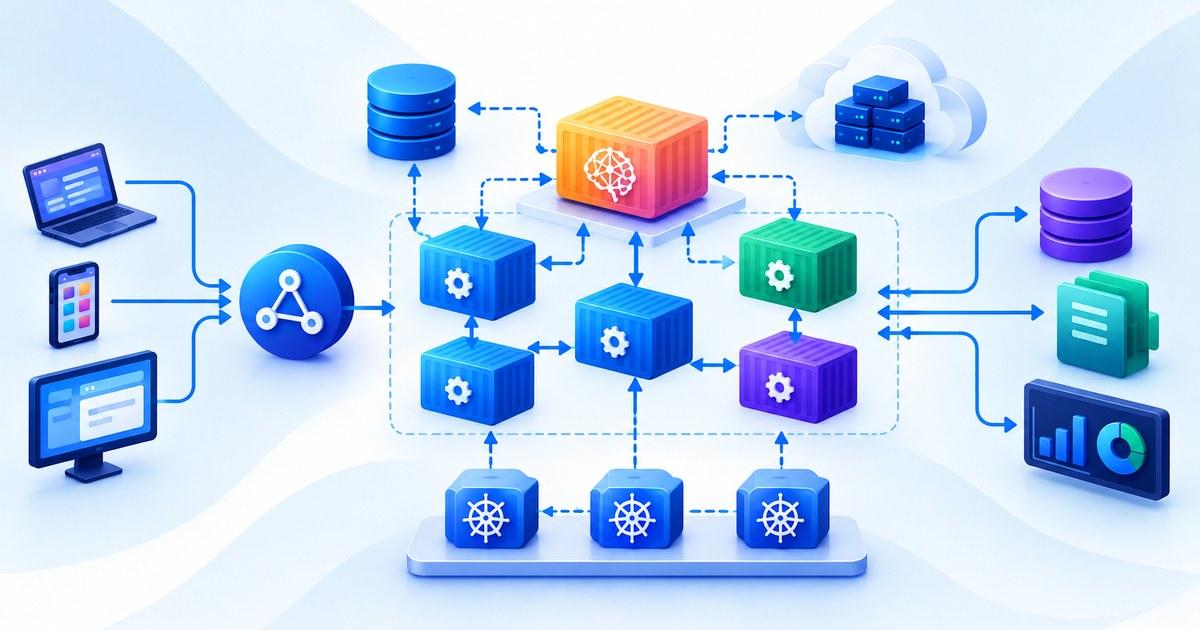
Supporting these frameworks is a robust production infrastructure specifically designed for AI workloads. Traditional cloud architectures optimized for web applications are often insufficient for large-scale inference because AI systems require specialized GPUs, high-bandwidth memory, low-latency networking, distributed storage, intelligent orchestration platforms, observability systems, caching layers, and workload schedulers operating together seamlessly. Production AI infrastructure therefore resembles a highly coordinated distributed computing environment where every component contributes to minimizing latency, maximizing throughput, improving reliability, and controlling operational costs.
Perhaps the most important insight emerging from AI Performance Engineering is that exceptional AI products are built through systems optimization rather than isolated hardware upgrades. Organizations frequently assume purchasing more powerful GPUs will solve performance challenges, yet many production bottlenecks originate elsewhere within inference pipelines, memory management, networking, scheduling, or serving architectures. Sustainable optimization therefore requires a holistic engineering approach where models, infrastructure, software frameworks, orchestration systems, and hardware accelerators operate as a unified performance ecosystem.
Readers interested in understanding how intelligent orchestration enables scalable AI systems should also explore "The Engineering Behind Autonomous AI Workflows," which examines how orchestration frameworks, distributed infrastructure, and autonomous AI systems collaborate to deliver enterprise-scale intelligent applications.
Key Takeaway
AI Performance Engineering extends far beyond accelerating model execution. AI inference optimization, model quantization, KV cache optimization, intelligent batching, parallel inference, GPU scheduling, memory optimization, networking efficiency, AI serving frameworks, and production infrastructure collectively determine whether AI systems operate successfully at enterprise scale. Organizations that optimize every layer of the inference stack deliver faster, more scalable, more reliable, and significantly more cost-efficient AI experiences, transforming powerful language models into production-ready intelligent platforms capable of supporting millions of users.
Section 3: Building Reliable and Efficient Enterprise AI Systems
As organizations move from AI experimentation to enterprise-scale deployment, performance optimization alone is no longer sufficient. A language model that produces responses in milliseconds provides little business value if it becomes unavailable during periods of peak demand, consumes excessive infrastructure resources, exposes sensitive information, or degrades unpredictably over time. Enterprise AI systems are expected to operate continuously across global regions, serve millions of users simultaneously, comply with strict regulatory requirements, and deliver consistent user experiences regardless of workload fluctuations. Achieving these objectives requires a comprehensive engineering approach that combines performance optimization with operational excellence, reliability engineering, observability, governance, and continuous improvement.
This represents one of the most significant differences between research-oriented AI development and production AI engineering. Research teams primarily evaluate model capabilities using controlled datasets and benchmark scores. Enterprise engineering teams must ensure those same models remain responsive under unpredictable workloads, recover gracefully from infrastructure failures, optimize hardware utilization continuously, and maintain operational efficiency while serving real users around the clock. Every production deployment therefore becomes a complex distributed system rather than simply a machine learning model running on powerful hardware.
As AI applications continue expanding across finance, healthcare, manufacturing, cybersecurity, software development, telecommunications, and enterprise productivity, organizations increasingly recognize that production success depends on operating AI systems with the same discipline previously applied to cloud infrastructure through Site Reliability Engineering (SRE). AI Performance Engineering extends these principles into the world of intelligent applications by ensuring that inference services remain observable, resilient, secure, scalable, and economically sustainable throughout their operational lifecycle.
Operating AI Systems at Enterprise Scale
The foundation of reliable AI operations begins with AI observability. Traditional application monitoring focuses primarily on infrastructure metrics such as CPU utilization, memory consumption, disk usage, and application availability. AI-native systems require significantly deeper operational visibility because model quality and infrastructure efficiency must be monitored simultaneously. AI observability continuously tracks inference latency, token generation speed, GPU utilization, request throughput, cache efficiency, model accuracy, retrieval quality, user satisfaction, infrastructure health, and workload distribution across production environments. These measurements provide engineering teams with comprehensive insight into how AI systems behave under real production conditions, enabling them to identify emerging bottlenecks before users experience degraded service.
Closely connected to observability is comprehensive performance monitoring. Performance optimization is not a one-time engineering activity completed before deployment. User behavior changes continuously, enterprise knowledge expands, models evolve, infrastructure configurations change, and application workloads fluctuate throughout the day. AI Performance Engineers therefore establish continuous monitoring systems that evaluate latency distributions, inference efficiency, queue lengths, GPU scheduling effectiveness, batching performance, network communication, memory allocation, and request completion times across every production environment. Continuous performance monitoring allows organizations to detect gradual efficiency declines early, ensuring AI systems maintain predictable responsiveness as operational conditions evolve.
Performance, however, cannot be evaluated independently of financial efficiency. Large-scale AI deployments often operate on thousands of GPUs distributed across multiple cloud regions, making cost monitoring one of the most important responsibilities within AI Performance Engineering. Every inference request consumes computational resources, memory bandwidth, networking capacity, and storage infrastructure, collectively contributing to operational expenses. Engineering teams therefore monitor cost per inference, GPU utilization efficiency, infrastructure allocation, energy consumption, cloud spending, storage costs, and workload distribution continuously. Rather than simply reducing expenses, cost monitoring enables organizations to maximize business value generated from every computational resource while maintaining exceptional user experiences.
Engineering Reliable AI Operations
Sustaining enterprise AI platforms also requires applying principles from reliability engineering. AI systems must continue functioning despite hardware failures, cloud outages, networking interruptions, software bugs, infrastructure upgrades, and unexpected demand spikes. Performance Engineers therefore design highly resilient architectures incorporating redundancy, distributed inference clusters, automated failover mechanisms, workload replication, graceful degradation strategies, and disaster recovery procedures. Reliability engineering ensures that intelligent applications remain available even when individual infrastructure components experience failures, preserving business continuity while minimizing user disruption.
As AI systems become deeply integrated into enterprise operations, security assumes equal importance alongside performance. Production AI platforms routinely access customer information, proprietary documentation, enterprise databases, APIs, source code repositories, financial records, and confidential organizational knowledge. These environments present unique attack surfaces including prompt injection, adversarial inputs, unauthorized model access, inference manipulation, API abuse, and data leakage. AI Performance Engineers collaborate closely with security teams to ensure optimized inference pipelines do not compromise authentication, encryption, access control, network isolation, or infrastructure protection. Secure AI systems must remain both highly efficient and highly resilient against evolving cybersecurity threats.
Strong security must be supported by comprehensive AI governance. Governance establishes organizational policies governing model deployment, infrastructure changes, resource allocation, operational accountability, compliance validation, version management, and production approvals. AI Performance Engineering contributes directly to governance by ensuring infrastructure modifications, optimization strategies, scaling policies, and deployment decisions remain transparent, auditable, and aligned with business objectives. Governance transforms AI operations from experimental infrastructure into enterprise-grade engineering platforms where every operational decision remains traceable and accountable.
Readers interested in understanding how engineering strategy extends beyond technical implementation to deliver enterprise AI success should also explore "The Business of AI: What Every ML Engineer Should Know Beyond Coding," which examines how operational thinking, governance, and business strategy combine to create scalable AI organizations.
Key Takeaway
Building reliable and efficient enterprise AI systems requires far more than optimizing inference speed. AI observability, performance monitoring, cost monitoring, autoscaling, intelligent load balancing, reliability engineering, security, AI governance, continuous optimization, and disciplined production operations collectively ensure that AI platforms remain scalable, resilient, cost-efficient, and enterprise-ready. Organizations that master these operational disciplines transform advanced AI models into dependable business platforms capable of delivering exceptional performance, operational stability, and sustainable long-term value.
Section 4: Why AI Performance Engineers Will Shape the Future of AI
Artificial intelligence is evolving far beyond standalone chatbots and predictive models. The next generation of AI systems will consist of autonomous agents capable of reasoning, planning, collaborating, making decisions, interacting with external tools, processing multiple forms of data simultaneously, and continuously adapting to changing environments. These intelligent systems will operate across cloud platforms, enterprise software, edge devices, industrial equipment, healthcare infrastructure, financial services, and consumer applications, creating computational demands unlike anything the software industry has previously encountered. While advances in Large Language Models will continue to drive innovation, the long-term success of AI will increasingly depend on the engineers responsible for ensuring these sophisticated systems remain fast, scalable, reliable, and economically sustainable.
This evolution marks a significant shift in the engineering landscape. Over the past decade, organizations invested heavily in hiring Machine Learning Engineers and Data Scientists to build intelligent models capable of solving increasingly complex problems. During the coming decade, enterprises will continue requiring those specialists, but they will also create an entirely new category of engineering roles dedicated to operating AI at production scale. As AI workloads become larger, more distributed, and more integrated into mission-critical business operations, optimizing model execution will become as strategically important as designing the models themselves. AI Performance Engineers will therefore emerge as one of the most influential engineering disciplines supporting the global expansion of artificial intelligence.
The growing importance of performance engineering mirrors earlier technological revolutions. As cloud computing matured, organizations discovered that writing distributed applications represented only part of the challenge. Reliable cloud platforms required Site Reliability Engineers, Platform Engineers, Infrastructure Architects, and Cloud Operations specialists capable of maintaining highly available, scalable, and efficient production environments. Artificial intelligence is following a similar trajectory. Developing intelligent models is only the beginning; sustaining those models across millions of users demands sophisticated engineering focused on infrastructure optimization, operational resilience, resource efficiency, and continuous performance improvement.
The Rise of AI-Native Engineering Careers
One of the strongest indicators of this transformation is the rapid emergence of AI infrastructure engineers. Traditional cloud infrastructure teams focused primarily on virtual machines, storage systems, networking, databases, Kubernetes clusters, and distributed applications. AI infrastructure introduces an entirely different level of complexity. Production AI environments require GPU clusters, high-bandwidth interconnects, distributed inference engines, vector databases, AI accelerators, memory optimization strategies, specialized networking architectures, and intelligent orchestration systems capable of supporting extremely demanding computational workloads. AI infrastructure engineers design and maintain these environments, ensuring hardware resources remain highly utilized while delivering consistent performance across globally distributed deployments.
Closely related to infrastructure engineering is the rapid growth of AI platform engineering. Enterprise organizations increasingly develop internal AI platforms that allow multiple business teams to deploy, monitor, optimize, and manage intelligent applications without rebuilding infrastructure from scratch. AI Platform Engineers create reusable serving frameworks, deployment pipelines, observability platforms, security controls, governance systems, model registries, orchestration frameworks, and performance optimization services that standardize AI development across the organization. Rather than supporting individual AI applications, these engineers build the foundational platforms that enable hundreds of AI initiatives to operate efficiently at enterprise scale. Performance engineering becomes deeply integrated into these platforms because every shared service must maximize efficiency while minimizing infrastructure costs.
The rapid emergence of Agentic AI further increases the importance of performance engineering. Unlike traditional conversational systems that generate a single response for each user request, agentic systems coordinate multiple autonomous AI agents working together to accomplish complex objectives. One agent may retrieve enterprise knowledge, another may analyze business data, a third may generate code, while additional agents verify outputs, execute workflows, interact with external applications, and monitor results. Every additional agent introduces new computational demands, increased networking requirements, more complex orchestration, and additional infrastructure coordination. AI Performance Engineers optimize these collaborative systems by reducing communication overhead, improving scheduling efficiency, minimizing latency between agents, and ensuring distributed workflows execute reliably despite growing architectural complexity.
Readers interested in understanding how practical engineering experience accelerates success in this rapidly evolving field should also explore "Research to Real-World ML Engineering: Bridging the Gap," which examines how engineers translate cutting-edge AI research into scalable production systems that create measurable business impact.
Key Takeaway
The future of artificial intelligence will be shaped not only by smarter models but by smarter systems capable of operating efficiently at global scale. AI infrastructure engineers, AI platform engineers, specialists in Agentic AI, Edge AI, multimodal systems, and advanced AI hardware optimization will define the next generation of enterprise engineering. As organizations continue embedding AI into every aspect of business operations, AI Performance Engineering will become one of the most valuable and high-demand disciplines in software engineering, enabling intelligent applications to remain scalable, reliable, cost-efficient, and ready to support the next era of AI-driven innovation.
Conclusion
Artificial intelligence has reached a pivotal stage in its evolution where building intelligent models is no longer the greatest engineering challenge. The industry has successfully demonstrated that Large Language Models, multimodal systems, and autonomous AI agents can perform increasingly sophisticated reasoning, generate high-quality content, write software, analyze documents, and automate complex workflows. However, as these technologies transition from research laboratories into enterprise production environments, organizations are discovering that intelligence alone does not guarantee successful AI products. Performance has become equally important because users judge AI systems not by benchmark scores or parameter counts, but by how quickly, reliably, and consistently they deliver value in real-world scenarios.
Throughout this article, we explored why AI Performance Engineering has emerged as one of the fastest-growing disciplines within modern software engineering. The conversation has shifted beyond improving model accuracy toward optimizing latency, throughput, scalability, GPU utilization, infrastructure efficiency, operational reliability, and cost-effectiveness. Enterprises deploying AI across customer support, software development, healthcare, finance, cybersecurity, manufacturing, education, and business automation require systems capable of supporting millions of users while maintaining exceptional responsiveness and sustainable operating costs. These demands have transformed performance optimization from a technical enhancement into a strategic business necessity.
We also examined the engineering practices that make production AI possible. AI inference optimization, model quantization, KV cache optimization, intelligent batching, parallel inference, GPU scheduling, memory management, networking optimization, and specialized AI serving frameworks collectively ensure that advanced models operate efficiently at scale. Rather than relying solely on increasingly powerful hardware, successful organizations optimize every layer of the AI stack to maximize computational efficiency while minimizing latency and infrastructure costs. This systems-oriented approach allows enterprises to deliver superior AI experiences without continually expanding hardware investments.
Beyond technical optimization, reliable enterprise AI depends on operational excellence. AI observability, continuous performance monitoring, cost monitoring, autoscaling, load balancing, reliability engineering, security, governance, and production operations enable organizations to maintain consistent service quality despite changing workloads and rapidly evolving business requirements. These disciplines ensure that AI platforms remain resilient, secure, compliant, and continuously optimized throughout their operational lifecycle. As foundational AI models become widely available, operational excellence will increasingly distinguish industry leaders from competitors relying solely on model capabilities.
Frequently Asked Questions (FAQs)
1. What is AI Performance Engineering?
AI Performance Engineering is the discipline focused on optimizing AI systems for speed, scalability, reliability, resource efficiency, and cost-effectiveness. It ensures that AI models operate efficiently in production by improving inference performance, infrastructure utilization, and operational stability.
2. Why is AI Performance Engineering becoming important?
As AI applications scale to millions of users, organizations must optimize latency, throughput, GPU utilization, infrastructure costs, and system reliability. Performance Engineering enables AI systems to deliver consistent user experiences while remaining economically sustainable.
3. How is AI Performance Engineering different from Machine Learning Engineering?
Machine Learning Engineers primarily build, train, and improve AI models, whereas AI Performance Engineers optimize how those models run in production by focusing on inference efficiency, infrastructure optimization, scalability, and operational performance.
4. What factors affect AI inference latency?
Inference latency is influenced by model size, hardware capabilities, GPU utilization, memory bandwidth, KV cache management, batching strategies, network communication, request routing, and serving framework efficiency.
5. What is model quantization?
Model quantization reduces the numerical precision of model parameters to decrease memory usage and computational requirements while maintaining nearly the same prediction quality, resulting in faster inference and lower infrastructure costs.
6. What is KV cache optimization in Large Language Models?
KV cache optimization stores previously computed attention states during text generation, allowing models to reuse computations instead of recalculating them for every generated token. This significantly reduces latency and improves inference efficiency.
7. Why is GPU utilization important in AI systems?
GPUs represent one of the most expensive components of AI infrastructure. High GPU utilization enables organizations to process more inference requests using existing hardware, improving performance while reducing operational costs.
8. How do enterprises optimize AI serving?
Enterprises optimize AI serving through intelligent batching, distributed inference, autoscaling, GPU scheduling, caching strategies, specialized inference frameworks, load balancing, and continuous performance monitoring.
9. What is AI observability?
AI observability provides real-time visibility into AI system behavior by monitoring latency, throughput, GPU utilization, inference quality, infrastructure health, token generation speed, operational costs, and user experience metrics.
10. How does autoscaling improve AI performance?
Autoscaling automatically adjusts computational resources based on workload demand, ensuring AI applications maintain low latency and high availability during traffic spikes while avoiding unnecessary infrastructure expenses during lower-demand periods.
11. Which skills are required for AI Performance Engineering?
Professionals typically need expertise in distributed systems, cloud computing, GPU architectures, Kubernetes, networking, operating systems, AI inference frameworks, Large Language Models, observability platforms, performance optimization, and infrastructure automation.
12. Which industries need AI Performance Engineers?
Healthcare, finance, cybersecurity, manufacturing, retail, logistics, telecommunications, education, autonomous systems, enterprise software, and technology companies all require AI Performance Engineers to deploy and operate AI solutions efficiently.
13. How does AI Performance Engineering reduce operational costs?
By improving GPU utilization, optimizing inference pipelines, reducing latency, minimizing unnecessary computations, implementing intelligent scheduling, and maximizing infrastructure efficiency, organizations can significantly lower the cost of serving AI workloads.
14. What tools are commonly used in AI Performance Engineering?
Common tools include NVIDIA Triton Inference Server, TensorRT-LLM, vLLM, Ray Serve, Kubernetes, Prometheus, Grafana, OpenTelemetry, MLflow, NVIDIA Nsight, CUDA profiling tools, vector databases, and cloud-native monitoring platforms.
15. What is the future of AI Performance Engineering?
AI Performance Engineering will become a core discipline supporting Agentic AI, multimodal AI, Edge AI, autonomous infrastructure management, specialized AI hardware, and self-optimizing inference platforms. As enterprise AI adoption accelerates, demand for AI Performance Engineers is expected to grow rapidly, making it one of the most valuable and future-proof careers in software engineering.