Section 1: From AI Features to AI-Native Products
The role of artificial intelligence in software development has undergone a remarkable transformation over the past decade. Initially, AI was viewed as a specialized capability that could enhance specific parts of an application. Organizations integrated recommendation engines into e-commerce platforms, chatbots into customer support portals, fraud detection models into banking systems, or predictive analytics into business dashboards. These AI-powered features certainly improved user experiences, but they remained isolated components within applications whose core architecture was still built around deterministic business logic. Users interacted primarily with traditional software, occasionally invoking AI when they needed additional assistance.
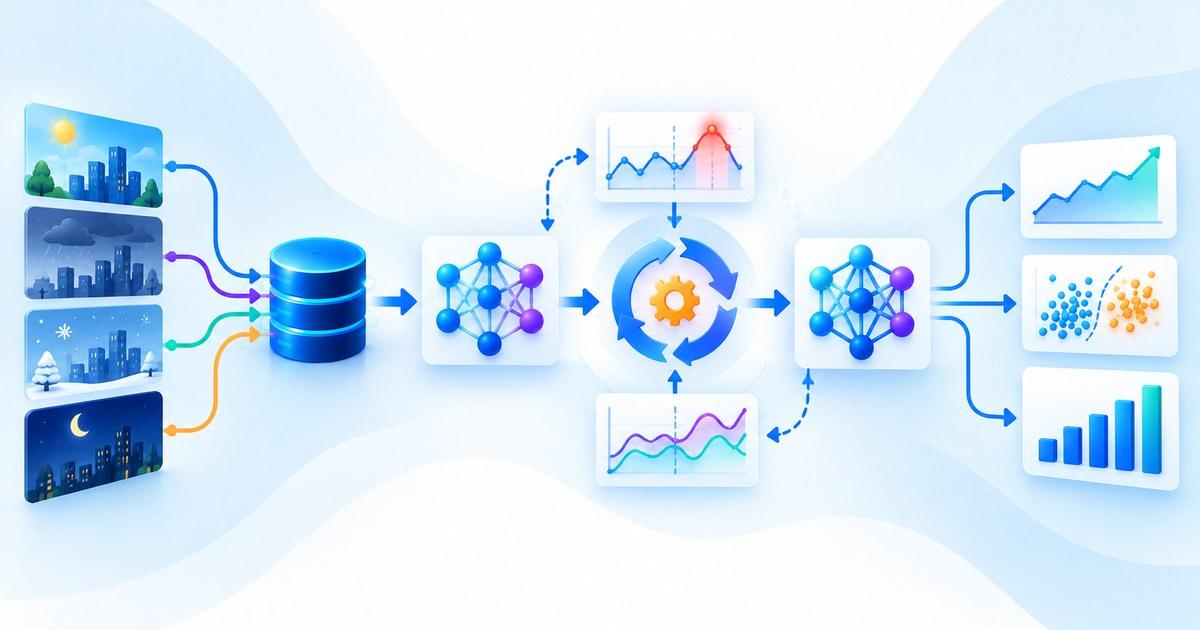
Today, this approach is rapidly becoming obsolete. Enterprises are no longer designing software first and then deciding where artificial intelligence can be added. Instead, they are beginning product development with a fundamentally different question: How can every user interaction become more intelligent? This shift represents the rise of AI-native applications, where artificial intelligence influences every aspect of product design, workflow execution, personalization, automation, and decision-making. Rather than existing as a collection of individual AI features, intelligence becomes the operating principle of the entire application.
This transition reflects changing user expectations. Modern users increasingly expect software to understand their intent rather than simply respond to explicit instructions. They want applications that recommend next steps, summarize complex information, automate repetitive work, predict future needs, and adapt to individual preferences over time. Meeting these expectations requires more than integrating a language model into existing software. It demands rethinking application architecture, user experience, and engineering workflows from an AI-first perspective.
Rethinking Product Design with an AI-First Mindset
Traditional software development follows a relatively predictable pattern. Product teams identify business requirements, define workflows, create interfaces, and implement features that execute predefined actions based on user input. Every screen, button, and workflow is carefully designed around fixed rules established during development. While this approach has powered enterprise software for decades, it often struggles to accommodate the dynamic and personalized experiences modern users expect.
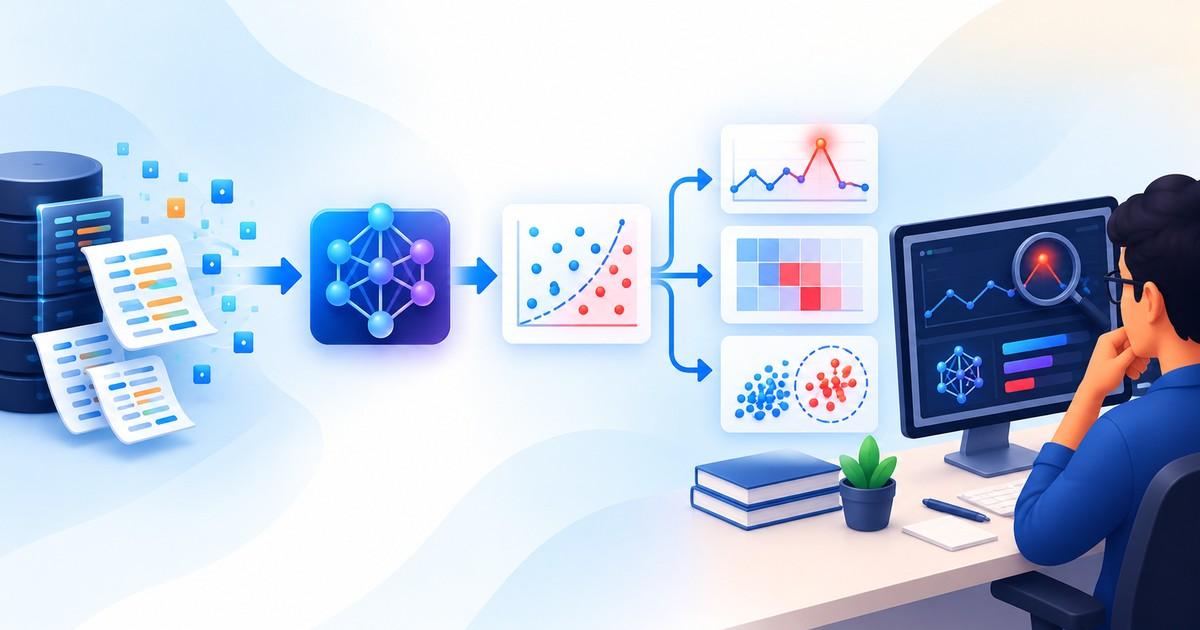
AI-native product development introduces a fundamentally different philosophy known as AI-first thinking. Instead of asking how users should interact with software, engineers begin by considering how software can understand users. Every feature is designed around intelligence rather than automation alone. Artificial intelligence continuously analyzes context, interprets intent, generates recommendations, predicts future actions, and simplifies decision-making throughout the application. The software evolves from being a passive tool into an active collaborator capable of assisting users at every stage of their workflow.
One of the defining characteristics of AI-native applications is user-centric intelligence. Rather than providing identical experiences to every user, intelligent applications adapt continuously based on roles, preferences, historical interactions, organizational objectives, and real-time context. A project management platform, for example, no longer simply displays tasks. Instead, it identifies high-priority work, predicts potential delays, summarizes project updates, drafts communications, recommends resource allocation, and suggests corrective actions before problems escalate. Every feature becomes more valuable because artificial intelligence understands both the user and the broader business environment.
This capability naturally extends into personalization, which has become one of the most important competitive advantages of AI-powered products. Earlier personalization engines relied on simple rule-based recommendations or historical purchasing patterns. Modern AI systems analyze significantly richer contextual information, including behavioral trends, communication styles, collaboration patterns, business priorities, and organizational knowledge. As users continue interacting with the application, the AI refines its understanding, enabling increasingly accurate recommendations and highly personalized experiences. Instead of forcing users to adapt to software, AI-native products continuously adapt to individual users.
Closely connected to personalization is context awareness. Traditional applications typically process each user request independently, requiring users to repeatedly provide information or navigate through multiple interfaces. AI-native applications maintain contextual understanding across interactions, allowing software to remember previous conversations, ongoing projects, business objectives, and related activities. This persistent awareness enables more natural interactions where users focus on achieving outcomes rather than managing software workflows. Context-aware applications reduce friction while significantly improving productivity because they eliminate repetitive manual tasks that have long been accepted as unavoidable.
Readers interested in understanding why software organizations are restructuring engineering teams around artificial intelligence should also explore "Why Every Software Team Will Have an AI Engineer by 2030," which examines how AI-native development is reshaping software engineering roles, product strategy, and enterprise innovation.
Key Takeaway
The evolution from isolated AI features to AI-native products represents one of the most significant shifts in software engineering. Instead of adding intelligence to individual capabilities, modern applications embed AI into every workflow through AI-first thinking, personalization, context awareness, AI copilots, intelligent automation, and user-centric design. Organizations adopting this engineering philosophy are building software that continuously adapts to users, delivers more meaningful experiences, and establishes the foundation for the next generation of enterprise applications.
Section 2: Engineering the Architecture Behind AI-Powered Features
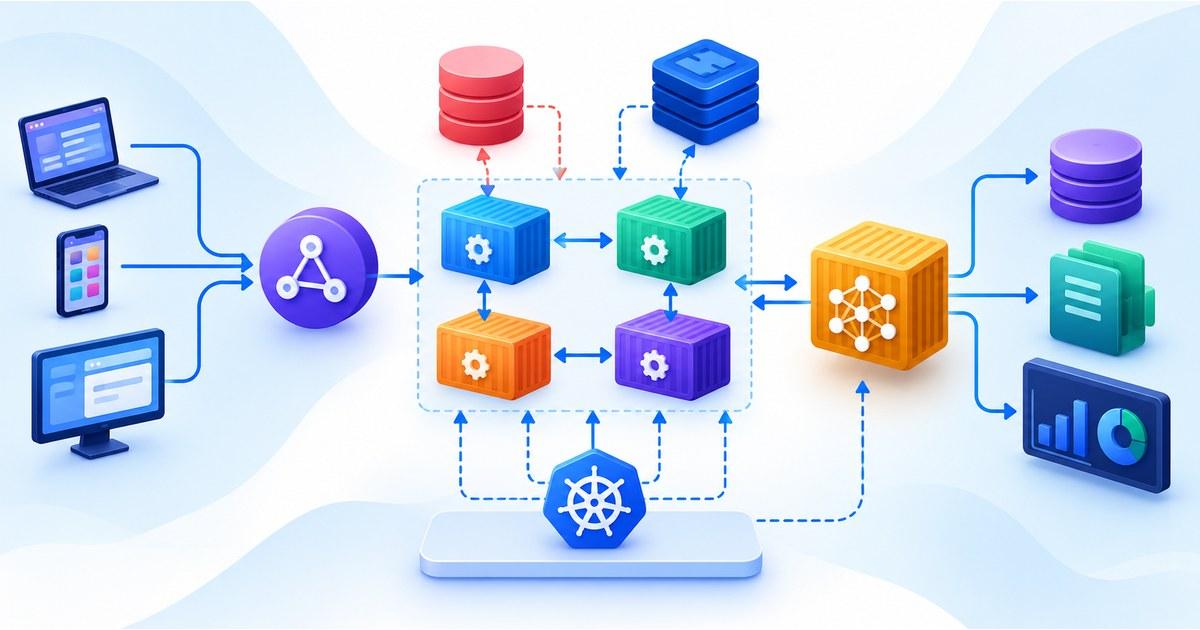
The promise of AI-native applications extends far beyond embedding a chatbot into an existing product or connecting a Large Language Model (LLM) through an API. While these approaches can introduce intelligent capabilities quickly, they rarely provide the reliability, scalability, personalization, and responsiveness expected from enterprise software. As organizations expand artificial intelligence across every feature of an application, they quickly discover that the model itself represents only one component of a much larger engineering ecosystem. Behind every AI-powered experience lies an architecture responsible for retrieving knowledge, managing context, orchestrating multiple services, optimizing performance, protecting sensitive data, and delivering reliable responses within milliseconds.
This realization has fundamentally changed the way engineering teams approach application architecture. Traditional software systems were designed around databases, business logic, APIs, and user interfaces. AI-native applications introduce additional architectural layers that enable software to understand language, retrieve enterprise knowledge, maintain long-term context, coordinate multiple AI models, and adapt continuously to changing user needs. These capabilities require entirely new engineering patterns that differ significantly from conventional web application development.
Building such architectures also demands balancing competing priorities. AI systems must generate accurate responses while remaining fast enough for real-time interaction. They must personalize experiences without compromising user privacy. They must retrieve current information while preventing hallucinations. They must scale to millions of requests while controlling infrastructure costs. Successfully achieving these objectives requires thoughtful engineering decisions rather than simply selecting the most powerful language model available.
The Core Components of AI-Native Architecture
At the center of most AI-native applications are Large Language Models (LLMs). These models provide the reasoning, language understanding, summarization, content generation, translation, coding assistance, and conversational capabilities that define modern intelligent software. Their ability to process natural language allows users to interact with applications conversationally rather than navigating rigid interfaces or learning complex commands. However, despite their impressive capabilities, LLMs possess an important limitation: they only know what was included during training and cannot reliably access real-time enterprise information on their own.
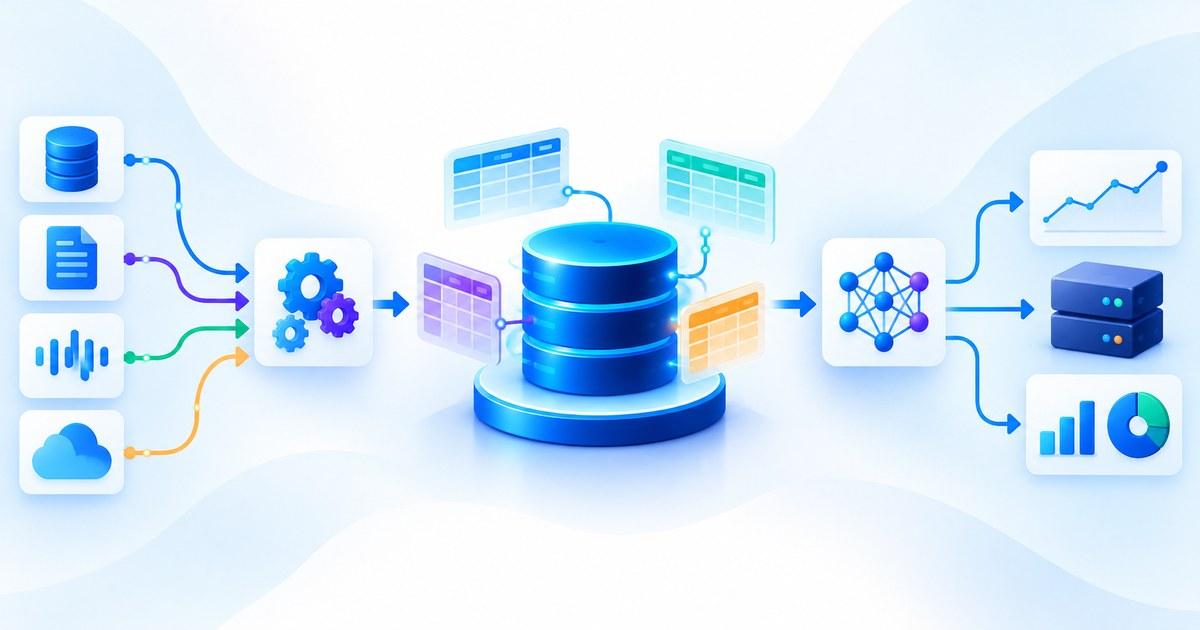
To overcome this limitation, organizations increasingly implement Retrieval-Augmented Generation (RAG). Instead of relying exclusively on the model's internal knowledge, RAG enables applications to retrieve relevant information from organizational documents, databases, knowledge bases, product catalogs, or support articles before generating a response. When users ask questions, the application first searches trusted enterprise content, supplies the retrieved information to the language model, and then generates an answer grounded in verified organizational knowledge. This significantly improves factual accuracy while reducing hallucinations, making RAG one of the most important architectural patterns for enterprise AI.
Supporting RAG requires vector databases, which store information in numerical embeddings rather than traditional rows and columns. Unlike relational databases that retrieve information using exact matches, vector databases identify semantically similar content even when users phrase questions differently. For example, an employee searching for "vacation rules," "leave policy," or "paid time off" may receive the same relevant company documentation despite using different wording. This semantic retrieval capability enables AI applications to understand meaning rather than keywords, dramatically improving the quality of enterprise search, recommendation systems, and conversational assistants.
Another critical architectural component is prompt engineering. Contrary to popular belief, prompt engineering within enterprise applications involves much more than writing clever instructions. Production systems dynamically construct prompts by combining user requests, retrieved organizational knowledge, previous conversations, user preferences, security constraints, business rules, and formatting instructions before sending information to the language model. These prompts evolve continuously depending on context, making prompt construction an automated engineering process rather than a manually written instruction. Well-designed prompt pipelines improve consistency, reduce hallucinations, and ensure responses align with organizational objectives.
Designing for Scale, Speed, and Context
As AI-powered applications grow, organizations rarely rely on a single model for every task. Different models possess different strengths. Some excel at reasoning, others generate code efficiently, while smaller models provide faster responses for routine interactions. This diversity has led to the adoption of model routing, where intelligent orchestration systems automatically select the most appropriate model based on task complexity, latency requirements, cost considerations, and expected output quality. Routine customer inquiries may be handled by lightweight models, while complex analytical tasks are delegated to larger reasoning models. This approach improves both user experience and infrastructure efficiency while preventing unnecessary computational costs.
Another increasingly important architectural component is memory systems. Traditional applications treat each interaction independently, requiring users to repeat information frequently. AI-native applications maintain contextual memory across conversations, projects, and workflows, allowing software to remember user preferences, organizational knowledge, historical decisions, and ongoing tasks. Persistent memory enables more natural interactions while reducing repetitive communication. Enterprise AI assistants become progressively more valuable because they accumulate contextual understanding over time instead of restarting every conversation from scratch.
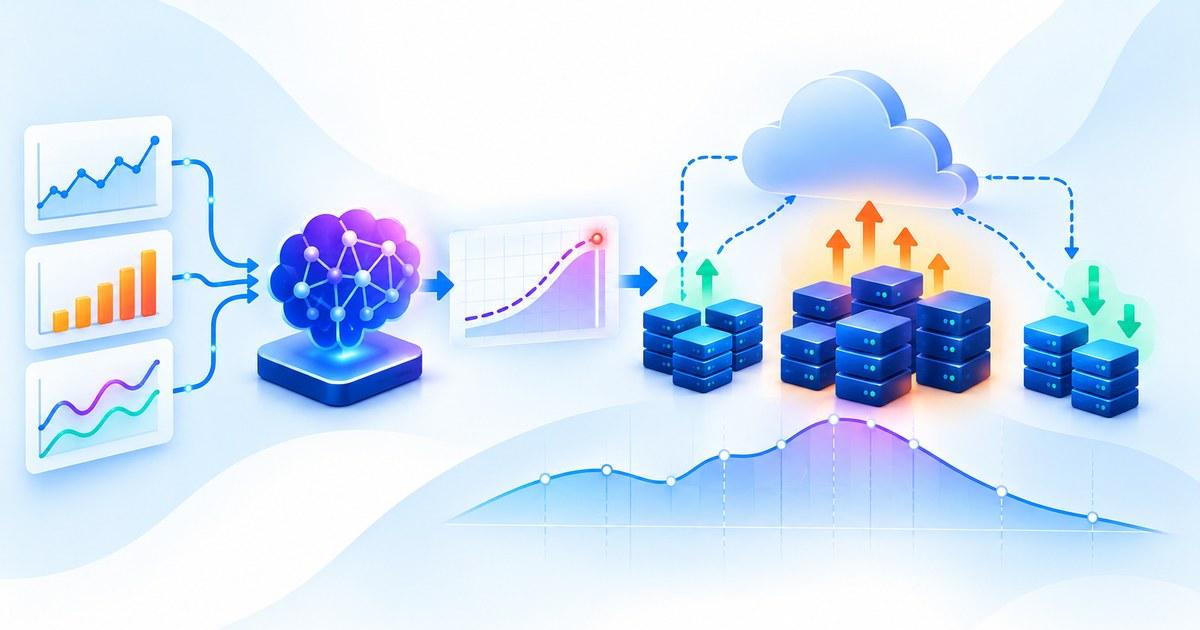
Building AI-powered applications also introduces significant scalability challenges. Unlike conventional web requests, AI inference requires substantial computational resources, particularly when serving millions of users simultaneously. Engineering teams must design distributed infrastructures capable of balancing workloads across multiple GPUs, managing concurrent inference requests, caching frequently used responses, optimizing retrieval pipelines, and scaling dynamically based on demand. Efficient scalability ensures applications maintain consistent performance even during periods of high traffic while controlling infrastructure costs.
Readers interested in understanding how intelligent orchestration enables autonomous enterprise systems should also explore "The Engineering Behind Autonomous AI Workflows," which examines how orchestration pipelines, AI infrastructure, and production engineering transform individual AI capabilities into scalable enterprise solutions.
Key Takeaway
Engineering AI-powered applications requires far more than integrating a Large Language Model into existing software. Successful AI-native architectures combine LLMs, Retrieval-Augmented Generation, vector databases, prompt engineering, AI orchestration, APIs, model routing, memory systems, scalable infrastructure, and latency optimization to deliver intelligent, responsive, and reliable user experiences. By integrating these technologies into a unified engineering platform, organizations can build applications where every feature is enhanced by artificial intelligence while remaining secure, scalable, and ready for enterprise deployment.
Section 3: Building Reliable, Secure, and Responsible AI Applications
As artificial intelligence becomes the foundation of modern software, organizations face a challenge that extends far beyond developing intelligent features. Users may initially adopt AI-powered applications because they automate tasks, generate content, or simplify complex workflows, but long-term success depends on whether those applications consistently produce reliable, secure, and trustworthy results. An AI system that occasionally provides inaccurate recommendations, exposes sensitive information, or behaves unpredictably can quickly undermine user confidence regardless of how sophisticated its underlying models may be. Consequently, engineering AI-native applications requires balancing innovation with responsibility, ensuring that intelligence enhances business value without compromising reliability or trust.
Unlike traditional software, AI applications operate probabilistically rather than deterministically. Conventional applications execute predefined instructions that produce consistent outcomes under identical conditions. AI systems, particularly those powered by Large Language Models, generate responses by evaluating probabilities across enormous datasets. This capability enables flexibility and creativity but also introduces uncertainty. Responses may vary between identical requests, reasoning can occasionally be flawed, and generated outputs may contain inaccuracies despite appearing highly convincing. These characteristics make reliability one of the most significant engineering challenges in AI-native product development.
The widespread adoption of AI across finance, healthcare, legal services, cybersecurity, education, manufacturing, and enterprise productivity further increases the importance of dependable systems. AI recommendations increasingly influence financial decisions, customer interactions, software development, regulatory compliance, and operational planning. Under these circumstances, organizations cannot simply trust AI outputs without validation. They must build engineering frameworks that continuously monitor model behavior, protect sensitive information, ensure regulatory compliance, and provide mechanisms for human intervention whenever necessary. Responsible AI therefore becomes an engineering discipline rather than merely an ethical consideration.
Engineering Trust into AI-Powered Products
One of the most important capabilities supporting reliable AI applications is AI observability. Traditional application monitoring focuses primarily on infrastructure metrics such as server utilization, memory consumption, response times, and network performance. AI-native applications require significantly broader visibility because model quality depends on far more than system availability. Engineering teams must continuously evaluate prediction accuracy, hallucination frequency, response consistency, retrieval quality, user feedback, inference latency, prompt performance, and business outcomes. AI observability provides this comprehensive operational awareness, enabling organizations to identify declining performance before customers experience noticeable problems. Rather than reacting to failures after they occur, observability allows engineers to detect emerging issues early and implement corrective actions proactively.
Among the most widely discussed challenges in Generative AI is hallucination mitigation. Large Language Models occasionally generate information that appears highly plausible despite being factually incorrect or unsupported by evidence. In enterprise environments, such inaccuracies can affect customer service, legal documentation, financial reporting, software development, healthcare recommendations, and executive decision-making. Engineering teams therefore implement multiple safeguards to minimize hallucinations. Retrieval-Augmented Generation (RAG) grounds responses in verified organizational knowledge, confidence scoring identifies uncertain outputs, validation pipelines cross-check generated information against trusted sources, and structured prompt engineering guides models toward more reliable responses. These layered techniques significantly improve factual accuracy while reducing the likelihood of misleading information reaching end users.
Equally important is ensuring robust security throughout the AI application lifecycle. AI-native platforms frequently process confidential enterprise data, customer records, financial transactions, proprietary intellectual property, and regulated information. This makes them attractive targets for cyberattacks. Threats such as prompt injection, adversarial inputs, unauthorized API access, data poisoning, model theft, and malicious automation require organizations to integrate cybersecurity directly into AI engineering rather than treating it as a separate operational concern. Authentication, encryption, role-based access control, secure API gateways, vulnerability assessments, and continuous threat monitoring collectively protect AI applications against evolving attack vectors while preserving system integrity.
Ensuring Responsible AI at Enterprise Scale
As AI systems become more influential in business operations, users increasingly expect to understand how decisions are made. This expectation has elevated the importance of explainability. Traditional software typically produces easily traceable outputs because every decision follows predefined logic. AI models, particularly deep learning systems, often function as complex statistical models whose internal reasoning is difficult to interpret. Explainability techniques provide additional context by identifying influential factors, presenting supporting evidence, summarizing reasoning steps, or referencing retrieved knowledge used during response generation. Although explainability may not reveal every mathematical calculation performed by the model, it significantly improves user confidence by making AI-assisted decisions more transparent and understandable.
Responsible AI also requires meaningful human oversight. Despite rapid advances in autonomous systems, there remain numerous situations where human expertise is essential. Medical diagnoses, financial approvals, legal advice, hiring decisions, cybersecurity responses, and regulatory assessments often involve significant consequences that extend beyond algorithmic predictions. AI-native applications therefore incorporate workflows that allow humans to review recommendations, approve sensitive actions, override automated decisions, or provide corrective feedback when necessary. This collaborative model combines the speed and scalability of artificial intelligence with the judgment, ethical reasoning, and contextual understanding that experienced professionals contribute.
Maintaining trust over time depends heavily on continuous evaluation. AI systems do not remain static after deployment. User behavior changes, enterprise knowledge expands, business objectives evolve, and operational environments introduce new challenges that gradually influence model performance. Organizations therefore establish evaluation pipelines that continuously measure response quality, hallucination rates, retrieval effectiveness, customer satisfaction, workflow efficiency, and business impact. Automated testing, A/B experimentation, user feedback analysis, and performance benchmarking enable engineering teams to improve AI systems continuously while ensuring updates enhance rather than degrade user experiences.
Readers interested in understanding how engineering decisions influence organizational success beyond technical implementation should also explore "The Business of AI: What Every ML Engineer Should Know Beyond Coding," which explains how governance, operational excellence, scalability, and responsible engineering contribute to building enterprise-ready AI solutions.
Key Takeaway
Building reliable, secure, and responsible AI applications requires far more than deploying powerful language models. AI observability, hallucination mitigation, cybersecurity, governance, privacy, explainability, human oversight, continuous evaluation, and regulatory compliance collectively create the foundation of enterprise trust. Organizations that integrate these engineering principles into every stage of AI development will build applications that are not only intelligent but also dependable, transparent, secure, and capable of delivering long-term business value across increasingly complex enterprise environments.
Section 4: The Future of AI-Native Software Development
Artificial intelligence has already transformed software from a collection of static features into intelligent systems capable of understanding language, generating content, automating workflows, and assisting users with increasingly sophisticated tasks. Yet, the AI-powered applications available today represent only the early stages of this transformation. Most current systems still require users to initiate interactions, provide explicit instructions, and guide AI through individual tasks. The next generation of AI-native software will move far beyond reactive assistance toward applications that anticipate user needs, coordinate complex workflows autonomously, and continuously optimize themselves based on changing business conditions. Intelligence will no longer be a feature users activate—it will become the invisible operating layer that powers every interaction throughout the application.
This evolution is being driven by rapid advances in foundation models, multimodal learning, autonomous reasoning, cloud infrastructure, and enterprise AI platforms. As these technologies mature, software applications will become increasingly proactive rather than reactive. They will monitor ongoing projects, identify emerging opportunities, recommend decisions before users request assistance, automate multi-step business processes, and collaborate across organizational systems with minimal human supervision. Instead of interacting with dozens of independent applications, users will increasingly rely on intelligent software ecosystems capable of orchestrating work seamlessly across multiple platforms.
For engineering teams, this transformation introduces a new generation of architectural challenges. Future AI-native applications must coordinate multiple intelligent services, process diverse forms of data, maintain long-term contextual understanding, operate efficiently across cloud and edge environments, and continuously adapt without sacrificing security, governance, or user trust. Building such systems requires a fundamental shift from developing software features to engineering intelligent ecosystems capable of evolving alongside the organizations they serve.
The Next Generation of Intelligent Applications
One of the most transformative developments shaping future software is Agentic AI. Unlike today's AI assistants that respond to individual prompts, AI agents are designed to pursue objectives independently by planning tasks, gathering information, selecting appropriate tools, executing workflows, evaluating results, and adjusting strategies as circumstances change. Within AI-native applications, these agents will increasingly function as digital teammates rather than intelligent search engines. A project management platform, for example, may automatically identify project risks, assign tasks, coordinate schedules, generate stakeholder updates, and monitor progress without requiring continuous user instructions. Engineers will therefore design applications around autonomous collaboration rather than isolated AI interactions.
Another technology accelerating this transformation is multimodal AI. Current applications primarily process text, but future AI-native platforms will understand and generate information across text, images, audio, video, diagrams, spreadsheets, sensor data, and even three-dimensional environments simultaneously. Enterprise users will communicate naturally through multiple formats without considering which model processes each type of information. An engineer may upload a system architecture diagram, discuss deployment challenges through voice, share performance metrics in spreadsheet form, and receive an integrated recommendation combining all available information. Multimodal capabilities will eliminate many of the barriers separating different software tools, creating far more intuitive user experiences.
As AI capabilities expand, software itself will increasingly resemble an AI operating system rather than a traditional application. Instead of launching separate tools for documentation, communication, analytics, coding, customer management, and workflow automation, users will interact with a unified intelligent platform capable of coordinating these services automatically. AI will understand organizational priorities, retrieve enterprise knowledge, manage workflows, recommend actions, and execute business processes across multiple systems while maintaining complete contextual awareness. This represents a significant shift from application-centric computing toward intelligence-centric computing, where AI becomes the primary interface connecting users with digital services.
Future AI-native products will also deliver increasingly personalized AI experiences. Current personalization often relies on user preferences or historical behavior, but next-generation systems will develop much deeper contextual understanding by continuously learning organizational processes, communication styles, professional responsibilities, and evolving business objectives. Intelligent applications will proactively organize information, recommend priorities, automate repetitive work, and adapt interfaces based on individual workflows. Rather than forcing users to customize software manually, applications will continuously optimize themselves around each user's unique working patterns while respecting governance and privacy requirements.
Engineering the Future of AI-Native Platforms
Another important trend shaping AI-native software is the growing adoption of Edge AI. While cloud computing will remain central to enterprise AI, many intelligent applications increasingly require real-time decision-making with minimal latency. Manufacturing systems, autonomous vehicles, healthcare devices, industrial robotics, and Internet of Things (IoT) platforms often cannot depend exclusively on cloud-based inference because network delays may affect operational safety or productivity. Edge AI enables models to execute directly on local devices while synchronizing with cloud infrastructure when appropriate. Engineers will therefore design hybrid architectures balancing cloud scalability with local responsiveness, creating applications capable of delivering intelligent experiences regardless of connectivity conditions.
These technological advances are fundamentally changing AI-first product strategy. Historically, product roadmaps focused on adding individual features to satisfy customer requests. AI-native organizations instead begin by identifying opportunities where intelligence can transform complete user workflows. Product teams evaluate how AI can reduce cognitive load, eliminate repetitive tasks, anticipate user needs, improve collaboration, and create entirely new business capabilities that were previously impossible. This strategic perspective positions AI as the foundation of product innovation rather than a feature added after development has already begun.
Building these sophisticated systems also requires engineers to develop new capabilities. Future software professionals will need expertise extending well beyond frontend development, backend services, and cloud deployment. Skills future engineers need include Large Language Model integration, Retrieval-Augmented Generation (RAG), AI orchestration, vector databases, prompt engineering, MLOps, distributed systems, AI observability, cybersecurity, governance, human-centered design, and software reliability engineering. Equally important will be understanding how AI interacts with business processes, regulatory frameworks, and user experience design. Successful engineers will combine software engineering expertise with systems thinking, enabling them to architect applications that remain scalable, trustworthy, and continuously adaptable.
Readers interested in understanding how emerging AI research becomes production-ready enterprise technology should also explore "Research to Real-World ML Engineering: Bridging the Gap," which examines how innovative AI concepts are transformed into scalable, secure, and enterprise-ready engineering solutions.
Key Takeaway
The future of AI-native software development extends beyond integrating language models into existing applications. Technologies such as Agentic AI, multimodal AI, AI operating systems, personalized AI experiences, autonomous workflows, Edge AI, and AI-first product strategies are transforming software into intelligent ecosystems capable of understanding context, coordinating complex operations, and continuously adapting to user needs. Engineers who master these emerging architectural patterns will build the next generation of enterprise applications where every feature is powered by artificial intelligence, delivering smarter, more productive, and increasingly autonomous digital experiences.
Conclusion
Artificial intelligence is transforming software development at a pace unmatched by any previous technological shift. What began as isolated AI features has evolved into a new generation of AI-native applications where intelligence is embedded into every workflow, every interaction, and every business process. Modern users no longer expect software to simply execute commands; they expect applications to understand context, personalize experiences, automate repetitive work, generate meaningful insights, and proactively assist in achieving their goals. As a result, AI is no longer an optional enhancement but the architectural foundation upon which the next generation of software products is being built.
Throughout this article, we explored how organizations are moving from adding AI capabilities to designing applications where every feature is powered by intelligence. We examined the shift toward AI-first product thinking, where personalization, context awareness, AI copilots, and intelligent automation redefine user experiences. We also explored the engineering architecture that supports AI-native applications through Large Language Models, Retrieval-Augmented Generation (RAG), vector databases, prompt engineering, orchestration frameworks, APIs, memory systems, and scalable infrastructure. Beyond technical capabilities, we discussed why trust remains the cornerstone of enterprise AI, highlighting the importance of observability, hallucination mitigation, security, governance, privacy, explainability, human oversight, continuous evaluation, and compliance. Finally, we looked toward the future, where Agentic AI, multimodal intelligence, AI operating systems, autonomous workflows, Edge AI, and AI-first product strategies will redefine how intelligent software is built and experienced.
For organizations, adopting AI-native engineering principles is becoming a strategic necessity rather than a competitive advantage. Businesses that successfully embed intelligence throughout their products will deliver faster innovation, deeper personalization, greater operational efficiency, and significantly improved customer experiences. However, sustainable success requires far more than integrating powerful language models. It depends on designing scalable architectures, implementing responsible AI practices, protecting enterprise data, and continuously improving applications as user needs and business environments evolve.
For software engineers, this transformation represents an exciting expansion of the profession. Future engineers will not simply develop application features but will architect intelligent ecosystems capable of reasoning, learning, orchestrating workflows, and adapting continuously. Expertise in AI infrastructure, MLOps, AI orchestration, observability, governance, security, and distributed systems will become as essential as traditional software engineering skills. Ultimately, the future of software belongs to AI-native applications where every feature is intelligently connected, every workflow is continuously optimized, and every user interaction becomes more productive through artificial intelligence.
Frequently Asked Questions (FAQs)
1. What is an AI-powered application?
An AI-powered application integrates artificial intelligence into its features to automate tasks, personalize experiences, generate insights, and improve user productivity.
2. What is an AI-native application?
An AI-native application is designed with artificial intelligence at its core, making AI an integral part of every workflow rather than an optional feature.
3. How are AI-native applications different from traditional software?
Traditional software follows predefined rules, while AI-native applications understand context, learn from interactions, personalize experiences, and automate decision-making.
4. What technologies power AI-native applications?
They typically use Large Language Models (LLMs), Retrieval-Augmented Generation (RAG), vector databases, AI orchestration, APIs, memory systems, and cloud infrastructure.
5. What is Retrieval-Augmented Generation (RAG)?
RAG combines enterprise knowledge retrieval with language models to generate responses based on trusted, up-to-date information.
6. Why are vector databases important for AI applications?
Vector databases enable semantic search by retrieving information based on meaning rather than exact keyword matches.
7. What is AI orchestration?
AI orchestration coordinates multiple AI models, tools, APIs, and workflows to execute complex tasks efficiently within an application.
8. How do AI-powered applications reduce hallucinations?
They use techniques such as RAG, prompt engineering, response validation, confidence scoring, and continuous evaluation to improve accuracy.
9. Why is AI observability important?
AI observability monitors model performance, response quality, latency, user interactions, and business metrics to ensure reliable production performance.
10. How do enterprises secure AI-powered applications?
Organizations implement encryption, authentication, access controls, secure APIs, governance frameworks, and continuous security monitoring to protect AI systems.
11. What role does AI governance play?
AI governance establishes policies, accountability, compliance, and operational standards to ensure AI systems remain trustworthy and responsible.
12. What skills are required to build AI-native software?
Engineers should understand LLMs, RAG, prompt engineering, vector databases, MLOps, AI orchestration, cloud computing, observability, cybersecurity, and system design.
13. How will Agentic AI change software development?
Agentic AI will enable applications to plan tasks, coordinate workflows, make decisions, and complete complex objectives with minimal human intervention.
14. Which industries benefit most from AI-powered applications?
Healthcare, finance, retail, manufacturing, education, logistics, cybersecurity, telecommunications, and enterprise software are among the industries seeing significant benefits.
15. What is the future of AI-native application development?
The future lies in intelligent applications powered by Agentic AI, multimodal models, autonomous workflows, personalized experiences, Edge AI, and AI-first architectures that continuously learn and adapt to user needs.