
Section 1: Understanding Federated Learning and Its Distributed Architecture
What Is Federated Learning and Why Does It Matter?
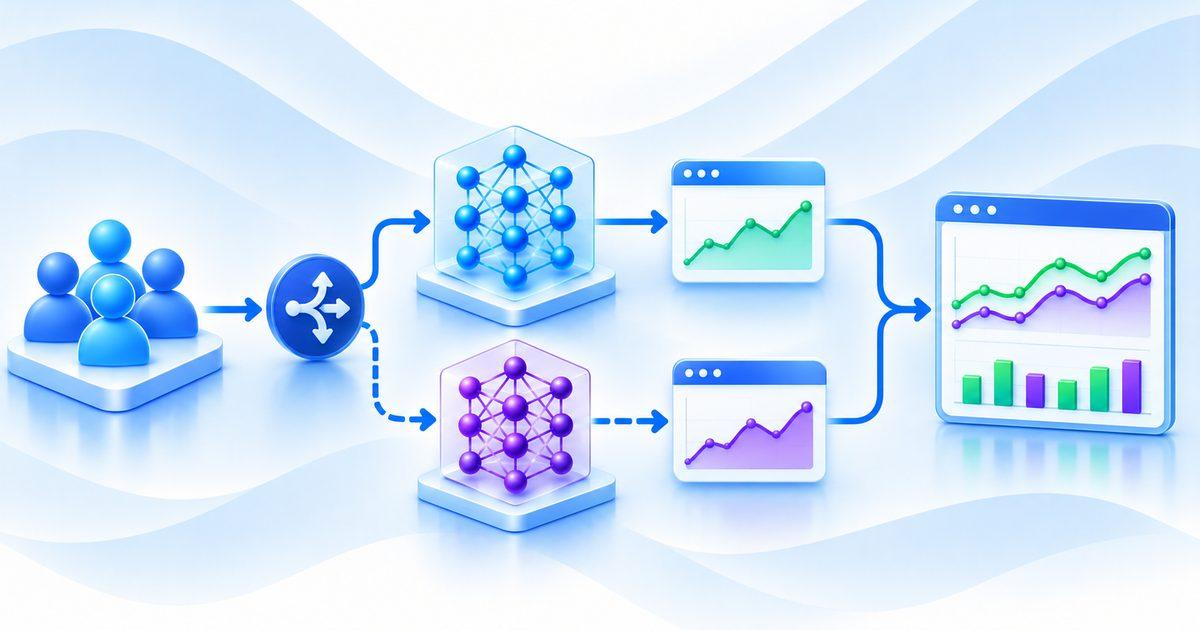
Federated learning is a distributed machine learning approach that allows multiple devices or organizations to collaboratively train a shared model without transferring their raw training data to a centralized repository. Instead of collecting information from every participant into one location, the central coordinating server distributes a model to participating clients, where local training takes place using data that remains under each participant's control. The resulting model updates are then communicated to the coordinating server, which combines the contributions to improve a shared global model without requiring the original training examples to leave their respective environments.
Consider a healthcare network involving several hospitals that want to develop a machine learning model for predicting patient readmission risk. Traditionally, the hospitals might need to combine their patient records into a centralized dataset before training a common model, creating substantial challenges involving patient privacy, institutional data ownership, regulatory requirements, and secure information transfer. Through federated learning, each hospital can train the distributed model using its own patient records and submit model updates for aggregation, allowing the institutions to benefit from collaborative learning while retaining their underlying datasets locally.
The architecture generally involves a central coordinator, multiple participating clients, local datasets, a model distribution mechanism, and an aggregation process that combines eligible client contributions. Depending on the deployment, clients may represent individual smartphones, IoT devices, enterprise servers, hospitals, or financial institutions, with each participant executing local computation using its available infrastructure. This approach is particularly valuable when information is distributed across independently managed environments where transferring raw datasets is technically difficult, operationally expensive, or restricted by privacy and data-governance requirements.
However, retaining raw data locally does not automatically guarantee complete privacy because gradients, model updates, and other information exchanged during training may still reveal sensitive information under certain conditions. A carefully designed federated learning architecture therefore requires additional security and privacy mechanisms, including secure aggregation, differential privacy, authenticated communication, and appropriate access controls. As explained in “Privacy-Preserving Machine Learning: Training Models Without Exposing Sensitive Data”, preserving data confidentiality requires multiple complementary techniques rather than relying exclusively on the location where training takes place.
Cross-Device vs. Cross-Silo Federated Learning
Federated learning systems are commonly divided into cross-device and cross-silo settings, depending on the type and number of participating clients and the infrastructure available to them. Cross-device federated learning involves potentially millions of individual devices, such as smartphones, tablets, connected sensors, and consumer IoT products, where each participant may have a relatively small local dataset and limited computational resources. These devices frequently operate under unpredictable network conditions, may disconnect during training, and may become available only when specific conditions are satisfied, such as when a device is charging or connected to Wi-Fi.
A practical example is predictive typing on a smartphone keyboard, where each device observes locally generated typing patterns and contributes to improving a shared language model. The central system distributes an updated model to eligible devices, which perform local training using their permitted data before returning model updates through a controlled communication process. Since individual devices have different usage patterns, operating systems, battery conditions, and connectivity characteristics, cross-device systems must support participant sampling, intermittent availability, resource constraints, and unreliable communication without assuming that every selected device will complete every training round.
Cross-silo federated learning operates across a smaller number of participants, typically organizations with more substantial computational resources and larger datasets. Hospitals, banks, insurance providers, universities, and enterprise organizations are examples of potential participants because they may possess complementary datasets while maintaining independent control over their information systems. Compared with cross-device environments, cross-silo participants are generally more stable and may offer predictable infrastructure, although differences in data formats, governance policies, security requirements, and organizational objectives can still make collaboration difficult.
Another important classification concerns how the datasets themselves are distributed, with horizontal and vertical federated learning describing different relationships between participants' records and features. In horizontal federated learning, participating organizations generally have similar feature structures but different records, such as hospitals maintaining records containing comparable medical attributes for different patient populations. Vertical federated learning involves organizations that hold different attributes about overlapping entities, such as a bank and an e-commerce company possessing different information about some of the same customers. These distinctions are important because cross-device and cross-silo describe participant settings, whereas horizontal and vertical describe the structure of data distribution and influence how federated computation must be designed.
How Federated Averaging (FedAvg) Works: A Complete Training Round
Federated Averaging, commonly known as FedAvg, is a foundational algorithm for coordinating model training across distributed clients while reducing the need for frequent communication with a central server. The process begins when the coordinating server initializes a global model and selects a group of eligible participants for a training round, after which the current model parameters are distributed to those clients. Each participant uses the received parameters as the starting point for local training, processes its own dataset for a configured number of epochs or optimization steps, and generates updated model parameters that represent the results of its local computation.
After local training is completed, participating clients send their eligible model updates or updated parameters back to the coordinating server, which combines the contributions to produce the next global model. A simplified weighted aggregation formula is:
[
w_{t+1}=\sum_{k=1}^{K}\frac{n_k}{n}w_{t+1}^{(k)}
]
Here, (w_{t+1}) represents the updated global model, (w_{t+1}^{(k)}) represents the locally trained model parameters from client (k), (n_k) represents the number of relevant training examples held by that client, and (n) represents the total number of examples across the participating clients. This weighted averaging approach allows clients with different dataset sizes to contribute according to their local data volume, although practical implementations may need additional controls when client distributions or participation patterns are highly heterogeneous.
The updated global model becomes the starting point for subsequent training rounds, with the server selecting another group of participants or inviting eligible clients to continue local optimization. This repeated process allows information from multiple decentralized datasets to influence a shared model without directly transferring the original training records. The number of local training steps, learning rate, participating client population, aggregation frequency, and client-selection strategy all influence convergence and communication requirements, making these parameters important design decisions for federated ML engineers.
Local training can reduce communication overhead because clients perform several optimization steps before sending their contributions to the server, rather than communicating after every individual batch. However, increasing the number of local training steps may also cause model updates to diverge when clients have substantially different data distributions, making aggregation less effective. Engineers must therefore balance local computation against communication frequency and global convergence, particularly when designing large-scale cross-device systems where network availability and participant behavior are difficult to predict.
Key Takeaway
Federated learning enables multiple devices or organizations to collaborate on training a shared machine learning model while maintaining local control over their original datasets. Its architecture relies on model distribution, local optimization, and global aggregation through algorithms such as FedAvg, with cross-device and cross-silo settings introducing different infrastructure and participation requirements. Understanding the distinction between federated learning, centralized training, conventional distributed training, and horizontal or vertical data partitioning helps software engineers choose the appropriate architecture for privacy-sensitive applications while accounting for data heterogeneity, communication constraints, and security requirements.
Section 2: Federated Training, Optimization, and Communication Challenges
Local Model Training and Global Aggregation
Federated learning operates through repeated cycles of local model training and global aggregation, allowing multiple participants to contribute to a shared model without transferring their original datasets to a central server. At the beginning of a training round, the coordinating server distributes the current global model parameters to a selected group of clients, each of which uses the received model as the starting point for optimization on its locally available data. Instead of communicating after every training batch, participants perform a configured number of local optimization steps or epochs before sending their resulting model updates to the central coordinator, reducing the frequency of network communication.
During local training, each client calculates predictions using its own dataset, evaluates the corresponding loss, and updates model parameters through an optimization algorithm such as stochastic gradient descent or Adam, depending on the implementation. The resulting local model represents the changes produced by the participant's training process, and the difference between its updated parameters and the original global parameters can be transmitted as a model update. The coordinator collects eligible contributions and combines them using an aggregation strategy, with Federated Averaging commonly weighting local models according to the number of training examples represented by each participating client.
The number of local epochs and optimization steps influences both training efficiency and the behavior of the global model, because additional local computation can reduce communication overhead while potentially increasing divergence between participants. A client with several thousand examples may produce a different update trajectory from a client with a much smaller dataset, particularly when their local data distributions contain different patterns or target-label frequencies. Engineering teams must therefore configure local batch sizes, learning rates, optimizer settings, aggregation frequency, and client participation carefully, ensuring that local optimization improves the shared model without creating excessive disagreement between updates.
Optimizer-state management also requires attention because federated implementations may aggregate model parameters while maintaining server-side optimization state separately from individual client optimizers. Some implementations reset client optimizer states at the beginning of each round, while others use persistent or algorithm-specific state-management strategies, making it important to understand the chosen federated optimization algorithm. These decisions influence convergence behavior, communication requirements, and the reproducibility of training experiments, particularly when participants operate with different computational capabilities and incomplete training availability.
Non-IID Data, Client Drift, and Federated Optimization
One of the most significant challenges in federated learning is that data distributed across participants rarely follows an identical statistical distribution. This condition is commonly described as non-independent and identically distributed (non-IID) data, where individual clients may contain different feature distributions, label frequencies, sample sizes, and behavioral patterns. For example, smartphones belonging to different users may contain very different typing patterns, while hospitals serving different patient populations may maintain clinical datasets with substantially different disease distributions and treatment histories.
This heterogeneity can cause client drift, where local optimization moves individual client models toward solutions that perform well on their own datasets but do not necessarily align with the global learning objective. When these local models are averaged, their updates may partially cancel one another or produce a global model that performs poorly for certain participants. The problem becomes more pronounced when clients perform many local training epochs before aggregation because each participant has more opportunity to move toward a locally specialized solution, making global convergence more difficult to achieve under highly heterogeneous data conditions.
Several federated optimization methods have been developed to address these challenges by modifying how local updates are calculated or coordinated. FedProx introduces a proximal regularization term that discourages local models from moving too far away from the current global model, helping control divergence when participants have different data distributions or computational capabilities. SCAFFOLD uses control variates to correct differences between local and global update directions, helping reduce client drift during federated optimization. These methods address different aspects of heterogeneous training and should be selected according to the degree of data imbalance, model behavior, and communication constraints rather than being treated as interchangeable solutions.
Personalized federated learning provides another approach when a single global model does not serve every participant equally well. Instead of requiring every client to use identical final parameters, personalized approaches can combine shared global representations with locally adapted components, allowing the system to reflect participant-specific patterns without requiring raw data centralization. This is particularly useful in healthcare and mobile personalization, where individual populations or users may have distinct characteristics, although personalization introduces additional requirements involving local model storage, evaluation, update management, and fairness across participants. The federated system design considerations discussed in “Apple ML Interview: Privacy-Preserving Machine Learning and Federated Learning Systems” are relevant because practical federated optimization must balance non-IID data, device availability, communication efficiency, and privacy constraints rather than focusing exclusively on the aggregation algorithm.
Communication Efficiency, Client Selection, and Network Reliability
Communication can become a major bottleneck in federated learning because model updates must travel between distributed participants and the coordinating server across potentially unreliable networks. A large neural network may contain millions of parameters, making repeated transmission of complete model updates expensive for mobile devices with restricted bandwidth, limited battery capacity, or intermittent connectivity. Consequently, federated learning systems must balance local computation against communication frequency, ensuring that the amount of information exchanged is sufficient to improve the global model without creating unnecessary network overhead.
Client selection is an important component of this process because cross-device federated systems cannot assume that every registered device will be available for every training round. Participants may be offline, disconnected, low on battery, using restricted network connections, or executing other resource-intensive applications, making it necessary to select eligible devices according to availability and system requirements. A coordinator may prioritize devices that satisfy conditions such as sufficient battery capacity, stable network access, and adequate computational resources, although selection strategies must avoid systematically excluding participant groups whose device conditions or connectivity patterns differ from the majority.
Communication optimization techniques can reduce the volume of information exchanged during federated training by compressing updates or reducing synchronization frequency. Quantization represents model updates using fewer bits, while sparsification transmits selected update components rather than every parameter, potentially reducing communication requirements at the expense of approximation errors. Other strategies include delta-based updates, fewer communication rounds, model compression, and structured parameter sharing, with the appropriate choice depending on the model architecture, available bandwidth, and acceptable convergence behavior. Engineers must evaluate these techniques carefully because excessive compression or insufficient synchronization can slow training or reduce the quality of the resulting global model.
Network reliability introduces additional challenges because participants may disconnect during local training or fail to submit updates before a round completes. Federated coordinators should define timeouts, retry policies, minimum participation thresholds, incomplete-update handling, and aggregation rules that allow training to continue despite partial participation. Asynchronous aggregation can provide flexibility by accepting updates as they arrive instead of requiring every participant to finish at the same time, although delayed contributions may be based on older global-model versions and can introduce additional optimization challenges. Reliable orchestration must therefore account for network variability, participant dropouts, communication costs, and the possibility that the available clients do not represent the complete population.
Key Takeaway
Federated training involves more than distributing a model and averaging client updates because local optimization, data heterogeneity, communication constraints, and participant availability all influence global model convergence. Algorithms such as FedAvg, FedProx, and SCAFFOLD address different optimization challenges, while client selection, update compression, and fault-tolerant orchestration help manage distributed execution. Reliable federated systems must also evaluate model quality without centralizing validation data, combining global performance measurements with participant-level analysis and appropriate privacy protections to ensure that improvements benefit the distributed population rather than only a subset of contributors.
Section 3: Privacy, Security, and Trust in Federated Learning Systems
Privacy Risks in Federated Model Updates
Federated learning reduces the need to transfer raw training data to centralized infrastructure, but the exchange of model updates introduces its own privacy risks that engineering teams must address. During local training, participating clients calculate gradients or updated model parameters using their private datasets and communicate these contributions to a coordinating server for aggregation. Although the original examples remain on individual devices or within participating organizations, the information contained in these updates may reveal patterns about the underlying training data, particularly when an attacker has access to individual client contributions, model checkpoints, or additional information about the participants.
Gradient inversion attacks demonstrate one way that private information can potentially be reconstructed from model updates under certain conditions. An attacker analyzes gradients or parameter updates to infer characteristics of the training examples that generated them, and in some experimental settings may reconstruct recognizable information from individual records. Membership inference presents another privacy risk by attempting to determine whether a particular person's data was included in the training process based on model behavior or other accessible information. The success of these attacks depends on factors such as model architecture, attacker access, batch size, update visibility, background knowledge, and the protections applied during training, meaning that not every federated implementation is equally vulnerable.
A reliable federated architecture should therefore begin with a clearly defined threat model that identifies which entities are trusted, what information each participant can access, and which privacy risks the system must mitigate. For example, a coordinating server may be trusted to distribute models but should not necessarily be allowed to inspect individual hospital updates, while participating clients must be prevented from accessing another organization's private training information. Engineering teams should also consider compromised devices, malicious participants, unauthorized model access, communication interception, and accidental exposure through logging or debugging systems. This broader threat model helps organizations recognize that data locality is an important privacy measure but must be combined with controls that protect model updates, communication channels, and the infrastructure coordinating training.
Secure Aggregation: Protecting Individual Client Contributions
Secure aggregation is a cryptographic technique that allows a federated learning server to calculate a combined result from participating clients without directly inspecting each client's individual contribution. In a conventional FedAvg implementation, the coordinating server receives separate model updates and performs the weighted aggregation itself, creating an opportunity for the server or another entity with access to the communication layer to examine individual contributions. Secure aggregation changes this arrangement by allowing clients to apply cryptographic masking or related protocols to their updates, so that the coordinator can recover the permitted aggregate while individual contributions remain concealed under the protocol's security assumptions.
A simplified example involves several hospitals participating in collaborative model training, where each institution calculates a local update using its patient records. Before sending its contribution, each participant applies cryptographic masks that are designed to cancel appropriately when the participating updates are combined, allowing the server to obtain the aggregate without learning each hospital's individual update. Practical secure aggregation protocols require additional mechanisms for coordinating masks, establishing participant communication, handling clients that disconnect, and ensuring that the aggregation process can complete when some participants become unavailable. These mechanisms are especially important in cross-device federated learning, where intermittent connectivity and unpredictable client participation make strict synchronization difficult.
Secure aggregation is valuable when participants want to contribute to collaborative model training without giving the coordinating infrastructure direct visibility into their individual updates, although its protection applies to the aggregation process rather than every component of the federated lifecycle. It does not automatically prevent information leakage from the final global model, malicious model updates, compromised client devices, or inappropriate access to training metadata. The privacy-preserving system design principles discussed in “Apple ML Interview: Privacy-Preserving Machine Learning and Federated Learning Systems” are relevant because secure aggregation, local computation, and data minimization address different layers of the privacy problem. Engineers must also recognize that hiding individual updates can make certain security checks more difficult, particularly when the server cannot directly inspect contributions to identify malicious or corrupted clients.
Differential Privacy and Additional Privacy-Preserving Techniques
Differential privacy provides a mathematical framework for limiting how much an individual's participation in a dataset can influence the output of a randomized mechanism. In federated learning, it can be applied at different levels depending on whether the objective is to protect individual training examples or entire participating clients. Example-level differential privacy limits the influence of an individual record, while client-level differential privacy aims to limit the influence of one participating device or organization, which can be especially important when each client holds multiple sensitive records. Defining the protected unit is therefore an essential design decision because the privacy guarantee and required noise calibration depend on the neighboring-dataset relationship.
A common approach involves clipping individual gradients or client updates to establish a sensitivity bound and adding appropriately calibrated random noise before the resulting information is released or aggregated. Clipping limits the maximum contribution of an individual record or client according to the selected privacy mechanism, while noise reduces the ability to distinguish outputs generated with and without a particular protected contribution. Engineers must also use a suitable privacy accountant to track cumulative privacy expenditure across training rounds and repeated releases, since evaluating the privacy parameters of a single update does not establish the guarantee of the complete federated training process. Stronger privacy protection generally requires greater noise or other restrictions, potentially reducing model accuracy and slowing convergence, particularly when client participation is limited or local datasets are highly heterogeneous.
Other privacy-preserving technologies can complement differential privacy by protecting different aspects of collaborative computation. Secure multiparty computation (SMPC) allows multiple parties to jointly calculate a function using cryptographic protocols without revealing their private inputs directly, while homomorphic encryption enables certain computations to be performed on encrypted data without first decrypting it. Trusted execution environments provide hardware-supported isolated execution regions intended to protect code and data during processing, although their guarantees depend on the hardware, implementation, and threat model. These techniques introduce different trade-offs involving computation, memory, communication, deployment complexity, and trust assumptions, making it important to select protections according to the actual risks rather than assuming that one cryptographic method provides complete privacy.
Key Takeaway
Federated learning protects data locality but does not automatically guarantee the confidentiality or integrity of model updates, making privacy and security mechanisms essential parts of the architecture. Secure aggregation conceals individual client contributions during aggregation, differential privacy limits the influence of protected examples or participants, and cryptographic approaches such as SMPC and homomorphic encryption provide additional computational protections. Engineering teams must also defend against gradient inversion, membership inference, poisoning, and malicious clients while accounting for the trade-offs between privacy, model utility, communication overhead, and robust aggregation.
Conclusion: Building Collaborative AI Without Centralizing Sensitive Data
Federated learning represents an important shift in machine learning architecture because it allows organizations and devices to collaboratively train models without requiring their original training datasets to be transferred into a centralized repository. By moving computation toward the data, federated learning creates opportunities for collaboration across hospitals, financial institutions, mobile devices, and enterprise systems that operate under different privacy, security, and data-ownership requirements. Its distributed architecture enables participants to contribute to a shared global model through local training and coordinated aggregation, providing an alternative to conventional centralized machine learning when data consolidation is difficult or undesirable.
Federated Averaging (FedAvg) provides a foundational approach to this process by distributing global model parameters to participating clients, allowing local optimization, and combining eligible updates into an improved global model. However, successful federated training requires more than implementing a model distribution and aggregation mechanism because participating clients frequently have different data distributions, dataset sizes, computational capabilities, and network conditions. Non-IID data can introduce client drift and affect global convergence, while communication overhead, intermittent connectivity, participant availability, and local resource constraints influence how effectively training rounds can be coordinated. Optimization approaches such as FedProx and SCAFFOLD address different aspects of client heterogeneity, while personalized federated learning provides additional flexibility when a single global model cannot adequately represent every participant.
Privacy and security are equally important because keeping raw training data local does not automatically prevent sensitive information from being inferred through model updates or the resulting global model. Secure aggregation can conceal individual client contributions during aggregation, while differential privacy can limit the influence of individual records or participating clients according to a defined mathematical guarantee. Additional techniques such as secure multiparty computation, homomorphic encryption, and trusted execution environments offer complementary protections, although each introduces its own implementation requirements and computational trade-offs. Engineering teams must also defend against gradient inversion, membership inference, data poisoning, malicious updates, and compromised participants, making a clearly defined threat model essential for reliable deployment.
Ultimately, federated learning is most valuable when the benefits of collaborative model development justify the additional complexity associated with distributed data, privacy, communication, and governance. Engineering teams should compare federated approaches with centralized and conventional distributed training where appropriate, establish measurable privacy and predictive-quality requirements, and validate the architecture under realistic participant and network conditions. By treating data locality, secure aggregation, optimization, participant reliability, and model governance as interconnected engineering requirements, organizations can build collaborative AI systems that learn from distributed information while maintaining greater control over the data they own.
Frequently Asked Questions
1. What is federated learning, and how does it work?
Federated learning is a distributed machine learning approach that enables multiple devices or organizations to collaboratively train a shared model while keeping their original training data within their respective environments. A coordinating server distributes a global model to selected participants, who perform local training and return eligible model updates for aggregation into an improved global model. This process repeats across multiple communication rounds, allowing the model to benefit from decentralized datasets without requiring the original training examples to be centralized.
2. How is federated learning different from traditional distributed machine learning?
Traditional distributed machine learning typically divides computation across multiple workers that access partitions of a centrally managed dataset, allowing them to coordinate gradient calculations and parameter updates. Federated learning operates across independently controlled data environments where participants retain their original datasets and communicate model updates instead of transferring raw training examples. This introduces additional challenges involving non-IID data, client availability, communication reliability, privacy, and participant coordination that are not necessarily present in conventional distributed training clusters.
3. What is Federated Averaging (FedAvg)?
Federated Averaging, commonly known as FedAvg, is a foundational federated optimization algorithm that combines locally trained models into an updated global model through weighted averaging. The coordinating server distributes the current global parameters to selected clients, each participant performs several local training steps, and the resulting model parameters are returned for aggregation. The contributions are generally weighted according to local dataset sizes, although the algorithm's convergence can be influenced by differences in participant data distributions, local training durations, and client participation patterns.
4. What is the difference between cross-device and cross-silo federated learning?
Cross-device federated learning involves large populations of individual devices, such as smartphones, tablets, and IoT endpoints, which may have limited computing resources and unpredictable network availability. Cross-silo federated learning involves a smaller number of more powerful participants, such as hospitals, financial institutions, and enterprise organizations, that maintain independently managed datasets and infrastructure. Both approaches support decentralized model training, but their orchestration, communication, participant-selection, and security requirements differ considerably because of the characteristics of their participating environments.
5. Does federated learning guarantee data privacy?
Federated learning reduces the need to centralize raw training data, but it does not automatically guarantee privacy because model updates and gradients may contain information that can reveal characteristics of local training examples. Attacks such as gradient inversion and membership inference demonstrate how information may be inferred under certain conditions when an attacker has access to model updates or other relevant information. Engineering teams should therefore combine data locality with appropriate protections such as secure aggregation, differential privacy, encryption, authentication, and access controls according to a clearly defined threat model.
6. What is non-IID data in federated learning?
Non-independent and identically distributed data refers to situations where participating clients have different data distributions, sample sizes, feature characteristics, or label frequencies. For example, hospitals serving different patient populations may observe substantially different medical conditions, while smartphone users may generate different typing patterns and interaction histories. Such differences can affect local optimization and global model convergence, making non-IID data one of the most important challenges in practical federated learning systems.
7. How do federated learning systems handle client drift?
Client drift occurs when local training moves individual client models toward solutions that perform well on their own datasets but differ from the global learning objective. FedProx addresses this problem by introducing a proximal regularization term that discourages excessive deviation from the current global model, while SCAFFOLD uses control variates to correct differences between local and global optimization directions. Personalized federated learning offers another approach by combining shared global knowledge with locally adapted model components when different participants require specialized predictions.
8. What is secure aggregation, and why is it important?
Secure aggregation is a cryptographic technique that allows a coordinating server to calculate combined model updates without directly inspecting each participant's individual contribution. Clients apply cryptographic masking or related protocol mechanisms so that the permitted aggregate can be recovered while individual updates remain concealed under the protocol's security assumptions. This is particularly useful when hospitals, banks, or mobile devices want to collaborate on model training without exposing their individual contributions to the central infrastructure, although secure aggregation does not independently prevent every form of privacy leakage or malicious model manipulation.
9. How does differential privacy work in federated learning?
Differential privacy limits how much an individual's participation can influence the output of a randomized mechanism by applying mathematically defined privacy constraints. In federated learning, example-level differential privacy protects individual training records, while client-level differential privacy aims to limit the influence of an entire participating device or organization. Mechanisms such as contribution clipping and calibrated random noise can establish these guarantees, but the resulting privacy parameters must be tracked across repeated training rounds using an appropriate privacy accountant, with the associated accuracy and convergence trade-offs considered during implementation.
10. What are the biggest communication challenges in federated learning?
Federated learning systems must repeatedly exchange global model parameters and local updates across networks that may have limited bandwidth, high latency, or intermittent connectivity. These requirements become particularly challenging in cross-device settings where millions of participants may have different hardware capabilities, battery conditions, and network availability. Techniques such as client sampling, update quantization, sparsification, fewer communication rounds, and asynchronous aggregation can reduce communication costs, although excessive compression or delayed synchronization may affect model convergence and predictive quality.
11. How can engineers evaluate a federated model without centralizing validation data?
Federated evaluation allows each participating client to assess the shared global model using its own local validation dataset and return appropriately aggregated evaluation metrics. The coordinating infrastructure can combine measurements such as accuracy, loss, precision, and recall without requiring the original validation examples to be transferred to a central repository. Engineers should also examine client-level and subgroup performance because a strong global average may conceal poor results for smaller participants or populations with different data distributions.
12. What is the difference between horizontal and vertical federated learning?
Horizontal federated learning involves participants that generally have similar feature structures but different records, such as hospitals maintaining comparable patient attributes for different populations. Vertical federated learning involves participants holding different features about overlapping entities, such as a bank and an e-commerce company possessing different information about some of the same customers. These approaches describe the structure of data distribution, whereas cross-device and cross-silo describe the types of participating clients and their deployment environments.
13. Which frameworks can engineers use to implement federated learning?
Flower and TensorFlow Federated are two established frameworks that provide tools for developing and experimenting with federated learning algorithms. Flower supports client-server coordination, configurable aggregation strategies, simulation, and deployment-oriented workflows across supported machine learning environments, while TensorFlow Federated provides abstractions for defining federated computations and implementing algorithms such as federated training and evaluation. Engineers should assess their framework's compatibility, orchestration capabilities, security requirements, and deployment maturity because successful local simulation does not automatically establish production readiness across real devices or independently managed organizations.
14. What are the real-world applications of federated learning?
Federated learning can support collaborative model development across healthcare institutions, financial organizations, mobile devices, and industrial IoT environments where raw information is distributed across separate data owners. Healthcare applications may involve clinical risk prediction and medical image analysis, while financial applications may include fraud detection and transaction-risk modeling across participating institutions. Mobile applications can use federated training for predictive typing and personalization, whereas industrial systems can investigate collaborative anomaly detection and predictive maintenance using locally maintained sensor information.
15. What are the biggest challenges of deploying federated learning in production?
Production federated learning introduces challenges involving non-IID data, client drift, communication overhead, participant availability, security, privacy, and distributed infrastructure management. Engineering teams must coordinate model distribution, local execution, update aggregation, client authentication, secure communication, model versioning, monitoring, and fault recovery across independently managed environments. Long-term reliability also requires global and participant-level evaluation, privacy-budget accounting, auditability, protection against malicious updates, and tested rollback procedures that allow organizations to maintain model quality and trust as their federated systems evolve.