
Introduction
For most of the past decade, machine learning education and interviews revolved around models.
Candidates were expected to know:
- Algorithms
- Architectures
- Loss functions
- Training techniques
That era is over.
In 2026, ML systems are no longer evaluated, or built, at the model level alone. They are evaluated at the node level.
This shift explains why many capable candidates feel:
“I know ML, but interviews feel different now.”
They are different.
What “Node-Level ML” Actually Means
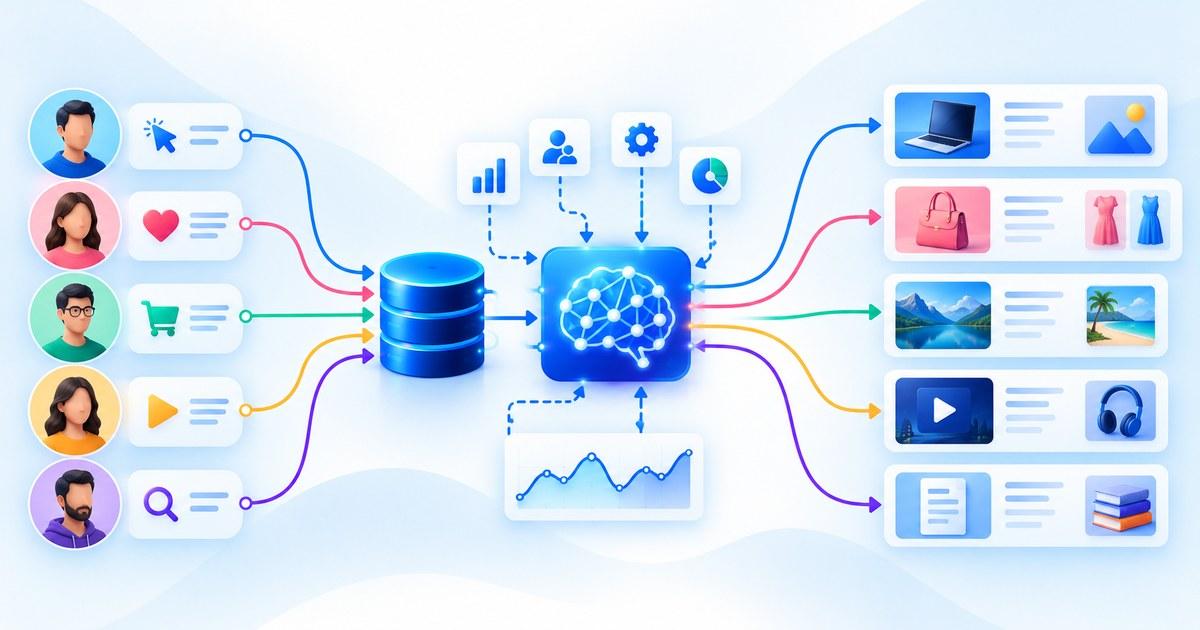
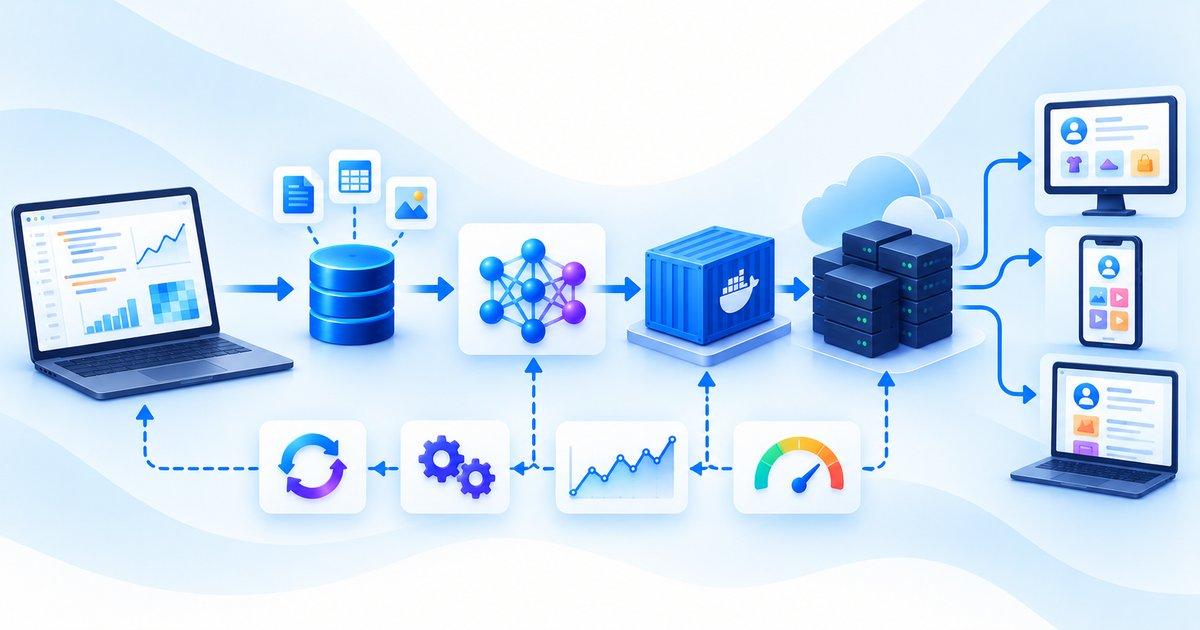
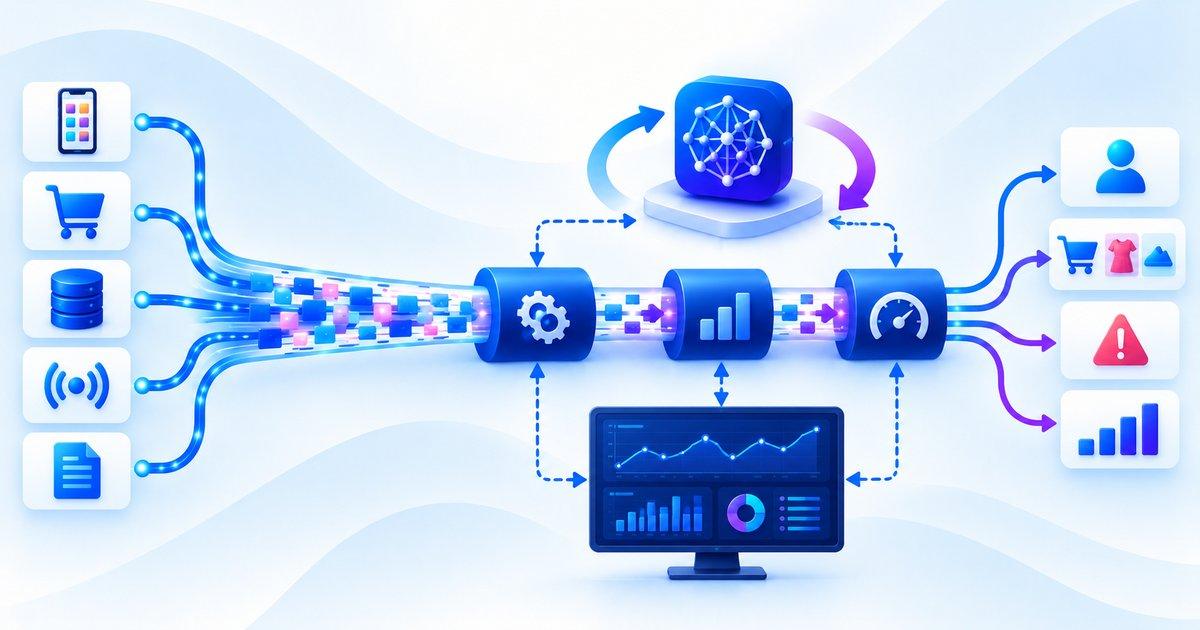
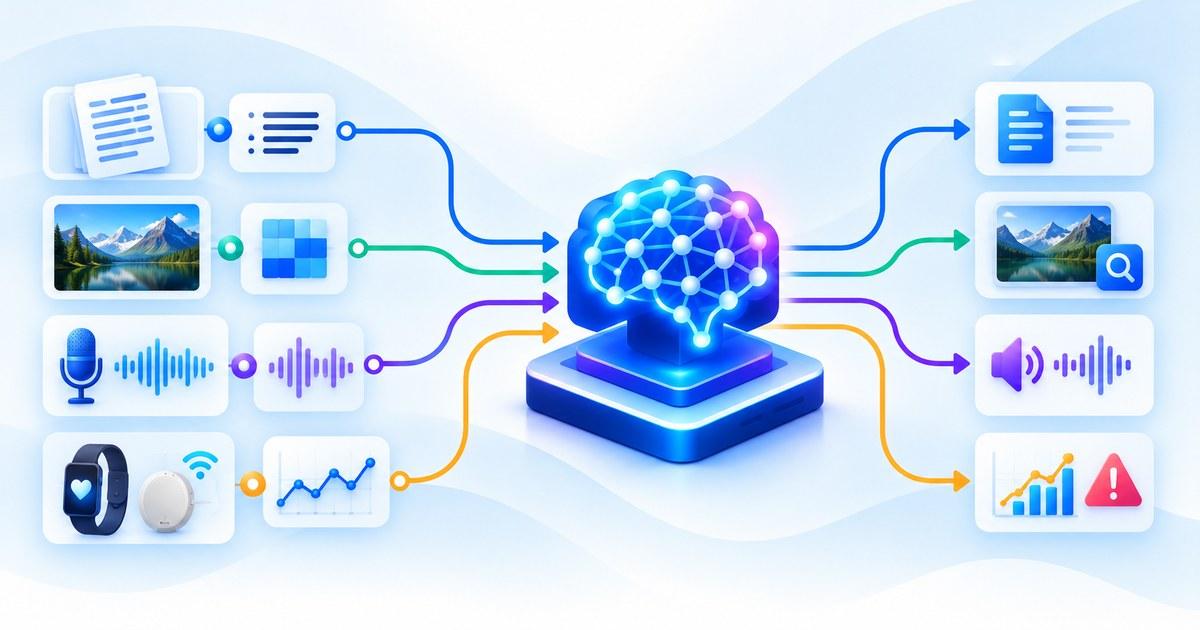
Node-level ML refers to the individual operational components that make up a real ML system, each with its own failure modes, tradeoffs, and ownership.
Examples of nodes include:
- Data ingestion and validation
- Feature generation and storage
- Model training jobs
- Model inference services
- Retrieval layers (for RAG)
- Caching and latency control
- Monitoring and alerting
- Feedback and retraining loops
In modern ML systems, the model is just one node.
And often, not the most fragile one.
Why This Shift Happened
Three forces drove the move from model-level to node-level ML thinking:
1. Models Became Commoditized
Pretrained models, fine-tuning APIs, and foundation models mean:
- Fewer teams train from scratch
- Model choice is often obvious
- Architecture innovation is centralized
Competitive advantage moved away from model design.
2. Failure Happens Outside the Model
In production, most ML incidents come from:
- Data drift
- Broken pipelines
- Stale embeddings
- Inference latency
- Monitoring blind spots
- Retrieval errors (in RAG systems)
Teams realized that system reliability matters more than model elegance.
3. AI Is Now Business-Critical Infrastructure
ML systems:
- Affect revenue
- Influence users
- Carry compliance risk
- Operate continuously
This forces companies to hire engineers who can reason about operational nodes, not just training notebooks.
Why Interviews Now Test Node-Level Thinking
Interviewers no longer ask only:
- “Which model would you use?”
They ask:
- “What breaks first?”
- “How do you monitor this?”
- “Where does latency come from?”
- “How would you roll this back?”
- “How do you know it’s still working?”
These are node-level questions.
They reveal:
- Ownership mindset
- Production awareness
- Risk judgment
- Seniority
Candidates who answer only at the model level struggle, even when technically strong.
The Three Node-Level Domains Dominating 2026
Across companies, three node-level areas dominate interviews, job descriptions, and real systems:
- MLOps - how models are trained, deployed, monitored, and maintained
- RAG Systems - how retrieval, embeddings, generation, and data freshness interact
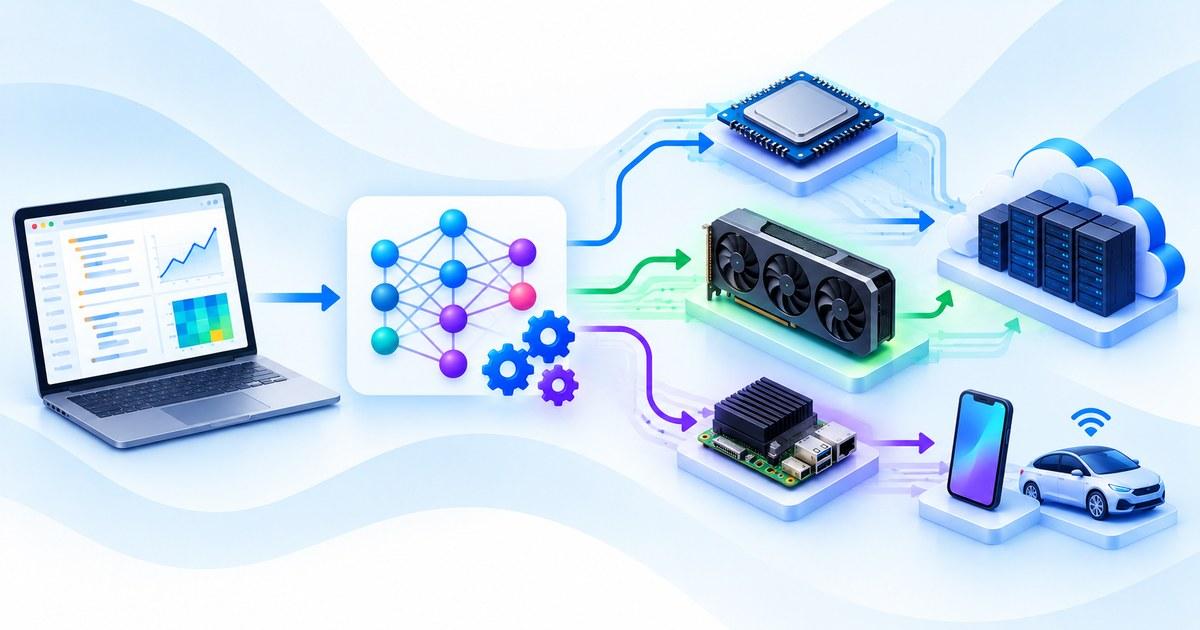
- Deployment & Inference - how ML behaves under real traffic, constraints, and failures
These are no longer “nice to have” skills.
They are baseline expectations.
Why Candidates Prepare at the Wrong Level
Most candidates still prepare by:
- Studying algorithms
- Practicing modeling questions
- Memorizing architectures
But interviews now reward candidates who can:
- Trace data through nodes
- Identify bottlenecks
- Anticipate operational failure
- Explain system behavior over time
This mismatch explains why preparation feels endless, but confidence stays low.
Node-Level Thinking Changes How You Answer Questions
At the model level, questions have:
- Correct answers
- Known patterns
- Clear optimization goals
At the node level, questions involve:
- Tradeoffs
- Uncertainty
- Constraints
- Business context
Interviewers are not looking for perfection.
They are looking for reasonable decision-making across nodes.
The Key Reframe
If you remember one thing, remember this:
In 2026, ML engineers are hired for how they reason about systems, not how well they tune models.
Once you prepare at the node level, interviews become clearer, and far more predictable.
Section 1: MLOps Node-Level Topics Every ML Engineer Must Know in 2026
In 2026, MLOps is no longer a specialty lane. It is the operational backbone of nearly every production ML system, and interviewers treat it as such.
What changed is not the existence of MLOps, but where interviews probe. Teams no longer ask whether you know a tool or framework. They ask whether you can reason about individual MLOps nodes, their failure modes, and the tradeoffs that connect them.
Below are the node-level MLOps topics that consistently surface in interviews, and what “knowing them” actually means.
1. Training Pipelines vs. Experimentation (Two Different Nodes)
Interviewers increasingly distinguish between:
- Experimentation environments (fast, flexible, messy)
- Training pipelines (reproducible, auditable, controlled)
What they expect you to reason about:
- Why experimentation speed conflicts with reproducibility
- How code, data, and config are versioned independently
- When an experiment graduates into a pipeline
- How to avoid “it worked on my notebook” failures
Red flag answers blur these two nodes together.
Strong answers explicitly separate:
- Ad-hoc exploration
- Scheduled, repeatable training jobs
This distinction signals production maturity.
2. Data Versioning Is a First-Class Node
In 2026, interviewers assume you understand that:
- Models don’t fail silently, data does
- Re-training on different data without tracking is a risk
- Labels change, definitions drift, and joins break
Node-level expectations include:
- How training data snapshots are captured
- How schema changes are detected
- How label leakage is prevented
- How feature backfills affect retraining
You don’t need to name tools.
You need to show that data lineage is part of model reliability, a theme that recurs across ML system design interviews, as discussed in ML System Design Interview: Crack the Code with InterviewNode.
3. Model Versioning and Rollback (Beyond “Save the Model”)
Interviewers probe whether you understand that:
- Models are not single artifacts
- Rollback is a system decision, not a file operation
They look for reasoning around:
- Versioning models with code + data + config
- Canary releases vs full rollouts
- When rollback is safer than retraining
- How to detect regressions before users do
Weak answers focus on storage.
Strong answers focus on blast radius control.
4. CI/CD for ML Is About Trust, Not Speed
In 2026, CI/CD for ML is less about automation and more about guardrails.
Interviewers expect you to understand:
- Why automated tests for ML are limited
- What can and cannot be validated pre-deployment
- Where human approval is still required
- How pipelines enforce consistency without blocking iteration
They are testing whether you:
- Treat ML outputs as probabilistic
- Avoid overconfidence in automation
- Build safety into the deployment path
This is where many candidates over-engineer and lose points.
5. Monitoring Is Multiple Nodes, Not One Dashboard
Monitoring is the most common MLOps interview trap.
Candidates often say:
“We monitor accuracy and drift.”
Interviewers push deeper.
They want to hear separation between:
- Data monitoring (schema, distributions, freshness)
- Model monitoring (prediction stability, confidence)
- System monitoring (latency, errors, throughput)
- Business monitoring (user impact, KPIs)
Strong candidates explain:
- Which node fails first
- How alerts differ by failure type
- Why not all drift requires action
Monitoring answers that collapse everything into “metrics” usually fail follow-ups.
6. Drift Is a Decision Problem, Not a Metric
In 2026, interviewers expect nuanced drift reasoning.
They test whether you understand:
- Covariate drift vs concept drift
- Seasonal vs structural change
- When retraining helps, and when it hurts
- How to avoid retraining loops that amplify noise
The key signal:
Do you treat drift detection as a decision trigger, not a reflex?
Candidates who say “we retrain when drift exceeds a threshold” are pushed, and often rejected.
7. Feedback Loops and Retraining Cadence
Another node interviewers probe is how models evolve over time.
They look for reasoning about:
- How user feedback is captured
- How delayed labels affect retraining
- How feedback bias is handled
- Why more data isn’t always better
Strong answers acknowledge that:
- Feedback loops can degrade models
- Retraining frequency is contextual
- Human oversight matters
This signals real-world ownership, not academic understanding.
8. Incident Response for ML Systems
ML incidents are different from software incidents.
Interviewers increasingly ask:
- “What do you do when the model starts behaving strangely?”
- “Who do you notify?”
- “What’s the first action you take?”
They expect candidates to reason about:
- Triage vs rollback
- Temporary guards vs permanent fixes
- Communication with stakeholders
- Post-incident learning
Knowing that silence is often worse than wrong output is a subtle but powerful signal.
9. Cost, Latency, and Reliability Tradeoffs
Finally, interviewers expect node-level tradeoff thinking:
- Training cost vs model freshness
- Inference latency vs accuracy
- Monitoring depth vs operational overhead
Strong candidates:
- Quantify tradeoffs at a high level
- Choose “good enough” solutions
- Explain why extremes are risky
This is where seniority is most visible.
Section 1 Summary
In 2026, MLOps interview readiness means you can reason about:
- Training vs experimentation nodes
- Data versioning and lineage
- Model versioning and rollback
- CI/CD as a trust mechanism
- Monitoring across multiple nodes
- Drift as a decision problem
- Feedback loops and retraining cadence
- Incident response and communication
- Cost–latency–reliability tradeoffs
Interviewers are not testing tools.
They are testing whether you understand how ML systems survive contact with reality.
Section 2: RAG Node-Level Topics Interviewers Expect You to Reason About
By 2026, Retrieval-Augmented Generation (RAG) is no longer treated as an “advanced LLM topic.”
It is treated as infrastructure.
Interviewers assume you know what RAG is. What they test instead is whether you understand where RAG systems break, and how each node contributes to reliability, or failure.
Candidates who describe RAG only as “LLM + vector database” usually fail follow-ups.
1. Retrieval Is the Most Fragile Node in RAG Systems
Interviewers often start with:
“Where do RAG systems usually fail?”
The expected answer is not the model.
It’s retrieval.
They want you to reason about:
- Missing relevant documents
- Retrieving outdated or irrelevant context
- Over-retrieval that dilutes signal
- Query–document mismatch
Strong candidates explain that:
- A perfect LLM with poor retrieval still fails
- Retrieval quality sets the upper bound on generation quality
This immediately signals system-level thinking.
2. Chunking Strategy Is a Design Decision, Not a Detail
Chunking is a classic RAG interview trap.
Weak answers:
- “We chunk by fixed size”
- “We split by tokens”
Strong answers reason about:
- Semantic coherence vs recall
- Chunk size vs embedding fidelity
- Boundary effects (splitting key context)
- Domain-specific structure (tables, logs, code, docs)
Interviewers are testing whether you see chunking as:
A retrieval optimization problem, not a preprocessing step.
3. Embeddings Have a Lifecycle (and They Go Stale)
Many candidates treat embeddings as static artifacts.
Interviewers push deeper:
- What happens when documents change?
- How do you handle schema updates?
- When do embeddings need regeneration?
- How do you detect staleness?
Strong answers acknowledge:
- Embedding freshness is a reliability issue
- Partial re-embedding is often required
- Silent staleness is more dangerous than obvious failure
This mirrors real production issues teams face at scale.
4. Ranking and Filtering Are Separate Nodes
Interviewers increasingly expect candidates to distinguish:
- Initial retrieval (high recall)
- Re-ranking (precision optimization)
- Filtering (safety, policy, scope)
They test whether you understand:
- Why cosine similarity alone is insufficient
- How re-rankers trade latency for quality
- Where metadata filters belong
- Why business rules often override similarity
Candidates who collapse all of this into “vector search” are flagged as shallow.
5. Prompting Is Downstream of Retrieval Quality
A common interviewer move is to ask:
“If outputs are hallucinating, what do you fix first?”
Weak candidates say:
- “Improve the prompt”
- “Tune the LLM”
Strong candidates say:
- “Audit retrieval coverage and grounding”
Interviewers want to hear that:
- Prompting can’t compensate for missing context
- Hallucinations are often retrieval failures
- Better grounding beats clever prompting
This distinction separates demo-level understanding from production readiness, a theme also explored in LLMs & Retrieval-Augmented AI: How to Prepare for These Questions in Interviews.
6. Latency Is a Multi-Node Tradeoff in RAG
RAG latency doesn’t come from one place.
Interviewers expect you to reason about:
- Retrieval latency (vector DB, filters)
- Re-ranking latency
- LLM inference time
- Network hops and orchestration overhead
Strong answers discuss:
- Parallelization vs consistency
- Caching strategies at different nodes
- When to trade recall for speed
- Why “faster models” aren’t always the fix
This shows awareness of user-facing constraints.
7. Evaluation Is Harder Than It Looks
Interviewers increasingly ask:
“How do you evaluate a RAG system?”
They are not looking for:
- BLEU or ROUGE alone
They expect reasoning about:
- Retrieval recall vs answer quality
- Groundedness and citation accuracy
- User task success
- Failure mode categorization
Strong candidates admit:
- Offline evaluation is limited
- Human-in-the-loop evaluation matters
- Production feedback is essential
Honest uncertainty scores better than fake precision here.
8. RAG Failure Modes Are Often Silent
One of the most important node-level insights interviewers look for:
RAG systems often fail quietly.
Examples:
- Confident but incomplete answers
- Answers grounded in outdated documents
- Subtle hallucinations that look plausible
Strong candidates explain:
- Why silent failures are dangerous
- How monitoring must focus on retrieval health
- Why user trust erosion matters more than raw accuracy
This signals mature risk awareness.
9. RAG Is Not Always the Right Solution
Senior-level interviews often end with:
“When would you not use RAG?”
Strong answers include:
- Highly structured, low-entropy data
- Strict latency constraints
- Domains with rapidly changing truth
- Scenarios requiring guaranteed correctness
Knowing when not to deploy RAG signals judgment, not ignorance.
Section 2 Summary
In 2026, RAG interview readiness means you can reason about:
- Retrieval as the primary failure node
- Chunking as a design tradeoff
- Embedding freshness and lifecycle
- Ranking, filtering, and grounding
- Prompting as downstream, not primary
- Latency across multiple nodes
- Evaluation beyond static metrics
- Silent failure modes
- When RAG is the wrong choice
Interviewers are not hiring prompt engineers.
They are hiring engineers who understand why RAG systems fail, and how to keep them honest.
Section 3: Deployment & Inference Node-Level Topics That Separate Senior ML Engineers
If there is one place where ML systems fail most often in production, it is deployment and inference.
This is why interviewers use inference questions as a seniority filter. Junior candidates talk about models. Mid-level candidates talk about pipelines. Senior candidates talk about behavior under load, failure, and cost pressure.
Deployment is where ML stops being theoretical and starts behaving like infrastructure.
1. Batch vs. Real-Time Inference Is a Business Decision
Interviewers rarely ask:
“How do you deploy a model?”
They ask:
“Would you serve this in batch or real time, and why?”
Strong candidates reason about:
- Latency requirements
- Freshness tolerance
- Volume and cost
- Failure impact
Batch inference works when:
- Slight staleness is acceptable
- Cost efficiency matters
- Throughput dominates latency
Real-time inference is necessary when:
- Decisions affect user experience immediately
- Feedback loops are tight
- Latency defines product usability
Candidates who default to real-time without justification are flagged as inexperienced.
2. Inference Architecture Is About Isolation and Blast Radius
Senior interviewers probe:
“What happens when inference fails?”
They expect you to think about:
- Model servers crashing
- Dependency timeouts
- Partial outages
- Degraded responses
Strong candidates discuss:
- Isolating inference from core services
- Circuit breakers and timeouts
- Fallback behavior (rules, defaults, cached outputs)
- Graceful degradation
The key signal:
You design inference assuming failure, not hoping for uptime.
3. Latency Is Multi-Dimensional, Not Just Model Speed
Candidates often say:
“We’d optimize the model for latency.”
Interviewers push:
“Where else does latency come from?”
Senior answers include:
- Network hops
- Serialization/deserialization
- Feature fetching
- Retrieval (in RAG systems)
- Cold starts
- Load balancing
Strong candidates reason about:
- End-to-end latency budgets
- Parallelization opportunities
- Which node dominates at scale
They understand that shaving milliseconds off the model often doesn’t move the needle.
4. Caching Is a Strategic Node, Not an Optimization Hack
Caching is one of the clearest senior signals.
Interviewers test whether you understand:
- What can be cached safely
- Where caching introduces risk
- How cache invalidation affects correctness
Strong answers differentiate:
- Feature caching
- Embedding caching
- Inference result caching
- Prompt or retrieval caching (for RAG)
They also discuss:
- Cache staleness vs freshness tradeoffs
- Per-user vs global caches
- Cost savings vs correctness risk
This level of nuance separates operators from experimenters.
5. Cost Control Is Part of Inference Design
In 2026, inference cost is a hiring concern.
Interviewers expect candidates to reason about:
- Cost per prediction
- Load-based scaling
- Model size vs serving cost
- Traffic shaping
Senior candidates explain:
- Why smaller models may outperform larger ones economically
- How batching reduces cost but increases latency
- When approximate answers are acceptable
They treat cost as a first-class constraint, not an afterthought.
6. Model Serving Is a Lifecycle, Not a One-Time Event
Weak answers describe deployment as:
“We deploy the model and monitor it.”
Strong answers describe:
- Staged rollout (shadow, canary, partial traffic)
- Gradual exposure
- Rollback criteria
- Version coexistence
Interviewers look for:
- Awareness of regressions that only appear under load
- Understanding of user segmentation
- Willingness to pause or revert quickly
This mindset aligns with how ML systems are actually operated at scale.
7. Monitoring Inference Requires Different Signals Than Training
Senior interviewers push candidates beyond:
- Accuracy metrics
They expect reasoning about:
- Prediction confidence drift
- Latency percentiles
- Error rates
- Fallback frequency
- User-facing anomalies
Strong candidates explain:
- Why inference failures can be silent
- Why latency spikes matter more than averages
- Why business metrics must be part of monitoring
This connects deployment back to real-world impact.
8. Load, Spikes, and Non-Stationary Traffic
One common senior-level question:
“What happens when traffic spikes unexpectedly?”
Strong answers cover:
- Auto-scaling limits
- Cold start penalties
- Queueing and backpressure
- Prioritization of critical requests
Candidates who assume “autoscaling handles it” are pushed hard.
Interviewers want to hear:
You’ve thought about worst-case scenarios.
9. Deployment Decisions Reflect ML Judgment
Ultimately, interviewers use deployment questions to test:
- Risk awareness
- Tradeoff reasoning
- Ownership mindset
Senior candidates:
- Choose conservative defaults
- Acknowledge uncertainty
- Explain why they’d monitor before optimizing
This judgment-oriented evaluation mirrors how ML system design is assessed more broadly, as outlined in Mastering ML System Design: Key Concepts for Cracking Top Tech Interviews.
Section 3 Summary
In 2026, senior ML engineers stand out because they can reason about:
- Batch vs real-time inference tradeoffs
- Failure isolation and blast radius
- End-to-end latency sources
- Strategic caching
- Inference cost control
- Deployment as a lifecycle
- Inference-specific monitoring
- Traffic spikes and resilience
Deployment and inference are where ML systems face reality.
Interviewers know this, and they use it to separate model builders from system owners.
Conclusion: Why Node-Level ML Thinking Is the Real Hiring Bar in 2026
The defining shift in machine learning hiring in 2026 is not about new algorithms or larger models.
It is about where engineers choose to think.
Companies are no longer bottlenecked by:
- Model availability
- Framework knowledge
- Basic ML theory
They are bottlenecked by:
- System reliability
- Operational failures
- Silent degradation
- Cost overruns
- Loss of user trust
That is why interviews increasingly evaluate node-level reasoning.
When interviewers ask about:
- MLOps
- RAG
- Deployment and inference
They are not testing tool familiarity.
They are testing whether you can:
- Trace failures across nodes
- Anticipate real-world constraints
- Make defensible tradeoffs
- Take ownership beyond the model
Candidates who stay at the model level feel interviews are “unpredictable.”
Candidates who shift to node-level thinking find interviews suddenly structured and logical.
The model is no longer the star.
The system is.
Once you prepare at the node level, understanding how data, retrieval, inference, monitoring, and deployment interact, your answers naturally sound senior, grounded, and trustworthy.
That is the signal hiring teams are looking for in 2026.
FAQs: Node-Level ML Topics in Interviews (2026)
1. What does “node-level ML” actually mean in interviews?
It means reasoning about individual system components (data, retrieval, inference, monitoring) and their failure modes, not just models.
2. Are model questions no longer important?
They still matter, but they’re assumed. Node-level reasoning differentiates candidates.
3. Do I need deep DevOps knowledge to pass ML interviews?
No. You need judgment, not infra specialization.
4. Why do interviewers focus so much on MLOps now?
Because most ML failures in production come from pipelines, data, and monitoring, not model choice.
5. What’s the most common MLOps interview mistake?
Treating drift detection and monitoring as metrics instead of decision triggers.
6. For RAG interviews, how deep do I need to go into LLMs?
Less deep than retrieval, grounding, and evaluation. Retrieval failures dominate.
7. Is chunking really that important in RAG discussions?
Yes. It directly affects retrieval quality and hallucination risk.
8. Do interviewers expect production RAG experience?
No, but they expect you to reason like someone who has seen production issues.
9. What’s the biggest red flag in deployment discussions?
Assuming inference “just works” once deployed.
10. How do senior candidates talk about latency?
As an end-to-end budget across nodes, not a model optimization problem.
11. Is real-time inference always preferred?
No. Batch inference is often safer, cheaper, and sufficient.
12. Why do interviews emphasize rollback and fallback strategies?
Because failure is inevitable; recovery is the real skill.
13. How should I prepare for node-level ML topics efficiently?
Practice tracing failures and tradeoffs across a full system, not memorizing tools.
14. Will these topics replace system design interviews?
No. They are the modern form of ML system design.
15. What’s the single most important mindset shift for 2026 ML interviews?
Stop optimizing models in isolation. Start reasoning about systems under uncertainty.
Final Takeaway
In 2026, ML engineers are not hired for building models.
They are hired for keeping ML systems honest, reliable, and useful over time.
If you can reason at the node level, across MLOps, RAG, and deployment, you are no longer guessing what interviews want.
You are speaking the language of production.
And that is what gets offers.