Section 1: Understanding the Foundations of Self-Play Learning
What Is Self-Play Learning in Machine Learning?
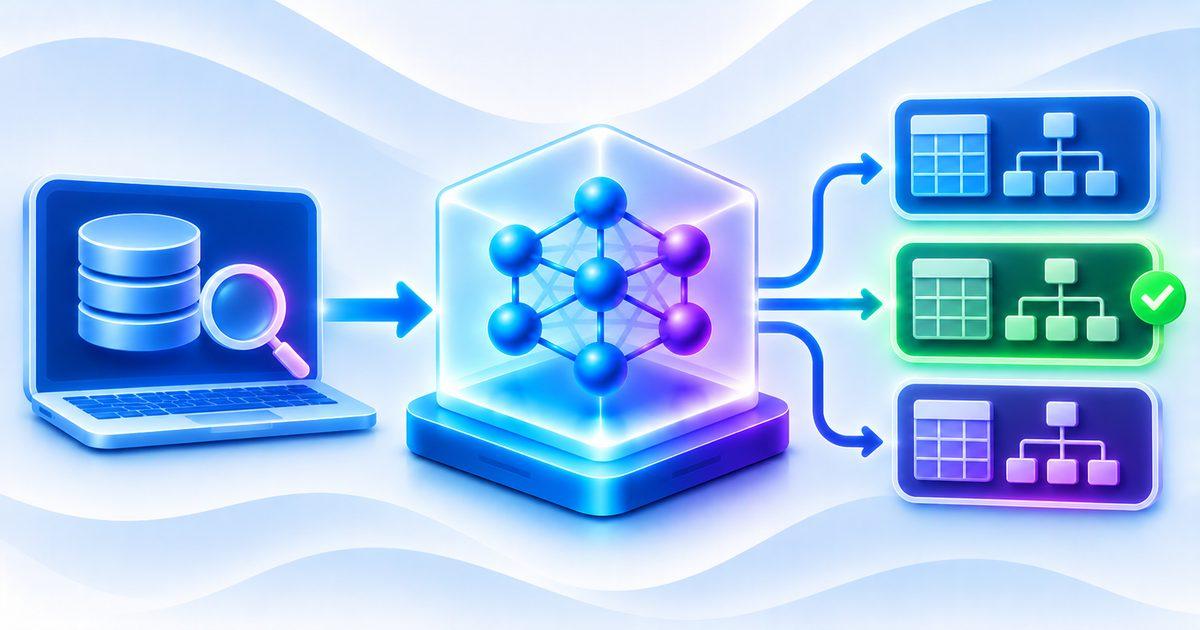
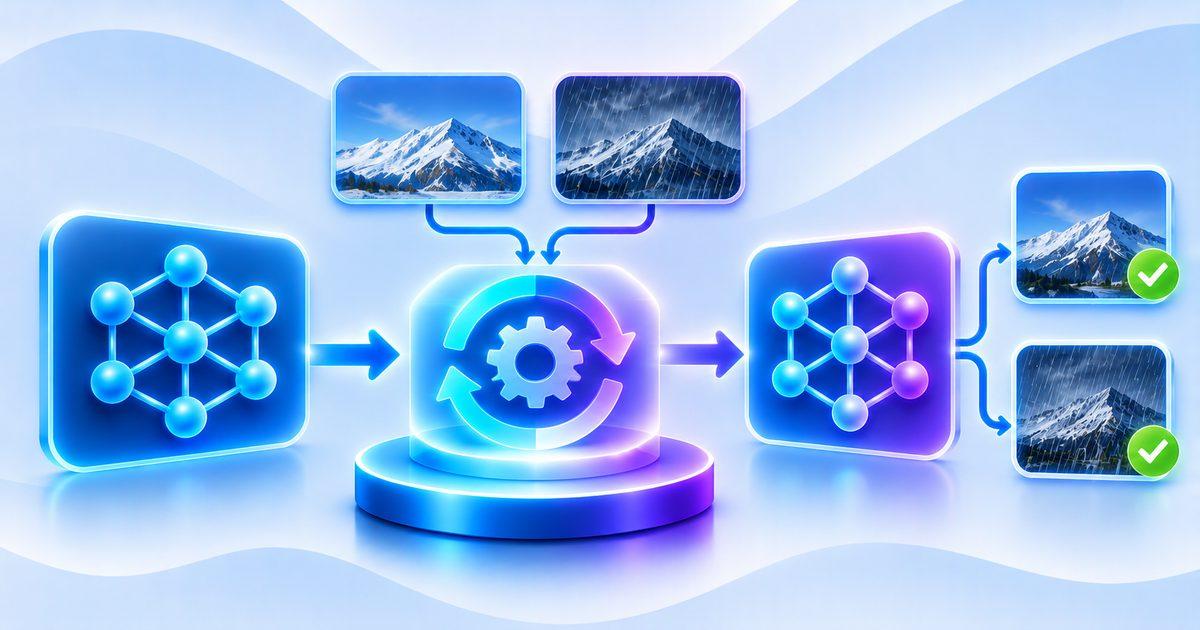
Self-play learning is a reinforcement learning approach in which an agent improves its behavior by interacting with another agent that is either an identical copy, a previous version, or a member of a population of related policies.
In conventional reinforcement learning, an agent interacts with an environment. It observes the current state, chooses an action, receives a reward, and updates its policy based on the experience. The environment may contain other agents, but their behavior is often treated as fixed or externally controlled.
Self-play changes this relationship. The opponent becomes part of the learning process. As the agent improves, the opponent can also become stronger, creating a continuously changing training environment.
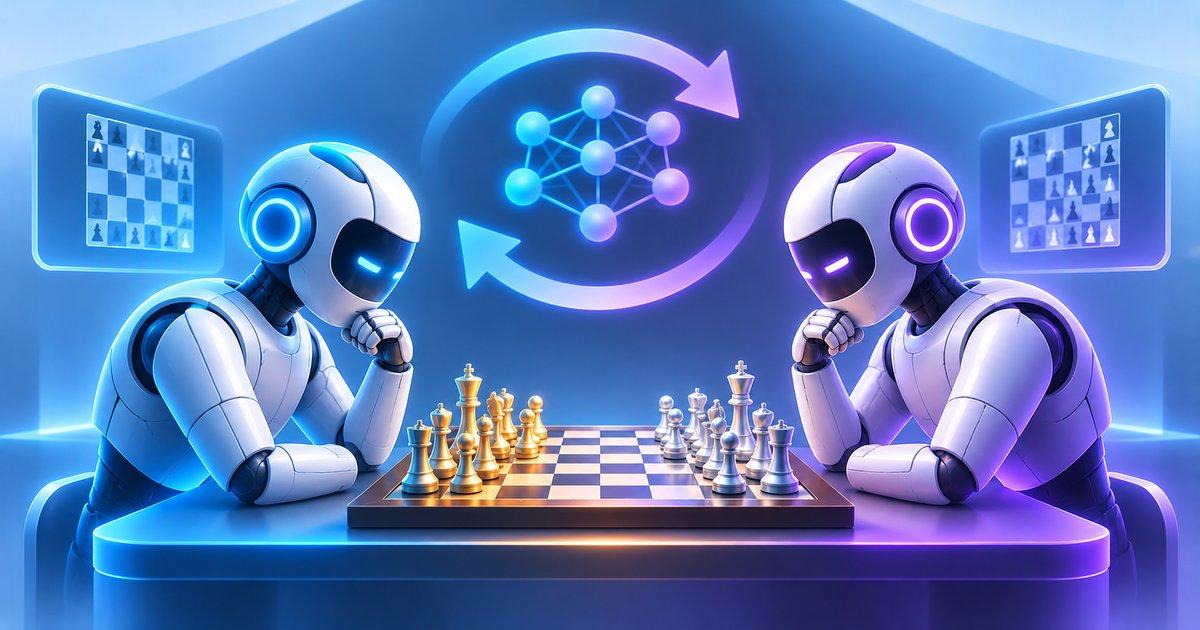
Consider an AI agent learning to play chess. Initially, it may select moves randomly or rely on a weak policy. It plays against another instance of itself and receives a result based on whether it wins, loses, or draws. The experiences generated during these games become training data. After updating its policy, the agent plays again against an opponent that may use the latest policy or a previous version.
Over time, the training process produces a feedback loop in which increasingly capable strategies challenge one another.
A simplified reinforcement learning objective can be expressed as:
[
J(\theta)=\mathbb{E}{\tau\sim\pi\theta}
\left[\sum_{t=0}^{T}\gamma^t r_t\right]
]
Here, (\theta) represents the parameters of the policy, (\pi_\theta) is the agent's decision-making policy, (\tau) represents a trajectory of states and actions, (r_t) is the reward at time (t), and (\gamma) is the discount factor.
In self-play, the trajectory is influenced by the opponent's policy as well as the environment. Consequently, the learning objective depends on the interaction between multiple policies rather than on the behavior of one isolated agent.
An important distinction is that self-play does not necessarily mean an agent competes against an exact copy of itself. Some systems train against historical checkpoints, a collection of opponent policies, or multiple agents with different roles. The defining characteristic is that the agent generates useful learning experiences through interactions with evolving versions of its own training population.
Why Competition Creates a Learning Signal
The primary reason self-play works is that competition can expose weaknesses that ordinary training examples may not reveal.
Suppose an agent learns a strategy that consistently wins against a weak opponent. If the opponent never changes its behavior, the agent may continue using the same strategy indefinitely. Its performance against that opponent may appear excellent, even though the strategy is fragile.
Now introduce an opponent that adapts to the agent's behavior. It may discover a counterstrategy that defeats the agent's preferred approach. The agent must then learn to respond to that counterstrategy, creating a new learning challenge.
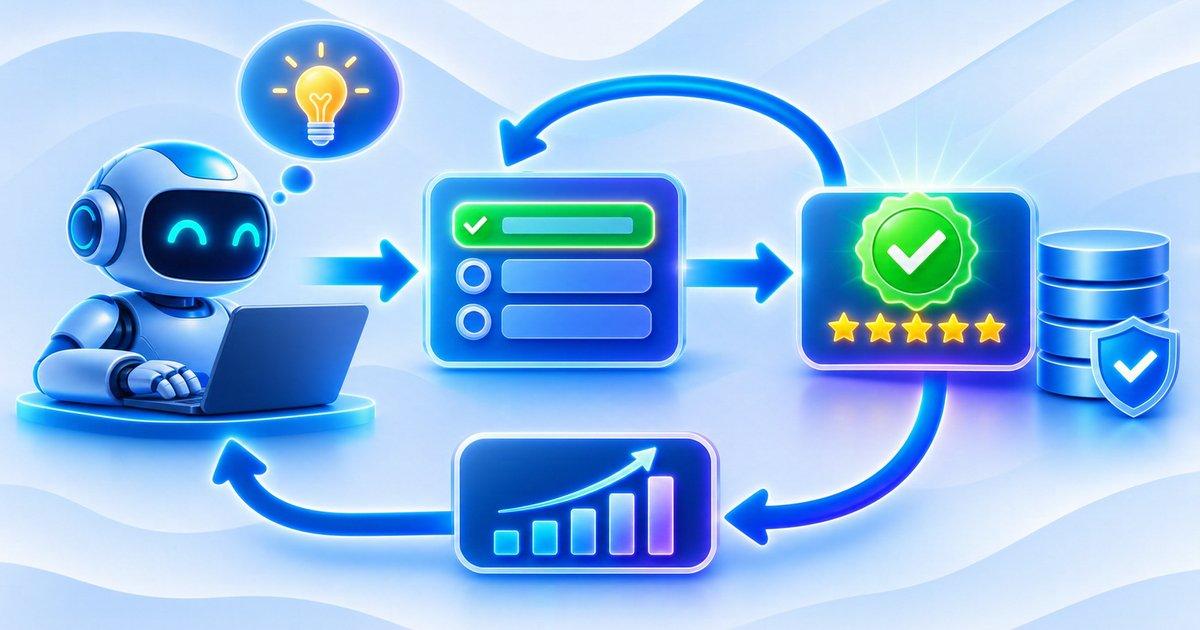
This process creates an adversarial feedback loop.
The first agent develops a strategy. The opponent identifies an opportunity to exploit it. The original agent receives negative feedback and modifies its behavior. The opponent then adapts again.
The competition continuously produces new situations that can expand the agent's learning experience.
This is particularly valuable when the environment has a large strategic search space. In chess, for example, a move that appears beneficial in one situation may create a vulnerability several moves later. An opponent that actively searches for weaknesses can reveal these problems more effectively than random interactions.
Competition also provides a natural source of difficult examples. Instead of manually constructing every challenging scenario, the training system can use opponent behavior to generate new situations.
Nevertheless, competition alone does not guarantee improvement. The learning signal must be connected to a meaningful objective. If the reward function is poorly designed, an agent may discover strategies that increase its training reward without improving the intended capability.
Engineers must therefore distinguish between learning to defeat a particular opponent and learning a robust strategy that performs well across the broader environment.
The Role of Reinforcement Learning and Policy Optimization
Self-play is most commonly associated with reinforcement learning because the agent must learn from the consequences of its actions rather than simply imitate predefined answers.
A policy defines how an agent chooses actions based on its observations. A value function estimates the expected future return associated with a state or state-action pair. Depending on the algorithm, the system may optimize its policy directly, estimate action values, or combine policy learning with planning.
In policy-gradient methods, the objective is to increase the probability of actions that lead to favorable outcomes. A simplified policy-gradient expression is:
[
\nabla_\theta J(\theta)=
\mathbb{E}\left[
\nabla_\theta\log\pi_\theta(a_t|s_t)A_t
\right]
]
Here, (A_t) represents the advantage of an action, indicating how much better or worse it performed relative to a baseline.
During self-play, the advantage estimates are influenced by the opponent's behavior. A move may be successful against one opponent but ineffective against another. This makes opponent selection an important component of the training architecture.
Algorithms such as Proximal Policy Optimization (PPO) can be used to train agents in self-play environments. PPO constrains policy updates to avoid excessively large changes that could destabilize learning. It does not solve every difficulty associated with multi-agent training, but it provides a practical optimization method for many simulated competitive environments.
Value-based methods can also support self-play. For example, agents may learn action-value estimates from interactions with competing policies. In more advanced systems, neural networks estimate both action probabilities and expected outcomes, while search procedures evaluate possible future decisions.
The choice of algorithm depends on the environment, action space, observability, reward structure, and computational budget.
For engineers developing these systems, understanding "Adaptive ML Systems: How Models Respond When the Environment Changes" provides useful context for thinking about how models respond when the behavior of their environment changes. Self-play introduces this challenge directly into the training process because the opponent's policy evolves alongside the learning agent.
Key Takeaway
Self-play learning transforms competition into a source of training feedback. By interacting with copies, previous versions, or populations of related agents, a model can discover weaknesses, develop counterstrategies, and generate new learning experiences. Its effectiveness depends on the quality of the reward signal, the diversity of opponents, and the ability to measure whether improvements generalize beyond the training environment.
Section 2: How Self-Play Systems Train and Improve Their Models
The Self-Play Training Loop
A self-play system generally operates through a repeated cycle of policy initialization, opponent selection, environment interaction, experience collection, policy optimization, and evaluation.
The process begins with an initial agent policy. Depending on the application, the policy may start from random parameters, a pretrained model, or a policy trained using demonstrations. The agent is then paired with an opponent selected from the current or historical training population.
Both agents interact with the environment. Their observations, actions, rewards, and resulting states are recorded. At the end of an episode or training segment, the system calculates learning targets and updates the policy.
The updated policy is then evaluated and potentially added to the opponent pool.
A simplified training loop looks like this:
initialize_policy()
initialize_opponent_pool()
for iteration in range(num_iterations):
opponent = sample_opponent(opponent_pool)
trajectories = collect_self_play_experience(
current_policy,
opponent,
environment
)
training_data = calculate_learning_targets(
trajectories
)
updated_policy = optimize_policy(
current_policy,
training_data
)
evaluation_results = evaluate_policy(
updated_policy,
opponent_pool
)
if passes_evaluation(evaluation_results):
current_policy = updated_policy
opponent_pool.add(current_policy)
save_checkpoint(current_policy)
This pseudocode illustrates the high-level architecture rather than a complete implementation of a specific algorithm. Actual systems may use parallel environment workers, replay buffers, distributed optimization, search procedures, and more sophisticated opponent-selection mechanisms.
One important design decision is when to promote a new policy into the opponent pool. If every newly trained checkpoint is immediately treated as a reliable opponent, the pool may become crowded with weak or unstable policies. Conversely, if policies are promoted too slowly, the system may fail to preserve useful strategic diversity.
The promotion mechanism should therefore consider performance, behavioral diversity, and robustness rather than relying only on the latest training reward.
Neural Networks as Policy and Value Estimators
Modern self-play systems frequently use neural networks to represent policies and estimate the value of states.
A policy network receives an observation and produces a probability distribution over possible actions. A value network estimates the expected outcome from the current state, helping the agent evaluate decisions that may not produce immediate rewards.
These functions can be implemented using separate networks or a shared neural architecture with multiple output heads.
For example, a chess agent might receive a representation of the board position. Its policy head predicts promising moves, while its value head estimates the probability of winning, losing, or drawing from that position.
The policy network provides a mechanism for choosing actions. The value network provides an estimate of how favorable the current position is.
Training data can be generated through self-play and used to improve both outputs. The final game result provides information about the quality of earlier decisions, while search procedures may generate stronger action targets than the network's initial predictions.
A common conceptual loss function is:
[
L(\theta)=
L_{\text{policy}}+
\lambda_v L_{\text{value}}+
\lambda_r L_{\text{regularization}}
]
Here, (L_{\text{policy}}) measures the difference between predicted action probabilities and target policies, (L_{\text{value}}) measures the difference between predicted and observed outcomes, and the regularization term helps control model complexity.
The weights (\lambda_v) and (\lambda_r) determine the relative contribution of different objectives.
Not every self-play algorithm uses this exact architecture. Some rely on policy gradients, some use Q-functions, and others combine neural networks with planning. However, the broader engineering principle remains consistent: neural models transform interaction histories into improved decision-making behavior.
Monte Carlo Tree Search and the AlphaZero Architecture
One of the most influential examples of self-play learning is AlphaZero, developed by DeepMind.
AlphaZero combines neural networks, self-play reinforcement learning, and Monte Carlo Tree Search (MCTS). Rather than selecting moves only from the neural network's immediate predictions, it uses search to examine possible future positions.
The neural network provides two important outputs: a policy prior that estimates promising actions and a value estimate that evaluates positions. MCTS uses these predictions to guide exploration through the game tree.
As search progresses, the algorithm evaluates different action sequences and updates estimates of which moves are most promising. The resulting visit counts can be converted into an improved policy target.
The agent then uses these self-generated targets and the eventual game outcome to update its neural network.
The overall process creates a feedback cycle:
- The neural network evaluates the current position.
- MCTS explores possible moves using network guidance.
- The agent selects a move based on the search results.
- Self-play generates complete game trajectories.
- Game outcomes and search distributions become training targets.
- The neural network is optimized using the collected experience.
- The improved network guides the next round of search.
The important insight is that the neural network does not simply imitate its previous predictions. Search produces additional information about promising actions, while the outcome of the game provides feedback about the quality of decisions.
AlphaZero demonstrated that this approach could achieve superhuman performance in chess, shogi, and Go using a common algorithmic framework.
MuZero extended this direction by learning a model of the environment that predicts information needed for planning, rather than requiring the complete game rules to be supplied to the search procedure.
For engineers, the AlphaZero architecture illustrates how self-play can be combined with planning and neural optimization. It also demonstrates why computational efficiency matters: search, simulation, experience generation, and neural network training must work together as a coordinated system.
Engineers exploring these production considerations can also refer to “Efficient ML: How to Build High-Performance Models With Less Compute”. The same principles of profiling, resource allocation, and compute optimization are relevant when designing large-scale self-play training infrastructure.
Key Takeaway
A practical self-play architecture requires more than repeatedly running two copies of a model. It needs an organized training loop, neural policy and value estimation, opponent selection, experience collection, and evaluation. Historical policy pools and search-based methods such as MCTS can make the training process more diverse and effective, but they also increase infrastructure and computational requirements.
Section 3: Challenges, Limitations, and Engineering Best Practices
Training Instability and Non-Stationary Opponents
One of the central challenges in self-play is non-stationarity.
In traditional single-agent reinforcement learning, the environment may be assumed to have relatively stable transition dynamics. In multi-agent settings, an opponent's policy changes over time. As a result, the effective environment changes even when the underlying game rules remain constant.
Suppose an agent learns a strategy that works well against its current opponent. The opponent then updates its policy and begins responding differently. The original agent's expected reward distribution changes, which can make previously useful training experiences less representative of the current environment.
This creates a moving-target problem.
A policy update that improves performance against one opponent may reduce performance against another. In some cases, two agents can enter cycles in which each repeatedly defeats a different version of the other without achieving stable improvement.
For example, consider three strategies: A defeats B, B defeats C, and C defeats A. A system that evaluates only the latest opponent may incorrectly conclude that a policy is improving or declining depending on which strategy it encounters.
Engineers can address this challenge through opponent populations, historical checkpoints, evaluation against fixed baselines, and careful tracking of cross-play performance.
Training should also use appropriate optimization controls. Learning rates, policy update constraints, and replay strategies can influence stability. However, no single optimizer eliminates the underlying strategic non-stationarity.
The objective is not necessarily to find one universally dominant policy. In environments with cyclical or diverse strategies, a robust population of policies may be more appropriate.
Reward Hacking and Exploitation of the Training Environment
Self-play agents optimize the reward signals they receive. If the reward function does not accurately represent the intended objective, agents may discover unintended ways to maximize it.
This problem is commonly described as reward hacking or specification gaming.
Imagine a simulated racing environment where an agent receives rewards for passing checkpoints quickly. If the simulation contains a loophole that allows the agent to pass through an obstacle, it may learn to exploit that behavior rather than develop a legitimate driving strategy.
In self-play, this problem can become more difficult to detect because multiple agents may discover and reinforce the same exploit.
An agent may appear to improve because it consistently wins against its opponent, even though both agents are relying on an unrealistic property of the environment.
For this reason, engineers should evaluate more than the primary reward metric. They should monitor constraints, safety violations, behavioral patterns, and performance under altered environmental conditions.
Independent evaluation environments are particularly valuable. If an agent is trained in one simulator, testing it in a separately configured environment can reveal whether its performance depends on narrow simulation assumptions.
For language-model agents, similar problems can arise when the system learns to satisfy an automated evaluator through superficial patterns rather than completing the intended task.
The solution is not simply to add more reward terms. Reward design should be supported by independent verification, adversarial testing, and carefully defined success criteria.
Computational Cost and Infrastructure Complexity
Self-play can require substantial computational resources because training involves generating interactions, executing multiple agents, collecting trajectories, and optimizing neural networks.
The total cost depends on the complexity of the environment, the number of agents, episode duration, model size, search requirements, and the amount of parallelism available.
In AlphaZero-style systems, computational expense can increase significantly because the agent performs search during decision-making. Each move may require many simulations, and the resulting experiences must be processed during neural network training.
Large-scale multi-agent systems introduce additional infrastructure challenges. Multiple simulation workers may generate experiences in parallel, while centralized or distributed training components update the policy.
A production-grade architecture may contain:
- Environment simulation workers.
- Policy inference services.
- Opponent checkpoint storage.
- Experience collection pipelines.
- Replay buffers or trajectory databases.
- Distributed training workers.
- Evaluation services.
- Model versioning and experiment tracking.
The infrastructure must maintain consistency between policy versions and training data. Otherwise, experiences generated by older policies may be mixed with newer checkpoints without adequate tracking.
Engineers should monitor simulation throughput, GPU utilization, policy inference latency, experience-generation rates, and training efficiency. They should also measure how much compute is spent on generating useful experiences rather than simply increasing the number of episodes.
A system that generates millions of repetitive or low-information interactions may consume substantial resources without producing meaningful improvement.
Evaluating Generalization and Preventing Strategic Overfitting
An agent that performs well against its training opponents is not necessarily a strong general-purpose agent.
This is one of the most important evaluation problems in self-play. Because the agent learns from its own population, the training distribution may become increasingly narrow. The agent may specialize in exploiting familiar behaviors while remaining vulnerable to unfamiliar strategies.
A reliable evaluation process should therefore include opponents that were not used during training.
Engineers can maintain a separate evaluation population containing historical policies, baseline agents, rule-based opponents, and independently trained policies. They can measure performance across multiple matchups rather than relying on a single win rate.
Cross-play evaluation is especially important in multi-agent systems. It measures how policies interact with different opponents and can reveal strategic weaknesses that are hidden by self-play results.
A practical evaluation suite might include:
| Evaluation dimension | What it measures |
| Win rate | Competitive performance against selected opponents |
| Cross-play performance | Robustness across different policy versions |
| Strategy diversity | Ability to handle different opponent behaviors |
| Generalization | Performance in unfamiliar scenarios |
| Exploit resistance | Sensitivity to reward or environment loopholes |
| Safety compliance | Adherence to defined operational constraints |
| Sample efficiency | Improvement relative to interaction and compute cost |
Evaluation should also distinguish between statistical improvement and meaningful capability improvement. Small differences in win rates may be caused by randomness, opponent sampling, or environment variation.
Repeated evaluation, confidence intervals, fixed test seeds, and controlled comparisons can make results more reliable.
For engineering teams, self-play models should be treated like other machine learning systems that require reproducible experiments, version control, automated testing, and deployment validation. The principles covered in “MLOps for Software Engineers: Building, Deploying, and Monitoring Machine Learning Models in Production” are relevant when managing model checkpoints, experiment metadata, training pipelines, and post-training evaluation.
Key Takeaway
Self-play introduces challenges that extend beyond ordinary model optimization. Non-stationary opponents can destabilize learning, poorly designed rewards can encourage exploitation, and large-scale simulations can become computationally expensive. Robust implementations require diverse opponent populations, independent verification, reproducible experiments, and evaluation against unfamiliar strategies. The goal is not merely to produce a stronger training opponent but to build an agent that performs reliably outside its training population.
Conclusion: Turning Competition Into a Continuous Learning Process
Self-play learning changes how machine learning systems generate training experiences. Instead of relying exclusively on fixed datasets or predefined demonstrations, an agent can improve by interacting with copies, historical versions, and evolving populations of its own policy.
The approach has produced important results in strategic games. AlphaZero demonstrated that neural networks and self-play could produce highly capable chess, shogi, and Go agents. OpenAI's hide-and-seek experiments illustrated how competition could generate increasingly sophisticated strategies in simulated environments. These examples established that learning systems can discover behaviors that are not explicitly programmed into their objectives.
The broader significance lies in the feedback mechanism. A model's current capabilities determine the challenges it encounters, while those challenges influence its future capabilities. This creates an iterative learning process in which competition can function as a source of increasingly difficult training experiences.
For software and machine learning engineers, implementing self-play requires more than selecting a reinforcement learning algorithm. It requires designing the environment, managing opponent diversity, defining reliable reward functions, collecting high-quality interaction data, and evaluating whether improvements generalize.
The approach is not suitable for every machine learning problem. It works best when interactions can be simulated or safely performed, outcomes can be measured, and the system has a meaningful way to determine whether one strategy is better than another.
As autonomous agents become more capable, self-play and adversarial training may become increasingly useful for discovering weaknesses, improving decision-making, and testing complex behaviors before deployment. The most reliable systems will combine competitive learning with independent evaluation, verification, and operational safeguards.
Ultimately, self-play demonstrates an important principle in machine learning: sometimes the most valuable training challenge is not another labeled example, but a stronger opponent.
Frequently Asked Questions (FAQs)
1. What is self-play learning in machine learning?
Self-play learning is a reinforcement learning approach in which an agent improves by interacting with copies of itself, previous versions, or other agents from its training population. These interactions generate experiences that help the model discover better strategies and decision-making policies.
2. How does self-play help AI models improve?
Self-play creates competitive feedback. When an opponent exposes a weakness in the current policy, the agent can learn to develop a counterstrategy. Repeated interactions can produce increasingly challenging training experiences and improve strategic performance.
3. Is self-play a type of reinforcement learning?
Self-play is a training paradigm commonly used within reinforcement learning, particularly multi-agent reinforcement learning. It describes how agents interact with one another during training rather than defining one specific optimization algorithm.
4. What is the difference between self-play and adversarial training?
Self-play generally involves agents learning through interactions with copies or versions of themselves. Adversarial training is a broader concept in which a model is exposed to challenging inputs or opponents designed to reveal weaknesses. Self-play can be one form of adversarial training.
5. How did AlphaZero use self-play learning?
AlphaZero used neural networks, reinforcement learning, and Monte Carlo Tree Search to generate and evaluate its own games. The outcomes and search results became training targets, allowing the model to improve without relying on human gameplay examples as its starting training data.
6. What is an autocurriculum in self-play?
An autocurriculum is a learning process in which agents generate increasingly difficult challenges for one another through their evolving strategies. Each new strategy creates pressure for competing agents to develop counterstrategies, producing a continuously changing training curriculum.
7. Can self-play learning work without human training data?
Yes. AlphaZero demonstrated that self-play can produce strong game-playing capabilities without human gameplay examples, provided the system has access to the game rules, a suitable reward signal, and sufficient computational resources. Other applications may still benefit from human demonstrations or pretrained models.
8. What is the role of opponent pools in self-play?
Opponent pools contain multiple policy versions that an agent can compete against during training. They help introduce strategic diversity, reduce dependence on the latest policy, and expose the agent to a wider range of behaviors.
9. What is the biggest challenge in self-play reinforcement learning?
One major challenge is training instability caused by non-stationary opponents. As agents change their policies, the effective training environment changes as well. Reward hacking, strategic overfitting, and computational expense are also important challenges.
10. Can self-play be used in robotics?
Yes. Self-play and related multi-agent training methods can support simulated robot competitions, navigation, coordination, and adversarial testing. However, simulation-trained policies must be validated against real-world sensor noise, physical constraints, and safety requirements.
11. How is self-play used in multi-agent reinforcement learning?
In multi-agent reinforcement learning, self-play allows agents to learn through competitive or cooperative interactions with other evolving policies. It can help agents develop strategies, counterstrategies, and coordination behaviors.
12. Does self-play always produce better AI models?
No. Self-play can lead to unstable training, repetitive behavior, reward exploitation, and overfitting to familiar opponents. Improvement must be verified through independent evaluation and testing against diverse, previously unseen policies.
13. What algorithms are commonly used for self-play?
Common approaches include Proximal Policy Optimization, policy-gradient methods, value-based reinforcement learning, fictitious self-play, population-based training, and AlphaZero-style combinations of neural networks and Monte Carlo Tree Search. The appropriate method depends on the environment and learning objective.
14. Can large language models use self-play?
Large language models can use self-play-inspired methods in which multiple model instances generate solutions, critiques, counterexamples, and revisions. However, reliable improvement requires independent verification because model-generated feedback may contain errors or reinforce incorrect assumptions.
15. What should engineers measure when evaluating a self-play system?
Engineers should evaluate win rates, cross-play performance, opponent diversity, generalization to unfamiliar scenarios, reward exploitation, safety compliance, and sample efficiency. Measuring only performance against the latest training opponent can give an incomplete picture of the model's actual capabilities.