
Section 1: What Is an Agent Engineer and Why Are Companies Hiring Them?
Agent Engineering has emerged as one of the fastest-growing disciplines within artificial intelligence. As organizations move beyond chatbots and simple AI assistants toward autonomous systems capable of executing real-world workflows, they are discovering that building successful AI agents requires a specialized set of skills that traditional software engineering and machine learning roles do not fully address.
Understanding why Agent Engineers are becoming important starts with understanding how AI systems themselves are evolving.
The Shift From Models to Systems
For many years, AI development focused heavily on models. Success was often measured by improving accuracy, optimizing training processes, increasing inference speed, or developing more capable architectures.
The rise of Large Language Models changed the landscape dramatically.
Today, organizations can access highly capable foundation models through APIs and cloud platforms. As these models become increasingly commoditized, competitive differentiation is shifting away from model creation and toward system design.
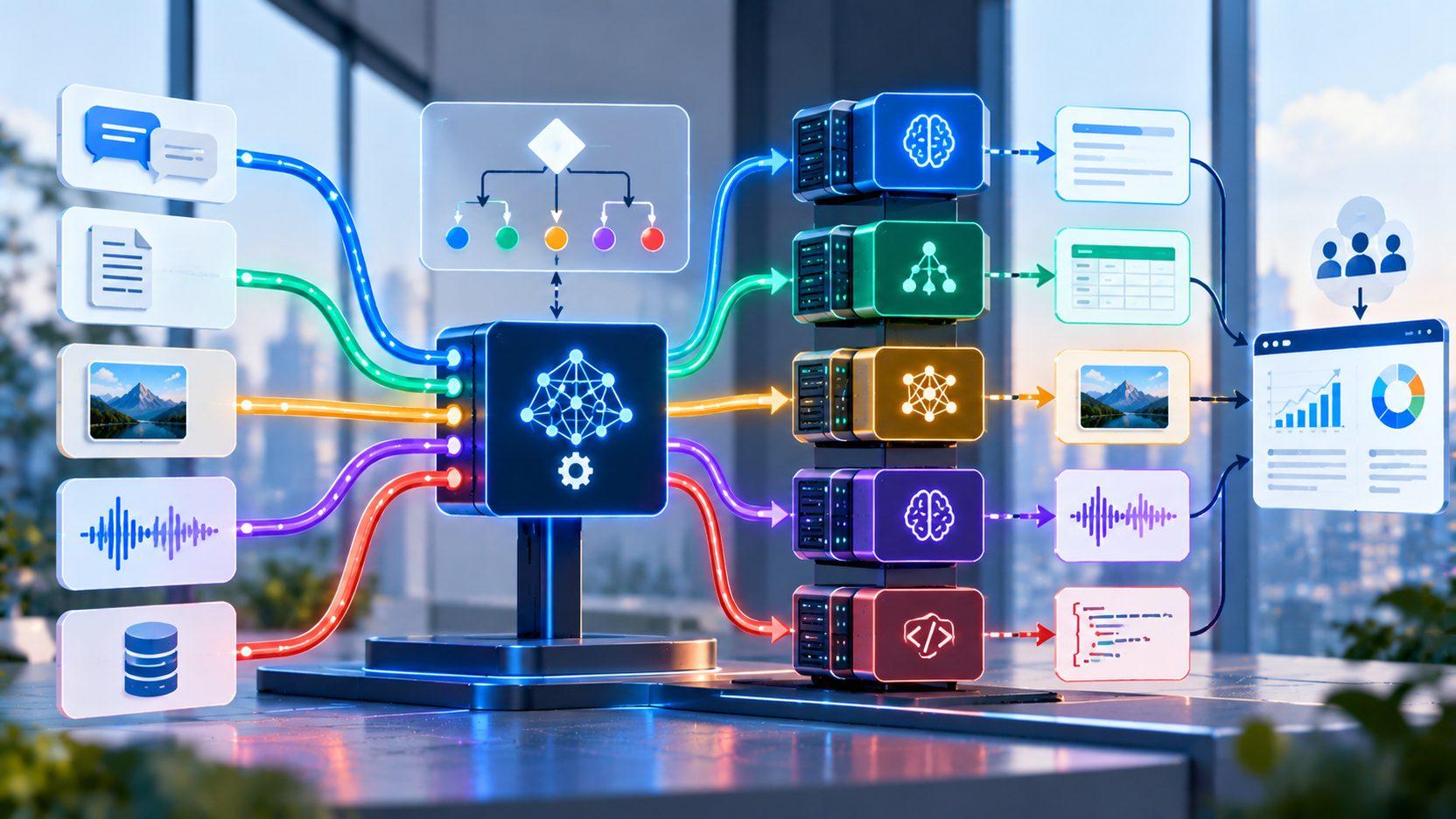
Modern AI products rarely consist of a standalone model. Instead, they include retrieval pipelines, memory systems, orchestration frameworks, tool integrations, monitoring platforms, governance controls, and user-facing applications. The value comes from how these components work together.
This shift has created demand for engineers who understand the complete AI workflow rather than focusing solely on individual models.
Agent Engineers are emerging to fill this gap.
What Exactly Does an Agent Engineer Do?
An Agent Engineer is responsible for designing and operating AI systems that can perform tasks, make decisions, interact with tools, and pursue objectives within defined constraints.
Unlike traditional AI applications that generate outputs directly from inputs, agents often follow multi-step workflows. They gather information, evaluate options, execute actions, monitor progress, and adapt based on changing circumstances.
Building these systems requires expertise across multiple domains.
Agent Engineers design agent architectures, implement tool integrations, manage memory systems, configure retrieval pipelines, establish evaluation frameworks, optimize workflows, and ensure operational reliability. They also work closely with product teams to determine how agents should behave within business environments.
For example, an enterprise research agent may need to retrieve information from multiple knowledge sources, evaluate competing perspectives, generate summaries, and distribute findings to stakeholders. An Agent Engineer would be responsible for orchestrating these capabilities into a cohesive system.
The role is therefore much broader than prompt engineering or model deployment. It focuses on creating intelligent systems capable of performing useful work.
Why Organizations Are Investing in Agentic AI
The growing demand for Agent Engineers reflects the enormous potential of agentic AI.
Traditional automation systems require predefined workflows and explicit rules. AI agents offer a more flexible approach. They can adapt to changing conditions, handle ambiguity, interact with multiple systems, and perform tasks that previously required human intervention.
Organizations are already exploring agentic systems across a wide range of functions. Customer support agents assist users with complex inquiries. Software engineering agents help investigate incidents and generate code. Research agents analyze large volumes of information. Operations agents automate routine workflows.
These capabilities promise significant improvements in productivity, scalability, and operational efficiency.
However, realizing these benefits requires more than access to advanced models. Organizations need engineers who understand how to build reliable systems around those models.
This growing industry focus is reflected in "From Copilots to Coworkers: The Evolution of AI Assistants in 2026," which explores how AI systems are evolving from simple productivity tools into active participants within organizational workflows.
As AI becomes increasingly capable of contributing to business operations, the demand for professionals who can build and manage these systems continues to grow.
Why Agent Engineering May Become a Major Career Category
Many industry observers compare today's Agent Engineering movement to the rise of cloud engineering during the cloud computing revolution.
Initially, cloud technologies were handled by general software engineers and infrastructure teams. As adoption increased, organizations recognized the need for specialists who understood cloud-native architectures, scalability, security, and operational best practices. This led to the emergence of dedicated cloud engineering roles.
Agent Engineering appears to be following a similar trajectory.
As enterprises deploy increasingly sophisticated AI agents, specialized expertise becomes more valuable. Organizations need professionals who understand planning systems, memory architectures, evaluation strategies, workflow orchestration, observability, reliability, governance, and human-AI collaboration models.
The complexity of these systems is creating an entirely new engineering discipline.
Key Takeaway
Agent Engineers focus on designing, deploying, and managing AI agents that can reason, retrieve information, use tools, and execute workflows within real-world environments. As organizations shift from model-centric AI development to system-centric AI deployment, demand is growing rapidly for professionals who understand how to build reliable, scalable, and effective agentic systems. Agent Engineering is emerging as one of the most promising new career paths in the AI industry.
Section 2: The Core Skills Every Agent Engineer Needs
Agent Engineering Requires More Than Traditional Software Development
One reason Agent Engineering is emerging as a distinct career path is that it requires a combination of skills rarely found within a single role. Traditional software engineering focuses on application development, scalability, APIs, databases, and system design. Machine learning engineering focuses on model training, feature engineering, experimentation, and deployment.
Agent Engineering sits at the intersection of both disciplines while introducing entirely new requirements.
Modern AI agents must reason, retrieve information, use tools, maintain context, execute workflows, and interact with external systems. Building these capabilities requires engineers to think beyond individual components and focus on end-to-end system behavior.
For example, when an AI agent fails to complete a task, the issue may not originate from the underlying language model. The problem could stem from a retrieval failure, memory limitation, orchestration error, API integration issue, tool selection mistake, or workflow design flaw. Agent Engineers therefore need a broader perspective than traditional developers or model-focused practitioners.
This systems-oriented mindset is becoming increasingly valuable because enterprise AI deployments are growing more complex every year. Organizations need professionals who understand not only how intelligent systems are built but also how they behave in production environments.
As AI agents become more autonomous, the ability to reason about complete workflows rather than isolated technologies will become one of the defining characteristics of successful Agent Engineers.
Understanding Agent Architectures and Orchestration Frameworks
One of the most important skill areas for Agent Engineers is understanding how agents are structured internally.
Modern agentic systems are rarely built around a single prompt. Instead, they consist of multiple interacting components that work together to achieve objectives. These may include planning modules, memory systems, retrieval layers, tool integrations, execution engines, monitoring systems, and evaluation frameworks.
Agent Engineers must understand how these components interact and how decisions flow through the system.
For example, an AI research agent may receive a request to analyze a market opportunity. The system may first generate a plan, retrieve information from multiple sources, evaluate findings, summarize results, and then prepare recommendations. Each stage introduces potential design choices and operational trade-offs.
Understanding orchestration frameworks is therefore becoming increasingly important. These frameworks coordinate agent behavior, manage workflows, facilitate tool usage, and govern interactions between system components.
As organizations scale agent deployments, orchestration skills are becoming just as important as application development skills. Engineers who understand how to design reliable workflows often create significantly more value than those who focus exclusively on prompts or model selection.
This growing importance of system design is discussed in "The Architecture of Agentic AI Systems: Key Components Explained," which explores how planning, memory, retrieval, execution, and orchestration layers work together to create effective AI agents.
Successful Agent Engineers think in terms of architectures rather than individual prompts.
Retrieval, Memory, and Context Management Are Critical
Another major skill area involves information management.
AI agents are only as effective as the information available to them. Even highly capable language models struggle when they lack relevant context or access to accurate knowledge sources. As a result, retrieval systems and memory architectures play a central role in modern agent design.
Agent Engineers must understand how information is stored, retrieved, prioritized, and utilized throughout workflow execution.
Retrieval-Augmented Generation (RAG) has become a foundational pattern because it allows agents to access current information from external knowledge repositories. Engineers need to understand vector databases, embeddings, indexing strategies, document chunking, ranking mechanisms, and retrieval evaluation methodologies.
Memory systems introduce additional complexity. Agents often need to retain information across multiple interactions, workflows, and projects. Designing effective memory architectures requires balancing relevance, scalability, privacy, and performance.
For example, an AI project management agent may need to remember deadlines, stakeholder preferences, previous decisions, project constraints, and ongoing action items. Determining which information should be retained and how it should be retrieved becomes a critical design consideration.
As enterprise AI adoption grows, context management is becoming one of the most important technical challenges within Agent Engineering.
Reliability, Evaluation, and Debugging Are Becoming Essential Skills
Building an agent is only the beginning. Ensuring that it performs reliably in production is often the harder challenge.
Unlike traditional software systems, AI agents operate probabilistically. They make decisions, evaluate information, select tools, and adapt to changing circumstances. This flexibility creates powerful capabilities but also introduces new forms of risk.
Agent Engineers therefore need expertise in evaluation, observability, debugging, and reliability engineering.
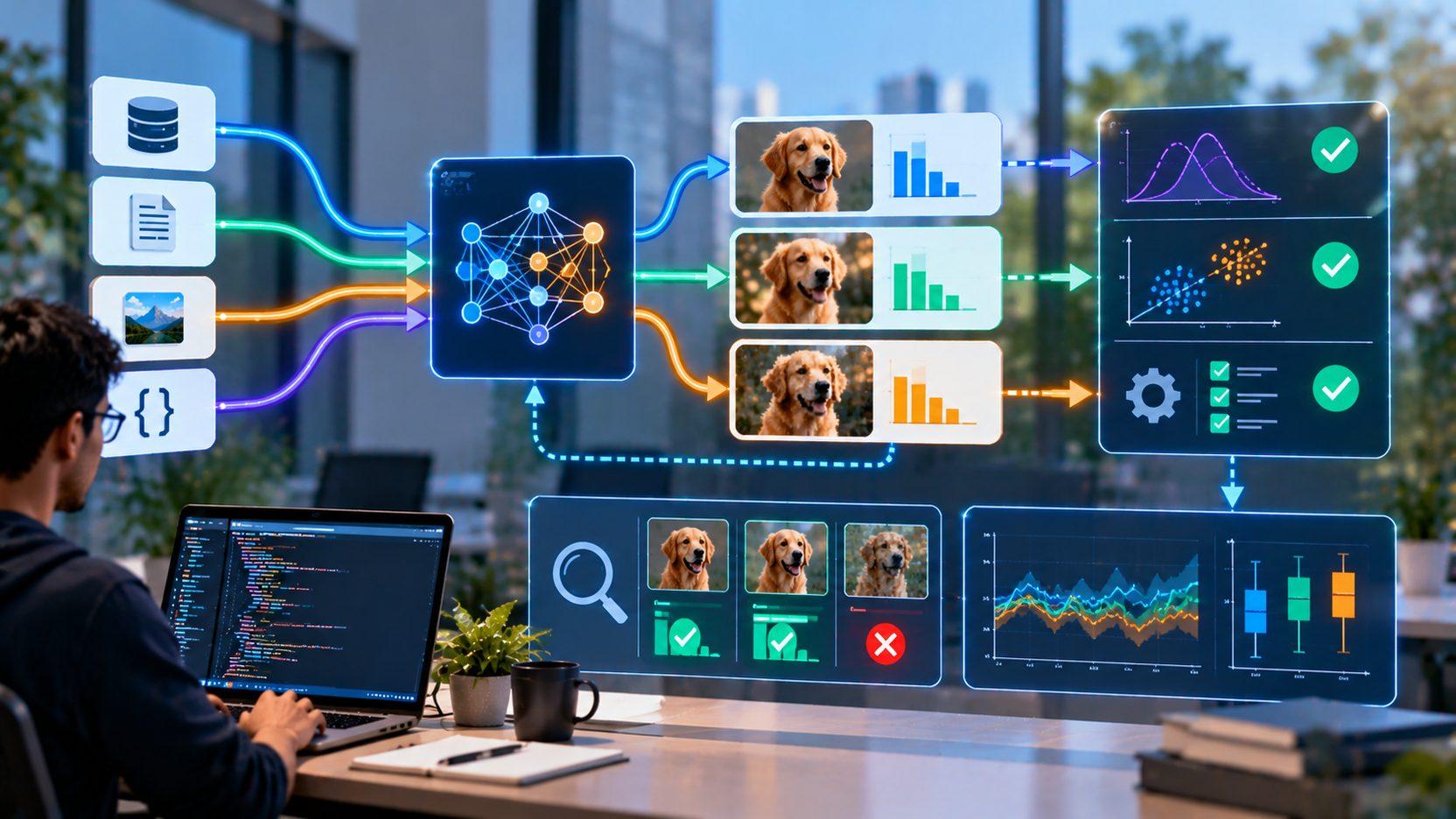
Organizations increasingly expect engineers to establish evaluation frameworks capable of measuring task completion rates, reasoning quality, retrieval effectiveness, workflow success, latency, and operational performance. Continuous monitoring is essential because agent behavior can evolve as environments, data, and user interactions change.
Debugging agentic systems also requires specialized skills. Engineers must analyze reasoning paths, execution traces, retrieval results, tool interactions, and workflow decisions to determine why failures occur. Traditional software debugging techniques remain valuable, but they are no longer sufficient on their own.
As AI systems become more autonomous, reliability will become a major competitive differentiator. Organizations need professionals who can ensure agents remain trustworthy, effective, and aligned with business objectives.
Key Takeaway
Agent Engineering requires expertise across system design, orchestration frameworks, retrieval architectures, memory management, evaluation methodologies, debugging practices, and reliability engineering. Unlike traditional software development or machine learning roles, Agent Engineers focus on the behavior of complete AI systems operating in real-world environments. As organizations scale agentic AI deployments, these interdisciplinary skills are becoming some of the most valuable capabilities in the technology industry.
Section 3: The Responsibilities of an Agent Engineer in Production Environments
Building an Agent Is Easy - Operating One Is Difficult
One of the biggest misconceptions surrounding agentic AI is that building an agent is the primary challenge. In reality, creating a functional prototype is often relatively straightforward. Modern frameworks, foundation models, and orchestration tools make it possible to assemble simple agents quickly.
The real challenge begins when organizations attempt to deploy these systems into production environments.
Enterprise AI agents are expected to operate reliably under changing conditions, interact with multiple systems, manage sensitive information, and deliver consistent outcomes at scale. Unlike demos, production environments introduce unpredictable user behavior, data quality issues, infrastructure failures, governance requirements, and operational constraints.
This is where Agent Engineers become essential.
Their responsibilities extend far beyond initial development. They are responsible for ensuring that agents remain reliable, scalable, secure, and effective throughout their lifecycle. This requires a combination of software engineering discipline, operational thinking, and AI-specific expertise.
For example, a customer support agent may perform well during testing but struggle when exposed to thousands of real-world interactions. An internal research agent may encounter retrieval issues as enterprise knowledge repositories expand. A software engineering agent may produce inconsistent recommendations when infrastructure configurations change.
Agent Engineers are responsible for anticipating these challenges and designing systems capable of handling them effectively.
As organizations move from experimentation to production deployment, operational excellence is becoming one of the most important aspects of agent development.
Designing Workflows and Defining Agent Behavior
One of the core responsibilities of an Agent Engineer is determining how agents should behave within business workflows.
Unlike traditional software systems that follow predefined execution paths, AI agents often operate with varying degrees of autonomy. They may need to choose tools, retrieve information, evaluate options, prioritize tasks, and determine execution strategies. These decisions influence both system performance and user outcomes.
Agent Engineers must therefore define the boundaries within which agents operate.
This involves designing workflows that align with business objectives while minimizing operational risk. Engineers determine what actions agents are allowed to perform, when human approval is required, how failures should be handled, and what safeguards should exist throughout the execution process.
For example, an enterprise procurement agent may be permitted to gather supplier information and generate recommendations but require human approval before executing purchasing decisions. Similarly, a software engineering agent may investigate incidents and propose fixes while leaving final deployment decisions to human engineers.
These workflow design decisions have significant implications for reliability, compliance, and user trust.
As agent capabilities continue expanding, workflow design is becoming one of the most strategically important responsibilities within Agent Engineering.
Monitoring, Observability, and Failure Diagnosis
Once agents are deployed, visibility into system behavior becomes critical.
Traditional software monitoring focuses primarily on infrastructure health and application performance. Agentic systems require a much broader observability strategy. Engineers need visibility into reasoning paths, retrieval quality, tool interactions, memory utilization, workflow execution, and task completion outcomes.
Agent Engineers are increasingly responsible for implementing these observability mechanisms.
For example, if an AI operations agent produces an incorrect recommendation, engineers need to understand why. Did the retrieval system surface inaccurate information? Did the agent select the wrong tool? Was the context incomplete? Did the reasoning process follow an ineffective path?
Without detailed observability, diagnosing these failures becomes extremely difficult.
Modern organizations therefore invest heavily in tracing systems that capture execution workflows, intermediate decisions, retrieved information, and final outputs. These capabilities allow engineers to identify root causes and continuously improve performance.
The growing importance of observability is explored in "The New Era of AI Debugging: Diagnosing Failures in Complex Systems," which examines how engineers are adapting traditional debugging practices to increasingly sophisticated AI architectures.
As AI systems become more autonomous, understanding how agents arrive at decisions is becoming just as important as evaluating the outcomes themselves.
Ensuring Reliability, Safety, and Governance
Perhaps the most important responsibility of an Agent Engineer is ensuring that AI systems remain reliable and trustworthy.
Organizations cannot deploy autonomous systems without confidence that they will behave predictably and responsibly. This requires rigorous evaluation, continuous monitoring, governance frameworks, and well-defined safety controls.
Agent Engineers establish evaluation methodologies that measure not only technical performance but also business effectiveness. They monitor workflow success rates, task completion accuracy, retrieval quality, reasoning consistency, latency, and operational stability. They also implement safeguards designed to prevent undesirable behavior.
For example, an AI financial assistant may need controls that prevent unauthorized transactions. A healthcare-related agent may require strict validation procedures before generating recommendations. Customer-facing agents may need escalation mechanisms that transfer interactions to human representatives when confidence levels fall below acceptable thresholds.
Governance becomes particularly important as organizations deploy agents across multiple departments and workflows. Agent Engineers help ensure that systems comply with organizational policies, regulatory requirements, and operational standards.
This responsibility increasingly places Agent Engineers at the center of AI strategy. They are not simply building systems; they are creating the trust mechanisms that allow organizations to adopt AI at scale.
Key Takeaway
Agent Engineers play a critical role in production AI environments by designing workflows, defining agent behavior, implementing observability systems, diagnosing failures, and ensuring reliability, safety, and governance. While building an agent may be relatively straightforward, operating one successfully at scale requires deep expertise in workflow management, monitoring, debugging, and operational excellence. As organizations deploy increasingly autonomous systems, these responsibilities are becoming central to the success of enterprise AI initiatives.
Section 4: Career Paths, Compensation Trends, and How to Become an Agent Engineer
Why Agent Engineering Is Emerging as a Long-Term Career Path
Every major technology wave creates new categories of technical roles. The rise of cloud computing created cloud architects and platform engineers. The growth of big data led to data engineering and analytics engineering. The expansion of machine learning introduced ML engineering and MLOps.
Agentic AI is now creating a similar transformation.
As organizations move from experimenting with AI assistants to deploying autonomous systems that participate in business operations, the need for specialized talent continues to grow. Companies are increasingly realizing that building production-grade agents requires expertise that extends beyond traditional software engineering and machine learning.
This realization is turning Agent Engineering into a dedicated career path rather than simply a temporary specialization.
Unlike many emerging technology trends that remain limited to a small number of companies, agentic AI has applications across nearly every industry. Technology firms are deploying coding assistants and operational agents. Financial institutions are exploring research and compliance agents. Healthcare organizations are evaluating workflow automation systems. Enterprise software vendors are building AI coworkers directly into their platforms.
The breadth of these applications means demand for Agent Engineers is likely to remain strong for years rather than being tied to a short-term technology cycle.
For software engineers, this creates a compelling opportunity. Agent Engineering allows professionals to remain close to software development while expanding into AI, systems design, automation, and product strategy. It combines technical depth with business impact, making it one of the most versatile AI-related career paths currently emerging.
Common Career Paths Into Agent Engineering
One reason Agent Engineering is growing so rapidly is that professionals can enter the field from multiple backgrounds.
Software engineers represent one of the most common entry points because many agentic systems are ultimately software products. Engineers with experience building APIs, distributed systems, cloud-native applications, and enterprise platforms already possess many of the foundational skills required for agent development.
Machine learning engineers also transition naturally into Agent Engineering because they understand model behavior, evaluation methodologies, inference systems, and AI architectures. However, they often need to expand their expertise into workflow orchestration, software infrastructure, and operational reliability.
Platform engineers and DevOps professionals are increasingly finding opportunities as well. Agentic systems depend heavily on observability, monitoring, deployment pipelines, cloud infrastructure, and scalability practices. These capabilities are essential for operating AI systems successfully in production environments.
Another emerging pathway comes from AI product teams. Professionals who understand user workflows, business objectives, and AI capabilities often become highly effective Agent Engineers because successful agents must align technical functionality with organizational goals.
This growing convergence of disciplines is discussed in "The AI Talent Wars: What Top Employers Are Looking for in 2026," which explores how companies increasingly seek professionals who can operate across software engineering, AI systems, infrastructure, and business domains.
The most successful Agent Engineers often combine expertise from multiple technical backgrounds rather than following a single traditional career trajectory.
What Employers Are Looking For in Agent Engineering Candidates
As demand for Agent Engineers increases, hiring managers are beginning to develop clearer expectations regarding candidate qualifications.
One of the most important characteristics employers seek is systems thinking. Building an agent requires understanding how retrieval systems, memory architectures, orchestration frameworks, APIs, monitoring platforms, and business workflows interact. Candidates who can reason about complete systems often stand out significantly during interviews.
Practical experience is also becoming increasingly important. Organizations want engineers who have built real applications, experimented with agent frameworks, deployed AI systems, or worked on production automation projects. Demonstrated experience often carries more weight than theoretical knowledge alone.
Communication skills represent another major differentiator. Agent Engineers frequently work with product managers, software teams, business stakeholders, operations groups, and AI specialists. The ability to explain technical decisions, discuss trade-offs, and align systems with organizational goals is highly valued.
Hiring managers are also paying close attention to adaptability. Agentic AI continues evolving rapidly, and organizations need professionals who can learn new tools, frameworks, and architectural patterns as the ecosystem matures.
The strongest candidates therefore combine technical expertise with curiosity, experimentation, and a demonstrated ability to navigate complex interdisciplinary environments.
The Future of Agent Engineering
The long-term outlook for Agent Engineering appears exceptionally strong.
Over the next several years, AI agents are expected to become increasingly integrated into software products, enterprise workflows, operational systems, and customer experiences. Organizations will require professionals who can design, deploy, monitor, evaluate, and improve these systems at scale.
The role itself is likely to evolve as the technology matures. Today's Agent Engineers often perform a broad range of responsibilities. Over time, the field may develop additional specializations focused on areas such as agent reliability, agent infrastructure, agent evaluation, agent governance, and multi-agent systems.
This evolution mirrors the trajectory of cloud engineering, cybersecurity, and machine learning engineering. What begins as a broad specialization often develops into an ecosystem of related career paths as adoption grows.
For engineers evaluating future opportunities, Agent Engineering offers a unique combination of technical complexity, business relevance, and long-term growth potential. It sits at the center of one of the most important technological transformations currently underway.
Professionals who invest in these skills today may find themselves exceptionally well positioned as agentic AI becomes a foundational component of modern organizations.
Key Takeaway
Agent Engineering is rapidly emerging as a major career category within artificial intelligence. Professionals from software engineering, machine learning, platform engineering, and product-focused backgrounds can transition into the field by developing expertise in agent architectures, orchestration systems, observability, reliability, and workflow design. As organizations continue deploying AI agents at scale, demand for Agent Engineers is expected to grow significantly, making it one of the most promising and future-oriented career paths in the technology industry.
Conclusion
The emergence of Agent Engineering represents one of the most important developments in the modern AI landscape. As organizations move beyond traditional machine learning applications and begin deploying autonomous systems capable of reasoning, planning, retrieving information, using tools, and executing workflows, a new category of engineering expertise is becoming essential.
For years, AI development focused primarily on models. Success was often measured by accuracy improvements, training efficiency, and algorithmic innovation. While these capabilities remain important, the rise of agentic AI has shifted attention toward systems. Organizations increasingly care about how AI interacts with enterprise software, how it accesses knowledge, how it makes decisions, how it handles failures, and how it creates value within real-world workflows.
This shift has created a significant opportunity for Agent Engineers.
Unlike traditional software engineers, Agent Engineers must understand AI behavior, reasoning systems, orchestration frameworks, memory architectures, retrieval pipelines, and workflow automation. Unlike traditional machine learning engineers, they must also think deeply about software architecture, infrastructure, observability, governance, and production reliability. Their role is fundamentally interdisciplinary, combining elements from multiple technical domains into a unified discipline focused on building intelligent systems that can operate effectively in complex environments.
The growing adoption of AI agents across software development, customer support, operations, research, sales, and enterprise automation suggests that demand for Agent Engineers will continue expanding throughout the coming years. Organizations increasingly need professionals who can bridge the gap between powerful foundation models and practical business applications.
At the same time, the field offers tremendous flexibility. Software engineers, ML engineers, platform engineers, DevOps professionals, and product-focused technologists can all transition into Agent Engineering by developing expertise in agent architectures, retrieval systems, orchestration frameworks, observability, and AI workflow design.
Perhaps most importantly, Agent Engineering sits at the center of the broader evolution from AI assistants to AI coworkers. As intelligent systems become more capable and autonomous, organizations will need experts who can ensure these systems remain reliable, scalable, secure, and aligned with business objectives.
For professionals looking to build future-proof careers in AI, Agent Engineering represents a unique opportunity to work on some of the most challenging and impactful problems in technology. The field is still emerging, demand is growing rapidly, and the engineers who develop these skills today are likely to play a central role in shaping how organizations deploy and collaborate with AI over the next decade.
Frequently Asked Questions
1. What is an Agent Engineer?
An Agent Engineer is a professional who designs, develops, deploys, evaluates, and maintains AI agents capable of reasoning, retrieving information, using tools, executing workflows, and completing objectives within real-world environments.
2. How is Agent Engineering different from Machine Learning Engineering?
Machine Learning Engineers primarily focus on building, training, and deploying models. Agent Engineers focus on designing complete AI systems that combine models with retrieval, memory, orchestration, tooling, monitoring, and workflow execution capabilities.
3. Why is Agent Engineering becoming important?
As organizations adopt AI agents for business operations, customer support, software development, and workflow automation, they need specialists who understand how to build reliable and scalable agentic systems.
4. What skills are required to become an Agent Engineer?
Important skills include software engineering, system design, Large Language Models, Retrieval-Augmented Generation (RAG), orchestration frameworks, APIs, cloud computing, observability, debugging, and AI reliability engineering.
5. Do Agent Engineers need machine learning expertise?
A strong understanding of AI fundamentals and LLM behavior is valuable, but Agent Engineers typically focus more on system design and workflow orchestration than on training foundation models from scratch.
6. What are AI agents?
AI agents are systems capable of pursuing objectives through reasoning, planning, memory, retrieval, tool usage, and multi-step execution rather than simply generating responses to prompts.
7. What industries are hiring Agent Engineers?
Technology companies, SaaS providers, financial institutions, healthcare organizations, consulting firms, enterprise software vendors, cybersecurity companies, and large enterprises are increasingly hiring Agent Engineers.
8. What is the difference between an AI assistant and an AI agent?
AI assistants typically respond to user requests, while AI agents can plan tasks, use tools, retrieve information, make decisions, and execute workflows to achieve broader objectives.
9. What role does Retrieval-Augmented Generation (RAG) play in Agent Engineering?
RAG enables agents to access external knowledge sources, improving accuracy, reducing hallucinations, and allowing agents to work with current information beyond their training data.
10. Why is observability important for Agent Engineers?
Observability helps engineers understand agent behavior, reasoning paths, tool usage, retrieval quality, workflow execution, and failure patterns in production environments.
11. How do Agent Engineers evaluate AI agents?
They use metrics such as task completion rates, workflow success rates, retrieval accuracy, reasoning quality, latency, reliability, user satisfaction, and business impact measurements.
12. Can software engineers transition into Agent Engineering?
Yes. Software engineers already possess many foundational skills needed for Agent Engineering, including programming, APIs, system design, debugging, cloud infrastructure, and distributed systems expertise.
13. What frameworks do Agent Engineers commonly work with?
Depending on the organization, Agent Engineers may work with orchestration frameworks, vector databases, workflow engines, observability platforms, AI SDKs, cloud AI services, and agent development frameworks.
14. Is Agent Engineering a good long-term career path?
Yes. As organizations increasingly deploy AI agents across business functions, demand for professionals who can build, operate, and optimize agentic systems is expected to grow significantly.
15. What does the future of Agent Engineering look like?
The field is likely to expand into specialized areas such as agent infrastructure, agent reliability, agent evaluation, agent governance, multi-agent systems, and enterprise AI operations. As agentic AI becomes mainstream, Agent Engineering is expected to become one of the most important career paths within the broader AI ecosystem.