Section 1: Why Software Engineering Is Shifting from Automation to Collaboration
The Evolution of AI in Software Engineering
For many years, automation in software engineering focused primarily on repetitive tasks. Tools were designed to reduce manual effort in testing, deployment, code formatting, and infrastructure management. AI initially entered this space as a productivity enhancer rather than a collaborative participant. At companies like Google, GitHub, OpenAI, and Microsoft, this perspective has changed dramatically over the last few years.
AI is no longer being treated purely as an automation layer.
Instead, it is increasingly functioning as a collaborative engineering partner capable of assisting with reasoning, architecture discussions, debugging, workflow management, and even long-term software planning.
This marks a fundamental shift.
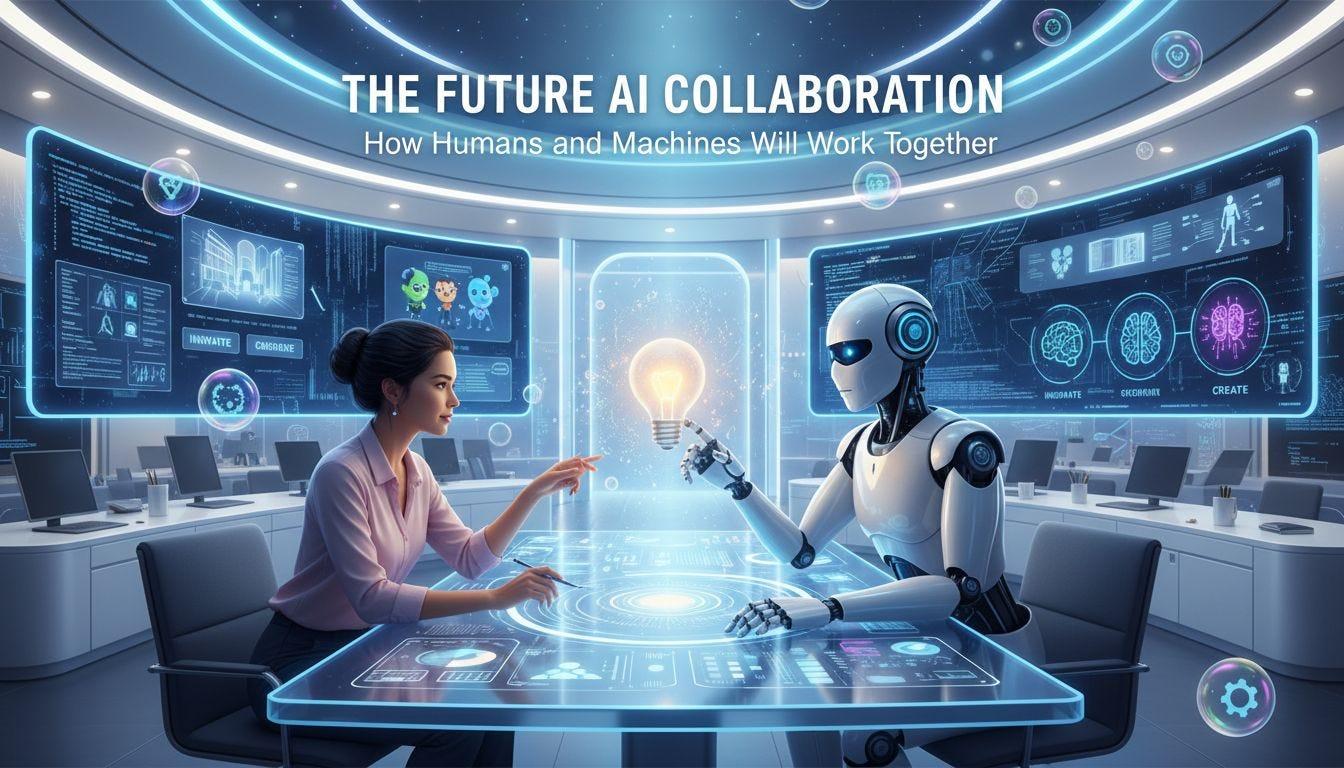
The future of software engineering is not centered around replacing developers. It is centered around creating workflows where humans and AI systems work together continuously.
Why Pure Automation Has Limitations
Early conversations around AI in software engineering often focused on replacement.
There was significant speculation that increasingly advanced AI systems would automate large portions of development work entirely. While AI systems have become remarkably capable at code generation and pattern recognition, real-world engineering environments exposed important limitations in purely automated approaches.
Software engineering is not simply code generation.
It involves tradeoffs, architectural reasoning, collaboration, business constraints, security considerations, and long-term maintainability. Many engineering decisions depend heavily on context, organizational priorities, and human judgment.
AI systems can generate implementations quickly, but they often lack deep situational understanding.
This is why the industry is moving toward collaborative models rather than fully autonomous engineering systems.
The most effective workflows combine human strategic thinking with AI-assisted execution and reasoning support.
The Rise of AI-Augmented Development Workflows
Modern development workflows are increasingly becoming AI-augmented rather than AI-automated.
Developers now interact continuously with AI systems during:
- Code generation
- Refactoring
- Documentation
- Testing
- Debugging
- Architecture exploration
- Knowledge retrieval
Instead of treating AI as a separate tool, engineers integrate it directly into daily workflows.
This changes how software is built.
Developers spend less time on repetitive implementation details and more time on higher-level system reasoning. AI accelerates iteration cycles, while humans provide strategic oversight, contextual understanding, and final decision-making.
The workflow becomes collaborative rather than transactional.
Why Human Judgment Remains Critical
Despite rapid progress in AI capabilities, human judgment remains central to software engineering.
Engineering decisions often involve ambiguity.
Teams must balance scalability, maintainability, security, performance, cost, and user experience simultaneously. These tradeoffs cannot always be optimized through pattern matching alone because they depend heavily on organizational context and long-term strategy.
Human engineers provide:
- Domain understanding
- Business reasoning
- Ethical judgment
- Prioritization decisions
- System-level tradeoff analysis
AI systems assist by accelerating exploration and reducing operational friction.
This creates complementary strengths rather than direct competition.
The future of engineering therefore depends on effective coordination between human reasoning and AI capabilities.
Why Collaboration Is More Powerful Than Replacement
One of the most important realizations in modern software engineering is that collaboration produces better outcomes than full automation.
AI systems are extremely effective at:
- Generating implementation patterns
- Surfacing documentation
- Identifying inconsistencies
- Accelerating debugging workflows
- Exploring alternative approaches
Humans are more effective at:
- Defining goals
- Evaluating tradeoffs
- Understanding business impact
- Designing long-term architectures
- Managing organizational complexity
Together, these capabilities create significantly more productive engineering environments.
This collaborative model also improves adaptability.
As systems become more complex, humans and AI systems can divide responsibilities dynamically rather than forcing one side to manage the entire workflow independently.
The Shift Toward AI-Native Engineering Environments
The rise of AI-native workflows is reshaping software engineering environments themselves.
Development environments are increasingly integrating:
- Context-aware assistants
- Automated reasoning systems
- Workflow orchestration layers
- AI-supported testing systems
- Intelligent documentation retrieval
These environments are evolving into collaborative ecosystems where AI participates continuously throughout the software lifecycle.
This changes how engineers think about productivity.
The value no longer comes purely from writing code faster. It comes from improving reasoning efficiency, reducing cognitive overhead, and accelerating system-level decision-making.
Engineering itself is becoming more workflow-oriented and AI-assisted.
Why This Shift Is Reshaping Engineering Roles
As collaboration becomes central to engineering workflows, the role of software engineers is evolving.
Engineers are spending less time on repetitive coding tasks and more time on:
- Architectural reasoning
- Workflow orchestration
- System integration
- Reliability planning
- AI coordination
This does not reduce the importance of engineering expertise.
Instead, it increases the importance of higher-level systems thinking and communication skills.
Engineers who can effectively collaborate with AI systems will become significantly more productive than those who rely only on traditional workflows.
Why This Matters in Interviews
Human-AI collaboration is increasingly relevant in software engineering interviews because it reflects how modern development environments operate.
Interviewers increasingly evaluate whether candidates can:
- Use AI tools effectively
- Reason about workflows
- Validate AI-generated outputs
- Manage system-level tradeoffs
- Collaborate within AI-augmented environments
Candidates who view AI only as a coding shortcut often demonstrate shallow understanding.
Strong candidates recognize AI as a collaborative engineering layer rather than a replacement mechanism.
This expectation is emphasized in “The Hidden Skills ML Interviewers Look For (That Aren’t on the Job Description)”, which highlights the growing importance of systems thinking, workflow coordination, and adaptive engineering practices in modern technical roles .
The Key Takeaway
The future of software engineering is shifting from pure automation toward human-AI collaboration. AI systems are becoming integrated partners within development workflows, accelerating implementation and reasoning while humans provide strategic judgment, architectural thinking, and contextual understanding. Engineers who learn to collaborate effectively with AI systems will be better positioned to thrive in the next generation of software engineering environments.
Section 2: How AI Is Transforming Developer Productivity, Workflows, and System Design
Developer Productivity Is No Longer Measured Only by Code Output
For decades, software engineering productivity was closely tied to implementation speed. Developers were evaluated based on how efficiently they could write code, fix bugs, and deliver features. In modern engineering environments, that definition is changing rapidly. At companies like Google, Microsoft, GitHub, and OpenAI, productivity is increasingly viewed through the lens of reasoning efficiency, workflow coordination, and system-level problem solving.
AI is driving this transformation.
Instead of functioning only as a code generation tool, AI is becoming integrated into every stage of the software lifecycle. Developers are no longer interacting with AI occasionally. They are collaborating with it continuously throughout design, implementation, debugging, testing, and maintenance workflows.
This fundamentally changes how engineering work is performed.
The value of AI is not simply that it writes code faster. The larger impact comes from reducing cognitive overhead, accelerating exploration, and allowing engineers to focus more attention on architecture, tradeoffs, and system behavior.
Productivity is therefore shifting from typing efficiency toward decision-making efficiency.
AI-Augmented Workflows Are Reshaping Daily Engineering Practices
Modern software development workflows are becoming deeply AI-augmented.
Developers increasingly rely on AI systems during brainstorming sessions, debugging processes, infrastructure configuration, documentation retrieval, and architectural exploration. Instead of searching manually through large knowledge bases or documentation repositories, engineers can interact conversationally with context-aware systems that surface relevant information instantly.
This changes the rhythm of engineering work.
Many repetitive operational tasks that once interrupted developer focus are now partially automated or accelerated through AI assistance. Engineers can iterate through solutions more quickly because the cost of exploration has decreased significantly.
This acceleration affects both junior and senior engineers differently.
Junior developers gain access to implementation support and contextual guidance that previously required extensive mentorship or documentation research. Senior engineers benefit by offloading repetitive operational work and focusing more heavily on strategic system design.
However, the most important change is not speed alone.
AI-assisted workflows are altering how engineers think about software development itself. Workflows are becoming more interactive, iterative, and reasoning-driven rather than purely implementation-driven.
This creates a more collaborative engineering environment where AI participates continuously as an operational layer within the workflow.
System Design Is Becoming More Dynamic and Iterative
AI collaboration is also reshaping how system design decisions are approached.
Traditional software architecture processes often involved long planning cycles followed by relatively static implementation phases. Modern AI-assisted environments encourage more iterative architectural exploration.
Engineers can now evaluate multiple implementation strategies rapidly, simulate workflows conceptually, and analyze tradeoffs more efficiently through AI-assisted reasoning.
This increases experimentation velocity significantly.
Instead of committing early to rigid architectures, teams can explore alternatives dynamically before converging on final decisions. AI systems help accelerate comparative analysis by surfacing design patterns, scalability considerations, infrastructure constraints, and implementation tradeoffs in real time.
As a result, system design itself is becoming more fluid.
This flexibility becomes increasingly valuable as software systems grow more distributed and workflow-oriented. Modern applications involve orchestration layers, cloud-native infrastructure, retrieval systems, event-driven pipelines, and AI-native components interacting simultaneously. Engineers must reason about complex interdependencies across multiple layers of the stack.
AI systems help reduce the cognitive complexity of managing these interactions.
Rather than replacing engineering judgment, they enhance architectural exploration and accelerate systems-level reasoning.
This collaborative model improves adaptability because teams can evolve architectures more efficiently as requirements change.
The Nature of Engineering Expertise Is Changing
As AI systems become integrated into engineering workflows, the definition of expertise is evolving.
Historically, expertise was often associated with memorization of frameworks, syntax familiarity, or implementation speed. While technical depth remains important, the most valuable engineers are increasingly those who can reason effectively across systems, workflows, and organizational constraints.
AI systems can generate implementations quickly, but they do not fully understand long-term product strategy, organizational tradeoffs, or evolving business priorities.
Human engineers therefore become more focused on:
- System architecture
- Reliability reasoning
- Workflow coordination
- Product alignment
- Long-term maintainability
- Risk evaluation
The role shifts upward from isolated implementation toward systems orchestration and decision-making.
This also changes learning priorities for engineers.
Understanding distributed systems, infrastructure coordination, workflow design, observability, and architectural tradeoffs is becoming more important than memorizing isolated implementation details. Engineers who understand how systems interact can leverage AI much more effectively than those who rely only on low-level coding knowledge.
The relationship between humans and AI therefore becomes multiplicative rather than competitive.
AI amplifies engineering capability when paired with strong systems thinking and contextual judgment.
Why Human Oversight Remains Essential
Despite rapid progress in AI-assisted development, human oversight remains critical.
AI systems are highly effective at pattern generation and operational acceleration, but they still struggle with ambiguity, contextual nuance, and long-term strategic reasoning. Generated solutions may appear correct while introducing subtle scalability, security, or maintainability issues.
This means engineers must increasingly function as validators, orchestrators, and strategic decision-makers.
The challenge is no longer simply writing code manually. The challenge is understanding whether AI-generated workflows align with architectural goals, reliability requirements, and organizational constraints.
Human oversight becomes especially important in large-scale systems where small design flaws can create cascading operational problems.
The future of software engineering therefore depends heavily on collaborative validation workflows rather than blind automation.
Teams that combine AI acceleration with strong engineering review processes will outperform teams relying exclusively on either manual workflows or uncontrolled automation.
Why This Matters in Interviews
AI-augmented engineering workflows are increasingly influencing how technical candidates are evaluated.
Interviewers now look beyond raw implementation ability and increasingly focus on:
- Systems thinking
- Workflow reasoning
- Architectural tradeoff analysis
- Validation skills
- Adaptability within AI-assisted environments
Candidates who view AI only as a code generator often fail to demonstrate deeper engineering maturity.
Strong candidates understand how AI changes workflows, accelerates reasoning, and shifts engineering responsibilities toward higher-level decision-making.
This expectation is emphasized in “Machine Learning System Design Interview: Crack the Code with InterviewNode”, which highlights the growing importance of workflow reasoning, systems architecture, and production-level thinking in modern technical interviews .
The Key Takeaway
AI is transforming software engineering by reshaping productivity, workflows, and system design itself. Engineering is becoming increasingly collaborative, iterative, and workflow-driven, with AI systems acting as operational partners rather than simple automation tools. Engineers who develop strong systems thinking, architectural reasoning, and collaborative validation skills will be better prepared for the future of AI-augmented software development.
Section 3: Human Strengths vs AI Strengths , The New Division of Engineering Work
Why Software Engineering Is Moving Toward Cognitive Collaboration
As AI systems become deeply integrated into software engineering workflows, one of the biggest shifts happening across the industry is the emergence of a new division of labor between humans and AI. At companies like Google, Microsoft, OpenAI, and GitHub, engineering productivity is increasingly driven by collaboration between human reasoning and AI-assisted execution rather than isolated individual effort.
This transition is important because software engineering is no longer defined only by writing code.
Modern systems involve architecture coordination, infrastructure scalability, workflow orchestration, observability, product reasoning, security constraints, and long-term maintainability. AI systems excel at accelerating certain parts of this process, but they struggle with others. Humans remain essential in areas where judgment, context, ambiguity, and strategic reasoning dominate.
The future therefore depends on understanding comparative strengths rather than framing AI as either a replacement or a simple tool.
The most effective engineering organizations are learning how to distribute work intelligently between humans and AI systems.
Where AI Systems Excel in Engineering Workflows
AI systems are exceptionally effective at high-speed operational tasks that involve pattern recognition, implementation acceleration, and information retrieval.
One of the biggest advantages of AI is its ability to process and synthesize large volumes of technical information rapidly. Engineers can now retrieve documentation, generate implementation patterns, compare frameworks, and explore alternative approaches within seconds. Tasks that previously required extensive searching or repetitive manual work can now be accelerated significantly.
This improves iteration speed dramatically.
AI systems are also highly effective in environments where:
- Problems follow recognizable patterns
- Large codebases require navigation
- Boilerplate implementation is repetitive
- Documentation retrieval slows workflows
- Refactoring requires broad consistency checks
These strengths make AI extremely valuable as a workflow accelerator.
Another major advantage is scalability of operational assistance.
AI systems do not fatigue during repetitive exploration. They can continuously assist with generating tests, analyzing implementation variations, surfacing dependency issues, or identifying potential inconsistencies across large systems.
This reduces cognitive overhead for engineers.
Instead of spending energy on repetitive operational details, developers can allocate more attention toward higher-level reasoning and strategic decisions.
However, these strengths depend heavily on context provided by humans.
AI systems are powerful pattern engines, but they do not independently understand organizational priorities, long-term product strategy, or evolving business constraints in the same way human engineers do.
Why Validation Is Becoming More Important Than Generation
One of the most important shifts in AI-assisted engineering is that validation is becoming more valuable than raw generation.
Generating code is becoming increasingly inexpensive.
AI systems can now produce implementations rapidly across many programming environments. However, generated output is not automatically reliable, scalable, secure, or maintainable.
This creates a new engineering challenge.
The critical skill is no longer simply producing implementations manually. It is evaluating whether generated workflows align with system goals and operational constraints.
Human engineers therefore become responsible for:
- Validating architectural integrity
- Detecting hidden scalability risks
- Ensuring maintainability
- Evaluating tradeoffs
- Managing system interactions
- Confirming operational safety
This dramatically changes the nature of engineering expertise.
The highest-value engineers are increasingly those who can reason effectively about systems behavior rather than simply implementing isolated features.
This also explains why systems thinking is becoming more important across the industry.
As AI handles more operational execution, humans become more focused on coordinating complexity across workflows and organizational boundaries.
The Future Is Workflow-Oriented Collaboration
The future of software engineering is not fully human-driven or fully AI-driven.
It is workflow-driven.
Humans and AI systems will increasingly divide responsibilities dynamically depending on the nature of the task. AI systems will accelerate operational execution and exploration, while humans provide strategic reasoning, oversight, and contextual alignment.
This creates a more adaptive engineering environment.
Instead of rigid divisions between automation and manual work, workflows become collaborative systems where responsibilities shift fluidly between humans and AI based on complexity, ambiguity, and operational requirements.
The engineering stack itself is evolving to support this collaboration.
Development environments increasingly integrate:
- Context-aware reasoning systems
- AI-assisted orchestration workflows
- Intelligent debugging layers
- Dynamic knowledge retrieval
- Continuous validation mechanisms
Engineering productivity therefore becomes tightly connected to how effectively humans and AI systems coordinate within shared workflows.
This is also reshaping organizational expectations.
Companies increasingly value engineers who can collaborate effectively with AI systems while maintaining strong architectural reasoning and operational judgment.
The competitive advantage no longer comes purely from coding speed. It comes from leveraging AI to amplify systems thinking and decision-making efficiency.
This evolution is already influencing hiring patterns and technical interviews.
Candidates are increasingly evaluated on whether they can:
- Validate AI-generated outputs
- Reason about workflows
- Understand system interactions
- Coordinate AI-assisted development processes
- Maintain reliability in AI-augmented environments
This expectation is emphasized in “The Hidden Metrics: How Interviewers Evaluate ML Thinking, Not Just Code”, which highlights the growing importance of systems reasoning, workflow orchestration, and production-level judgment in modern engineering environments .
The Key Takeaway
The future of software engineering is defined by collaboration between human reasoning and AI-assisted execution. AI systems excel at operational acceleration, implementation support, and large-scale pattern recognition, while humans remain essential for strategic reasoning, validation, architecture, and contextual decision-making. Engineers who learn to orchestrate these complementary strengths effectively will be best positioned to thrive in the next generation of AI-augmented engineering environments.
Section 4: The Future Engineering Organization , AI-Native Teams, Workflows, and Career Evolution
Engineering Organizations Are Being Rebuilt Around AI Collaboration
The integration of AI into software engineering is no longer limited to individual developer productivity tools. At companies like Google, Microsoft, OpenAI, and GitHub, the influence of AI is beginning to reshape the structure of engineering organizations themselves.
This transformation is happening because AI changes how work flows through teams.
Traditional software organizations were built around human-centered execution. Work moved sequentially between planning, implementation, testing, deployment, and maintenance teams. AI-assisted engineering changes the speed, coordination patterns, and operational complexity of these workflows.
As a result, organizations are evolving toward AI-native operating models.
These organizations are not simply adding AI tools into existing workflows. They are redesigning workflows around continuous collaboration between humans and AI systems. This changes team structures, communication patterns, productivity expectations, and even the definition of engineering roles.
The future engineering organization will therefore look fundamentally different from traditional software teams.
AI-Native Workflows Are Changing Team Coordination
One of the biggest shifts happening in engineering organizations is the move toward workflow-centric collaboration.
In earlier software environments, much of the engineering process revolved around implementation ownership. Developers were primarily responsible for writing code manually, while operational coordination happened separately through management structures and deployment processes.
AI-native environments compress many of these boundaries.
AI systems now participate continuously across:
- Architecture exploration
- Code generation
- Infrastructure configuration
- Debugging workflows
- Documentation retrieval
- Testing pipelines
- Operational monitoring
This creates highly interconnected workflows where reasoning, implementation, and operational feedback happen much more rapidly.
The result is that coordination itself becomes more important than isolated coding effort.
Teams increasingly organize around workflows rather than static technical silos. Engineers collaborate more dynamically across infrastructure, product, reliability, and AI orchestration layers because the system evolves continuously rather than through rigid release cycles.
This also accelerates iteration speed dramatically.
AI reduces friction between stages of development, allowing ideas to move from concept to deployment much faster. However, this increased speed also introduces new coordination challenges because systems evolve more rapidly and dependencies become harder to manage manually.
AI-native organizations therefore rely heavily on orchestration systems, observability frameworks, and collaborative engineering workflows to maintain alignment across teams.
The Definition of Engineering Roles Is Expanding
As AI systems handle more operational execution, the role of engineers is evolving significantly.
Historically, engineering expertise was closely associated with implementation ability and low-level technical execution. In AI-native environments, repetitive coding tasks are increasingly accelerated or partially automated through AI collaboration.
This shifts engineering value upward toward systems-level reasoning.
Modern engineers are spending more time on:
- Architectural decision-making
- Workflow orchestration
- Reliability reasoning
- Infrastructure coordination
- Product alignment
- AI supervision and validation
The role becomes less centered around isolated implementation and more centered around managing complexity across interconnected systems.
This does not reduce the importance of technical depth.
In fact, strong technical understanding becomes even more important because engineers must evaluate AI-generated outputs critically and understand how decisions affect larger workflows. Engineers who lack systems understanding often struggle in AI-native environments because they cannot effectively validate or coordinate increasingly complex workflows.
This evolution is also creating entirely new engineering specializations.
Organizations are increasingly investing in:
- AI workflow orchestration engineers
- AI reliability specialists
- Prompt and context engineering roles
- AI infrastructure coordinators
- Human-AI interaction designers
The engineering ecosystem itself is becoming more interdisciplinary and workflow-oriented.
The Future of Engineering Will Be Defined by Human-AI Coordination
One of the most important long-term realities is that engineering organizations are unlikely to become fully autonomous AI systems.
Instead, they are evolving toward collaborative ecosystems where humans and AI continuously coordinate responsibilities.
AI systems will increasingly handle:
- Operational acceleration
- Knowledge retrieval
- Repetitive implementation
- Workflow optimization
- Large-scale pattern analysis
Humans will continue leading:
- Strategic reasoning
- Organizational alignment
- Product direction
- Reliability oversight
- Ethical judgment
- Long-term systems architecture
This division of labor creates more scalable and adaptive organizations.
The engineering teams that succeed will not necessarily be the ones using the most AI. They will be the ones capable of integrating AI into workflows intelligently while maintaining strong systems thinking, operational discipline, and organizational coordination.
This shift is already influencing hiring expectations.
Modern technical interviews increasingly evaluate whether candidates can reason effectively inside AI-augmented workflows rather than focusing purely on manual implementation ability. Interviewers increasingly care about systems reasoning, workflow design, validation thinking, and adaptability.
This expectation is emphasized in “Machine Learning System Design Interview: Crack the Code with InterviewNode”, which highlights the growing importance of workflow coordination, systems architecture, and production-level reasoning in modern engineering careers .
The Key Takeaway
The future engineering organization will be AI-native, workflow-driven, and highly collaborative. Engineering roles are evolving from isolated implementation toward systems orchestration, reliability reasoning, and workflow coordination. Engineers who develop adaptability, systems thinking, and the ability to collaborate effectively with AI systems will be best positioned to thrive in the next generation of software engineering environments.
Conclusion: The Future of Software Engineering Is Collaborative Intelligence
Software engineering is entering one of the most important transitions in its history. The industry is moving away from a model where developers work independently with static tools and toward environments where humans and AI systems collaborate continuously throughout the software lifecycle. At organizations like Google, Microsoft, OpenAI, and GitHub, this transformation is already reshaping engineering workflows, organizational structures, and long-term career expectations.
One of the most important realizations emerging from this shift is that AI is not simply an automation tool.
The future of engineering is not centered around replacing developers entirely. Instead, it is being built around collaborative intelligence, where humans and AI systems contribute complementary strengths to shared workflows. AI systems accelerate implementation, retrieve knowledge rapidly, reduce operational friction, and support large-scale reasoning tasks. Human engineers continue to provide strategic thinking, contextual judgment, architectural reasoning, and organizational coordination.
This collaborative relationship is fundamentally changing how software is built.
Engineering workflows are becoming more iterative, adaptive, and workflow-oriented. Instead of spending large amounts of time on repetitive operational work, engineers are increasingly focused on systems design, workflow orchestration, validation, and reliability reasoning. AI systems compress iteration cycles and accelerate exploration, allowing teams to move from concept to implementation much faster than traditional development environments allowed.
At the same time, this acceleration introduces new responsibilities.
As AI-generated outputs become more common, validation becomes more important than raw generation. Engineers must understand scalability, reliability, maintainability, and operational tradeoffs deeply enough to evaluate whether AI-assisted workflows align with long-term system goals. This means systems thinking is becoming one of the most important engineering skills in the modern industry.
Another major transformation is happening at the organizational level.
Engineering teams are evolving into AI-native environments where collaboration between humans and AI systems happens continuously across design, implementation, testing, deployment, and operational monitoring. Workflow coordination is becoming more important than isolated coding effort because modern systems involve highly interconnected infrastructures, orchestration layers, and AI-assisted development pipelines.
This is also changing career growth patterns.
The engineers who thrive in the future are unlikely to be those who focus only on manual implementation speed. Instead, the highest-value engineers will be those who can reason across workflows, coordinate complex systems, adapt to rapidly evolving technologies, and collaborate effectively with AI systems.
The future engineering organization will therefore become increasingly workflow-driven rather than purely implementation-driven.
AI systems will continue taking over repetitive operational acceleration, while human engineers focus more heavily on strategic reasoning, architectural coordination, organizational alignment, and long-term systems reliability. The relationship between humans and AI will become increasingly integrated rather than adversarial.
This evolution is already influencing technical hiring expectations.
Modern interviews increasingly evaluate systems reasoning, workflow coordination, validation thinking, and adaptability within AI-assisted engineering environments. Candidates who understand how human-AI collaboration reshapes workflows are becoming more aligned with the realities of modern software development. This expectation is emphasized in “The Hidden Skills ML Interviewers Look For (That Aren’t on the Job Description)”, which highlights the growing importance of systems thinking, workflow orchestration, and production-level reasoning in modern engineering careers .
Ultimately, the future of software engineering will not belong solely to humans or solely to AI systems.
It will belong to organizations and engineers capable of combining human judgment with AI-assisted execution in scalable, adaptive, and collaborative workflows. The engineers who learn to operate effectively within this new model will be best positioned to lead the next generation of software innovation.
Frequently Asked Questions (FAQs)
1. Will AI replace software engineers completely?
No. AI is more likely to augment engineering workflows rather than fully replace human developers.
2. What is human-AI collaboration in software engineering?
It refers to workflows where humans and AI systems work together across coding, design, debugging, and system reasoning tasks.
3. Why are AI-assisted workflows becoming important?
Because they reduce repetitive work, accelerate iteration speed, and improve engineering productivity.
4. What tasks are AI systems best at in engineering?
Pattern generation, documentation retrieval, repetitive implementation, debugging assistance, and workflow acceleration.
5. What tasks still require human engineers?
Strategic reasoning, architectural decisions, tradeoff analysis, product alignment, and long-term system planning.
6. Why is validation becoming more important than generation?
Because AI can generate code rapidly, but humans must ensure it is scalable, reliable, and maintainable.
7. How are AI-native engineering organizations different?
They design workflows around continuous collaboration between humans and AI systems.
8. What skills will matter most for future engineers?
Systems thinking, adaptability, workflow reasoning, architecture design, and AI collaboration skills.
9. How is AI changing developer productivity?
It shifts productivity from raw coding speed toward faster reasoning and workflow coordination.
10. Why is systems thinking becoming more important?
Because modern software systems are increasingly distributed, interconnected, and workflow-driven.
11. What is an AI-augmented workflow?
A workflow where AI assists continuously throughout the engineering process rather than being used occasionally.
12. How are technical interviews changing because of AI?
Interviews increasingly evaluate workflow reasoning, systems design, and validation ability instead of only coding speed.
13. Will junior engineers still be needed in AI-assisted environments?
Yes. AI can accelerate learning and implementation support, but human judgment and growth remain essential.
14. Why is adaptability important in future engineering careers?
Because AI tools, workflows, and engineering architectures are evolving rapidly.
15. What is the key takeaway?
The future of software engineering is collaborative, where humans and AI systems combine complementary strengths to build more scalable and adaptive systems.
By understanding how AI is transforming workflows, engineering culture, and organizational design, you can prepare yourself for the next era of software engineering, one defined not by competition between humans and AI, but by increasingly powerful collaboration between them.