Section 1: Why AI Memory Systems Are Becoming Essential for Next-Generation AI
Large Language Models Were Never Designed to Remember Everything
The first wave of generative AI products demonstrated remarkable capabilities in reasoning, coding, summarization, content generation, and conversational interaction. Large language models transformed how people interact with software by enabling natural language interfaces that feel increasingly intelligent and adaptive.
Despite these advances, early AI systems had a significant limitation.
Most large language models were fundamentally stateless. They could process information within a context window during a conversation, but once that interaction ended, the model typically lost access to the information unless external systems stored and reintroduced it later.
This limitation became increasingly problematic as organizations attempted to build AI products that operate continuously across workflows, projects, teams, and enterprise environments.
Users naturally expect intelligent systems to remember previous interactions, preferences, objectives, decisions, and contextual information. Human conversations depend heavily on memory. Without memory, AI systems repeatedly ask the same questions, lose context across sessions, and struggle to maintain continuity during long-term interactions.
As AI moves beyond chatbots into operational systems, memory becomes critical.
Modern AI products increasingly function as assistants, copilots, enterprise agents, research partners, and workflow coordinators. These systems need persistent contextual understanding to provide meaningful long-term value.
This shift is driving the rapid rise of AI memory systems.
Rather than relying solely on a model's internal parameters, organizations increasingly build external memory architectures that store, retrieve, organize, and prioritize contextual information dynamically during runtime operation.
The result is a new generation of AI systems capable of maintaining continuity across interactions rather than treating every conversation as an isolated event.
Memory is therefore becoming one of the most important infrastructure layers in modern AI architecture.
Context Retention Is Becoming a Competitive Advantage
One of the biggest challenges facing AI products is maintaining useful context over time.
Earlier AI systems often relied entirely on prompt engineering and context windows to provide relevant responses. While expanding context windows improved performance, they did not fully solve long-term memory challenges.
Large context windows are expensive.
They increase computational costs, introduce latency, and eventually encounter scalability limits. More importantly, simply expanding context does not necessarily improve prioritization. AI systems still need mechanisms to determine which information matters most.
This is where memory systems become valuable.
Instead of storing every interaction permanently inside a context window, memory architectures selectively retain important information while retrieving relevant context only when necessary.
For example, an AI coding assistant may remember preferred programming languages, development environments, project structures, recurring architectural decisions, and debugging history across multiple sessions.
An enterprise assistant may remember organizational structures, project dependencies, meeting discussions, workflow preferences, and team-specific terminology over time.
Another major advantage involves personalization.
Memory systems allow AI products to adapt to users continuously rather than restarting from generic assumptions during every interaction. This creates experiences that feel significantly more intelligent and useful.
Another important factor is operational efficiency.
Rather than processing enormous amounts of context repeatedly, AI systems increasingly retrieve targeted information from memory stores dynamically during runtime execution. This improves performance while reducing infrastructure costs.
As AI competition intensifies, contextual continuity is becoming a major differentiator between products.
Organizations increasingly recognize that memory quality may become just as important as model quality itself.
AI Systems Are Evolving From Conversations to Relationships
One of the most profound changes happening in artificial intelligence is the shift from short-term interaction toward long-term engagement.
Earlier AI products primarily focused on answering questions or completing isolated tasks. Modern AI systems increasingly operate as persistent collaborators supporting users over extended periods.
This fundamentally changes product expectations.
Users increasingly expect AI systems to understand preferences, remember objectives, track ongoing work, maintain project context, and adapt continuously over time.
For example, AI tutors increasingly remember learning progress and knowledge gaps across months of study. AI productivity assistants remember work patterns, communication preferences, and recurring priorities. AI research systems track investigations, hypotheses, and prior findings across multiple projects.
These experiences depend heavily on memory.
Without memory infrastructure, AI systems cannot build meaningful continuity across interactions.
Another major trend involves organizational memory.
Enterprise AI systems increasingly retain institutional knowledge by storing workflow history, operational insights, project decisions, documentation relationships, and organizational expertise. This allows companies to preserve and leverage knowledge more effectively.
The growing importance of persistent context closely aligns with trends explored in AI Personalization in 2026: Beyond Basic Recommendation Engines, where memory systems, contextual intelligence, and adaptive user experiences are becoming foundational infrastructure for modern AI products.
The future of AI will likely depend not only on reasoning capability but also on memory quality.
Memory Systems Are Becoming Core AI Infrastructure
One of the clearest long-term trends in artificial intelligence is that memory is evolving from an optional enhancement into a foundational infrastructure layer.
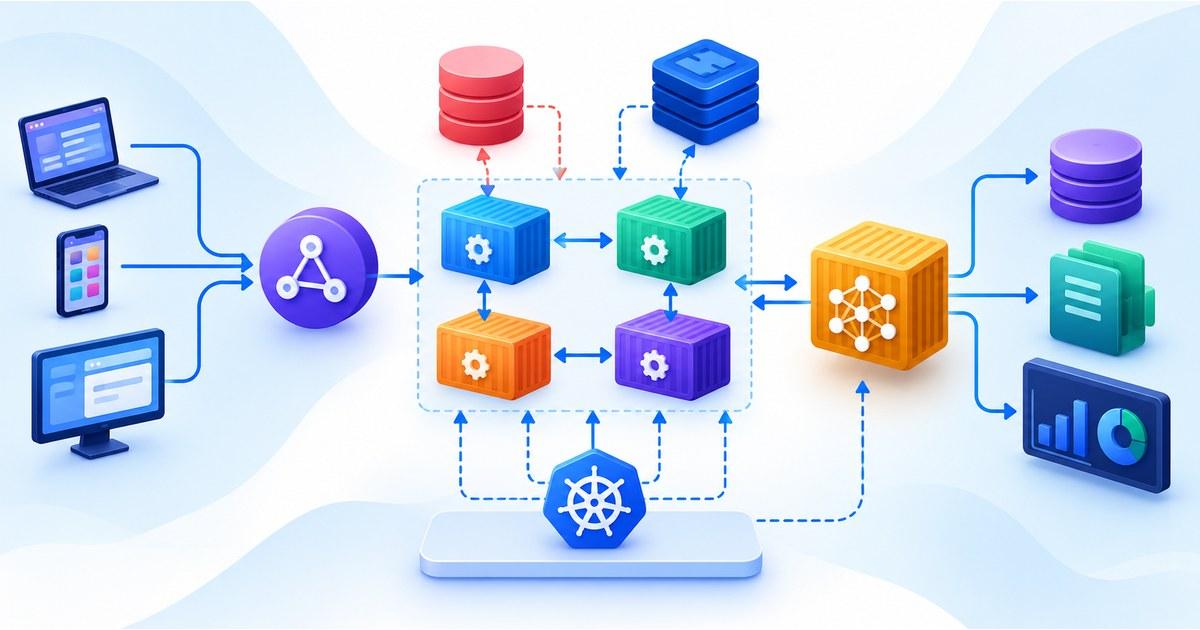
Modern AI architectures increasingly combine language models, retrieval systems, vector databases, orchestration frameworks, observability platforms, and memory systems together into unified operational ecosystems.
This reflects a broader realization across the industry.
Intelligence without memory is limited.
As AI systems become more deeply integrated into daily workflows, persistent contextual understanding becomes essential for scalability, personalization, productivity, and operational effectiveness.
The next generation of AI products will likely be defined not only by what they can reason about, but by what they can remember.
Key Takeaways
Large language models traditionally struggle with long-term context retention across sessions.
AI memory systems provide persistent contextual understanding beyond standard context windows.
Memory architectures improve personalization, continuity, and operational efficiency.
Modern AI products increasingly depend on memory to support long-term user relationships.
The future of AI will likely combine reasoning systems with sophisticated memory infrastructure to create more adaptive and intelligent experiences.
Section 2: How AI Memory Systems Work Behind the Scenes
Memory Is Becoming a Layer Separate From the Model
One of the biggest misconceptions about modern AI systems is that memory exists entirely inside the model itself. Many users assume that when an AI system remembers information, that information is somehow permanently stored within the neural network.
In reality, most modern AI memory systems operate outside the model.
Large language models remain primarily reasoning engines. While they contain knowledge learned during training, they are not designed to continuously update and store every user interaction permanently. Instead, modern AI architectures increasingly separate reasoning from memory.
This architectural separation is becoming a defining characteristic of next-generation AI systems.
Rather than expanding model parameters endlessly, organizations increasingly build dedicated memory layers responsible for storing, organizing, retrieving, and prioritizing contextual information during runtime operation.
These memory systems function similarly to external knowledge stores.
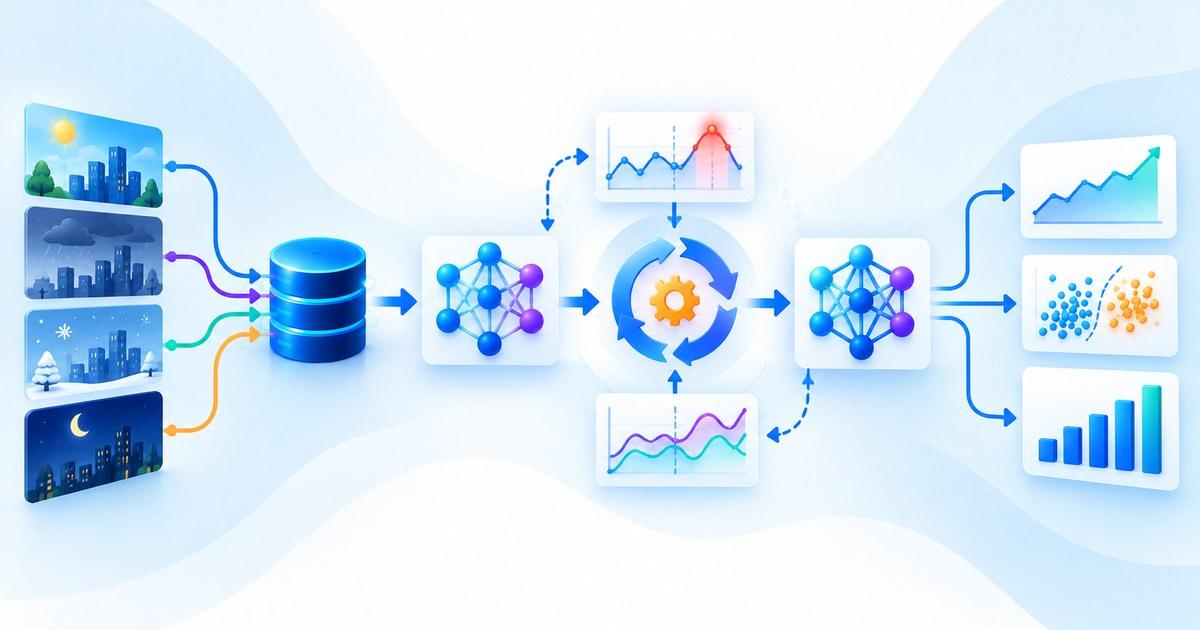
When a user interacts with an AI assistant, important information can be stored inside structured memory systems. During future interactions, relevant memories are retrieved dynamically and supplied to the model as contextual information.
This creates the appearance of long-term memory without requiring continuous model retraining.
Another major advantage involves scalability.
If every interaction needed to be stored directly inside model weights, updating systems would become extraordinarily expensive and impractical. External memory architectures allow AI products to evolve continuously while keeping model infrastructure relatively stable.
Another important factor is personalization.
Different users require different contextual histories. External memory systems allow AI products to maintain individualized context while using the same underlying foundation model across millions of users.
This separation between intelligence and memory is rapidly becoming one of the most important architectural principles in modern AI development.
Vector Databases Are Powering Modern Memory Retrieval
One of the most important technologies enabling AI memory systems is the vector database.
Traditional databases store information through exact records and predefined relationships. Modern AI systems increasingly store contextual information as embeddings, which are numerical representations capturing semantic meaning.
This allows memory retrieval to become context-aware rather than keyword-dependent.
For example, a user may ask an AI assistant about a project discussed several weeks earlier without using the exact same language. A traditional search system might struggle to identify the relevant information. A vector-based memory system can retrieve semantically related memories based on meaning rather than exact wording.
This dramatically improves contextual continuity.
Modern AI memory architectures increasingly store conversations, preferences, workflow history, project information, operational context, and interaction patterns inside vector databases. During runtime execution, retrieval systems search these memories and surface the most relevant information dynamically.
Another major advantage involves scalability.
As memory stores grow, vector retrieval systems remain capable of identifying relevant information efficiently without requiring the model to process every historical interaction simultaneously.
This becomes especially important for enterprise AI systems.
Organizations increasingly store documentation history, operational workflows, meeting discussions, project knowledge, and institutional expertise inside memory architectures. AI systems retrieve only the most relevant contextual information during active workflows.
Another important trend is hybrid retrieval.
Many modern memory systems combine vector search, metadata filtering, ranking systems, and structured knowledge retrieval simultaneously. This improves memory quality while reducing irrelevant context retrieval.
The rise of retrieval-centric memory architectures closely aligns with trends explored in The Role of Knowledge Graphs in Next-Generation AI Applications, where structured contextual reasoning and semantic retrieval are becoming foundational components of intelligent systems.
Memory systems are therefore increasingly becoming retrieval systems rather than storage systems alone.
Short-Term and Long-Term Memory Are Becoming Distinct Layers
One of the most important developments in AI architecture is the separation between short-term and long-term memory.
Human cognition naturally uses multiple memory layers. Modern AI systems increasingly adopt similar approaches because different types of information require different retention strategies.
Short-term memory typically includes information relevant to the current interaction.
This may involve active conversations, recent tasks, temporary objectives, runtime instructions, and contextual workflow details. Short-term memory often resides inside active context windows or temporary runtime storage systems.
Long-term memory serves a different purpose.
Long-term memory stores information expected to remain valuable over extended periods. This may include user preferences, project history, organizational knowledge, recurring workflows, operational patterns, and contextual relationships accumulated over time.
Another major trend involves memory prioritization.
Not all information deserves permanent retention. Modern memory architectures increasingly evaluate importance, frequency, relevance, and operational value before deciding what information should move into long-term storage.
For example, a temporary scheduling request may remain only in short-term memory, while a user's preferred coding framework or recurring workflow preference may become part of long-term memory.
This selective retention improves efficiency significantly.
Another important capability involves memory summarization.
Rather than storing every interaction verbatim, AI systems increasingly compress historical information into structured summaries that preserve essential context while reducing storage and retrieval complexity.
This allows memory systems to scale much more effectively.
As AI assistants become more persistent, layered memory architectures are becoming increasingly important for balancing personalization, performance, and operational efficiency.
Memory Orchestration Is Becoming a New AI Engineering Discipline
One of the clearest long-term trends in AI architecture is that memory management is becoming its own engineering domain.
Modern AI systems increasingly require retrieval strategies, memory prioritization frameworks, context ranking systems, storage policies, observability tooling, and governance controls operating together continuously.
This means memory is no longer simply a product feature.
It is becoming foundational infrastructure supporting personalization, productivity, contextual intelligence, and long-term adaptation across AI ecosystems.
The future of intelligent systems will likely depend heavily on how effectively organizations design and manage memory architectures.
Key Takeaways
Modern AI memory systems increasingly operate outside the model itself through dedicated memory infrastructure.
Vector databases enable semantic memory retrieval based on meaning rather than exact keywords.
Short-term and long-term memory systems serve different operational purposes.
Memory prioritization and summarization improve scalability and efficiency.
Memory orchestration is rapidly becoming a foundational AI engineering discipline.
Section 3: Why AI Memory Systems Are Transforming Enterprise AI and Autonomous Agents
Enterprise AI Systems Need Persistent Memory to Be Useful
One of the biggest lessons organizations learned during the first wave of generative AI adoption is that intelligence alone is not enough. Large language models can generate impressive responses, summarize information, answer questions, and automate workflows, but without memory they often struggle to provide continuity across long-running business operations.
This creates major limitations in enterprise environments.
Most organizations operate through ongoing projects, recurring workflows, institutional knowledge, operational dependencies, and long-term collaboration. Employees do not start from scratch every day, and AI systems increasingly need to operate the same way.
Memory systems solve this problem.
Modern enterprise AI platforms increasingly maintain persistent contextual understanding across projects, teams, workflows, documentation repositories, meetings, customer interactions, and operational processes. Instead of treating every interaction independently, AI systems can retrieve historical context dynamically and build upon prior knowledge.
For example, an enterprise AI assistant may remember project milestones, architectural decisions, team responsibilities, recurring operational challenges, and organizational terminology across months of activity. When employees interact with the system, relevant context can be retrieved automatically without requiring users to repeat information continuously.
This dramatically improves productivity.
Another major advantage involves institutional knowledge preservation.
Organizations often lose valuable expertise when employees change roles or leave the company. Memory-enabled AI systems increasingly capture workflows, decision-making patterns, documentation relationships, and operational history, creating persistent organizational intelligence that remains accessible over time.
Another important trend involves workflow continuity.
AI systems increasingly support long-running business processes involving multiple teams, projects, and stakeholders. Memory architectures allow these systems to track progress, recall previous decisions, and maintain awareness of evolving objectives continuously.
This transforms AI from a tool that answers questions into a system that actively participates in operational workflows.
As enterprises deploy AI more broadly, persistent memory is becoming a foundational requirement rather than an optional enhancement.
Autonomous AI Agents Depend on Memory for Long-Term Reasoning
One of the most important reasons memory systems are receiving so much attention is the rise of autonomous AI agents.
Earlier AI products primarily operated through short conversational exchanges where users remained responsible for coordinating tasks and maintaining context. Modern AI agents increasingly execute workflows, coordinate tools, retrieve information, manage projects, and interact with systems over extended periods.
This creates entirely new memory requirements.
An autonomous agent cannot operate effectively if it forgets previous actions, completed tasks, workflow history, operational constraints, or user objectives. Memory becomes essential for maintaining coherent behavior across long-running interactions.
For example, a research agent may spend days gathering information, evaluating sources, organizing findings, and refining conclusions. Without memory, the system would repeatedly restart work rather than building progressively toward objectives.
Similarly, enterprise workflow agents increasingly coordinate scheduling, documentation updates, customer interactions, project tracking, and operational tasks. Memory allows these agents to understand what has already happened and determine what should happen next.
Another major advantage involves planning.
AI agents increasingly use memory to store goals, intermediate results, operational constraints, and historical outcomes. This allows systems to reason across multiple stages of execution rather than focusing only on immediate actions.
Another important trend is multi-agent coordination.
Organizations increasingly deploy multiple specialized agents working together across workflows. Shared memory architectures allow these agents to exchange context, coordinate activities, and maintain consistent understanding across operational environments.
The rise of memory-enabled agents closely aligns with broader trends explored in AI Co-Pilots vs Autonomous Agents: Where ML Products Are Heading, where persistent context, runtime orchestration, and adaptive operational intelligence are becoming essential components of next-generation AI systems.
The future of autonomous AI will likely depend heavily on sophisticated memory infrastructure.
Memory Systems Are Creating More Personalized AI Experiences
One of the most visible applications of AI memory systems is personalization.
Earlier AI assistants often treated every user interaction as a relatively isolated event. While systems could respond intelligently within a conversation, they frequently lacked awareness of long-term preferences, recurring goals, and historical interactions.
Memory changes this dramatically.
Modern AI systems increasingly remember communication preferences, workflow habits, project interests, learning objectives, productivity patterns, and operational priorities over time. This allows experiences to become significantly more adaptive.
For example, an AI coding assistant may remember preferred frameworks, development environments, debugging approaches, and architectural patterns. An AI tutor may track learning progress, recurring knowledge gaps, and educational goals across months of study.
Another major advantage involves reducing user effort.
Without memory, users repeatedly provide the same context during interactions. Memory-enabled systems automatically retrieve relevant information, allowing conversations and workflows to begin at a much deeper level of understanding.
Another important trend involves adaptive personalization.
AI systems increasingly update memory dynamically as users evolve. Preferences, objectives, workflows, and priorities change over time, and memory architectures allow AI products to adapt continuously rather than relying on static profiles.
This creates experiences that feel increasingly natural and useful.
However, personalization also introduces important challenges involving privacy, governance, and transparency. Organizations increasingly need mechanisms controlling what information is stored, how memories are retrieved, and how users manage long-term contextual data.
As AI becomes more deeply integrated into daily life and work, balancing personalization with user control will become increasingly important.
Memory Infrastructure Is Becoming a Competitive Differentiator
One of the clearest trends emerging across the AI industry is that memory quality is becoming a major competitive advantage.
As foundation models become more widely available, organizations increasingly differentiate through contextual intelligence, personalization quality, workflow continuity, and long-term adaptation capabilities.
This means memory infrastructure is rapidly becoming one of the most strategic components of modern AI architecture.
The companies that build the most effective memory systems may ultimately create the most useful, productive, and intelligent AI products.
Key Takeaways
Enterprise AI systems increasingly rely on memory to maintain continuity across workflows and projects.
Autonomous agents require memory to support long-term reasoning, planning, and task execution.
Memory architectures significantly improve personalization and contextual adaptation.
Shared memory systems enable coordination across multiple AI agents.
The future of AI products will likely depend heavily on sophisticated memory infrastructure supporting long-term contextual intelligence.
Section 4: The Future of AI Memory Systems and What Comes Next
Memory Will Become the Foundation of Truly Intelligent AI Systems
One of the biggest realizations emerging across the AI industry is that intelligence without memory has fundamental limitations. Early large language models demonstrated extraordinary reasoning and generation capabilities, but they often struggled to maintain continuity across long-running interactions. As AI products become more integrated into daily workflows, memory is increasingly becoming the missing layer that transforms isolated interactions into persistent intelligent relationships.
This shift is changing how AI systems are designed.
Rather than viewing memory as an optional enhancement, organizations increasingly treat memory infrastructure as a core architectural component alongside models, retrieval systems, orchestration frameworks, and inference platforms. Future AI systems will likely be evaluated not only on reasoning quality but also on how effectively they remember, organize, prioritize, and utilize contextual information over time.
Another important trend is the evolution from session-based AI to relationship-based AI.
Earlier AI products often interacted with users in short bursts. Future systems will increasingly maintain awareness across months or even years of interactions. AI assistants will understand ongoing projects, recurring goals, personal preferences, operational responsibilities, and historical decisions continuously.
This creates significantly more useful experiences.
For example, future enterprise assistants may understand organizational structures, project histories, operational dependencies, and team workflows at a level that allows them to function as persistent organizational collaborators rather than temporary support tools.
Another major development is memory-aware reasoning.
AI systems increasingly retrieve historical context before generating responses, allowing reasoning to incorporate long-term knowledge rather than relying solely on current prompts. This creates richer decision-making and more contextually accurate outputs.
As memory architectures improve, AI systems will increasingly move closer to the type of contextual continuity users naturally expect from human collaborators.
Multi-Layered Memory Architectures Are Becoming the New Standard
One of the most important developments shaping future AI systems is the emergence of multi-layered memory architectures.
Earlier memory implementations often relied on relatively simple storage and retrieval mechanisms. Modern AI systems increasingly use multiple memory layers working together simultaneously, each serving different operational purposes.
Short-term memory manages active conversations, temporary goals, and current workflow context. Long-term memory stores preferences, project histories, recurring patterns, and persistent knowledge. Organizational memory captures institutional information shared across teams and systems. Episodic memory records specific events and interactions, while semantic memory stores generalized knowledge extracted from historical experiences.
This layered approach improves efficiency significantly.
Instead of forcing models to process every historical interaction continuously, systems increasingly retrieve only the most relevant information from appropriate memory layers. This reduces computational overhead while improving contextual quality.
Another major trend involves memory abstraction.
AI systems increasingly summarize and compress information before storing it long term. Rather than retaining raw interactions indefinitely, systems generate structured representations that preserve essential context while reducing storage complexity.
This becomes especially important as memory volumes grow.
Future AI products may manage millions of contextual records while maintaining efficient retrieval and reasoning performance. Advanced memory orchestration frameworks will determine what information should be stored, summarized, forgotten, or prioritized dynamically.
Another important capability involves contextual ranking.
Not all memories are equally valuable. Future systems increasingly evaluate relevance, recency, frequency, importance, and operational impact before surfacing information during interactions.
The evolution toward layered memory architectures closely aligns with trends explored in The Rise of AI Engineering: Skills, Interviews, Salaries, and Career Paths Explained, where infrastructure systems supporting retrieval, orchestration, and operational intelligence are becoming foundational components of modern AI ecosystems.
Memory engineering is therefore emerging as a major discipline within AI system design.
Privacy, Governance, and User Control Will Define Memory Adoption
While memory systems create enormous opportunities, they also introduce significant challenges involving privacy, governance, and trust.
The more AI systems remember, the more important it becomes to control what information is stored and how it is used.
Users increasingly want transparency around memory operations. They want to know what information has been retained, why it was stored, how it influences AI behavior, and when it can be removed. Organizations deploying memory-enabled AI systems face similar concerns around compliance, security, and operational governance.
As a result, memory governance is becoming a major focus area.
Future AI products increasingly provide controls allowing users to inspect memories, modify stored information, remove unwanted context, and customize retention policies. This improves trust while giving users greater ownership over their data.
Another major trend involves permission-aware memory systems.
Enterprise environments increasingly require memory architectures that respect organizational boundaries, access controls, compliance requirements, and security policies dynamically. AI systems must understand not only what they know but also what information they are allowed to retrieve and use.
Observability is becoming equally important.
Organizations increasingly monitor memory retrieval quality, storage behavior, contextual relevance, and governance compliance continuously during production operation. This ensures memory systems remain reliable, secure, and operationally aligned with organizational objectives.
The future of AI memory will therefore depend heavily on balancing personalization with transparency and user control.
Memory May Become the Next Major AI Platform Layer
One of the clearest long-term trends in artificial intelligence is that memory is evolving into its own platform layer.
Just as cloud infrastructure transformed software deployment and retrieval systems transformed contextual reasoning, memory systems are now transforming how AI products retain knowledge and build long-term relationships.
Future AI ecosystems will likely combine models, retrieval systems, orchestration frameworks, reasoning engines, and memory architectures into unified operational platforms capable of adapting continuously over time.
The companies that build the most effective memory infrastructure may ultimately define the next generation of intelligent software.
Key Takeaways
Memory is becoming a foundational component of next-generation AI systems.
Future AI products will increasingly operate through long-term relationships rather than isolated interactions.
Multi-layered memory architectures improve scalability, efficiency, and contextual intelligence.
Privacy, governance, transparency, and user control will be critical for memory system adoption.
Memory infrastructure may become one of the most important platform layers shaping the future of artificial intelligence.
Conclusion
AI memory systems are rapidly becoming one of the most important innovations in the evolution of artificial intelligence. While large language models introduced remarkable reasoning and generation capabilities, organizations quickly discovered that intelligence alone is not sufficient for long-term collaboration. To become truly useful in real-world environments, AI systems must remember context, retain relevant knowledge, adapt to user preferences, and maintain continuity across interactions.
This realization is reshaping modern AI architecture.
Early AI systems largely operated within limited context windows and often treated each conversation as an isolated event. Modern AI products increasingly rely on dedicated memory infrastructures that store, retrieve, prioritize, and update information dynamically during runtime. This enables AI systems to operate more like persistent collaborators rather than temporary assistants.
Memory systems are particularly important because AI applications are expanding beyond simple chat interfaces. Enterprise copilots, research assistants, autonomous agents, educational platforms, customer support systems, and productivity tools increasingly require long-term awareness of projects, workflows, objectives, preferences, and historical interactions.
Without memory, these systems repeatedly lose valuable context.
One of the biggest developments driving this transformation is the combination of memory architectures with retrieval systems. Vector databases, semantic search pipelines, knowledge graphs, and orchestration frameworks increasingly work together to ensure that AI systems can retrieve the right information at the right time. This allows models to reason using historical context without requiring enormous context windows or constant retraining.
Another major trend is the rise of autonomous AI agents.
As agents become responsible for managing workflows, coordinating tools, executing tasks, and interacting with enterprise systems over extended periods, memory becomes essential. Agents need awareness of previous actions, goals, constraints, and outcomes to function effectively. Memory is therefore becoming the foundation for long-term planning and operational intelligence.
Personalization is also benefiting significantly from memory infrastructure. Modern AI systems increasingly adapt to individual users by remembering communication styles, work preferences, project history, learning objectives, and behavioral patterns. This creates experiences that feel more natural, efficient, and valuable.
However, memory introduces new responsibilities.
Privacy, governance, transparency, and user control are becoming critical requirements. Organizations and users increasingly expect visibility into what information is stored, how memories influence AI behavior, and how contextual information can be managed over time. Future memory systems will likely place strong emphasis on explainability and user ownership.
Perhaps the most important long-term lesson is that memory is evolving into a foundational AI platform layer. Just as cloud infrastructure transformed software deployment and retrieval systems transformed contextual reasoning, memory architectures are transforming how AI systems learn from experience and maintain continuity over time.
The next generation of intelligent systems will likely be defined not only by what they know, but by what they remember.
Frequently Asked Questions
1. What is an AI memory system?
An AI memory system is an infrastructure layer that stores, organizes, retrieves, and manages contextual information across interactions and workflows.
2. Why do AI models need memory?
Memory allows AI systems to maintain continuity, remember preferences, track objectives, and support long-term interactions.
3. Is memory stored inside the model?
In most modern architectures, memory is stored outside the model using dedicated retrieval and storage systems.
4. How do vector databases support AI memory?
Vector databases store semantic representations of information, allowing AI systems to retrieve relevant memories based on meaning rather than exact keywords.
5. What is the difference between short-term and long-term memory?
Short-term memory handles active conversations and current tasks, while long-term memory stores persistent preferences, knowledge, and historical context.
6. Why are memory systems important for enterprise AI?
They help maintain continuity across projects, workflows, teams, meetings, documentation, and operational processes.
7. How do AI agents use memory?
Agents use memory to track goals, remember previous actions, manage workflows, and support long-term planning.
8. What role does memory play in personalization?
Memory enables AI systems to adapt to individual users by remembering preferences, habits, communication styles, and objectives.
9. What is memory retrieval?
Memory retrieval is the process of finding and supplying relevant stored information during runtime interactions.
10. How are knowledge graphs related to memory systems?
Knowledge graphs help organize relationships between entities and concepts, improving contextual memory retrieval and reasoning.
11. What are memory orchestration systems?
Memory orchestration systems manage how memories are stored, ranked, summarized, retrieved, and updated across AI workflows.
12. What challenges do AI memory systems create?
Privacy, governance, storage management, retrieval accuracy, transparency, and user control are major challenges.
13. Why is memory important for autonomous AI?
Autonomous systems require long-term awareness of tasks, objectives, decisions, and operational history to function effectively.
14. What skills are important for building AI memory systems?
Vector databases, retrieval systems, knowledge graphs, distributed systems, orchestration frameworks, AI infrastructure, and observability engineering are highly valuable.
15. What is the future of AI memory systems?
The future points toward multi-layered memory architectures that combine personalization, retrieval, long-term context retention, governance controls, and adaptive reasoning to create AI systems capable of maintaining meaningful relationships with users and organizations over extended periods.