Section 1: What Makes a Company AI-Native?
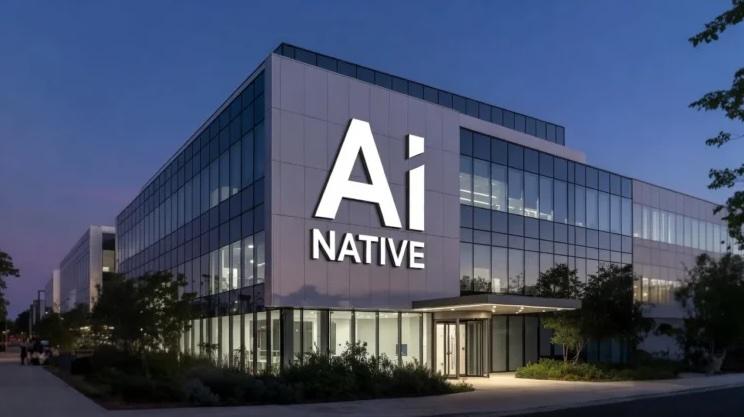
For many organizations, artificial intelligence is an enhancement. They adopt AI tools to improve productivity, automate workflows, or add intelligent features to existing products. AI-native companies take a fundamentally different approach. Rather than integrating AI into an existing business model, they build their entire organization around the assumption that AI is a core capability.
Understanding this distinction is essential because it explains why AI-native companies operate differently and why they are reshaping hiring trends across the technology industry.
AI Is the Foundation Rather Than a Feature
Traditional technology companies often begin with a product and later determine how AI can improve it. An e-commerce company may add recommendation systems. A SaaS platform may introduce an AI assistant. A customer support provider may deploy chatbots.
AI-native companies reverse this process.
They start by asking what becomes possible when intelligent systems are available from the beginning. Their products are designed around AI capabilities rather than enhanced by them later. This allows them to build workflows, user experiences, and operational processes that would be difficult or impossible for traditional organizations to replicate quickly.
For example, an AI-native research platform may automate information gathering, synthesis, analysis, and reporting from the start. An AI-native software company may design development processes assuming that AI participates throughout coding, testing, documentation, and deployment workflows.
Because AI is embedded at the foundation of these businesses, it influences every aspect of how they operate.
Smaller Teams Can Achieve Greater Output
One of the most visible characteristics of AI-native companies is their ability to achieve significant output with relatively small teams.
Historically, scaling a technology company required hiring large numbers of engineers, support staff, analysts, operations specialists, and administrative personnel. AI-native organizations increasingly use intelligent systems to automate many of these functions.
AI assists with software development, customer support, market research, documentation, content generation, workflow automation, and operational monitoring. As a result, teams can often accomplish more with fewer employees.
This does not mean AI-native companies hire fewer talented people. Instead, they tend to hire professionals capable of leveraging AI effectively. Employees are expected to work alongside intelligent systems and focus on activities where human judgment creates the most value.
This shift is transforming productivity expectations and influencing how organizations evaluate talent.
AI-Native Organizations Hire for Different Skills
Because AI changes how work is performed, AI-native companies often prioritize different hiring signals than traditional employers.
Technical expertise remains important, but companies increasingly look for candidates who can adapt quickly, learn continuously, and work effectively with intelligent systems. They value professionals who understand AI capabilities, recognize limitations, and know how to integrate AI into workflows.
This trend is particularly visible in engineering hiring. Companies increasingly seek candidates who can design systems, evaluate trade-offs, leverage AI tools, and solve business problems rather than focusing exclusively on implementation.
"How AI Is Reshaping Career Growth for Software Engineers," which examines how engineers are moving from implementation-focused work toward higher-level problem solving, strategic thinking, and systems design.
The rise of AI-native companies is accelerating this evolution across the technology industry.
Why AI-Native Companies Are Growing So Quickly
Several factors are contributing to the rapid growth of AI-native organizations.
Advances in Large Language Models, agentic AI, cloud infrastructure, and automation frameworks have dramatically reduced the cost of building intelligent products. Startups can access powerful AI capabilities without investing billions of dollars in research infrastructure.
At the same time, customer expectations are changing. Users increasingly expect personalized experiences, intelligent assistance, workflow automation, and conversational interfaces. AI-native companies are often better positioned to meet these expectations because their products are designed around these capabilities from inception.
Investors also view AI-native businesses as highly attractive because they often demonstrate strong scalability and operational efficiency. This combination of technological capability and economic potential is fueling significant growth across the sector.
Key Takeaway
AI-native companies differ from traditional organizations because they build products, workflows, and business models around artificial intelligence from the start. Their ability to achieve greater productivity with smaller teams, move faster, and leverage intelligent systems throughout operations is reshaping the technology industry. As these companies continue growing, they are also changing what employers value and creating new expectations for job seekers entering the AI-driven workforce.
Section 2: How AI-Native Companies Are Changing Hiring Expectations
AI Literacy Is Becoming a Baseline Requirement
One of the most significant ways AI-native companies are reshaping hiring is by redefining what constitutes a foundational technical skill. Just as cloud computing knowledge became a standard expectation during the SaaS boom, AI literacy is rapidly becoming a baseline requirement across many technical and business roles.
This does not mean every candidate must be a machine learning expert.
Most AI-native organizations are not looking exclusively for professionals who can train large models or conduct AI research. Instead, they want employees who understand how AI systems work, where they create value, what their limitations are, and how they can be integrated into workflows effectively.
For software engineers, this means understanding concepts such as Large Language Models, Retrieval-Augmented Generation (RAG), AI agents, vector databases, and AI-assisted development workflows. Product managers are increasingly expected to understand how AI capabilities influence customer experiences and product strategy. Operations teams are expected to identify opportunities for intelligent automation and workflow optimization.
The reason for this shift is simple. In AI-native organizations, employees interact with AI constantly. Professionals who understand how to collaborate with intelligent systems are often able to produce significantly greater output than those who rely exclusively on traditional approaches.
As a result, AI literacy is increasingly viewed as a prerequisite rather than a specialization. Candidates who lack familiarity with modern AI systems may find themselves at a disadvantage, even when applying for roles that are not directly related to machine learning.
The most competitive candidates are those who can demonstrate not only technical knowledge but also practical experience using AI to solve real-world problems.
Companies Are Prioritizing Problem Solvers Over Task Executors
Historically, many hiring processes focused heavily on implementation skills. Candidates were evaluated based on coding ability, technical expertise, tool familiarity, and domain knowledge. While these attributes remain important, AI-native companies increasingly place greater emphasis on problem-solving capabilities.
This shift is happening because AI is changing how work gets done.
As intelligent systems automate portions of development, research, documentation, analysis, and operational workflows, the value of purely execution-focused work begins to decline. Organizations increasingly need employees who can identify important problems, evaluate trade-offs, make decisions, and guide AI systems toward meaningful outcomes.
For example, a software engineer who can define requirements, design architectures, and assess business impact often creates more value than someone who focuses solely on implementation. Similarly, a product manager who understands customer needs and can leverage AI effectively may outperform someone who simply manages feature requests.
AI-native companies therefore look for evidence of judgment, systems thinking, creativity, and strategic reasoning during hiring processes.
This trend is closely aligned with "Why AI Product Sense Is Becoming Essential for ML Engineers," which explores how employers increasingly value professionals who can connect technical solutions with customer needs and business objectives.
The future of hiring is shifting from evaluating what candidates can do manually toward evaluating how effectively they can solve problems using both human expertise and AI capabilities.
Cross-Functional Thinking Is Becoming a Competitive Advantage
Another defining characteristic of AI-native companies is their emphasis on interdisciplinary collaboration.
Traditional organizations often maintain strict boundaries between engineering, product, operations, analytics, and business functions. AI-native companies frequently operate with more fluid structures because AI technologies naturally intersect multiple domains.
For example, building an AI-powered product may require knowledge of software engineering, data systems, user experience design, infrastructure, product strategy, and business operations. Employees who can navigate these intersections often create disproportionate value.
As a result, hiring managers increasingly seek candidates who demonstrate breadth alongside depth.
An engineer who understands product strategy is often more valuable than one focused exclusively on implementation. A product manager with technical AI knowledge can collaborate more effectively with engineering teams. An operations professional who understands automation and AI workflows can drive greater organizational efficiency.
This does not mean specialization is unimportant. Rather, organizations increasingly favor candidates who combine deep expertise in one area with a broader understanding of adjacent disciplines.
The ability to think across functions is becoming one of the defining characteristics of high-performing employees in AI-native environments.
Demonstrated Impact Matters More Than Credentials
Perhaps the most important hiring trend emerging from AI-native companies is the growing emphasis on demonstrated impact.
In previous hiring cycles, credentials such as degrees, certifications, and years of experience often played a central role in candidate evaluation. While these signals remain valuable, AI-native companies increasingly prioritize evidence of real-world achievement.
Hiring managers want to understand what candidates have built, improved, automated, launched, or scaled. They care about measurable outcomes.
For example, a candidate who used AI to reduce operational costs, accelerate software delivery, improve customer experiences, or automate workflows often stands out more than someone with impressive credentials but limited practical impact.
This shift reflects the entrepreneurial mindset common within AI-native organizations. These companies typically move quickly, experiment aggressively, and focus intensely on outcomes. Consequently, they seek employees who demonstrate similar qualities.
Portfolios, open-source contributions, side projects, technical writing, AI experiments, and case studies are becoming increasingly valuable because they provide tangible evidence of capability.
In many AI-native companies, demonstrated impact has become one of the strongest predictors of hiring success.
Key Takeaway
AI-native companies are fundamentally changing hiring expectations. They increasingly prioritize AI literacy, problem-solving ability, cross-functional thinking, and demonstrated impact over narrow technical specialization or traditional credentials. As intelligent systems become embedded within everyday workflows, employers are seeking professionals who can collaborate effectively with AI, navigate complexity, and create measurable business value. These qualities are rapidly becoming the defining characteristics of successful candidates in the AI-driven economy.
Section 3: The New Career Opportunities Created by AI-Native Companies
Entirely New Roles Are Emerging Across the Industry
Every major technological transformation creates new job categories, and the rise of AI-native companies is no exception. During the cloud computing revolution, organizations created roles such as Cloud Architect, Site Reliability Engineer, and DevOps Engineer. The growth of big data introduced Data Engineers and Analytics Engineers. AI-native companies are now creating a similar wave of specialization.
What makes this shift particularly interesting is that many of these roles did not exist in a meaningful way just a few years ago.
Today, organizations are actively hiring AI Engineers, Agent Engineers, AI Reliability Engineers, LLM Engineers, AI Infrastructure Engineers, AI Product Managers, AI Security Specialists, and AI Operations professionals. These positions reflect the growing complexity of modern AI systems and the need for expertise beyond traditional software development.
For example, an Agent Engineer focuses on designing systems that can reason, retrieve information, use tools, and execute workflows. AI Reliability Engineers ensure these systems remain trustworthy and operational in production environments. AI Infrastructure Engineers manage the platforms that support model deployment, inference, observability, and scalability.
The rapid emergence of these roles creates opportunities for professionals from a wide range of backgrounds. Software engineers, ML engineers, DevOps specialists, platform engineers, data professionals, and product managers can all transition into AI-focused careers by developing the appropriate skills.
This expansion of career options is one of the reasons AI-native companies are attracting so much attention from ambitious professionals. They are not simply creating jobs, they are creating entirely new career paths.
Traditional Roles Are Being Reimagined Rather Than Eliminated
One of the most common concerns surrounding AI is whether it will eliminate jobs. While automation is certainly changing how work is performed, AI-native companies are demonstrating that the reality is often more nuanced.
Rather than replacing professionals outright, AI is frequently transforming the nature of their responsibilities.
Software engineers, for example, increasingly spend less time writing repetitive code and more time designing systems, reviewing AI-generated outputs, evaluating architectural trade-offs, and solving complex business problems. Product managers are using AI to analyze customer feedback and generate insights while focusing more heavily on strategy and prioritization. Operations teams are automating routine processes and concentrating on optimization and oversight.
This evolution is creating opportunities for professionals who are willing to adapt.
AI-native organizations tend to value employees who can leverage AI effectively rather than compete against it. Individuals who understand how to combine human judgment with machine capabilities often become significantly more productive than those who rely exclusively on traditional workflows.
As a result, many traditional technology roles are becoming more strategic and higher impact. The emphasis is shifting away from routine execution and toward decision-making, systems thinking, and business value creation.
For job seekers, this means the most important question is no longer whether AI will affect their role. The more relevant question is how they can evolve alongside it.
The Most Valuable Employees Are Becoming Human-AI Collaborators
One of the defining characteristics of AI-native companies is that they view AI as a collaborator rather than merely a tool.
Employees are increasingly expected to work alongside intelligent systems throughout their daily workflows. Engineers use AI to accelerate development. Product teams use AI to generate insights. Analysts use AI to process information at scale. Operations teams use AI to automate routine activities.
This shift is creating demand for a new type of professional: the human-AI collaborator.
These individuals understand how to delegate work effectively, evaluate AI-generated outputs, identify limitations, and integrate intelligent systems into broader workflows. They know when to trust AI recommendations and when human intervention is necessary.
Organizations are discovering that these skills often matter more than deep expertise in any particular tool or framework. Technologies evolve rapidly, but the ability to collaborate effectively with intelligent systems remains valuable regardless of which platforms dominate the market.
This growing importance of human-AI collaboration is explored in "From Copilots to Coworkers: The Evolution of AI Assistants in 2026," which examines how AI systems are increasingly becoming active participants in organizational workflows rather than simple productivity tools.
The professionals who thrive in AI-native environments are those who understand how to maximize the strengths of both humans and machines.
Career Growth Is Accelerating for Adaptable Professionals
Perhaps the most exciting aspect of AI-native companies is the speed at which career growth can occur.
Because these organizations often operate with smaller teams and flatter structures, employees frequently gain exposure to responsibilities that would traditionally be reserved for more senior roles. Engineers may contribute directly to product strategy. Product managers may help shape AI architecture decisions. Operations professionals may influence automation initiatives across the organization.
This environment rewards adaptability and initiative.
Professionals who learn quickly, embrace emerging technologies, and demonstrate the ability to create business value often advance rapidly. AI-native companies tend to prioritize impact over hierarchy, making them particularly attractive for individuals who want to accelerate their careers.
At the same time, these organizations often encourage experimentation and continuous learning. Employees are expected to stay current with new AI developments, evaluate emerging tools, and contribute to organizational innovation. This culture creates an environment where motivated professionals can develop skills faster than in more traditional settings.
For job seekers, the message is clear: AI-native companies offer some of the most dynamic and rapidly evolving career opportunities in the technology industry today.
Key Takeaway
AI-native companies are creating new career paths while transforming existing roles. They are driving demand for specialized AI-focused positions, rewarding professionals who can collaborate effectively with intelligent systems, and providing accelerated growth opportunities for adaptable employees. Rather than eliminating jobs, these organizations are redefining work and creating a new generation of careers built around human-AI collaboration, systems thinking, and business impact.
Section 4: How Job Seekers Can Position Themselves for Success in AI-Native Companies
Develop AI Fluency Instead of Chasing Every New Tool
One of the biggest mistakes job seekers make when preparing for AI-related careers is focusing exclusively on learning individual tools. The AI ecosystem evolves extremely quickly. New frameworks, models, orchestration platforms, and development environments emerge constantly. A tool that dominates discussions today may be replaced by something more capable within a relatively short period.
AI-native companies understand this reality.
As a result, they are often less interested in whether candidates have mastered a specific platform and more interested in whether they understand the underlying concepts that drive AI systems. Employers increasingly look for professionals who understand how Large Language Models work, how Retrieval-Augmented Generation improves accuracy, how AI agents execute workflows, and how AI systems interact with enterprise software environments.
This broader understanding allows employees to adapt as technology changes.
For example, a software engineer who understands agent architectures, observability, workflow orchestration, and evaluation frameworks can usually learn a new tool relatively quickly. By contrast, someone whose expertise is limited to a single platform may struggle as the ecosystem evolves.
The most successful candidates therefore focus on developing AI fluency. They understand the capabilities, limitations, trade-offs, and practical applications of modern AI systems. This foundational knowledge remains valuable regardless of which technologies become popular in the future.
AI-native organizations consistently reward professionals who can adapt faster than technology changes.
Build a Portfolio That Demonstrates Real-World Impact
In traditional hiring environments, resumes, certifications, and academic credentials often served as primary indicators of capability. AI-native companies increasingly rely on a different signal: evidence of practical execution.
Employers want to see what candidates have actually built.
This is because AI tools are making it easier than ever to acquire theoretical knowledge. Thousands of candidates can complete the same online course or earn similar certifications. What differentiates top candidates is their ability to apply knowledge to real-world problems.
A strong portfolio may include AI-powered applications, workflow automation projects, Retrieval-Augmented Generation systems, agentic applications, open-source contributions, technical blogs, architecture case studies, or operational improvements driven by AI. These projects demonstrate initiative, technical competence, and problem-solving ability.
For example, a candidate who built an internal AI assistant that automates document analysis often creates a stronger impression than someone who merely lists AI skills on a resume. Similarly, an engineer who publishes a case study explaining how they improved an AI system's reliability demonstrates both technical depth and communication skills.
This growing emphasis on practical work reflects a broader hiring trend. InterviewNode explores this evolution in "The AI Talent Wars: What Top Employers Are Looking for in 2026," which examines how organizations increasingly prioritize measurable impact and demonstrated capability over traditional credentials alone.
In AI-native environments, visible proof of execution often carries more weight than claims of expertise.
Learn to Think Like a Product Builder
Another important characteristic of successful employees in AI-native companies is product thinking.
Historically, many technical professionals focused primarily on implementation. They received requirements, developed solutions, and delivered outputs. AI-native organizations increasingly expect employees to think more broadly.
They want professionals who understand users, business objectives, market dynamics, and organizational priorities.
For example, an engineer building an AI-powered feature should understand not only how the technology works but also why customers need it, how success will be measured, and what trade-offs influence adoption. Similarly, a data professional should understand how insights support business decisions rather than focusing exclusively on technical metrics.
This shift is occurring because AI-native companies often operate with lean teams. Employees frequently work across multiple disciplines and contribute directly to strategic decisions. Individuals who understand both technology and business contexts often create significantly more value.
The growing importance of product thinking also reflects the reality that AI itself is becoming increasingly accessible. As technical capabilities become easier to obtain, understanding how technology creates value becomes a major differentiator.
Job seekers who develop strong product instincts will often find themselves better positioned for leadership opportunities and high-impact roles within AI-native organizations.
Embrace Continuous Learning as a Career Strategy
Perhaps the most important strategy for succeeding in AI-native companies is committing to continuous learning.
The pace of innovation in artificial intelligence is extraordinary. New models, workflows, infrastructure approaches, evaluation methodologies, and organizational practices emerge regularly. Professionals who stop learning quickly risk becoming outdated.
AI-native companies actively seek employees who are curious, adaptable, and enthusiastic about learning.
These organizations recognize that future success depends less on what candidates know today and more on how quickly they can acquire new skills tomorrow. During interviews, hiring managers often evaluate learning agility by exploring side projects, experimentation habits, technical interests, and engagement with emerging technologies.
Continuous learning also provides long-term career resilience. While specific tools and frameworks may change, the ability to absorb new information and adapt to evolving environments remains consistently valuable.
This mindset is particularly important because AI-native companies are often at the forefront of technological change. Employees regularly encounter new challenges, ambiguous problems, and rapidly evolving requirements. Those who embrace learning tend to thrive, while those who rely solely on existing expertise often struggle.
The most successful professionals in AI-native environments are not necessarily those who know the most today. They are the ones who remain capable of learning the fastest as the industry continues evolving.
Key Takeaway
Job seekers who want to succeed in AI-native companies should focus on developing AI fluency, building portfolios that demonstrate real-world impact, strengthening product-thinking capabilities, and embracing continuous learning. These organizations increasingly value adaptability, execution, and business awareness over narrow technical specialization. As AI reshapes the workforce, professionals who can combine technical expertise with curiosity, strategic thinking, and measurable impact will be best positioned for long-term success.
Conclusion
The rise of AI-native companies represents one of the most important shifts in the technology industry since the emergence of cloud computing and mobile platforms. Unlike traditional organizations that are gradually adopting artificial intelligence, AI-native companies are building products, workflows, teams, and business models around AI from the very beginning. This fundamental difference is enabling them to move faster, operate more efficiently, and rethink how work gets done.
For job seekers, this transformation creates both tremendous opportunities and new expectations.
AI-native organizations are creating entirely new career paths across engineering, infrastructure, product development, reliability, operations, and AI systems design. Roles such as AI Engineer, Agent Engineer, AI Reliability Engineer, AI Infrastructure Engineer, and AI Product Manager are becoming increasingly common as companies compete to build intelligent products and services. At the same time, traditional roles are evolving rather than disappearing. Software engineers, product managers, analysts, and operations professionals are increasingly expected to collaborate with AI systems as part of their daily work.
One of the most significant changes is the shift in hiring priorities. AI-native companies care less about narrow technical specialization and more about adaptability, systems thinking, AI literacy, problem-solving ability, and business impact. Employers increasingly look for candidates who can leverage AI effectively, learn quickly, work across disciplines, and create measurable value.
This shift is redefining what career growth looks like in technology. Professionals who understand both human and AI capabilities are becoming highly valuable. Organizations increasingly reward individuals who can identify meaningful problems, design effective solutions, and use AI as a force multiplier rather than viewing it as a separate technology category.
Perhaps the most important lesson for job seekers is that AI-native companies are not simply changing the jobs available today, they are influencing what work itself will look like in the future. The ability to collaborate with intelligent systems, adapt to rapid technological change, and continuously develop new skills is becoming a core professional competency.
The future workforce will likely consist of humans and AI systems working together in increasingly integrated ways. Those who embrace this reality, build practical experience, and focus on creating business value will be well positioned to thrive in the next generation of technology organizations.
For ambitious professionals, the rise of AI-native companies represents more than a hiring trend. It represents an opportunity to participate in one of the most transformative periods in the history of technology.
Frequently Asked Questions
1. What is an AI-native company?
An AI-native company is an organization that builds its products, workflows, operations, and business model around artificial intelligence from the beginning rather than adding AI features to existing systems later.
2. How are AI-native companies different from traditional tech companies?
Traditional companies typically integrate AI into existing products and processes. AI-native companies design their products and operations assuming AI is a core capability from day one.
3. Why are AI-native companies growing so quickly?
Advances in Large Language Models, cloud infrastructure, AI agents, and automation tools allow startups to build powerful products with smaller teams, lower costs, and faster development cycles.
4. What types of jobs are AI-native companies creating?
Common roles include AI Engineer, Agent Engineer, LLM Engineer, AI Reliability Engineer, AI Infrastructure Engineer, AI Product Manager, AI Operations Specialist, and AI Security Engineer.
5. Do I need a machine learning background to work at an AI-native company?
No. While AI knowledge is valuable, many roles require software engineering, product management, operations, infrastructure, design, or business expertise combined with AI literacy.
6. What skills do AI-native companies value most?
Employers increasingly prioritize AI literacy, systems thinking, adaptability, product awareness, communication skills, business impact, and problem-solving ability.
7. Is AI replacing software engineering jobs?
AI is changing software engineering roles rather than eliminating them. Engineers are increasingly focusing on architecture, system design, product development, and strategic problem-solving while AI handles portions of implementation work.
8. What is AI literacy?
AI literacy refers to understanding how modern AI systems work, their capabilities, limitations, practical applications, and how they can be integrated into workflows and business processes.
9. Why do AI-native companies emphasize business impact?
These organizations typically operate with lean teams and focus heavily on outcomes. They prioritize candidates who can demonstrate measurable value rather than simply technical activity.
10. How important are portfolios when applying to AI-native companies?
Portfolios are becoming increasingly important because they provide evidence of practical execution. Real-world projects often carry more weight than certifications or theoretical knowledge alone.
11. What role do AI agents play in AI-native companies?
AI agents help automate workflows, conduct research, coordinate tasks, interact with tools, retrieve information, and support decision-making processes across various business functions.
12. Are AI-native companies only hiring engineers?
No. They also hire product managers, designers, operations specialists, marketers, analysts, customer success professionals, sales teams, and business leaders who understand AI-driven workflows.
13. How can job seekers prepare for careers in AI-native companies?
Candidates should build AI literacy, gain hands-on experience with AI tools, develop cross-functional skills, create practical projects, strengthen product thinking, and continuously learn emerging technologies.
14. What industries are seeing the most AI-native company growth?
Technology, enterprise software, healthcare, finance, cybersecurity, education, legal technology, customer support, productivity software, and research platforms are among the fastest-growing sectors.
15. What will make candidates successful in AI-native companies over the next decade?
The most successful professionals will combine technical expertise, adaptability, AI fluency, product thinking, communication skills, business awareness, and the ability to work effectively alongside intelligent systems. These capabilities will become increasingly important as AI continues reshaping the future of work.