
INTRODUCTION - MLOps Is No Longer Optional. It’s the New Core of ML Hiring.
If 2018–2022 was the era of “build models and ship them,” then 2023–2026 has become the era of production-first ML, an industry-wide shift toward systems, reliability, automation, and lifecycle thinking. Companies no longer need engineers who can just design models; they need engineers who can maintain them, monitor them, version them, deploy them, govern them, and keep them running at scale without breaking business operations.
This is why MLOps roles, and MLOps-style expectations inside ML engineering roles, have exploded across industries. Recruiters aren’t just evaluating your modeling intuition anymore; they’re analyzing whether you understand what happens after the model is built. They’re assessing reliability thinking, system design intuition, data governance skills, observability instincts, and operational maturity.
Production ML has become the backbone of success for AI-driven companies. Whether you’re interviewing at FAANG, OpenAI, Stripe, Databricks, NVIDIA, Tesla, or any high-growth startup, interviewers now care about:
- scalability
- monitoring & observability
- CI/CD for machine learning
- data pipelines & orchestration
- feature stores
- model versioning & rollback strategies
- drift detection & real-time evaluation
- governance, compliance & safety
- model explainability & auditing
- LLMOps for modern AI systems
In 2026, ML roles are no longer split between “researchy” and “engineering-heavy.” Even modeling roles have absorbed MLOps expectations. Recruiters understand that brilliant models are useless if you cannot deploy, monitor, and maintain them, especially in high-stakes domains like healthcare, finance, autonomous systems, and large-scale consumer tech.
This blog breaks down why MLOps has emerged as the centerpiece of ML hiring, how interview loops are changing, what skills matter now, and how candidates can prepare for this production-first world.
Let’s begin with the transformation itself, how we got here.
SECTION 1 - Why MLOps Exploded: The Industry Shift That Redefined ML Engineering
Only a few years ago, ML hiring revolved around modeling challenges, build a classifier, choose an architecture, optimize accuracy. Companies hired for algorithms and intuition. Deployments were often an afterthought. But in the past three years, a massive shift occurred: companies started realizing that the model is only 10–20% of the ML lifecycle, and the real challenge begins after the notebook.
Here’s why.
1. The Maturity of ML Systems Exposed the Fragility of Pure Modeling Roles
As more models moved to production, companies finally saw the real bottleneck:
- pipelines failed
- data drifted
- monitoring was missing
- models decayed silently
- performance fluctuated
- retraining wasn’t automated
- feature engineering wasn’t reproducible
- debugging took weeks
Executives began asking:
“Why did we spend $3M on ML teams only to gain no stable ROI?”
The answer wasn’t that the models were bad.
The answer was that the systems were immature.
This realization fundamentally changed hiring priorities. Recruiters began prioritizing engineers who can:
- reason about system behavior
- design reliable ML infra
- detect failures early
- maintain long-term performance
- automate workflows end-to-end
MLOps became not just a skillset, it became the foundation of operational AI success.
2. LLMs & Foundation Models Intensified the Complexity
Pre-LLM ML pipelines were difficult.
Post-LLM pipelines became exponentially harder.
Deploying foundation models introduced new challenges:
- high inference costs
- latency unpredictability
- prompt variability
- hallucination risks
- guardrail enforcement
- online feedback integration
- retrieval augmentation orchestration
- continuous evaluation loops
LLMOps emerged as a new discipline, an extension of MLOps that deals with:
- model selection vs fine-tuning
- versioning prompts
- vector databases
- retrieval pipelines
- hybrid search systems
- monitoring hallucinations
- controlling behavior across contexts
Companies realized this required systems thinkers, not just model builders.
This is why many interviews now ask:
- “How would you monitor hallucinations?”
- “How do you detect concept drift in an LLM-based system?”
- “How do you design an RAG pipeline with fallback strategies?”
Candidates without production intuition struggle here. Those with MLOps experience shine.
3. Companies Need Reliability, Not Experiments
The age of “ML as a research toy” is over.
Executives want ML systems that:
- behave predictably
- integrate cleanly
- withstand failure
- scale automatically
- improve continuously
- meet compliance standards
This pressured recruiters to redefine ML excellence.
It’s no longer about clever architectures, it’s about operational robustness.
In hiring committees, interviewers increasingly ask:
- Does this candidate understand lifecycle automation?
- Can they debug production drift?
- Can they reason about monitoring frameworks?
- Do they know how to deploy safely?
- Do they understand model risk?
- Can they explain operational tradeoffs?
These questions aren’t theoretical; they reflect real organizational needs, especially in enterprise-level ML deployments where uptime is critical.
This operational shift also explains why modern interviews emphasize system-level clarity, similar to what’s seen in:
➡️Scalable ML Systems for Senior Engineers – InterviewNode
The industry is moving from “machine learning as experimentation” to machine learning as infrastructure.
4. Compliance, Governance & Safety Became Central to Hiring
As regulators around the world impose new standards for AI systems, companies must demonstrate:
- data transparency
- model explainability
- traceable decisions
- audit logs
- reproducible training
- bias monitoring
- privacy guarantees
These requirements fall directly into the MLOps domain.
Recruiters no longer ask:
“Can you train a good model?”
They now ask:
“Can you train, deploy, govern, and maintain a responsible model?”
This shift has turned MLOps into a critical hiring differentiator.
5. The Result: MLOps Is Now a Core Interview Theme Across All ML Roles
Whether you’re interviewing for:
- ML Engineer
- AI Engineer
- LLM Engineer
- Data Scientist (Product/Applied)
- MLOps Engineer
- ML Infra Engineer
- AI Platform Engineer
—you will face MLOps-style questions in 2026.
The shift is so universal that even modeling-heavy roles now evaluate:
- pipeline reliability
- monitoring strategy
- evaluation consistency
- versioning practices
- deployment tradeoffs
- retraining triggers
- data quality gates
- observability metrics
Production ML competency is no longer optional; it is the baseline.
SECTION 2 - Why MLOps Has Become the Core of ML Hiring: The Industry Shifts Driving 2026 Interview Expectations
Throughout the 2010s, ML hiring revolved around modeling skill. Companies wanted people who could tweak loss functions, optimize hyperparameters, and implement neural architectures. But as we entered the mid-2020s, something fundamental changed: machine learning stopped being a research experiment and became a business-critical production system.
This single shift, from experimentation to deployment, triggered a cascade of hiring changes. Companies no longer evaluate ML candidates as isolated model builders. They evaluate them as system thinkers, capable of ensuring that ML solutions survive real-world conditions: data drift, scaling failures, latency constraints, privacy regulations, A/B testing cycles, and continuous monitoring.
If the last decade was about “How do we build better models?”, the coming decade is about “How do we operationalize ML reliably, safely, and at scale?”
This change didn’t happen overnight. It was driven by five seismic shifts across the industry.
1. Companies Finally Realized the Hardest Part of ML Isn’t Modeling - It’s Everything After Modeling
Ask any ML team today where most engineering time goes, and they’ll say:
- debugging pipelines
- managing deployments
- handling model rollback
- monitoring drift
- versioning datasets
- tracking experiments
- ensuring feature consistency
- maintaining reproducibility
- aligning stakeholders
- coordinating with DevOps
In other words: the work is MLOps, not modeling.
Companies learned this the hard way. Many spent millions building complex offline models that never made it to production, or worse, models that shipped but couldn’t survive their first month due to real-world variability.
Executives don’t want to repeat those mistakes.
So hiring managers now optimize for candidates who can answer questions like:
- “How does this model behave in production?”
- “How would you monitor drift in this pipeline?”
- “What is your rollback strategy if performance drops?”
- “How do you ensure reproducibility across teams?”
These are not modeling questions.
These are operational questions.
These are 2026 ML interview questions.
This shift is why many interview loops now prioritize MLOps system design rounds over pure model theory, similar to how modern interviews emphasize evaluating engineering maturity, as explored in:
➡️The Hidden Metrics: How Interviewers Evaluate ML Thinking, Not Just Code
MLOps isn’t a bonus skill anymore.
It’s the center of ML hiring.
2. The Explosion of LLMs Pushed ML Into High-Stakes Production Environments
LLMs didn’t just change the types of models companies use, they changed the risk profile of ML systems.
An LLM failure is visible.
It’s user-facing.
It’s business-critical.
It’s reputational.
It’s legal.
It’s ethical.
Companies can no longer afford to hire ML engineers who only:
- tune models offline
- run Kaggle-style experiments
- optimize metrics in isolation
They need engineers who can:
- evaluate model safety
- detect hallucinations
- manage prompt versioning
- track context window changes
- build automated retrieval pipelines
- run shadow deployments
- integrate guardrails and filters
- measure alignment vs business risk
This is no longer “ML research.”
This is ML operations at scale.
And with the rise of LLM multi-agent systems, the complexity compounds. The shift from static models to continuously adapting AI assistants means companies need candidates who think in terms of lifecycle, not architecture.
The engineers who understand MLOps become the ones who can ship LLM products safely and repeatedly, which is exactly why their interview performance stands out.
3. Companies Want Reliability Over Innovation - Stability Has Become the New Intelligence
A quiet hiring transformation has been taking place:
companies now value reliability more than brilliance.
This doesn’t mean they don’t want smart engineers. It means they want smart engineers who can deliver dependable ML systems:
- stable training pipelines
- predictable evaluation
- reproducible experiments
- controlled deployments
- trackable changes
- automated monitoring
- minimal fire drills
Most ML failures in production aren’t due to poor modeling decisions. They arise from:
- inconsistent features
- silent data corruption
- evaluation mismatch
- untracked experiments
- unmanaged drift
- bad rollout strategies
This has pushed recruiters to prioritize candidates who speak fluently about:
- pipeline orchestration
- CI/CD for ML
- feature store consistency
- monitoring architectures
- drift and skew detection
- retraining strategies
- blue-green deployments
- shadow testing
These are the engineers who don’t just build, they maintain.
They don’t just deploy, they safeguard.
The 2026 ML interview loop tests stability as much as creativity.
4. Software Engineering Expectations Have Increased Dramatically
Five years ago, it was common for ML engineers to write barely maintainable notebooks, patch together scripts, and rely on ad hoc configurations.
Those days are over.
Teams have learned that ML cannot scale without:
- modularization
- CI pipelines
- containerization
- automated testing
- reproducibility guarantees
- versioning systems
- API contracts
- observability tooling
This has fused ML engineering and software engineering into a single, unified expectation.
In interviews, this shift shows up through questions like:
- “How would you design a feature store for this system?”
- “Walk me through your CI/CD pipeline for ML deployment.”
- “How do you test ML code beyond unit tests?”
- “Explain your monitoring workflow for detecting drift.”
This is not optional knowledge.
It is required knowledge.
And recruiters now systematically screen for ML candidates who think like software engineers, not like Kaggle competitors.
5. Regulatory Pressure Is Increasing And MLOps Is the Defensive Layer
Regulated industries (finance, healthcare, insurance, energy, aviation, enterprise SaaS) are adopting ML faster than ever, but they face strict requirements:
- auditability
- explainability
- data access logging
- bias mitigation
- version tracking
- governance
- incident reporting
- compliance documentation
MLOps is the backbone of all of these.
Because without robust pipelines, versioning systems, and monitoring frameworks, companies can’t meet regulatory demands, or defend themselves during audits.
And when compliance enters ML hiring, the interview loop changes immediately.
Suddenly, candidates must discuss:
- lineage tracking
- reproducible modeling workflows
- explainability methodologies
- drift-impact on regulated models
- governance dashboards
- traceable deployments
This is why 2026 ML interviews increasingly feel like risk assessments, not quizzes.
SECTION 3 - Why MLOps Skills Now Matter More Than Model Architecture Knowledge
For most of the past decade, ML interviews revolved around modeling depth. Companies wanted people who could talk about loss functions, gradient flow, regularization, and architectural tradeoffs. But the industry has changed, dramatically. In 2026, recruiters are not just searching for “model builders.” They are searching for system owners: engineers who understand how models behave after training, in production, under drift, load, and evolving constraints.
The new ML landscape is no longer driven by ML accuracy; it is driven by ML reliability.
And reliability is an MLOps problem.
This shift has transformed interviews. Instead of questions like “How does batch normalization work?”, candidates are increasingly asked:
- “How would you monitor this model post-deployment?”
- “How would you detect drift?”
- “How would you design a retraining pipeline?”
- “How would you ensure the model remains stable across environments?”
- “How do you handle rollback after a degraded release?”
In 2026, these questions are not “senior-only.”
They are baseline expectations.
Recruiters no longer want ML engineers who simply know ML.
They want ML engineers who know ML systems.
This is the heart of the MLOps revolution.
Modeling Expertise Has Become Commoditized
Five years ago, knowing how to tune deep learning architectures gave you a competitive edge. Today, tools like AutoML, LLM frameworks, vector databases, and model hubs have absorbed much of that complexity. Companies still value theoretical ML fluency, but they no longer hire purely for it.
Why?
Because modeling is no longer the bottleneck.
- Off-the-shelf embeddings outperform handcrafted features
- Pretrained LLMs outperform traditional NLP pipelines
- Fine-tuning frameworks outperform scratch training
- Open-source models reduce development time
- Managed platforms reduce operational overhead
The industry now assumes you know how to pick or train a model.
What they’re testing is whether you know how to own that model across its lifecycle.
This lifecycle includes:
- data ingestion
- versioning
- evaluation
- deployment
- monitoring
- retraining
- rollback
- observability
- governance
A candidate who excels only at modeling is now considered incomplete.
A candidate who excels at modeling and MLOps is considered essential.
Production Failures-Not Model Errors-Drive Hiring Priorities
The biggest ML failures in industry aren’t accuracy failures.
They’re ops failures.
Here are the failures companies fear most:
- A model silently drifts and damages revenue
- Latency spikes in production destroy user experience
- A model performs well offline but collapses in real traffic
- A pipeline breaks because upstream schema changed
- Retraining introduces performance instability
- Lack of monitoring leads to compliance violations
- Feature pipelines create inconsistent input distributions
These issues have cost companies millions, even billions.
Recruiters have learned from this pain.
And now they hire to avoid it.
This is why your ability to talk about production context has become more important than your ability to explain the internals of ResNet.
The skill that increases business resilience is MLOps, not hyperparameter tuning.
The Rise of the “Full-Stack ML Engineer”
Companies are increasingly converging toward a hybrid role:
The ML engineer who can build, deploy, and maintain ML systems end-to-end.
This role blends:
- infrastructure understanding
- model lifecycle management
- data engineering patterns
- observability
- scaling considerations
- CI/CD pipelines
- version control of datasets and models
- incident response themes
- business-driven tradeoffs
This is not the same as a pure ML research role.
This is not the same as a pure software engineering role.
This is not the same as a pure data engineering role.
It is the intersection, the T-shaped skill set recruiters now see as the future.
Interviews now measure your ability to reason across multiple layers:
1. The Data Layer
What breaks when schemas change? How do you detect corrupt data?
What sampling strategies survive drift?
2. The Model Layer
How do you ensure evaluation reflects real-world conditions?
How do you debug offline vs online mismatches?
3. The Serving Layer
How do you reduce latency?
How do you ensure deterministic inference?
4. The Monitoring Layer
What metrics matter?
What alarms catch silent failures?
5. The Feedback Layer
How does the system learn from real users?
How do you automate retraining?
ML candidates who can speak across all five layers are now fast-tracked.
This cross-layer reasoning is exactly what modern ML interviewers are trained to evaluate, a shift explored further in:
➡️The AI Hiring Loop: How Companies Evaluate You Across Multiple Rounds
This is the new competency map for 2026 hiring.
Why Recruiters Consider MLOps a Predictor of Future Success
Recruiters love leading indicators, skills that predict future excellence even before the candidate grows into the role.
MLOps is one of the strongest indicators because:
1. It shows system-level thinking
Candidates who understand MLOps understand how ML interacts with infrastructure, data, UX, business goals, and real-world constraints.
2. It reveals engineering maturity
Anyone can train a model.
Not everyone can deploy and maintain one.
3. It demonstrates long-term thinking
MLOps forces you to think about sustainability, not just quick wins.
4. It reduces organizational risk
Engineers who understand MLOps prevent incidents before they happen.
5. It signals adaptability
MLOps technologies, tools, and frameworks evolve constantly.
Candidates who understand the space tend to be continuous learners.
Recruiters don’t want ML engineers who build models only in isolation.
They want engineers who build systems that sustain themselves.
This shift has permanently altered interview content, questions no longer emphasize theoretical novelty; they emphasize operational realism.
SECTION 4 - The New Senior Bar: Why MLOps Competence Now Signals Engineering Maturity
The biggest shift in ML hiring between 2020 and 2026 is that the definition of a “senior” machine learning engineer has changed completely. A few years ago, seniority was measured by the complexity of your models, the depth of your math, or the breadth of your domain experience. But by 2026, companies have realized that the primary barrier to successful ML adoption is not modeling expertise, it’s productionization expertise.
In other words:
Senior ML engineers are no longer defined by the sophistication of their models, but by the sophistication of the systems around those models.
This shift is seismic. It touches hiring rubrics, interview structures, technical assessments, and the expectations recruiters set. It also separates candidates into two camps: those who still think ML interviews are about algorithms, and those who recognize that interviews now measure whether you can make ML work in the real world.
Let’s break down how MLOps has become the new senior bar and why interviewers now evaluate candidates with a far more operational, holistic lens than ever before.
1. The Senior Bar Has Shifted From Modeling → ML Systems Thinking
In previous eras, companies valued:
- candidates who could choose the right model
- candidates who could optimize training pipelines
- candidates who could tune hyperparameters
- candidates who could explain algorithms deeply
These are still useful skills, but they no longer define senior-level ML engineers.
By 2026, seniority requires:
- designing fully automated training + evaluation pipelines
- managing versioning, lineage, and reproducibility
- handling deployment across distributed systems
- monitoring data drift, concept drift, and performance decay
- integrating with real-time or batch data sources
- building feedback loops that evolve systems in production
- maintaining reliable ML infrastructure
- aligning modeling choices with operational SLAs
Interviewers now ask questions like:
“How would you design a retraining pipeline if data distribution changes weekly?”
“What monitoring would you put in place post-deployment?”
“How do you manage feature dependencies across multiple teams?”
“What do you do when your model degrades but the upstream business metrics still look stable?”
These questions aren’t theoretical.
They’re operational.
They measure whether you understand ML as a living system, not a static artifact.
This is the hallmark of modern ML system design interviews, reflected in discussions from your earlier blog on advanced ML roles:
➡️The Rise of ML Infrastructure Roles: What They Are and How to Prepare
2. Recruiters Now Map Seniority to End-to-End Ownership, Not Just Technical Depth
Recruiters in 2026 are no longer simply asking:
“How deep is your ML expertise?”
They’re asking:
“Can this person own a production ML system end-to-end?”
This means:
- Can you articulate a problem from business framing to monitoring?
- Can you collaborate with data, infra, and product teams?
- Can you design pipelines that actually survive contact with reality?
- Can you evaluate operational tradeoffs with clarity?
- Can you propose sensible, stable solutions, not flashy ones?
A candidate who speaks only in algorithms or architecture diagrams feels junior now.
A candidate who talks about tradeoffs, reliability, and maintenance feels senior.
Companies learned the hard way that a brilliant ML engineer who can’t ship stable systems is a liability. In a world where ML touches high-stakes domains like finance, healthcare, logistics, and security, reliability is non-negotiable.
Thus:
senior engineers are reliability-first engineers.
3. MLOps Fluency Is Now the Fastest Path From Mid-Level → Senior
For mid-level ML engineers, the growth bottleneck is no longer model knowledge. It’s operational knowledge.
Mid-level:
“I can build a strong model and evaluate its metrics.”
Senior:
“I can build a model, deploy it, monitor it, improve it, and maintain it at scale.”
This is the difference interviewers are listening for.
Mid-level engineers talk about:
- the model
- training data
- metrics
- tuning
- architecture choices
Senior engineers talk about:
- systems
- dependencies
- teams
- pipelines
- reliability
- automation
- cost
- monitoring
- governance
One category solves local problems.
The other category solves organizational ones.
If you can articulate:
- how you’d handle partial failures
- how you’d build fallback paths
- how you’d ensure reproducibility
- how you'd manage feature dependencies
- how you'd re-train without breaking existing workflows
- how you’d track model lineage across versions
…you instantly sound senior to interviewers.
This is why candidates who invest even a few months in MLOps fundamentals (feature stores, orchestration, CI/CD for ML, observability) accelerate their career trajectory dramatically.
4. Senior-Level Interviews Now Include “Operational Tradeoff Conversations”
Perhaps the clearest sign of this shift toward MLOps is the rise of what interviewers call operational tradeoff conversations.
These aren’t system design questions with a single correct answer.
They are open-ended, ambiguous discussions meant to evaluate your engineering judgment and reasoning maturity.
Examples:
“How do you decide between real-time inference and batch?”
“When would you choose explainability over performance?”
“How do you monitor a model whose predictions feed into human decision loops?”
“What is your rollback plan if performance degrades silently in production?”
These conversations reveal more than your ML knowledge.
They reveal your engineering philosophy.
Interviewers want to see if you think:
- in terms of risk
- in terms of cost
- in terms of reliability
- in terms of stakeholders
- in terms of evolving systems
- in terms of organizational alignment
Only candidates with genuine MLOps experience, or strong conceptual foundations, perform well in these discussions.
5. The Senior Bar Is No Longer About Complexity - It’s About Sustainability
The old ML hierarchy valued complexity:
PhD-level math → deep modeling → advanced architectures.
The new hierarchy rewards sustainability:
Simple but robust > Fancy but fragile
Explainable > Mysterious
Stable > Dramatic
Maintainable > Impressive
Monitorable > Opaque
Reproducible > Miraculous
This is the core of modern ML engineering.
A complex solution is a liability if it can’t be:
- deployed reliably
- monitored effectively
- debugged quickly
- updated safely
- scaled smoothly
In 2026, interviewers see sophistication not in complexity but in clarity.
They reward candidates who understand the long-term life cycle of ML systems, not just the glamorous modeling phase.
This shift reflects a broader industry truth:
Most ML projects fail after deployment, not before it.
Senior engineers prevent that failure.
Conclusion - The Center of Gravity in ML Has Moved: Interviews Now Reward Builders, Not Just Modelers
If there is one undeniable shift happening across the ML industry, it is this: companies no longer hire people to train models, they hire people who can ship them. MLOps is no longer a niche specialty. It has become the backbone of modern AI organizations, the differentiator between teams who only prototype and teams who deliver in production.
Recruiters are responding accordingly.
Technical interviews are responding accordingly.
The entire career landscape is responding accordingly.
The center of gravity has moved from experimentation → deployment, from accuracy → reliability, from novelty → durability, from clever modeling → operational excellence.
This means the ML interviews of 2026 will not look like the interviews of 2020, 2022, or even 2024:
- You won’t stand out by knowing architectures.
- You won’t stand out by tuning hyperparameters.
- You won’t stand out by discussing offline metrics.
You’ll stand out by demonstrating production intuition, the engineering maturity that turns unstable ML prototypes into business-critical systems that survive real-world conditions.
Interviews increasingly test:
- your ability to trace failure modes
- your understanding of observability
- your familiarity with model drift
- your design patterns for retraining pipelines
- your experience with CI/CD for ML
- your approach to cost, latency, and model governance
- your sensitivity to risk, debugging, and rollback strategies
- your understanding of how ML interacts with infra, data engineering, and APIs
And perhaps the most important quality engineers need today:
the humility to treat ML as a system, not a model.
This shift doesn’t eliminate creativity, it elevates it. You’re no longer designing for intellectual beauty; you’re designing for operational truth. You’re explaining not just how a system works but how it will fail. You’re thinking not only about metrics but about monitoring, drift, and lifecycle. You’re reasoning not only about inference but about reliability, governance, security, and maintainability.
If you embrace this shift, you won’t just ace interviews, you will future-proof your career.
MLOps is not a buzzword anymore.
MLOps is modern ML.
And the engineers who master it will lead the next decade of AI.
FAQs
1. Why is MLOps suddenly so important in interviews?
Because ML systems have moved into products used by millions of people. Companies can no longer afford brittle pipelines. They need engineers who understand lifecycle, monitoring, drift management, deployment, and real-time performance. Recruiters now screen for production thinking as early as the phone screen.
2. Do I need MLOps experience to get hired as an ML engineer in 2026?
Not necessarily, but you do need to show you can operate like someone who has production experience. Even academic candidates must discuss tradeoffs, data issues, monitoring, and pipeline design if they want to be competitive.
3. What’s the difference between ML engineering and MLOps?
ML engineers design and train models. MLOps engineers build the systems that train, deploy, serve, monitor, govern, and evolve those models. Increasingly, companies blend these roles, expecting ML engineers to understand operational realities and MLOps engineers to understand modeling fundamentals.
4. How do interviews test MLOps skills without requiring hands-on infra work?
They ask theoretical and design questions that reveal production reasoning:
- “How would you monitor this model?”
- “What happens when data drifts?”
- “How do you roll back a bad deployment?”
- “How would you automate retraining?”
These types of questions instantly surface whether a candidate has operational maturity.
5. What tools should I know for 2026 interviews?
Tools matter less than concepts. But familiarity with MLFlow, Kubernetes, Airflow, Ray, BentoML, SageMaker, or Vertex pipelines helps you speak concretely. Interviewers do not care about tool mastery, they care about system understanding.
6. Do FAANG companies test MLOps knowledge explicitly?
Increasingly, yes. Even modeling interviews involve questions about deployment constraints, inference latency, monitoring strategies, and drift. Senior ML roles almost always include a system design interview anchored in MLOps.
7. What’s the most common MLOps mistake candidates make in interviews?
They talk about accuracy instead of reliability. ML model accuracy is often a small part of the real problem. Interviewers want to know if you think about failures, robustness, cost, and long-term maintainability.
8. How can I show production-level thinking if I only have academic or Kaggle experience?
When describing projects, emphasize:
- data issues
- failure scenarios
- monitoring you would implement
- costs and latency
- lifecycle steps
- retraining triggers
- governance and privacy considerations
You do not need industry experience to think like an engineer.
9. Do recruiters really care about ML system understanding?
Yes, because hiring is expensive, and teams can no longer afford engineers who build “lab models” that don’t survive production. Recruiters increasingly ask screening questions about drift, metrics, noise, and data pipelines.
10. What should I revise if I have limited time before an MLOps-heavy interview?
Study the lifecycle:
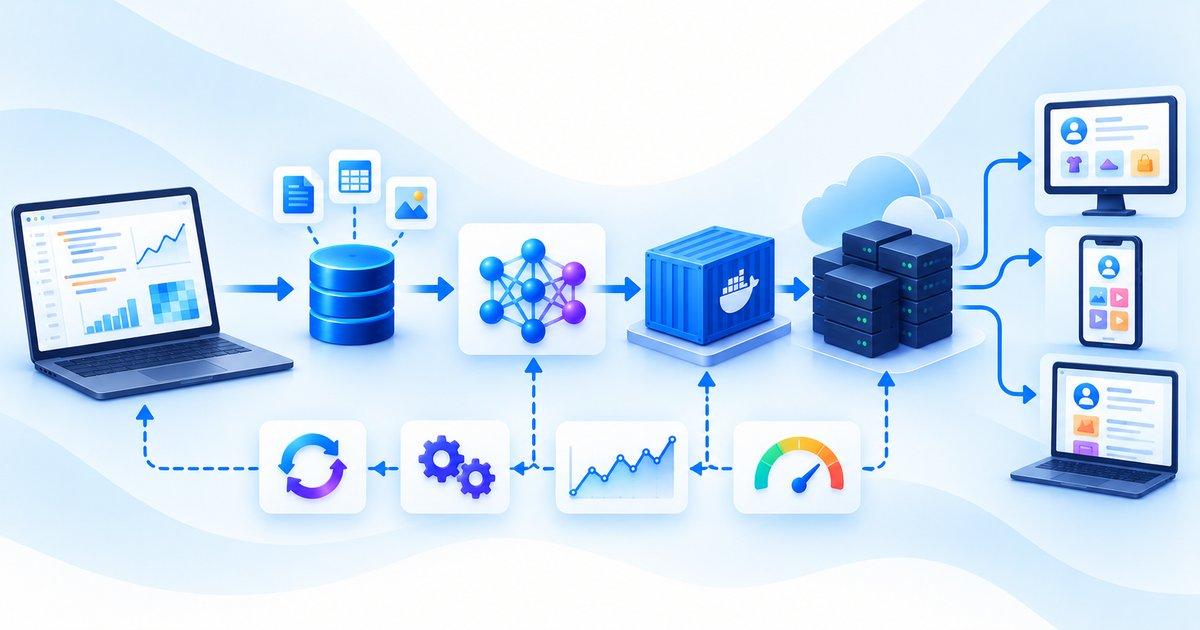
- data → training → validation → deployment → monitoring → retraining → rollback
If you understand this loop deeply, you can navigate most questions with confidence.
11. How do interviews evaluate whether I understand monitoring?
They ask questions like:
- “How would you detect silent model failure?”
- “What signals indicate drift?”
- “How do you decide on alert thresholds?”
- “What would you log at inference time?”
Strong candidates think in signals, not just metrics.
12. What’s the hardest MLOps concept for candidates to learn?
Tradeoff reasoning: cost vs accuracy, batch vs streaming, latency vs throughput, interpretability vs performance. These tradeoffs reflect real-world constraints, and interviewers expect you to articulate them clearly.
13. Do coding rounds now include MLOps components?
Many companies add:
- dataset cleaning challenges
- simple pipeline assembly
- implementing monitoring hooks
- feature-store-like patterns
Not full infra, but enough to show your thought process.
14. How do I practice MLOps reasoning without building large systems?
Talk through small but complete pipelines. Even lightweight examples sharpen your thinking:
- build + deploy a model
- create fake drift
- simulate alerts
- roll back a model
- retrain with noisy labels
Mini-simulations build real understanding.
15. Will MLOps roles continue to grow beyond 2026?
Absolutely. As companies scale AI across product lines, MLOps becomes the backbone of reliability. Roles involving production ML, ML platform, AI infra, and ML reliability engineering will grow rapidly. This is the decade of production AI.