Section 1: Why Traditional AI Systems Are Not Enough for Autonomous Problem Solving
Large Language Models Are Powerful, but They Were Never Designed to Operate Independently
The rapid rise of Large Language Models (LLMs) has fundamentally transformed the artificial intelligence landscape. Modern models can write software code, summarize lengthy documents, answer technical questions, generate marketing content, translate languages, explain complex concepts, and engage in conversations that often appear remarkably human. These capabilities have enabled organizations to introduce AI into customer support, enterprise search, software development, education, healthcare, finance, and countless other business functions.
Despite these impressive achievements, organizations quickly discovered that language models have important limitations when deployed in real-world business environments.
At their core, Large Language Models are prediction engines. They generate the next most likely sequence of words based on the information available within the current conversation. Although this allows them to produce highly intelligent responses, they do not naturally understand long-term objectives, remember previous interactions across sessions, or independently execute business processes.
Consider a software engineering assistant helping a development team build a new application.
During one conversation, the model may successfully generate database schemas, explain system architecture, write API endpoints, and recommend testing strategies. However, once the conversation ends, the model typically loses awareness of the broader project unless that information is explicitly provided again. It does not automatically remember design decisions made last week, unfinished development tasks, project milestones, or ongoing engineering priorities.
The same limitation appears in customer support.
A conversational AI may answer questions accurately during a single interaction, but when the customer returns several days later, the system often lacks awareness of previous discussions, unresolved issues, or earlier troubleshooting steps. Customers are forced to repeat information that should already be available, creating frustration despite the intelligence of the language model itself.
These limitations become even more apparent when organizations attempt to automate complex workflows.
Enterprise operations rarely consist of answering one isolated question. Instead, business activities involve sequences of decisions, interactions with multiple software systems, evolving business objectives, and continuous adaptation as new information becomes available.
A procurement request may require retrieving supplier information, verifying budgets, obtaining approvals, generating purchase orders, communicating with vendors, updating inventory systems, and notifying finance departments.
A healthcare workflow may involve reviewing patient history, retrieving clinical guidelines, scheduling appointments, updating medical records, coordinating specialists, and generating treatment summaries.
A cybersecurity incident may require analyzing network activity, identifying threats, retrieving historical attack patterns, notifying security teams, isolating compromised systems, and documenting incident reports.
These processes cannot be completed through a single prompt-response interaction.
They require systems capable of maintaining context, reasoning across multiple stages, and interacting intelligently with enterprise software throughout extended workflows.
This realization has driven the rapid transition from conversational AI toward autonomous AI agents capable of managing complete business objectives rather than isolated conversations.
Enterprise AI Is Driving Demand for More Capable Intelligent Agents
The rapid adoption of enterprise AI explains why memory, planning, and tool use have become such important engineering priorities.
Organizations are no longer experimenting with isolated conversational interfaces.
They are investing in intelligent systems capable of improving productivity across entire departments.
Software companies deploy coding agents that assist throughout the software development lifecycle.
Financial institutions automate compliance reviews and risk assessments.
Healthcare organizations coordinate patient care using AI-assisted workflows.
Manufacturers optimize production through intelligent operational systems.
Retailers personalize customer experiences while automating inventory management.
Legal teams accelerate document analysis using AI-powered review workflows.
Each of these applications depends on agents capable of maintaining long-term context, reasoning strategically, and interacting directly with enterprise software environments.
The growing importance of designing production-ready AI agents is explored in "AI Workflow Engineering: Building End-to-End Intelligent Applications," which explains how workflow orchestration, Retrieval-Augmented Generation, enterprise integrations, AI agents, cloud-native infrastructure, and production engineering combine to create intelligent systems capable of automating complete business operations.
As enterprise AI adoption continues accelerating, memory, planning, and tool use are becoming the defining characteristics that separate simple conversational AI from truly autonomous intelligent agents capable of delivering measurable business value.
Key Takeaway
Large Language Models have transformed artificial intelligence, but they were never designed to operate independently across complex business workflows. AI agents represent the next stage of enterprise AI by pursuing goals rather than simply responding to prompts. Their success depends on three foundational capabilities: memory, which preserves long-term context; planning, which enables multi-step reasoning; and tool use, which allows interaction with enterprise systems. Together, these capabilities transform AI from a conversational assistant into an intelligent operational partner capable of solving real-world business problems at scale.
Section 2: Why Memory, Planning, and Tool Use Are the Three Pillars of Successful AI Agents
Memory Enables AI Agents to Learn from Every Interaction
One of the biggest limitations of traditional conversational AI systems is that every interaction is treated as an isolated event. Even if a language model produces highly accurate responses during a conversation, it typically has no persistent understanding of what happened before that interaction unless previous context is manually supplied again. For simple question-answering tasks, this limitation may not create significant problems. However, for enterprise AI applications that support customers, employees, software developers, healthcare professionals, or financial analysts over weeks or months, the inability to remember previous interactions becomes a major obstacle.
Modern AI agents overcome this challenge through memory.
Memory allows an agent to retain information that remains relevant beyond a single conversation. Instead of repeatedly asking users for the same information, the agent can remember customer preferences, project history, previous decisions, completed tasks, organizational policies, and ongoing business objectives. This creates interactions that feel consistent and intelligent because the system builds upon earlier experiences rather than starting from the beginning every time.
Consider an AI engineering assistant supporting a software development team working on a large application over several months. During the early stages of the project, the team may define architectural principles, select cloud infrastructure, establish coding standards, choose frameworks, and determine deployment strategies. Without memory, the assistant would require engineers to repeat this information whenever they requested help with new features. Valuable context would constantly be lost, reducing productivity and increasing frustration.
An AI agent equipped with long-term memory behaves very differently. It remembers previous architectural discussions, understands the existing technology stack, recalls unresolved technical issues, and recognizes ongoing development priorities. When engineers ask for assistance building a new microservice or debugging a production issue, the agent incorporates historical project knowledge into its recommendations instead of treating every request as completely independent.
The same principle applies across customer support, healthcare, finance, manufacturing, and enterprise operations.
A customer service agent remembers previous support tickets and customer preferences before suggesting solutions. A healthcare assistant recalls patient history and earlier treatments when generating clinical summaries. Financial advisory systems remember investment objectives and previous portfolio decisions before recommending new strategies. Enterprise knowledge assistants recognize departmental responsibilities and employee workflows, allowing responses to become increasingly personalized over time.
Memory therefore transforms AI from a reactive conversational interface into a continuously learning assistant capable of developing long-term understanding. This persistent context enables more accurate recommendations, reduces repetitive interactions, strengthens user trust, and significantly improves the overall effectiveness of autonomous AI systems.
The Combination of Memory, Planning, and Tool Use Creates Truly Autonomous AI Agents
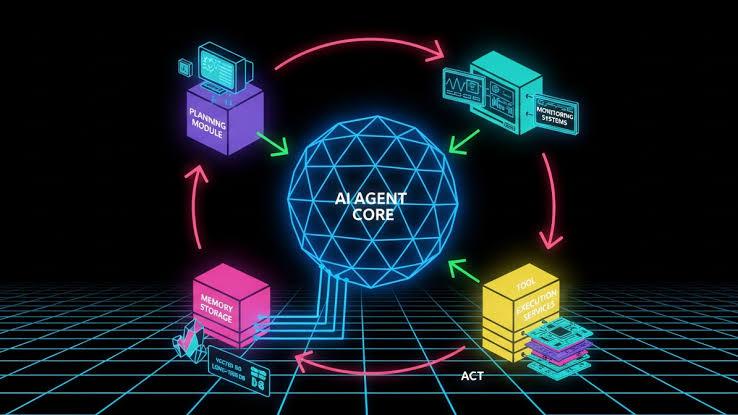
Although memory, planning, and tool use each provide significant value independently, their true power emerges when they operate together as parts of a unified intelligent system.
Memory provides historical context that allows agents to understand long-term objectives, user preferences, organizational knowledge, and previous decisions.
Planning transforms that contextual knowledge into structured execution strategies capable of solving complex, multi-step business problems.
Tool use enables those plans to become real actions by connecting AI agents directly with enterprise software, databases, APIs, cloud platforms, and operational systems.
When these three capabilities operate together, AI agents become significantly more than advanced conversational interfaces.
They evolve into intelligent operational partners capable of understanding goals, reasoning strategically, adapting continuously, interacting with business systems, and completing complex workflows with minimal human intervention.
The importance of designing AI agents that can effectively coordinate reasoning, enterprise knowledge, and external actions is explored in "The Engineering Behind Real-Time AI Decision Systems," which explains how modern AI applications combine decision-making pipelines, Retrieval-Augmented Generation (RAG), distributed inference, and workflow orchestration to deliver intelligent, low-latency responses across complex enterprise environments.
As organizations continue investing in autonomous AI, the success of future agents will depend less on individual model performance and more on how effectively memory, planning, and tool use are integrated into cohesive engineering architectures capable of supporting real-world enterprise operations.
Key Takeaway
Memory, planning, and tool use represent the three foundational capabilities that distinguish autonomous AI agents from traditional conversational AI. Memory enables agents to preserve long-term context, planning allows them to solve complex multi-step problems, and tool use empowers them to interact directly with enterprise systems to execute meaningful work. Together, these capabilities transform language models into intelligent operational systems capable of supporting real-world business processes with greater consistency, adaptability, and reliability.
Section 3: Engineering Challenges of Building AI Agents with Memory, Planning, and Tool Use
Building Long-Term Memory Systems Is Far More Complex Than Simply Storing Conversations
One of the biggest misconceptions about AI agents is that adding memory simply involves saving previous conversations in a database. While conversation history certainly contributes to memory, enterprise AI systems require a much more sophisticated approach. An effective memory system must determine what information should be remembered, what should be forgotten, when stored knowledge should be retrieved, and how historical context should influence future decisions.
Every interaction between an AI agent and a user generates large amounts of information. Some of that information is temporary and loses value almost immediately. Other information remains important for weeks, months, or even years. A successful AI agent must distinguish between these different categories automatically because retaining everything would quickly create enormous storage requirements while also reducing retrieval efficiency.
Consider an AI engineering assistant supporting a development team over the lifecycle of a software project.
Every day, engineers ask hundreds of technical questions, discuss implementation details, review pull requests, analyze production incidents, and evaluate architectural alternatives. Not every conversation deserves permanent storage. Temporary debugging discussions or one-time implementation questions rarely need to influence future recommendations. On the other hand, architectural decisions, technology selections, deployment strategies, coding standards, security requirements, and unresolved technical issues remain valuable throughout the entire project.
The memory system must therefore identify information with long-term importance while discarding temporary details that no longer contribute meaningful context.
Enterprise customer support presents another example.
An AI support agent should remember a customer's subscription plan, preferred communication method, previous product issues, and ongoing support cases because this information improves future interactions. However, remembering every greeting, casual conversation, or temporary troubleshooting step would unnecessarily increase complexity without improving customer experience.
Modern AI memory systems therefore rely on multiple layers of memory rather than maintaining one large repository of historical information. Short-term memory manages information required during the current workflow, while long-term memory preserves knowledge that remains valuable across future interactions. Retrieval mechanisms continuously evaluate which historical information is most relevant before presenting it to the language model during inference.
Designing these systems requires careful engineering because retrieving excessive historical information increases latency and computational cost, while retrieving insufficient information causes agents to lose valuable context.
Balancing memory quality, retrieval accuracy, storage efficiency, and operational performance has therefore become one of the most important engineering challenges in modern AI agent development.
Observability and Continuous Evaluation Keep AI Agents Reliable After Deployment
Building an AI agent is only the beginning of the engineering process. Once deployed into production, agents operate within constantly changing environments where business requirements, enterprise knowledge, infrastructure conditions, and user expectations evolve continuously.
Without appropriate monitoring, even well-designed agents gradually become less effective.
Enterprise AI therefore depends heavily on observability and continuous evaluation.
Unlike traditional application monitoring, AI observability examines not only infrastructure performance but also reasoning quality, memory retrieval effectiveness, planning accuracy, tool execution reliability, workflow completion rates, and overall business outcomes.
Engineering teams continuously analyze how agents behave in production.
They monitor whether retrieved memory improves decision quality, whether planning strategies remain efficient as workflows evolve, whether tool integrations operate reliably, whether response latency remains acceptable, and whether business objectives are completed successfully.
For example, an enterprise support agent may initially resolve customer issues quickly. Over time, however, changes in product documentation, evolving customer expectations, or new software releases may reduce retrieval accuracy or increase workflow complexity.
Observability platforms help engineers identify these issues before customers experience declining service quality.
Similarly, AI agents supporting software development may require periodic evaluation as programming frameworks, cloud services, security standards, and deployment pipelines continue evolving. Continuous monitoring ensures the agent adapts alongside the engineering environment rather than becoming dependent on outdated assumptions.
The importance of evaluating production AI systems continuously is explored in "The Rise of AI Reliability Engineering: Keeping Models Running at Scale," which explains how observability, workflow monitoring, infrastructure automation, evaluation pipelines, and operational engineering enable enterprise AI systems to remain reliable, scalable, and trustworthy throughout their production lifecycle.
Organizations that invest in continuous evaluation recognize that AI agents are not static software products. They are intelligent operational systems that require ongoing observation, refinement, and optimization to maintain long-term business value.
Key Takeaway
Building enterprise AI agents involves far more than connecting a language model to external tools. Engineers must design intelligent memory systems that preserve meaningful context, adaptive planning mechanisms that respond to changing business conditions, secure integration layers that protect enterprise systems, and comprehensive observability platforms that continuously evaluate production performance. These engineering disciplines enable AI agents to operate safely, reliably, and effectively while supporting increasingly complex business workflows across modern organizations.
Section 4: The Future of AI Agents and Why Memory, Planning, and Tool Use Will Define Enterprise AI
AI Agents Are Evolving from Task Automation to Autonomous Decision-Making
The first generation of enterprise AI focused primarily on automating individual tasks. Organizations deployed machine learning models to classify documents, detect fraud, recommend products, forecast demand, and answer customer questions. Although these systems significantly improved productivity, they generally operated within narrowly defined boundaries. Human employees still coordinated the overall business process by deciding what should happen before and after each AI prediction.
The next generation of enterprise AI is fundamentally different.
Organizations are now building intelligent agents capable of managing complete business objectives rather than isolated activities. Instead of simply generating recommendations, these systems evaluate situations, determine the sequence of actions required, retrieve relevant information, interact with enterprise applications, monitor progress, respond to unexpected events, and continue working until a business goal has been achieved.
This transformation is redefining how enterprises think about automation.
Consider how software incident management operates within a modern technology company. A traditional monitoring system may identify that an application has become unavailable and notify engineers about the outage. Human operators then investigate the problem, analyze system logs, identify the root cause, coordinate infrastructure teams, deploy corrective updates, monitor recovery, and communicate status to stakeholders.
An advanced AI agent approaches the same situation differently.
It continuously monitors infrastructure health, detects abnormal behavior, retrieves historical incident reports, compares current system metrics with previous failures, analyzes deployment history, identifies the most likely root cause, executes predefined diagnostic procedures, recommends corrective actions, coordinates with cloud infrastructure, updates incident dashboards, notifies engineering teams, and continues monitoring until service stability has been restored.
The agent is no longer acting as an intelligent assistant that provides suggestions.
It becomes an intelligent participant within the operational workflow.
This evolution will extend across nearly every industry.
Healthcare organizations will deploy agents that coordinate patient care across multiple departments.
Financial institutions will automate complex compliance investigations while maintaining regulatory oversight.
Manufacturers will optimize production lines by continuously monitoring equipment, predicting maintenance requirements, coordinating inventory systems, and adjusting production schedules dynamically.
Retail companies will deploy intelligent commerce agents capable of managing pricing strategies, inventory replenishment, customer engagement, and supply chain coordination simultaneously.
These developments illustrate an important trend.
The future of enterprise AI will increasingly depend on autonomous agents capable of coordinating complex business operations while collaborating seamlessly with human teams.
Responsible AI Engineering Will Determine the Success of Autonomous Agents
While the capabilities of AI agents continue expanding rapidly, organizations are also becoming increasingly aware that autonomy must be accompanied by strong engineering discipline.
An agent capable of accessing enterprise software, retrieving confidential information, executing business workflows, and making operational decisions introduces responsibilities that extend far beyond traditional software development.
Responsible AI engineering has therefore become one of the defining requirements for enterprise agent deployment.
Memory systems must protect sensitive information while retaining only context that genuinely improves future decision-making.
Planning systems must remain transparent enough for engineers and business stakeholders to understand how important decisions are reached.
Tool integrations must operate within carefully controlled permission boundaries to prevent unauthorized actions.
Observability platforms must continuously monitor workflow execution so engineering teams can identify unexpected behavior before it affects business operations.
Organizations are also placing greater emphasis on governance and accountability.
Every important decision made by an AI agent should remain traceable through comprehensive audit logs. Business leaders increasingly expect visibility into which information influenced an agent's reasoning, which tools were used during workflow execution, which business rules were applied, and why specific recommendations or actions were ultimately chosen.
These governance practices strengthen trust while allowing organizations to deploy increasingly autonomous AI systems with confidence.
The objective is not to eliminate human oversight entirely but to ensure autonomous agents operate within well-defined operational boundaries that balance automation with accountability.
As enterprise AI adoption accelerates, organizations that invest in responsible engineering practices will be significantly better positioned to deploy intelligent agents safely while maintaining regulatory compliance, operational reliability, and customer trust.
AI Engineers Must Learn Agent Engineering to Remain Competitive in the Future
Perhaps the most significant implication of this technological shift is its impact on the future of AI careers.
Only a few years ago, developing machine learning models represented the primary responsibility of many AI professionals. Today, organizations increasingly seek engineers capable of designing complete agent ecosystems rather than isolated predictive models.
Modern AI engineers are expected to understand how memory systems preserve long-term context, how planning frameworks coordinate complex workflows, how Retrieval-Augmented Generation provides current enterprise knowledge, how AI agents interact securely with business applications, how workflow orchestration coordinates multiple services, and how observability platforms ensure production reliability.
This represents a substantial expansion of the traditional AI engineering role.
Rather than specializing exclusively in algorithms or model training, engineers now combine expertise across machine learning, software engineering, cloud computing, distributed systems, workflow automation, enterprise architecture, cybersecurity, and production operations.
The growing role of autonomous AI systems in enterprise software is explored in "How Fortune 500 Companies Are Deploying AI at Enterprise Scale," which examines how leading organizations build production-ready AI platforms by integrating AI agents, cloud-native infrastructure, enterprise knowledge systems, security, observability, and workflow automation to transform business operations at scale.
For aspiring AI professionals, the message is becoming increasingly clear.
Understanding Large Language Models alone will not be sufficient for building the next generation of enterprise AI.
The engineers who lead the industry throughout 2026 and beyond will be those who understand how memory, planning, tool use, orchestration, governance, and production engineering combine to create intelligent agents capable of solving real-world business problems at scale.
Key Takeaway
The future of enterprise AI lies in autonomous agents that combine long-term memory, adaptive planning, and intelligent tool use to automate complete business operations rather than isolated tasks. As organizations adopt multi-agent architectures, strengthen governance, and expand workflow automation, AI engineers must develop expertise that extends far beyond language models. Professionals who understand agent engineering, workflow orchestration, enterprise integrations, observability, and responsible AI development will be best positioned to build the intelligent systems that define the next generation of enterprise software.
Conclusion
Artificial intelligence is moving beyond the era of conversational assistants and entering the age of autonomous agents. While Large Language Models (LLMs) have demonstrated extraordinary capabilities in generating text, writing code, answering questions, and understanding natural language, organizations have learned that these capabilities alone are not enough to automate real business operations. Enterprise workflows are rarely completed through a single prompt or response. Instead, they require systems that can retain context, reason across multiple steps, interact with enterprise software, and continuously adapt as new information becomes available.
This evolution explains why AI agents have become one of the most significant developments in modern artificial intelligence.
Unlike traditional AI applications that respond to individual requests, AI agents are designed to achieve objectives. They break complex problems into manageable tasks, retrieve relevant knowledge, execute actions using external tools, monitor outcomes, and refine their approach until the desired goal has been achieved. This shift transforms artificial intelligence from a passive information provider into an active participant within business operations.
However, the success of an AI agent does not depend solely on the intelligence of the underlying language model.
Three foundational capabilities determine whether an agent can operate effectively in real-world environments: memory, planning, and tool use.
Memory provides continuity by allowing agents to retain information beyond a single interaction. Instead of repeatedly asking users for the same details, intelligent agents remember project history, customer preferences, organizational policies, previous decisions, and workflow progress. This persistent context enables more personalized interactions, reduces repetitive work, and improves decision quality across long-running business processes.
Planning enables agents to solve problems that require structured reasoning rather than immediate responses. Enterprise workflows involve multiple interconnected tasks, changing priorities, unexpected events, and dependencies between activities. Through planning, AI agents decompose large objectives into smaller actions, determine the most efficient execution strategy, evaluate progress continuously, and modify their plans whenever business conditions change. This capability allows agents to move beyond simple automation and participate in sophisticated operational decision-making.
Tool use transforms AI agents from intelligent advisors into intelligent operators. By connecting with APIs, databases, cloud platforms, enterprise software, productivity applications, and workflow systems, agents can retrieve information, execute business actions, generate reports, update records, schedule meetings, process transactions, and coordinate activities across multiple departments. Instead of merely recommending what employees should do, AI agents increasingly perform those tasks directly while operating within carefully controlled governance and security boundaries.
When these three capabilities work together, AI agents become far more than advanced chatbots. They evolve into autonomous systems capable of supporting customer service, software engineering, healthcare, finance, cybersecurity, manufacturing, legal operations, and enterprise automation at scale.
Building these systems, however, requires much more than connecting a language model to external tools. Engineers must design intelligent memory architectures, adaptive planning frameworks, secure integration layers, workflow orchestration systems, observability platforms, and governance controls that ensure AI agents remain reliable, transparent, and safe throughout their operational lifecycle. As enterprise AI becomes more deeply integrated into critical business functions, responsible engineering practices will become just as important as model performance.
Looking ahead, AI agents are expected to become increasingly collaborative through multi-agent architectures where specialized agents work together to solve complex business problems. Memory systems will become more sophisticated, planning algorithms will support longer and more dynamic workflows, and tool ecosystems will expand to include nearly every enterprise application. Organizations will increasingly evaluate AI not by how well it answers questions but by how effectively it completes meaningful business objectives.
For AI engineers, this represents one of the most exciting opportunities in the industry. The future belongs to professionals who understand not only machine learning and Large Language Models but also memory systems, planning strategies, workflow orchestration, enterprise integrations, cloud infrastructure, observability, and responsible AI engineering. These multidisciplinary skills will define the next generation of intelligent enterprise applications.
Ultimately, the future of autonomous AI will not be determined by larger language models alone. It will be shaped by how effectively engineers combine memory, planning, and tool use into intelligent systems capable of reasoning, adapting, collaborating, and delivering measurable business value. These three capabilities form the foundation upon which the next generation of enterprise AI will be built.
Frequently Asked Questions
1. What is an AI agent?
An AI agent is an intelligent software system that pursues goals rather than simply responding to prompts. It can reason, plan, remember information, interact with external tools, and execute workflows to accomplish complex tasks.
2. How is an AI agent different from a chatbot?
A chatbot primarily answers questions or generates responses during a conversation. An AI agent goes further by maintaining context, making decisions, interacting with enterprise systems, and completing multi-step workflows to achieve business objectives.
3. Why is memory important for AI agents?
Memory enables AI agents to retain relevant information across interactions, including user preferences, project history, previous decisions, and workflow progress. This improves consistency, personalization, and long-term problem-solving.
4. What types of memory do AI agents use?
AI agents commonly use short-term memory for the current task and long-term memory to preserve important information across multiple conversations or workflows. Advanced systems selectively retrieve relevant memories when needed.
5. What is planning in AI agents?
Planning is the ability to break complex objectives into smaller tasks, determine the optimal sequence of actions, monitor execution, and adapt strategies as circumstances change.
6. Why can't Large Language Models perform planning on their own?
LLMs excel at generating responses but do not naturally maintain long-term objectives or structured execution plans. Planning frameworks provide the additional reasoning required for complex workflows.
7. What does tool use mean in AI agents?
Tool use allows AI agents to interact with APIs, databases, enterprise software, cloud services, search engines, and other applications so they can perform real-world actions instead of only generating text.
8. What are examples of tools AI agents commonly use?
Common tools include CRM platforms, email systems, calendars, databases, cloud storage, code repositories, business intelligence tools, workflow automation platforms, and enterprise APIs.
9. Can AI agents work without memory?
Yes, but their effectiveness is significantly reduced. Without memory, agents treat every interaction independently, resulting in repetitive conversations, weaker personalization, and limited long-term reasoning.
10. What industries benefit most from AI agents?
Healthcare, finance, retail, manufacturing, logistics, cybersecurity, legal services, education, software engineering, customer support, and enterprise operations all benefit from AI agents that automate complex workflows.
11. What is a multi-agent system?
A multi-agent system consists of multiple specialized AI agents that collaborate to complete complex workflows. Each agent performs a specific function while sharing information and coordinating with others.
12. How do organizations ensure AI agents remain secure?
Organizations implement authentication, authorization, role-based access control, encrypted communication, audit logging, governance policies, continuous monitoring, and approval workflows to ensure AI agents operate safely.
13. What skills are required to build AI agents?
AI engineers should understand Large Language Models, Retrieval-Augmented Generation (RAG), vector databases, memory systems, planning frameworks, APIs, workflow orchestration, cloud computing, software engineering, observability, security, and enterprise architecture.
14. What are the biggest engineering challenges in AI agent development?
The biggest challenges include designing scalable memory systems, creating adaptive planning strategies, integrating external tools securely, maintaining low latency, ensuring reliability, monitoring production behavior, and implementing governance throughout the AI lifecycle.
15. Why are memory, planning, and tool use considered the foundation of modern AI agents?
These three capabilities allow AI agents to move beyond conversational intelligence and become autonomous problem solvers. Memory provides context, planning enables strategic decision-making, and tool use allows agents to interact with the real world. Together, they create intelligent systems capable of completing complex business workflows, adapting to changing environments, and delivering meaningful value across enterprise applications.