Section 1: Why Personalization Engines Define Amazon ML System Design Interviews
Customer Obsession as a System Design Constraint
If there is one principle that underpins every machine learning system at Amazon, it is customer obsession. Unlike companies that treat personalization as a feature, Amazon treats it as infrastructure. Every interaction, from product recommendations to search results, email targeting, and homepage layout, is driven by personalization systems that operate continuously at scale. This is why Amazon ML system design interviews frequently revolve around personalization engines. They are not just testing your ability to build models; they are testing whether you can design systems that directly influence customer experience and business outcomes.
Personalization at Amazon is not about showing relevant items in isolation. It is about optimizing the entire customer journey. A recommendation system must consider not only what a user is likely to click on but also what they are likely to purchase, how it affects long-term engagement, and how it aligns with inventory and business goals. This introduces a level of complexity that goes far beyond standard recommendation problems. Candidates are expected to recognize that personalization is inherently multi-objective and to reason about how different objectives interact.
Another defining aspect of Amazon’s personalization systems is scale. The system must handle millions of users, billions of interactions, and a constantly evolving catalog of products. This means that solutions must be designed with scalability as a core requirement from the outset. Candidates who propose solutions that work only in small-scale settings without addressing how they would scale are unlikely to meet expectations.
From Recommendations to Real-Time Decision Systems
A common misconception among candidates is that personalization systems are equivalent to recommendation models. While recommendation models are an important component, Amazon’s systems operate as real-time decision engines. They must process user behavior, update signals dynamically, and generate personalized outputs within strict latency constraints.
For example, when a user visits the homepage, the system must decide which products to display in real time. This decision is influenced by a wide range of factors, including past behavior, current session activity, contextual signals, and business constraints. The system must retrieve candidate items, rank them, and present results within milliseconds. This requires a multi-stage architecture that balances efficiency and accuracy.
Candidates are expected to understand this architecture and explain how different components interact. Retrieval systems are typically optimized for recall, ensuring that relevant items are not missed. Ranking systems then refine these candidates to prioritize the most relevant items. In some cases, additional layers such as re-ranking or filtering are applied to incorporate business rules or diversity constraints. Strong candidates can clearly articulate this pipeline and explain the role of each stage.
Latency is a critical factor in these systems. Users expect immediate responses, and even small delays can impact engagement. This creates a trade-off between model complexity and response time. Candidates who explicitly address latency constraints and propose strategies for optimizing performance demonstrate a strong understanding of real-world system design.
Data as the Core of Personalization Systems
At the heart of every personalization engine is data. Amazon’s systems rely on a vast array of signals, including user interactions, purchase history, browsing behavior, and contextual information. Designing a system that can effectively collect, process, and utilize this data is a central challenge in ML system design interviews.
One of the key challenges is handling the dynamic nature of user behavior. Preferences can change over time, and systems must adapt quickly to reflect these changes. This requires designing pipelines that can process data in near real time and update models or features accordingly. Candidates who recognize the importance of freshness in data demonstrate a deeper understanding of personalization systems.
Another important aspect is feature engineering. Personalization systems often rely on complex features that capture user preferences, item characteristics, and interaction patterns. These features must be consistent across training and inference to ensure reliable predictions. Candidates are expected to discuss how features are generated, stored, and served in a scalable manner.
Data sparsity is another challenge that arises in personalization systems. New users and new items often lack sufficient data, making it difficult to generate accurate recommendations. This is commonly referred to as the cold start problem. Strong candidates acknowledge this issue and discuss potential strategies for addressing it, such as leveraging content-based features or using global trends.
The importance of connecting data to system design is emphasized in End-to-End ML Project Walkthrough: A Framework for Interview Success, where candidates are encouraged to think about how data flows through the system and influences outcomes . Amazon interviews place a strong emphasis on this perspective, as data is the foundation of personalization.
Finally, it is important to recognize that data is not just a technical resource but a business asset. Decisions about how data is collected and used can have significant implications for user experience and business performance. Candidates who can connect data design to business impact demonstrate a higher level of maturity.
The Key Takeaway
Amazon ML system design interviews are fundamentally about building personalization engines that operate at scale. Success depends on your ability to think beyond models and design systems that integrate data, retrieval, ranking, and real-time decision-making while balancing latency, scalability, and business objectives.
Section 2: Core Concepts - Recommendation Systems, Retrieval & Ranking Architectures
Recommendation Paradigms: From Collaborative Filtering to Representation Learning
To perform well in Amazon ML system design interviews, you must demonstrate a clear understanding of how recommendation systems have evolved and why different approaches exist. Personalization engines are not built using a single technique. Instead, they combine multiple paradigms that address different aspects of the problem, each with its own strengths and limitations.
One of the foundational approaches is collaborative filtering, which relies on user-item interaction patterns to generate recommendations. The core idea is that users who have behaved similarly in the past are likely to have similar preferences in the future. Matrix factorization techniques are commonly used in this context to learn latent representations of users and items. These representations capture underlying preferences and enable the system to recommend items that a user has not yet interacted with.
However, collaborative filtering has inherent limitations. It struggles with the cold start problem, where new users or items lack sufficient interaction data. It also relies heavily on historical behavior, which may not always reflect current user intent. Candidates who recognize these limitations and discuss how they impact system design demonstrate a deeper understanding of the problem.
To address these challenges, content-based approaches are often used alongside collaborative filtering. These methods leverage item attributes such as descriptions, categories, and metadata to generate recommendations. By analyzing the features of items a user has interacted with, the system can recommend similar items even in the absence of extensive interaction data. This makes content-based methods particularly useful for handling cold start scenarios.
Modern recommendation systems increasingly rely on representation learning, where both users and items are embedded into a shared vector space. These embeddings capture complex relationships and enable the system to measure similarity in a more nuanced way. Deep learning models are often used to learn these representations, incorporating signals from user behavior, item features, and contextual data. Candidates who can explain how embeddings unify different sources of information demonstrate a strong grasp of modern recommendation techniques.
Understanding these paradigms is essential, but what differentiates strong candidates is their ability to explain how these methods are combined in real systems. Amazon does not rely on a single approach; it integrates multiple techniques to create robust and flexible personalization engines.
Real-Time vs Batch Personalization: Handling Dynamic User Behavior
Personalization systems must operate across different time scales. Some signals, such as long-term user preferences, can be processed in batch pipelines. Others, such as recent interactions within a session, require real-time processing. Designing a system that integrates both types of signals is a key challenge in Amazon ML system design interviews.
Batch processing is typically used to compute features that change relatively slowly, such as user embeddings or item popularity scores. These computations can be performed offline using large-scale data processing frameworks. The results are then stored and used during inference. Candidates should explain how batch pipelines enable efficient processing of large datasets.
Real-time processing, on the other hand, is used to capture immediate user behavior. For example, if a user clicks on a product, the system may update recommendations within the same session to reflect this new information. This requires low-latency systems that can process events and update features quickly. Candidates who discuss streaming systems or real-time feature updates demonstrate an understanding of dynamic personalization.
Integrating batch and real-time systems introduces additional complexity. The system must ensure consistency between offline and online features, avoid duplication of computation, and handle potential conflicts between signals. Candidates who can explain how to manage these challenges show a deeper level of system thinking.
Another important consideration is evaluation. Personalization systems must be evaluated using both offline metrics and online experiments. Offline metrics provide initial insights, but real-world performance must be validated through A/B testing. This ensures that improvements translate into meaningful user outcomes. This perspective is reinforced in Recommendation Systems: Cracking the Interview Code, where evaluation is treated as an integral part of system design rather than a separate step .
Finally, it is important to recognize that personalization systems are continuously evolving. Models are updated, features are refined, and new signals are incorporated over time. This requires designing systems that can adapt to changing conditions without disrupting performance.
The Key Takeaway
Amazon’s personalization systems are built on a combination of recommendation paradigms, multi-stage architectures, and hybrid processing pipelines. Success in interviews depends on your ability to explain how these components work together, reason about trade-offs, and design systems that adapt to dynamic user behavior at scale.
Section 3: System Design - Building Scalable Personalization Engines at Amazon
End-to-End Architecture: From User Signals to Ranked Recommendations
Designing a personalization engine at Amazon requires thinking in terms of a continuously evolving system that transforms raw user interactions into meaningful, ranked outputs in real time. Unlike isolated ML problems, this is a pipeline where each component influences the others, and the overall effectiveness depends on how well the system is orchestrated end to end.
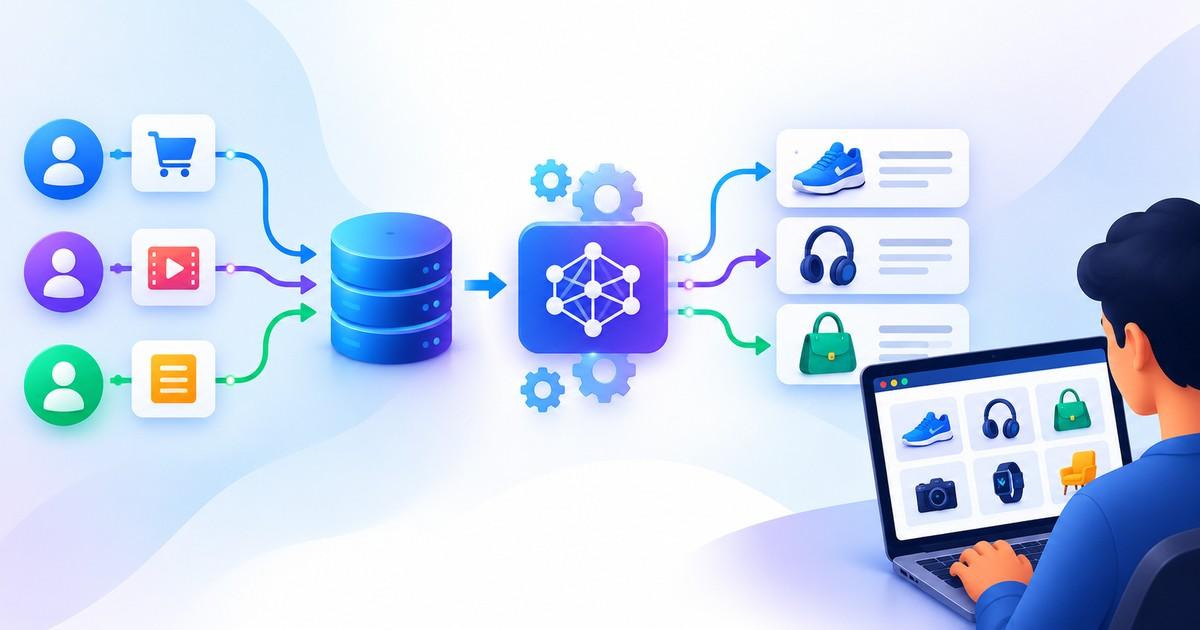
The process begins with data collection. Every user interaction, clicks, searches, purchases, dwell time, serves as a signal that reflects user intent. These signals are captured through event logging systems and streamed into data pipelines for processing. At Amazon’s scale, this involves handling massive volumes of data with high velocity, making efficient ingestion and storage critical. Candidates are expected to reason about how to design systems that can capture and process these signals reliably without introducing latency or data loss.
Once data is collected, it flows into feature engineering pipelines. These pipelines transform raw signals into structured features that can be used by machine learning models. Features may include user embeddings, item embeddings, session-level statistics, and contextual attributes. Ensuring consistency between training and inference features is essential, as discrepancies can lead to degraded model performance. Candidates who emphasize feature consistency demonstrate a strong understanding of production systems.
The next stage involves candidate generation and ranking. As discussed earlier, retrieval systems generate a broad set of potential recommendations, while ranking models refine this set to identify the most relevant items. These models often incorporate a combination of historical data and real-time signals to capture both long-term preferences and immediate intent. Candidates should explain how these components interact and how the system balances efficiency with accuracy.
Finally, the system must deliver recommendations to the user interface in real time. This requires low-latency serving infrastructure that can handle high request volumes while maintaining performance. Candidates are expected to discuss how to design serving systems that are both scalable and reliable, ensuring a seamless user experience.
An important aspect of this architecture is the feedback loop. User interactions with recommendations generate new data, which is fed back into the system to improve future predictions. This creates a continuous cycle of learning and adaptation. Candidates who recognize this feedback loop and incorporate it into their design demonstrate a deeper understanding of how personalization systems evolve.
Scaling the System: Handling Millions of Users and Items
Scalability is one of the most critical challenges in designing personalization engines at Amazon. The system must handle millions of users, billions of interactions, and a constantly growing catalog of items. This requires designing architectures that can scale horizontally while maintaining performance and reliability.
One of the key strategies for achieving scalability is distributing computation across multiple components. Data processing, feature engineering, and model inference are often handled by separate systems that can scale independently. This modular approach allows the system to handle increasing workloads without becoming a bottleneck. Candidates who discuss distributed architectures demonstrate an understanding of how large-scale systems operate.
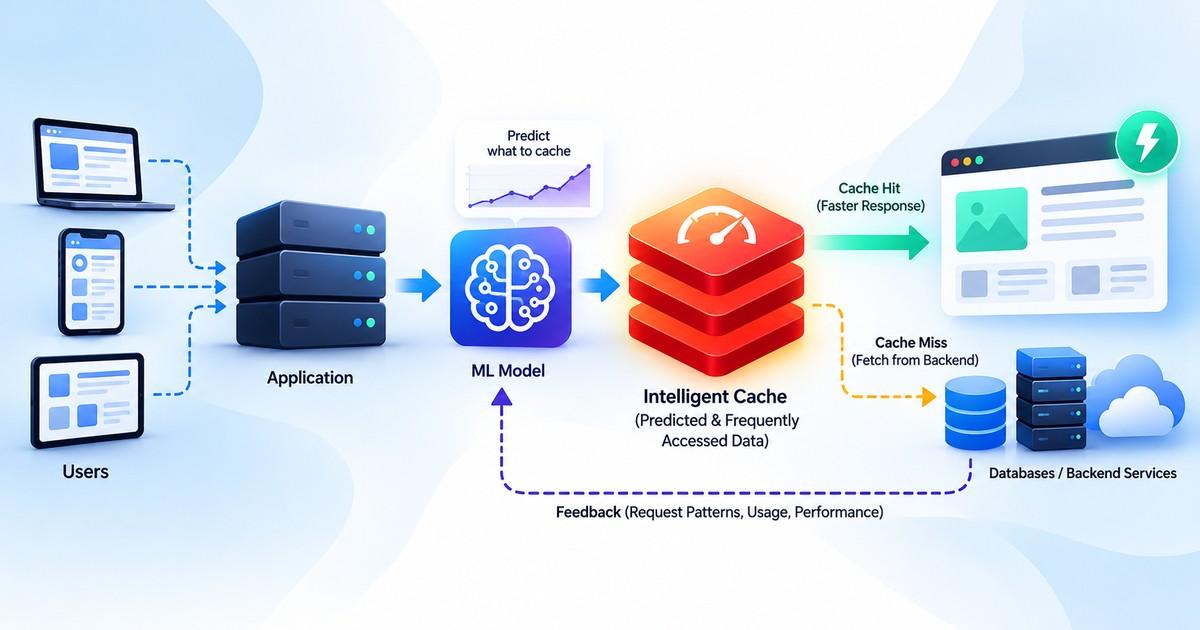
Another important consideration is caching. Since many users exhibit similar behavior patterns, caching frequently accessed data or precomputed recommendations can significantly reduce latency and computational overhead. Candidates should explain how caching can be used effectively while ensuring that recommendations remain fresh and relevant.
Partitioning is also a common technique used to scale systems. Data can be partitioned based on users, items, or other attributes, allowing different parts of the system to operate independently. This improves efficiency and enables parallel processing. However, partitioning introduces challenges such as maintaining consistency and handling cross-partition interactions. Candidates who address these challenges show a more advanced understanding of system design.
Load balancing is another critical component of scalability. The system must distribute incoming requests evenly across servers to prevent overload and ensure consistent performance. Candidates should discuss how load balancing strategies can be implemented and how they contribute to system reliability.
Handling failures is an inevitable part of large-scale systems. Components may fail due to hardware issues, network problems, or unexpected spikes in traffic. Designing systems that can recover gracefully from failures is essential for maintaining reliability. Candidates who incorporate fault tolerance and redundancy into their design demonstrate a practical approach to system engineering.
Balancing Personalization, Diversity, and Business Objectives
While personalization aims to maximize relevance for individual users, it must also consider broader objectives such as diversity and business goals. This introduces a layer of complexity that goes beyond traditional recommendation systems and is a key focus area in Amazon ML interviews.
One of the challenges in personalization is avoiding overfitting to user preferences. If a system only recommends items that are very similar to past interactions, it may limit discovery and reduce long-term engagement. Introducing diversity into recommendations helps expose users to a wider range of items, improving overall experience. Candidates should discuss how diversity can be incorporated into ranking algorithms without compromising relevance.
Business objectives also play a significant role in shaping recommendations. For example, the system may need to promote certain products, manage inventory, or optimize for profitability. These objectives must be integrated into the ranking process, often through additional constraints or weighting mechanisms. Candidates who can explain how to balance user preferences with business goals demonstrate a strong understanding of real-world systems.
Another important consideration is fairness. Personalization systems must ensure that recommendations do not disproportionately favor certain items or categories in a way that could lead to biased outcomes. Candidates who address fairness show an awareness of ethical considerations in machine learning.
Evaluation becomes more complex in this context, as multiple objectives must be considered simultaneously. Offline metrics may capture certain aspects of performance, but online experiments are essential for understanding how changes impact user behavior and business outcomes. This aligns with insights from The Hidden Metrics: How Interviewers Evaluate ML Thinking, Not Just Code, where the emphasis is on interpreting results in context rather than relying solely on numerical metrics .
Finally, it is important to recognize that these objectives are often in tension with each other. Increasing diversity may reduce short-term engagement, while optimizing for business goals may conflict with user preferences. Candidates who can articulate these trade-offs and propose balanced solutions demonstrate a high level of maturity.
The Key Takeaway
Designing scalable personalization engines at Amazon requires a holistic approach that integrates data pipelines, distributed systems, and multi-objective optimization. Success in interviews depends on your ability to connect these components into a cohesive system, reason about scalability and trade-offs, and align technical decisions with both user experience and business impact.
Section 4: How Amazon Tests ML System Design (Question Patterns + Answer Strategy)
Question Patterns: Personalization as a System Design Problem
By the time you reach ML system design rounds at Amazon, the evaluation shifts from theoretical knowledge to applied system thinking. Amazon does not test personalization as a narrow recommendation problem. Instead, it frames questions as open-ended system design challenges that reflect real-world product scenarios. The interviewer is not looking for a specific algorithm but for a structured approach to designing scalable, high-impact systems.
One of the most common patterns involves designing a personalization system for a specific surface, such as a homepage, product page, or notification system. These questions are intentionally broad and require you to think across the entire pipeline. You are expected to define how data is collected, how candidate items are retrieved, how ranking is performed, and how results are delivered in real time. Candidates who focus only on the model without addressing upstream and downstream components often provide incomplete answers.
Another frequent pattern involves improving an existing system. For example, you might be told that engagement has plateaued or that recommendations are becoming repetitive. The interviewer is testing your ability to diagnose issues and propose improvements. Strong candidates approach this systematically by examining data quality, feature design, model performance, and system constraints before suggesting changes. This demonstrates an understanding that problems in ML systems rarely originate from a single component.
Amazon also places strong emphasis on handling scale. Questions often include implicit or explicit requirements about the number of users, items, or requests the system must handle. Candidates are expected to incorporate scalability into their design from the outset rather than treating it as an afterthought. This includes discussing distributed systems, caching strategies, and load balancing.
Ambiguity is another defining feature of these questions. You will not be given complete information about the problem, and you are expected to ask clarifying questions and make reasonable assumptions. This reflects real-world scenarios where engineers must operate without perfect clarity. Candidates who can structure ambiguous problems effectively stand out because they demonstrate practical problem-solving skills.
Answer Strategy: Structuring End-to-End Personalization Systems
A strong answer in an Amazon ML system design interview is defined by clarity, structure, and depth of reasoning. The most effective approach begins with clearly defining the problem and its objectives. Before discussing technical details, you should establish what the system is trying to optimize. Is the goal to increase click-through rate, drive purchases, or improve long-term engagement? This framing ensures that your design decisions are aligned with business outcomes.
Once the objective is defined, the next step is to outline the system architecture. In personalization systems, this typically involves describing the data pipeline, retrieval stage, ranking stage, and serving infrastructure. Each component should be explained in terms of its role and how it contributes to the overall system. Candidates who can clearly articulate this flow demonstrate strong system design skills.
Model selection should come after system design. Instead of starting with a specific algorithm, you should explain what the model needs to achieve and what constraints it must operate under. This might include handling sparse data, adapting to real-time signals, or maintaining low latency. Only then should you discuss specific techniques that meet these requirements. This approach shows that your decisions are driven by the problem rather than by familiarity with certain models.
Trade-offs are central to Amazon interviews, and you should address them explicitly. For example, increasing model complexity may improve accuracy but increase latency. Expanding the candidate pool may improve recall but increase computational cost. Strong candidates do not avoid these trade-offs; they explain how they would balance them based on system requirements.
Evaluation is another critical component of your answer. You should discuss both offline metrics and online experimentation. Offline metrics provide initial insights, but real-world performance must be validated through A/B testing. This ensures that improvements translate into meaningful user outcomes. Candidates who emphasize evaluation demonstrate a comprehensive understanding of system performance.
Communication plays a key role in how your answer is perceived. Your explanation should follow a logical flow from problem definition to system design, followed by trade-offs, evaluation, and potential improvements. This structured approach makes it easier for the interviewer to follow your reasoning and assess your thinking.
Common Pitfalls and What Differentiates Strong Candidates
One of the most common pitfalls in Amazon ML system design interviews is focusing too narrowly on recommendation models. Candidates often propose sophisticated algorithms but fail to address how those models fit into a larger system. This leads to answers that lack depth and fail to demonstrate system-level thinking. Strong candidates, in contrast, treat the model as one component within a broader architecture.
Another frequent mistake is ignoring real-time constraints. Personalization systems must operate with low latency, and failing to address this can weaken your answer significantly. Candidates who explicitly discuss latency and propose strategies for optimizing performance demonstrate a stronger understanding of production systems.
A more subtle pitfall is neglecting business objectives. Amazon’s personalization systems are designed to drive measurable outcomes, and candidates are expected to connect their designs to these goals. Answers that focus solely on technical aspects without considering business impact often miss an important dimension of the problem.
Handling data-related challenges is another area where candidates often fall short. Issues such as data sparsity, cold start, and feature consistency are central to personalization systems. Candidates who proactively address these challenges demonstrate a deeper level of understanding.
What differentiates strong candidates is their ability to think holistically. They do not just describe individual components; they explain how those components interact to form a complete system. They also demonstrate ownership by discussing how the system would be monitored, iterated, and improved over time. This reflects the reality of working in production environments.
This approach aligns closely with ideas explored in End-to-End ML Project Walkthrough: A Framework for Interview Success, where candidates are encouraged to present solutions as complete, production-ready systems rather than isolated implementations . Amazon interviews consistently reward candidates who adopt this mindset.
Finally, strong candidates are comfortable with ambiguity and trade-offs. They do not attempt to provide perfect answers but focus on demonstrating clear reasoning and sound judgment. This ability to navigate complex, open-ended problems is one of the most important signals in Amazon ML system design interviews.
The Key Takeaway
Amazon ML system design interviews are designed to evaluate how you build scalable personalization systems end to end. Success depends on your ability to structure ambiguous problems, design multi-stage architectures, reason about trade-offs, and connect technical decisions to user and business impact.
Conclusion: What Amazon Is Really Evaluating in ML System Design Interviews
If you analyze Amazon’s ML system design interviews closely, a clear pattern emerges. Amazon is not evaluating whether you can build a recommendation model. It is evaluating whether you can design, scale, and evolve a personalization system that directly impacts customer experience and business outcomes.
This distinction is critical. Many candidates approach these interviews with a model-centric mindset, focusing on collaborative filtering, deep learning architectures, or optimization techniques. While these are important building blocks, they are only a small part of the system. Amazon operates at a scale where models are just one component within a much larger ecosystem that includes data pipelines, distributed systems, real-time serving, and continuous feedback loops.
What Amazon truly values is your ability to think in terms of systems. A strong candidate does not say, “I would use a deep learning model for recommendations.” Instead, they explain how data is collected, how candidates are retrieved, how ranking is performed, how latency is managed, and how the system evolves over time. This end-to-end thinking is what differentiates top candidates from the rest.
Another defining aspect of Amazon’s evaluation is its focus on trade-offs. There is no perfect personalization system. Every decision involves balancing competing objectives such as relevance, diversity, latency, scalability, and business goals. For example, increasing model complexity may improve accuracy but increase latency. Expanding the candidate pool may improve recall but increase computational cost. Amazon interviewers expect you to recognize these trade-offs and justify your decisions clearly.
Business impact is also central to how Amazon evaluates candidates. Personalization systems are designed to drive measurable outcomes, such as increased engagement, higher conversion rates, and improved customer satisfaction. Candidates who can connect their technical designs to these outcomes demonstrate a deeper understanding of how machine learning is used in practice.
Handling ambiguity is another key signal. Real-world problems are rarely well-defined, and Amazon’s interview questions reflect this reality. You may not be given complete information, and you will need to make assumptions to move forward. Your ability to structure the problem, ask the right questions, and proceed with a clear approach is a strong indicator of how you would perform in a real engineering environment.
Scalability and reliability are equally important. Amazon’s systems must handle massive volumes of data and traffic while maintaining performance and availability. Candidates who incorporate these considerations into their designs demonstrate an understanding of what it takes to operate systems at scale.
Communication ties everything together. Even the most well-designed system can fall short if it is not explained clearly. Amazon interviewers evaluate how effectively you can articulate your reasoning, structure your answers, and guide them through your thought process. This is particularly important in collaborative environments where engineers must work with cross-functional teams.
Ultimately, succeeding in Amazon ML system design interviews is about demonstrating that you can think like an engineer who builds production systems. You need to show that you understand how personalization engines operate end to end, how they scale, and how they deliver value to both users and the business. When your answers reflect this mindset, you align directly with what Amazon is trying to evaluate.
Frequently Asked Questions (FAQs)
1. How are Amazon ML system design interviews different from other companies?
Amazon focuses heavily on personalization systems and real-world impact. Unlike companies that emphasize theoretical ML concepts, Amazon evaluates how well you can design scalable systems that influence user behavior and business outcomes.
2. Do I need deep knowledge of recommendation algorithms?
You should understand core concepts such as collaborative filtering, content-based methods, and embeddings. However, the focus is on how these techniques are used within a larger system rather than on algorithmic details.
3. What is the most important part of a personalization system?
There is no single most important component. Amazon evaluates how well you connect data pipelines, retrieval systems, ranking models, and serving infrastructure into a cohesive system.
4. How should I structure my answer in an interview?
Start by defining the problem and objectives, then outline the system architecture, discuss trade-offs, explain evaluation methods, and finally address potential improvements.
5. How important is scalability in Amazon interviews?
Scalability is critical. Systems must handle millions of users and items, so you should explicitly discuss how your design scales and how it maintains performance under load.
6. What are common mistakes candidates make?
Common mistakes include focusing only on models, ignoring system components, neglecting latency constraints, and failing to connect solutions to business impact.
7. How do I handle cold start problems in recommendations?
You can use content-based features, popularity signals, or hybrid approaches that combine multiple techniques to handle new users and items.
8. How important is latency in personalization systems?
Latency is extremely important because recommendations must be generated in real time. Candidates should discuss how to optimize inference and reduce response times.
9. Should I discuss A/B testing in my answers?
Yes, A/B testing is essential for evaluating real-world performance. You should explain how changes are validated using online experiments.
10. How do I balance personalization and diversity?
You should incorporate mechanisms in the ranking stage to ensure that recommendations are not overly repetitive while still maintaining relevance.
11. What role does data play in personalization systems?
Data is the foundation of personalization. Candidates should discuss how data is collected, processed, and used to generate features and train models.
12. How do I handle real-time and batch processing together?
You should design hybrid systems where batch processing handles long-term features and real-time systems capture immediate user behavior.
13. What differentiates senior candidates in these interviews?
Senior candidates demonstrate strong system-level thinking, anticipate edge cases, and reason about trade-offs and long-term system evolution.
14. What kind of projects should I build to prepare?
Focus on end-to-end recommendation systems that include data pipelines, candidate generation, ranking, and evaluation. Emphasize scalability and real-world considerations.
15. What ultimately differentiates top candidates?
Top candidates demonstrate structured thinking, strong understanding of system design, and the ability to connect technical solutions to user experience and business impact.