
Section 1: Why On-Device Learning Defines Apple’s ML Interview Philosophy
If you approach Apple machine learning interviews with the same mindset you would use for companies focused on large-scale cloud infrastructure, you will likely miss the core signal Apple is trying to evaluate. Apple’s ML philosophy is fundamentally different. While many companies prioritize centralized data collection and large-scale model training, Apple emphasizes on-device intelligence, user privacy, and efficient computation under strict constraints. This shift is not cosmetic, it shapes the entire way Apple designs systems and, by extension, how it evaluates candidates.
At Apple, machine learning is not just about building accurate models. It is about building systems that can operate directly on user devices such as iPhones, iPads, and Macs, often without sending sensitive data to external servers. This introduces a unique set of constraints that fundamentally change how ML systems are designed. Models must be lightweight, energy-efficient, and capable of running in real time, all while preserving user privacy. As a result, Apple ML interviews are less about scaling models across distributed systems and more about optimizing intelligence within constrained environments.
This difference becomes immediately visible in the types of questions asked. Instead of focusing on large-scale training pipelines, Apple interviewers often ask how you would design a feature that runs entirely on-device. For example, you might be asked how to build a personalized recommendation system, a keyboard prediction model, or a voice recognition system that processes data locally. The expectation is not just to propose a model but to explain how it operates within the limitations of device hardware, battery life, and privacy requirements.
One of the most important shifts you need to make is understanding that data availability is fundamentally different in Apple’s ecosystem. In many ML systems, data is centralized, allowing models to be trained on massive datasets. At Apple, much of the data remains on the device. This means that traditional approaches to model training and evaluation may not apply directly. Instead, techniques such as on-device learning, federated learning, and differential privacy become essential components of the system. Candidates who recognize this shift and incorporate it into their reasoning demonstrate a strong alignment with Apple’s engineering philosophy.
Another defining characteristic of Apple’s approach is its emphasis on privacy as a first-class design constraint rather than an afterthought. Privacy is not something that is added on top of a system; it is embedded into the architecture from the beginning. This means that every design decision must consider how user data is handled, stored, and processed. For example, if you are designing a feature that relies on user behavior, you must explain how that data is kept secure and how sensitive information is protected. Interviewers are explicitly looking for candidates who can integrate privacy considerations into their technical designs.
This focus on privacy also introduces trade-offs that are central to Apple ML interviews. Running models on-device improves privacy but limits computational resources. Avoiding centralized data collection reduces risk but makes it harder to train large models. Candidates are expected to recognize these trade-offs and reason about them explicitly. A strong answer does not simply propose an approach but explains why that approach is appropriate given the constraints.
The importance of connecting technical decisions to real-world impact is a recurring theme in ML interviews, and it is particularly relevant in Apple’s context. As discussed in Beyond the Model: How to Talk About Business Impact in ML Interviews, strong candidates are those who can link model behavior to user experience and product value rather than focusing solely on technical details . In Apple interviews, this often means explaining how on-device intelligence improves user trust, reduces latency, and enhances overall usability.
The Key Takeaway
Apple ML interviews are fundamentally about designing intelligent systems under constraints. Success depends on your ability to think beyond model accuracy and consider privacy, efficiency, and on-device execution as core design principles. Candidates who align their thinking with this philosophy consistently perform better.
Section 2: Core Concepts - On-Device ML, Federated Learning, and Differential Privacy
On-Device Machine Learning: Designing for Constraints, Not Scale
At the heart of Apple’s machine learning philosophy lies a fundamental inversion of the traditional paradigm. Instead of designing systems that scale across massive cloud infrastructure, Apple prioritizes systems that scale across millions of individual devices. This distinction reshapes how machine learning problems are approached. On-device machine learning is not simply a deployment choice; it is a design philosophy that influences model architecture, training strategies, and evaluation methods.
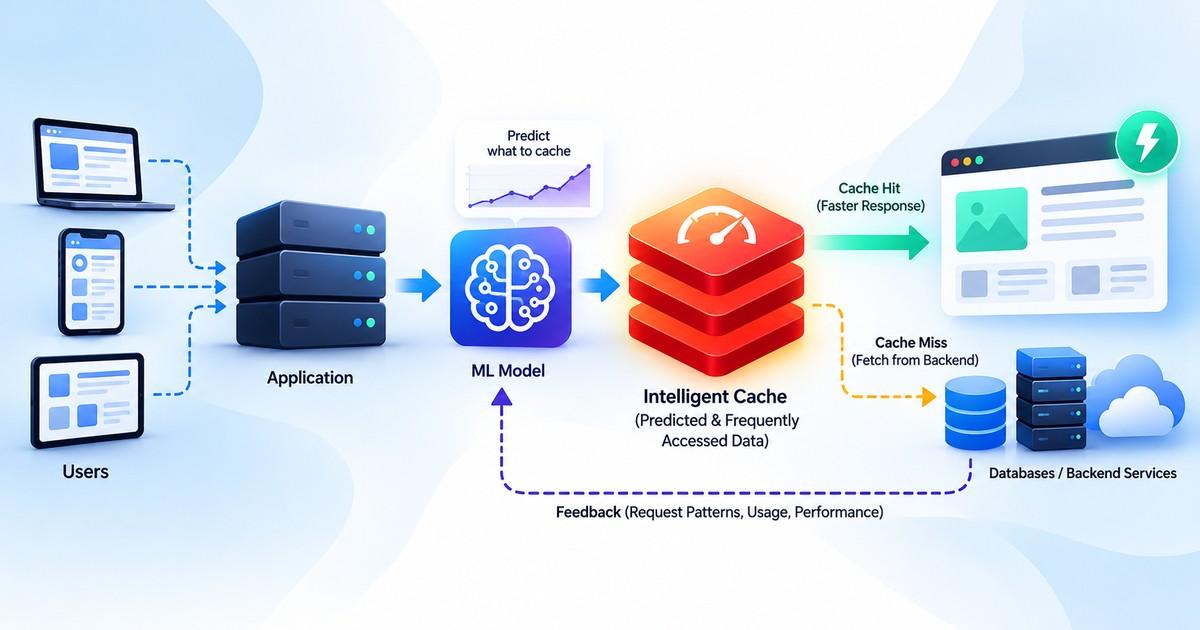
In an on-device setting, constraints become the primary driver of design decisions. Unlike server-based systems where computational resources can be scaled elastically, devices such as smartphones operate under strict limitations in terms of memory, processing power, and battery life. This means that models must be optimized not only for accuracy but also for efficiency. Techniques such as model quantization, pruning, and distillation are commonly employed to reduce model size and improve inference speed without significantly compromising performance.
Another important aspect of on-device learning is latency. Because computation happens locally, systems can achieve near-instant responses, which is critical for applications such as keyboard prediction, voice assistants, and real-time image processing. However, achieving low latency requires careful engineering. Candidates are expected to reason about how model complexity impacts response time and how to balance performance with user experience.
Data availability also changes significantly in this setting. Since user data remains on the device, models must often operate with limited or fragmented datasets. This introduces challenges in generalization and personalization. Candidates who recognize this constraint and discuss strategies for adapting models to local data demonstrate a deeper understanding of on-device systems. This perspective aligns with ideas explored in MLOps vs. ML Engineering: What Interviewers Expect You to Know in 2025, where the focus is on adapting machine learning workflows to real-world deployment environments .
Federated Learning: Training Without Centralizing Data
Federated learning is one of the most important techniques that enables Apple’s privacy-first approach. Instead of collecting user data in a centralized location, federated learning allows models to be trained collaboratively across multiple devices. Each device computes updates locally using its own data, and only these updates, rather than the raw data, are sent back to a central server for aggregation.
This approach fundamentally changes how training pipelines are designed. In traditional machine learning, data is aggregated first and models are trained centrally. In federated learning, the model is distributed to devices, trained locally, and then updated globally. This introduces new challenges that do not exist in centralized systems. For example, devices may have varying amounts of data, different computational capabilities, and inconsistent availability due to network conditions or user activity.
One of the key challenges in federated learning is handling non-IID data. Data on individual devices is often highly personalized and does not follow the same distribution as the global dataset. This can lead to instability in training and slower convergence. Strong candidates are expected to recognize this issue and discuss potential mitigation strategies, such as weighted aggregation or adaptive optimization techniques.
Communication efficiency is another critical factor. Since updates must be transmitted across potentially millions of devices, minimizing communication overhead is essential. Techniques such as update compression and selective parameter sharing are often used to address this challenge. Candidates who can reason about these trade-offs demonstrate an understanding of how federated systems operate at scale.
Federated learning also introduces new considerations for evaluation. Since data is not centralized, traditional validation methods may not apply directly. Candidates should be able to discuss how model performance can be assessed using aggregated metrics or on-device evaluation strategies. This reflects a broader shift in thinking, where evaluation must adapt to the constraints of the system rather than relying on standard approaches.
Differential Privacy: Ensuring Mathematical Guarantees of Data Protection
While federated learning reduces the need to centralize data, it does not fully eliminate privacy risks. Information can still potentially be inferred from model updates. This is where differential privacy becomes essential. Differential privacy provides a mathematical framework for ensuring that the inclusion or exclusion of a single data point does not significantly affect the output of a computation. In practical terms, it ensures that individual user data cannot be reverse-engineered from model updates.
Implementing differential privacy involves adding carefully calibrated noise to data or model updates. The challenge lies in balancing privacy and utility. Adding too much noise can degrade model performance, while adding too little may not provide sufficient privacy guarantees. Candidates are expected to understand this trade-off and explain how privacy budgets are managed in practice.
Another important aspect of differential privacy is its integration into the overall system. It is not a standalone feature but part of a broader privacy-preserving pipeline that includes secure aggregation and on-device processing. Candidates who treat privacy as an integral component of system design, rather than an afterthought, demonstrate alignment with Apple’s engineering philosophy.
The importance of privacy-preserving techniques is increasingly reflected in modern ML interviews. As discussed in The New Rules of AI Hiring: How Companies Screen for Responsible ML Practices, companies are placing greater emphasis on ethical and responsible AI, including data privacy and security considerations . Apple’s approach represents one of the most advanced implementations of these principles, making it a central focus of its interview process.
The Key Takeaway
Mastering Apple ML interviews requires more than understanding models, it requires understanding how those models operate under constraints. On-device learning, federated learning, and differential privacy are not isolated concepts but interconnected components of a system designed to deliver intelligence while preserving user trust. Candidates who can explain these concepts together, along with their trade-offs, demonstrate the depth of thinking Apple is looking for.
Section 3: System Design - Building Privacy-Preserving ML Systems on Apple Devices
End-to-End Architecture: From Data Generation to On-Device Inference
Designing machine learning systems for Apple requires thinking beyond isolated components and instead focusing on how the entire system operates under strict privacy and hardware constraints. Unlike cloud-first architectures where data flows freely between users and centralized servers, Apple’s ecosystem is built around minimizing data movement. This means that the architecture of an ML system must be fundamentally restructured to ensure that most computation happens locally on the device.
At a high level, an on-device ML system begins with data generation. User interactions, such as typing behavior, app usage, or voice commands, produce signals that can be used to improve models. However, unlike traditional systems, this data is not directly sent to a central server. Instead, it is processed locally, often in a privacy-preserving manner. This introduces the first key design challenge: how to extract meaningful signals without exposing sensitive information.
Once data is generated, the next step is local processing and inference. Models deployed on the device must be optimized for efficiency, ensuring that they can run in real time without consuming excessive resources. This requires careful selection of model architectures and optimization techniques. For example, smaller neural networks or compressed versions of larger models are often used to balance accuracy and performance. Candidates are expected to reason about these trade-offs and explain how they would choose an appropriate model given the constraints.
Another critical component of the architecture is the update loop. Models must improve over time, but without centralized data collection, this process becomes more complex. Techniques such as federated learning enable devices to contribute to global model updates while keeping raw data local. This creates a distributed training pipeline where updates are aggregated and used to refine the model. Candidates who can clearly articulate this pipeline demonstrate a strong understanding of how modern privacy-preserving systems operate.
The entire system must also be designed with robustness in mind. Devices may go offline, have varying computational capabilities, or generate noisy data. The architecture must handle these inconsistencies gracefully, ensuring that the system remains reliable across a diverse set of conditions. This requires a shift from designing for ideal scenarios to designing for real-world variability.
Balancing Personalization and Privacy in System Design
One of the most challenging aspects of Apple’s ML systems is achieving personalization without compromising privacy. Personalization is critical for improving user experience, whether it is predicting the next word in a sentence, recommending apps, or tailoring notifications. However, personalization typically relies on user-specific data, which must be handled carefully to avoid privacy violations.
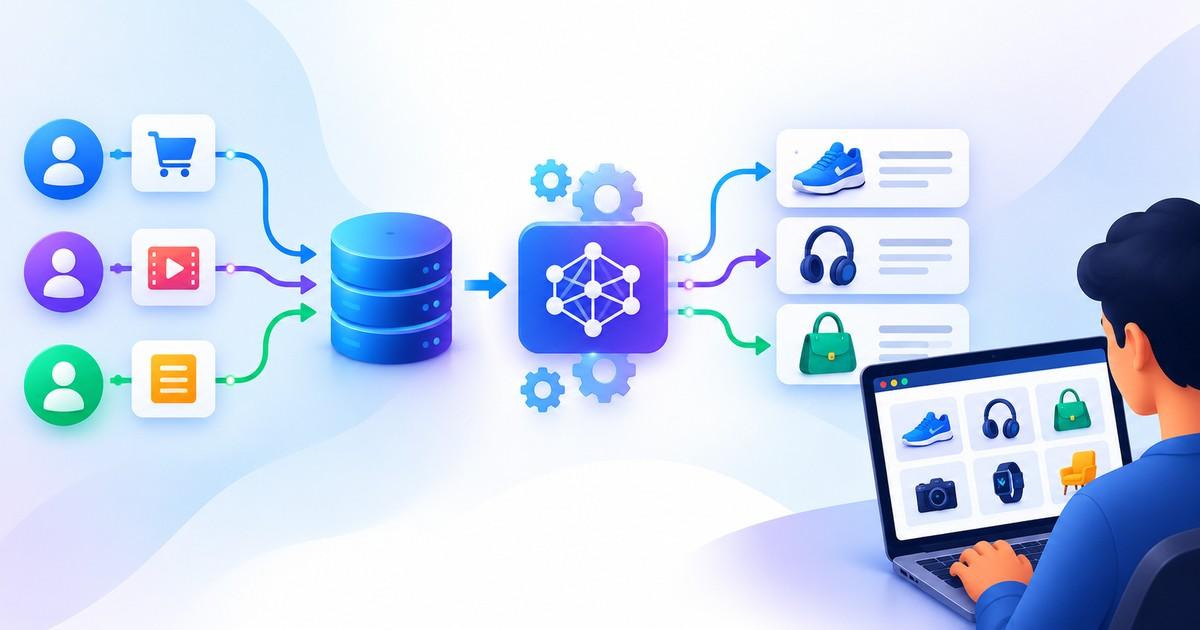
In a traditional system, personalization is often achieved by aggregating user data in a central location and training models that incorporate user-specific features. In Apple’s ecosystem, this approach is not feasible. Instead, personalization must be performed locally on the device. This means that models need to adapt to individual users based on their local data while still benefiting from global knowledge.
One approach to achieving this balance is to separate global and local components of the model. A global model can capture general patterns across users, while local adaptations allow the model to fine-tune its behavior for individual preferences. This hybrid approach enables personalization without requiring centralized access to user data. Candidates who can describe such architectures demonstrate an ability to think beyond standard solutions.
Another important consideration is how to evaluate personalized models. Since user data is not centralized, traditional evaluation methods may not apply. Instead, performance must often be assessed locally or through aggregated metrics that preserve privacy. This requires a different mindset, where evaluation is integrated into the system rather than treated as a separate step.
Privacy considerations also extend to how data is stored and processed on the device. Sensitive information must be protected through secure storage mechanisms and encryption. Candidates are expected to discuss how these safeguards are implemented and how they interact with the overall system. This reflects the broader expectation that privacy is not an add-on but a core design principle.
The challenge of balancing personalization and privacy is a recurring theme in Apple ML interviews. It tests whether candidates can navigate competing objectives and design systems that deliver value without compromising user trust. This type of trade-off is central to modern ML roles and is explored in The Hidden Skills ML Interviewers Look For (That Aren’t on the Job Description), where the ability to reason about real-world constraints is highlighted as a key differentiator .
The Key Takeaway
Designing ML systems at Apple requires a holistic approach that integrates architecture, personalization, and efficiency under strict privacy constraints. Success in interviews depends on your ability to connect these elements into a coherent system, reason about trade-offs, and align technical decisions with user experience and device limitations.
Section 4: How Apple Tests On-Device ML and Privacy in Interviews
Question Patterns: From Features to Systems Under Constraints
By the time you reach the core ML rounds at Apple, the interview is no longer about verifying whether you understand machine learning concepts in isolation. Instead, Apple evaluates how you apply those concepts under constraints that reflect real-world product environments. The most common pattern you will encounter is a system design-style question framed around a feature that must operate entirely on-device.
You may be asked to design a predictive keyboard, a photo classification system, or a personalized recommendation feature that runs locally on an iPhone. At first glance, these questions may seem similar to standard ML design problems, but the constraints fundamentally change the nature of the solution. The interviewer is not interested in the most complex or accurate model. They are interested in whether you can design a system that works efficiently, respects privacy, and delivers a seamless user experience.
A common mistake candidates make is approaching these questions as if they are building a cloud-based system. They propose large models, centralized training pipelines, or heavy data processing workflows without considering the limitations of the device. Strong candidates immediately recognize that the problem must be reframed. They begin by clarifying constraints such as latency requirements, memory limits, and privacy expectations. This initial framing is critical because it guides all subsequent design decisions.
Another frequent pattern involves improving an existing system. For example, you might be asked how to enhance the accuracy of an on-device model without increasing its size or how to personalize predictions without accessing centralized data. These questions are designed to test your ability to iterate within constraints. Candidates who can propose incremental improvements, such as model compression techniques or hybrid architectures, demonstrate a more practical and realistic approach.
Apple interviewers also often introduce ambiguity into the problem. You may not be given all the details about data availability, hardware capabilities, or user behavior. The goal is to see how you handle incomplete information. Strong candidates ask clarifying questions, make reasonable assumptions, and proceed with a structured approach. This ability to operate under uncertainty is a key signal of seniority.
Answer Strategy: Structuring Your Thinking for Apple Interviews
A strong answer in an Apple ML interview is not defined by the specific solution you propose but by how you structure your reasoning. The most effective approach begins with clearly defining the problem and its constraints. Before discussing models or algorithms, you should establish what the system is trying to achieve, what limitations it must operate under, and what success looks like from a user perspective.
Once the problem is framed, the next step is to outline the system architecture. In an on-device context, this typically involves describing how data is processed locally, how models are deployed and executed, and how updates are handled over time. Candidates should emphasize how each component of the system aligns with privacy and efficiency requirements. For example, explaining how data remains on-device or how inference is optimized for low latency demonstrates an understanding of Apple’s priorities.
Model selection should come after system design, not before. This is a key distinction that many candidates overlook. Instead of starting with a specific model, you should explain what characteristics the model needs to have, such as being lightweight, fast, and adaptable to local data. Only then should you discuss specific techniques that meet these criteria. This approach shows that you are thinking in terms of requirements rather than defaulting to familiar tools.
Another important aspect of your answer is addressing trade-offs. Every design decision involves compromises, whether it is between accuracy and latency, personalization and privacy, or model complexity and energy consumption. Apple interviewers expect you to acknowledge these trade-offs explicitly and justify your choices. A strong candidate does not present a perfect solution but demonstrates an understanding of why certain compromises are necessary.
Evaluation is another critical component of your answer. Since data is not centralized, traditional evaluation methods may not apply directly. You should discuss how performance can be measured using on-device metrics or aggregated signals that preserve privacy. This shows that you are thinking about the full lifecycle of the system rather than just its initial design.
Communication plays a central role in how your answer is perceived. Apple interviewers value clarity and structure. Your explanation should flow logically from problem definition to system design, followed by trade-offs and evaluation. This structured approach makes it easier for the interviewer to follow your reasoning and assess your thinking.
Common Pitfalls and What Differentiates Strong Candidates
One of the most common pitfalls in Apple ML interviews is ignoring privacy considerations. Candidates may propose technically sound solutions but fail to address how user data is protected. At Apple, this is a critical oversight. Privacy is not optional; it is a core requirement. Strong candidates integrate privacy into every part of their design, from data handling to model updates.
Another frequent mistake is over-engineering the solution. Candidates sometimes propose complex models or architectures that are impractical for on-device deployment. This often stems from applying patterns learned in cloud-based systems without adapting them to the constraints of the device. Simplicity and efficiency are highly valued at Apple, and solutions should reflect this.
A more subtle pitfall is failing to connect technical decisions to user experience. Apple places a strong emphasis on how products feel to users. A system that is technically sophisticated but introduces latency or drains battery life may not be acceptable. Candidates who explicitly discuss how their design impacts user experience demonstrate a more holistic understanding.
What differentiates strong candidates is their ability to think in terms of systems rather than components. They do not just describe a model; they explain how the model fits into a larger architecture, how it interacts with hardware, and how it evolves over time. They also demonstrate ownership by discussing how they would monitor, iterate, and improve the system after deployment.
This level of thinking is closely aligned with insights from How to Present ML Case Studies During Interviews: A Step-by-Step Framework, where candidates are encouraged to present solutions as complete narratives rather than isolated ideas . Apple interviews reward candidates who can tell a coherent story about how their system works and why it is designed the way it is.
Finally, strong candidates are comfortable with ambiguity and trade-offs. They do not attempt to provide perfect answers but instead focus on demonstrating clear reasoning and sound judgment. This reflects the reality of working in production environments, where decisions must often be made with incomplete information.
The Key Takeaway
Apple ML interviews are designed to evaluate how you design systems under real-world constraints. Success depends on your ability to structure problems clearly, integrate privacy and efficiency into your design, reason about trade-offs, and communicate your thinking effectively. Candidates who approach these questions with a system-level mindset consistently stand out.
Conclusion: What Apple Is Really Evaluating in ML Interviews
If you look across all the themes in Apple’s ML interviews, a clear pattern emerges. Apple is not evaluating whether you can build the most sophisticated model or optimize the highest benchmark score. It is evaluating whether you can design intelligent systems that operate responsibly, efficiently, and privately in the real world. This distinction is critical, and it is where many candidates misalign their preparation.
Apple’s approach to machine learning is deeply rooted in its product philosophy. Intelligence is expected to enhance user experience without compromising trust. This means that every technical decision must be evaluated not just in terms of performance but also in terms of privacy, efficiency, and usability. A model that is highly accurate but requires sending sensitive data to external servers may not be acceptable. Similarly, a system that drains battery life or introduces latency can degrade the user experience, even if it performs well technically.
This is why Apple places such a strong emphasis on on-device learning and privacy-preserving techniques. These are not niche topics; they are central to how Apple builds products. Candidates who understand this and incorporate it into their answers demonstrate alignment with Apple’s engineering culture. Those who focus solely on traditional ML approaches without adapting to these constraints often fail to meet expectations.
Another key aspect of Apple’s evaluation process is the ability to think in terms of systems rather than components. It is not enough to propose a model. You must explain how that model fits into a larger architecture, how it interacts with hardware, how it evolves over time, and how it delivers value to users. This requires a holistic perspective that connects machine learning, system design, and product thinking.
Trade-offs are at the center of this evaluation. Every design decision involves balancing competing objectives such as accuracy, latency, privacy, and energy consumption. Apple interviewers are not looking for perfect solutions; they are looking for candidates who can navigate these trade-offs thoughtfully and justify their decisions. This requires both technical depth and practical judgment.
Handling ambiguity is another defining signal. Real-world problems are rarely well-defined, and Apple’s interview questions reflect this reality. Candidates who can structure ambiguous problems, make reasonable assumptions, and proceed with a clear approach demonstrate the kind of thinking required in production environments. This ability to operate under uncertainty is often more important than arriving at a definitive answer.
Communication ties all of these elements together. Even the most well-reasoned solution can fall short if it is not explained clearly. Apple values candidates who can articulate their thought process in a structured and concise manner, making it easy for others to understand and evaluate their ideas. This is particularly important in cross-functional teams where engineers must collaborate with product managers, designers, and other stakeholders.
Ultimately, succeeding in Apple ML interviews is about demonstrating that you can think like an engineer who builds real products. You need to show that you understand how machine learning systems operate under constraints, how they impact users, and how they evolve over time. When your answers reflect this mindset, you align directly with what Apple is trying to evaluate.
Frequently Asked Questions (FAQs)
1. How are Apple ML interviews different from other companies?
Apple ML interviews focus heavily on on-device learning, privacy, and efficiency. Unlike companies that emphasize large-scale cloud systems, Apple evaluates how well you can design systems that operate locally under constraints such as limited compute, memory, and battery life.
2. Do I need to know federated learning in depth for Apple interviews?
You should have a strong conceptual understanding of federated learning, including how it works, why it is used, and its trade-offs. You are not expected to derive algorithms, but you should be able to explain how it enables training without centralizing data.
3. How important is differential privacy for Apple ML roles?
Differential privacy is highly relevant because it provides formal guarantees about data protection. You should understand its purpose, how noise is added to preserve privacy, and the trade-off between privacy and model utility.
4. What kind of system design questions can I expect?
You may be asked to design features such as predictive keyboards, recommendation systems, or image classifiers that run entirely on-device. The focus will be on how you handle constraints, not just the model itself.
5. Should I focus more on models or systems during preparation?
You should focus more on systems. While understanding models is important, Apple evaluates how those models are deployed, optimized, and integrated into real-world applications.
6. How do I handle constraints like limited memory and compute in my answers?
You should explicitly address these constraints by discussing techniques such as model compression, quantization, and efficient architectures. Ignoring constraints is a common mistake that weakens answers.
7. How important is latency in Apple ML systems?
Latency is critical because many on-device applications require real-time responses. You should discuss how your design ensures fast inference while maintaining acceptable accuracy.
8. What are common mistakes candidates make in Apple ML interviews?
Common mistakes include ignoring privacy, over-engineering solutions, focusing only on model accuracy, and failing to consider device constraints. Strong candidates address these factors explicitly.
9. Do I need experience with mobile development?
It is not mandatory, but having an understanding of how mobile systems work can strengthen your answers. Even without direct experience, you should be able to reason about constraints and system behavior.
10. How should I evaluate models without centralized data?
You can discuss on-device evaluation, aggregated metrics, or privacy-preserving analytics. The key is to show that you can measure performance without compromising user privacy.
11. How does Apple evaluate senior vs mid-level candidates?
Mid-level candidates are expected to understand core concepts and apply them correctly. Senior candidates are expected to reason about trade-offs, design complete systems, and demonstrate strong ownership and decision-making.
12. What role does hardware play in Apple ML systems?
Hardware plays a significant role because models must be optimized for specific device capabilities. Understanding how to leverage specialized components such as neural engines can strengthen your answers.
13. How can I demonstrate privacy awareness in interviews?
You should integrate privacy considerations into every part of your design, including data handling, model training, and evaluation. Treat privacy as a core requirement, not an afterthought.
14. What kind of projects should I build to prepare?
Focus on projects that simulate on-device constraints, such as lightweight models or local inference systems. Emphasize how you handle privacy, efficiency, and evaluation rather than just model performance.
15. What ultimately differentiates top candidates in Apple ML interviews?
Top candidates demonstrate a strong device-first mindset, clear reasoning about trade-offs, and the ability to design systems that balance accuracy, privacy, and efficiency. They do not just propose solutions, they explain how those solutions work in real-world conditions.