
Introduction
Artificial intelligence has rapidly moved from research laboratories into the core of modern digital products. Every time someone asks a question to an AI assistant, receives a personalized recommendation, searches for information, translates text, detects fraudulent activity, or interacts with a customer support chatbot, an AI inference takes place.
Just a few years ago, machine learning systems typically served thousands or millions of predictions each day.
Today, leading technology companies routinely process billions of AI inferences every 24 hours.
Recommendation engines continuously rank products for online shoppers. Social media platforms personalize feeds for billions of users. Search engines evaluate queries in milliseconds. Financial institutions analyze transactions in real time. Autonomous systems make rapid decisions using streaming sensor data. Enterprise AI assistants respond to employees across thousands of organizations simultaneously.
Behind each interaction lies a sophisticated infrastructure designed to deliver intelligence at massive scale.
This introduces an engineering challenge that extends far beyond building accurate models.
A state-of-the-art model provides little business value if it cannot respond quickly, scale efficiently, and operate reliably under enormous workloads. As organizations expand AI adoption, inference engineering has become just as important as model training.
Unlike training, which may occur periodically using dedicated computing clusters, inference happens continuously.
Every user request consumes computational resources. Every recommendation requires model execution. Every AI-generated response contributes to infrastructure costs.
When systems serve billions of requests each day, even small improvements in latency, resource utilization, or hardware efficiency can translate into millions of dollars in operational savings.
This reality has fundamentally changed how AI systems are designed.
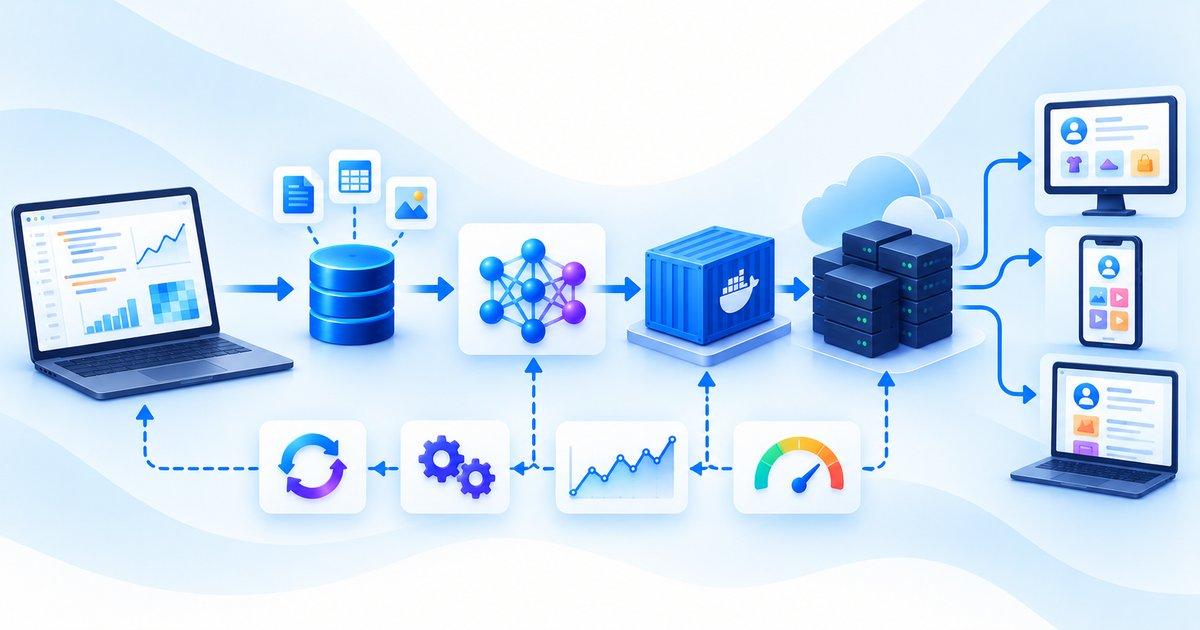
Modern inference platforms rely on distributed architectures, intelligent request routing, model optimization techniques, GPU scheduling, caching strategies, autoscaling infrastructure, observability platforms, and sophisticated orchestration systems to deliver fast and reliable predictions at global scale.
The rise of generative AI has made these challenges even more significant.
Large Language Models contain billions of parameters and require substantially more computational power than traditional machine learning models. Serving millions of users simultaneously demands careful engineering decisions around batching, token streaming, quantization, hardware acceleration, and workload distribution.
Organizations are therefore investing heavily in inference optimization.
Success is no longer measured solely by model quality. It is increasingly measured by how efficiently intelligence can be delivered to users around the world.
For machine learning engineers, platform engineers, MLOps professionals, and AI architects, understanding large-scale inference systems has become an essential skill.
In this article, we'll explore how modern AI engineers design systems capable of serving billions of inferences every day, the architectural principles behind these platforms, and the engineering practices that make large-scale AI possible.
Section 1: Why Inference Has Become the Biggest Challenge in Modern AI
Training Happens Occasionally, Inference Never Stops
When people think about artificial intelligence, they often focus on model training.
Training receives significant attention because it involves massive datasets, powerful GPU clusters, and sophisticated optimization algorithms. However, once a model enters production, training becomes only a small part of its lifecycle.
Inference becomes continuous.
Every interaction with an AI-powered application requires the model to process new inputs and generate predictions or responses. Unlike training workloads, which occur periodically, inference workloads operate twenty-four hours a day.
For organizations serving millions of users, this creates enormous operational demands.
A recommendation platform may evaluate thousands of products for every visitor. A search engine may rank millions of documents for every query. An AI assistant may generate responses simultaneously for users across multiple countries and time zones.
The infrastructure must support these workloads without interruption.
This shift has transformed inference from a deployment detail into one of the most important disciplines in production AI.
Scale Magnifies Every Engineering Decision
One of the defining characteristics of large-scale AI systems is that even small inefficiencies become expensive.
Consider a model that requires only ten milliseconds longer than necessary to generate a response.
For a small application, this delay may be insignificant.
For a platform processing billions of inferences each day, those extra milliseconds translate into enormous computational costs, increased latency, reduced hardware utilization, and higher infrastructure spending.
The same principle applies across nearly every aspect of inference engineering.
Slightly larger models require more GPU memory.
Minor increases in network communication affect throughput.
Inefficient request routing reduces server utilization.
Poor caching strategies increase redundant computations.
At global scale, these seemingly minor decisions can determine whether an AI platform remains economically sustainable.
As organizations expand AI deployments, engineering teams increasingly optimize entire inference pipelines rather than focusing exclusively on model architecture.
Latency Directly Shapes User Experience
Users rarely think about inference infrastructure.
They simply expect AI applications to respond immediately.
Whether asking a chatbot a question, translating text, searching for products, or receiving personalized recommendations, users expect responses within fractions of a second.
Meeting these expectations is technically challenging.
Every request may involve preprocessing, retrieval, model execution, post-processing, safety checks, and response generation before results reach users.
Maintaining low latency while serving millions of concurrent requests requires careful architectural design.
Engineers optimize request routing, reduce unnecessary computation, deploy models closer to users, and continuously monitor system performance.
The growing importance of production-scale inference is discussed in "Scalable ML Systems for Senior Engineers – InterviewNode," which explores how latency optimization, distributed infrastructure, resource management, and production system design have become fundamental skills for modern ML engineers.
As AI becomes embedded within everyday applications, latency is increasingly viewed as a product feature rather than merely a technical metric.
Cost Efficiency Is Becoming a Strategic Priority
The explosive growth of generative AI has dramatically increased inference costs.
Unlike traditional machine learning models, many modern foundation models require substantial computational resources for every request.
Organizations therefore face an important trade-off.
Users expect higher-quality responses.
Businesses require economically sustainable infrastructure.
Balancing these objectives has become one of the central challenges in AI engineering.
Teams increasingly optimize models through quantization, distillation, batching, hardware acceleration, intelligent caching, and workload scheduling.
Rather than deploying the largest possible model for every request, organizations often route queries to models of varying sizes depending on complexity.
Simple requests may use lightweight models.
Complex reasoning tasks may invoke larger architectures.
This adaptive approach significantly improves cost efficiency while maintaining user experience.
As inference volumes continue growing, engineering for efficiency is becoming just as important as engineering for intelligence.
Key Takeaway
Inference has become one of the biggest challenges in modern AI because it operates continuously, directly influences user experience, and determines operational costs at scale. Organizations serving billions of requests each day must optimize latency, infrastructure utilization, and computational efficiency across every layer of the inference pipeline. As AI adoption accelerates, scalable inference engineering is emerging as a foundational discipline in production machine learning.
Section 2: The Architecture Behind Large-Scale AI Inference Systems
Distributed Infrastructure Makes Massive Scale Possible
Serving billions of AI inferences every day is impossible with a single server or even a small cluster of machines.
Modern AI applications operate across globally distributed infrastructure designed to process enormous numbers of requests simultaneously while maintaining low latency and high availability.
Instead of relying on centralized deployments, organizations distribute inference workloads across multiple regions, cloud availability zones, edge locations, and specialized computing clusters.
When a user submits a request, sophisticated routing systems determine where that request should be processed. Factors such as geographic location, server utilization, GPU availability, network latency, and application priority all influence this decision.
This distributed architecture provides several advantages.
It reduces latency by serving users from nearby infrastructure. It improves reliability because workloads can shift automatically if individual servers or regions experience failures. It also enables organizations to scale capacity dynamically as demand fluctuates throughout the day.
For example, user activity may peak during business hours in one region while remaining relatively low elsewhere. Distributed inference platforms automatically rebalance workloads to maximize hardware utilization without compromising user experience.
As AI adoption continues growing globally, distributed infrastructure has become one of the foundational architectural principles behind large-scale inference systems.
Intelligent Request Routing Maximizes Efficiency
Not every AI request requires the same amount of computation.
Some queries involve simple classification tasks that can be completed quickly using lightweight models. Others require complex reasoning, multimodal understanding, or long-form content generation that demands significantly greater computational resources.
Treating every request identically would be highly inefficient.
Modern AI platforms therefore use intelligent routing systems that determine the most appropriate inference pathway for each request.
Simple workloads may be directed toward smaller, highly optimized models capable of producing responses rapidly. More demanding requests can be routed to larger foundation models with stronger reasoning capabilities.
Some systems also prioritize requests based on business importance.
For example, premium customers, real-time fraud detection, healthcare applications, or enterprise workflows may receive higher scheduling priority than less time-sensitive workloads.
This adaptive routing strategy improves resource utilization while maintaining a high-quality user experience.
Instead of allocating maximum computing power to every request, organizations match computational resources to task complexity, reducing infrastructure costs without sacrificing performance.
Model Optimization Reduces Inference Costs
As AI models become larger, optimization techniques become increasingly important.
Many state-of-the-art foundation models contain billions of parameters, making them computationally expensive to serve. Running these models in their original form for every request would require enormous infrastructure investments.
AI engineers therefore optimize models before deployment.
Techniques such as quantization reduce numerical precision while preserving most predictive performance. Model pruning removes unnecessary parameters. Knowledge distillation transfers capabilities from larger models into smaller, faster versions. Operator fusion combines multiple computational steps into more efficient execution pipelines.
These optimizations significantly reduce inference latency, memory consumption, and hardware requirements.
The result is a model that delivers comparable business value while consuming fewer computational resources.
This optimization process has become a standard part of production AI engineering.
Organizations increasingly recognize that deployment-ready models differ substantially from research models.
The objective is no longer simply maximizing benchmark performance.
It is maximizing performance per unit of computational cost.
The importance of production-oriented optimization is discussed in "Machine Learning System Design Interview: Crack the Code with InterviewNode," which explains how scalable AI systems require careful attention to latency, model optimization, resource allocation, and production architecture in addition to algorithm development.
As inference volumes continue increasing, optimization techniques are becoming indispensable for maintaining sustainable AI operations.
Autoscaling Keeps AI Systems Responsive During Demand Spikes
User demand for AI applications rarely remains constant.
Traffic patterns fluctuate throughout the day, increase during major events, and often surge unexpectedly when new features are released or viral content spreads across the internet.
Static infrastructure cannot efficiently accommodate these variations.
If organizations provision enough hardware for peak demand, significant resources remain idle during quieter periods. If they provision only for average demand, systems may become overloaded during traffic spikes.
Autoscaling addresses this challenge.
Modern inference platforms continuously monitor workload characteristics and automatically adjust computing capacity as demand changes.
Additional inference servers can be deployed when request volumes increase. Resources can be reduced when traffic declines, improving cost efficiency without sacrificing responsiveness.
Autoscaling is particularly important for generative AI applications, where computational requirements vary substantially depending on prompt complexity, response length, and user concurrency.
By combining distributed infrastructure with intelligent autoscaling, organizations can maintain consistent performance while controlling infrastructure costs.
This capability has become a cornerstone of production AI architecture because it allows systems to remain responsive under highly dynamic operating conditions.
Key Takeaway
Large-scale AI inference depends on far more than powerful models. Distributed infrastructure, intelligent request routing, model optimization, and autoscaling work together to deliver billions of predictions efficiently every day. These architectural patterns enable organizations to balance performance, latency, reliability, and operational cost while supporting rapidly growing AI workloads at global scale.
Section 3: Optimizing Performance, Latency, and Cost at Massive Scale
Hardware Acceleration Is the Foundation of Modern AI Inference
The rapid growth of artificial intelligence has fundamentally changed the relationship between software and hardware.
Traditional applications rely primarily on CPUs because most workloads involve sequential processing. AI inference, however, requires massive numbers of mathematical operations that can be executed simultaneously. This makes hardware acceleration essential.
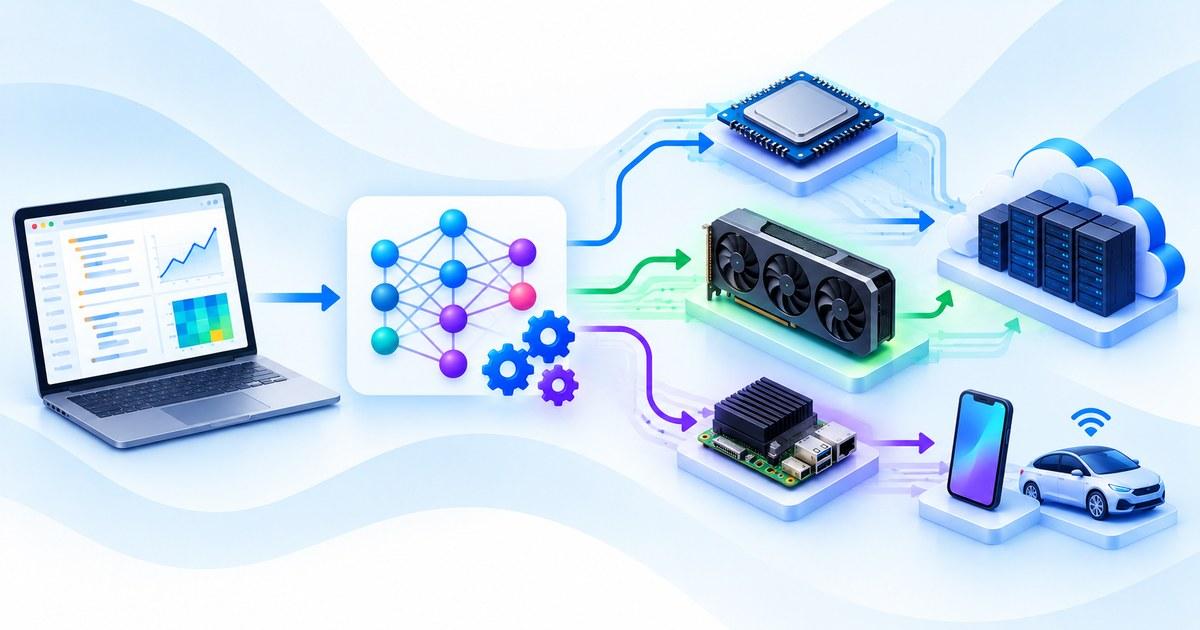
Modern AI platforms increasingly depend on GPUs, TPUs, and specialized AI accelerators designed specifically for machine learning workloads.
These processors execute thousands of parallel operations, dramatically reducing inference time for deep learning models. Tasks that would require several seconds on conventional hardware can often be completed in milliseconds using optimized accelerators.
However, simply deploying GPUs is not enough.
These resources are expensive, limited, and often shared across multiple applications. AI engineers must therefore maximize utilization while ensuring that latency remains low for end users.
Sophisticated scheduling systems allocate workloads dynamically based on GPU availability, request priority, model size, and workload characteristics. Some requests may share the same hardware through concurrent execution, while others receive dedicated resources because of their computational demands.
This careful management of hardware allows organizations to process enormous volumes of inference requests without unnecessary infrastructure expansion.
As AI adoption continues growing, efficient hardware utilization is becoming just as important as model quality.
Batching and Caching Improve Throughput Without Sacrificing User Experience
One of the biggest challenges in large-scale inference is balancing responsiveness with computational efficiency.
If every request is processed independently, hardware utilization often remains lower than optimal. AI accelerators perform most efficiently when they process multiple requests simultaneously.
This is where batching becomes valuable.
Batching combines multiple incoming requests into a single inference operation. Instead of executing the model separately for every request, the system processes several inputs together, increasing throughput and reducing computational overhead.
For example, an AI translation service receiving thousands of requests every second may group compatible requests before sending them to the inference engine. This allows hardware to perform more useful work during each execution cycle.
Caching provides another important optimization.
Many AI applications repeatedly receive identical or highly similar requests. Rather than recomputing results every time, systems store previously generated outputs and return them instantly when appropriate.
For example, popular search queries, frequently requested recommendations, and commonly asked questions can often be served directly from cache rather than invoking expensive model inference.
Together, batching and caching significantly reduce infrastructure costs while improving response times for users.
These techniques have become standard architectural patterns for organizations operating AI systems at global scale.
Observability Enables Continuous Performance Optimization
Running billions of inferences every day requires constant visibility into system behavior.
Without comprehensive monitoring, engineers cannot identify performance bottlenecks, diagnose latency issues, or understand how infrastructure behaves under changing workloads.
Modern AI organizations therefore invest heavily in observability.
Unlike traditional application monitoring, AI observability extends beyond infrastructure health. Engineers monitor inference latency, GPU utilization, throughput, queue lengths, request routing efficiency, model response times, token generation speed, cache performance, and business-level metrics simultaneously.
This comprehensive visibility allows teams to detect problems early.
For example, engineers may discover that a particular model version increases response latency under high traffic conditions. They may observe declining GPU utilization caused by inefficient scheduling or identify retrieval bottlenecks affecting downstream inference performance.
The growing importance of production observability is discussed in "AI Reliability Engineering: Keeping Models Running at Scale," which explores how monitoring, observability, incident response, and operational excellence have become essential for maintaining reliable AI systems in production.
Continuous observability enables organizations to improve both system efficiency and user experience over time.
Rather than reacting only after problems occur, engineering teams can proactively optimize infrastructure before performance degradation becomes noticeable.
Cost Optimization Has Become a Strategic Engineering Discipline
As inference volumes continue increasing, infrastructure cost has become one of the most significant considerations in AI engineering.
Large Language Models require substantial computational resources. Even small increases in inference cost become significant when multiplied across billions of daily requests.
Organizations therefore approach cost optimization as a continuous engineering discipline rather than an occasional optimization exercise.
Instead of deploying a single model for every request, many companies use model routing strategies that match computational complexity to user needs.
Simple requests may be handled by compact models capable of generating fast responses with minimal hardware requirements. More sophisticated reasoning tasks can be directed to larger models only when additional capability is genuinely needed.
Engineers also optimize workload scheduling, improve hardware utilization, reduce idle GPU capacity, compress models, optimize token generation, and continuously evaluate infrastructure efficiency.
These improvements often produce substantial financial benefits.
Reducing inference cost by only a small percentage can translate into millions of dollars in annual savings for organizations operating AI products at global scale.
As AI becomes increasingly integrated into commercial products, cost efficiency is evolving into one of the most important competitive advantages in production AI engineering.
Key Takeaway
Serving billions of AI inferences efficiently requires much more than powerful models. Hardware acceleration, intelligent batching, caching strategies, comprehensive observability, and continuous cost optimization work together to maximize performance while controlling infrastructure expenses. Organizations that successfully balance latency, throughput, reliability, and operational cost are better positioned to scale AI applications sustainably as global demand continues to grow.
Section 4: The Future of Large-Scale AI Inference Engineering
Inference Platforms Are Becoming Intelligent Systems Themselves
The architecture supporting AI inference is evolving just as rapidly as the models it serves.
In the past, inference infrastructure primarily focused on executing models as efficiently as possible. Requests arrived, models generated predictions, and responses were returned to users. While this approach remains fundamental, modern inference platforms are becoming significantly more sophisticated.
Today's systems increasingly make intelligent decisions about how inference should be performed.
Rather than treating every request identically, inference platforms evaluate workload characteristics, available hardware, network conditions, model availability, user priorities, and expected latency before determining the optimal execution strategy.
For example, a request requiring simple text classification may be routed to a compact model deployed on cost-efficient infrastructure. A complex reasoning task involving multiple documents may be directed to a larger foundation model running on high-performance GPUs. If one computing cluster approaches capacity, workloads can automatically shift to another region without affecting the user experience.
This dynamic decision-making allows organizations to maximize resource utilization while maintaining consistent service quality.
Inference platforms are no longer passive infrastructure.
They are becoming intelligent orchestration systems capable of optimizing themselves continuously based on real-time operational conditions.
Edge Computing Will Bring AI Closer to Users
As AI applications become more deeply integrated into everyday life, reducing response time is becoming increasingly important.
Users expect conversational assistants, recommendation engines, autonomous devices, and productivity tools to respond almost instantly. Even small increases in latency can negatively affect user satisfaction and product adoption.
One of the most important architectural trends addressing this challenge is edge computing.
Instead of processing every inference request in centralized cloud data centers, organizations are increasingly deploying optimized AI models closer to users.
For example, mobile devices can execute lightweight models locally. Smart manufacturing systems can process sensor data directly within factories. Retail locations can perform real-time computer vision without relying entirely on cloud connectivity. Autonomous vehicles can make safety-critical decisions using onboard inference engines.
Processing requests closer to where data is generated offers several advantages.
Latency decreases because requests travel shorter distances. Network costs are reduced. Applications continue functioning even when internet connectivity is limited. Sensitive information can remain on local devices, improving privacy and regulatory compliance.
As AI becomes increasingly embedded within physical products and connected devices, edge inference is expected to become a central component of large-scale AI architecture.
Sustainability Is Becoming a Major Engineering Objective
The rapid expansion of AI has significantly increased global demand for computing resources.
Training large foundation models requires enormous computational power, but inference often represents the largest long-term operational expense because it occurs continuously.
Billions of daily requests translate into billions of model executions, consuming substantial amounts of electricity and hardware capacity.
This reality is driving a growing focus on sustainable AI infrastructure.
Engineering teams increasingly optimize inference systems not only for performance and cost but also for energy efficiency.
Organizations are reducing unnecessary computation through model compression, intelligent routing, adaptive inference, hardware optimization, and workload scheduling. These improvements decrease operational costs while reducing environmental impact.
The importance of designing efficient production AI systems is explored in "The Cost Crisis in AI: Why Efficiency Is the Next Competitive Advantage," which explains how infrastructure optimization, resource efficiency, and scalable engineering practices are becoming critical differentiators for organizations deploying AI at scale.
As AI adoption continues accelerating, sustainable inference engineering will become an increasingly important business and technical priority.
AI Infrastructure Will Become Increasingly Autonomous
Perhaps the most significant trend shaping the future of inference engineering is automation.
Today's engineering teams already rely on monitoring systems, autoscaling platforms, deployment pipelines, and observability tools to manage large-scale AI infrastructure.
The next generation of platforms will go much further.
Inference systems will increasingly optimize themselves automatically.
They will detect workload changes, adjust routing strategies, allocate computing resources dynamically, deploy optimized model versions, rebalance traffic across regions, and identify performance bottlenecks with minimal human intervention.
AI may even help operate AI.
Machine learning techniques are already being applied to infrastructure optimization, predictive capacity planning, anomaly detection, and resource scheduling. As these capabilities mature, inference platforms will become increasingly autonomous, enabling engineering teams to focus more on architectural innovation than routine operational management.
This evolution will be essential as organizations move from serving millions of requests to tens or even hundreds of billions of daily inferences.
Manual infrastructure management will simply not scale to meet future demand.
Autonomous operations will become a defining characteristic of next-generation AI platforms.
Key Takeaway
The future of large-scale AI inference lies in intelligent infrastructure that continuously optimizes performance, cost, latency, and sustainability. Edge computing, autonomous orchestration, energy-efficient architectures, and self-managing inference platforms are transforming how AI systems are deployed around the world. As demand for AI continues to grow, engineers who understand scalable inference architecture will play a critical role in building the resilient, efficient, and globally distributed AI platforms that power billions of daily interactions.
Conclusion
Artificial intelligence has entered an era where the greatest engineering challenges no longer revolve solely around building better models. Increasingly, the focus has shifted toward delivering those models efficiently, reliably, and economically to millions, and often billions, of users every day.
Every recommendation shown on an e-commerce website, every search result ranked by an AI system, every fraud detection decision, every enterprise chatbot response, and every interaction with a Large Language Model represents an inference. At global scale, these seemingly small interactions accumulate into billions of requests that must be processed with remarkable speed, consistency, and reliability.
Meeting this demand requires far more than powerful hardware.
Modern AI inference platforms combine distributed infrastructure, intelligent request routing, model optimization, hardware acceleration, autoscaling, observability, caching strategies, and cost optimization into sophisticated ecosystems capable of operating continuously under enormous workloads.
The rise of generative AI has made inference engineering even more critical.
Large foundation models deliver impressive capabilities, but they also introduce significant computational challenges. Organizations must carefully balance latency, throughput, infrastructure costs, energy consumption, and user experience while serving increasingly complex AI workloads.
This balancing act has transformed inference engineering into one of the most important disciplines in modern artificial intelligence.
The future promises even greater evolution.
Inference platforms are becoming more intelligent, dynamically selecting models, optimizing hardware utilization, and adapting to changing workloads automatically. Edge computing is bringing AI closer to users, reducing latency and improving privacy. Sustainable infrastructure is becoming a business priority as organizations seek to reduce both operational costs and environmental impact. Autonomous infrastructure management is beginning to reduce the operational complexity of large-scale AI deployments.
For machine learning engineers, MLOps professionals, platform engineers, and AI architects, these developments create exciting opportunities.
The next generation of AI innovation will depend not only on breakthroughs in model architecture but also on the ability to deliver intelligence efficiently to users around the world. Engineers who understand distributed systems, inference optimization, GPU scheduling, observability, and production-scale infrastructure will play a central role in shaping that future.
Ultimately, the success of AI products will increasingly be determined by more than model quality.
The organizations that thrive will be those capable of delivering fast, reliable, cost-efficient, and scalable intelligence to billions of users every day. Inference engineering is making that future possible.
Frequently Asked Questions
1. What is AI inference?
AI inference is the process of using a trained machine learning model to generate predictions, recommendations, classifications, or responses based on new input data.
2. Why is inference different from model training?
Training teaches a model using historical data, while inference uses the trained model to make predictions in real-world applications. Training happens periodically, whereas inference occurs continuously in production.
3. Why is inference engineering becoming so important?
As AI applications scale to millions or billions of users, inference determines application speed, operational costs, user experience, and infrastructure efficiency.
4. What challenges do engineers face when serving billions of inferences?
Major challenges include minimizing latency, optimizing GPU utilization, reducing infrastructure costs, maintaining reliability, handling traffic spikes, and scaling systems across multiple regions.
5. What is distributed inference?
Distributed inference involves deploying AI workloads across multiple servers, regions, or cloud environments to improve scalability, availability, and response times.
6. Why is latency critical in AI applications?
Low latency improves user experience. Applications such as search, recommendation engines, fraud detection, autonomous systems, and AI assistants require responses within milliseconds.
7. What is model optimization?
Model optimization involves techniques such as quantization, pruning, knowledge distillation, and operator optimization to reduce computational requirements while maintaining model performance.
8. How does intelligent request routing improve AI systems?
Request routing directs different workloads to the most appropriate models and hardware resources, improving efficiency, reducing costs, and maintaining performance.
9. What role does caching play in AI inference?
Caching stores frequently requested inference results so identical or similar requests can be served instantly without repeatedly executing expensive model computations.
10. Why is GPU utilization important?
GPUs are expensive computing resources. Maximizing GPU utilization helps organizations process more inference requests while reducing infrastructure costs.
11. What is AI observability?
AI observability involves monitoring model performance, inference latency, resource utilization, throughput, system behavior, and business metrics to ensure production systems remain healthy.
12. How does autoscaling support AI inference?
Autoscaling automatically increases or decreases computing resources based on workload demand, helping maintain performance during traffic spikes while minimizing unnecessary infrastructure costs.
13. What is edge inference?
Edge inference performs AI computations closer to users or devices instead of relying entirely on centralized cloud infrastructure, reducing latency and improving privacy.
14. Why is cost optimization a major focus in AI engineering?
Serving billions of AI requests requires substantial computational resources. Even small improvements in efficiency can save millions of dollars annually while enabling organizations to scale sustainably.
15. What skills should ML engineers develop for large-scale inference systems?
ML engineers should build expertise in distributed systems, cloud infrastructure, GPU acceleration, model optimization, MLOps, observability, Kubernetes, inference serving frameworks, caching strategies, autoscaling, and AI system design. These skills are increasingly essential for building production AI platforms capable of serving billions of inferences every day.