
Section 1: Why Traditional Search Is No Longer Enough
For more than twenty-five years, search engines have served as the primary interface between people and the rapidly expanding digital world. Whether users wanted to find a restaurant, research a scientific concept, troubleshoot software, purchase products, or learn a new skill, the journey almost always began with typing a few keywords into a search box. This simple interaction revolutionized information discovery by making billions of web pages searchable within milliseconds. Companies such as Google transformed internet navigation through sophisticated indexing algorithms, PageRank, keyword matching, and ranking systems that organized the seemingly infinite amount of online information into accessible search results. The search engine quickly became one of the most influential technologies in modern computing, shaping digital marketing, e-commerce, education, enterprise productivity, and nearly every online experience.
Yet the digital world of today bears little resemblance to the internet that traditional search engines were originally designed to serve. Information is no longer limited to static web pages. Organizations now generate enormous volumes of structured and unstructured data across cloud platforms, collaboration tools, customer relationship management systems, technical documentation, multimedia content, enterprise knowledge bases, APIs, and real-time applications. Users simultaneously interact with websites, mobile applications, AI assistants, internal corporate portals, and cloud-native software ecosystems. As the quantity and complexity of digital information continue to accelerate, conventional search methods increasingly struggle to deliver experiences that match evolving user expectations.
The limitations of traditional search become especially apparent when users seek understanding rather than simply locating documents. Search engines excel at retrieving content that contains relevant keywords, but they leave much of the cognitive work to the user. Individuals must open multiple links, compare conflicting sources, evaluate credibility, synthesize information, and ultimately determine which answer best addresses their original question. This workflow may have been acceptable when online information was relatively limited, but modern users increasingly expect technology to perform much of this reasoning automatically. Rather than receiving hundreds of possible sources, they want one comprehensive, accurate, and context-aware answer that saves time while reducing information overload.
From Keywords to Understanding User Intent
The foundation of traditional search engines has always been keyword-based search. Early search algorithms relied primarily on matching words entered by users with words appearing in indexed web pages. Over time, search engines became significantly more sophisticated by incorporating ranking algorithms, backlink analysis, user engagement metrics, semantic relationships, and machine learning models to improve result quality. Nevertheless, keyword matching remains a fundamental component of traditional search because the system primarily focuses on retrieving documents that appear relevant to the submitted query.
While this approach performs remarkably well for many straightforward searches, it becomes increasingly limited when users express complex intentions through natural language. Human communication rarely depends solely on keywords. People ask follow-up questions, imply context, reference previous conversations, combine multiple objectives, and often expect technology to understand what they mean rather than merely what they type. A software engineer searching for "optimize GPU inference costs without affecting latency" expects guidance balancing multiple technical considerations, not simply documentation containing those individual words. Similarly, a business executive asking how generative AI will affect customer support is seeking strategic insight rather than a collection of unrelated articles mentioning AI and customer service separately.
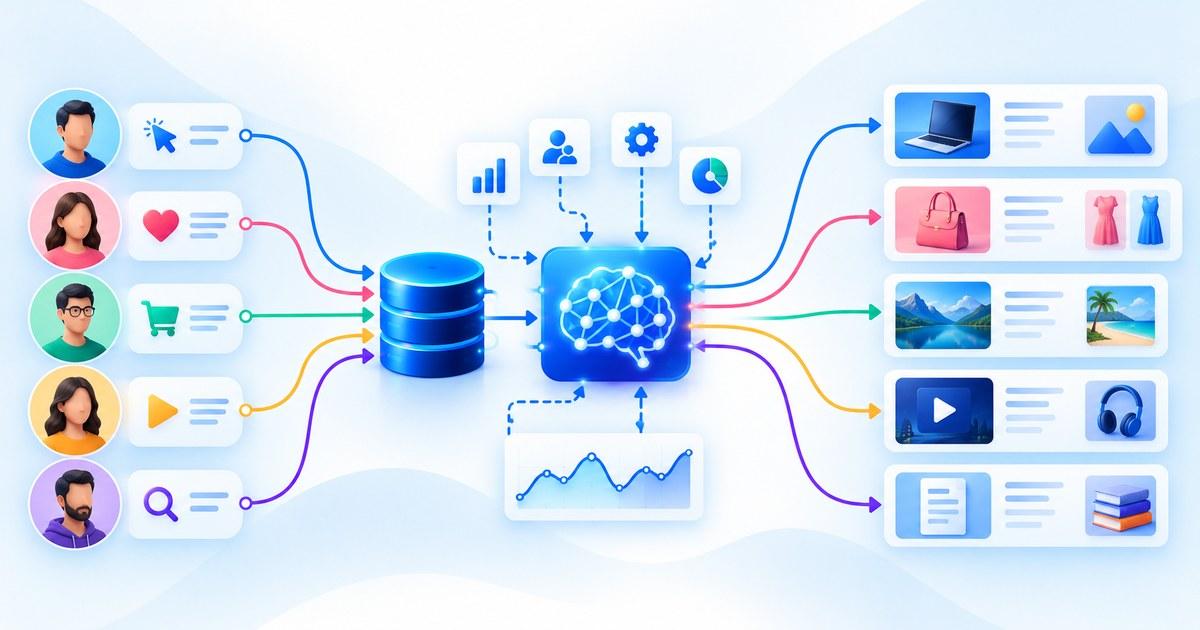
Understanding user intent has therefore become one of the defining challenges of modern information retrieval. Intent extends beyond identifying matching words to interpreting the objective behind a query. Two users entering similar phrases may require entirely different responses depending on their expertise, industry, organizational context, previous interactions, geographic location, or immediate goals. Traditional search engines often struggle to distinguish these nuances because they primarily retrieve documents instead of reasoning about what users actually need.
This limitation contributes directly to growing information overload. The internet now contains trillions of indexed pages alongside countless enterprise documents, internal reports, videos, research papers, technical specifications, discussion forums, and knowledge repositories. Conventional search engines frequently return thousands or even millions of potentially relevant results, leaving users responsible for filtering vast quantities of information before identifying useful insights. The challenge is no longer finding information because information has become abundant. Instead, the challenge lies in extracting the right knowledge from an overwhelming volume of available content.
The organizations leading this transformation also recognize that building exceptional Answer Engines requires engineers capable of combining artificial intelligence with scalable software architecture. Readers interested in understanding how engineering teams are evolving to meet these demands should also explore "Why Every Software Team Will Have an AI Engineer by 2030," which examines why AI expertise is becoming a core competency across modern software organizations.
Key Takeaway
Traditional search engines transformed the internet by making information searchable, but the exponential growth of digital content and rising user expectations have exposed the limitations of keyword-based retrieval. Modern users expect technology to understand intent, reduce information overload, provide personalized experiences, improve enterprise search, and deliver context-aware answers rather than simply presenting ranked lists of links. AI-powered search marks the beginning of this transformation, laying the foundation for Answer Engines that redefine how people discover, understand, and interact with information in the age of artificial intelligence.
Section 2: How Answer Engines Work
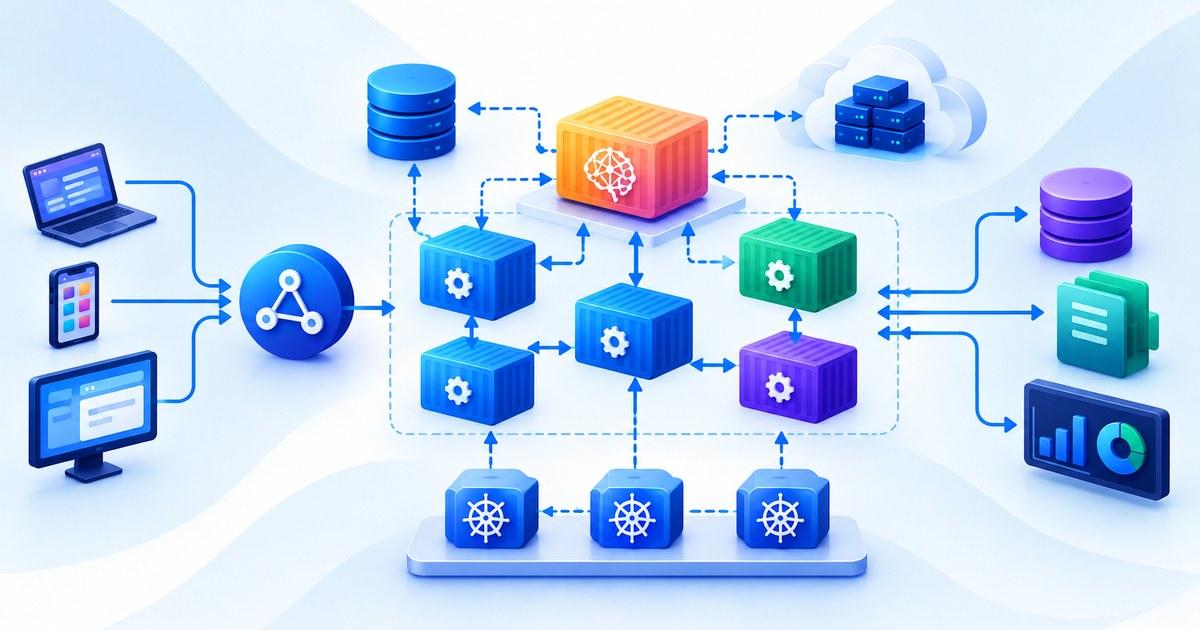
The transition from traditional search engines to Answer Engines represents one of the most significant technological shifts in the history of information retrieval. While search engines were designed to locate and rank documents based on keyword relevance, Answer Engines are built to understand questions, reason across multiple knowledge sources, and generate direct, contextual responses that help users accomplish their objectives immediately. This transformation is made possible by the convergence of several groundbreaking technologies including Large Language Models (LLMs), Retrieval-Augmented Generation (RAG), vector databases, semantic search, embeddings, conversational AI, multi-step reasoning, enterprise knowledge retrieval, AI orchestration, and intelligent response generation. Individually, each of these technologies addresses a specific limitation of traditional search. Together, they create intelligent systems capable of functioning more like knowledgeable experts than document retrieval tools.
Unlike conventional search engines that primarily act as intermediaries between users and information sources, Answer Engines actively participate in the information discovery process. They interpret intent, retrieve relevant knowledge, analyze multiple sources simultaneously, resolve inconsistencies, generate coherent explanations, and adapt responses according to the user's expertise, context, and previous interactions. The result is a fundamentally different digital experience where users spend less time searching for answers and more time applying them.
The Intelligence Behind Modern Answer Engines
At the core of every modern Answer Engine are Large Language Models (LLMs). These models have transformed natural language processing by enabling software to understand, generate, summarize, translate, classify, and reason over human language with unprecedented sophistication. Rather than relying on predefined rules or manually constructed knowledge graphs, LLMs learn statistical relationships across enormous datasets containing books, technical documentation, research papers, software code, websites, and countless other forms of digital content. This broad understanding enables them to interpret complex questions, recognize contextual relationships, explain abstract concepts, compare alternatives, and generate fluent responses that resemble conversations with subject matter experts.
However, even the most advanced language models have an important limitation. Their knowledge is constrained by the data available during training and does not automatically include newly published information, proprietary enterprise knowledge, or organization-specific documentation. They may also occasionally generate incorrect information or "hallucinate" responses when sufficient factual grounding is unavailable. Addressing this challenge has led to the rapid adoption of Retrieval-Augmented Generation (RAG), one of the most important architectural innovations behind modern Answer Engines.
Retrieval-Augmented Generation combines the reasoning capabilities of Large Language Models with real-time access to external knowledge sources. Instead of answering questions solely from learned parameters, a RAG system first retrieves relevant documents, policies, technical manuals, research reports, customer records, or enterprise knowledge before generating a response. The retrieved information provides factual grounding, allowing the language model to produce answers that are significantly more accurate, current, and contextually relevant. This architecture enables organizations to deploy AI systems capable of answering questions using proprietary information without requiring expensive retraining every time organizational knowledge changes. Enterprise support systems, internal knowledge assistants, legal research platforms, healthcare documentation tools, financial advisory systems, and software engineering copilots increasingly rely on RAG because it combines the strengths of retrieval systems with the reasoning capabilities of generative AI.
Efficient retrieval depends on another foundational technology: vector databases. Traditional relational databases organize information using structured tables and exact matching operations, making them highly effective for transactional workloads but less suitable for understanding conceptual relationships within unstructured content. Vector databases organize information differently by representing documents, images, code, audio, and other data as high-dimensional numerical vectors that capture semantic meaning rather than exact wording. This allows Answer Engines to retrieve information based on conceptual similarity instead of literal keyword matches. For example, a user searching for "improving AI model response speed" may receive documents discussing inference optimization, latency reduction, GPU scheduling, and caching strategies even if none of those documents contain the exact phrase entered by the user. Vector databases therefore provide the foundation for intelligent retrieval that understands meaning rather than merely matching words.
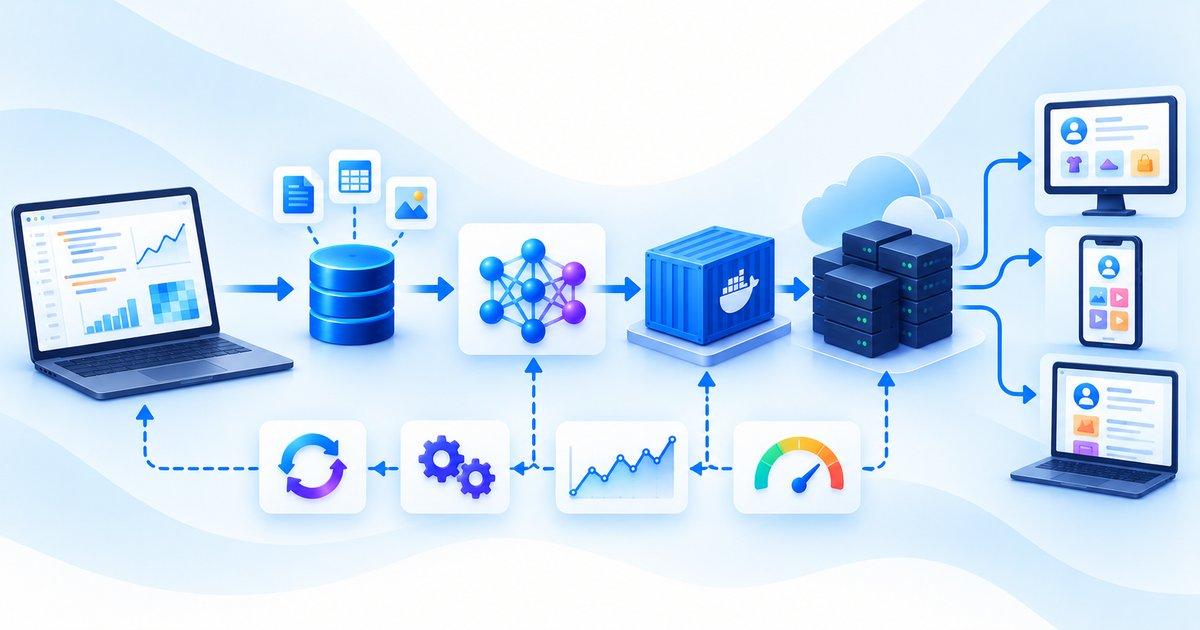
As organizations continue adopting these technologies, building high-quality Answer Engines requires more than integrating a language model into an application. It demands sophisticated engineering capable of orchestrating retrieval systems, reasoning engines, enterprise knowledge sources, infrastructure, security, and governance into scalable AI workflows. Readers interested in understanding how these intelligent workflows operate at production scale should also explore "The Engineering Behind Autonomous AI Workflows," which examines the architectural foundations enabling autonomous AI systems to deliver reliable and enterprise-ready digital experiences.
Key Takeaway
Answer Engines represent a new generation of intelligent information systems powered by Large Language Models, Retrieval-Augmented Generation, vector databases, embeddings, semantic search, conversational AI, multi-step reasoning, enterprise knowledge retrieval, AI orchestration, and intelligent response generation. Rather than retrieving documents based solely on keywords, these technologies enable software to understand intent, reason across multiple knowledge sources, and deliver direct, contextual, and personalized answers. As AI continues to redefine digital experiences, Answer Engines will become the primary interface through which individuals and organizations discover, understand, and apply information across every industry.
Section 3: Designing the Next Generation of Digital Experiences
The evolution from Search Engines to Answer Engines is reshaping far more than information retrieval—it is fundamentally redefining the way people interact with digital products. For decades, websites and enterprise applications were designed around menus, navigation bars, forms, filters, and search boxes that required users to understand the structure of the application before finding what they needed. Every interaction depended on users manually navigating complex interfaces, selecting appropriate options, refining searches, and interpreting information independently. Although these designs proved highly effective during the early internet era, they increasingly feel inefficient in a world where artificial intelligence can understand natural language, recognize intent, and generate personalized responses within seconds.
Modern users expect digital experiences to behave more like knowledgeable assistants than static software. Instead of learning how an application works, users increasingly expect the application to understand how they work. Whether interacting with an enterprise knowledge platform, an online retailer, a healthcare portal, a financial application, or a software development environment, people want systems capable of understanding objectives, anticipating needs, remembering context, and delivering relevant answers immediately. This shift represents one of the most significant changes in user experience design since the introduction of graphical user interfaces, moving digital products from navigation-centric experiences toward conversation-driven interactions powered by artificial intelligence.
Designing these next-generation experiences requires much more than embedding a chatbot inside an existing application. Organizations must rethink every aspect of user interaction, combining conversational interfaces, AI copilots, personalization, multimodal intelligence, observability, security, governance, scalability, and trust into unified AI-native experiences. The goal is no longer simply helping users complete tasks more efficiently; it is creating intelligent systems that actively collaborate with users throughout their decision-making processes.
Building Intelligent and Trustworthy User Experiences
At the center of this transformation are conversational interfaces, which are rapidly becoming the primary way users engage with digital systems. Traditional software requires users to navigate through multiple menus, forms, dashboards, and search filters before accessing the information they need. Conversational interfaces eliminate much of this complexity by allowing users to communicate naturally using everyday language. Instead of searching through documentation or clicking through numerous application screens, users simply describe what they want to accomplish. The system interprets their intent, retrieves relevant information, performs appropriate actions, and responds conversationally while maintaining awareness of previous interactions.
This conversational approach dramatically reduces the learning curve associated with complex software applications. Enterprise platforms that once required extensive onboarding and technical training can now guide employees through complicated workflows using natural dialogue. Customers interacting with banking applications can request financial summaries without navigating multiple reports. Healthcare professionals can retrieve patient insights through conversational queries instead of manually searching electronic medical records. Software developers can ask questions about codebases, infrastructure, or deployment pipelines without browsing extensive documentation. Across industries, conversational interfaces reduce friction by making technology adapt to human communication rather than forcing humans to adapt to software.
Supporting these interactions are increasingly sophisticated AI copilots, which extend beyond answering questions to actively assisting users throughout their daily workflows. Unlike traditional digital assistants that perform isolated commands, AI copilots function as collaborative partners capable of understanding ongoing work, recommending next steps, automating repetitive activities, summarizing information, generating content, identifying risks, and supporting complex decision-making. Productivity platforms now include AI copilots that draft documents, analyze spreadsheets, prepare presentations, summarize meetings, and automate administrative tasks. Software engineering environments use copilots to explain code, recommend architectural improvements, generate test cases, optimize performance, and troubleshoot deployment issues. Enterprise applications similarly integrate AI copilots that assist employees with customer service, legal research, financial analysis, procurement, human resources, and operational planning. These intelligent assistants transform software from passive tools into active collaborators capable of improving both productivity and decision quality.
Readers interested in understanding how organizations successfully combine technological innovation with business strategy should also explore "The Business of AI: What Every ML Engineer Should Know Beyond Coding," which examines how enterprises build scalable AI initiatives while balancing governance, business value, and long-term operational success.
Key Takeaway
The next generation of digital experiences will be built around conversational interfaces, AI copilots, personalization, multimodal AI, AI observability, Responsible AI, enterprise security, scalability, and user trust. Rather than requiring users to navigate complex software, Answer Engines enable applications to understand intent, collaborate intelligently, and deliver personalized guidance through natural interactions. Organizations that design trustworthy AI-native experiences today will define the future of customer engagement, enterprise productivity, and digital innovation in an increasingly AI-first world.
Section 4: The Future of Search in an AI-First World
The transition from Search Engines to Answer Engines is only the beginning of a much larger transformation in how humans interact with information. For decades, search was built around a simple model: users formulated queries, search engines retrieved relevant documents, and individuals interpreted the information themselves. This paradigm has served the digital world remarkably well, but it is increasingly being replaced by intelligent systems capable of understanding objectives, reasoning across knowledge sources, performing complex tasks, and proactively assisting users throughout their workflows. Search is evolving from a passive retrieval mechanism into an active intelligence layer embedded across every digital product and enterprise application.
This evolution is driven by rapid advances in artificial intelligence, cloud computing, distributed systems, and enterprise knowledge management. Modern AI systems no longer function solely as conversational interfaces capable of answering isolated questions. They are becoming autonomous digital collaborators capable of planning, reasoning, retrieving information, executing workflows, learning from interactions, and continuously improving their responses over time. The future of search therefore extends far beyond helping users find information. It encompasses intelligent systems that understand intent, coordinate multiple AI capabilities, automate knowledge-intensive tasks, and deliver meaningful business outcomes with minimal human effort.
Organizations across industries are already redesigning digital products around this AI-first vision. Enterprise software providers are integrating intelligent assistants into productivity platforms, healthcare organizations are building AI-powered clinical decision support systems, financial institutions are deploying conversational advisory services, educational platforms are developing personalized learning assistants, and software engineering teams are embracing AI-native development environments that transform how applications are designed, deployed, and maintained. As Answer Engines become increasingly sophisticated, they will evolve into the primary interface through which individuals access information, collaborate with technology, and accomplish complex objectives.
The Next Era of Intelligent Information Systems
One of the most transformative developments shaping this future is the emergence of Agentic AI. While today's Answer Engines primarily respond to user prompts, Agentic AI extends these capabilities by enabling intelligent systems to pursue broader objectives autonomously. Rather than answering individual questions in isolation, AI agents can break complex tasks into smaller objectives, plan execution strategies, coordinate multiple information sources, monitor progress, adapt to changing circumstances, and complete multi-step workflows with limited human intervention. A business executive may ask an AI system to prepare a quarterly market analysis, and instead of simply retrieving documents, the AI agent could gather financial reports, analyze industry trends, compare competitor performance, summarize key insights, generate presentation materials, and recommend strategic actions automatically. Search therefore evolves from information retrieval into intelligent task execution.
This capability depends heavily on autonomous information retrieval, where AI systems continuously discover, validate, and synthesize knowledge without requiring users to manually search multiple sources. Traditional search engines operate reactively, responding only after users formulate explicit queries. Future Answer Engines will become increasingly proactive, identifying relevant information before users recognize the need themselves. Enterprise assistants may automatically surface critical policy updates before compliance meetings, healthcare systems may alert clinicians to newly published treatment guidelines relevant to specific patients, software engineering platforms may recommend infrastructure optimizations based on evolving production metrics, and financial applications may proactively identify market developments affecting investment portfolios. Autonomous retrieval transforms AI from a responsive tool into an intelligent partner that continuously monitors information environments on behalf of its users.
These capabilities will increasingly define AI-native applications, where intelligence is embedded directly into software architecture rather than added as a standalone feature. Traditional enterprise software often separates search functionality from core business workflows, requiring users to leave their current tasks to locate relevant information. AI-native applications eliminate this separation by integrating Answer Engines directly into every aspect of the user experience. Customer relationship management systems automatically recommend next actions during sales conversations, healthcare platforms generate contextual treatment recommendations while clinicians review patient records, software development environments explain complex codebases during implementation, and enterprise resource planning systems provide operational insights while business decisions are being made. Intelligence becomes inseparable from the application itself, enabling software to participate actively in every workflow rather than merely storing information.
The foundation supporting these intelligent applications will be increasingly sophisticated enterprise knowledge systems. Every organization generates vast amounts of valuable information through customer interactions, internal documentation, research reports, operational metrics, software repositories, financial records, collaboration platforms, compliance documentation, and business analytics. Historically, much of this knowledge remained fragmented across disconnected systems, making it difficult for employees to locate relevant information efficiently. Future enterprise knowledge systems will unify these resources into continuously updated, AI-accessible knowledge ecosystems where Answer Engines retrieve, reason over, and synthesize information regardless of its original location. Employees will no longer search across numerous applications because enterprise AI will seamlessly integrate organizational knowledge into every decision-making process.
Readers interested in understanding how modern AI research is translated into scalable enterprise systems should also explore "Research to Real-World ML Engineering: Bridging the Gap," which explains how engineering teams transform cutting-edge AI innovations into reliable production platforms capable of delivering measurable business impact.
Key Takeaway
The future of search lies in AI-first Answer Engines powered by Agentic AI, autonomous information retrieval, AI-native applications, enterprise knowledge systems, and intelligent orchestration. These technologies will dramatically improve AI productivity, reshape the role of search engineers, create new technical skill requirements, accelerate business transformation, and provide organizations with lasting competitive advantages. As conversational intelligence becomes the default interface for accessing knowledge, Answer Engines will replace traditional search experiences across consumer applications, enterprise software, healthcare, finance, education, and software engineering, fundamentally redefining how humans discover, understand, and apply information in the age of artificial intelligence.
Conclusion
The evolution from Search Engines to Answer Engines marks one of the most significant transformations in the history of digital technology. For more than two decades, search engines fundamentally changed how people discovered information by organizing billions of web pages into searchable indexes and making knowledge accessible within seconds. They became the backbone of the internet, enabling everything from online shopping and digital marketing to scientific research and enterprise productivity. Yet the digital landscape has evolved dramatically since the early days of keyword-based search. The exponential growth of online information, combined with rising user expectations, has exposed the limitations of traditional search experiences. Users no longer want to spend valuable time navigating countless links, comparing multiple sources, and manually synthesizing information. Instead, they expect intelligent systems capable of understanding intent, reasoning across knowledge, and delivering immediate, context-aware answers that help them accomplish their objectives more efficiently.
Throughout this article, we explored why traditional search is no longer sufficient for today's digital experiences. Keyword-based retrieval transformed information discovery, but it was designed for an internet where finding documents was the primary challenge. Today's challenge is very different. Information has become abundant, while attention and time have become increasingly scarce. Modern users seek understanding rather than document retrieval, expecting software to interpret complex requests, reduce information overload, recognize contextual relationships, and provide personalized responses instead of simply presenting ranked lists of web pages. This shift reflects a broader evolution in human-computer interaction where technology moves beyond locating information toward helping users understand and apply knowledge more effectively.
We also examined the sophisticated technologies powering modern Answer Engines. Large Language Models provide natural language understanding and advanced reasoning capabilities, while Retrieval-Augmented Generation (RAG) grounds AI responses in reliable and up-to-date knowledge sources. Vector databases, embeddings, and semantic search allow systems to retrieve information based on conceptual similarity rather than exact keyword matching, dramatically improving search quality and contextual relevance. Conversational AI, multi-step reasoning, enterprise knowledge retrieval, AI orchestration, and intelligent response generation work together to create digital experiences that feel less like interacting with search software and more like collaborating with a knowledgeable expert. Rather than functioning as isolated technologies, these innovations collectively redefine how information is retrieved, interpreted, and delivered across consumer and enterprise applications.
Frequently Asked Questions (FAQs)
1. What is an Answer Engine?
An Answer Engine is an AI-powered information system that understands natural language questions, retrieves relevant knowledge, reasons across multiple sources, and generates direct, context-aware answers instead of simply presenting a list of search results.
2. How is an Answer Engine different from a traditional search engine?
Traditional search engines retrieve and rank documents based primarily on keywords and relevance signals, while Answer Engines interpret user intent, synthesize information from multiple sources, and provide personalized, conversational responses that directly answer user questions.
3. What is AI-powered search?
AI-powered search combines artificial intelligence technologies such as Large Language Models, semantic search, and Retrieval-Augmented Generation to understand user intent, improve information retrieval, and generate more accurate and contextual search experiences.
4. How do Large Language Models improve search?
Large Language Models improve search by understanding natural language, interpreting complex queries, recognizing contextual relationships, reasoning across information, and generating coherent responses that are easier to understand than traditional search results.
5. What is Retrieval-Augmented Generation (RAG)?
Retrieval-Augmented Generation (RAG) is an AI architecture that combines language models with external knowledge sources, allowing Answer Engines to retrieve current and relevant information before generating responses, resulting in higher factual accuracy and better contextual understanding.
6. How do vector databases support Answer Engines?
Vector databases store information as numerical representations called vectors, enabling Answer Engines to retrieve content based on semantic similarity instead of exact keyword matching. This significantly improves the relevance and quality of search results.
7. What is semantic search?
Semantic search is an information retrieval technique that focuses on understanding the meaning and intent behind a query rather than matching individual keywords. It enables AI systems to identify conceptually related information even when different terminology is used.
8. How do embeddings improve information retrieval?
Embeddings convert text, images, code, and other data into mathematical representations that capture semantic meaning. This allows AI systems to identify relationships between concepts, improving retrieval accuracy and enabling more intelligent Answer Engines.
9. Why are conversational interfaces replacing traditional search?
Conversational interfaces allow users to interact with technology using natural language, maintain context across multiple questions, ask follow-up queries, and receive personalized responses, creating a more intuitive and efficient user experience than traditional keyword-based search.
10. How do enterprises build AI-powered search systems?
Enterprises build AI-powered search systems by combining Large Language Models, Retrieval-Augmented Generation, vector databases, semantic search, enterprise knowledge repositories, AI orchestration, observability, security controls, and governance frameworks into scalable AI-native platforms.
11. Which industries benefit the most from Answer Engines?
Healthcare, finance, education, software engineering, manufacturing, retail, legal services, cybersecurity, customer support, telecommunications, government, and enterprise productivity platforms are among the industries that benefit significantly from AI-powered Answer Engines.
12. How do Answer Engines ensure accurate responses?
Answer Engines improve accuracy through Retrieval-Augmented Generation, semantic search, enterprise knowledge retrieval, source grounding, AI observability, human oversight, continuous evaluation, and Responsible AI practices that monitor and improve system performance over time.
13. What are the biggest challenges of AI-powered search?
Key challenges include maintaining factual accuracy, preventing hallucinations, protecting sensitive data, ensuring security, scaling AI infrastructure, managing operational costs, implementing governance frameworks, complying with regulations, and building user trust.
14. What skills are needed to build modern Answer Engines?
Engineers building Answer Engines need expertise in Large Language Models, Retrieval-Augmented Generation, vector databases, semantic search, machine learning, distributed systems, cloud computing, AI orchestration, enterprise architecture, cybersecurity, observability, and Responsible AI.
15. What is the future of search in the AI era?
The future of search will be driven by AI-first Answer Engines that use Agentic AI, autonomous information retrieval, conversational intelligence, multimodal reasoning, and enterprise knowledge systems to deliver proactive, personalized, and context-aware digital experiences. As these technologies mature, Answer Engines will become the default interface for interacting with information across consumer applications, enterprise software, education, healthcare, finance, and virtually every other digital domain.