Introduction
Artificial intelligence has evolved at an extraordinary pace over the past few years. Large Language Models (LLMs) can write code, summarize documents, answer complex questions, generate creative content, and assist with a growing range of professional tasks. AI agents are beginning to automate workflows, coordinate software tools, and perform increasingly sophisticated business operations.
Despite these impressive capabilities, early AI systems shared a significant limitation.
They had little or no persistent memory.
Most interactions existed only within a single conversation or context window. Once a session ended, or once the context window filled up, the AI effectively started over. Users had to repeat preferences, restate objectives, re-upload documents, and provide the same background information repeatedly.
This created friction.
A human assistant becomes more valuable over time because they remember previous conversations, understand long-term goals, recognize recurring patterns, and build contextual knowledge through ongoing interactions.
Traditional AI systems could not do this effectively.
The emergence of long-term memory is changing that.
Rather than treating every interaction as an isolated event, modern AI applications are increasingly designed to retain relevant information across conversations, projects, workflows, and extended periods of time. They can remember user preferences, maintain project histories, recall previous decisions, and use accumulated knowledge to provide more personalized and contextually relevant assistance.
This shift represents one of the most significant developments in modern AI architecture.
Long-term memory transforms AI from a reactive tool into a continuously evolving assistant.
The implications extend across nearly every industry.
Enterprise copilots can remember organizational workflows and employee preferences. Customer support systems can maintain historical interactions across months or years. Healthcare assistants can provide more personalized guidance by referencing previous consultations. Educational platforms can adapt learning experiences based on long-term student progress. Autonomous AI agents can complete multi-stage projects without repeatedly requesting the same information.
However, building memory into AI systems is far more complex than simply storing conversations.
Engineers must determine what information should be remembered, what should be forgotten, how memories should be retrieved efficiently, how outdated information should be updated, and how user privacy should be protected throughout the process.
As organizations increasingly deploy AI products into production environments, long-term memory is becoming a major architectural differentiator.
The most effective AI systems of the future will not necessarily be those with the largest models.
They will be the systems that understand users most effectively over time.
For machine learning engineers, AI architects, product managers, and software engineers, understanding long-term memory architectures is becoming an increasingly valuable skill.
In this article, we'll explore how long-term memory works, why it matters, the technologies enabling it, and how it is transforming the next generation of intelligent AI applications.
Section 1: Why AI Needs Long-Term Memory
Traditional AI Systems Start Every Conversation From Scratch
One of the biggest limitations of early AI applications was their inability to retain knowledge across interactions.
Most language models treated each conversation as an independent event. Even if a user worked with the same AI assistant every day, the system often had no awareness of previous discussions once the conversation ended.
This created a repetitive experience.
Users had to explain ongoing projects repeatedly.
Business objectives needed to be restated.
Personal preferences had to be entered again.
Technical context disappeared between sessions.
While modern context windows have become significantly larger, they still have limitations.
A larger context window allows an AI model to process more information within a single interaction, but it does not automatically create persistent memory.
Once information leaves the active context, it is no longer available unless external memory mechanisms retrieve it.
Organizations quickly realized that this limitation reduced productivity.
An assistant that forgets every previous interaction cannot provide the continuity users expect from an intelligent collaborator.
Long-Term Memory Enables Personalization
One of the greatest advantages of persistent memory is personalization.
Humans naturally personalize conversations because they remember previous interactions.
A colleague remembers ongoing projects.
A teacher remembers a student's learning progress.
A financial advisor remembers investment goals.
These memories improve future interactions.
AI systems are beginning to achieve similar capabilities.
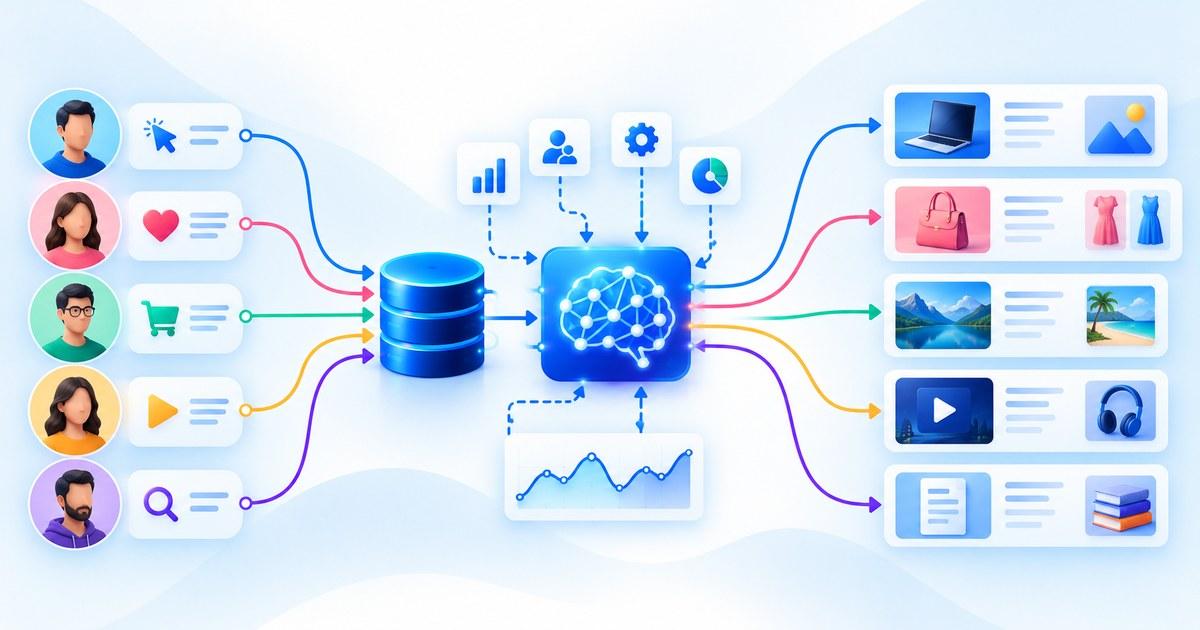
Instead of responding only to immediate prompts, memory-enabled AI applications can recall user preferences, historical decisions, recurring workflows, communication styles, and long-term objectives.
For example, an enterprise AI assistant may remember preferred reporting formats, commonly used software tools, project timelines, and documentation standards.
Rather than requiring users to specify these details repeatedly, the assistant automatically incorporates them into future interactions.
The result is a significantly more natural and productive experience.
Users spend less time providing background information and more time accomplishing meaningful work.
Memory Enables Continuous Collaboration
Long-term memory changes the relationship between humans and AI.
Traditional AI systems function primarily as question-answering tools.
Memory-enabled systems function more like collaborators.
They can continue projects over weeks or months, track progress toward long-term goals, remember previous decisions, and maintain continuity across complex workflows.
This capability is particularly valuable in enterprise environments.
Software development projects often span months.
Business planning evolves continuously.
Research initiatives involve hundreds of interconnected decisions.
Customer relationships develop over years.
Without persistent memory, AI assistants struggle to contribute effectively to these long-running activities.
With memory, they become significantly more useful.
The growing importance of persistent AI context is discussed in "The New Architecture Patterns Powering Modern AI Applications," which explains how memory systems, orchestration frameworks, retrieval layers, and agent architectures are becoming foundational components of next-generation AI platforms.
As organizations increasingly deploy AI assistants across business operations, long-term collaboration is becoming one of the most valuable capabilities these systems can offer.
Memory Makes AI Agents More Autonomous
The rise of AI agents has dramatically increased the importance of long-term memory.
Unlike traditional chatbots, AI agents pursue goals over extended periods of time.
They coordinate workflows.
Execute tasks.
Manage projects.
Interact with multiple software systems.
Track changing objectives.
Without memory, these agents repeatedly lose context.
They may duplicate work, forget completed tasks, overlook previous decisions, or require unnecessary user intervention.
Long-term memory solves many of these problems.
Agents can maintain persistent knowledge about ongoing workflows, remember completed actions, monitor future tasks, and adapt behavior based on accumulated experience.
This enables higher levels of autonomy.
Rather than functioning as isolated automation tools, memory-enabled agents become continuously improving systems capable of managing increasingly sophisticated business processes.
Key Takeaway
Long-term memory addresses one of the biggest limitations of traditional AI systems by allowing them to retain useful information across interactions. It enables personalization, supports long-term collaboration, improves AI agent autonomy, and creates experiences that feel significantly more intelligent and context-aware. As AI moves beyond single conversations toward ongoing partnerships with users, persistent memory is becoming one of the most important architectural innovations in modern AI applications.
Section 2: How Long-Term Memory Works in Modern AI Systems
Long-Term Memory Is More Than Conversation History
A common misconception is that long-term memory simply means saving previous conversations.
In reality, modern AI memory systems are far more sophisticated.
Storing every interaction indefinitely would quickly become inefficient, expensive, and often counterproductive. Large volumes of historical information can introduce unnecessary noise, making it more difficult for AI systems to retrieve the most relevant context when responding to users.
Instead, modern memory architectures focus on retaining meaningful information.
The objective is not to remember everything.
The objective is to remember what matters.
For example, an enterprise AI assistant may retain a user's preferred communication style, project objectives, recurring workflows, software preferences, and important business decisions. At the same time, it may intentionally discard temporary requests, outdated instructions, and information that is no longer relevant.
This selective approach allows AI systems to build increasingly useful knowledge over time without becoming overwhelmed by historical interactions.
In many ways, AI memory is becoming similar to human memory.
People do not remember every conversation word for word. They remember key ideas, important experiences, recurring patterns, and information that remains valuable over time.
Modern AI systems are increasingly designed with similar principles.
Memory Storage and Retrieval Work Together
Long-term memory is not simply about storing information.
It is equally about retrieving the right information at the right time.
A memory system may contain thousands or even millions of stored observations. However, only a small portion of those memories will be relevant to any individual interaction.
Efficient retrieval therefore becomes one of the most important components of memory architecture.
When a user submits a request, the AI system first analyzes the context of the conversation. It identifies the information most likely to improve the response and retrieves only those relevant memories before generating an answer.
For example, if a software engineer asks for help with an ongoing project, the system may retrieve previous architectural decisions, coding preferences, technology stacks, and unresolved issues related to that specific project.
If the same user later requests help preparing for a technical interview, the system retrieves an entirely different set of memories focused on interview preparation rather than software development.
This targeted retrieval process allows AI systems to maintain continuity without overwhelming the language model with unnecessary information.
The quality of memory retrieval often determines whether an AI assistant feels genuinely intelligent or merely capable of recalling isolated facts.
Vector Databases Power Modern Memory Systems
One of the key technologies enabling long-term memory is the vector database.
Unlike traditional databases that retrieve information through exact keyword matching, vector databases organize information according to semantic meaning.
Every stored memory is converted into a numerical representation called an embedding.
These embeddings capture conceptual relationships between pieces of information.
When users submit new requests, the system converts the request into its own embedding and searches for memories that are semantically similar rather than merely containing matching words.
This approach produces much more relevant results.
For example, a user asking about "improving model deployment costs" may retrieve previous discussions involving inference optimization, infrastructure efficiency, GPU utilization, or model compression even if the exact wording differs significantly.
This semantic retrieval capability makes long-term memory significantly more flexible than conventional storage systems.
The growing importance of semantic memory and production AI architecture is explored in "The New Architecture Patterns Powering Modern AI Applications," which explains how memory layers, retrieval systems, vector databases, orchestration frameworks, and intelligent infrastructure work together to create AI applications that maintain context, scale efficiently, and deliver highly personalized user experiences.
As AI systems become increasingly personalized, vector-based memory retrieval is becoming one of the most important architectural components supporting intelligent behavior.
Memory Management Is Becoming an Engineering Discipline
As AI systems accumulate more knowledge over time, managing memory becomes increasingly complex.
Not every piece of information should be retained permanently.
Some memories become outdated.
User preferences change.
Projects are completed.
Business priorities evolve.
Documents are replaced.
Keeping obsolete information can reduce response quality and introduce inconsistencies.
Modern AI systems therefore require sophisticated memory management strategies.
Engineers design mechanisms that continuously evaluate stored information, determine whether memories remain relevant, update existing knowledge when necessary, and remove information that no longer provides value.
Many systems also assign different importance levels to different types of memories.
Permanent preferences may remain available for years.
Project-specific information may be retained only while work continues.
Temporary conversational details may disappear after short periods.
This layered approach allows AI assistants to remain both knowledgeable and adaptable.
Rather than accumulating unlimited historical information, they continuously refine their memory based on changing circumstances.
As AI applications become more deeply integrated into enterprise workflows, memory management is emerging as an essential area of AI engineering, combining retrieval systems, lifecycle management, governance, and personalization into a unified architecture.
Key Takeaway
Long-term memory in AI is far more sophisticated than simply saving conversations. Modern systems selectively retain meaningful information, retrieve relevant memories using semantic search, leverage vector databases for efficient recall, and continuously manage stored knowledge as user needs evolve. These capabilities allow AI applications to maintain continuity, deliver personalized experiences, and support long-term collaboration while remaining efficient, accurate, and adaptable.
Section 3: How Long-Term Memory Is Transforming Real-World AI Applications
Enterprise AI Assistants Are Becoming More Intelligent Over Time
One of the most significant impacts of long-term memory can be seen in enterprise AI assistants.
Early AI assistants were highly capable at answering questions, summarizing documents, and generating content. However, every interaction often began with limited context. Employees repeatedly had to explain projects, upload reference documents, describe organizational processes, and restate objectives.
Long-term memory fundamentally changes this experience.
Instead of treating every request as an isolated task, enterprise assistants can build an evolving understanding of users, teams, and organizational workflows.
For example, an AI assistant supporting a product manager can remember active product roadmaps, previous strategic decisions, preferred reporting formats, stakeholder communication styles, and recurring meeting schedules. When asked to prepare a new product update, the assistant can automatically incorporate relevant historical context without requiring the user to provide the same information again.
Similarly, software engineering teams can benefit from assistants that remember architectural decisions, coding standards, deployment histories, and previous technical discussions. Rather than starting each design conversation from scratch, engineers can continue building on earlier work.
This continuity significantly improves productivity.
Employees spend less time providing background information and more time solving business problems.
Over weeks and months, AI assistants evolve into increasingly knowledgeable collaborators rather than simple conversational tools.
Long-Term Memory Enables Truly Autonomous AI Agents
The emergence of AI agents has dramatically increased the importance of persistent memory.
Unlike traditional chatbots that respond to individual prompts, AI agents pursue objectives across multiple interactions, applications, and time periods.
A project management agent may coordinate activities over several months.
A procurement agent may monitor vendor communications continuously.
A research agent may collect information from hundreds of sources before preparing recommendations.
Without memory, these workflows quickly become inefficient.
Agents repeatedly ask for previously supplied information, duplicate completed work, lose track of progress, and require frequent human intervention.
Persistent memory addresses these challenges.
AI agents can remember completed tasks, maintain project timelines, track pending actions, recognize recurring patterns, and adapt future decisions based on accumulated experience.
For example, an enterprise procurement agent may remember supplier preferences, previous contract negotiations, purchasing policies, and historical pricing trends. Instead of treating every procurement request independently, it can make increasingly informed recommendations over time.
This evolution transforms agents from task automation tools into intelligent operational partners capable of managing complex, long-running business processes.
The growing role of persistent context in autonomous AI is explored in "The Rise of Agentic AI: What It Means for ML Engineers in Hiring," which explains how memory, planning, reasoning, and long-term decision-making are becoming foundational capabilities for next-generation AI agents.
As organizations continue investing in agent-based systems, long-term memory will become essential for achieving meaningful autonomy.
Personalized Customer Experiences Become Far More Effective
Long-term memory is also reshaping how organizations interact with customers.
Traditional personalization systems often relied on relatively limited behavioral data such as recent purchases, browsing activity, or demographic information.
Modern AI applications can build significantly richer user profiles.
Over time, AI systems learn communication preferences, product interests, recurring support issues, purchasing patterns, learning styles, and long-term objectives.
This accumulated knowledge allows organizations to deliver far more personalized experiences.
For example, a customer support assistant can remember previous troubleshooting sessions and avoid asking users to repeat information they have already provided. An educational platform can adapt lessons according to a student's historical strengths and weaknesses. A financial planning assistant can remember investment goals and previous recommendations when suggesting future strategies.
The result is a more natural interaction.
Instead of feeling like conversations with software, these experiences begin to resemble ongoing relationships with knowledgeable advisors who understand individual needs and historical context.
Organizations benefit through stronger customer satisfaction, improved retention, and more meaningful engagement over time.
Memory Creates Smarter Decision-Making Across Business Workflows
Perhaps the most transformative impact of long-term memory is its ability to improve decision-making.
Business decisions rarely occur in isolation.
Strategic planning, software development, financial forecasting, hiring, product management, and customer success all involve decisions that build upon previous discussions, historical outcomes, and evolving priorities.
Traditional AI systems often struggled because they lacked awareness of this broader context.
Memory-enabled AI systems overcome this limitation.
By recalling previous recommendations, completed analyses, organizational objectives, and historical outcomes, they provide advice that is significantly more consistent and contextually relevant.
For example, an executive assistant can remember strategic initiatives discussed during previous planning sessions and incorporate those priorities into future recommendations. A sales assistant can reference earlier customer interactions before preparing proposals. A legal assistant can consider historical contract negotiations when reviewing new agreements.
These capabilities enable AI to participate more effectively in long-term organizational decision-making rather than simply responding to isolated requests.
As memory systems continue improving, AI applications will increasingly function as organizational knowledge partners that accumulate expertise alongside the people they support.
Key Takeaway
Long-term memory is transforming AI applications by enabling enterprise assistants to become more knowledgeable, AI agents to operate more autonomously, customer experiences to become highly personalized, and business decision-making to benefit from accumulated organizational knowledge. Rather than responding to individual prompts in isolation, memory-enabled AI systems develop continuity across interactions, making them significantly more valuable as long-term collaborators. As organizations increasingly deploy AI across critical workflows, persistent memory is becoming one of the defining capabilities of next-generation intelligent applications.
Section 4: The Future of Long-Term Memory: Building AI That Learns, Adapts, and Grows With Users
Long-Term Memory Is Becoming the Foundation of Next-Generation AI
As artificial intelligence continues to evolve, memory is rapidly moving from an optional enhancement to a foundational capability.
The first generation of AI assistants demonstrated that language models could answer questions, generate content, and assist with individual tasks. The next generation is expected to do far more.
Future AI systems will maintain long-term relationships with users. They will understand ongoing projects, remember previous decisions, recognize recurring challenges, and continuously build contextual knowledge through everyday interactions.
This shift represents a major change in how AI products are designed.
Rather than functioning as isolated conversation engines, AI systems are evolving into persistent knowledge partners that improve with experience. Every interaction contributes to a richer understanding of users, enabling future responses to become increasingly relevant and personalized.
Organizations are already recognizing the value of this evolution.
Enterprise assistants are beginning to remember organizational terminology, preferred workflows, and historical decisions. Customer-facing applications are learning individual preferences over time. AI-powered productivity tools are adapting to the unique working styles of different teams.
As memory architectures become more sophisticated, AI will increasingly resemble a long-term collaborator rather than a tool that starts from scratch every time a conversation begins.
Memory Will Enable Highly Personalized AI Experiences
Personalization has always been one of the primary goals of artificial intelligence.
Recommendation systems personalize content. Search engines personalize results. Marketing platforms personalize customer experiences.
Long-term memory takes personalization to an entirely new level.
Instead of relying primarily on recent interactions, AI systems will build comprehensive contextual understanding that develops over months and even years.
An AI writing assistant may learn a user's preferred tone, formatting style, vocabulary, and editing preferences. A software engineering assistant may remember coding standards, architectural patterns, preferred frameworks, and deployment strategies. A business assistant may understand meeting habits, reporting formats, organizational priorities, and communication preferences.
This accumulated knowledge allows AI systems to reduce repetitive interactions significantly.
Users spend less time configuring systems and more time accomplishing meaningful work.
However, successful personalization requires careful balance.
Organizations must ensure that memory remains accurate, relevant, and adaptable. Users should always have visibility into what information is remembered and retain control over how memory is used.
The future of personalization depends not only on intelligent memory but also on transparent memory management.
Privacy and Governance Will Shape the Future of AI Memory
As AI systems retain more information over longer periods, privacy becomes increasingly important.
Memory introduces significant responsibilities.
Organizations must determine what information should be stored, how long it should remain available, who can access it, and when it should be updated or deleted.
These questions extend far beyond technical implementation.
They influence regulatory compliance, user trust, security, and product design.
Future memory architectures will therefore incorporate increasingly sophisticated governance mechanisms.
Users will expect the ability to inspect stored memories, modify inaccurate information, remove outdated context, and control how AI systems use personal data across different applications.
Organizations will need clear policies governing memory retention, access permissions, encryption, auditability, and lifecycle management.
The importance of designing AI systems with strong governance and user control is explored in "Building AI Products That Users Trust: Engineering for Transparency and Control," which explains how transparency, accountability, governance, and user-centric design are becoming essential principles for modern AI products.
As memory becomes a permanent component of AI architecture, responsible governance will become just as important as technical capability.
AI Memory Will Transform the Relationship Between Humans and Machines
Perhaps the most significant impact of long-term memory is how it changes the nature of human-AI interaction.
Traditional software behaves largely the same regardless of how long people use it.
Memory-enabled AI behaves differently.
The longer users work with these systems, the more valuable they become.
AI assistants accumulate organizational knowledge. Research assistants develop deeper understanding of ongoing investigations. Educational platforms adapt continuously to individual learning progress. Enterprise agents refine workflows based on historical outcomes and evolving business priorities.
This creates a fundamentally different relationship.
Instead of repeatedly teaching AI how to assist, users gradually collaborate with systems that learn alongside them.
Rather than acting as passive tools, memory-enabled AI systems become active participants in long-term projects, helping preserve institutional knowledge, reduce repetitive work, and improve decision-making over time.
This transformation is likely to redefine expectations for intelligent software.
Future users will not simply expect AI to answer questions.
They will expect AI to remember, understand, adapt, and grow with them.
Key Takeaway
The future of AI memory extends far beyond storing conversation history. Long-term memory is becoming the foundation for highly personalized assistants, autonomous AI agents, adaptive enterprise systems, and enduring human-AI collaboration. At the same time, organizations must balance personalization with strong privacy, governance, and user control. As memory architectures continue to mature, the most successful AI applications will be those that combine intelligent recall with responsible data management, creating systems that users can trust and rely on over the long term.
Conclusion
Long-term memory is redefining what it means for artificial intelligence to be truly intelligent.
The first generation of AI applications demonstrated remarkable capabilities in generating text, answering questions, writing code, and automating individual tasks. However, these systems were fundamentally limited by one important constraint, they lacked continuity. Every new interaction often required users to repeat context, restate objectives, and rebuild the relationship from scratch.
Persistent memory is changing that reality.
By enabling AI systems to retain relevant knowledge across conversations, projects, and workflows, long-term memory transforms AI from a reactive tool into an evolving collaborator. Instead of simply responding to prompts, modern AI applications can understand user preferences, remember previous decisions, track long-term goals, and provide increasingly personalized assistance over time.
This evolution has significant implications for both businesses and individuals.
Enterprise assistants become more productive because they remember organizational processes and project histories. Customer support platforms deliver more seamless experiences by maintaining historical context across interactions. AI agents become more autonomous because they can learn from previous actions and adapt future behavior. Educational platforms create personalized learning journeys that improve as students progress. Across every industry, memory enables AI systems to become more useful with continued use.
At the same time, long-term memory introduces new engineering challenges.
Organizations must decide what information should be remembered, how memories should be organized, when outdated information should be updated or removed, and how user privacy should be protected. Effective memory architecture is not simply about storing more data, it is about retaining the right information while maintaining transparency, security, and user control.
This is why memory engineering is emerging as one of the most important areas of AI system design.
Future AI applications will rely on sophisticated retrieval mechanisms, semantic search, vector databases, memory management frameworks, governance policies, and observability platforms to ensure that stored knowledge remains accurate, relevant, and trustworthy.
For machine learning engineers, AI architects, and product leaders, understanding long-term memory is becoming an essential skill.
The next generation of AI will not be defined solely by larger models or improved benchmarks. It will be defined by systems that can learn continuously, collaborate over extended periods, and develop meaningful understanding of the people and organizations they support.
Ultimately, intelligence without memory is temporary.
Intelligence with memory becomes experience.
And experience is what will transform AI from an impressive technology into a trusted, long-term partner capable of creating lasting value for users around the world.
Frequently Asked Questions
1. What is long-term memory in AI?
Long-term memory refers to an AI system's ability to retain and retrieve relevant information across multiple interactions, allowing it to remember user preferences, project history, goals, and contextual knowledge over extended periods.
2. How is long-term memory different from a context window?
A context window only stores information during the current interaction and has a fixed size. Long-term memory persists beyond individual conversations and can retrieve relevant information from past interactions whenever needed.
3. Why is long-term memory important for AI applications?
It enables personalization, improves productivity, supports long-running workflows, reduces repetitive user input, and allows AI systems to become increasingly useful over time.
4. How do AI systems decide what to remember?
Modern AI systems use memory management strategies to identify meaningful information, such as user preferences, recurring workflows, project details, and important decisions, while filtering out temporary or irrelevant data.
5. What technologies support long-term memory in AI?
Key technologies include vector databases, embeddings, semantic search, Retrieval-Augmented Generation (RAG), memory management frameworks, knowledge graphs, and persistent storage systems.
6. What role do vector databases play in AI memory?
Vector databases store information as semantic embeddings, allowing AI systems to retrieve memories based on meaning rather than exact keyword matching.
7. How does semantic retrieval improve AI memory?
Semantic retrieval identifies conceptually related information, enabling AI to recall relevant memories even when users phrase requests differently from previous conversations.
8. How does long-term memory improve AI agents?
Persistent memory allows AI agents to track completed tasks, remember project goals, maintain workflow continuity, learn from previous actions, and operate more autonomously over extended periods.
9. Can long-term memory improve customer experiences?
Yes. AI systems can remember previous interactions, communication preferences, support history, and user goals, enabling faster, more personalized, and more consistent customer experiences.
10. What challenges come with implementing AI memory?
Major challenges include memory retrieval efficiency, information accuracy, storage management, privacy protection, outdated knowledge, governance, and deciding what information should be retained or discarded.
11. How is long-term memory different from simply storing chat history?
Chat history is a chronological record of conversations. Long-term memory selectively stores important knowledge, organizes it intelligently, and retrieves only the most relevant information when needed.
12. How does long-term memory support enterprise AI?
Enterprise AI assistants can remember organizational terminology, project documentation, business processes, previous decisions, and employee preferences, improving collaboration and productivity.
13. What role does privacy play in AI memory systems?
Privacy is essential because AI memory often contains personal or organizational information. Organizations must implement secure storage, encryption, access controls, governance policies, and user-controlled memory management.
14. Will long-term memory become a standard feature of future AI systems?
Yes. As AI assistants and autonomous agents become more integrated into daily work and personal life, persistent memory is expected to become a foundational capability for delivering personalized and context-aware experiences.
15. What is the biggest impact of long-term memory on AI?
The biggest impact is that AI evolves from responding to isolated prompts into building continuous relationships with users. By remembering context, adapting over time, and learning from previous interactions, memory-enabled AI becomes more intelligent, more personalized, and significantly more valuable in real-world applications.