Section 1: Why Hybrid AI Is Making a Comeback
From Pure Learning to Reasoning-Driven Systems
For much of the last decade, machine learning, especially deep learning, has dominated the AI landscape. Engineers focused on building models that could learn patterns directly from data, often achieving impressive results in areas like vision, speech, and language. At companies like Google, Meta, and OpenAI, this approach has powered many breakthroughs.
However, as systems have grown more complex, limitations of purely data-driven approaches have become more apparent.
Models can generate fluent outputs, but they may lack consistency, struggle with logical reasoning, and produce incorrect or unverifiable results. These challenges have led to renewed interest in symbolic reasoning, an older paradigm that focuses on explicit rules, logic, and structured knowledge.
Hybrid AI systems combine these two approaches, bringing together the flexibility of machine learning with the precision of symbolic reasoning.
What Is Symbolic AI and Why It Matters Again
Symbolic AI predates modern machine learning.
It is based on representing knowledge using symbols, rules, and logic. Systems are designed to reason explicitly, following defined steps to arrive at conclusions. This makes them interpretable, predictable, and reliable in domains where rules are well understood.
For example, symbolic systems can excel in tasks such as mathematical reasoning, rule-based decision-making, and knowledge representation.
However, symbolic AI struggled with tasks involving unstructured data, such as natural language or images. This is where machine learning proved to be far more effective.
The resurgence of symbolic AI is not about replacing machine learning, but about complementing it.
Why Pure ML Systems Are Not Enough
Modern ML systems, particularly large language models, are powerful but imperfect.
They excel at pattern recognition and generation, but they do not inherently understand logic or rules. This can lead to issues such as inconsistent reasoning, hallucination, and difficulty handling structured tasks.
For example, an LLM may generate a plausible explanation for a problem but fail to follow logical steps consistently. It may also produce answers that sound correct but are factually wrong.
These limitations highlight the need for systems that can combine learning with reasoning.
Hybrid AI systems address this by integrating symbolic components that enforce structure and logic, improving reliability and interpretability.
The Rise of Hybrid Architectures
Hybrid AI is gaining traction because it aligns with the needs of modern applications.
In many real-world scenarios, systems must handle both unstructured data and structured reasoning. For example, an AI assistant may need to understand natural language while also applying rules to ensure correctness.
Hybrid architectures enable this by combining different components.
Machine learning models handle perception and generation, while symbolic systems manage reasoning and constraints. Together, they create systems that are both flexible and reliable.
This approach is particularly relevant in domains such as healthcare, finance, and legal systems, where accuracy and explainability are critical.
Why This Matters for ML Engineers
The rise of hybrid AI systems is changing what is expected from ML engineers.
Engineers are no longer working with models alone. They must understand how to integrate different paradigms, design systems that combine learning and reasoning, and manage the interactions between components.
This requires a broader skill set.
In addition to traditional ML knowledge, engineers must understand concepts such as knowledge representation, rule-based systems, and logical reasoning. They must also be able to design architectures that balance flexibility with control.
Candidates who understand these concepts are better prepared for modern ML roles.
The Shift in Interview Expectations
This trend is also reflected in interviews.
Candidates may be asked to design systems that require both learning and reasoning. They must explain how they would combine models with rules, how they would ensure correctness, and how they would handle tradeoffs.
This requires a deeper level of thinking than traditional ML questions.
Instead of focusing solely on models, candidates must consider system design, integration, and real-world constraints.
This shift is highlighted in “The New Rules of AI Hiring: How Companies Screen for Responsible ML Practices”, which emphasizes the importance of reliability, interpretability, and system-level thinking in modern ML roles .
The Key Takeaway
Hybrid AI systems represent a new direction in machine learning, combining the strengths of symbolic reasoning and data-driven models. They address the limitations of purely learning-based systems and enable more reliable, interpretable, and flexible applications. Engineers who understand this shift and can design hybrid systems are better positioned to succeed in the evolving AI landscape.
Section 2: Core Components of Hybrid AI Systems (Models, Rules, Knowledge Graphs, and Reasoning Engines)
From Isolated Techniques to Integrated Intelligence
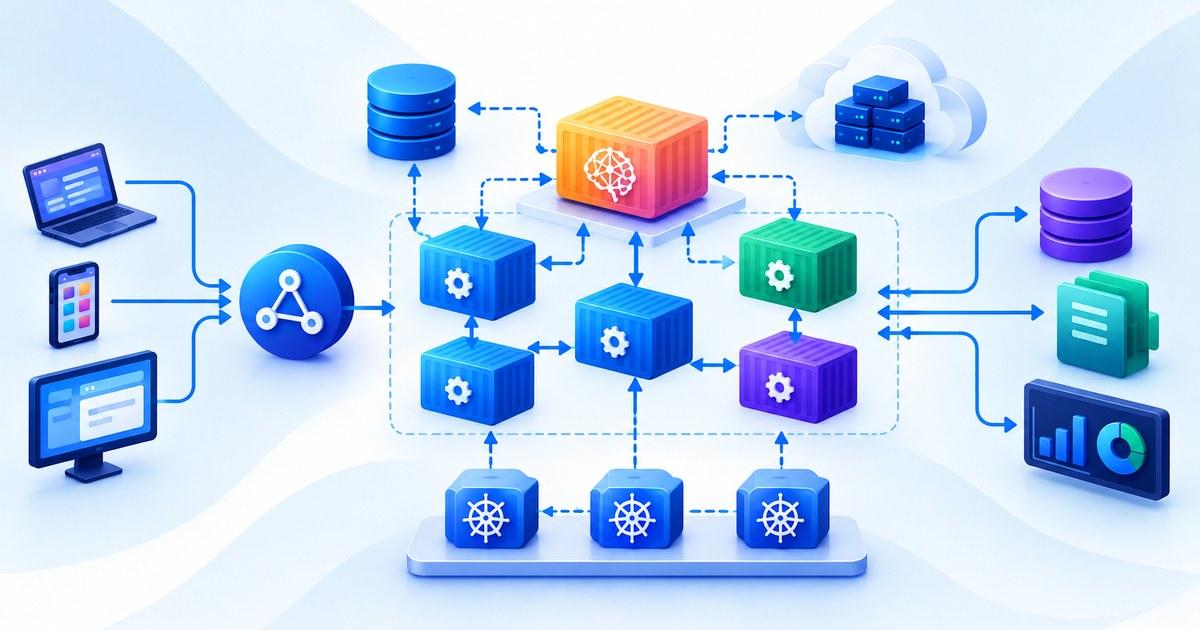
Hybrid AI systems are not defined by a single technique, but by how multiple paradigms are combined into a cohesive architecture. At companies like Google, Meta, and OpenAI, engineers are increasingly designing systems that blend learning-based models with structured reasoning components.
Unlike traditional ML pipelines, where models dominate the system, hybrid architectures distribute intelligence across different layers. Each component plays a specific role, and the effectiveness of the system depends on how well these components interact.
Understanding these components is essential because hybrid AI is fundamentally about integration, not replacement.
Machine Learning Models as the Perception Layer
In hybrid systems, machine learning models continue to serve as the perception layer.
These models are responsible for interpreting unstructured data such as text, images, or audio. Large language models, for example, can process natural language inputs, extract meaning, and generate responses. Similarly, computer vision models can analyze visual data and identify patterns.
This capability is critical because symbolic systems alone cannot handle the complexity and variability of real-world data.
However, in hybrid architectures, models are no longer expected to solve the entire problem. Instead, they act as the entry point, converting raw inputs into structured representations that other components can use.
This shift reduces the burden on models and allows the system to leverage their strengths without relying on them for tasks they are not well-suited for.
Rule-Based Systems as the Control Layer
Rule-based systems provide the control layer in hybrid architectures.
These systems encode domain knowledge in the form of explicit rules. They define how the system should behave under specific conditions, ensuring consistency and correctness.
For example, in a financial application, rules may enforce compliance requirements or validate transactions. In a healthcare system, rules may ensure that recommendations adhere to medical guidelines.
The key advantage of rule-based systems is their predictability. Unlike ML models, which may produce variable outputs, rules are deterministic. This makes them essential for tasks where reliability is critical.
In hybrid systems, rules act as a guiding framework. They constrain the behavior of models, ensuring that outputs remain within acceptable boundaries.
Knowledge Graphs as Structured Memory
Knowledge graphs serve as the structured memory of hybrid systems.
They represent information in a structured form, capturing relationships between entities. This allows the system to reason about connections, retrieve relevant information, and maintain consistency.
For example, a knowledge graph might store relationships between products, users, and transactions in an e-commerce system. In a medical application, it might represent relationships between symptoms, diseases, and treatments.
Knowledge graphs bridge the gap between unstructured and structured data.
While models can process natural language, knowledge graphs provide a framework for organizing and querying information. This enables more accurate and explainable reasoning.
Engineers must design these graphs carefully, ensuring that they are scalable, up-to-date, and aligned with the system’s requirements.
Reasoning Engines: Enabling Logical Inference
Reasoning engines are the component that brings symbolic intelligence into the system.
They use logical rules and structured data to perform inference. Given a set of inputs and rules, they can derive conclusions, validate outputs, and ensure consistency.
This is particularly important in scenarios where correctness is critical.
For example, a reasoning engine might verify whether a generated recommendation satisfies certain constraints or whether a sequence of actions follows logical rules.
In hybrid systems, reasoning engines complement ML models by providing capabilities that models lack. They ensure that outputs are not just plausible, but also logically consistent.
How These Components Work Together
The true power of hybrid AI systems lies in the interaction between these components.
Machine learning models interpret inputs and generate initial outputs. Rule-based systems enforce constraints and guide behavior. Knowledge graphs provide structured context, and reasoning engines ensure logical consistency.
This creates a system that is both flexible and reliable.
For example, consider an AI assistant in a financial application. The model interprets user queries in natural language. The knowledge graph provides relevant information about financial products. Rules ensure compliance with regulations, and the reasoning engine validates the final output.
Each component contributes to the overall system, and the absence of any one component would reduce its effectiveness.
Strong candidates understand these interactions and can explain how different components complement each other.
Design Challenges in Hybrid Systems
While hybrid systems offer many advantages, they also introduce new challenges.
One challenge is integration. Engineers must ensure that different components communicate effectively and that data flows smoothly between them.
Another challenge is maintaining consistency. As systems grow more complex, ensuring that all components align becomes more difficult.
Performance is also a concern. Combining multiple components can increase latency and resource usage, requiring careful optimization.
Strong candidates acknowledge these challenges and explain how they would address them in system design.
Why This Matters in Interviews
The rise of hybrid AI systems is reflected in how ML engineers are evaluated.
Interviewers are increasingly interested in candidates who can think beyond models and design systems that integrate multiple paradigms. They expect candidates to understand how different components work together and how to manage tradeoffs.
Candidates who can explain hybrid architectures clearly demonstrate a deeper level of understanding.
This perspective is emphasized in “From Research to Real-World ML Engineering: Bridging the Gap”, which highlights the importance of translating theoretical concepts into practical system designs .
The Key Takeaway
Hybrid AI systems combine machine learning models, rule-based systems, knowledge graphs, and reasoning engines into a unified architecture. Each component plays a distinct role, and their interaction enables systems that are both flexible and reliable. Understanding these components and how they work together is essential for designing modern AI systems and succeeding in ML interviews.
Section 3: Design Patterns for Hybrid AI Systems (Pipelines, Feedback Loops, and Control Mechanisms)
Why Design Patterns Matter in Hybrid AI
As hybrid AI systems become more common, the challenge is no longer understanding individual components, but knowing how to structure them into reliable, scalable systems. At companies like Google, Meta, and OpenAI, engineers are expected to go beyond conceptual knowledge and demonstrate how these systems are actually built.
This is where design patterns come in.
Design patterns provide repeatable ways to organize hybrid systems so that machine learning components and symbolic reasoning elements work together effectively. Without these patterns, systems can become fragmented, inconsistent, or difficult to maintain.
Strong candidates understand not just the components of hybrid AI, but also the patterns that govern their interaction.
Pipeline Pattern: Structuring Flow with Clear Responsibility
One of the most common design patterns in hybrid AI systems is the pipeline pattern.
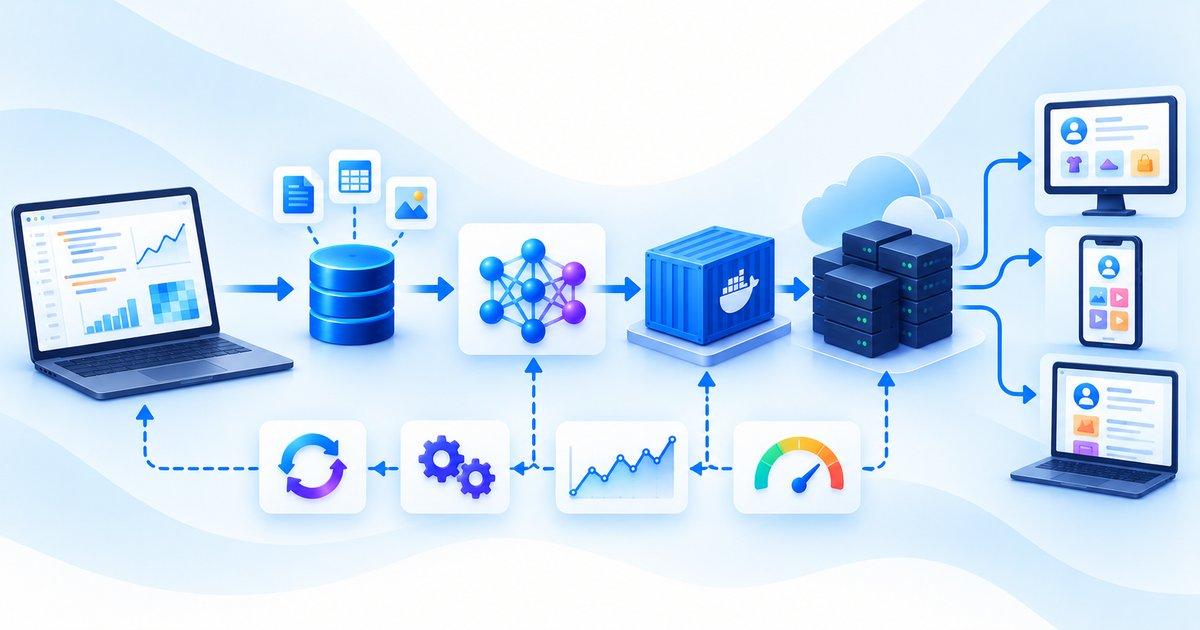
At a high level, the pipeline organizes the system into sequential stages. Each stage has a specific responsibility, and data flows from one stage to the next. However, unlike traditional ML pipelines, hybrid pipelines incorporate both learning-based and symbolic components.
The pipeline typically begins with a machine learning model that processes unstructured input. This output is then passed to symbolic components such as rule engines or knowledge graphs, which refine, validate, or constrain the result.
The key advantage of this pattern is clarity.
Each stage is well-defined, making the system easier to debug and maintain. Engineers can isolate issues, optimize individual components, and ensure that responsibilities are clearly separated.
However, the limitation of a pure pipeline is rigidity. Real-world systems often require flexibility, which leads to the need for more dynamic patterns.
Feedback Loops: Enabling Continuous Improvement
Hybrid AI systems are rarely static. They operate in environments where data changes, user behavior evolves, and system performance must be continuously monitored and improved.
This is where feedback loops become essential.
A feedback loop allows the system to learn from its own outputs. For example, user interactions, system performance metrics, or validation results can be fed back into the system to refine behavior.
In hybrid systems, feedback loops often operate at multiple levels.
Machine learning models may be updated based on new data. Rule-based systems may be adjusted to handle new edge cases. Knowledge graphs may be expanded with additional information. These updates ensure that the system remains relevant and effective over time.
Feedback loops also play a critical role in managing errors.
When the system produces incorrect or suboptimal outputs, feedback mechanisms help identify the issue and guide improvements. This creates a cycle of continuous refinement.
Strong candidates emphasize feedback loops as a core part of system design, not an afterthought.
Control Mechanisms: Managing Complexity and Ensuring Reliability
As hybrid systems become more complex, control mechanisms are needed to manage their behavior.
Control mechanisms act as the system’s governance layer. They ensure that outputs meet certain standards, that rules are enforced, and that the system behaves predictably despite underlying variability.
These mechanisms can take many forms.
They may include validation layers that check outputs against predefined constraints. They may involve rule engines that override model outputs when necessary. They may also include fallback systems that provide safe alternatives when the primary system fails.
The goal is to balance flexibility with reliability.
Machine learning components introduce variability, while symbolic components provide structure. Control mechanisms ensure that this combination does not lead to unpredictable or unsafe behavior.
Designing effective control mechanisms requires careful consideration of tradeoffs. Too much control can limit the system’s capabilities, while too little can lead to errors and inconsistencies.
Combining Patterns for Real-World Systems
In practice, hybrid AI systems rarely rely on a single pattern.
Instead, they combine pipelines, feedback loops, and control mechanisms into a cohesive architecture. Each pattern addresses a different aspect of the system.
Pipelines provide structure and clarity. Feedback loops enable adaptation and improvement. Control mechanisms ensure reliability and consistency.
For example, a system might use a pipeline to process inputs and generate outputs, a feedback loop to update models and rules based on performance, and control mechanisms to validate results before they are delivered to users.
This layered approach allows systems to be both flexible and robust.
Strong candidates understand how to combine these patterns and explain how each contributes to the overall system.
Handling Tradeoffs in Design Patterns
Each design pattern comes with tradeoffs.
Pipelines offer simplicity but may lack flexibility. Feedback loops enable adaptability but introduce complexity. Control mechanisms improve reliability but can restrict system behavior.
Engineers must evaluate these tradeoffs based on the application’s requirements.
For example, a system that prioritizes accuracy and reliability may rely heavily on control mechanisms, while a system that prioritizes adaptability may emphasize feedback loops.
Understanding these tradeoffs is critical for designing effective hybrid systems.
Why These Patterns Matter in Interviews
The ability to discuss design patterns is a strong signal in ML interviews.
Interviewers are not just looking for knowledge of components, they are looking for the ability to organize those components into a functional system. Candidates who can explain how pipelines, feedback loops, and control mechanisms work together demonstrate system-level thinking.
Candidates who lack this understanding often give fragmented answers. They may describe individual components but fail to connect them into a coherent design.
Strong candidates, on the other hand, present structured and well-reasoned systems.
This expectation is highlighted in “Machine Learning System Design Interview: Crack the Code with InterviewNode”, which emphasizes the importance of structured thinking and system-level design in modern ML interviews .
The Key Takeaway
Design patterns are essential for building hybrid AI systems. Pipelines provide structure, feedback loops enable continuous improvement, and control mechanisms ensure reliability. By combining these patterns thoughtfully and understanding their tradeoffs, engineers can design systems that are both flexible and robust. Candidates who can articulate these patterns clearly demonstrate the kind of system-level thinking that modern ML roles require.
Section 4: Challenges in Hybrid AI Systems and How to Overcome Them
Why Hybrid AI Systems Are Powerful Yet Difficult to Build
Hybrid AI systems promise the best of both worlds: the adaptability of machine learning and the precision of symbolic reasoning. However, combining these paradigms introduces a level of complexity that goes far beyond traditional ML systems. At companies like Google, Meta, and OpenAI, engineers are increasingly dealing with these challenges as systems become more sophisticated.
The difficulty lies not in understanding individual components, but in managing how they interact.
Hybrid systems require careful coordination between models, rules, knowledge structures, and reasoning engines. Each component behaves differently, and aligning them into a coherent system is a non-trivial task. Engineers must think holistically, anticipating issues that arise from integration, scale, and real-world variability.
Integration Complexity: Bridging Two Paradigms
One of the biggest challenges in hybrid AI is integration.
Machine learning models and symbolic systems operate on fundamentally different principles. Models are probabilistic and data-driven, while symbolic systems are deterministic and rule-based. Bringing these together requires designing interfaces that allow them to communicate effectively.
For example, outputs from a model may need to be converted into structured representations that a rule engine can process. Similarly, rules may need to guide or constrain model outputs without overly restricting their flexibility.
This integration is not always straightforward. Misalignment between components can lead to inconsistencies, errors, or degraded performance.
To overcome this, engineers must define clear boundaries and interfaces. They must ensure that data formats, expectations, and responsibilities are well understood across components. This reduces ambiguity and improves system coherence.
Balancing Flexibility and Control
Hybrid systems must strike a balance between flexibility and control.
Machine learning components introduce flexibility, allowing systems to handle unstructured data and adapt to new scenarios. Symbolic components provide control, ensuring that outputs follow rules and constraints.
However, too much flexibility can lead to unpredictable behavior, while too much control can limit the system’s capabilities.
Finding the right balance is a key design challenge.
Engineers must decide where to allow variability and where to enforce constraints. For example, a system may allow a model to generate responses freely, but use rules to validate or filter those responses before presenting them to users.
This balance is not static. It may need to be adjusted as the system evolves or as new requirements emerge.
Scalability and Performance Constraints
Hybrid systems often involve multiple components, each with its own computational requirements.
Machine learning models, particularly large ones, can be resource-intensive. Symbolic systems, such as reasoning engines or knowledge graphs, may also require significant processing power, especially when dealing with large datasets.
Combining these components can lead to performance bottlenecks.
Latency is a particular concern in real-time applications. Each additional component adds processing time, which can affect user experience.
To address this, engineers must optimize system design.
This may involve caching results, simplifying rules, or using smaller models where appropriate. It may also require distributing workloads across multiple systems or using asynchronous processing.
Understanding how to manage performance tradeoffs is essential for building scalable hybrid systems.
Maintaining Consistency Across Components
Another major challenge is maintaining consistency.
In hybrid systems, different components may produce outputs that need to align with each other. For example, a model may generate a recommendation that conflicts with a rule or with information in a knowledge graph.
These inconsistencies can undermine trust in the system.
Engineers must design mechanisms to detect and resolve conflicts. This may involve prioritizing certain components, implementing validation layers, or using reasoning engines to reconcile differences.
Consistency is particularly important in domains where accuracy is critical, such as healthcare or finance.
Handling Data and Knowledge Evolution
Hybrid systems must operate in environments where both data and knowledge evolve over time.
Machine learning models require updates as new data becomes available. Knowledge graphs must be expanded and maintained. Rules may need to be updated to reflect new requirements or regulations.
Managing these changes is complex.
Updates to one component can affect others, creating dependencies that must be carefully managed. For example, changes in a knowledge graph may require adjustments to rules or retraining of models.
To address this, engineers must design systems with modularity and versioning in mind. This allows components to be updated independently while maintaining overall system stability.
Explainability and Debugging Challenges
Hybrid systems are often expected to be more explainable than purely ML-based systems, but achieving this is not always straightforward.
While symbolic components provide transparency, machine learning models remain complex and difficult to interpret. When issues arise, it can be challenging to determine whether the problem lies in the model, the rules, or the interaction between them.
Debugging requires visibility into all components.
Engineers must implement logging, monitoring, and tracing mechanisms to track how decisions are made. This helps identify the source of errors and enables more effective troubleshooting.
Strong candidates recognize that explainability is not automatic in hybrid systems, it must be designed intentionally.
Operational Complexity and Maintenance
Hybrid systems are inherently more complex to operate and maintain.
They involve multiple components, each with its own lifecycle. Engineers must manage updates, monitor performance, and ensure that all parts of the system continue to work together effectively.
This increases operational overhead.
Teams must invest in infrastructure, tooling, and processes to support these systems. This includes monitoring systems, automated testing, and deployment pipelines.
Candidates who understand these operational challenges demonstrate a realistic perspective on system design.
Why These Challenges Matter in Interviews
The challenges of hybrid AI systems are not just technical, they are also evaluative.
Interviewers use these topics to assess whether candidates can think beyond ideal scenarios and consider real-world constraints. Candidates who acknowledge challenges and propose practical solutions demonstrate maturity and readiness.
Those who ignore these challenges often present overly simplistic systems that lack realism.
This perspective is emphasized in “Security in Machine Learning: Interview Questions You Don’t Expect”, which highlights the importance of anticipating edge cases, risks, and system-level challenges in modern ML roles .
The Key Takeaway
Hybrid AI systems offer powerful capabilities but come with significant challenges. Integration complexity, tradeoffs between flexibility and control, scalability issues, consistency management, and operational overhead all require careful design. Engineers who understand these challenges and can address them effectively are better equipped to build robust systems and succeed in modern ML interviews.
Conclusion: The Future of AI Lies in Combining Learning with Reasoning
The evolution of artificial intelligence is no longer about choosing between paradigms, it is about combining them effectively. Hybrid AI systems represent a significant step in this direction, bringing together the adaptability of machine learning and the precision of symbolic reasoning. At companies like Google, Meta, and OpenAI, this convergence is already shaping how modern systems are designed and deployed.
Purely data-driven systems have demonstrated remarkable capabilities, especially in handling unstructured data and generating human-like outputs. However, their limitations in reasoning, consistency, and interpretability have become increasingly evident. On the other hand, symbolic systems provide structure, logic, and explainability but lack the flexibility required to handle real-world complexity.
Hybrid AI systems address these gaps.
By integrating models with rules, knowledge graphs, and reasoning engines, these systems create a balance between flexibility and control. They allow engineers to design solutions that are both adaptive and reliable, capable of handling dynamic inputs while maintaining logical consistency.
This shift is not just technical, it is conceptual.
Engineers must move from thinking about models as standalone entities to viewing them as components within larger systems. They must understand how different paradigms interact, how tradeoffs are managed, and how systems evolve over time. This requires a broader skill set and a deeper level of system-level thinking.
Another important aspect is the emphasis on real-world impact.
Hybrid systems are often used in domains where accuracy, reliability, and explainability are critical. This means that engineers must consider not only how systems perform, but also how they behave under constraints and how they are perceived by users.
This perspective is reinforced in “The New Rules of AI Hiring: How Companies Screen for Responsible ML Practices”, which highlights the growing importance of building systems that are not only powerful but also reliable and interpretable .
Ultimately, hybrid AI systems represent the future of intelligent applications.
They combine the strengths of different approaches, enabling systems that can learn from data, reason through problems, and deliver consistent outcomes. Engineers who understand this paradigm and can design such systems are well-positioned to succeed in both interviews and real-world roles.
Frequently Asked Questions (FAQs)
1. What is a hybrid AI system?
A hybrid AI system combines machine learning models with symbolic reasoning components such as rules and knowledge graphs.
2. Why are hybrid AI systems important?
They address the limitations of purely data-driven models by adding structure, logic, and explainability.
3. What is symbolic reasoning?
It involves using rules, logic, and structured representations to make decisions and draw conclusions.
4. How do ML and symbolic AI complement each other?
ML handles unstructured data and pattern recognition, while symbolic AI ensures logical consistency and interpretability.
5. What are common components of hybrid systems?
Machine learning models, rule engines, knowledge graphs, and reasoning engines.
6. Where are hybrid AI systems used?
In domains such as healthcare, finance, legal systems, and enterprise applications.
7. What are the main challenges in hybrid AI?
Integration complexity, scalability, consistency, and maintaining system reliability.
8. How do hybrid systems improve reliability?
By using rules and reasoning to validate and constrain model outputs.
9. Are hybrid systems more complex than traditional ML systems?
Yes, because they involve multiple interacting components.
10. Do hybrid systems replace machine learning?
No, they enhance it by combining it with symbolic reasoning.
11. What skills are needed to build hybrid AI systems?
System design, machine learning, knowledge representation, and reasoning techniques.
12. How are interviews evolving for hybrid AI roles?
They increasingly focus on system-level thinking and the ability to integrate multiple paradigms.
13. What is the role of knowledge graphs in hybrid AI?
They provide structured memory and enable reasoning over relationships.
14. How do you evaluate hybrid AI systems?
By combining quantitative metrics with logical validation and real-world performance checks.
15. What is the key takeaway?
The future of AI lies in combining learning and reasoning to build systems that are both flexible and reliable.
By understanding hybrid AI systems and developing the ability to design them effectively, you can align your skills with the next generation of AI innovation and stand out in an increasingly competitive landscape.