Section 1: From Memorization to Augmentation - The Rise of the Second Brain
What Is the “Second Brain” in the Age of AI?
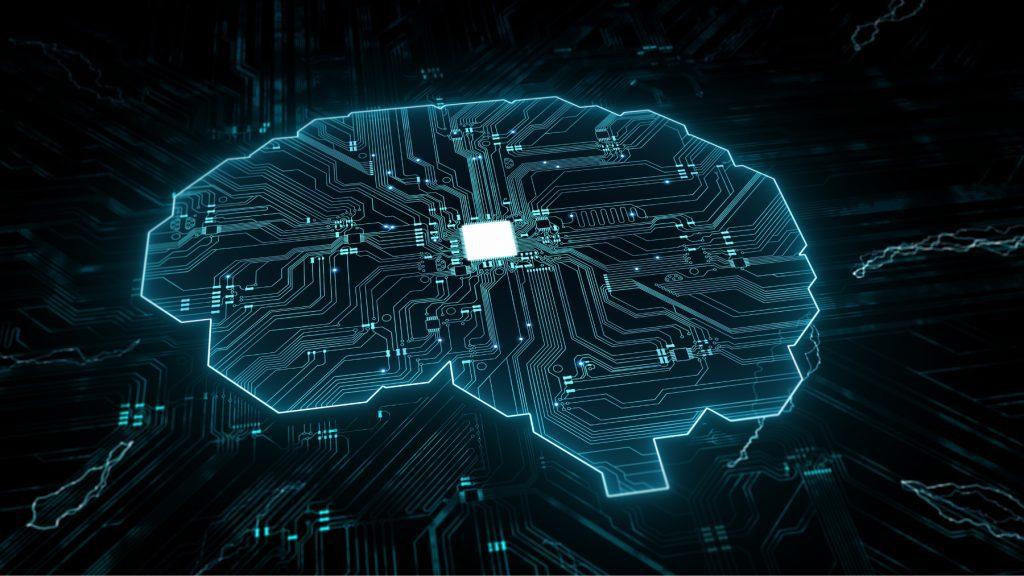
The concept of a “second brain” has evolved significantly over the past decade. Originally associated with personal knowledge management systems, structured notes, digital repositories, and productivity frameworks, it now refers to something far more powerful: an interactive, AI-driven cognitive layer that actively participates in thinking.
With tools like OpenAI’s ChatGPT, the second brain is no longer passive storage. It has become a dynamic reasoning partner capable of generating explanations, simulating scenarios, and assisting in real-time problem solving.
This fundamentally changes the nature of knowledge itself. Traditionally, knowledge was something you had to internalize and recall. Now, knowledge can be externalized and accessed instantly, shifting the cognitive burden away from memorization toward interpretation and application.
However, this does not eliminate the need for understanding. Instead, it raises the bar. The second brain is most effective when paired with a human who can guide it, question it, and refine its outputs. Candidates who treat AI as a collaborator rather than a shortcut gain the most value.
This transformation mirrors broader shifts in engineering workflows, where abstraction layers reduce manual effort but increase the importance of system-level thinking and decision-making.
The Shift in Technical Preparation: From Knowledge Accumulation to Cognitive Leverage
Technical preparation has historically been built around knowledge accumulation. Candidates memorized algorithms, practiced coding patterns, and internalized system design templates. While these approaches still matter, they are no longer sufficient on their own.
AI tools dramatically reduce the cost of accessing information. Instead of searching through documentation or multiple resources, candidates can generate explanations, examples, and comparisons instantly. This enables a transition from learning everything to learning how to navigate and apply knowledge effectively.
The key shift is toward cognitive leverage. Instead of relying solely on what you know, you leverage AI to extend your thinking. This allows you to explore more ideas, test more hypotheses, and iterate faster than traditional methods allow.
For example, a candidate preparing for system design interviews can simulate multiple architectures, compare trade-offs, and refine their approach within minutes. This level of iteration was previously impractical.
However, this shift introduces new challenges. AI-generated outputs are not always accurate or contextually appropriate. Candidates must develop the ability to evaluate, validate, and adapt information. Blind reliance on AI can lead to superficial understanding.
This is why the role of the candidate changes from a knowledge holder to a decision-maker and evaluator. Strong candidates use AI to expand their thinking, but they remain responsible for the final judgment.
This evolution aligns with ideas discussed in Machine Learning System Design Interview: Crack the Code with InterviewNode, where the emphasis shifts from memorizing solutions to understanding systems, trade-offs, and real-world constraints .
How the Second Brain Changes Learning Dynamics
The introduction of AI into learning workflows fundamentally alters how knowledge is acquired and retained. One of the most significant changes is the transition from linear learning to interactive learning.
In traditional settings, learning is sequential: read material, practice problems, review mistakes. With AI, learning becomes dialogue-driven. You can ask follow-up questions, request alternative explanations, and explore edge cases dynamically.
This creates a more adaptive learning environment, where the depth and direction of learning are guided by curiosity and need rather than fixed curricula.
Another important change is the speed of feedback. Immediate feedback accelerates learning cycles, allowing candidates to correct misunderstandings quickly. This reduces the time spent reinforcing incorrect assumptions.
The second brain also enables contextual learning. Instead of studying isolated concepts, candidates can explore how ideas connect within larger systems. This is particularly valuable in domains like system design and machine learning, where understanding interactions is critical.
However, there is a potential downside: cognitive dependency. Over-reliance on AI can weaken internal reasoning if not managed carefully. Candidates must ensure that they are actively engaging with the material rather than passively consuming outputs.
Strong candidates strike a balance. They use AI to accelerate learning but also invest time in internalizing core principles and practicing independent reasoning.
Implications for Interviews: What Is Actually Being Evaluated Now
The rise of the second brain is influencing how companies evaluate candidates. Since AI tools are widely accessible, interviews are increasingly designed to assess skills that cannot be easily outsourced.
One key area is problem structuring. Candidates must demonstrate the ability to break down complex problems, define objectives, and identify constraints. This requires clear thinking rather than memorized answers.
Another important area is trade-off reasoning. In system design and ML interviews, there is rarely a single correct answer. Candidates are evaluated on how they navigate trade-offs and justify their decisions.
Adaptability is also critical. Interviewers may introduce new constraints or modify the problem mid-discussion. Candidates who can adjust their approach dynamically demonstrate strong problem-solving skills.
Communication plays a central role. Candidates must articulate their reasoning clearly and guide the interviewer through their thought process. This is not something AI can do on their behalf.
Finally, there is an increasing emphasis on original thinking. Candidates who simply reproduce common patterns or generic solutions are less compelling than those who demonstrate nuanced understanding and creativity.
The Emerging Skill: AI-Augmented Thinking
The most important skill in this new paradigm is not just technical knowledge, it is AI-augmented thinking. This involves knowing how to:
- Frame precise and meaningful questions
- Interpret and validate AI-generated outputs
- Integrate insights into coherent solutions
- Iterate quickly while maintaining rigor
Candidates who develop this skill can significantly accelerate their preparation and improve the quality of their thinking.
At the same time, they must maintain a strong foundation. AI can assist with exploration, but core understanding and reasoning must remain internal. The combination of internal expertise and external augmentation is what creates a true second brain.
The Key Takeaway
The “second brain” effect represents a fundamental shift in technical preparation. AI tools are transforming learning from a process of memorization into one of augmentation, interaction, and rapid iteration. Success now depends on your ability to combine human reasoning with AI-assisted exploration, creating a workflow that is both efficient and deeply insightful.
Section 2: Core Concepts - Cognitive Offloading, Prompt Engineering, and Learning Acceleration
Cognitive Offloading: Extending Human Memory and Reasoning
At the heart of the “second brain” effect is a concept known as cognitive offloading, the practice of delegating mental tasks to external systems. In the context of AI tools, this means using systems like ChatGPT to handle parts of thinking that would otherwise consume mental bandwidth.
Traditionally, cognitive offloading was limited to simple tools such as notes, reminders, or calculators. Today, it extends to complex reasoning tasks, including summarizing research, generating explanations, and even drafting system designs.
This fundamentally changes how candidates allocate their cognitive resources. Instead of spending effort on recall or routine tasks, they can focus on higher-order thinking, such as analyzing trade-offs, designing architectures, and evaluating solutions.
However, cognitive offloading introduces a critical risk: loss of depth. If candidates rely too heavily on AI for reasoning, they may develop shallow understanding. Strong candidates use offloading strategically, they delegate repetitive or low-value tasks while retaining control over core reasoning.
Another important aspect is working memory augmentation. AI tools can hold and manipulate large amounts of context, allowing candidates to explore more complex ideas than they could manage mentally. This enables deeper exploration of systems and concepts.
The key is balance. Cognitive offloading should enhance thinking, not replace it. Candidates who maintain this balance demonstrate stronger long-term capability.
Prompt Engineering: The Interface Between Human Intent and AI Output
If AI is the second brain, then prompt engineering is the interface that connects human intent to machine output. The quality of the output is directly influenced by how well the input is structured.
At a basic level, prompts define the task. But at a deeper level, they shape the context, constraints, and expectations of the response. Candidates who understand this can extract significantly more value from AI tools.
Effective prompts are specific and structured. Instead of asking vague questions, strong candidates provide context, define objectives, and specify constraints. For example, asking for a system design with latency constraints and scalability requirements yields more relevant output than a generic request.
Another important aspect is iterative prompting. Rarely does the first response provide a complete solution. Candidates refine prompts based on previous outputs, gradually improving the quality of results. This creates a feedback loop similar to iterative problem solving.
Prompt engineering also involves controlling scope. Large, complex queries can lead to unfocused answers. Breaking problems into smaller components often produces better results. Candidates who decompose problems effectively demonstrate strong thinking.
There is also an element of role framing. Asking the AI to respond as a system design interviewer, a senior engineer, or a reviewer can influence the perspective of the output. Candidates who use role framing strategically can explore different viewpoints.
Another advanced technique is constraint injection, where you explicitly define trade-offs or limitations. This forces the AI to produce more realistic and practical solutions.
Prompt engineering is not just a technical skill, it is a thinking skill. It reflects how clearly you understand the problem and how effectively you can communicate it.
Learning Acceleration: Faster Iteration, Deeper Understanding
One of the most powerful effects of AI tools is learning acceleration. By reducing the friction of accessing information and generating examples, AI enables candidates to learn faster and explore more deeply.
The most immediate benefit is rapid iteration. Candidates can test ideas, receive feedback, and refine their understanding in a fraction of the time required by traditional methods. This increases the number of learning cycles, which is a key driver of mastery.
Another important aspect is personalized learning. AI can adapt explanations to different levels of understanding, provide analogies, and focus on specific gaps. This makes learning more efficient and targeted.
AI also enables multi-perspective exploration. Candidates can examine problems from different angles, technical, architectural, and practical, within a single session. This leads to more comprehensive understanding.
However, learning acceleration must be managed carefully. Faster learning does not always mean deeper learning. Candidates must ensure that they are not skipping foundational concepts or relying on superficial explanations.
Strong candidates use AI to augment deliberate practice, not replace it. They still solve problems independently, test their understanding, and revisit concepts to reinforce learning.
This approach aligns with ideas discussed in ML Engineer Portfolio Projects That Will Get You Hired in 2025, where the focus is on iterative learning, real-world application, and continuous improvement.
The Feedback Loop: Human + AI Co-Evolution
A defining feature of the second brain is the creation of a feedback loop between human and AI. The human provides direction, context, and evaluation, while the AI provides suggestions, explanations, and alternatives.
This loop enables continuous refinement. Each interaction improves both the understanding of the problem and the quality of the solution. Candidates who engage actively in this loop demonstrate stronger learning outcomes.
Another important aspect is error correction. AI can help identify mistakes or inconsistencies, but it is up to the human to validate and interpret these corrections. Candidates who use AI for error analysis demonstrate deeper engagement.
Over time, this feedback loop leads to co-evolution. The candidate becomes better at prompting and evaluating, while the AI becomes more aligned with the candidate’s needs. This creates a highly efficient learning system.
However, this requires active participation. Passive use of AI, simply accepting outputs, does not produce the same benefits. Candidates must engage critically and iteratively.
The Key Takeaway
The core concepts behind the second brain effect, cognitive offloading, prompt engineering, and learning acceleration, transform how technical preparation is approached. Success depends on your ability to use AI as a tool for deeper thinking and faster iteration, while maintaining strong internal reasoning and critical evaluation.
Section 3: System Design - Building an AI-Augmented Learning Workflow
End-to-End Architecture: Designing Your Personal “Second Brain” System
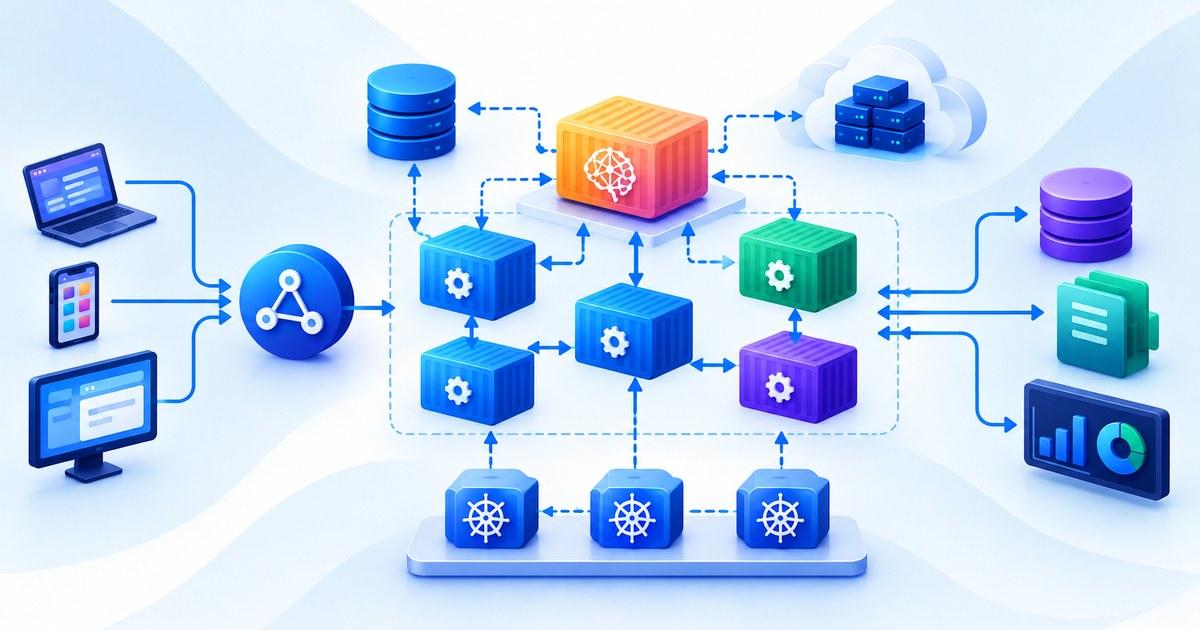
Building an effective AI-augmented learning system is not about casually using tools, it requires designing a structured workflow where human reasoning and AI capabilities are tightly integrated. Think of it as a personal ML system, where you are both the user and the orchestrator.
At the center of this system are tools like ChatGPT, which act as the reasoning engine. Surrounding this are components such as knowledge storage, practice environments, and feedback loops.
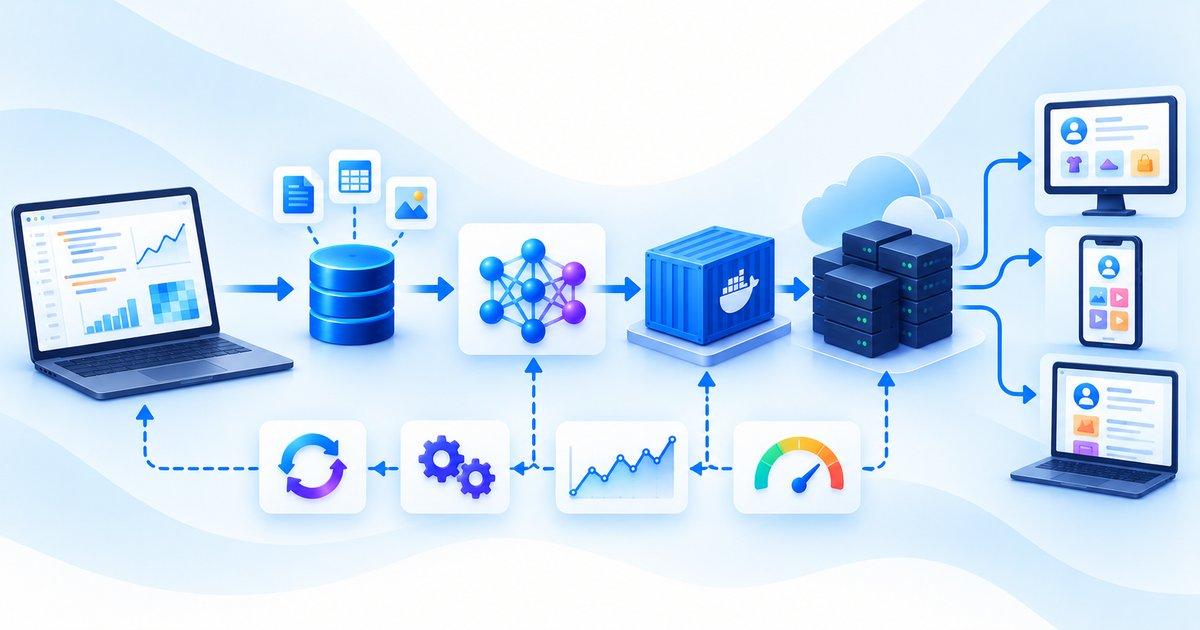
The workflow begins with problem intake. This could be a concept you want to learn, an interview question, or a system design scenario. Instead of jumping directly to answers, strong candidates first frame the problem clearly, defining objectives, constraints, and expected outputs.
Next is the exploration phase, where AI is used to generate explanations, examples, and alternative perspectives. This phase is iterative and interactive, allowing you to refine your understanding quickly.
Following exploration is synthesis. This is where you consolidate insights into your own mental model or notes. Candidates who skip this step often retain less knowledge. The key is to transform AI outputs into structured understanding.
The final stage is application, where you solve problems independently, design systems, or simulate interview scenarios. This ensures that knowledge is internalized and not dependent on external tools.
This pipeline, intake → exploration → synthesis → application, forms the backbone of an effective second brain system.
Knowledge Layer: Structuring Information for Retrieval and Reuse
A critical component of your second brain is the knowledge layer, where information is stored and organized for future use. Without this layer, learning becomes fragmented and difficult to revisit.
Candidates should think in terms of structured knowledge representation. Instead of storing raw notes, organize information into concepts, frameworks, and patterns. This makes it easier to retrieve and apply knowledge during interviews.
Another important aspect is linking concepts. For example, connecting system design patterns with real-world use cases or linking ML concepts with deployment constraints. Candidates who build interconnected knowledge demonstrate deeper understanding.
AI can assist in organizing knowledge by summarizing content, generating outlines, and identifying key points. However, the final structure should reflect your own thinking.
Versioning is another useful concept. As your understanding evolves, your notes should be updated and refined. This creates a living knowledge system that grows over time.
The goal of the knowledge layer is not just storage, it is retrievability and usability. Candidates who can quickly recall and apply concepts during interviews gain a significant advantage.
Practice Layer: Simulating Real Interview Conditions
The practice layer is where learning is tested and reinforced. This is the stage where candidates move from understanding concepts to demonstrating competence.
AI tools can simulate interview scenarios, generate questions, and provide feedback. However, the key is to ensure that practice remains active and challenging.
One effective approach is timed problem solving. Set constraints similar to real interviews and attempt to solve problems without assistance. Afterward, use AI to review and refine your solution.
Another important technique is iterative refinement. Solve a problem, receive feedback, and improve your solution. This mirrors real-world engineering workflows and leads to deeper learning.
Mock interviews are particularly valuable. AI can act as an interviewer, asking follow-up questions and probing your reasoning. Candidates who practice in this way develop stronger communication and problem-solving skills.
It is also important to practice edge cases and failure scenarios. These are often overlooked but are critical in interviews. AI can help generate such scenarios for exploration.
The practice layer ensures that your knowledge is not just theoretical but actionable and testable.
Feedback and Iteration: Continuous Improvement Loop
The most important component of an AI-augmented learning system is the feedback loop. This is what transforms isolated learning sessions into continuous improvement.
After each practice session or learning cycle, you should evaluate your performance. Identify gaps in understanding, areas of weakness, and opportunities for improvement.
AI can assist in this process by analyzing your responses, suggesting improvements, and highlighting missing considerations. However, self-reflection remains essential.
Another important aspect is error analysis. Instead of simply correcting mistakes, understand why they occurred. This leads to more durable learning.
Iteration is key. Each cycle of learning, practice, and feedback should build on the previous one. Over time, this creates a compounding effect, significantly improving your capabilities.
This approach aligns with ideas in Scalable ML Systems for Senior Engineers – InterviewNode, where continuous feedback and iteration are essential for building robust systems .
Scaling Your Second Brain: Efficiency, Depth, and Independence
As your system matures, the focus shifts from basic usage to optimization and scaling. This involves improving efficiency, deepening understanding, and maintaining independence from AI.
Efficiency comes from refining your workflow. You learn which types of prompts work best, how to structure your sessions, and how to minimize unnecessary steps.
Depth comes from focusing on core concepts and first principles. While AI can provide quick answers, true expertise requires deeper understanding. Candidates who invest in depth stand out.
Independence is crucial. While AI is a powerful tool, you must be able to perform without it during interviews. Regular practice without assistance ensures that your skills remain internalized.
Another important aspect is adaptability. As tools evolve, your workflow should evolve as well. Candidates who continuously refine their approach remain ahead.
The Key Takeaway
Building an AI-augmented learning workflow requires designing a structured system that integrates exploration, knowledge management, practice, and feedback. Success depends on your ability to combine human reasoning with AI capabilities, creating a process that is both efficient and deeply effective.
Section 4: How Interviews Are Adapting to the Second Brain Era (Question Patterns + Strategy)
Question Patterns: Testing Thinking, Not Recall
As AI tools become ubiquitous, interview design is shifting toward evaluating how candidates think under constraints, not how much they can memorize. Companies expect that candidates have access to strong “second brain” tools in practice; interviews therefore probe independent reasoning, structure, and judgment.
A common pattern is open-ended system design with evolving constraints. Instead of asking for a canonical solution, interviewers introduce changes mid-stream, new latency targets, data privacy constraints, or scale jumps, to see how you restructure the solution. Candidates who rigidly follow templates struggle; strong candidates reframe the problem and adjust trade-offs.
Another pattern is ambiguity-first prompts. You may be given minimal context and asked to clarify requirements. This tests whether you can ask the right questions, define success metrics, and scope the problem before jumping into solutions. Treat this as signal: your questions are part of the evaluation.
You’ll also see failure-driven questions. Rather than “design X,” the interviewer may say, “Your system is producing inconsistent results, why?” or “Latency doubled overnight, what do you check?” This probes debugging frameworks, observability, and hypothesis testing, not memorized answers.
Finally, counterfactuals and what-ifs are common: “What if traffic 10x’s?”, “What if data becomes non-stationary?”, “What if a component fails?” These test robustness thinking and your ability to reason beyond the happy path.
Answer Strategy: A Repeatable Structure for AI-Aware Interviews
To perform well, you need a structure that emphasizes clarity, constraints, and iteration, the same principles that make AI collaboration effective, but executed independently.
Start with problem framing. Restate the objective, define inputs/outputs, and surface constraints (latency, scale, cost, privacy). Explicitly call out assumptions. This demonstrates control over ambiguity.
Move to a high-level architecture. Sketch the main components and data flow before diving into details. Keep it modular so you can adapt as constraints change.
Then perform bottleneck and risk analysis. Identify where the system could fail or degrade, compute, memory, I/O, network, data quality. This is where many candidates skip ahead; don’t.
Propose design choices with trade-offs. For each major component, explain alternatives and why you choose one given constraints. Tie choices to measurable outcomes (latency, throughput, accuracy).
Include evaluation and monitoring. Define metrics (both offline and online), logging, alerting, and experimentation plans. Show how you would know if your system is working, and when it isn’t.
Close with iteration paths. If given more time or scale, how would you evolve the system? This signals long-term thinking.
Operating Without the Tool: Demonstrating Independent Reasoning
Even though preparation may be AI-augmented, interviews are typically tool-free. You must demonstrate that the reasoning is yours.
Use progressive disclosure: start simple, then layer complexity. This mirrors how you might iterate with AI, but you do it explicitly, “I’ll start with a baseline, then optimize for latency.”
Think out loud with intent. Avoid rambling; narrate decisions: “Given a 100 ms latency budget, I’ll prefer a two-stage pipeline to bound inference cost.”
Leverage mental models instead of memorized templates. For example:
- Pipelines: ingest → transform → serve
- Trade-offs: latency vs accuracy, cost vs reliability
- Scaling: vertical vs horizontal, sync vs async
When you get stuck, reframe. Ask a clarifying question or simplify the scope. This shows control, not weakness.
Common Pitfalls in the Second Brain Era
- Template overuse
Relying on memorized “one-size-fits-all” designs. Interviewers will break these with new constraints. - Surface-level trade-offs
Saying “there are trade-offs” without quantifying them. Be specific: “adds ~20 ms latency, reduces cost by 30%.” - Ignoring failure modes
Not addressing data quality, partial outages, or skew. Robustness is a major signal. - No metrics or evaluation
Designing systems without defining success criteria. Always include metrics and monitoring. - Overcomplication early
Jumping to complex architectures before establishing a baseline. Build incrementally.
What Differentiates Strong Candidates
- Clarity under ambiguity: They structure vague problems into solvable components.
- Constraint-driven design: Every decision ties back to requirements.
- Explicit trade-offs: They quantify and justify choices.
- Robustness thinking: They anticipate failures and design safeguards.
- Adaptive iteration: They evolve the design as new information appears.
This aligns with themes from The Hidden Metrics: How Interviewers Evaluate ML Thinking, Not Just Code, where reasoning quality and system awareness outweigh rote knowledge .
The Key Takeaway
In the second brain era, interviews are designed to separate tool-assisted recall from independent reasoning. Your advantage comes from bringing the discipline you use with AI, structured thinking, iteration, and evaluation, into a setting where you are the system.
Conclusion: What the “Second Brain” Era Really Demands (2026)
The rise of AI tools like ChatGPT is not just changing how we prepare, it is redefining what it means to be technically strong.
The “second brain” effect has eliminated the advantage of pure memorization. Information is now universally accessible, and the cost of retrieval has dropped to near zero. As a result, the competitive edge has shifted toward how effectively you can think, reason, and make decisions under constraints.
This is the central insight: AI does not replace intelligence, it raises the standard for it.
In this new landscape, strong candidates are those who can leverage AI without becoming dependent on it. They use AI to accelerate exploration, test ideas, and uncover blind spots, but they retain ownership of the reasoning process. They are not passive consumers of answers, they are active evaluators and decision-makers.
One of the most important changes is the shift toward meta-skills. These include problem framing, trade-off analysis, system thinking, and communication. These skills cannot be outsourced, and they are increasingly what interviews are designed to evaluate.
Another key shift is the importance of iteration speed. AI enables rapid cycles of learning and refinement, allowing candidates to explore more scenarios and deepen their understanding. Those who embrace this iterative approach improve faster and more consistently.
However, speed without depth is dangerous. Candidates who rely too heavily on AI may develop shallow understanding and struggle in tool-free environments. The challenge is to balance efficiency with internalization.
System-level thinking is becoming the dominant evaluation signal. Whether in machine learning, system design, or software engineering, the ability to connect components, reason about trade-offs, and handle real-world constraints is critical.
Communication has also become more important. As problems become more complex, the ability to explain your reasoning clearly and guide others through your thought process is a key differentiator.
The “second brain” also changes how you should approach preparation. Instead of focusing solely on solving problems, you should focus on building a learning system, a structured workflow that integrates AI, practice, feedback, and reflection.
Ultimately, success in this era comes from mastering a new balance:
- Human strengths: reasoning, judgment, creativity, communication
- AI strengths: speed, recall, synthesis, iteration
Candidates who combine these effectively create a powerful advantage.
Frequently Asked Questions (FAQs)
1. What is the “second brain” in technical preparation?
It refers to using AI tools as an external cognitive system that supports learning, reasoning, and problem-solving.
2. Does AI reduce the need for memorization?
Yes, but it increases the importance of reasoning, problem-solving, and decision-making skills.
3. How should I use AI for interview preparation?
Use AI for exploration, explanations, and feedback, but practice solving problems independently to build internal capability.
4. What is cognitive offloading?
It is the process of delegating mental tasks to external tools, allowing you to focus on higher-level thinking.
5. What is prompt engineering?
It is the skill of structuring inputs to AI systems to obtain high-quality, relevant outputs.
6. How do I avoid becoming dependent on AI?
Practice AI-free problem solving, delay using AI until after attempts, and focus on understanding rather than copying answers.
7. What skills are most important in the AI era?
Problem framing, trade-off reasoning, system design, and communication are the most important skills.
8. How do interviews adapt to AI tools?
Interviews focus more on reasoning, system design, and handling ambiguity rather than memorized knowledge.
9. Can AI help with system design preparation?
Yes, it can generate architectures, compare approaches, and provide feedback, but you must internalize the reasoning.
10. How do I practice effectively with AI?
Use a loop of learn → attempt → compare → refine to ensure balanced learning.
11. What are common mistakes when using AI for preparation?
Over-reliance, shallow understanding, and skipping independent practice are common mistakes.
12. How important is iteration in learning?
Iteration is critical. Faster feedback loops lead to deeper understanding and quicker improvement.
13. What differentiates strong candidates in this era?
Strong candidates combine AI-assisted learning with independent reasoning and clear communication.
14. Should I build a structured learning system?
Yes, a structured workflow improves efficiency, consistency, and long-term retention.
15. What is the biggest takeaway from the second brain concept?
The biggest takeaway is that success now depends on how well you augment your thinking with AI while maintaining strong independent reasoning.