
Section 1: Understanding the Shift from Prompt Engineering to Context Engineering
Why Traditional Prompt Engineering Has Reached Its Practical Limits
Prompt engineering is fundamentally concerned with how instructions are communicated to a language model. Developers experiment with role descriptions, task definitions, examples, constraints, output schemas, and reasoning guidance to influence model behavior.
For example, a basic prompt might ask an LLM to review a software function and identify potential defects. A more carefully engineered prompt could specify the programming language, request a structured response, define the categories of defects to inspect, and require the model to return a JSON object containing the issue, severity, and recommended correction.
This approach can substantially improve output consistency because it reduces ambiguity. It is particularly effective when the task is well-defined and the necessary information is already present in the request.
The limitation appears when the task depends on information that is unavailable in the prompt or changes throughout execution. A prompt cannot automatically know which version of a company's internal policy is current, which database record belongs to a particular customer, or which file in a repository contains the implementation being discussed. Adding more instructions does not solve the absence of relevant information.
There is also a maintenance problem. As applications become more sophisticated, developers may keep adding exceptions, examples, and conditional instructions to a single system prompt. Over time, the prompt becomes difficult to maintain and may contain overlapping or contradictory guidance. The model must interpret an increasingly complicated instruction set while still performing the actual task.
This is why prompt refinement alone becomes insufficient for multi-step AI applications. The system needs an information architecture that supplies relevant evidence and manages the evolving state of the task. Prompt engineering remains useful, but it becomes one component of a broader engineering discipline.
What Context Engineering Actually Means
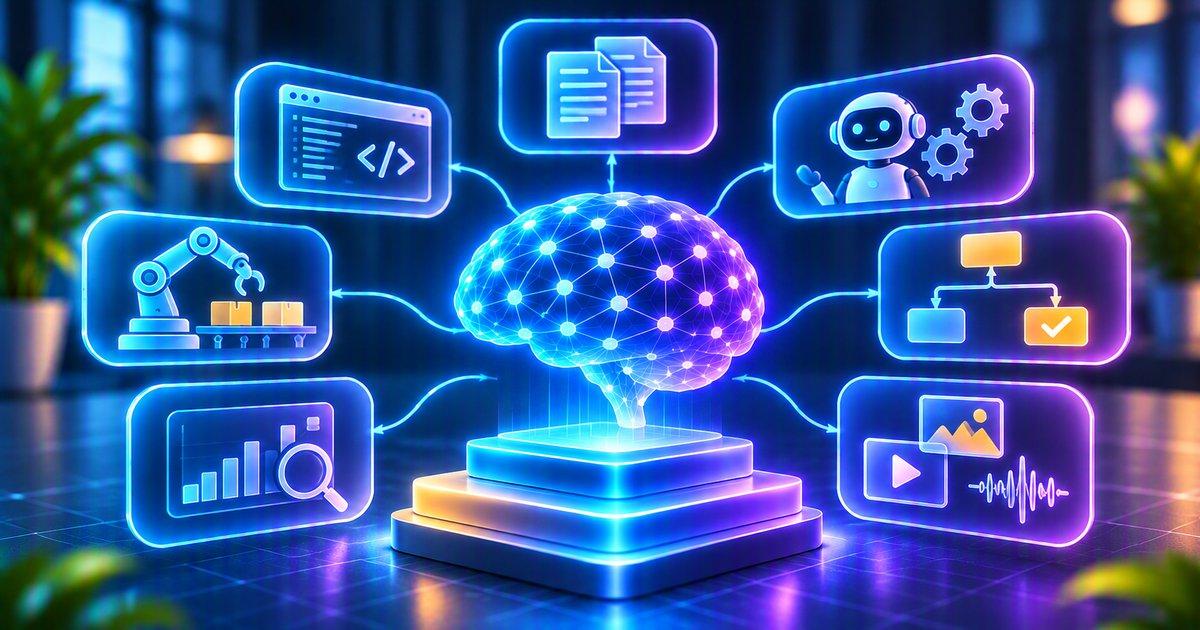
Context engineering focuses on the complete set of information made available to a model during a particular inference step. This includes the system prompt, user request, conversation history, retrieved documents, tool descriptions, tool outputs, structured records, intermediate decisions, and relevant memory.
The key difference is that this context is not necessarily static. In an agentic application, it changes as the model interacts with external systems and receives new information.
Imagine an AI support agent investigating a customer's delayed order. At the beginning, it may receive the customer's message and basic account details. It then retrieves the order record, checks shipping information, examines the delivery status, and consults the company's refund policy. Each tool call produces additional information that may influence the next decision.
The context required at the beginning is therefore different from the context required after the order status has been retrieved. The application must decide which results should remain available, which should be summarized, and which additional information should be retrieved.
Context engineering addresses this continuous process of information assembly and management. Rather than repeatedly sending every available document and interaction to the model, engineers design mechanisms that select the information relevant to the current stage of execution.
A useful way to understand the discipline is to view the context window as a limited working-memory resource. The model may have access to a large context window, but that does not mean every available token contributes equally to the quality of its response. Anthropic's engineering guidance emphasizes that context has diminishing returns and that irrelevant information can distract from the information needed to complete a task.
For a deeper understanding of the information infrastructure behind these systems, engineers can explore InterviewNode's article, "ML Data Pipelines for Software Engineers: From Event Streams to Model-Ready Data". The principles of data ingestion, transformation, and validation are directly relevant to building reliable context pipelines.
The Core Components of an AI Context Architecture
A production context architecture generally consists of several interconnected components. The first is the instruction layer, which defines the model's role, objectives, operating constraints, and expected response format. This is where prompt engineering continues to play an important role.
The second is the knowledge layer. It contains information the model may need to answer questions or complete tasks. Depending on the application, this information can come from vector databases, relational databases, document repositories, APIs, search indexes, code repositories, or enterprise knowledge systems.
The third component is the memory layer. Memory allows an application to preserve useful information across interactions. It can include user preferences, task progress, previous decisions, recurring constraints, or information learned during earlier sessions. Unlike ordinary conversation history, persistent memory is selectively stored and retrieved according to its future usefulness.
The fourth component is the tool layer. Tools allow a model to interact with external systems rather than relying exclusively on information included in its context. Examples include executing SQL queries, searching documentation, reading files, calling APIs, running tests, or updating records.
Finally, the context-management layer determines how these components work together. It handles retrieval, ranking, filtering, summarization, token budgeting, context compression, and the removal of outdated or unnecessary information.
These components should not be treated as independent features. Their value comes from coordination. A retrieval system may find the correct document, but a context-management layer must determine whether it is relevant to the current task. A memory system may preserve a user's preference, but the application must decide whether that preference applies to the current interaction.
Context engineering therefore requires system-level thinking. The objective is not to maximize the amount of information supplied to a model. It is to maximize the usefulness of the information available at each inference step.
Why Context Quality Can Matter More Than Context Quantity
One of the most common mistakes in LLM application development is assuming that larger context automatically leads to better answers. This assumption is unreliable.
A model may support a large context window, but filling that window with every available document, previous message, and tool result can introduce noise. Important information may become harder to identify, conflicting instructions may compete for attention, and outdated records may influence the final answer.
This behavior is often discussed under the term context rot. As context grows, a model may become less effective at locating or using particular information, even when the information technically fits inside its context window. The severity varies by model and task, but a larger context limit does not eliminate the need for careful information selection.
Consider a customer-service application with access to thousands of support conversations. If the system includes hundreds of historical interactions in every request, the model may encounter unrelated complaints, outdated product information, and customer details that have no bearing on the current issue.
A better approach is to retrieve only the relevant records, prioritize authoritative and recent sources, and include enough metadata to explain where the information came from. If two policy documents disagree, the system should identify the conflict rather than silently combining their contents.
Context quality can be evaluated through relevance, accuracy, freshness, completeness, provenance, and task suitability. These dimensions help engineers move beyond token-count optimization and assess whether the model is receiving information that genuinely supports its decisions.
Key Takeaway
Prompt engineering improves the instructions given to an LLM, while context engineering designs the complete information environment in which the model operates. As AI applications move toward multi-step workflows, retrieval, memory, tools, structured information, and context management become essential parts of the architecture. The objective is not to give a model more information, but to provide the smallest reliable set of information needed for its next decision.
Section 2: The Core Techniques That Make Context Engineering Work
Retrieval-Augmented Generation: Supplying Relevant External Knowledge
Retrieval-Augmented Generation, commonly known as RAG, is one of the most established techniques used to provide external knowledge to language models. Instead of expecting a model to answer entirely from its training data, a RAG application retrieves relevant information from an external knowledge source and includes it in the model's context.
A typical RAG pipeline begins by ingesting documents from sources such as PDFs, internal wikis, technical documentation, support articles, and databases. The documents are cleaned, divided into smaller chunks, converted into vector embeddings, and stored in a vector database or search index.
When a user submits a question, the application converts the query into a representation that can be matched against the indexed content. The retrieval system identifies relevant chunks using semantic similarity, keyword search, or a hybrid approach. These results may then be reranked before being passed to the LLM.
The model uses the retrieved information to construct an answer. A well-designed system can also preserve source references so that users can inspect the evidence behind the response.
However, retrieval quality is not determined by embeddings alone. Chunk size, metadata, document freshness, query formulation, ranking, filtering, and source authority all influence the usefulness of retrieved context. A system that retrieves semantically similar but outdated documents can produce a confident yet incorrect answer.
Modern context engineering therefore treats RAG as a retrieval subsystem rather than a complete solution. It must decide when to retrieve, what to retrieve, how much to retrieve, and whether the retrieved evidence is sufficient to proceed.
Memory Engineering: Giving AI Applications Useful Continuity
Retrieval provides access to external knowledge, while memory helps an AI application preserve information that becomes useful across interactions.
Memory is particularly important for personal assistants, coding agents, research agents, and customer-support systems that operate over extended periods. Without memory, an application may repeatedly ask users for information they have already provided or lose track of decisions made earlier in a workflow.
Memory can be organized into several categories. Episodic memory stores information about previous interactions or events. Semantic memory stores generalized facts, relationships, or knowledge. Procedural memory preserves instructions, workflows, and task-specific methods that can guide future execution.
For example, a software development agent might maintain a record of the repository's architecture, preferred testing framework, coding conventions, and unresolved implementation tasks. When the developer returns to the project, the agent can retrieve the relevant notes instead of reconstructing the entire history from scratch.
Memory should not simply become an unlimited transcript archive. Storing every interaction creates noise, increases retrieval complexity, and may preserve temporary information that should not influence future decisions.
A useful memory system needs mechanisms for deciding what is worth storing, how information should be summarized, when it should expire, and how conflicting records should be updated. It should also distinguish between verified facts and model-generated assumptions.
For example, if a user says that a feature is temporarily disabled, the system should not necessarily store that statement as a permanent product rule. Memory needs metadata such as timestamps, source information, confidence, and scope so that future retrieval can account for changing circumstances.
This makes memory engineering a data-lifecycle problem as much as an LLM problem. The system must manage information throughout its lifecycle, from creation and validation to retrieval, revision, and deletion.
Context Compression and Summarization: Managing Limited Working Memory
Long-running AI agents generate large volumes of information. Tool responses, document extracts, intermediate decisions, error messages, and conversation history can gradually consume the available context window.
Context compression addresses this problem by reducing the amount of information carried forward while preserving the details required for future execution.
One approach is summarization. Instead of retaining an entire conversation, the application can generate a structured summary containing the task objective, completed actions, important findings, unresolved issues, and next steps. The agent can then continue using the summary as a compact representation of the previous state.
Another approach is tool-result clearing. Large tool responses that are no longer necessary can be removed from active context while retaining the ability to retrieve them again if needed. This is useful when an agent has inspected multiple files or queried large datasets but only needs a few findings for the next stage.
A third technique is selective offloading. Instead of placing large documents directly into the model's context, the application can store them externally and provide a file reference or retrieval handle. The model can then access specific portions when necessary.
These methods solve different problems. Summarization preserves a compressed representation of information. Clearing removes information that is no longer needed. Offloading keeps information available outside the active context window.
Anthropic's 2026 context-engineering cookbook discusses compaction, tool-result clearing, and persistent memory as distinct strategies that can be combined for long-running agents.
The difficult part is deciding what information must survive compression. A summary that removes an important constraint, file path, user decision, or unresolved error can cause an agent to repeat work or make an incorrect assumption. Compression should therefore preserve task-critical state rather than merely produce a shorter version of the conversation.
Tool Context and Dynamic Information Selection
Tools extend the capabilities of an LLM by allowing it to retrieve information or perform actions outside the model itself. However, providing an agent with too many tools can create its own context-management challenge.
Each tool may have a name, description, input schema, output format, and usage constraints. When an application exposes a large collection of tools, the model must interpret these definitions and determine which tool is appropriate for the current task.
Poorly designed tool descriptions can overlap, making it difficult for the model to distinguish between similar operations. Large tool outputs can also consume significant context and distract from the task.
Dynamic tool selection addresses this problem by exposing only the tools relevant to the current task or stage of execution. An agent working on a database question may receive database-query tools, while an agent performing code review may receive repository search, file inspection, and test execution tools.
Tool outputs should also be designed with context efficiency in mind. Instead of returning an entire database table, an API can return the requested records and relevant metadata. Instead of returning a complete file, a file-search tool can return matching lines and their locations.
This approach is closely related to progressive disclosure. The model initially receives a concise description of available capabilities and loads more detailed instructions only when a task requires them.
For example, a research agent may have access to a specialized financial-analysis skill. It does not need the entire skill definition in every interaction. The application can provide a short description and retrieve the full workflow when the agent begins a financial research task.
Context engineering thus requires developers to design not only what information is available, but also when it becomes available. A system that dynamically selects relevant tools and information can reduce unnecessary context while improving task focus.
Key Takeaway
Retrieval, memory, compression, and dynamic tool selection form the foundation of practical context engineering. RAG supplies external knowledge, memory preserves useful continuity, compression manages growing information, and tool selection gives agents access to the right capabilities. These techniques work best when they are coordinated through a context pipeline that evaluates relevance, freshness, and usefulness at every stage.
Section 3: Designing Context Engineering for Production-Grade AI Systems
Building a Dynamic Context Assembly Pipeline
A production AI application should not treat context as a static prompt assembled once at the beginning of a session. Instead, it should build and update context as the task progresses.
A dynamic context assembly pipeline begins by interpreting the user's request and identifying the information required to complete it. The application then determines which data sources, memories, tools, and instructions are relevant. It retrieves the required information, filters and ranks the results, and constructs a structured payload for the model.
After the model responds or invokes a tool, the application evaluates the resulting information and decides what should happen next. It may retrieve additional evidence, update task memory, summarize earlier interactions, or remove unnecessary tool outputs.
A simplified pipeline can be represented as:
User Request → Task Classification → Context Retrieval → Filtering and Ranking → Context Assembly → LLM Inference → Tool Execution → Context Update → Final Response
The process may repeat several times before the task is complete.
Consider an AI assistant that helps engineers investigate production incidents. The initial request might contain an error message and a service name. The application retrieves relevant service documentation, recent deployment records, and monitoring data. The model identifies a possible cause and requests additional logs through a tool. Those logs become new context, which may lead to another diagnostic step.
A static prompt cannot adequately manage this evolving process. The context assembly layer must decide which evidence to retain, whether additional retrieval is required, and when the system has enough information to generate a useful conclusion.
Engineers should also separate orchestration logic from model instructions. Deterministic operations such as access checks, data validation, query execution, and schema enforcement should generally be handled by application code rather than relying on the LLM to follow natural-language instructions perfectly.
Context Windows, Token Budgets, and Information Prioritization
Every model request has a practical context budget. This budget must accommodate system instructions, user input, tool definitions, retrieved information, conversation history, and the expected output.
The available input capacity is therefore smaller than the model's advertised context window once output tokens and application-specific constraints are considered.
A useful engineering practice is to define a token budget for different context categories. For example, an application might reserve space for stable system instructions, recent conversation state, retrieved evidence, tool metadata, and the model's expected response. The exact allocation should be determined through testing rather than copied from a generic template.
Information should be prioritized according to its relevance to the current task. A recent authoritative policy document may deserve higher priority than an older conversation summary. A critical security constraint should not be removed simply because it is longer than other context elements.
Retrieval systems can support this process by ranking documents according to semantic relevance, freshness, authority, and metadata. Context assemblers can then select a subset that fits within the available budget.
Developers should also avoid unnecessary repetition. If the same policy appears in the system prompt, a retrieved document, and the conversation history, the application may be consuming tokens without adding useful information. At the same time, removing repeated information requires care when repetition reinforces a critical constraint.
Context budgeting should be measured as part of system performance. Relevant metrics include input tokens per request, output tokens, retrieval volume, context utilization, latency, and the relationship between context size and task success.
The goal is not simply to minimize token usage. It is to find an efficient balance between information completeness, response quality, latency, and operating cost.
Multi-Agent Systems and Context Isolation
Multi-agent architectures introduce another important context-engineering challenge: different agents may need different information to perform specialized tasks.
A single agent responsible for research, analysis, coding, testing, and reporting may accumulate a large amount of unrelated information. This can make its context difficult to manage and increase the risk that details from one task influence another.
Context isolation addresses this by assigning specialized tasks to separate agents or execution environments. A research agent can inspect documents and return a concise evidence summary. A coding agent can inspect repository files and implement changes. A testing agent can execute test suites and report failures.
The coordinating agent receives the outputs required to continue the workflow rather than every intermediate interaction generated by every specialist.
This does not mean that every task needs multiple agents. Additional agents introduce orchestration overhead, communication costs, latency, and new failure modes. They are useful when tasks can be separated into meaningful units with clear inputs, outputs, and responsibilities.
The quality of communication between agents is particularly important. A subagent should return structured results containing findings, source references, confidence or uncertainty where appropriate, and unresolved questions. Returning an unfiltered transcript can simply transfer the context-management problem from one agent to another.
Context isolation also supports security boundaries. Different agents can receive different tool permissions and data access scopes. A research agent may be allowed to read documents but not modify production records. A deployment agent may require explicit authorization before executing a release operation.
These boundaries should be enforced by the application infrastructure rather than relying exclusively on the model's interpretation of instructions.
Integrating Context Engineering with Production AI Infrastructure
Context engineering becomes significantly more complex when an application moves from a prototype to a production environment. The system must manage retrieval services, databases, memory stores, orchestration logic, tool execution, model APIs, and monitoring infrastructure.
A practical architecture often separates the context pipeline into services or logical modules. The retrieval service handles document search and ranking. The memory service manages persistent information. The orchestration layer determines the sequence of operations. The context assembler creates the model payload. The tool execution layer interacts with external systems, while observability services record the behavior of the complete workflow.
This separation makes the application easier to maintain and test. Developers can improve retrieval ranking without rewriting the model prompt, or introduce a new memory backend without changing the entire orchestration process.
It also creates opportunities for caching. Frequently accessed documentation, stable instructions, and reusable context fragments may be cached when the underlying information permits it. However, cached context must have an appropriate invalidation strategy. Serving an outdated policy or stale database record can be worse than performing a fresh retrieval.
Production systems also need resilience mechanisms. Retrieval services may be unavailable, external APIs may time out, and tool responses may be incomplete. The application should define what the agent can do when required context is missing. It may retry a request, use an approved fallback source, ask the user for clarification, or stop rather than fabricate an answer.
For engineers building the full production lifecycle, InterviewNode's article "From Notebook to Low-Latency Service: The Engineering Journey of a Production ML Model" offers useful background on turning experimental model workflows into operational services. The same production discipline applies to context pipelines: components need defined interfaces, measurable performance, failure handling, and deployment controls.
Key Takeaway
Production context engineering requires a dynamic assembly pipeline, deliberate token budgeting, controlled context isolation, and reliable infrastructure. The model is only one component in the system. Retrieval services, memory stores, orchestration, tool execution, caching, and observability determine whether the model receives useful information throughout a multi-step workflow.
Conclusion: Engineering the Information Behind Intelligence
Prompt engineering changed how developers communicate with language models. Context engineering is changing how developers build systems around them.
As AI applications evolve from simple chat interfaces into agents capable of retrieving information, using tools, maintaining memory, and completing multi-step workflows, the quality of the surrounding information architecture becomes increasingly important.
A well-designed context pipeline determines which information reaches the model, how that information is organized, which sources can be trusted, what should be remembered, and what should be removed. It also determines how the application responds when information is missing, contradictory, outdated, or potentially malicious.
For software engineers, the practical implication is clear: learning to write effective prompts is still valuable, but it is no longer sufficient for building sophisticated AI products. Engineers must understand the systems that retrieve, manage, validate, and govern the information supplied to models.
The next generation of reliable AI applications will not be built through prompt optimization alone. It will depend on carefully engineered context architectures that connect models to the right knowledge, memory, tools, and operational controls.
The competitive advantage will increasingly belong to engineers who can design not only what an AI model says, but also the information environment that enables it to make better decisions.
Frequently Asked Questions (FAQs)
1. What is context engineering in AI?
Context engineering is the process of designing how information is collected, selected, organized, and supplied to a language model during inference. It includes prompts, retrieved documents, memory, tool definitions, conversation history, and context-management strategies. Its goal is to provide the model with relevant and reliable information for each stage of a task.
2. How is context engineering different from prompt engineering?
Prompt engineering focuses on writing and structuring instructions to improve a model's response. Context engineering manages the complete information environment available to the model, including external knowledge, memory, tools, and conversation state. Prompt engineering is therefore one component of the broader context-engineering discipline.
3. Why is context engineering important for AI agents?
AI agents perform multi-step tasks that involve retrieving information, using tools, interpreting results, and updating their state. Their context changes throughout execution, and irrelevant or outdated information can reduce reliability. Context engineering helps agents maintain useful information while controlling context size and complexity.
4. Is context engineering replacing prompt engineering?
No. Prompt engineering remains important for defining instructions, constraints, and output formats. Context engineering extends those techniques by managing the information supplied to the model across an entire workflow. Production AI applications generally need both.
5. What are the main components of context engineering?
The main components include system instructions, external knowledge retrieval, memory, tool definitions and outputs, conversation history, context assembly, and context management. Depending on the application, they may also include document-ranking systems, summarization, compression, access controls, and observability.
6. What role does RAG play in context engineering?
Retrieval-Augmented Generation retrieves relevant information from external sources and adds it to the model's context. It helps applications answer questions using current or organization-specific knowledge without requiring that knowledge to be embedded in model parameters. Retrieval quality, source freshness, and evidence validation remain essential.
7. What is context window management?
Context window management is the process of controlling the information included in a model request so that it fits within available token limits and remains useful. Techniques include selective retrieval, summarization, compression, tool-result clearing, and external storage. Good management prioritizes relevant information instead of simply maximizing context size.
8. What is context rot?
Context rot refers to the degradation in a model's ability to effectively use information as the context grows or becomes noisy. A model may technically accept a large input while still struggling to retrieve specific details or distinguish relevant information. Selective context assembly and compression can help reduce this problem.
9. What is the difference between AI memory and conversation history?
Conversation history is the record of interactions within a session or workflow. AI memory selectively stores useful information that may be needed in future interactions, potentially across multiple sessions. Memory is usually more structured and requires mechanisms for updating, retrieving, and removing information.
10. How does context engineering improve AI coding agents?
Context engineering helps coding agents retrieve relevant source files, understand repository structure, preserve coding conventions, access documentation, and maintain task progress. It also helps manage tool outputs from file searches, code execution, and testing. This allows coding agents to work more effectively across multi-step software development tasks.
11. Can too much context reduce LLM performance?
Yes. Excessive context can introduce irrelevant information, contradictory evidence, and distractions that make important details harder to identify. It can also increase token costs and latency. The objective should be to provide sufficient high-quality context rather than the maximum possible amount.
12. How do developers evaluate context-engineering systems?
Developers can evaluate retrieval quality, source relevance, grounding, citation accuracy, memory precision, compression quality, and end-to-end task success. Operational metrics such as token usage, latency, cost, and failure rates are also important. Evaluation should cover both individual components and complete workflows.
13. What are the security risks associated with context engineering?
Important risks include prompt injection in retrieved content, unauthorized data exposure, context poisoning, outdated information, and conflicting sources. Systems should enforce permissions outside the model, treat external content as untrusted data, validate tool operations, and maintain appropriate data-governance controls.
14. Which tools and technologies are used for context engineering?
Common technologies include vector databases, relational databases, document stores, embedding models, search engines, orchestration frameworks, memory stores, and observability platforms. Developers may use RAG frameworks, agent frameworks, API integrations, and structured tool interfaces to assemble and manage context. The appropriate stack depends on the application's data sources and operational requirements.
15. What skills should software engineers learn to become context engineers?
Software engineers should develop skills in LLM application architecture, prompt design, RAG, vector search, database systems, memory management, API integration, tool orchestration, and context evaluation. Knowledge of distributed systems, security, observability, and production deployment is also valuable. These skills help engineers build complete AI applications rather than isolated model interactions.