Section 1: How LLM Applications Are Moving Beyond Traditional Chatbots
From Question-Answering Interfaces to Task-Oriented Applications
Traditional chatbots are primarily designed around conversational interaction. A user submits a question, the system interprets the request, and the model produces a response. Even when retrieval-augmented generation is involved, the central purpose often remains answering questions using available information.
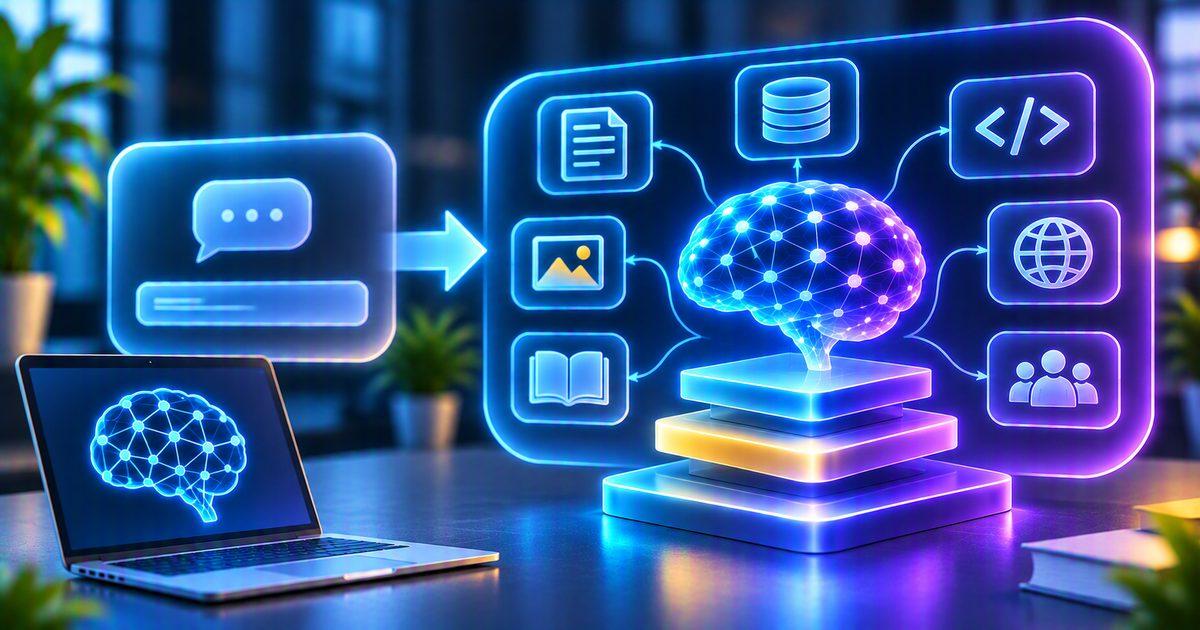
Task-oriented LLM applications introduce a different execution model. Instead of treating the user's message as a request for text, the system interprets it as an objective that may require several operations.
For example, imagine a user asking an AI assistant to prepare a weekly engineering performance report. A conventional chatbot might explain how to create such a report or generate a template. A task-oriented application could retrieve issue-tracking data, query deployment records, summarize engineering activity, compare current performance with previous weeks, generate charts, and prepare a report for review.
The application must understand the desired outcome, identify the required information, select appropriate tools, execute operations, validate the results, and return a completed artifact.
This requires a different software architecture. The application needs a workflow controller, access to external systems, structured tool interfaces, state management, and mechanisms for handling failures. The LLM may decide which action should happen next, but application code should enforce permissions and validate important operations.
This shift also changes how developers measure success. A chatbot may be evaluated based on answer relevance and factual accuracy. A task-oriented application must additionally be evaluated on task completion, tool-call correctness, execution time, error recovery, and whether the final result meets the user's requirements.
The most important distinction is that the model is no longer only generating an answer. It is participating in an execution process.
AI Agents: Giving Language Models the Ability to Take Action
AI agents are one of the most significant developments in the evolution of LLM applications. An agent combines a language model with instructions, tools, and an execution loop that allows it to work toward a defined objective.
A basic agent receives a task, determines what information or actions are needed, invokes an appropriate tool, interprets the result, and decides whether another step is required. It continues until the task is complete, it encounters a condition that requires human intervention, or it determines that it cannot proceed.
Consider a software engineering agent asked to investigate a failing automated test. It may inspect the repository, identify the relevant test file, read the implementation, reproduce the failure, analyze the error, propose a code change, and run the test again. Each result informs the next decision.
The agent is not simply generating code based on a developer's description. It is interacting with a development environment and using feedback from that environment to guide its work.
OpenAI's agent-building guidance describes the core building blocks as models, tools, orchestration, context, and guardrails. Its Agents SDK supports multi-step execution, tool use, handoffs, and tracing for monitoring agent workflows.
Nevertheless, the presence of an LLM does not automatically make an application an agent. A system that calls a model once to classify an email is still a conventional model-powered application. An agent becomes more meaningful when the model participates in deciding and executing a sequence of operations.
The degree of autonomy should depend on the task. An agent that summarizes internal documentation may operate with limited supervision. An agent that modifies production infrastructure or approves financial transactions requires stricter authorization, validation, and human review.
Workflow Automation: Connecting AI With Existing Business Systems
One of the most commercially useful directions for LLM applications is workflow automation. Organizations already depend on software systems for customer relationship management, human resources, finance, project management, support, inventory, and reporting. These systems contain the information and operational capabilities required to complete business processes.
LLMs introduce a natural-language interface and reasoning layer that can help coordinate these existing systems.
For example, an AI-powered recruitment assistant could receive a request to prepare a shortlist of candidates for a technical position. It might retrieve applications from an applicant tracking system, extract relevant experience, compare qualifications against role requirements, identify missing information, and prepare a structured shortlist for a recruiter.
The important point is that the LLM does not need to replace the applicant tracking system. The existing system remains the source of truth for candidate records, while the AI application helps interpret information and coordinate approved actions.
This architecture is often more practical than building an entirely autonomous business platform. Organizations can introduce AI capabilities into existing processes without replacing established databases, permissions, and operational controls.
The same pattern applies to invoice processing, customer onboarding, technical support, sales operations, compliance documentation, and internal reporting. An LLM can interpret unstructured requests, while APIs and conventional application logic handle structured operations.
For engineering teams, this creates a valuable integration challenge. The application must connect multiple systems, handle authentication, manage API failures, validate data, and preserve a consistent workflow state. Reliable integrations are often more important than increasingly elaborate prompts.
From Chatbot Features to Complete Software Experiences
As LLM capabilities become integrated into products, AI will increasingly appear as an embedded feature rather than a separate chat interface.
A developer working in an integrated development environment may receive code suggestions, automated explanations, test-generation assistance, and repository-level task execution without opening a separate chatbot. A financial analyst may interact with an AI system through a spreadsheet that can interpret financial questions and generate formulas or reports. A customer-support representative may receive recommended actions directly inside a support dashboard.
These applications reduce the distance between identifying a problem and completing the corresponding action.
The user interface may still include a conversational component, but conversation is no longer the entire product. It becomes one interaction method among several, alongside forms, dashboards, notifications, generated documents, voice interfaces, and direct application controls.
This also means that LLM application design must consider the complete user experience. Developers need to decide when the system should ask a question, when it should display a proposed action, when it should request confirmation, and when it can safely complete an operation in the background.
For engineers interested in the production architecture behind these experiences, InterviewNode's article "From Notebook to Low-Latency Service: The Engineering Journey of a Production ML Model" provides useful background on moving model-powered functionality into reliable software services.
Key Takeaway
The evolution beyond chatbots is fundamentally a shift from conversational output to task execution. Modern LLM applications can retrieve information, coordinate software systems, use tools, and complete multi-step workflows. Their value comes not simply from producing intelligent responses, but from integrating model capabilities into software experiences that deliver measurable outcomes.
Section 2: The Emerging Architecture of Next-Generation LLM Applications
Tool-Calling Architectures and External System Integration
A language model cannot independently access every database, API, application, or computing environment. It needs a controlled mechanism for interacting with external systems. Tool calling provides this mechanism.
A tool is typically a function with a defined name, description, input schema, and execution behavior. The application exposes available tools to the model, which can select an appropriate tool and generate structured arguments. The application executes the function and returns its result to the model.
For example, an enterprise assistant may have access to tools such as search_customer, get_order_status, create_support_ticket, and update_customer_record. When a user asks about a delayed order, the model can identify the required operation and request the relevant tool call.
The backend executes the function using the application's authentication and business logic. It then returns a structured result that the model can interpret.
This separation is important. The model decides what action may be appropriate, but the application determines whether the action is permitted and how it is executed. A model-generated function call should never be treated as sufficient authorization for a sensitive operation.
Tool design also has a direct impact on reliability. Functions should have clear responsibilities, typed parameters, predictable return structures, and meaningful error responses. A tool that combines unrelated operations or returns excessively large outputs can make the system harder to reason about and maintain.
As applications expand, developers must also manage tool discovery, versioning, authentication, rate limits, retries, and observability. These are familiar software engineering concerns, but they become more complex when the model dynamically selects which operations to invoke.
Retrieval-Augmented Generation and Enterprise Knowledge Access
Many enterprise tasks depend on information that changes frequently or exists outside a model's training data. Retrieval-Augmented Generation, or RAG, provides a way to connect LLM applications to external knowledge sources.
A typical RAG architecture ingests documents, extracts and cleans their content, divides the material into chunks, generates embeddings, and stores searchable representations in a retrieval system. When a user asks a question, the application retrieves relevant content and includes it in the model's context.
This makes it possible to build applications around internal policies, technical documentation, product catalogs, legal documents, research papers, support histories, and operational records.
However, future LLM applications will need more than basic semantic search. They may combine vector search, keyword search, structured database queries, metadata filters, graph relationships, and live API calls.
For example, an enterprise finance assistant may need to retrieve a company's expense policy, query the latest transaction records, and compare the results against a defined spending threshold. A vector database alone cannot reliably perform every part of this task. The application needs a coordinated retrieval architecture that selects the correct source for each information requirement.
Freshness and authorization are equally important. The system should not retrieve an employee's confidential information simply because it is semantically relevant to a question. Access controls must be applied before information enters the model's context.
Context selection also becomes important as the number of available sources grows. Supplying every retrieved document to the model can increase cost and introduce conflicting information. Retrieval pipelines need ranking, filtering, provenance, and relevance checks.
The data infrastructure behind these systems is closely related to the principles covered in InterviewNode's article "ML Data Pipelines for Software Engineers: From Event Streams to Model-Ready Data". Reliable AI applications depend on well-managed data ingestion, transformation, validation, and delivery.
Multi-Agent Systems and Specialized AI Components
As LLM applications handle increasingly complex tasks, developers may divide responsibilities among specialized agents. Instead of asking one model-driven component to perform research, analysis, planning, execution, and validation, a system can coordinate multiple agents with clearly defined responsibilities.
For example, an AI-powered market research platform might use a research agent to collect information, an analysis agent to identify trends, a verification agent to check supporting evidence, and a reporting agent to prepare the final document.
A coordinating agent or deterministic workflow controller can manage how these components interact.
There are two broad orchestration patterns. In a manager-style architecture, a central agent remains responsible for the overall task and calls specialist agents as needed. In a handoff architecture, one agent transfers control to another specialist that becomes responsible for the next stage.
OpenAI's agent orchestration documentation describes both patterns and explains that developers can combine model-directed decisions with code-controlled workflow logic.
Multi-agent architectures can improve separation of concerns, but they also introduce additional complexity. Each agent may require its own instructions, context, tools, state, and evaluation criteria. Communication between agents can introduce delays, duplicate work, and information loss.
More agents do not automatically produce better results. A single agent with a small set of well-designed tools may outperform a complicated network when the task is straightforward. Multi-agent systems are most useful when responsibilities can be separated into meaningful subtasks with explicit inputs and outputs.
The engineering objective should be to introduce specialization only when it improves measurable task performance, reliability, or maintainability.
Context, Memory, and State Management Across Long-Running Tasks
A major limitation of simple chatbot architectures is that they often treat each request as an isolated interaction or rely on a conversation transcript as the primary record of state.
Long-running LLM applications need more deliberate state management. An agent may work on a task over multiple sessions, interact with several external systems, or pause while waiting for approval. The application must preserve the information necessary to continue correctly.
This information can include the user's objective, completed operations, pending actions, important decisions, retrieved evidence, and unresolved issues.
Memory systems help preserve useful information across interactions. Short-term context can support the current task, while persistent memory can store information that may be relevant in future sessions. Structured databases may hold authoritative business state, while conversation summaries preserve useful interaction history.
These mechanisms should not be confused. A model's conversational memory should not become the source of truth for critical financial, customer, or operational records. Such information should remain in controlled application databases.
Long-running agents also require mechanisms for context compression, checkpointing, recovery, and idempotent execution. If an agent crashes after creating a support ticket but before recording that the operation succeeded, restarting the workflow should not create duplicate tickets.
For systems that process continuous events, the application may also need to update context as new information arrives. InterviewNode's article "Streaming Machine Learning: Building Models That Learn From Data in Real Time" provides relevant background on handling continuously changing data. Similar principles apply when LLM applications consume live events and maintain current operational context.
Key Takeaway
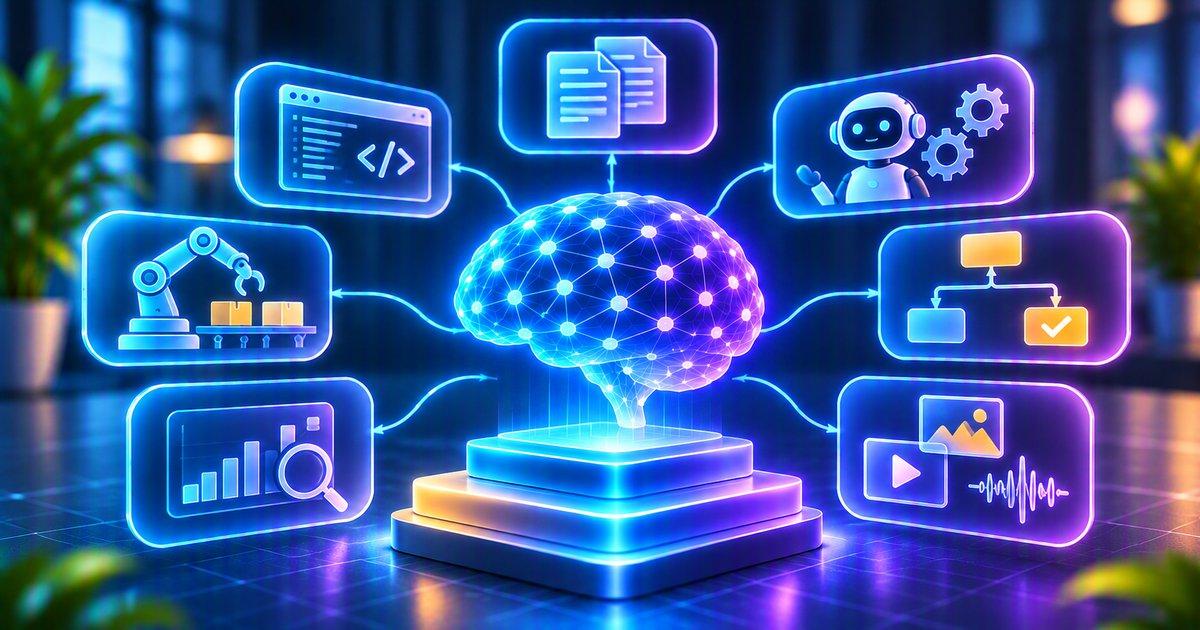
Next-generation LLM applications depend on a broader architecture than a model endpoint and a chat interface. Tool calling connects external systems, RAG provides enterprise knowledge, multi-agent orchestration supports specialized work, and memory and state management enable long-running tasks. The most reliable designs combine these capabilities with conventional software engineering controls.
Section 3: High-Impact Applications That Will Shape the Future of LLMs
Software Engineering: From Code Suggestions to Autonomous Development Workflows
Software engineering is one of the most visible areas where LLM applications are moving beyond conversational assistance.
Early AI coding tools primarily focused on code completion, syntax suggestions, and explanations. Modern systems increasingly support repository exploration, code modification, test generation, debugging, documentation, and pull-request preparation.
A developer may assign an issue to an AI coding agent. The agent can inspect the repository, identify relevant files, understand project conventions, implement a change, run tests, analyze failures, and prepare a proposed modification for review.
This creates a more complete software development workflow. Instead of asking the model to generate an isolated function, the developer delegates a bounded engineering task to a system that can interact with the repository and development environment.
The architecture requires more than code generation. Agents need controlled file access, command execution, repository context, dependency information, testing tools, and an execution environment. They also need mechanisms for handling incomplete requirements, failed tests, unexpected dependencies, and ambiguous implementation choices.
Sandboxing is particularly important. Generated commands and code should execute in isolated environments with restricted filesystem, network, and credential access. Production changes should be subject to review and established release controls.
The likely direction is not the complete disappearance of software engineers. Rather, the nature of engineering work may shift toward task decomposition, architectural decisions, code review, system validation, and the design of reliable AI-assisted development workflows.
Enterprise Operations: AI-Powered Business Process Execution
Enterprise operations involve numerous repetitive activities that require interpreting unstructured information and updating structured systems.
Examples include processing invoices, handling customer requests, preparing compliance reports, validating employee documentation, coordinating approvals, and maintaining operational records.
LLM applications can help connect these processes by interpreting natural-language instructions and coordinating existing business tools.
Consider an invoice-processing application. It receives an invoice, extracts relevant fields, compares them with a purchase order, checks supplier information, identifies discrepancies, and prepares the transaction for approval. The finance system remains responsible for the authoritative financial record, while the AI application coordinates information extraction and workflow decisions.
The same approach can support recruitment operations. An AI assistant can organize candidate information, compare applications against role requirements, prepare interview summaries, and schedule approved follow-up activities.
However, enterprise workflows often involve sensitive information and decisions with legal or financial consequences. These applications need permission controls, audit trails, data retention policies, and human approval for high-impact actions.
A useful design principle is to automate information-intensive steps while keeping policy-sensitive decisions under appropriate human or deterministic controls. This allows organizations to gain efficiency without granting an AI system unrestricted authority.
Healthcare and Scientific Research: AI as an Analytical Assistant
Healthcare and scientific research are information-intensive domains where professionals must interpret large volumes of documents, records, studies, and observations.
LLM applications can help summarize research literature, extract structured information from documents, organize clinical records, prepare administrative reports, and support evidence discovery.
In scientific research, an AI application may search academic papers, compare experimental methods, extract reported results, organize references, and generate a structured literature review. A more advanced system could connect to data-analysis tools and help researchers inspect datasets or generate reproducible analysis scripts.
In healthcare administration, applications may assist with appointment coordination, document processing, insurance workflows, and patient communication. Clinical decision-support applications require considerably stronger safeguards, because generated information must be validated against appropriate medical sources and professional judgment.
The important distinction is between assistance and authority. An LLM can help organize information, identify relevant evidence, or prepare a draft, but its output should not automatically be treated as a validated clinical conclusion.
These applications will depend on secure data access, privacy-preserving infrastructure, source traceability, domain-specific evaluation, and clear accountability.
Cybersecurity and IT Operations: Intelligent Investigation and Response
Cybersecurity and IT operations generate large volumes of logs, alerts, configuration records, incident reports, and system events. Investigating these signals often requires correlating information across multiple tools and understanding relationships between events.
LLM applications can help analysts summarize incidents, query security information, investigate suspicious activity, retrieve relevant documentation, and prepare response recommendations.
For example, an AI-assisted security operations application might receive an alert about unusual authentication activity. It can retrieve relevant identity logs, inspect recent account activity, compare events with known threat patterns, and prepare an investigation summary.
An agent may also interact with approved security tools to collect additional evidence. However, actions such as disabling accounts, blocking network traffic, or changing production configurations should be governed by explicit authorization policies.
The same pattern applies to IT operations. An agent can investigate a service outage by correlating monitoring alerts, deployment history, application logs, and infrastructure events. It may identify likely causes and recommend a remediation procedure.
The value comes from reducing the time required to collect and interpret evidence. Reliability still depends on accurate data, validated procedures, and clear boundaries around automated remediation.
Key Takeaway
The future of LLM applications extends across software engineering, enterprise operations, healthcare administration, scientific research, cybersecurity, and IT operations. The common pattern is the integration of language models with specialized data sources and operational tools. The most valuable systems will be those that solve clearly defined problems while respecting the reliability and safety requirements of their domains.
Conclusion: The Future of LLMs Is About Building Systems That Get Work Done
LLM applications are entering a new phase. The chatbot introduced a simple way for people to interact with language models, but the broader opportunity lies in integrating those models into the systems that power everyday work.
AI agents can coordinate tools and complete multi-step tasks. RAG connects models to current and organization-specific information. Memory supports continuity across interactions. Multi-agent architectures divide complex responsibilities, while multimodal capabilities allow applications to work with information beyond text.
These capabilities are creating new opportunities across software engineering, enterprise operations, healthcare administration, scientific research, and cybersecurity.
However, the transition from conversation to execution introduces a different set of engineering responsibilities. Developers must design reliable workflows, secure integrations, structured state management, evaluation pipelines, observability, and human approval mechanisms.
The strongest LLM applications will not necessarily be the ones with the largest models or the most autonomous agents. They will be the ones that solve meaningful problems with the right combination of model capabilities and conventional software engineering.
For software engineers, this is an important shift in the skills required to build modern AI products. Understanding APIs, databases, distributed systems, retrieval, orchestration, security, and production deployment will be just as important as understanding how to interact with an LLM.
The future of LLM applications is not simply better chatbots. It is intelligent software that can understand objectives, access the right information, coordinate systems, and complete useful work under reliable human and technical controls.
Frequently Asked Questions (FAQs)
1. What is the future of LLM applications?
LLM applications are evolving from simple conversational interfaces into systems that can retrieve information, use external tools, execute workflows, and interact with business software. Future applications will increasingly combine agents, memory, retrieval, multimodal capabilities, and conventional software infrastructure.
2. Are chatbots becoming obsolete?
No. Chatbots remain useful for customer support, information retrieval, education, and conversational interfaces. However, many applications are expanding beyond question-answering to include task execution, system integrations, and workflow automation.
3. What are agentic LLM applications?
Agentic LLM applications use language models to manage multi-step tasks, select tools, interpret results, and determine subsequent actions. They can operate with varying degrees of autonomy depending on the application's requirements and safety constraints.
4. How are AI agents different from traditional chatbots?
Traditional chatbots primarily respond to user messages. AI agents can interact with external systems, execute tools, maintain task state, and work through multiple steps to achieve an objective. The distinction is based on workflow execution rather than conversational ability alone.
5. What technologies are used to build modern LLM applications?
Common technologies include LLM APIs, agent frameworks, vector databases, relational databases, retrieval systems, API integrations, orchestration engines, memory stores, and observability platforms. The appropriate combination depends on the application's data sources, workflow complexity, and security requirements.
6. What is the role of RAG in next-generation LLM applications?
RAG connects language models to external knowledge sources, allowing applications to retrieve current or organization-specific information. It is particularly useful for enterprise assistants, research tools, documentation systems, and applications that need evidence-based responses.
7. What are multi-agent systems?
Multi-agent systems consist of multiple AI agents that collaborate or coordinate to complete a task. Each agent may have a specialized responsibility, such as research, analysis, coding, or validation. Orchestration logic determines how tasks and information move between agents.
8. How are LLMs changing software engineering?
LLMs are expanding from code completion and explanation into repository exploration, debugging, test generation, documentation, and task execution. AI coding agents can perform multiple development steps, although human engineers remain responsible for architecture, validation, security, and final review.
9. Can LLM applications automate enterprise workflows?
Yes. LLM applications can interpret requests, retrieve business information, coordinate APIs, prepare documents, and execute approved operations. They are particularly useful for processes involving unstructured information and multiple existing software systems.
10. What are the biggest challenges in building production LLM applications?
Major challenges include reliability, hallucinations, prompt injection, data privacy, authorization, latency, operating cost, and evaluation. Production systems also need observability, error recovery, and human approval for sensitive actions.
11. What is the difference between an LLM application and an AI agent?
An LLM application is any software system that uses a large language model. An AI agent is a more specific type of application in which the model participates in deciding and executing a sequence of actions to accomplish a task. Not every LLM application needs agentic behavior.
12. Will AI agents replace traditional software applications?
AI agents are more likely to become integrated into existing software products than replace every conventional application. Databases, transaction systems, authentication services, and deterministic business logic will remain essential. Agents will increasingly provide intelligent interfaces and coordination capabilities around them.
13. How can developers reduce the cost of LLM applications?
Developers can use smaller models for simpler tasks, optimize prompts and context, cache reusable information, reduce unnecessary model calls, parallelize independent operations, and select appropriate orchestration patterns. Cost should be measured against successful task completion rather than token usage alone.
14. What role will multimodal AI play in future LLM applications?
Multimodal AI allows applications to process combinations of text, images, audio, and video. This supports use cases such as visual inspection, voice-based assistants, document understanding, video analysis, and applications that connect digital workflows with physical environments.
15. What should software engineers learn to build next-generation LLM applications?
Engineers should learn LLM integration, prompt and context engineering, RAG, tool calling, agent orchestration, databases, API design, security, evaluation, and production deployment. Knowledge of distributed systems, observability, and workflow automation is also valuable for building reliable AI products.