Section 1: Understanding the AI Agent Economy and the Rise of Autonomous Systems
From Generative AI Applications to Autonomous AI Agents
The first wave of mainstream generative AI applications focused primarily on producing content. Users entered prompts and received generated text, images, summaries, or code. These systems improved productivity by reducing the time required to perform information-intensive tasks, but they generally depended on users to decide what to do next and execute the resulting actions.
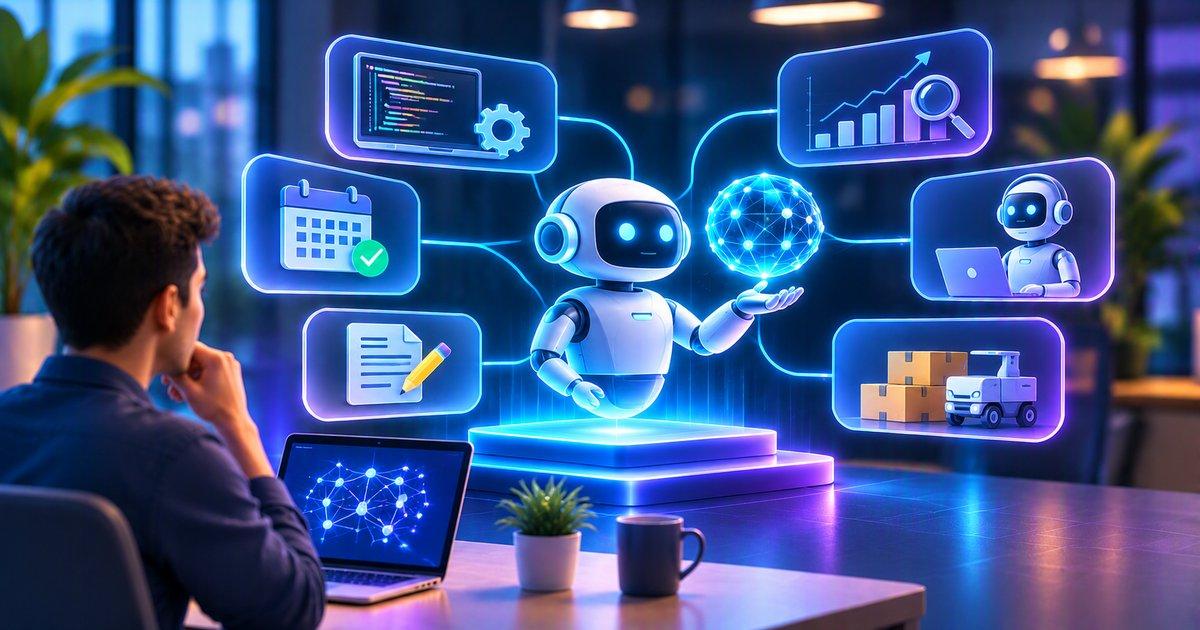
AI agents introduce a more action-oriented model. Rather than generating a response and stopping, an agent can interact with tools, observe the results, and continue working toward an objective. The model may determine which information is missing, select an appropriate tool, interpret the tool's response, and decide whether another operation is necessary.
A simplified agent execution cycle includes four stages: perception, planning, action, and observation. During perception, the agent interprets the user's objective and available context. During planning, it determines an appropriate sequence of actions. During action, it invokes tools or external services. During observation, it examines the results and decides whether to continue, revise its approach, or finish.
Consider a software engineering team that wants to investigate a production incident. A conventional monitoring dashboard displays alerts and metrics, but an AI agent could retrieve recent deployment records, inspect logs, correlate error patterns, identify potentially affected services, and prepare an incident summary. If granted appropriate permissions, it might also create an incident ticket or notify the responsible engineering team.
The distinction is important because autonomy introduces new engineering responsibilities. A system that only generates text can still produce incorrect information, but an agent that executes actions can create operational consequences. Developers must therefore design boundaries around tool access, data retrieval, approval requirements, and execution limits.
An agent should not automatically receive unrestricted authority simply because it can formulate a plausible plan. Reliable systems combine model-driven decisions with deterministic application logic, validation, and human oversight.
Why Organizations Are Investing in Agentic AI
Businesses are interested in AI agents because many operational processes involve repetitive information gathering, decision support, coordination, and execution across multiple applications. These processes often require employees to move between databases, ticketing systems, spreadsheets, communication tools, and internal knowledge repositories.
An AI agent can potentially coordinate these activities through APIs and structured tools. For example, a sales operations agent could retrieve account information, summarize previous interactions, identify incomplete CRM records, prepare follow-up recommendations, and request approval before updating customer-facing information.
The economic value comes from reducing manual coordination, shortening execution time, improving information accessibility, and allowing employees to focus on decisions that require judgment. However, the value depends on whether the agent actually completes the intended task accurately and safely.
Industry research illustrates the growing interest. LangChain's June 2026 State of Agent Engineering survey of more than 1,300 professionals reported that 57.3% of respondents had agents running in production environments, with another 30.4% actively developing agents with plans to deploy them. The survey also identified quality as a major obstacle to production adoption. These results indicate momentum among surveyed organizations, not universal adoption across the entire economy.
McKinsey's August 2026 State of AI research also reported that 40% of respondents from organizations with annual revenue above $1 billion were scaling AI agents in at least one business function, compared with 27% in the previous year. The research suggests that larger organizations are moving faster toward operational deployment, although scaling remains uneven across company sizes and functions.
The business opportunity is not limited to reducing labor costs. Agents may also make previously uneconomical services practical. A company could provide more personalized customer assistance, process a larger volume of documents, accelerate research, or offer intelligent software features without increasing human staffing at the same rate.
Nevertheless, organizations must account for implementation costs, model usage, integration complexity, security requirements, and the cost of correcting errors. An agent that requires extensive human intervention may deliver less value than a simpler workflow automation system.
The Economic Ecosystem Around AI Agents
The AI agent economy consists of more than companies developing foundation models. It includes the infrastructure, software platforms, integration services, data systems, governance products, and specialized professional services required to deploy autonomous applications.
At the infrastructure layer, cloud providers and hardware vendors supply the computing resources needed to train and serve models. Model providers offer foundation models through hosted APIs or open-weight distributions. These models provide the reasoning, language understanding, and generation capabilities used by agent applications.
The application layer includes agent frameworks, orchestration platforms, workflow engines, vector databases, enterprise search systems, API connectors, and monitoring products. These technologies allow developers to connect models to business applications and external services.
A separate integration and services market is also emerging. Organizations often have valuable business data distributed across legacy applications, internal databases, document repositories, and third-party platforms. Connecting an agent to these systems requires architecture, data engineering, security design, and workflow transformation.
The professional services layer includes agent implementation consultants, AI solution architects, workflow designers, evaluation specialists, security auditors, and AI governance professionals. Their work helps organizations move from experimentation to repeatable deployments.
This ecosystem creates opportunities for companies of different sizes. Large enterprises may develop internal AI platforms and specialized engineering teams. Smaller businesses may adopt managed agent platforms or build narrow applications for specific industries. Startups can create specialized agents for legal operations, financial research, customer support, software development, and other vertical workflows.
The emerging market also creates opportunities for independent developers and consulting firms. A specialist who understands a business process and can build a secure, measurable agent workflow may deliver value without developing a foundation model or operating a large infrastructure platform.
Engineers interested in the relationship between autonomous behavior and changing operating conditions can explore InterviewNode's article, Adaptive ML Systems: How Models Respond When the Environment Changes. Understanding how intelligent systems respond to changing inputs is relevant when designing agents that must operate across dynamic environments.
Key Takeaway
The AI agent economy is an expanding ecosystem involving models, infrastructure, applications, integration services, governance, and specialized talent. Enterprise adoption and agent-related hiring signals are increasing, but the market remains uneven. Engineers who understand both the technology and the business processes it supports will be better positioned to participate in this developing economy.
Section 2: Emerging Career Opportunities in the AI Agent Economy
AI Agent Engineers and Multi-Agent Systems Architects
AI agent engineers are responsible for developing applications that use language models to plan actions, invoke tools, coordinate workflows, and complete tasks. Their work combines backend development, LLM integration, application architecture, and evaluation.
A typical assignment might involve building an agent that investigates customer issues using a CRM system, a knowledge base, and an internal ticketing platform. The engineer must define the agent's tools, determine which information it can access, establish execution boundaries, and design how it handles errors or incomplete results.
Core responsibilities include building model integrations, designing tool schemas, implementing orchestration logic, managing conversation or task state, and validating outputs. Engineers may also develop routing logic that selects between different models or delegates specific tasks to specialized components.
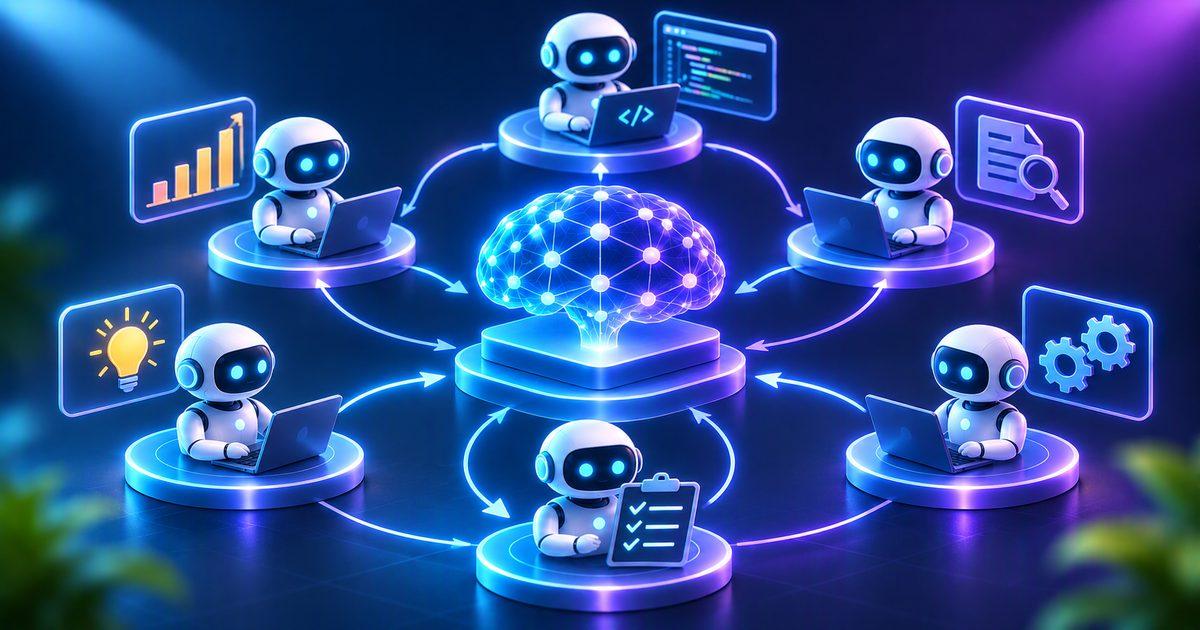
Multi-agent systems architects work at a broader architectural level. They design systems in which multiple specialized agents collaborate on a shared objective. For example, a research workflow could include a retrieval agent, an analysis agent, a verification agent, and a reporting agent.
The challenge is not simply assigning different names to several model instances. The architecture must define communication protocols, shared state, task ownership, error handling, and termination conditions. It must also prevent agents from duplicating work or producing conflicting outputs.
These roles require strong programming fundamentals and an understanding of distributed systems. Engineers must be able to explain how agents communicate, how execution is traced, what happens when one component fails, and how the application prevents unauthorized actions.
For software engineers, this is one of the most direct transitions into the AI agent economy. Existing knowledge of APIs, asynchronous processing, message queues, service orchestration, and system design can be applied to agent-based applications.
AI Workflow Architects and Enterprise Automation Specialists
Not every valuable career in the AI agent economy requires developing models or writing complex orchestration code. Organizations also need professionals who can identify business processes suitable for agent automation and translate them into implementable technical workflows.
AI workflow architects analyze how work currently moves through an organization. They identify manual steps, repetitive decisions, application dependencies, data requirements, approval stages, and operational risks. They then determine which activities should be automated, which should remain human-controlled, and how agents should interact with existing systems.
For example, consider a recruitment operations process. A workflow may begin when a candidate submits an application. The system could extract relevant information, compare qualifications against job requirements, organize application records, schedule follow-up tasks, and prepare interview summaries. However, decisions that materially affect candidates should have appropriate human review and accountability.
A workflow architect must understand the difference between automation and autonomy. A deterministic workflow is suitable when the process follows a known sequence. An agent is more useful when the system needs to interpret unstructured information or select the next action based on intermediate results.
These specialists often work with workflow automation platforms, API integrations, enterprise application connectors, data pipelines, and agent orchestration tools. They also need to measure business outcomes, including processing time, error rates, completion rates, employee workload, and cost per successful task.
Business process knowledge is particularly valuable in this career path. A professional who understands finance, customer support, HR operations, supply chain, or sales processes can identify practical agent opportunities that a purely technical developer may overlook.
As organizations move beyond isolated AI demonstrations, workflow architecture becomes an important bridge between engineering teams and business stakeholders.
AI Agent Product Managers, Context Engineers, and AI Experience Designers
Agentic applications introduce product challenges that differ from traditional software interfaces. Users may provide broad objectives instead of clicking through a fixed sequence of screens. The system may need to ask clarifying questions, explain its planned actions, request approval, and communicate what it completed.
AI agent product managers define the problem the agent should solve, identify the intended users, prioritize workflows, and establish success criteria. They must understand the model's capabilities and limitations well enough to avoid promising levels of autonomy that the technology cannot reliably deliver.
A product manager designing an enterprise finance agent, for example, must determine whether the system should only summarize transactions, recommend actions, or initiate payments after approval. Each level of autonomy has different usability, security, and compliance requirements.
Context engineers focus on the information and instructions supplied to models. They design how an agent receives task descriptions, user permissions, conversation history, retrieved documents, tool definitions, and application state. Their work helps ensure that the model has relevant information without receiving unnecessary or unauthorized context.
AI experience designers work on how people interact with agents. They consider how to communicate uncertainty, display progress, present evidence, request approval, and recover from failed operations. An agent interface should make its actions understandable rather than conceal complex operations behind an unexplained response.
These roles require a combination of technical literacy, product thinking, communication, and user research. They are particularly relevant for professionals transitioning from product management, UX design, business analysis, or technical program management.
The emerging opportunity is not restricted to building more capable agents. Organizations also need people who can make agent behavior understandable and useful to real users.
AI Evaluation Engineers, Governance Specialists, and Agent Security Professionals
Autonomous systems create new responsibilities around testing, accountability, security, and governance. An agent may execute multiple operations before completing a task, and failures can occur at different points in the execution process.
AI evaluation engineers develop methods to determine whether an agent performs reliably. They build test datasets, define task-level metrics, inspect tool selection, measure completion rates, and compare system behavior across model and prompt versions.
For example, an agent that processes invoices may be evaluated on extraction accuracy, correct vendor identification, calculation accuracy, policy compliance, and successful completion of the downstream accounting workflow. A response that looks convincing but contains an incorrect payment amount must be treated as a failure.
AI governance specialists establish policies for acceptable use, access permissions, human oversight, auditability, data retention, and risk classification. They help organizations define which operations agents can execute independently and which require human authorization.
Agent security professionals address risks such as prompt injection, tool misuse, unauthorized data access, credential exposure, and excessive permissions. They assess how malicious instructions could influence an agent and design defenses that operate at the application and infrastructure layers.
These responsibilities overlap with traditional quality engineering, cybersecurity, privacy, and compliance disciplines, but they require additional knowledge of model behavior and agent execution.
The need is supported by enterprise research. Deloitte's August 2026 survey found that only 5% of surveyed organizations considered their business processes highly prepared for AI agents, while just 15% reported having scaled orchestrated, cross-functional multi-agent adoption. The survey also found that leaders expected workforce disruption and new roles as agentic AI adoption expanded.
This gap between technological experimentation and organizational readiness creates opportunities for professionals who can make autonomous systems safe, measurable, and accountable.
Key Takeaway
The AI agent economy is creating opportunities across engineering, architecture, workflow automation, product management, evaluation, security, and governance. Not every career requires training foundation models. Professionals who combine existing domain expertise with agent-related technical capabilities can move into several different specializations.
Section 3: Technical Skills and Infrastructure Required to Build Autonomous Systems
Agent Architecture, Tool Calling, and Workflow Orchestration
The foundation of agent engineering is understanding how models interact with application tools and external environments. A language model alone cannot reliably update a database, access a private service, or execute a business transaction. The application must expose controlled interfaces that allow the model to request specific operations.
Tool calling provides this mechanism. Developers define tools with descriptions and structured input schemas. The model can select a tool and produce arguments, after which the application validates the request and executes the corresponding operation.
For example, an expense management agent may have access to tools such as get_expense_details, check_policy, and create_reimbursement_request. The model can decide which operation is relevant, but the application must verify the user's identity, permissions, and request validity before executing it.
Orchestration manages the sequence of these interactions. A simple agent may use a single model call followed by one tool execution. A more complex workflow may require several steps, intermediate state, conditional branches, and human approval.
State management is especially important. An agent must retain the information required to complete a task without confusing different users, sessions, or operations. Applications may use databases, task stores, or workflow engines to maintain execution state and support recovery.
Developers should also understand how to handle tool failures. A tool may time out, return incomplete data, reject an operation, or produce a result that conflicts with previous information. The orchestration layer must decide whether to retry, use an alternative, request clarification, or stop.
Multi-agent orchestration adds another layer of complexity. Specialized agents may communicate through shared state or defined message formats, but their responsibilities should remain clearly separated. A system that uses multiple agents without clear ownership can become more expensive and difficult to debug than a single well-designed workflow.
For software engineers, the most important capability is knowing when to use a model-driven decision and when to use deterministic code. Business rules, authorization, financial calculations, and irreversible actions should not depend entirely on model-generated reasoning.
Context Engineering, Memory, and Enterprise Data Integration
Agents can only make useful decisions when they receive relevant and trustworthy information. Context engineering determines what information enters the model, how it is organized, and how it changes throughout the task.
A typical agent may receive system instructions, user requests, retrieved documents, tool descriptions, recent interaction history, and structured application state. Combining all of these inputs requires careful design because large contexts increase token consumption and may introduce irrelevant or conflicting information.
Memory is another important concept, but it should not be treated as a single universal storage mechanism. Short-term task state may preserve information during one execution. Conversation memory may retain relevant information across interactions. Long-term organizational knowledge may be stored in databases, document repositories, or retrieval systems.
Engineers must determine what information should be retained, how long it should remain available, and which users or agents can access it. Sensitive information should not be copied into persistent memory without appropriate policy and consent.
Enterprise data integration creates additional challenges. Agents may need information from CRM platforms, ERP systems, databases, ticketing applications, internal documents, and external APIs. These systems use different schemas, authentication methods, update frequencies, and permission models.
A robust integration architecture should define how data is retrieved, transformed, validated, and returned to the agent. It should also account for stale records, missing fields, conflicting sources, and partial service outages.
For applications that process event streams or respond to rapidly changing information, real-time data pipelines can become essential. Engineers can explore InterviewNode's article, Streaming Machine Learning: Building Models That Learn From Data in Real Time, to understand how streaming architectures support systems that depend on continuously updated information.
The broader lesson is that agent intelligence depends not only on model capability but also on the quality, accessibility, freshness, and governance of the information available to the system.
Evaluation, Observability, and Reliable Agent Operations
Traditional software testing often compares program outputs against deterministic expectations. Agent systems require additional evaluation because model responses and action sequences may vary across executions.
An agent should be evaluated on whether it completes the intended task, not simply whether its final response sounds appropriate. A customer support agent that gives a convincing explanation but fails to create the required ticket has not completed its task successfully.
Task-level evaluation can measure completion rates, correct tool selection, argument validity, policy compliance, response quality, and the number of unnecessary actions. These metrics should be combined with human review for tasks where correctness is difficult to assess automatically.
Observability is necessary because agent execution involves multiple steps. A useful trace should show the initial request, model calls, tool selections, tool arguments, execution results, errors, and final outcome. Sensitive content should be protected through redaction and access controls.
LangChain's 2026 State of Agent Engineering survey found that 89% of respondents had implemented some form of agent observability, while 52.4% reported running offline evaluations on test sets. The difference suggests that many teams have invested in inspecting agent execution while evaluation practices are still developing.
Reliability engineering should also address retries, timeouts, rate limits, circuit breakers, idempotency, and recovery from interrupted tasks. If an agent submits a payment request but loses the response, retrying blindly could create duplicate transactions. The application should use operation identifiers and idempotent execution patterns where possible.
Production monitoring should include latency, token usage, cost per completed task, tool failure rates, human intervention frequency, and quality trends. Teams should also monitor whether agents are taking unnecessarily long execution paths or repeatedly calling the same tools.
Reliable agent systems need continuous evaluation rather than one-time testing. Changes to model versions, prompts, tools, context construction, or external APIs can introduce regressions. Engineers must be able to detect these changes and roll back deployments when required.
Key Takeaway
Building autonomous systems requires more than connecting an LLM to a collection of APIs. Engineers need expertise in orchestration, context management, enterprise integration, evaluation, observability, and security. The ability to control agent behavior and demonstrate reliable task completion is what separates production engineering from experimental automation.
Section 4: Preparing for Careers in the AI Agent Economy
The Technical Skills Software Engineers Should Develop
Software engineers entering the AI agent economy should begin with a strong foundation in conventional engineering. Programming, data structures, algorithms, APIs, databases, asynchronous execution, testing, and distributed systems remain important because agents operate within software environments.
Python is widely used for agent development, model integration, and data processing. Engineers should be comfortable building services with frameworks such as FastAPI, managing dependencies, writing unit and integration tests, and handling external API failures.
They should understand LLM fundamentals, including tokenization, embeddings, context windows, structured outputs, sampling, and model limitations. This knowledge helps developers determine how to supply context, select models, and manage response variability.
Agent-specific skills include tool calling, orchestration, state management, memory design, workflow execution, and multi-agent communication. Engineers should be able to build a simple agent without depending entirely on a framework, then use orchestration frameworks when they provide meaningful advantages.
Cloud infrastructure and deployment are also important. Docker, Kubernetes, managed databases, object storage, message queues, secrets management, and CI/CD systems are useful for operating agent applications.
Security knowledge should include authentication, authorization, API security, prompt injection, data privacy, and audit logging. Evaluation skills should cover test dataset design, task completion metrics, regression testing, tracing, and human review.
The most effective learning strategy is to build capabilities progressively. Begin with a basic tool-using agent, extend it into a retrieval-based application, introduce evaluation, and then deploy it with monitoring and security controls. Each stage should demonstrate an engineering skill that employers can assess.
Building a Portfolio That Demonstrates Agent Engineering Experience
A practical portfolio is one of the strongest ways to demonstrate readiness for an AI agent engineering role. Projects should solve realistic problems and show how the developer handles failures, permissions, data quality, and operational requirements.
A useful first project is an enterprise research agent. The application should retrieve information from multiple sources, compare findings, provide references, and produce a structured report. The portfolio should explain how retrieval works, how source relevance is measured, and what happens when evidence is insufficient.
A second project could be a customer support agent that integrates with a simulated CRM and ticketing system. It should retrieve account information, classify requests, prepare responses, and create tickets through controlled tools. Sensitive operations should require human approval.
A third project could be a multi-agent software engineering assistant. One agent could analyze an issue, another could inspect relevant documentation, and another could prepare a proposed code change. The application should maintain task state, enforce execution limits, and record tool calls.
A fourth project could focus on evaluation and observability. Build a test harness that runs a representative set of tasks, records agent traces, calculates completion rates, and compares performance across prompt or model versions.
Each project should include an architecture diagram, API documentation, example requests, test results, deployment instructions, and a discussion of limitations. It should also explain why the chosen architecture was appropriate and which alternatives were considered.
Candidates should avoid presenting a simple chatbot as an advanced agent system. A convincing project should demonstrate that the application can perform controlled actions, recover from failures, and produce measurable results.
A Practical Career Roadmap for Entering the AI Agent Economy
Software engineers do not need to abandon their existing specialization to enter the AI agent economy. A more practical approach is to build on their current strengths and add agent-specific capabilities.
Stage 1: Strengthen software engineering fundamentals. Review API development, databases, asynchronous programming, testing, distributed systems, and cloud deployment. These skills provide the foundation for building reliable applications around AI models.
Stage 2: Learn LLM application development. Understand model APIs, prompting, embeddings, retrieval, structured outputs, and context management. Build a simple application that answers questions using external documents.
Stage 3: Develop tool-using agents. Learn how models select tools, how applications validate arguments, and how orchestration manages multiple execution steps. Build an agent that performs a realistic task using controlled external APIs.
Stage 4: Add production engineering. Introduce authentication, authorization, observability, evaluation, retries, error handling, and deployment. Measure the quality and cost of completed tasks.
Stage 5: Choose a specialization. Depending on existing experience and interests, specialize in agent engineering, multi-agent architecture, enterprise workflow automation, AI product management, evaluation, security, or governance.
Stage 6: Demonstrate professional readiness. Publish well-documented projects, prepare system design explanations, practice coding interviews, and learn to communicate technical tradeoffs clearly.
Existing professionals can approach the transition differently depending on their background. Backend engineers can specialize in orchestration and enterprise integration. Data engineers can focus on context pipelines and retrieval systems. ML engineers can develop expertise in model evaluation and inference. DevOps and platform engineers can move toward AI infrastructure and agent operations.
Professionals from non-engineering backgrounds can also participate. Domain experts in finance, healthcare, recruitment, operations, and customer support may become valuable workflow architects or AI product specialists when they combine process expertise with technical literacy.
The important point is that the AI agent economy is not a single career path. It is a collection of interconnected specializations. Engineers should select the one that builds on their strongest existing capabilities while addressing a genuine market need.
Key Takeaway
A successful transition into the AI agent economy requires a combination of software engineering fundamentals, practical agent development, production experience, and measurable project work. Engineers should focus on a specific career direction rather than attempting to learn every framework or emerging job title. Demonstrated ability to build reliable autonomous workflows is more valuable than superficial familiarity with agent terminology.
Conclusion
The AI agent economy represents a developing shift in how organizations build software, coordinate work, and deliver digital services. Autonomous systems can move beyond generating information and participate in multi-step workflows involving databases, enterprise applications, APIs, and external tools.
This transition is creating demand for a broader range of professionals. AI agent engineers, multi-agent architects, workflow automation specialists, context engineers, AI product managers, evaluation engineers, governance specialists, and security professionals all contribute to the development and operation of autonomous systems.
For software engineers, the opportunity is especially relevant because many of the required capabilities build on existing engineering disciplines. Backend architecture, distributed systems, API integration, databases, testing, cloud infrastructure, and security remain central to building dependable agent applications.
However, the market should be approached realistically. Not every business process requires an autonomous agent, not every AI experiment will become a production system, and not every emerging job title will develop into a large employment category. Organizations will continue to need engineers who can evaluate whether automation is appropriate and determine how to implement it safely.
The most valuable professionals will combine technical depth with business understanding. They will know how to identify useful workflows, select the right level of autonomy, build controlled integrations, evaluate task completion, and demonstrate measurable outcomes.
The next phase of AI adoption will not be defined only by more powerful models. It will also depend on the people who can turn those models into reliable systems that solve real operational problems. For software engineers willing to expand their skills, the AI agent economy offers an opportunity to move from building applications that support human work to engineering systems that collaborate with people and execute increasingly complex tasks under human oversight.
Frequently Asked Questions (FAQs)
1. What is the AI agent economy?
The AI agent economy is the growing ecosystem of technologies, companies, services, and professional roles built around autonomous AI systems. It includes model providers, agent platforms, infrastructure companies, integration specialists, application developers, and governance professionals.
2. What is the difference between generative AI and agentic AI?
Generative AI primarily creates content such as text, images, and code in response to inputs. Agentic AI uses models to plan and execute actions through tools, external services, and multi-step workflows to accomplish objectives.
3. What jobs are emerging in the AI agent economy?
Emerging and evolving roles include AI agent engineer, multi-agent systems architect, AI workflow architect, context engineer, AI evaluation engineer, agent security specialist, AI governance professional, and AI agent product manager.
4. Do software engineers need machine learning experience to become AI agent engineers?
Deep machine learning experience is not always required for application-focused agent roles. Strong programming, API development, databases, system design, and cloud engineering skills are useful starting points, although knowledge of LLM fundamentals is essential.
5. Which programming language should I learn for AI agent development?
Python is a practical starting point because of its extensive AI ecosystem. TypeScript, Java, and Go are also useful for production applications and integrations with existing enterprise services.
6. What is a multi-agent system?
A multi-agent system consists of multiple agents that collaborate on a shared objective. Each agent may have a specialized responsibility, such as retrieval, analysis, planning, execution, or verification.
7. Are AI agents replacing traditional software applications?
Not necessarily. Many applications still require deterministic logic, databases, APIs, and conventional user interfaces. Agents are generally introduced where language understanding, flexible decision-making, or multi-step coordination adds measurable value.
8. What skills are most important for an AI agent engineer?
Important skills include Python or another backend language, LLM APIs, tool calling, orchestration, context engineering, databases, testing, evaluation, observability, security, and cloud deployment.
9. What is context engineering?
Context engineering is the process of designing and managing the information supplied to an AI model. It includes system instructions, retrieved documents, user input, memory, tool definitions, and application state.
10. How do companies measure the success of AI agents?
Organizations may measure task completion rates, accuracy, execution time, cost per successful task, tool-call success, human intervention frequency, customer satisfaction, and operational error rates.
11. What are the major risks associated with autonomous AI agents?
Major risks include incorrect actions, prompt injection, unauthorized data access, privacy violations, excessive tool permissions, uncontrolled execution loops, inaccurate outputs, and insufficient human oversight.
12. Can non-technical professionals find opportunities in the AI agent economy?
Yes. Business analysts, product managers, workflow architects, domain specialists, and operations professionals can contribute by identifying automation opportunities, designing processes, defining requirements, and evaluating business outcomes.
13. How should software engineers prepare for AI agent interviews?
Candidates should prepare for coding, LLM fundamentals, agent orchestration, tool calling, RAG, system design, security, evaluation, and production reliability. Practical projects provide valuable examples for technical discussions.
14. What projects should I build to demonstrate AI agent engineering skills?
Useful projects include an enterprise research agent, a customer support workflow agent, a multi-agent software engineering assistant, and an agent evaluation platform. Projects should demonstrate controlled tool execution, error handling, observability, and measurable results.
15. Is the AI agent economy a long-term career opportunity?
It has the potential to become an important part of the technology labor market as organizations integrate autonomous systems into their operations. However, specific job titles and hiring demand will evolve. Professionals who build transferable skills in software engineering, AI systems, security, and business process design will be better positioned to adapt.