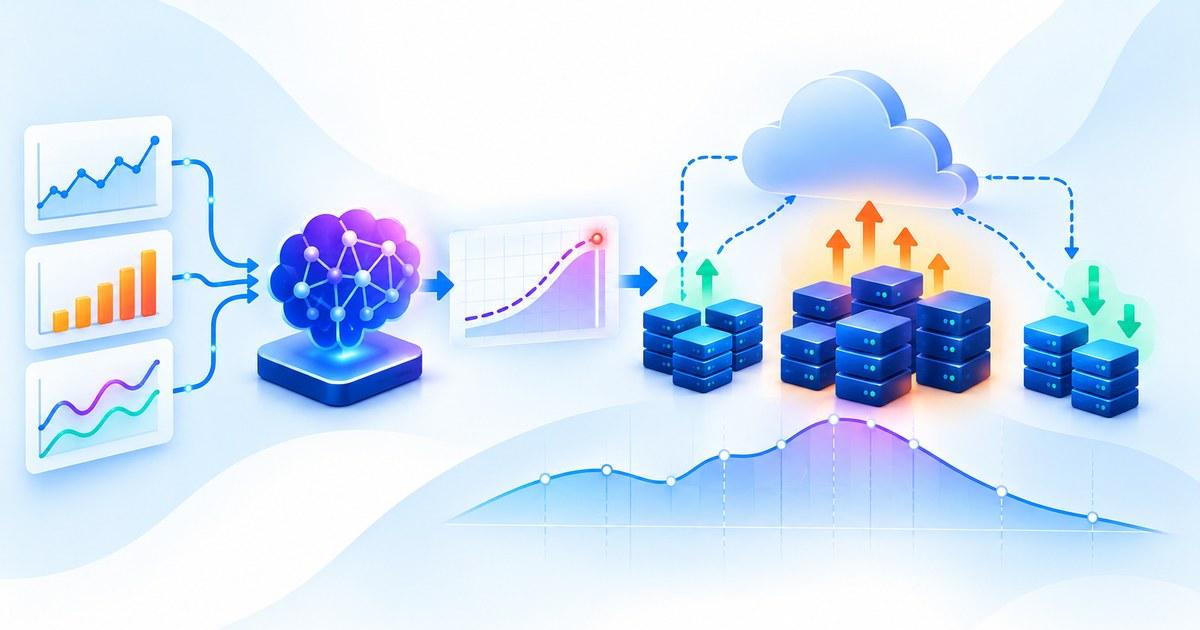

Section 1: Why Time-Series Foundation Models Represent a Major Shift in Forecasting
From Dataset-Specific Forecasting to Reusable Temporal Intelligence
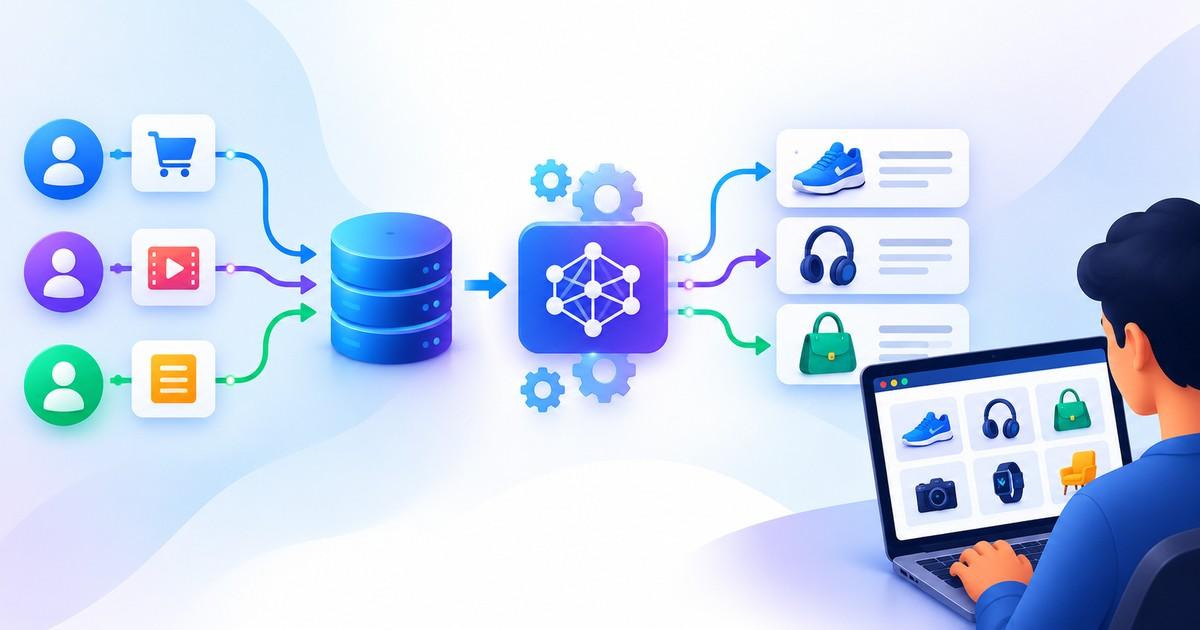
For decades, time-series forecasting has largely followed a dataset-specific development model in which engineers begin with a particular business problem, collect historical observations, engineer temporal features, select an appropriate algorithm, train the model, and optimize it for the characteristics of that individual dataset. A demand forecasting system for retail, an electricity forecasting system for utilities, and a predictive maintenance system for manufacturing may all contain sequences of numerical observations, yet they are traditionally treated as separate machine-learning problems that require separate modeling pipelines. This approach remains practical for well-defined applications, particularly when teams have sufficient historical data and the underlying environment is relatively stable, but it creates considerable duplication when organizations operate thousands of related temporal workloads.
Time-series foundation models introduce a different development paradigm by attempting to learn reusable temporal representations from broad collections of sequences rather than learning exclusively from the dataset associated with one downstream application. Instead of asking a model to understand only the historical behavior of a specific product, machine, customer segment, or geographic region, engineers can pretrain a model on diverse temporal patterns and then investigate how effectively those representations transfer to new forecasting problems. The underlying assumption is that many datasets contain recurring structures, including trends, periodic behavior, seasonality, temporal dependencies, volatility patterns, regime changes, and relationships between related signals, even when the business meaning of those signals is completely different.
This creates an important distinction between learning a forecasting task and learning temporal intelligence. A conventional model may become highly specialized in predicting one target, while a foundation model attempts to learn a representation of how numerical systems evolve over time that can remain useful across multiple targets. The concept is related to the broader transfer-learning principle discussed in “Transfer Learning Beyond LLMs: How Knowledge Moves Between ML Tasks,” but time-series data introduces additional challenges because numerical sequences can differ significantly in scale, frequency, sampling regularity, dimensionality, and semantic meaning. The practical value of a temporal foundation model therefore depends on whether it can identify patterns that are genuinely reusable rather than merely memorizing characteristics of the datasets seen during pretraining.
Why Time-Series Data Requires Specialized Foundation Models
Although time-series foundation models share some conceptual similarities with foundation models used for language and other modalities, temporal data has structural properties that require specialized engineering decisions. In a text model, tokens generally belong to a shared representational system in which words and subwords can be related through linguistic context, whereas a numerical value in a time series has no intrinsic semantic meaning without information about the variable, unit, sampling frequency, and temporal context. A value of 100 could describe revenue, temperature, demand, network latency, pressure, inventory, or some other measurement, meaning that the model must learn useful temporal structure without assuming that numerical magnitude alone communicates semantic identity.
Scale creates another challenge because similar patterns can exist at dramatically different magnitudes. A daily demand sequence might range between a few dozen units and several million units, while the underlying temporal behavior can still follow comparable seasonal or cyclical structures. A useful foundation model therefore needs mechanisms that allow temporal patterns to remain meaningful even when their numerical scale changes substantially. Sampling frequency introduces another layer of complexity because one application may produce observations every few milliseconds while another may generate weekly or monthly values, making temporal resolution an important consideration in both representation and computational design.
Pretraining Can Change the Economics of Forecasting Development
The economic argument for time-series foundation models becomes particularly important when organizations operate large numbers of related forecasting workloads. Under a conventional architecture, every new forecasting problem may require substantial effort across data preparation, feature engineering, model selection, hyperparameter tuning, evaluation, and deployment. When hundreds or thousands of related forecasting tasks exist, much of that work becomes repetitive because different teams repeatedly rediscover temporal structures that may already exist elsewhere in the organization or within broader datasets.
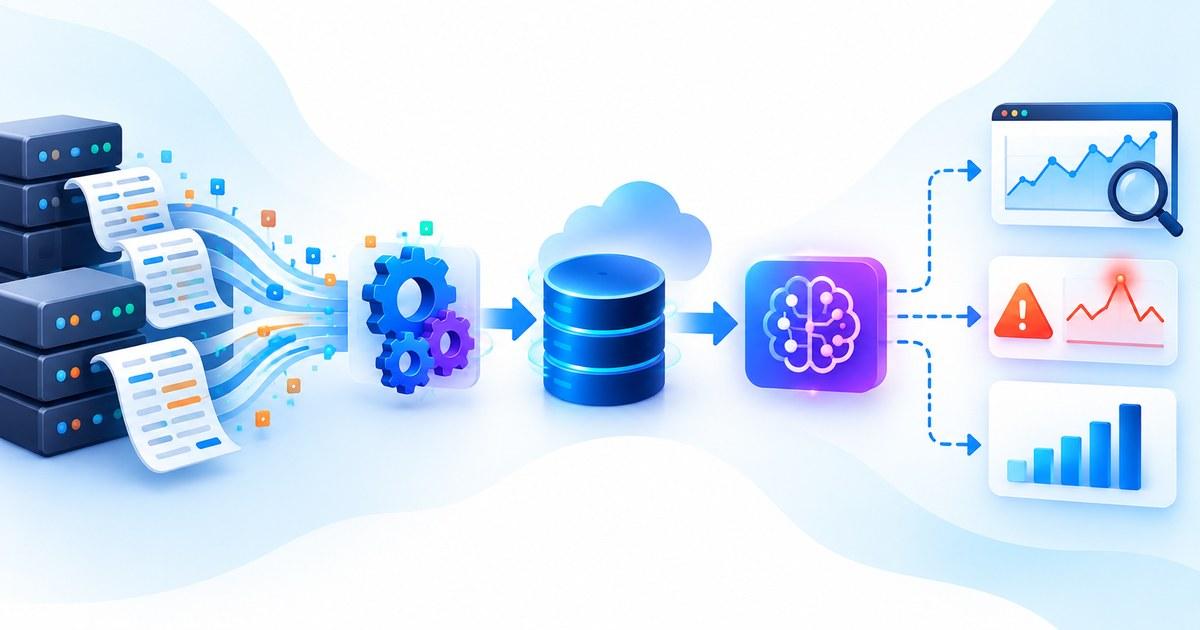
Pretraining introduces the possibility of moving some of that repeated work into a reusable model-development stage. A foundation model can learn general temporal representations from broad data and then serve as a common starting point for downstream applications. Depending on the architecture and task, the downstream system might use the pretrained model directly, adapt it using a relatively small amount of target-specific data, or fine-tune selected components for a specialized forecasting environment. The resulting development workflow can therefore shift from training every model independently toward adapting reusable temporal intelligence to different operational requirements.
This distinction becomes particularly valuable when target datasets contain limited historical information. A new product, a newly deployed sensor, a recently opened geographic market, or a newly introduced operational process may not have enough observations to support reliable training of a highly specialized model from scratch. A pretrained model may already have learned temporal patterns that provide a useful prior for the new application, potentially reducing the amount of target-specific information needed before useful predictions can be produced.
Key Takeaway
Time-series foundation models represent a shift from repeatedly training isolated forecasting models toward building reusable temporal intelligence that can support many downstream applications. Their potential advantage comes from learning transferable patterns across diverse sequences, reducing duplicated modeling effort, and improving data efficiency for new forecasting problems, while their real production value depends on how effectively those learned representations transfer across different domains, scales, frequencies, and temporal regimes.
Section 2: How Software Engineers Build and Adapt Time-Series Foundation Models
Learning General Temporal Patterns Through Large-Scale Pretraining
The central engineering challenge in building a time-series foundation model is determining how a model can learn temporal structures that remain useful across datasets it has never seen before. Traditional forecasting systems are usually optimized around one target variable and one historical dataset, which means the model can specialize heavily in the statistical properties of that environment. A foundation model requires a broader objective because its value comes from learning representations that can transfer across different forecasting problems, domains, sampling frequencies, and operating conditions. Software engineers therefore design pretraining pipelines around large collections of time-series data and use objectives that encourage the model to understand both local patterns and longer-range temporal dependencies.
Future-value prediction is one natural pretraining objective because the model can observe a historical context and learn to predict subsequent observations, encouraging it to identify trends, recurring patterns, seasonality, volatility, and relationships between earlier and later events. However, forecasting the next observation alone may not provide sufficiently rich representations for downstream tasks, particularly when applications involve long horizons or complex temporal dynamics. Engineers can therefore use broader sequence-learning objectives, including reconstructing masked segments, predicting future windows, learning representations from partially observed sequences, or combining multiple objectives that expose the model to different forms of temporal structure. The underlying principle is that pretraining should encourage the model to learn more than a narrow forecasting shortcut.
Data diversity becomes equally important because a foundation model can only generalize to the extent that its pretraining environment exposes it to useful forms of temporal variation. A model trained predominantly on one domain may become highly effective for patterns similar to that domain while remaining poorly suited to unfamiliar applications. A broader corpus can contain business metrics, sensor streams, operational measurements, environmental sequences, demand histories, and other temporal behaviors, giving the model opportunities to encounter different scales, frequencies, trends, seasonal cycles, and regime changes. The goal is not to make every dataset look identical, but to help the model recognize structural similarities across sequences that have completely different business meanings.
Representing Long Temporal Context Efficiently
Once a model is exposed to large quantities of time-series data, another fundamental problem emerges because raw sequences can become extremely long. A high-frequency system that records observations every second can produce thousands or millions of observations over a useful historical window, making direct processing computationally expensive. Software engineers therefore need efficient representations that preserve meaningful temporal information while keeping inference and training costs manageable. One approach is to divide continuous sequences into patches or temporal segments so that the model processes groups of observations as higher-level units rather than treating every individual value as an independent token.
Temporal patching can improve efficiency because a short segment can represent a local pattern such as a rising trend, repeated fluctuation, temporary spike, or stable interval. The model can then reason over these segments while reducing the effective sequence length. The choice of patch size becomes a design trade-off, however, because smaller patches preserve greater temporal resolution but create longer sequences, while larger patches reduce computational requirements but may obscure short-lived events. A forecasting system that predicts slow-moving monthly demand can tolerate different temporal granularity from an anomaly-detection system monitoring industrial equipment every few seconds.
Foundation-model architectures must therefore balance local and global context rather than assuming that a single temporal scale is sufficient. Short-range information may be necessary to identify recent changes, while longer-range context may be required to understand seasonality, annual cycles, or gradual shifts in system behavior. The model must also handle differences in numerical scale because similar temporal patterns can occur at dramatically different magnitudes. Normalization and representation strategies can help separate meaningful temporal behavior from raw magnitude, allowing the model to focus on structural characteristics that are more transferable between datasets.
Fine-Tuning Turns General Temporal Knowledge Into Domain-Specific Capability
Fine-tuning provides a mechanism for moving from broad temporal intelligence toward specialized production capability without discarding the representation learned during pretraining. Rather than initializing a model with random parameters and requiring the target dataset to establish every useful temporal relationship, engineers can update some or all of the pretrained model using domain-specific observations. The amount of fine-tuning can vary depending on the similarity between the pretraining data and the target environment, with closely related problems often requiring less adaptation than highly specialized applications.
The practical advantage of this approach is that the model can retain general temporal patterns while becoming more sensitive to domain-specific behavior. An energy forecasting system may benefit from pretrained knowledge about seasonality and demand cycles while also learning the specific behavior of a particular grid. An industrial application may inherit general understanding of temporal dependencies and then adapt to the operating characteristics of a specific machine family. This combination allows engineering teams to balance reuse and specialization rather than choosing exclusively between a generic model and a fully custom architecture.
The production decision ultimately depends on whether the additional complexity creates measurable value. A foundation model that performs only marginally better than a simpler baseline while requiring substantially more compute may not justify deployment, whereas a pretrained model that performs competitively with limited target-specific training can significantly reduce the time and effort required to launch new forecasting capabilities. This makes experimentation discipline essential, particularly because the most sophisticated model is not necessarily the most effective production choice. The same principle applies to the broader transition from experimentation to deployment described in “From Experiment to Production: The Decisions That Shape an ML System,” where model selection must be evaluated together with operational constraints, maintainability, and business requirements.
Key Takeaway
Time-series foundation models are built by combining broad temporal pretraining, efficient sequence representations, and flexible adaptation strategies that range from zero-shot inference to fine-tuning. Software engineers must carefully balance context length, temporal resolution, multivariate relationships, training diversity, and computational cost while evaluating whether reusable temporal knowledge actually transfers to the target environment. The strongest production approach is therefore not simply the largest or most general model, but the architecture that converts pretrained temporal representations into reliable downstream capability with an appropriate balance of accuracy, adaptation effort, and infrastructure cost.
Section 3: Turning a Time-Series Foundation Model Into a Production Predictive System
Production Forecasting Requires More Than Model Accuracy
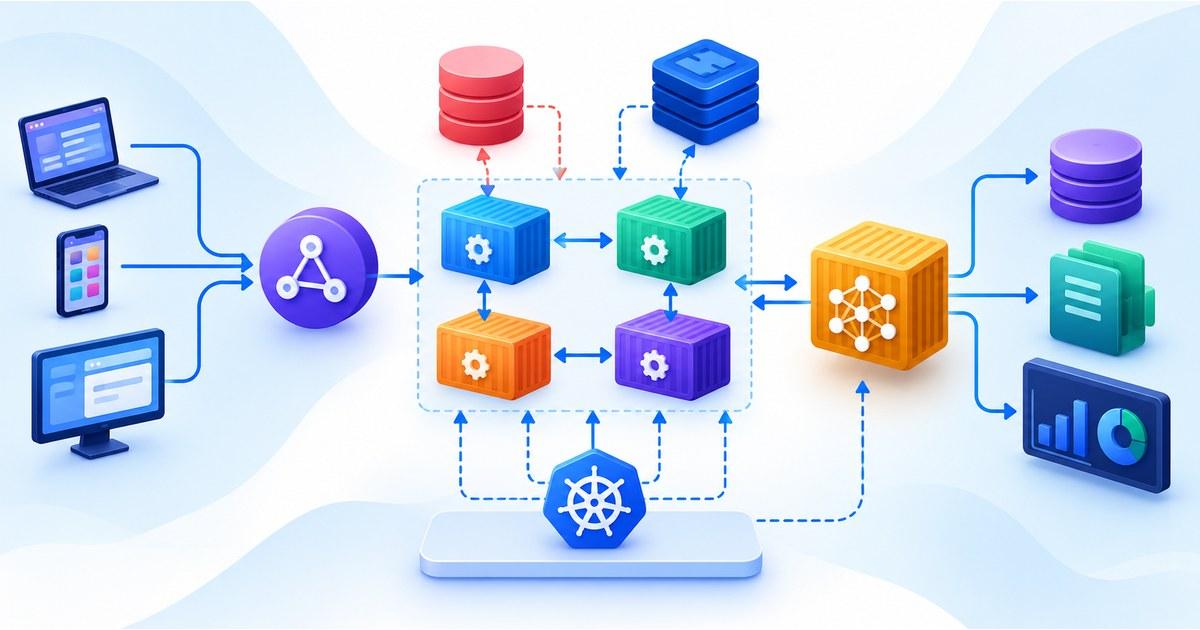
A time-series foundation model can demonstrate impressive forecasting performance in an experimental environment and still fail to deliver reliable value once it becomes part of a production system. Forecasting applications operate under operational constraints that are often invisible during model development, including strict latency requirements, incomplete observations, changing data frequencies, large numbers of concurrent prediction requests, and the need to generate forecasts consistently as new information arrives. Software engineers therefore need to treat the foundation model as one component within a larger predictive architecture rather than assuming that model quality alone determines system reliability.
The deployment architecture depends heavily on the forecasting workload. A supply-chain system that generates forecasts once each morning may use scheduled batch inference, while an industrial monitoring platform may require predictions every few seconds or minutes. A financial application may need repeated low-latency predictions across many instruments, while an enterprise planning system may prioritize throughput and reproducibility over millisecond-level response time. These differences influence how historical context is retrieved, how inference is scheduled, how models are loaded into memory, and how predictions are exposed to downstream systems.
The serving layer also needs to understand temporal context. A prediction can depend not only on the latest observation but on an ordered historical window with a specific length, frequency, normalization strategy, and treatment of missing values. If that context is constructed incorrectly, the model can produce a valid numerical output that is nevertheless based on invalid input. Production engineering must therefore guarantee that the model receives the temporal context it was designed to consume, while versioning the preprocessing and model components together so that changes remain traceable.
Data Freshness, Temporal Integrity, and Multivariate Context
The quality of a time-series prediction is heavily dependent on whether the historical context accurately reflects the state of the system at prediction time. Unlike many static datasets, temporal data arrives continuously, which means production pipelines must reason about freshness as well as correctness. An observation can have a valid schema and plausible value while still being unusable because it arrived too late, belongs to the wrong timestamp window, or does not represent the latest operational state required by the forecasting task.
Engineers therefore need explicit controls around timestamp alignment, observation frequency, missing intervals, duplicate records, delayed events, and unit consistency. A model trained on hourly data can behave unexpectedly when the production pipeline silently introduces irregular intervals, while a model expecting daily observations can produce misleading forecasts when upstream systems generate partial-day data without clear aggregation rules. These issues are not conventional model errors because the neural network may execute successfully; they are system-level failures occurring before inference.
The situation becomes more demanding for multivariate forecasting because temporal relationships among variables often carry predictive information. A manufacturing system may use temperature, vibration, pressure, throughput, and power consumption together, while an energy system may combine demand, weather, generation, storage, and market signals. The model needs both a reliable history for each individual series and consistent synchronization across the entire multivariate context. A timestamp misalignment between two signals can create artificial relationships that the model interprets as meaningful patterns.
Monitoring Must Track Temporal Drift, Forecast Horizons, and Business Impact
Monitoring a time-series foundation model requires a broader perspective than simply calculating an aggregate error metric after deployment. Forecast accuracy naturally changes across time, entities, horizons, seasons, and operating conditions, meaning that a single average score can hide important weaknesses. A model may perform well for one-day-ahead forecasts but deteriorate sharply for longer horizons, or it may work reliably for high-volume products while producing large errors for long-tail items whose histories contain fewer observations.
Production monitoring should therefore examine forecast behavior across meaningful temporal dimensions. Engineers can evaluate errors by horizon, time period, product or asset, geographic region, operating regime, and data-quality condition, allowing them to distinguish localized degradation from broad model deterioration. This is particularly important when a foundation model serves many downstream workloads because aggregate performance across all users may look stable even while an important individual application experiences substantial degradation.
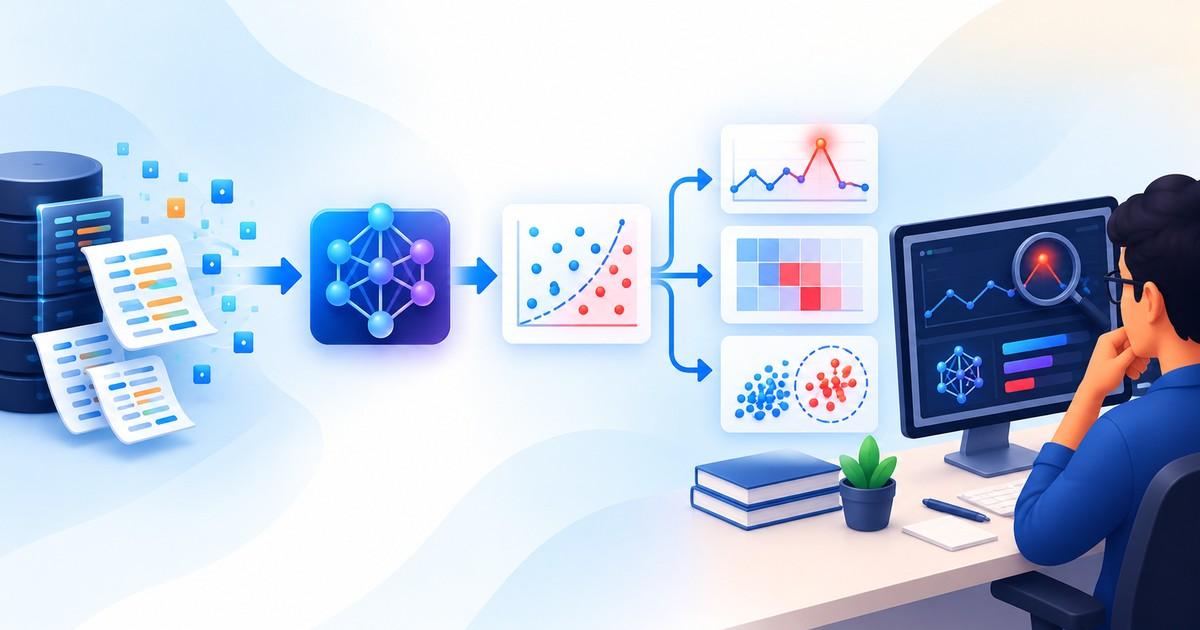
Monitoring should also examine changes in the underlying data distribution. A time-series system can encounter new seasonal patterns, structural breaks, unusual events, changes in customer behavior, or entirely new operating regimes. These changes do not necessarily imply that the model has failed, but they can indicate that the assumptions learned during pretraining or adaptation are becoming less representative of the current environment. This makes distribution monitoring an important complement to conventional prediction-error tracking, particularly when labels arrive with significant delay.
The challenge becomes even more significant when forecasts influence operational decisions. If the system changes inventory, maintenance schedules, capacity allocation, or other business processes, those interventions can alter the future data observed by the model. Engineers must therefore monitor not only forecast accuracy but also the relationship between predictions, decisions, and subsequent outcomes. This connects with the broader production challenge described in “The Challenge of Feedback Loops in Production Machine Learning,” because future observations may reflect actions influenced by earlier model predictions rather than representing an untouched view of the environment.
Key Takeaway
Deploying a time-series foundation model successfully requires a complete production architecture around the model, including reliable temporal data, synchronized multivariate context, appropriate inference infrastructure, uncertainty estimation, and monitoring across forecasting horizons and operating conditions. Software engineers must treat freshness, timestamp integrity, distribution change, and model-driven feedback as core system concerns because a foundation model can only produce reliable predictive value when the surrounding pipeline preserves the assumptions under which its temporal representations remain useful.
Section 4: Why Time-Series Foundation Models Could Redefine the Future of Predictive Systems
Forecasting Could Become a Reusable Temporal Intelligence Layer
The long-term significance of time-series foundation models may extend far beyond replacing one forecasting algorithm with another because their greatest value could come from turning temporal understanding into a reusable capability across multiple predictive applications. Traditional machine-learning architectures are often organized around one target variable and one business objective, which means organizations may build separate models for demand forecasting, anomaly detection, predictive maintenance, capacity planning, and event prediction even when those systems operate on related temporal patterns. A sufficiently general temporal foundation model creates the possibility of sharing learned representations across these workloads, allowing the model to provide a common layer of temporal intelligence while downstream components specialize the resulting predictions.
This architecture could change how enterprise machine-learning platforms are designed because teams would no longer need to treat every temporal workload as an independent model-development project. A retail organization could potentially use shared temporal representations across product demand, inventory movement, customer activity, and capacity planning, while an industrial organization could reuse temporal intelligence across equipment monitoring, failure prediction, maintenance scheduling, and production forecasting. The goal would not necessarily be to force every application through one universal model, but to establish a reusable representation layer from which specialized applications can be developed more efficiently.
Such reuse could also improve the economics of machine-learning operations because model development, evaluation infrastructure, and serving systems can become centralized rather than duplicated across individual teams.
Predictive Systems Will Become More Hybrid and Decision-Oriented
The future of forecasting is unlikely to be dominated by a single foundation model operating in isolation because production systems still contain statistical models, deterministic rules, optimization algorithms, domain-specific models, and human decision processes. A temporal foundation model can provide broad predictive capability while specialized components handle tasks that require explicit business constraints, domain knowledge, or deterministic guarantees. This creates a layered architecture in which temporal representation, prediction, optimization, and execution remain separate but connected stages of the system.
Consider a supply-chain application in which a foundation model forecasts demand across thousands of products. The forecast itself does not determine how much inventory the company should order because inventory decisions also depend on supplier constraints, lead times, storage capacity, service-level targets, procurement costs, and risk tolerance. An optimization system can consume the model's forecasts while enforcing these operational constraints, allowing the forecasting layer to focus on predicting the evolving environment instead of embedding every business rule inside the model.
This separation can make systems easier to evolve because prediction models can be upgraded independently from decision logic, while domain-specific constraints can remain explicit and auditable. It also reinforces the distinction between predicting what is likely to happen and determining what should be done in response, which becomes increasingly important as machine learning moves deeper into operational workflows. A foundation model may therefore become one component of a larger decision-intelligence architecture rather than the central component responsible for every stage of reasoning.
Hybrid architectures are also useful when statistical methods provide strong performance for predictable components of a series. A seasonal forecasting model may capture stable periodic behavior effectively, while a learned model handles nonlinear relationships or complex residual patterns. Combining these approaches can produce a system that uses expensive learned capacity only where it creates measurable value, rather than assuming that every temporal pattern requires a large neural architecture.
Continuous Adaptation Will Become More Important as Environments Change
Time-series systems operate in environments that are inherently dynamic, which means a model that performs well today may encounter materially different behavior months or years later. Customer demand changes, products evolve, operational processes are redesigned, economic conditions shift, and external events can create patterns that were absent from the training data. This makes adaptation a central requirement for the next generation of predictive systems, particularly when foundation models are intended to serve many domains over long periods.
Continuous adaptation does not necessarily mean updating model parameters after every new observation because unrestricted online learning can cause the system to absorb temporary noise, faulty measurements, or anomalous events as though they represent permanent changes. A more disciplined architecture can combine streaming data ingestion with monitoring, drift detection, scheduled evaluation, and controlled model updates so that adaptation occurs when evidence indicates that the underlying temporal process has meaningfully changed.
This creates a more sophisticated lifecycle in which the foundation model can remain stable while downstream adaptation layers respond to local changes. In some applications, lightweight fine-tuning may be sufficient, while others may require a complete retraining cycle or even a specialized model for a new regime. The critical engineering question becomes whether the observed change represents genuine environmental evolution, a temporary disturbance, a data-quality problem, or a change caused by the system's own interventions.
The ability to respond to evolving user behavior is particularly relevant for customer-facing predictive systems because historical relationships can change when users respond to product changes, recommendations, pricing, or external events. The broader challenge is explored in “How Machine Learning Systems Handle Changing User Behavior,” where model reliability depends on recognizing that the environment producing training data is itself dynamic and can respond to the system's predictions.
Key Takeaway
Time-series foundation models could become a reusable temporal intelligence layer within broader predictive systems, supporting forecasting, anomaly detection, and other temporal workloads while specialized models, statistical methods, optimization engines, and business rules handle domain-specific requirements. Their long-term value will depend less on model scale alone and more on whether engineers can build adaptive, reproducible, and operationally reliable systems that continue to provide useful predictions as the environments they model evolve.
Conclusion
Time-series foundation models represent a fundamental change in how software engineers can approach predictive systems because they shift the emphasis from building isolated models for individual datasets toward developing reusable temporal intelligence that can be adapted across many applications. Traditional forecasting workflows often require teams to repeat the same sequence of activities for every new problem, including data preparation, feature engineering, model selection, training, tuning, evaluation, deployment, and monitoring. When an organization manages thousands of time-dependent signals, that approach can create substantial duplication in both engineering effort and infrastructure. Foundation models introduce the possibility of learning general temporal patterns once and then reusing those representations across multiple downstream forecasting and predictive tasks.
The significance of this approach does not come simply from increasing model size. The more important development is the attempt to learn temporal structures that remain useful outside the datasets on which the model was originally trained. Trends, seasonality, periodicity, volatility, long-range dependencies, regime changes, and relationships among variables can appear in many different environments even when the underlying business meanings are completely different. A successful time-series foundation model attempts to capture those transferable characteristics while remaining flexible enough to adapt to the specific behavior of a target application.
This creates a new model-development spectrum that ranges from zero-shot forecasting to few-shot adaptation and full fine-tuning. A new forecasting problem with limited historical data may benefit from a pretrained model without requiring extensive retraining, while a mature production application may use the same general temporal foundation as a starting point for domain-specific adaptation. The critical engineering decision is not whether one approach is universally superior, but how much specialization the target workload actually requires and whether the additional adaptation produces measurable improvements in quality, reliability, cost, or maintainability.
Frequently Asked Questions
1. What is a time-series foundation model?
A time-series foundation model is a machine-learning model pretrained on large and diverse collections of temporal data with the objective of learning reusable temporal representations that can support multiple downstream tasks, including forecasting, anomaly detection, classification, and other predictive applications.
2. How is a time-series foundation model different from a traditional forecasting model?
A traditional forecasting model is usually optimized for a particular dataset, target variable, forecast horizon, or domain, while a time-series foundation model attempts to learn patterns that transfer across datasets and downstream applications. The foundation-model approach therefore emphasizes reuse and adaptation rather than training every predictive model independently from scratch.
3. What does zero-shot forecasting mean?
Zero-shot forecasting refers to generating predictions for a previously unseen time series using a pretrained model without first performing target-specific training. The model relies primarily on temporal patterns learned during its broader pretraining stage.
4. Why is few-shot adaptation useful for time-series forecasting?
Few-shot adaptation allows a pretrained model to incorporate a relatively small amount of target-specific historical data, which can be valuable when a new product, machine, region, or operational process has limited observations. The model can reuse general temporal knowledge while learning characteristics specific to the new environment.
5. Can time-series foundation models work with multivariate data?
Yes, time-series foundation models can be designed to process multiple related variables and learn temporal relationships both within individual series and across multiple signals. The usefulness of this approach depends on how accurately the data pipeline synchronizes variables and how effectively the model represents their changing relationships.
6. Why is temporal context important to foundation models?
Temporal context determines which historical observations are available when the model generates a prediction, and that context can influence the model's interpretation of trends, seasonality, recent changes, and long-range dependencies. Incorrect context construction, missing observations, or timestamp misalignment can therefore degrade predictions even when the model itself has not changed.
7. Do time-series foundation models require large amounts of data?
Large-scale pretraining generally benefits from diverse temporal data because the model needs exposure to many types of patterns and operating conditions. However, one of the potential advantages of pretraining is that downstream applications may require less target-specific data than would be necessary when training a specialized model entirely from scratch.
8. Can a time-series foundation model replace classical forecasting methods?
It does not necessarily replace them because traditional statistical methods can remain highly effective for structured temporal patterns, especially when datasets are small, interpretable forecasts are important, or the additional complexity of a foundation model does not produce meaningful value. In many production environments, statistical and neural approaches can coexist.
9. Why is uncertainty important in time-series foundation models?
Future observations are inherently uncertain, so a single point forecast may conceal the range of plausible outcomes. Prediction intervals and probabilistic forecasts can provide downstream systems with information about confidence and risk, allowing decisions to account for uncertainty rather than treating every forecast as equally precise.
10. How should software engineers evaluate a time-series foundation model?
Engineers should evaluate foundation models against strong task-specific baselines using the actual target workload, while considering forecast accuracy, different prediction horizons, unusual operating conditions, inference latency, resource consumption, adaptation effort, and operational complexity. Aggregate accuracy alone may not reveal whether the model is appropriate for production.
11. What are the main challenges in deploying time-series foundation models?
Important challenges include maintaining temporal data integrity, handling missing or delayed observations, synchronizing multivariate inputs, serving models efficiently, managing long historical contexts, measuring uncertainty, detecting distribution shift, controlling adaptation, and monitoring how predictions affect downstream systems.
12. Can time-series foundation models adapt as the environment changes?
They can support adaptation through fine-tuning, retraining, online-learning strategies, or other update mechanisms, but continuous adaptation needs careful controls. Updating from every new observation can cause a model to learn temporary noise or faulty data, so production systems generally require monitoring and evidence that a meaningful environmental change has occurred.
13. Why are feedback loops important in predictive time-series systems?
Forecasts can influence the actions taken by people or software systems, and those actions can subsequently change the data observed by the model. For example, a demand prediction can influence inventory decisions, which then influence future sales patterns, meaning future training data may partly reflect earlier model-driven interventions.
14. Will one foundation model eventually handle every time-series problem?
It is unlikely that one model will be optimal for every forecasting environment because applications differ in sampling frequency, scale, domain behavior, latency requirements, uncertainty characteristics, and operational constraints. A more practical future is likely to combine general foundation models with specialized models, statistical techniques, optimization systems, and domain-specific components.
15. Why are time-series foundation models important for software engineers?
They are important because they expand forecasting from a standalone machine-learning task into a reusable software capability that can support many applications. Engineers will increasingly need to understand not only temporal modeling but also data pipelines, model adaptation, distributed inference, monitoring, resource management, uncertainty, and the relationship between predictions and downstream decisions.