Section 1: What Transfer Learning Actually Means
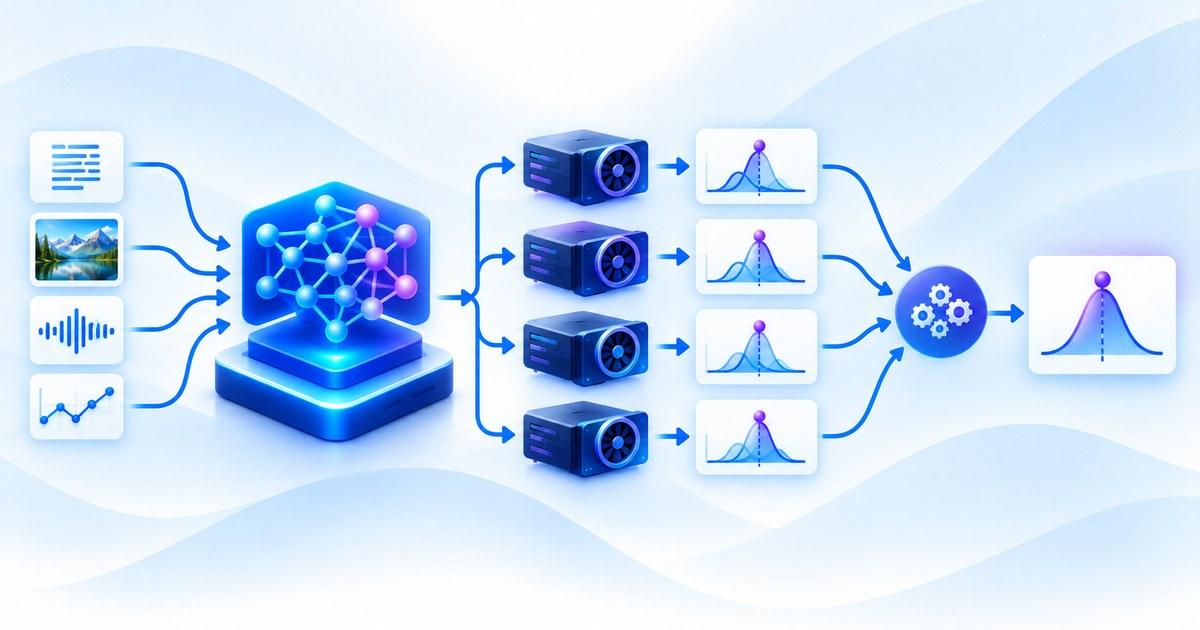
Transfer learning is one of the most important strategies for building machine learning systems when training a model entirely from scratch is expensive, slow, or impractical. Although the technique has become strongly associated with large language models, the underlying idea applies much more broadly.
The central concept is simple: knowledge learned while solving one machine learning problem can sometimes be reused to solve another problem.
Instead of starting with randomly initialized parameters and requiring a target model to learn every useful representation from the beginning, engineers can begin with a model that has already learned useful patterns from another dataset or task.
This can reduce the amount of target-domain data required, accelerate training, and improve generalization.
Learning Once and Reusing Knowledge
Transfer learning involves at least two problems: a source task or source domain and a target task or target domain.
The source task is the problem used to develop the original model. The target task is the new problem where engineers want to reuse some of what the model has already learned.
The two tasks do not need to be identical.
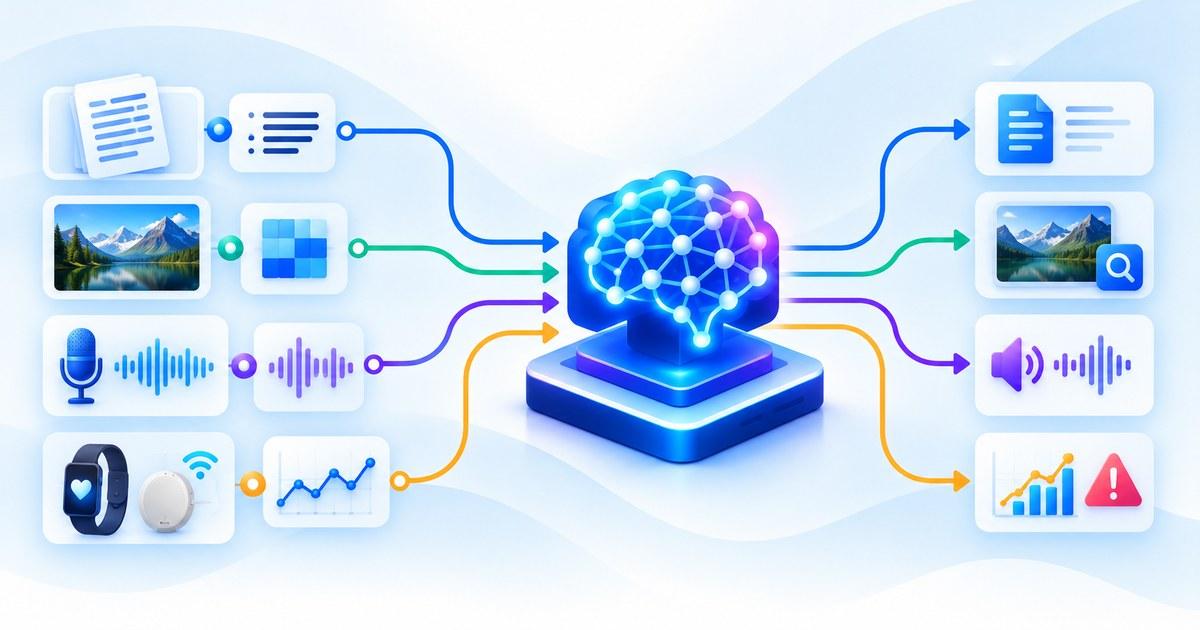
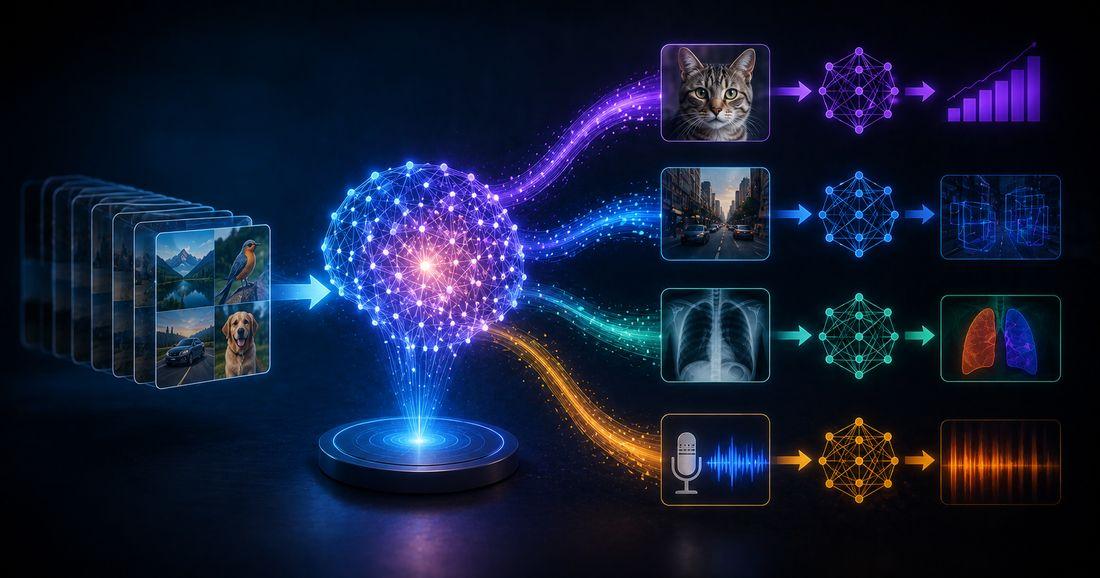
A computer vision model trained on a large collection of natural images may learn general visual representations such as edges, textures, shapes, and object structures. Those representations can potentially be reused when building a model for a specialized image-classification problem.
Similarly, a speech model trained across a large and diverse audio collection may learn useful representations of sounds and speech patterns. A specialized application can adapt those representations to a particular language, environment, or use case.
The key assumption is that some knowledge learned in the source setting remains useful in the target setting.
This is fundamentally different from training from scratch.
When engineers train from scratch, the model begins without learned representations and must discover useful patterns exclusively from target-domain data.
With transfer learning, the target model starts from a previously learned state.
This can make the learning process significantly more data-efficient.
Where Transferable Knowledge Lives
Knowledge can be transferred at several different levels.
The most intuitive form is feature transfer. A model trained on a large dataset may learn lower-level or intermediate features that are useful for another task.
In computer vision, early layers may learn generic visual patterns such as edges and textures, while later layers become increasingly specialized to the original task.
Another form is representation transfer. Instead of transferring an individual hand-designed feature, engineers can reuse an internal representation learned by the source model.
These representations can be particularly valuable because they summarize complex information in a form that can be used by downstream models.
Embeddings are a common example. A pretrained model can transform inputs into numerical vectors that capture useful semantic or structural information. Another model can then use those vectors for a different target task.
Engineers can also transfer model parameters. A target model may begin with the pretrained weights of a source model and then adapt those weights to the new task.
Even the architecture itself can be reused. A proven neural network structure may provide a useful starting point for another task even when the learned parameters are different.
These forms of transfer are not mutually exclusive. A target system may reuse the source architecture and parameters while adapting only some layers and replacing the final task-specific component.
The important idea is that machine learning knowledge does not exist only in the final predictions of a model. It can exist in the internal representations and parameters that the model learned while processing its original data.
Examples Beyond Language Models
Transfer learning has been widely useful in computer vision.
A model trained on a large image dataset can serve as the starting point for specialized tasks such as defect detection, medical imaging, satellite imagery, or industrial inspection. The source model's learned visual representations may provide a stronger initialization than training entirely from random weights.
Speech and audio provide another example. A model trained on broad speech data can potentially be adapted to specialized acoustic conditions, languages, speakers, or downstream audio tasks.
In healthcare, target datasets are often expensive to label because specialist expertise may be required. Reusing representations learned from related medical or imaging data can reduce the amount of task-specific labeled information required.
Recommendation systems can also benefit from transferable representations. A model trained to represent users or items in one context may provide useful information for another related recommendation task.
Time-series models may similarly transfer knowledge between related forecasting or anomaly-detection problems when the underlying temporal structures share meaningful characteristics.
These applications demonstrate that transfer learning is fundamentally about reusing useful structure, not about any particular model family.
The same concept can also support machine learning under limited-data conditions. Rather than requiring each target task to build its representations entirely from a small dataset, organizations can reuse knowledge already learned elsewhere.
"Machine Learning Under Data Constraints: Building Models When Data Is Limited" provides relevant context because transfer learning is one of the key strategies for extracting greater value from limited target-domain labeled data.
Key Takeaway
Transfer learning allows machine learning systems to reuse knowledge learned from one task or domain when solving another. That knowledge can exist in features, representations, embeddings, model parameters, or architectures. By starting from useful prior knowledge instead of learning everything from scratch, teams can reduce target-data requirements, accelerate training, and improve data efficiency. However, successful transfer depends on meaningful relationships between the source and target problems, so engineers should always compare transferred models against a strong from-scratch baseline rather than assuming that pretraining will automatically help.
Section 2: How Knowledge Moves Between ML Tasks
Transfer learning becomes useful when a source model has learned representations or patterns that remain relevant to a new target problem. The engineering challenge is determining what should be transferred, how much should be transferred, and how much the target task should modify the inherited knowledge.
There is no single transfer-learning strategy. Engineers may reuse feature extractors, embeddings, model parameters, or shared architectures. They may freeze most of the source model and train only a task-specific component, or they may fine-tune substantial portions of the model.
The right approach depends on how closely the source and target tasks are related.
Feature and Representation Transfer
The simplest form of transfer involves reusing learned features or representations.
A model trained on a large dataset can learn representations that capture useful characteristics of the input data. Instead of asking a target model to discover those patterns again, engineers can reuse the learned representation and train a new task-specific model on top of it.
This is particularly effective when the source and target domains share meaningful structure.
In computer vision, for example, an existing model may already recognize basic visual patterns such as edges, textures, shapes, and spatial relationships. A target model for industrial defect detection can reuse those representations instead of learning all visual structure from scratch.
Embeddings provide another form of transferable representation. A pretrained model transforms an input into a numerical vector that captures information learned from the source task or domain. A downstream model can then use that representation for classification, ranking, retrieval, similarity, or another target task.
Engineers may also freeze layers of the pretrained model. Frozen components retain their learned parameters while only newly added layers are trained on target-domain data.
Freezing can be valuable when the target dataset is small because it reduces the number of parameters that need to be updated. It can also reduce computational requirements and lower the risk of overfitting.
The deeper the target task differs from the source task, however, the less likely it is that simply reusing the original representation will be sufficient.
Fine-Tuning and Parameter Transfer
A more flexible strategy is parameter transfer followed by fine-tuning.
Instead of keeping all pretrained parameters fixed, engineers initialize the target model with parameters learned from the source task and allow some or all of those parameters to change during target-domain training.
Full fine-tuning updates most or all of the pretrained model. This gives the target task greater freedom to adapt the inherited representation.
Partial fine-tuning updates only selected layers while keeping others fixed. This can be useful when the earlier representations remain broadly applicable but later representations need to specialize.
For example, in a vision model, lower-level features may remain useful across several image domains while higher-level features need to adapt more substantially to the target task.
The choice of which layers to update depends on source-target similarity and the amount of available target data.
When target data is limited, updating too many parameters can lead to overfitting. When the target domain differs significantly from the source domain, freezing too much of the model may prevent sufficient adaptation.
A task-specific head is often added on top of the transferred representation. The pretrained portion provides general knowledge, while the new head learns the final target-specific mapping.
This creates a flexible architecture:
Pretrained representation → Task-specific adaptation → Target prediction
Parameter transfer can significantly reduce training requirements, but it should still be evaluated against a model trained from scratch.
Multi-Task and Related-Task Transfer
Knowledge can also be transferred when a model learns multiple related tasks simultaneously.
In multi-task learning, several tasks share portions of the same model, such as a common encoder or representation layer. The tasks then have separate output components for their individual objectives.
The intuition is that related tasks can provide useful learning signals for one another.
For example, a computer vision system might jointly learn object classification and another related visual task. The shared representation can capture information useful across both objectives.
An auxiliary task can sometimes improve the quality of the representation learned for the primary target.
Shared encoders are useful because they allow several tasks to benefit from common structure while retaining task-specific outputs.
However, task relationships need to be considered carefully. If two tasks require conflicting representations or emphasize very different patterns, joint learning can reduce performance.
This connects back to an important principle of transfer learning: relatedness matters more than mere availability of a pretrained model.
The fact that one model was trained on a large dataset does not guarantee that its representations will be useful for every downstream problem.
Engineers should evaluate whether the source and target tasks share relevant structure, whether the target distribution differs materially from the source distribution, and whether transferring knowledge actually improves target performance.
The broader engineering decision also involves model complexity. A highly sophisticated pretrained model may contain useful transferable representations, but its deployment and adaptation costs may not be justified if a simpler target-specific model performs adequately. "Model Complexity vs Business Value: Finding the Right Level of ML" provides relevant context on evaluating model capability against the business and operational value it delivers.
Key Takeaway
Knowledge can move between machine learning tasks through feature transfer, learned representations, embeddings, parameter reuse, fine-tuning, domain adaptation, and shared multi-task architectures. Freezing parameters can preserve general knowledge and reduce training requirements, while fine-tuning allows the model to adapt to target-specific patterns. The correct strategy depends on source-target similarity, target data availability, and the degree of domain shift. Transfer learning works best when engineers deliberately identify which knowledge is reusable and how much adaptation the target problem requires.
Section 3: When Transfer Learning Works and When It Fails
Transfer learning can dramatically reduce the amount of data and computation required for a new machine learning task, but transferring knowledge is not automatically beneficial. A model can carry useful representations from one domain into another, yet it can also carry assumptions that are irrelevant or actively harmful to the target problem.
The central question is therefore not simply, "Is there a pretrained model available?" It is:
"How much useful knowledge does the source model contain for this target task, and does transferring that knowledge improve performance?"
Answering that requires evaluating source-target similarity, understanding the benefits of limited labeled data, watching for negative transfer, and comparing the transferred approach against a credible from-scratch baseline.
Measuring Source and Target Similarity
Transfer works best when the source and target problems share meaningful structure.
Similarity can exist at several levels. The two tasks may use similar inputs, similar labels, similar representations, or similar underlying mechanisms.
For example, two computer-vision tasks may both involve identifying objects in images even if their final classification categories differ. A model trained on broad visual data may therefore provide useful representations for a specialized vision problem.
But similarity should not be judged solely by the surface appearance of the data.
Feature distributions matter. A model trained on ordinary consumer photographs may encounter very different inputs when applied to industrial inspection images.
Task similarity matters as well. A representation useful for one prediction objective may not contain the information required for another.
Domain similarity is equally important. A source model trained on one population, geography, device type, or operating environment may need substantial adaptation before it becomes useful in another.
Engineers can also investigate representation overlap. If source and target examples occupy related regions in a learned embedding space, transferring the source representation may be more promising.
Ultimately, the strongest evidence comes from experiments rather than assumptions. A team should test the transferred model on representative target-domain data and compare it with alternative initialization strategies.
Benefits of Limited Labeled Data
One of the strongest reasons organizations use transfer learning is that target-domain labels are often expensive.
A medical organization may have large collections of imaging data but limited specialist-verified labels. An industrial company may have millions of sensor measurements but relatively few confirmed failure events.
Training entirely from scratch can be difficult in such environments because the target dataset may be too small to support learning a rich representation reliably.
A pretrained model can provide a useful starting point.
This enables few-shot adaptation, where a relatively small amount of target-domain labeled data is used to specialize an already trained model.
The benefit is not merely a smaller dataset. Transfer learning can also reduce the number of training iterations required to reach useful performance, making experimentation faster.
It can also improve annotation efficiency. Instead of collecting enormous quantities of target labels before beginning development, teams can use a pretrained model and determine how much additional labeling is actually necessary.
This can be especially valuable when expert annotation is expensive. Healthcare specialists, engineers, financial investigators, or other domain experts may have limited capacity, so reducing the amount of required target labeling can materially change the economics of the project.
Transfer learning can therefore act as a bridge between general knowledge and specialized knowledge.
The source model supplies broad representations, while a smaller target dataset teaches the system what is different or important in the target environment.
However, the benefit depends on whether the transferred knowledge is actually relevant.
Evaluating Transfer Effectiveness
The most reliable way to determine whether transfer learning works is to establish a from-scratch baseline.
The baseline should use the same target dataset, evaluation methodology, and target performance criteria as the transferred model.
The comparison can be structured as:
Train from scratch → Measure target performance
Transfer pretrained knowledge → Measure target performance
If the transferred model performs better with similar or lower resource requirements, there is evidence that the source knowledge is useful.
An ablation study can provide deeper insight.
Engineers might compare a frozen representation, partial fine-tuning, and full fine-tuning. This helps determine how much of the source model should be retained versus adapted.
The evaluation should also include realistic target-domain conditions. A model may perform well on a small curated target dataset but fail when exposed to the broader production distribution.
Teams should therefore use representative target-domain evaluation data, including important edge cases and relevant operational segments.
Performance should also be measured over time. A transferred representation may initially work well but become less effective as the target environment changes.
The final assessment should consider more than accuracy. Training cost, inference cost, latency, model size, interpretability, data requirements, and maintenance also influence whether transfer learning is worthwhile.
This connects directly to active learning because both approaches attempt to make better use of limited labeling resources. Transfer learning provides prior knowledge, while active learning identifies which new examples are most valuable to label. "Active Learning: Making Machine Learning More Efficient With Less Labeled Data" provides relevant context on how targeted labeling can complement data-efficient model development.
Key Takeaway
Transfer learning works best when source and target tasks share meaningful structure and target-domain data is limited or expensive. It can accelerate training, improve data efficiency, and reduce labeling requirements, but transferred knowledge can also become a liability through negative transfer. The strongest ML teams therefore measure source-target similarity experimentally, compare transfer against a from-scratch baseline, and use ablation studies to determine how much source knowledge should be retained. The goal is not to transfer as much knowledge as possible—it is to transfer the right knowledge.
Section 4: Engineering Transfer Learning for Production
Choosing a pretrained model and demonstrating improvement on a target dataset are only the beginning. A transfer-learning solution must eventually operate inside a production environment with constraints around model selection, licensing, compute, latency, monitoring, retraining, and long-term maintenance.
The engineering challenge is to preserve the benefits of transferred knowledge without allowing the resulting system to become unnecessarily expensive or difficult to operate.
Selecting the Right Pretrained Model
The first production decision is choosing an appropriate pretrained model.
Teams should evaluate more than benchmark performance. The model's architecture, source data, domain relevance, input representation, computational requirements, and expected production behavior all matter.
Architecture determines what types of adaptation are possible. A model designed for one modality or task may not be appropriate for another, even if it performs well on a related benchmark.
Data provenance is equally important. Engineers should understand where the source training data came from, whether it is representative of the intended use case, and whether there are known limitations or biases.
Domain relevance can have a substantial impact on transfer effectiveness. A model trained on data that resembles the target environment may require less adaptation than one trained on a substantially different domain.
The organization must also review licensing and usage restrictions. A technically attractive pretrained model may be inappropriate for commercial deployment if its license, training-data provenance, or usage conditions do not meet organizational requirements.
Model size is another consideration. The most capable pretrained model is not automatically the best production choice. A smaller model that transfers effectively may provide a better balance between target performance, latency, infrastructure cost, and maintainability.
The selection process should therefore consider:
Transfer effectiveness + Operational feasibility + Legal and governance requirements
rather than source-model accuracy alone.
Fine-Tuning and Serving
After selecting a pretrained model, teams must determine how aggressively it should be adapted.
The target model can use full fine-tuning, partial fine-tuning, or a largely frozen representation with a task-specific component.
The choice directly affects compute requirements.
Full fine-tuning can require substantial training resources, particularly for large architectures. Partial fine-tuning can reduce the number of parameters being updated and may be more practical when target-domain data is limited.
Serving requirements also matter.
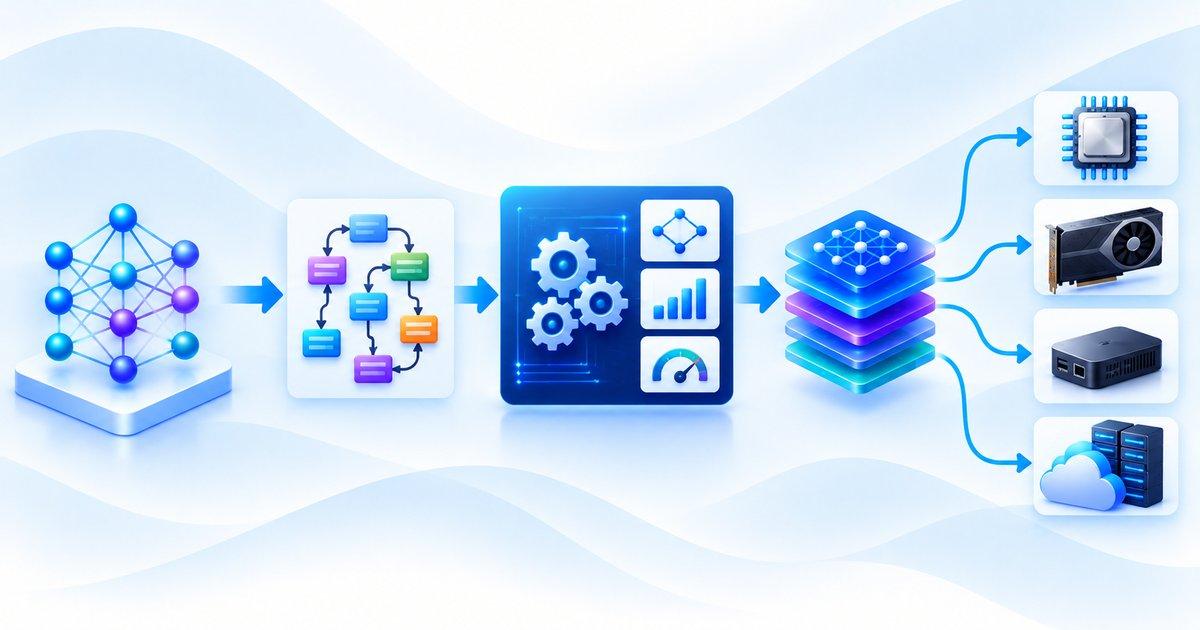
A model that performs well after transfer may still be too large or computationally expensive for the intended production environment. Model size affects memory requirements, deployment footprint, and potentially inference latency.
Latency becomes especially important for real-time applications. A transferred model may need optimization or a smaller architecture if predictions must be generated within strict response-time requirements.
Teams may therefore consider techniques that reduce serving cost while maintaining acceptable target-domain performance.
The final production decision should balance:
Target performance + Inference cost + Latency + Scalability
The fact that a model was efficiently pretrained does not eliminate the need to optimize its target-domain serving architecture.
Building a Reusable Transfer-Learning Strategy
Organizations that repeatedly solve related ML problems can benefit from treating pretrained representations as reusable assets.
A company working across multiple computer-vision tasks, for example, may maintain a library of validated pretrained models and target-specific adaptations.
Model libraries can reduce duplicated experimentation and help teams start from proven representations rather than rebuilding similar models.
Representation reuse can also improve development speed. Teams can evaluate whether existing embeddings or pretrained components transfer to new problems before investing in entirely new training pipelines.
Organizations should establish evaluation standards for transfer learning. Each candidate transfer should be compared against an appropriate from-scratch baseline, and target-domain evaluation should include relevant edge cases and production conditions.
A reusable strategy should also maintain documentation covering source domains, intended uses, known limitations, fine-tuning procedures, performance benchmarks, and licensing constraints.
This creates a form of organizational knowledge: teams are not only reusing model parameters but also learning which types of knowledge transfer successfully across the organization's tasks.
Over time, this can turn transfer learning into a strategic capability.
Instead of treating every new ML project as an isolated training problem, organizations can ask:
What knowledge do we already have that can be reused?
How similar is the new problem?
What must change?
What evidence demonstrates that transfer is helping?
This approach can significantly reduce duplicated effort while encouraging disciplined evaluation.
Transfer learning also fits naturally into the broader production ML lifecycle. The hidden engineering work includes data pipelines, deployment, monitoring, governance, and continuous improvement, not merely the initial model adaptation. "The Hidden Engineering Work Behind Every Successful Machine Learning Product" provides relevant context on why models become useful products only when these surrounding engineering systems are built and maintained.
Key Takeaway
Production transfer learning requires careful pretrained-model selection, controlled fine-tuning, efficient serving, target-domain monitoring, and reusable organizational practices. Engineers must evaluate data provenance, domain relevance, licensing, compute, latency, and long-term maintenance alongside model performance. The most effective strategy is not to reuse the largest or newest model automatically, but to identify transferable knowledge that improves the target problem while remaining operationally and economically sustainable.
Conclusion
Transfer learning has become one of the most important strategies for building efficient machine learning systems, but its value extends far beyond the modern focus on large language models. The underlying principle is much broader: knowledge learned from one task or domain can sometimes provide a useful foundation for another.
This matters because training every model from scratch can be expensive in terms of data, computation, engineering effort, and time. Many target applications have limited labeled data, while related source models may already contain useful representations of the underlying inputs.
By reusing features, representations, embeddings, model parameters, or architectures, engineers can reduce the amount of target-specific learning required.
Computer vision provides a clear example. A model trained on large-scale image data may learn visual representations that remain useful for specialized applications such as industrial inspection, medical imaging, or satellite imagery. Similarly, pretrained speech systems can provide useful representations for specialized audio applications, while related representations can support recommendation and time-series tasks.
The important question, however, is not whether a pretrained model exists. It is whether the knowledge it contains is relevant to the target problem.
Source-target similarity matters at multiple levels. The source and target may share visual or semantic structure, but differences in data distributions, objectives, populations, or environments can reduce transfer effectiveness.
This is why negative transfer is an important risk. Reusing an unsuitable representation can make a target model perform worse than one trained from scratch. A pretrained model should therefore never be assumed to be beneficial simply because it was trained on more data.
The strongest evaluation strategy is to establish a from-scratch baseline and compare it directly with the transferred approach using the same target-domain data and evaluation criteria.
Teams should also examine how much of the source model needs to be adapted. A largely frozen representation may work well when source and target tasks are closely related, while partial or full fine-tuning may be necessary when the target domain differs substantially.
Frequently Asked Questions (FAQs)
1. What is transfer learning in machine learning?
Transfer learning is a technique in which knowledge learned from a source task or domain is reused to help solve a different target task or domain.
2. How does transfer learning work beyond LLMs?
The same principles apply to computer vision, speech, healthcare, recommendation, time series, and other areas. Models can transfer learned representations, features, embeddings, parameters, or architectures to related target problems.
3. What is the difference between transfer learning and fine-tuning?
Transfer learning is the broader concept of reusing knowledge from a source model. Fine-tuning is one specific way of adapting that transferred model using target-domain data.
4. What types of knowledge can be transferred between ML tasks?
Knowledge can be transferred through learned features, internal representations, embeddings, model parameters, architectures, and sometimes shared task structure.
5. How is transfer learning used in computer vision?
A model pretrained on large image datasets can provide reusable visual representations for specialized tasks such as defect detection, medical imaging, object recognition, and other target-domain applications.
6. Can transfer learning work with small datasets?
Yes. One of its major benefits is reducing the amount of target-domain labeled data required, particularly when the source model has learned representations relevant to the target problem.
7. What is domain adaptation?
Domain adaptation is a form of transfer learning focused on adapting a model when the source and target involve related tasks but different data distributions or environments.
8. What is negative transfer?
Negative transfer occurs when transferring knowledge from a source model makes performance on the target problem worse than an appropriate alternative, such as training from scratch.
9. How do engineers determine whether two ML tasks are similar enough for transfer?
Teams can compare the source and target data, tasks, representations, and operating environments, then validate the transfer empirically against a from-scratch baseline.
10. Should pretrained layers always be fine-tuned?
No. Some applications benefit from freezing most pretrained layers and adapting only task-specific components. The appropriate amount of fine-tuning depends on source-target similarity, target data availability, and computational constraints.
11. How does transfer learning reduce training costs?
It allows teams to start from previously learned representations rather than discovering them from scratch, potentially reducing target-domain training time, compute requirements, and data needs.
12. How should transfer learning models be evaluated?
Transferred models should be evaluated on representative target-domain data and compared with a from-scratch baseline. Teams should also consider target performance, computational cost, latency, robustness, and other production requirements.
13. What is the difference between feature transfer and parameter transfer?
Feature transfer reuses learned representations or features from a source model. Parameter transfer initializes the target model using learned source-model weights and may then adapt those parameters through fine-tuning.
14. When should engineers train a model from scratch instead?
Training from scratch may be preferable when the source and target problems are poorly related, transfer provides little measurable benefit, the target domain is fundamentally different, or the additional complexity of adaptation is not justified.
15. What is the future of transfer learning beyond foundation models?
Transfer learning is likely to remain important across computer vision, speech, multimodal systems, healthcare, recommendation, time series, and specialized enterprise AI. As organizations accumulate reusable models and representations, the ability to identify, evaluate, and safely transfer knowledge between tasks will become an increasingly important ML engineering capability.