
Section 1: The Work Before the Model Is Built
A successful machine learning product often appears to begin when a data scientist starts training a model. In reality, much of the most important engineering work happens before the first model is trained.
Teams must determine what problem they are actually solving, identify which decisions the model will support, establish measurable success criteria, build dependable data pipelines, construct training-ready datasets, and create infrastructure that makes experimentation reproducible.
This work is easy to underestimate because users never see it. But weaknesses in these early stages can propagate through the entire ML lifecycle. A model trained on unreliable data, poorly defined labels, or leaked information may perform impressively during development while failing after deployment.
Understanding the Real Business Problem
The first engineering task is defining the product problem, not the model.
A request such as "build an ML model to predict churn" does not provide enough information to begin development. The team needs to understand what decision the prediction is intended to support.
Does the business want to identify customers who are likely to leave? Prioritize customers for intervention? Determine which retention action is most effective? Estimate future customer value?
Each objective can require a different ML formulation.
The team also needs clear product requirements. The model may need to produce predictions in real time, support a particular number of decisions, meet a defined accuracy threshold, or operate within a specific cost constraint.
Success metrics should connect technical performance to the intended business outcome. A churn model might be evaluated using precision and recall, but the product may ultimately care about retained customers or increased customer lifetime value.
This connection is critical because model performance does not automatically translate into product success.
Teams also need to identify constraints early. Latency, privacy, reliability, interpretability, infrastructure cost, data availability, and operational capacity can all influence the design.
A technically excellent model that cannot meet the product's latency or cost requirements is not a successful ML product.
Building Reliable Data Pipelines
Once the problem is defined, engineers need to determine where the required information comes from.
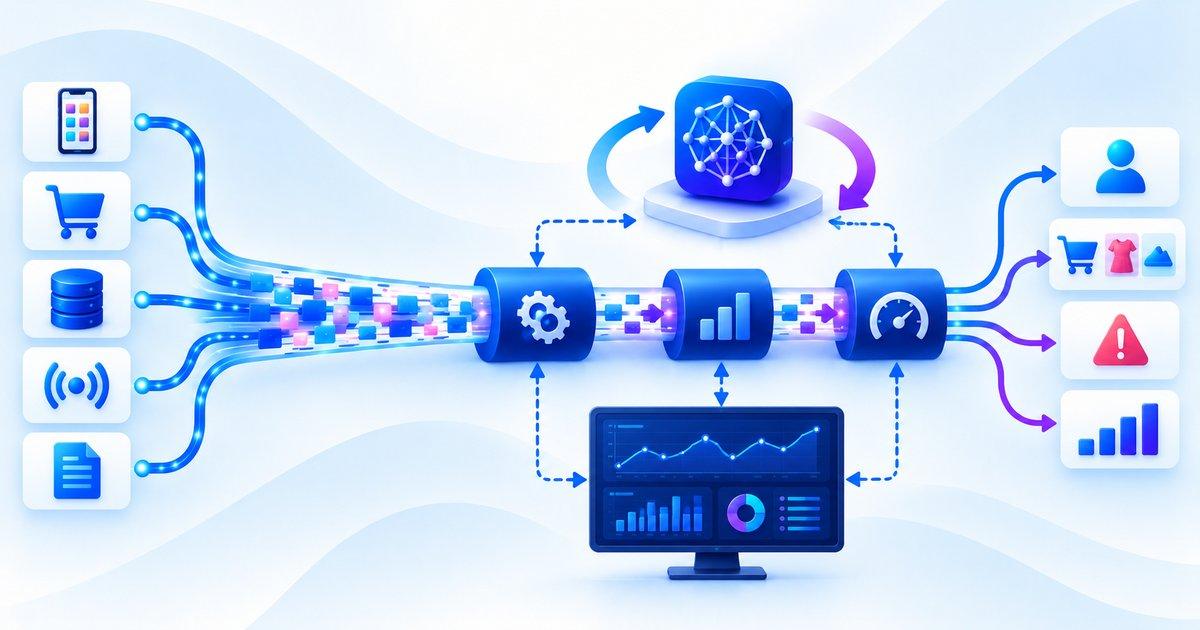
Data ingestion may involve databases, APIs, application logs, event streams, files, sensors, or external systems. Each source introduces its own reliability and quality requirements.
A production ML system cannot depend on manually downloading datasets whenever a model needs retraining. Data must move through reliable, repeatable pipelines.
These pipelines need to handle data quality issues such as missing values, duplicates, incorrect formats, unexpected categories, and schema changes.
They also need to preserve data lineage. Engineers should be able to determine where a training record originated, which transformation was applied to it, and which downstream models depend on it.
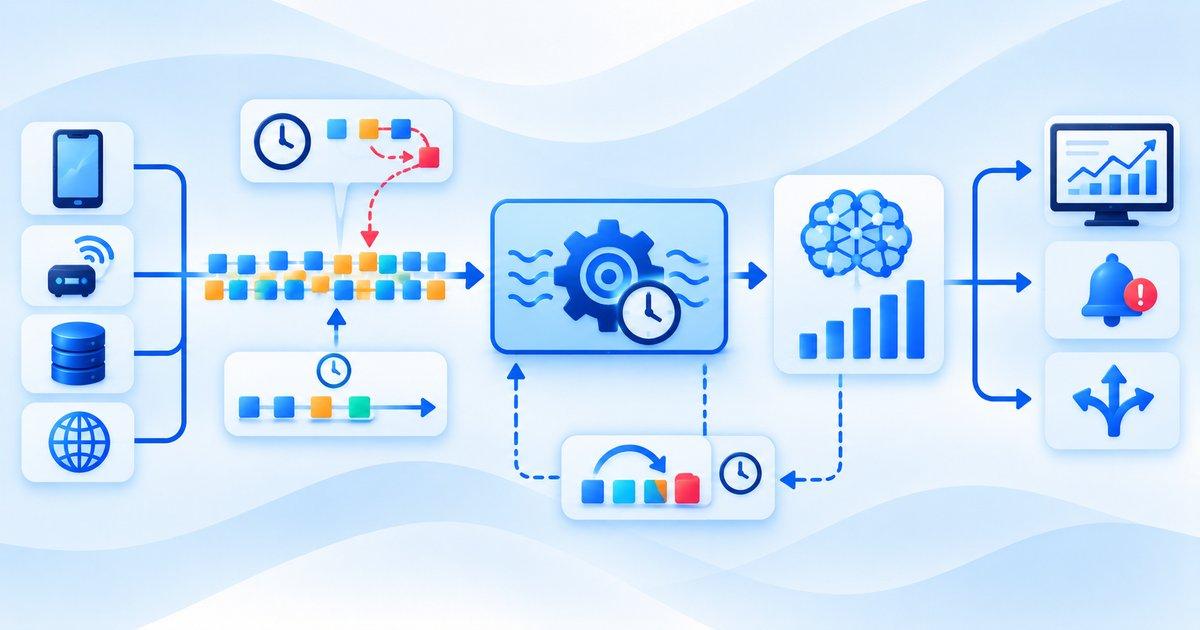
Batch and streaming pipelines may both be required. A recommendation or fraud system may need low-latency event processing, while a forecasting model may rely primarily on scheduled batch data.
The architecture should therefore reflect how quickly information needs to become available to the product.
Data pipelines also need failure handling. A temporary upstream outage should not silently produce an incomplete training dataset or corrupt production predictions.
The engineering objective is to transform raw organizational information into reliable, observable, reproducible data products.
Creating Training-Ready Data
Raw data still needs to be transformed into information suitable for model training.
This includes labeling, feature engineering, dataset construction, and leakage prevention.
For supervised learning, labels define the outcome the model needs to predict. Creating reliable labels can be difficult when outcomes require expert judgment or become available only after a delay.
Feature engineering transforms raw information into useful model inputs. These transformations must be carefully designed so that training features represent information that would actually have been available when the production prediction was made.
This makes leakage prevention particularly important.
For example, a model intended to predict customer cancellation cannot legitimately use information that becomes available only after the cancellation occurs. Including such information can create excellent-looking offline results while making the model unusable in production.
The team must also create appropriate training, validation, and test datasets. The splitting strategy needs to reflect the problem. Time-dependent problems may require temporal splits, while imbalanced problems may require careful stratification.
These datasets should be versioned so that the team knows exactly which information produced a particular model.
The result should not simply be "a cleaned dataset." It should be a well-defined training artifact with known provenance, labels, transformations, and validation rules.
Experimentation Infrastructure
Once training data exists, teams need infrastructure that allows engineers and data scientists to experiment without losing track of what they have done.
Reproducibility is fundamental. If a model performs exceptionally well, the team should be able to determine exactly how that result was produced.
That requires tracking the dataset version, source-code version, feature configuration, model architecture, hyperparameters, random seeds, training environment, and evaluation results.
Experiment tracking provides a structured record of this information.
Dataset versioning ensures that a model trained today can be associated with the exact information used during training, even after the underlying production data changes.
Model comparison should also be systematic. Teams need to compare candidate models against a strong baseline using consistent evaluation datasets and business-relevant metrics.
Without this infrastructure, experiments can become difficult to reproduce and successful approaches can be lost.
This is particularly important because the hidden work behind an ML product does not stop at preparing the first dataset. Every future model version depends on the same underlying engineering discipline.
The broader dataset lifecycle is explored in "The Journey of a Dataset: From Raw Data to Production ML", which examines how raw information is collected, validated, transformed, versioned, and ultimately connected to production machine learning.
Key Takeaway
Much of the engineering behind a successful ML product happens before model training begins. Teams must define the real business problem, establish meaningful success criteria, build reliable data pipelines, create training-ready datasets, prevent leakage, and establish reproducible experimentation infrastructure. These foundations determine whether a model can eventually become a dependable production capability rather than remaining an isolated prototype.
Section 2: Turning a Model Into a Production System
A machine learning model that performs well in development is not yet a production product. The model must be integrated into a system that can receive real inputs, generate predictions reliably, satisfy latency requirements, scale with demand, recover from failures, and protect the data and decisions surrounding it.
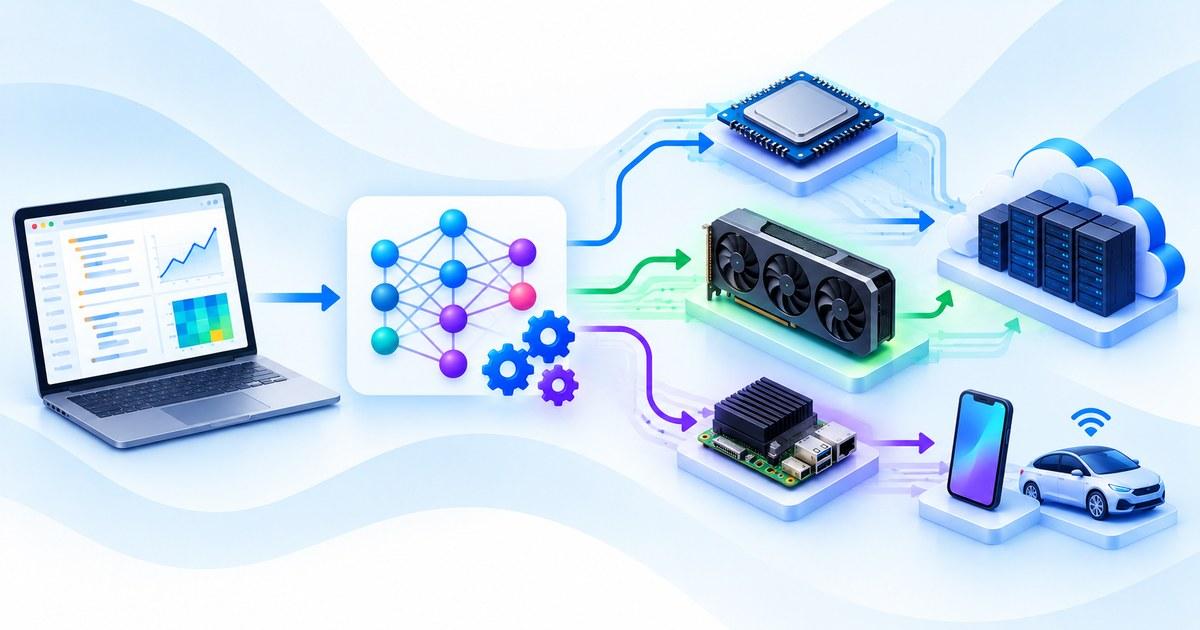
This transition from model artifact to production ML system is where much of the hidden engineering work appears. Teams need to build model-serving infrastructure, connect production features, manage inference workloads, engineer for scale and reliability, and establish security and governance controls.
Model Deployment
A trained model must first be made available to the application or workflow that needs its predictions.
There are several common deployment patterns.
Model serving exposes the model through an online service that accepts inputs and returns predictions. This is useful when applications require predictions during user interactions or operational decisions.
An application may call a model through an API, allowing the model to operate as a separate service. This creates a clear interface between the product and the ML system but also introduces network, availability, authentication, and latency considerations.
Not every model requires real-time inference. Batch inference can generate predictions periodically for large datasets. This can be significantly more efficient when decisions do not need to happen immediately.
Real-time inference is appropriate when the prediction must be available during an active interaction. Search, recommendations, fraud detection, personalization, and certain operational systems may require this pattern.
The deployment approach therefore depends on the product requirement.
Engineers must also determine how the model will be packaged, loaded, updated, and scaled. A deployment system should support versioned model artifacts and controlled releases rather than replacing production models without validation.
The deployment process should ultimately connect:
Model artifact → Serving infrastructure → Application → Production prediction
Feature and Inference Infrastructure
Model serving is only part of the production problem. The model also needs the right features at prediction time.
Some features are available directly from a request. Others require computation from databases, event streams, or historical information.
Online features are particularly important for real-time applications. A fraud model, for example, may need recent transaction frequency or account activity calculated immediately before making a prediction.
A feature store or equivalent feature infrastructure can help manage reusable feature definitions and provide more consistent access to features across training and serving environments.
The critical requirement is training-serving consistency.
If a feature was calculated using one transformation during training and a different transformation during inference, the model may receive information with a different meaning from what it learned.
Differences can arise in aggregation windows, missing-value handling, encoding, timestamps, or source systems.
This can produce training-serving skew and cause a model that performed well offline to degrade in production.
Teams therefore need mechanisms to maintain consistent feature definitions and validate production feature quality.
Latency is another major consideration. Feature retrieval can sometimes consume more time than model inference itself. A highly optimized model may still fail its service-level objective if the system spends too long retrieving or calculating features.
Production engineering must therefore optimize the complete prediction path:
Request → Feature retrieval → Feature transformation → Model inference → Response
Scalability and Reliability
Production workloads can vary dramatically. Traffic may increase during peak periods, promotional events, product launches, or unexpected spikes.
ML systems therefore require scalability.
Autoscaling can increase available compute as demand rises and reduce resources during quieter periods. This can help balance performance and infrastructure cost.
Capacity planning is also important. Teams need to estimate expected throughput and determine whether the system has sufficient resources to handle peak demand.
Availability becomes critical when a model is part of a customer-facing or operationally important workflow. If the inference service fails, the application needs a defined response.
This is where failure recovery becomes part of ML product engineering.
A system may use a previous model version, cached predictions, a simpler fallback model, or deterministic business rules when the primary model is unavailable.
These mechanisms create graceful degradation instead of allowing a single model failure to bring down the entire product.
Reliability also includes monitoring resource utilization, request failures, latency, throughput, and model-service health.
The objective is not simply to keep the model running. It is to ensure that the complete prediction system remains reliable under realistic production conditions.
Security and Governance
Machine learning systems frequently process sensitive business or customer information, making security and governance critical engineering requirements.
Access control should determine which users, services, and teams can access datasets, features, models, and prediction APIs.
Organizations also need to consider how sensitive data is stored, processed, logged, and exposed during inference.
Model governance becomes important as well. Teams should maintain records of approved model versions, evaluation results, owners, deployment dates, and relevant changes.
For high-impact applications, auditability can be essential. Organizations may need to determine which model version produced a particular decision and what data and configuration were associated with it.
Security must also extend to the model-serving infrastructure itself. Production endpoints should be protected against unauthorized access and abuse.
These requirements increase the engineering scope of ML products, but they also help transform experimental models into dependable systems that can safely operate in real environments.
The broader transition from experimentation to production requires coordinated work across model development, infrastructure, data pipelines, deployment, monitoring, and operations. "From Proof of Concept to Production: Why Most ML Projects Never Make the Leap" explores this transition and why a successful prototype requires significant engineering before it can become a reliable production capability.
Key Takeaway
Turning a model into a production system requires much more than deploying a model file. Teams must build serving infrastructure, feature systems, scalable inference, failure recovery, security controls, and governance mechanisms. Real-time and batch inference require different architectural choices, while training-serving consistency is essential to prevent production degradation. The successful ML product is therefore not just the model, it is the entire reliable system that delivers, operates, secures, and governs the model in production.
Section 3: The Engineering Work After Deployment
Deployment is not the end of a machine learning product. It is the point at which the model begins interacting with the real environment it was designed to predict. Once users, production data, business processes, and infrastructure begin influencing the system, new engineering problems emerge.
A successful ML product therefore requires continuous work after launch. Teams need to monitor data and model behavior, investigate unexpected failures, manage feedback and retraining, and control the technical debt that accumulates as the system evolves.
The hidden engineering effort after deployment is often what determines whether an ML product remains useful months or years after its initial launch.
Monitoring Data and Models
The first requirement is continuous monitoring.
Traditional software monitoring focuses on availability, errors, latency, and infrastructure health. ML systems require these metrics as well, but they also need visibility into the quality and distribution of the data flowing through the system.
Data drift can occur when production inputs change relative to the training environment. Customer behavior may evolve, new products may appear, or upstream systems may change how information is recorded.
Teams should monitor important feature distributions, missing values, category frequencies, data freshness, and other indicators relevant to the model.
Model drift is different. It refers to a change in model effectiveness as production conditions evolve. A model can continue receiving valid inputs and producing predictions successfully while becoming progressively less accurate or useful.
For classification systems, engineers may monitor precision, recall, calibration, or other task-specific metrics once reliable labels become available. Recommendation systems may track ranking quality and downstream engagement. Forecasting systems may monitor prediction error against actual outcomes.
Feature monitoring is especially important because an individual feature can become unreliable even when the overall data pipeline appears healthy.
A feature may become unavailable, change meaning, or drift significantly from its historical behavior.
Teams therefore need to monitor both the data inputs and the resulting predictions.
The most valuable monitoring systems connect technical metrics with business outcomes. A model may maintain acceptable predictive performance while conversion, customer retention, revenue, or operational efficiency declines because the surrounding business process has changed.
Debugging Production ML
When something goes wrong, debugging ML systems is more difficult than debugging conventional software because failures can originate from many interacting components.
A production problem may begin in the data pipeline, where a source system changes its schema or sends incomplete records.
It may originate in a feature pipeline, where a transformation differs from the version used during training.
The problem may come from the model itself, particularly when production data no longer resembles the training environment.
Or the model may be functioning correctly while the business workflow around it has changed.
This makes error analysis essential.
Engineers should examine incorrect predictions and search for recurring patterns. Errors may cluster around specific users, regions, products, time periods, or types of input.
Root-cause analysis should compare these failures against the original assumptions made during model development.
For example, an image classifier that suddenly performs poorly might not require immediate retraining. The actual problem could be a newly introduced camera producing images with different characteristics.
Similarly, a recommendation model may show declining engagement because the catalog changed, not because the ranking algorithm itself became less accurate.
Production incidents should therefore be investigated across the complete ML pipeline.
The goal is to determine:
What changed?
Where did it change?
Did the change affect model predictions?
Did it affect the business outcome?
Only after those questions are answered should teams decide on the appropriate corrective action.
Managing Technical Debt
Machine learning systems accumulate technical debt just like conventional software, but the debt can involve both code and data.
A model may depend on multiple feature pipelines, databases, APIs, training frameworks, model-serving systems, and monitoring tools.
Over time, these dependencies can become difficult to maintain.
Pipeline maintenance is a major source of debt. An upstream system may change while the ML model continues to assume an older data structure.
Infrastructure can also become fragmented. A team may initially build a specialized system for one model and later discover that several other models require similar capabilities.
Ownership creates another challenge. Data scientists may own the model, data engineers may own the data pipeline, and platform engineers may operate the infrastructure. Without clear responsibility, important problems can remain unresolved.
Model dependencies can also become difficult to replace. If a production model relies on a particular feature store, framework version, or hardware configuration, future upgrades may require coordinated changes across multiple systems.
Technical debt should therefore be managed proactively. Teams should periodically evaluate whether features, models, pipelines, and infrastructure remain necessary and whether simpler alternatives are available.
A successful ML product is not simply one that continues making predictions. It is one that remains maintainable, observable, and economically sustainable as its environment changes.
The broader challenge of feedback loops is particularly relevant here because user and system interactions become part of the future training process. "The Challenge of Feedback Loops in Production Machine Learning" explores how model decisions can influence future data and why production systems need mechanisms to prevent self-reinforcing errors and biased feedback.
Key Takeaway
The engineering work continues long after an ML model is deployed. Teams must continuously manage data drift, model performance, production errors, feedback loops, retraining, versioning, and technical debt. The most successful ML products treat monitoring and lifecycle management as permanent engineering responsibilities rather than post-launch maintenance tasks. The objective is to keep the entire system reliable as data, users, infrastructure, and business conditions evolve.
Section 4: Building ML Products That Improve Over Time
A machine learning product is not finished when its first production model is deployed. In a successful system, deployment begins a new phase in which engineers continuously learn from production behavior, evaluate whether the system is still achieving its objectives, and improve the model and surrounding infrastructure.
The challenge is to make this improvement systematic and controlled. Continuous change without proper evaluation can create instability, while excessive caution can leave a model operating with outdated assumptions.
The strongest ML organizations build products that can evolve while preserving reliability, traceability, and business value.
Continuous Evaluation
A production ML product needs a mechanism for determining whether it is still performing as expected.
Business outcomes should remain central to this evaluation. A recommendation model may need to improve conversion or retention. A fraud model may need to reduce financial losses while keeping false positives manageable. A forecasting model may need to improve inventory decisions rather than simply minimize a statistical error metric.
Technical metrics remain necessary, but they should be connected to these broader outcomes.
A/B testing can provide evidence about whether a new model actually improves the product. A treatment group can receive the updated model while a control group continues using the existing system.
This helps teams distinguish genuine improvement from changes caused by external factors.
Model comparison should also be continuous. The current production model should provide a reference point for candidate models, feature changes, and new training strategies.
Teams should preserve stable evaluation datasets and appropriate holdout data so that improvements are not judged only on examples used during model development.
Continuous evaluation is particularly important because production behavior can change even when the model itself remains unchanged.
Safe Model Evolution
When teams identify an opportunity to improve a model, changes should be introduced gradually.
A champion-challenger approach keeps the current production model as the champion while a new candidate is evaluated as the challenger.
The candidate can first be evaluated offline, then through shadow deployment, where it receives production inputs without controlling user-facing decisions.
This provides evidence about how the new model behaves under current production conditions.
A canary release can then expose a small percentage of traffic to the candidate. Engineers can monitor performance, latency, errors, and business outcomes before increasing exposure.
These controls reduce the risk associated with large model changes.
Rollbacks are equally important. If a new model creates unexpected behavior, engineers should be able to restore the previous validated version quickly.
Model evolution should also preserve lineage. Teams need to know which dataset, feature configuration, code version, and training process produced each model.
This creates a controlled lifecycle:
Develop → Validate → Shadow → Canary → Deploy → Monitor → Roll back or expand
The process allows teams to improve models without treating every new version as an uncontrolled production experiment.
Designing for Changing Environments
Production environments are not static. Customer behavior changes, new products appear, competitors respond, and external conditions evolve.
This creates distribution shift, in which production data differs from the environment represented in the training dataset.
A robust model can reduce the impact of change by training on diverse and representative data. However, no model can anticipate every future condition.
Organizations therefore need adaptive systems.
Some models can be retrained periodically using newer data. Others may benefit from incremental or online learning, particularly when new information becomes valuable very quickly.
The right adaptation strategy depends on how rapidly the environment changes and how costly prediction errors are.
A robust system should also support fallback mechanisms. If a model encounters unfamiliar inputs or becomes unavailable, the product can use a simpler model, deterministic rules, cached results, or human review.
This creates graceful degradation rather than assuming the primary model will always operate correctly.
Engineers should also recognize that not every environmental change requires a new model. Sometimes the correct response is updating a feature, modifying a business rule, changing a threshold, or redesigning the surrounding workflow.
This is why production ML requires diagnosis before adaptation.
Creating an ML Engineering Culture
Long-term success depends not only on technology but on how the organization operates.
Cross-functional ownership is essential. Data scientists, ML engineers, software engineers, product teams, data engineers, and business stakeholders all contribute to the final ML product.
The organization should clearly define who owns the model, data pipelines, production infrastructure, monitoring, and business outcomes.
Reusable platforms can reduce duplicated engineering effort. Shared infrastructure for experimentation, feature management, deployment, monitoring, and model governance allows teams to focus more on product-specific problems.
Data and model governance should also become part of normal development. Important model versions, datasets, decisions, evaluation results, and deployments should be traceable.
A strong ML engineering culture also values continuous improvement over one-time model launches. Teams regularly inspect production errors, customer feedback, data changes, infrastructure costs, and business outcomes.
This is particularly important because technical success and product success are not identical. A model can remain statistically strong while becoming less valuable because user behavior, product strategy, or business objectives have changed.
The mature organization therefore treats the ML product as a living system:
Data → Model → Product → User behavior → New data → Improved model
This lifecycle contains much of the engineering work that users never see.
"How ML Teams Decide When to Retrain a Model" provides a closely related perspective on using performance, data changes, drift, and business signals to determine when a model should be updated rather than relying on a fixed retraining schedule.
Key Takeaway
Successful ML products improve through continuous evaluation, safe model evolution, adaptation to changing environments, and strong cross-functional engineering practices. A/B testing, champion-challenger workflows, shadow deployments, canary releases, and rollbacks make model improvement safer, while MLOps, reusable infrastructure, governance, and clear ownership make it sustainable. The best ML products are not static models, they are continuously evaluated and improved systems that evolve with their data, users, and business environment.
Conclusion
The visible part of a machine learning product is often a model prediction, but the successful product behind that prediction is a much larger engineering system. Data pipelines, feature infrastructure, model serving, monitoring, deployment controls, feedback collection, retraining, security, governance, and operational ownership all contribute to whether an ML system creates lasting value.
The journey begins long before training. Teams must define the right business problem, establish meaningful success criteria, construct reliable datasets, prevent leakage, and create reproducible experimentation workflows. These foundations determine whether a model has a realistic path to production.
After development, the model must become a dependable production service. Engineers need to determine whether inference should be batch or real time, build feature-serving infrastructure, manage latency and throughput, handle infrastructure failures, and establish security and governance controls.
Deployment, however, is only the beginning.
Once real users and production data interact with the model, the organization needs continuous monitoring. Data distributions can change, model performance can decline, upstream systems can fail, and users can respond to model-driven decisions. These effects may not appear in offline testing.
Production debugging therefore requires a broader perspective. Engineers must investigate data quality, feature consistency, model metrics, segment-level behavior, infrastructure, business processes, and downstream outcomes. Simply retraining a model whenever performance changes can hide the real source of the problem.
Frequently Asked Questions (FAQs)
1. What engineering work is required to build a successful machine learning product?
It includes business problem definition, data pipelines, dataset preparation, feature engineering, experimentation, model development, deployment, serving, monitoring, reliability, security, governance, retraining, and continuous improvement.
2. Why is building the model only one part of an ML product?
A model cannot create value by itself. It needs reliable data, production features, serving infrastructure, application integration, monitoring, operational workflows, and mechanisms for updating and maintaining it.
3. What role do data pipelines play in production ML?
Data pipelines collect, transform, validate, and deliver the information required for training and inference. Their reliability directly affects model quality and production behavior.
4. Why is feature engineering an engineering problem as well as a modeling problem?
Features must not only be predictive; they must also be available at inference time, consistently calculated, sufficiently fresh, scalable, and maintainable in production.
5. What is required to deploy an ML model into production?
Teams typically need model packaging, serving infrastructure, feature retrieval, API or batch integration, performance validation, deployment controls, monitoring, security, versioning, and rollback capabilities.
6. How do ML teams make models scalable and reliable?
They use appropriate serving architectures, capacity planning, autoscaling, caching where appropriate, resilient infrastructure, monitoring, failure recovery, and fallback mechanisms.
7. Why is model monitoring necessary after deployment?
Production conditions can change after deployment. Monitoring helps detect data drift, model degradation, feature failures, latency problems, unexpected predictions, and changes in business outcomes.
8. How do engineers debug production machine learning systems?
They examine data quality, feature pipelines, model performance, segment-level errors, infrastructure, business workflows, and production outcomes to identify the actual source of the problem.
9. What is ML technical debt?
ML technical debt is the accumulated complexity and maintenance burden created by models, features, data pipelines, infrastructure, dependencies, monitoring, and specialized operational requirements.
10. How do feedback loops affect ML products?
Feedback loops can help models improve, but they can also reinforce biases, amplify errors, distort training data, and reduce exploration when model decisions influence future observations.
11. How do ML teams manage retraining and model updates?
Teams use validated training pipelines, dataset and model versioning, performance monitoring, controlled evaluation, champion-challenger testing, and staged deployment rather than replacing production models without evidence.
12. Why is model versioning important?
Model versioning allows teams to identify which model produced a prediction, compare versions, reproduce historical behavior, investigate incidents, and roll back to a known-good model.
13. How does distribution shift affect production ML products?
Production data can become different from training data as users, markets, products, or processes change. This can reduce model performance even when the model code itself remains unchanged.
14. What role does MLOps play in successful machine learning products?
MLOps connects development and production through automation for training, evaluation, deployment, monitoring, versioning, retraining, and lifecycle management.
15. What separates a successful ML prototype from a successful ML product?
A prototype demonstrates that a model can work. A successful ML product demonstrates that the entire system can operate reliably, scale, adapt, remain maintainable, and consistently produce measurable business value in the real world.