Section 1: The Rise of AI Reliability Engineering as a New Discipline
For years, the primary focus of artificial intelligence teams was model development. Success was largely measured by accuracy metrics, benchmark performance, and algorithmic improvements. Researchers and engineers spent enormous effort optimizing training pipelines, improving architectures, and increasing predictive performance. While these activities remain important, the widespread deployment of AI systems has fundamentally changed what organizations need from their engineering teams.
The reality is that a model achieving excellent results in testing does not automatically translate into a reliable production system. As AI applications become integrated into customer experiences, business operations, and enterprise workflows, organizations are discovering that operational reliability matters just as much as model quality.
The Shift From Model Performance to System Reliability
In the early stages of machine learning adoption, organizations primarily focused on whether models could generate accurate predictions. If a recommendation engine improved engagement or a fraud model reduced false positives, the project was often considered successful.
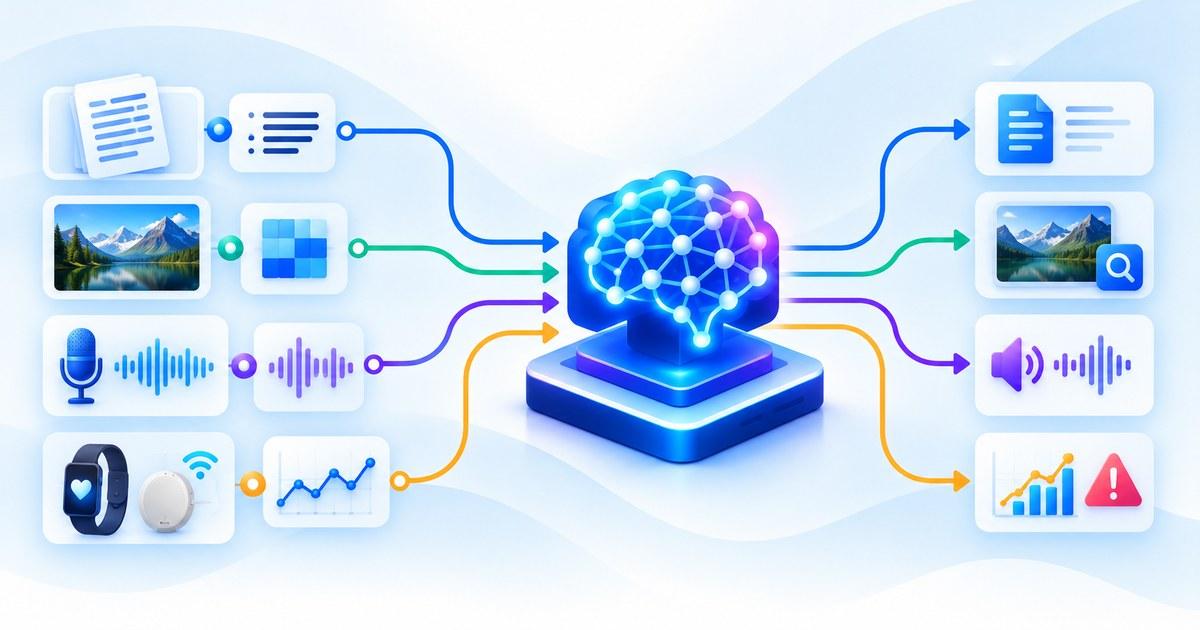
Today's AI systems operate in far more complex environments. Large Language Models, retrieval pipelines, AI agents, orchestration frameworks, vector databases, and external APIs frequently work together to deliver a single user experience. A failure in any component can negatively affect the overall system.
For example, an AI assistant may rely on multiple subsystems simultaneously. The language model generates responses, a retrieval system provides relevant information, memory stores maintain context, and external tools execute actions. Even if the language model performs flawlessly, failures elsewhere can still produce poor outcomes.
This shift has forced organizations to think beyond model accuracy and focus on system-level reliability. The question is no longer simply whether the model works. The question is whether the entire AI system can operate consistently, safely, and efficiently under real-world conditions.
Why Traditional Reliability Practices Are No Longer Enough
Traditional software reliability focuses on metrics such as uptime, latency, throughput, and infrastructure health. While these metrics remain important, AI systems introduce additional dimensions of reliability that conventional engineering practices were not designed to address.
An AI service may remain fully available while simultaneously producing low-quality outputs. A language model may generate hallucinations. A retrieval system may surface irrelevant information. An AI agent may follow an incorrect reasoning path. From an infrastructure perspective, the system appears healthy. From a user perspective, it is failing.
This distinction is one of the primary reasons AI Reliability Engineering is emerging as a separate discipline. Engineers must monitor not only whether systems are running but also whether they are behaving correctly.
The need for this broader perspective is changing hiring expectations across the industry. Companies increasingly seek professionals who understand both machine learning and operational engineering. This trend is explored in "The Future of ML Hiring: Why Companies Are Shifting from LeetCode to Case Studies," which discusses how organizations are evaluating candidates on practical system-thinking skills rather than isolated technical knowledge.
Reliability in AI extends beyond infrastructure and requires understanding models, data, workflows, user behavior, and business outcomes simultaneously.
The Growth of Production AI Is Creating New Responsibilities
As organizations deploy more AI systems, new operational responsibilities continue to emerge. Teams must manage model drift, evaluate retrieval quality, monitor hallucination rates, validate agent behavior, ensure compliance with governance policies, and maintain observability across increasingly complex workflows.
These responsibilities often do not fit neatly into traditional roles. Machine learning engineers focus on models. Software engineers focus on applications. DevOps and SRE teams focus on infrastructure. AI reliability sits at the intersection of all three domains.
This intersection is creating a new category of engineering work focused specifically on ensuring that AI systems remain dependable over time. Engineers in these roles investigate failures, establish reliability standards, create evaluation frameworks, build monitoring systems, and implement safeguards that prevent AI-related incidents from impacting users or businesses.
The demand for these skills is growing rapidly because organizations are realizing that reliable AI is ultimately more valuable than merely powerful AI.
Reliability Will Determine the Long-Term Success of AI
The next phase of AI adoption will not be defined solely by model advancements. It will be defined by whether organizations can deploy intelligent systems that users trust. Reliability is becoming a competitive differentiator because unreliable AI systems create operational risks, damage customer confidence, and reduce business value.
Companies that invest in AI reliability gain a significant advantage. They can scale deployments more confidently, automate more workflows, and reduce the risks associated with increasingly autonomous systems.
As AI becomes a core part of business infrastructure, reliability engineering is evolving from a supporting function into a strategic necessity.
Key Takeaway
AI Reliability Engineering is emerging because modern AI systems are far more complex than standalone models. Organizations must ensure not only that systems remain available but also that they produce accurate, trustworthy, and consistent outcomes. As production AI adoption accelerates, reliability is becoming just as important as model performance, creating a rapidly growing career path for engineers who can bridge AI, software systems, and operational excellence.
Section 2: Why Companies Are Investing Heavily in AI Reliability Roles
AI Failures Have Real Business Consequences
As artificial intelligence systems become increasingly integrated into critical business operations, the consequences of failures are growing significantly. In the early days of machine learning adoption, errors were often limited to recommendation quality, advertising performance, or minor prediction inaccuracies. While these issues affected business outcomes, they rarely disrupted core operations.
Today's AI systems are fundamentally different. Organizations are deploying AI-powered assistants, autonomous agents, workflow automation platforms, decision-support systems, and customer-facing applications that directly influence business processes. When these systems fail, the impact extends far beyond technical performance metrics.
Consider a customer support agent that provides inaccurate policy information, an AI-powered coding assistant that introduces security vulnerabilities into production code, or a financial operations agent that incorrectly processes business data. In each case, the consequences affect customers, employees, compliance requirements, and revenue generation. The stakes are substantially higher than traditional machine learning deployments.
This shift is forcing organizations to recognize that AI reliability is not simply a technical concern, it is a business concern. Executives increasingly understand that deploying AI without reliability safeguards can create operational risks that outweigh potential productivity gains. As a result, companies are actively investing in engineers who can prevent these failures before they occur.
The growing demand for reliability expertise mirrors earlier shifts in software engineering. As web applications became critical to business operations, Site Reliability Engineering emerged as a specialized discipline. Today, AI Reliability Engineering is following a similar trajectory because organizations need professionals capable of ensuring intelligent systems remain dependable under real-world conditions.
The Rise of Agentic AI Is Increasing Reliability Challenges
The rapid growth of AI agents is one of the biggest factors driving demand for reliability-focused professionals. Traditional machine learning systems typically generate predictions or classifications. Agentic systems, however, can reason through problems, interact with tools, retrieve information, and execute workflows autonomously.
While these capabilities unlock enormous business value, they also introduce entirely new categories of operational risk.
An AI agent does not simply answer a question. It may search internal documentation, access databases, query APIs, generate recommendations, and trigger actions across multiple systems. Each interaction introduces potential failure points. A retrieval system may provide outdated information. An API may return incomplete results. The agent may misinterpret context or choose an ineffective execution path.
The complexity grows exponentially as organizations expand the scope of agent responsibilities. A single workflow may involve dozens of interconnected components operating simultaneously. Monitoring and validating these systems requires expertise that extends well beyond traditional machine learning.
This is one reason many organizations are shifting hiring priorities. Rather than focusing exclusively on model development skills, they increasingly seek engineers who understand system behavior, observability, governance, infrastructure, and production operations. "The Rise of Agentic AI: What It Means for ML Engineers in Hiring" explores how companies are adapting their hiring strategies as agentic AI becomes more widespread.
As AI systems gain greater autonomy, ensuring reliable execution becomes one of the most important challenges facing engineering teams.
Reliability Directly Impacts User Trust and Adoption
Technical performance alone does not determine whether an AI product succeeds. User trust plays an equally important role.
Organizations can build highly capable AI systems, but if users encounter inconsistent outputs, unexplained errors, or unreliable recommendations, adoption quickly declines. Trust is difficult to earn and easy to lose, particularly when AI systems are expected to support important decisions.
Consider how employees interact with enterprise AI tools. If an internal assistant consistently provides accurate information and completes tasks reliably, users become increasingly comfortable incorporating it into their workflows. Over time, productivity improves and adoption expands. Conversely, if the assistant frequently generates incorrect responses or fails unpredictably, employees begin ignoring its recommendations regardless of underlying capabilities.
The same principle applies to customer-facing applications. Users judge AI systems based on consistency and dependability rather than model sophistication. A slightly less capable system that behaves predictably often creates more value than a highly advanced system that produces erratic results.
This emphasis on trust is one of the reasons AI reliability has become a strategic priority for organizations. Reliability engineers help establish the monitoring frameworks, evaluation methodologies, and governance practices necessary to ensure users can depend on AI-powered products.
In many cases, the success of an AI initiative depends less on raw intelligence and more on whether people trust the system enough to use it consistently.
Reliability Is Becoming a Competitive Advantage
As AI adoption accelerates across industries, organizations are beginning to realize that reliability can serve as a significant competitive differentiator. Most companies have access to similar models, cloud infrastructure, and development frameworks. What increasingly separates successful AI products from unsuccessful ones is the quality of their production systems.
Reliable AI systems generate higher user satisfaction, lower operational costs, stronger customer retention, and greater business confidence. They allow organizations to automate more workflows, expand AI adoption more aggressively, and reduce the risks associated with intelligent systems.
This reality is creating substantial demand for professionals who can design, monitor, and improve AI reliability. Companies are investing in dedicated teams focused on observability, model evaluation, incident management, governance, and operational excellence. These responsibilities are becoming essential as AI transitions from experimental technology to critical business infrastructure.
Much like cybersecurity became a major career path as organizations recognized the importance of digital security, AI Reliability Engineering is emerging because businesses recognize that trustworthy AI is fundamental to long-term success.
Key Takeaway
Organizations are investing heavily in AI Reliability Engineering because AI failures now have direct business consequences. The rise of agentic systems, increasing operational complexity, growing user expectations, and the need to build trust are driving demand for professionals who can ensure AI systems remain dependable in production. As AI becomes embedded in critical workflows, reliability is evolving from a technical concern into a major competitive advantage, making AI Reliability Engineering one of the fastest-growing career paths in the industry.
Section 3: The Skills That Make AI Reliability Engineers Highly Valuable
AI Reliability Engineering Sits at the Intersection of Multiple Disciplines
One of the primary reasons AI Reliability Engineering is becoming such a valuable career path is that it combines expertise from several traditionally separate domains. Unlike conventional software engineering roles, which often focus on application development, or machine learning roles, which focus on model creation, AI reliability requires a holistic understanding of how intelligent systems operate in production.
Modern AI systems are no longer isolated models running independently. They are complex ecosystems composed of Large Language Models, retrieval systems, vector databases, orchestration frameworks, APIs, monitoring platforms, cloud infrastructure, and business applications. Ensuring that all these components work together reliably requires a unique combination of skills that few professionals currently possess.
An AI Reliability Engineer must understand how machine learning models behave, how software systems scale, how cloud infrastructure operates, and how production incidents are investigated. They need to identify whether a failure originated from the model, retrieval layer, infrastructure, orchestration logic, or user interaction patterns. This cross-functional expertise makes them particularly valuable because they can bridge communication gaps between AI researchers, software engineers, DevOps teams, and business stakeholders.
As organizations continue integrating AI into critical workflows, professionals capable of understanding the entire system rather than a single component will become increasingly important. The complexity of modern AI environments demands engineers who can think beyond isolated technologies and focus on end-to-end reliability.
Observability and Monitoring Are Becoming Core AI Skills
In traditional software systems, monitoring typically focuses on metrics such as latency, uptime, error rates, and infrastructure health. AI systems require a much broader perspective. A model can remain fully operational while simultaneously producing inaccurate recommendations, low-quality outputs, or inconsistent behavior.
This reality has elevated observability into one of the most important skill areas within AI Reliability Engineering.
AI reliability professionals must understand how to monitor not only infrastructure but also model behavior, retrieval quality, workflow execution, user interactions, and business outcomes. They need to establish metrics that provide visibility into system performance at every stage of the AI pipeline.
For example, an AI-powered customer support assistant may appear healthy from an infrastructure perspective while delivering poor responses due to outdated retrieval data. A traditional monitoring dashboard may not identify the issue because servers are functioning normally. An AI Reliability Engineer, however, would implement observability mechanisms capable of detecting declines in response quality, retrieval relevance, and user satisfaction.
The ability to build comprehensive monitoring frameworks is becoming increasingly important because AI systems are inherently probabilistic. Engineers cannot simply assume that correct behavior will continue indefinitely. Continuous measurement and evaluation are necessary to maintain reliability as data, user behavior, and business requirements evolve.
This growing emphasis on operational excellence is influencing hiring trends throughout the industry. Organizations increasingly value engineers who understand system observability and production operations alongside machine learning concepts. "The Rise of ML Infrastructure Roles: What They Are and How to Prepare" explores how infrastructure-focused AI careers are becoming critical as production AI deployments expand.
Observability is no longer a supporting capability, it is becoming a foundational requirement for managing intelligent systems at scale.
Incident Response and Failure Analysis Are Essential Responsibilities
As AI systems become embedded in critical business operations, organizations must be prepared to respond effectively when failures occur. Unlike traditional software incidents, AI-related failures can be significantly more difficult to diagnose because they often involve interactions between multiple components operating simultaneously.
A recommendation engine may perform poorly due to data drift. An AI agent may make incorrect decisions because of retrieval errors. A language model may generate inconsistent outputs under changing workloads. In many cases, the underlying infrastructure remains healthy even though business outcomes are deteriorating.
AI Reliability Engineers are increasingly responsible for investigating these incidents and identifying root causes. This requires a deep understanding of system architecture, model behavior, data pipelines, and operational workflows. Engineers must analyze logs, evaluate execution paths, review model outputs, and assess interactions between system components to determine what went wrong.
Incident management also involves establishing processes that minimize business impact. Organizations need escalation procedures, rollback strategies, recovery mechanisms, and post-incident analysis frameworks. Reliability engineers play a central role in designing these systems and ensuring that lessons learned from failures lead to continuous improvements.
As AI systems become more autonomous, the ability to diagnose and resolve issues quickly will become even more important. Companies are increasingly recognizing that operational resilience is just as valuable as model accuracy.
Communication and Business Understanding Differentiate Top Reliability Engineers
Technical expertise alone is not sufficient for success in AI Reliability Engineering. The most effective professionals also possess strong communication and business reasoning skills. This is because reliability issues often affect multiple stakeholders across engineering, product, operations, compliance, and executive teams.
When an AI system experiences problems, reliability engineers must explain technical issues in ways that non-technical stakeholders can understand. They need to communicate risks, prioritize remediation efforts, and help decision-makers evaluate trade-offs between performance, cost, speed, and reliability.
Business understanding is equally important. Reliability is not an abstract technical objective; it exists to support business outcomes. Engineers must understand how failures impact customer experiences, operational efficiency, revenue generation, regulatory compliance, and organizational goals.
This ability to connect technical decisions with business value is increasingly becoming a differentiator in hiring and career advancement. Organizations are looking for professionals who can influence both engineering strategy and business outcomes rather than focusing exclusively on technical implementation.
Key Takeaway
AI Reliability Engineers are highly valuable because they combine expertise across machine learning, software engineering, cloud infrastructure, observability, incident response, and business operations. Their ability to monitor complex AI systems, diagnose failures, maintain operational resilience, and communicate effectively across teams makes them essential to successful AI deployments. As organizations continue scaling AI adoption, these interdisciplinary skills will become some of the most sought-after capabilities in the technology industry.
Section 4: How to Build a Career in AI Reliability Engineering
Why This Career Path Is Still in Its Early Stages
One of the most exciting aspects of AI Reliability Engineering is that the field is still emerging. Unlike traditional software engineering, data science, or cloud infrastructure roles, there is no universally accepted roadmap for becoming an AI Reliability Engineer. Most professionals currently working in this area transitioned from adjacent disciplines such as machine learning engineering, Site Reliability Engineering (SRE), MLOps, platform engineering, software engineering, or cloud operations.
This creates a unique opportunity for engineers who want to position themselves ahead of industry demand. Organizations are actively building AI capabilities, but many are struggling to find professionals who understand how to operate intelligent systems reliably at scale. As a result, engineers who develop reliability-focused AI expertise today can gain a significant competitive advantage over the next several years.
The rapid growth of Large Language Models, Retrieval-Augmented Generation (RAG) systems, and AI agents is accelerating this demand. Every new AI deployment introduces operational challenges that require monitoring, evaluation, governance, and incident management. Companies are beginning to realize that reliable AI systems require dedicated expertise rather than treating reliability as an afterthought.
Much like cloud engineering became a major career category during the rise of cloud computing, AI Reliability Engineering is poised to become a recognized specialization with its own career tracks, leadership roles, and organizational functions.
For engineers looking to future-proof their careers, this timing creates a rare opportunity to enter a rapidly expanding field before it becomes saturated.
Building the Technical Foundation
The strongest AI Reliability Engineers typically possess knowledge across several technical domains rather than specializing exclusively in one area. This interdisciplinary nature is one of the reasons the role is becoming increasingly valuable.
A solid understanding of machine learning remains important because reliability engineers need to understand how models behave, why performance changes over time, and how issues such as data drift, concept drift, hallucinations, and retrieval failures occur. However, model knowledge alone is insufficient.
Engineers must also develop expertise in cloud infrastructure, distributed systems, observability platforms, monitoring frameworks, incident management processes, and production operations. Understanding how AI applications interact with databases, APIs, orchestration systems, and external services is equally important.
The rise of agentic AI is further expanding the required skill set. Reliability professionals increasingly need familiarity with vector databases, retrieval systems, orchestration frameworks, evaluation pipelines, prompt management strategies, and AI governance principles. The ability to understand how these components interact within larger architectures is becoming a major differentiator.
This shift toward end-to-end system knowledge is influencing hiring expectations throughout the AI industry. Organizations increasingly value engineers who can think beyond individual models and understand complete production environments. "Why ML Engineers Are Becoming the New Full-Stack Engineers" explores how modern AI professionals are expected to work across multiple layers of the technology stack.
The future belongs to engineers who understand not just how AI models are built, but how AI systems operate in the real world.
Gaining Experience Through Real Production Systems
While certifications and coursework can provide useful foundations, AI Reliability Engineering is ultimately a practice-oriented discipline. The most valuable learning experiences come from working with production systems where reliability challenges emerge naturally.
Engineers interested in this field should seek opportunities to participate in AI deployments, monitoring initiatives, infrastructure projects, or operational support activities. Exposure to real-world failures often teaches lessons that cannot be learned through theoretical study alone.
For example, investigating why a retrieval system returned irrelevant information provides insight into reliability challenges that academic exercises rarely capture. Similarly, diagnosing latency issues within an AI workflow or evaluating the impact of model drift on user experience helps engineers develop practical intuition.
Open-source AI projects also provide valuable learning opportunities. Many modern frameworks allow engineers to build agentic systems, implement monitoring pipelines, evaluate workflows, and experiment with observability practices. These experiences help develop the system-level thinking that reliability roles demand.
Organizations increasingly value candidates who can discuss production challenges rather than focusing exclusively on model architectures. During interviews, hiring managers often look for evidence that candidates understand how systems behave under real-world conditions, how incidents are handled, and how reliability can be improved over time.
Practical experience therefore remains one of the most effective ways to accelerate growth within this emerging discipline.
Why AI Reliability Engineering May Become One of the Most Important AI Careers
As AI systems become more deeply integrated into business operations, reliability will increasingly determine whether deployments succeed or fail. Organizations can tolerate occasional inaccuracies in experimental environments, but production systems must meet far higher standards. Customers, employees, regulators, and business leaders all expect AI systems to be dependable, secure, and trustworthy.
This reality is elevating reliability from a supporting function to a strategic capability. Companies that can deploy AI safely and consistently will gain significant advantages in automation, productivity, customer satisfaction, and operational efficiency. Those that cannot may struggle with adoption challenges, governance concerns, and operational risks.
AI Reliability Engineers sit at the center of this transformation. They help organizations bridge the gap between innovation and operational excellence. Their work enables businesses to move from experimentation to large-scale deployment with confidence.
Over the next decade, the demand for professionals capable of managing AI reliability is likely to grow alongside AI adoption itself. As organizations build increasingly autonomous systems, reliability expertise will become just as essential as software engineering, cybersecurity, and cloud infrastructure skills.
Key Takeaway
AI Reliability Engineering offers a unique opportunity for engineers to position themselves at the intersection of artificial intelligence, software systems, infrastructure, and operations. By developing expertise in machine learning, observability, cloud platforms, incident management, and production AI architectures, engineers can build highly valuable careers in one of the fastest-growing areas of technology. As organizations continue scaling AI adoption, reliability professionals will play a critical role in ensuring intelligent systems remain trustworthy, resilient, and effective in the real world.
Conclusion
Artificial intelligence is entering a new phase of maturity. The industry’s focus is gradually shifting from building powerful models to operating dependable AI systems at scale. While breakthroughs in Large Language Models, agentic AI, and generative technologies continue to attract attention, organizations are increasingly discovering that reliability is what ultimately determines business success.
A model that performs well in a laboratory environment provides little value if it fails under real-world conditions. Enterprises need AI systems that consistently deliver accurate outputs, handle failures gracefully, comply with governance requirements, protect sensitive information, and maintain user trust over time. These expectations are creating an entirely new category of engineering work centered on reliability rather than model development alone.
AI Reliability Engineering has emerged to address this challenge. The discipline combines elements of machine learning, software engineering, cloud infrastructure, observability, incident response, security, governance, and operational excellence. Professionals in this field help organizations bridge the gap between AI innovation and production readiness. Their work ensures that intelligent systems remain trustworthy, scalable, and resilient as adoption grows.
The rise of AI agents is accelerating demand even further. Unlike traditional machine learning systems, agentic architectures involve reasoning, planning, retrieval, tool usage, and workflow execution. These capabilities create enormous opportunities but also introduce new operational risks. Organizations increasingly need engineers who understand not only how AI systems are built but also how they behave in production environments.
For software engineers, ML engineers, SRE professionals, and infrastructure specialists, AI Reliability Engineering represents one of the most promising career paths emerging in the technology industry. It offers an opportunity to work at the intersection of multiple disciplines while contributing directly to some of the most important challenges facing modern enterprises.
Just as cloud engineering became essential during the rise of cloud computing and cybersecurity became indispensable as digital systems expanded, AI reliability is becoming a foundational requirement for the next generation of intelligent systems. The engineers who develop these skills today will play a critical role in shaping how organizations deploy, govern, and scale AI in the years ahead.
The future of AI will not belong solely to those who build the smartest models. It will belong to those who ensure those models can be trusted.
Frequently Asked Questions
1. What is AI Reliability Engineering?
AI Reliability Engineering is the discipline focused on ensuring AI systems operate consistently, safely, accurately, and efficiently in production environments. It combines principles from machine learning, software engineering, observability, infrastructure, and operational excellence.
2. Why is AI Reliability Engineering becoming important?
As AI systems become integrated into business-critical applications, organizations need professionals who can ensure these systems remain dependable, scalable, secure, and trustworthy under real-world conditions.
3. How is AI Reliability Engineering different from MLOps?
MLOps primarily focuses on deploying, managing, and maintaining machine learning models. AI Reliability Engineering extends beyond deployment to include monitoring system behavior, handling failures, ensuring output quality, governance, observability, and operational resilience.
4. Is AI Reliability Engineering similar to Site Reliability Engineering (SRE)?
There are similarities. Both focus on system reliability, scalability, and operational excellence. However, AI Reliability Engineering must also address unique challenges such as hallucinations, model drift, retrieval quality, prompt failures, and AI-specific evaluation metrics.
5. What industries need AI Reliability Engineers?
Virtually every industry adopting AI can benefit from reliability expertise, including technology, healthcare, finance, retail, manufacturing, cybersecurity, telecommunications, and government organizations.
6. What technical skills are required for AI Reliability Engineering?
Important skills include machine learning fundamentals, cloud computing, distributed systems, observability platforms, monitoring frameworks, incident management, AI evaluation, retrieval systems, and production infrastructure management.
7. Do I need a machine learning background to enter this field?
While machine learning knowledge is valuable, professionals from software engineering, DevOps, SRE, platform engineering, and cloud infrastructure backgrounds can also transition successfully into AI Reliability Engineering.
8. What is model drift, and why does it matter?
Model drift occurs when real-world data changes over time, causing a model's performance to degrade. Reliability engineers monitor drift and implement processes to maintain model effectiveness.
9. Why is observability important in AI systems?
Observability helps teams understand how AI systems behave, identify failures, monitor output quality, track workflow performance, and diagnose issues before they impact users or business operations.
10. How do AI Reliability Engineers handle incidents?
They investigate failures, analyze system behavior, identify root causes, coordinate recovery efforts, implement safeguards, and establish processes to prevent similar incidents in the future.
11. What role does AI governance play in reliability?
Governance helps ensure AI systems operate within defined policies, security requirements, compliance frameworks, and ethical guidelines. Strong governance improves trust and reduces operational risk.
12. Will AI Reliability Engineering be a high-demand career in the future?
Most industry trends suggest strong demand growth. As organizations deploy more AI systems, reliability expertise will become increasingly important for managing operational complexity and business risk.
13. How can engineers gain experience in AI reliability?
Engineers can work on production AI systems, contribute to AI infrastructure projects, build monitoring pipelines, experiment with agentic architectures, participate in incident response processes, and study observability and MLOps practices.
14. What types of job titles are associated with AI Reliability Engineering?
Common roles may include AI Reliability Engineer, AI Platform Engineer, ML Infrastructure Engineer, AI Operations Engineer, AI Systems Engineer, MLOps Engineer, AI Site Reliability Engineer, and AI Production Engineer.
15. Is AI Reliability Engineering a good career path for software engineers?
Yes. Software engineers already possess many foundational skills needed for reliability work, including system design, debugging, infrastructure knowledge, and operational thinking. By adding AI-specific expertise, they can position themselves for one of the fastest-growing and most strategically important career paths in the AI industry.