
Section 1: The Accuracy Trap - Why 94% Isn’t the Signal You Think It Is
For years, machine learning interviews revolved around one dominant metric: accuracy. Candidates were trained to maximize it, defend it, and treat it as the ultimate proof of competence. But hiring managers in 2026 are increasingly indifferent to your “94% accuracy” claim.
Why?
Because production ML systems do not fail due to insufficient accuracy. They fail due to poor iteration strategy.
In modern engineering environments, the core question isn’t:
“How accurate is your model?”
It’s:
“How quickly can you detect failure, learn from it, and improve safely?”
That distinction separates academic ML from production ML.
The Real Interview Signal: Iteration Velocity
In product organizations, model performance is dynamic. Data shifts. User behavior evolves. Infrastructure changes. Regulatory requirements tighten. The model you deploy today will degrade tomorrow.
Hiring managers want engineers who understand that ML is not a static artifact, it’s a living system.
This shift aligns with what we explored in End-to-End ML Project Walkthrough: A Framework for Interview Success, where lifecycle thinking is presented as the dominant evaluation axis in interviews.
Accuracy is a snapshot. Iteration is a capability.
What Interviewers Actually Probe
When candidates proudly state:
“My model achieved 95% accuracy.”
Interviewers often follow with:
- What was the baseline?
- How did performance change over time?
- How did you detect drift?
- How did you prioritize improvements?
- What was your iteration cycle length?
This line of questioning reveals a deeper truth: accuracy is table stakes. Iteration demonstrates ownership.
In The Hidden Metrics: How Interviewers Evaluate ML Thinking, Not Just Code, we outlined how interviewers measure reasoning depth through system evolution questions rather than static evaluation metrics.
The Core Principle
In interviews, accuracy proves competence.
Iteration proves impact.
The strongest candidates:
- Frame ML problems as iterative systems
- Discuss tradeoffs transparently
- Quantify improvement cycles
- Explain monitoring triggers
- Highlight rollback strategies
In the next section, we’ll examine how to articulate iteration frameworks clearly during interviews, including how to structure your answers so hiring managers immediately recognize production readiness.
Section 2: How to Demonstrate Iteration Thinking in ML Interviews
If Section 1 established that accuracy is not the primary signal hiring managers optimize for, this section answers the practical question:
How do you actually demonstrate iteration thinking during an interview?
Most candidates unintentionally present ML work as a one-time achievement:
“We trained X model, tuned hyperparameters, and improved accuracy from 88% to 93%.”
That framing ends the story too early.
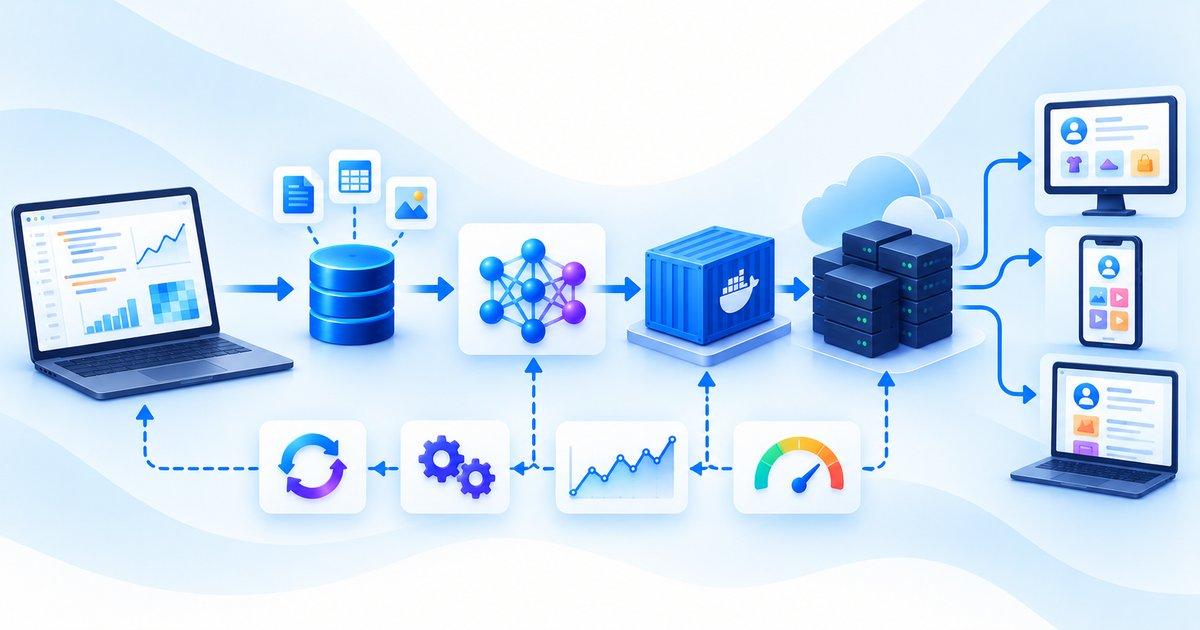
Strong candidates present ML work as a loop, not a line.
The Iteration Mindset Framework
When discussing any ML project, structure your answer across five iterative phases:
- Baseline Establishment
- Hypothesis-Driven Improvement
- Evaluation Beyond Offline Metrics
- Deployment Strategy
- Monitoring and Feedback Loop
This mirrors how production ML systems operate in mature engineering organizations. If your explanation naturally follows this lifecycle, interviewers immediately perceive operational depth.
We explored lifecycle ownership in From Research to Real-World ML Engineering: Bridging the Gap, where the key takeaway was that production ML is defined by continuous refinement, not one-time optimization.
1. Start With the Baseline (Signal: Pragmatism)
Before talking about model improvements, clarify:
- What was the initial baseline?
- Why was it chosen?
- What were its limitations?
Example framing:
“We began with a logistic regression baseline to establish interpretability and set a performance floor. The goal wasn’t to maximize accuracy immediately, but to understand feature signal strength and data leakage risk.”
This shows maturity. Hiring managers prefer engineers who validate signal quality before escalating complexity.
A common mistake is jumping straight to deep learning without justifying why simpler methods were insufficient. Iteration thinking begins with controlled progression.
2. Explain Hypothesis-Driven Iteration (Signal: Structured Thinking)
Iteration is not random experimentation.
It should be framed as:
“We observed X issue → formed Y hypothesis → tested Z improvement → measured outcome.”
For example:
- Observed high false positives
- Hypothesized feature imbalance
- Tested reweighting strategy
- Measured precision-recall shift
This communicates scientific rigor.
It also aligns with structured system design evaluation, discussed in Mastering ML System Design: Key Concepts for Cracking Top Tech Interviews.
Interviewers look for disciplined iteration, not chaotic tuning.
3. Move Beyond Accuracy (Signal: Business Awareness)
Accuracy is rarely the metric that matters in production.
Instead, iteration discussions should reference:
- Precision / Recall tradeoffs
- Calibration
- Latency impact
- Infrastructure cost
- Business KPIs
For example:
“Although accuracy improved by 1.2%, latency increased by 40ms, which exceeded our service-level objective. We rolled back and explored model distillation.”
This is a powerful signal.
You’re demonstrating you understand that ML systems operate within engineering constraints.
4. Discuss Deployment as an Experiment (Signal: Ownership)
One of the strongest iteration signals is how you talk about deployment.
Weak framing:
“We deployed the model.”
Strong framing:
“We rolled it out to 10% of traffic using shadow evaluation and monitored error rates for two weeks before increasing exposure.”
This demonstrates:
- Risk mitigation
- Experimental design
- Controlled iteration
At scale, ML deployment is experimentation infrastructure.
For example, at Amazon, ML features often launch behind A/B tests. At Google, model changes are frequently evaluated in staged rollouts. Hiring managers from such environments expect candidates to speak this language.
Even if your prior company was smaller, you can describe the process conceptually.
5. Monitoring and Drift (Signal: Long-Term Thinking)
Here’s where most candidates collapse.
Interviewers often ask:
“What happens six months after deployment?”
Strong answers include:
- Data drift detection mechanisms
- Alert thresholds
- Retraining triggers
- Feature validation pipelines
- Version tracking
For example:
“We monitored feature distribution shifts using population stability index (PSI). If PSI exceeded threshold values for two consecutive weeks, retraining was triggered.”
This level of detail communicates production readiness.
The Language Shift That Changes Perception
Here is a subtle but powerful adjustment:
Instead of saying:
- “The model achieved…”
Say:
- “The system evolved through…”
Instead of:
- “We tuned hyperparameters…”
Say:
- “We tested structured hypotheses…”
Instead of:
- “We improved accuracy…”
Say:
- “We improved business metrics while preserving latency constraints…”
These shifts communicate iteration mindset.
Why Iteration Signals Seniority
Senior ML engineers are not defined by how many models they’ve trained.
They are defined by:
- How quickly they detect underperformance
- How safely they ship changes
- How effectively they measure impact
- How predictably they improve systems
That’s why iteration thinking strongly correlates with senior-level hiring signals.
In ML Interview tips for mid-level and senior-level roles at FAANG companies, we emphasized that senior candidates are evaluated on system sustainability, not modeling cleverness.
A Simple Interview Formula
When answering any ML project question, follow this structure:
Problem → Baseline → Hypothesis → Experiment → Deployment → Monitoring → Next Iteration
If you follow this structure consistently, interviewers will:
- Ask deeper system questions
- Engage in architecture discussions
- Treat you as a production-ready engineer
If you focus solely on accuracy gains, the discussion remains shallow.
The Key Takeaway
Accuracy demonstrates technical capability.
Iteration demonstrates engineering judgment.
Hiring managers prefer the latter because it predicts long-term contribution.
In Section 3, we will examine why model iteration directly maps to business value, and how to articulate that connection clearly during interviews.
Section 3: Why Iteration Is the Real Proxy for Business Impact
If accuracy is a technical metric, iteration is a business metric.
That distinction is what separates strong ML candidates from high-impact ML hires.
Hiring managers are accountable for outcomes, revenue growth, cost reduction, user engagement, risk mitigation. A model’s offline accuracy does not directly map to any of those outcomes. Iteration speed and quality do.
In production environments, the question is not:
“How good is this model today?”
It is:
“How fast can this system adapt to tomorrow?”
That adaptability is what drives measurable business value.
The Economics of Iteration
Machine learning systems operate in dynamic environments:
- User behavior shifts.
- Competitors introduce new features.
- Regulations evolve.
- Product goals change.
A static model decays in value over time. An iterative system compounds in value over time.
This compounding effect is what hiring managers optimize for.
Consider two scenarios:
Engineer A
- Delivers a highly accurate model.
- Minimal monitoring.
- Rare retraining.
- Performance slowly degrades.
Engineer B
- Ships a solid baseline quickly.
- Implements monitoring.
- Runs controlled experiments monthly.
- Improves incremental metrics consistently.
Over 12 months, Engineer B’s system often generates far more impact.
Hiring managers understand this trajectory dynamic.
Why Accuracy Doesn’t Equal ROI
Accuracy measures classification correctness.
ROI measures business improvement.
The mapping between them is rarely linear.
For example:
- A 1% lift in recommendation relevance might increase engagement significantly.
- A 3% lift in fraud detection accuracy might have minimal financial impact if false positives increase customer friction.
That’s why interviewers increasingly ask:
- What business metric moved?
- What was the measurable downstream impact?
- How did you validate real-world improvement?
This mindset aligns with what we explored in Quantifying Impact: How to Talk About Results in ML Interviews Like a Pro, where the key principle is translating model metrics into business metrics.
If you cannot connect iteration cycles to impact, hiring managers assume you were operating in a research bubble rather than a product environment.
Iteration as a Feedback System
High-performing ML organizations operate like control systems:
- Deploy baseline
- Collect feedback
- Detect error signals
- Adjust parameters
- Redeploy safely
This loop mirrors engineering best practices emphasized in ML production literature, including Google’s guidance on ML lifecycle discipline.
What hiring managers care about is whether you think in loops.
When you describe iteration cycles, you are demonstrating that you understand ML systems as adaptive mechanisms rather than static predictors.
The Competitive Advantage of Iteration
In the tech ecosystem, iteration speed often defines market leadership.
Companies that can:
- Launch faster experiments
- Roll back safely
- Measure impact precisely
- Improve continuously
outperform competitors.
This is especially visible in search, recommendation, and ranking systems. Small improvements delivered consistently often outperform large, infrequent breakthroughs.
Hiring managers internalize this pattern. They seek engineers who amplify iteration velocity rather than chase perfection.
Iteration Signals Risk Awareness
Business impact is not only about upside. It is also about risk control.
Iteration thinking inherently includes:
- Canary releases
- A/B testing
- Rollback mechanisms
- Monitoring dashboards
- Guardrail metrics
When you describe these, you signal operational risk awareness.
For example:
Instead of saying:
“We improved model accuracy by 2%.”
Say:
“We rolled out the new model to 15% of users, monitored guardrail metrics including latency and churn, and expanded exposure once performance stabilized.”
This language communicates responsibility.
Hiring managers trust engineers who anticipate failure modes.
Why This Matters in Senior Hiring
At senior levels, ML engineers are expected to:
- Influence roadmap decisions
- Prioritize experiments
- Allocate engineering effort
- Balance cost versus impact
Iteration speed becomes a proxy for leadership effectiveness.
If an engineer can design an experimentation roadmap that yields incremental gains every quarter, that engineer compounds business value.
Accuracy alone cannot predict that trajectory.
This is why in Scalable ML Systems for Senior Engineers – InterviewNode, emphasis was placed on systems that evolve gracefully rather than models that peak briefly.
The Hidden Reality: Most ML Value Is Incremental
Popular narratives highlight breakthrough models.
In reality, most product ML value comes from:
- Feature engineering refinements
- Data quality improvements
- Labeling enhancements
- Better evaluation alignment
- Experimentation rigor
These are iteration-driven gains.
When you articulate how you improved data pipelines, cleaned noisy labels, or aligned evaluation metrics with product goals, you demonstrate deeper impact awareness.
Hiring managers recognize that sustainable value is engineered, not discovered accidentally.
How to Explicitly Connect Iteration to Business Impact in Interviews
Use this framing:
“Each iteration cycle reduced uncertainty.”
Then specify:
- What uncertainty?
- What hypothesis?
- What measurable change?
- What downstream metric improved?
Example structure:
“We observed declining user engagement in a specific segment. Hypothesized personalization gaps. Introduced feature augmentation. Ran A/B test. Increased engagement by 3.4% over four weeks.”
That narrative ties iteration directly to business outcome.
It signals that you understand cause-and-effect relationships, not just modeling mechanics.
The Executive Lens
Hiring managers often think like mini-executives. They ask:
- Does this engineer accelerate learning cycles?
- Can they de-risk deployments?
- Will they improve systems predictably?
Iteration answers those questions.
Accuracy does not.
In 2026 hiring environments, where budgets are scrutinized and ML investments must justify themselves, engineers who think in compounding cycles are significantly more valuable than engineers who chase leaderboard metrics.
The Core Takeaway
Iteration is measurable learning velocity.
Learning velocity drives business outcomes.
Business outcomes drive hiring decisions.
That is why hiring managers prioritize iteration capability over isolated accuracy numbers.
In Section 4, we will explore common interview traps that signal “accuracy obsession”, and how to avoid them while positioning yourself as a lifecycle-driven ML engineer.
Section 4: The Accuracy Obsession Trap - What Makes Candidates Fail
By the time candidates reach ML interviews at serious product companies, most are technically strong. They understand loss functions, model architectures, hyperparameter tuning, and evaluation metrics. Yet many still fail.
Not because their models aren’t accurate enough.
But because they signal the wrong priority.
Hiring managers are trained to detect a specific red flag: accuracy obsession without lifecycle awareness.
This section breaks down the most common failure patterns and how to avoid them.
Trap #1: Treating the Model as the Product
A common answer pattern sounds like this:
“We trained a transformer model, optimized hyperparameters, achieved 94.6% accuracy, and outperformed baseline by 3%.”
Then silence.
No deployment discussion.
No monitoring plan.
No discussion of business tradeoffs.
This framing implies the model is the product.
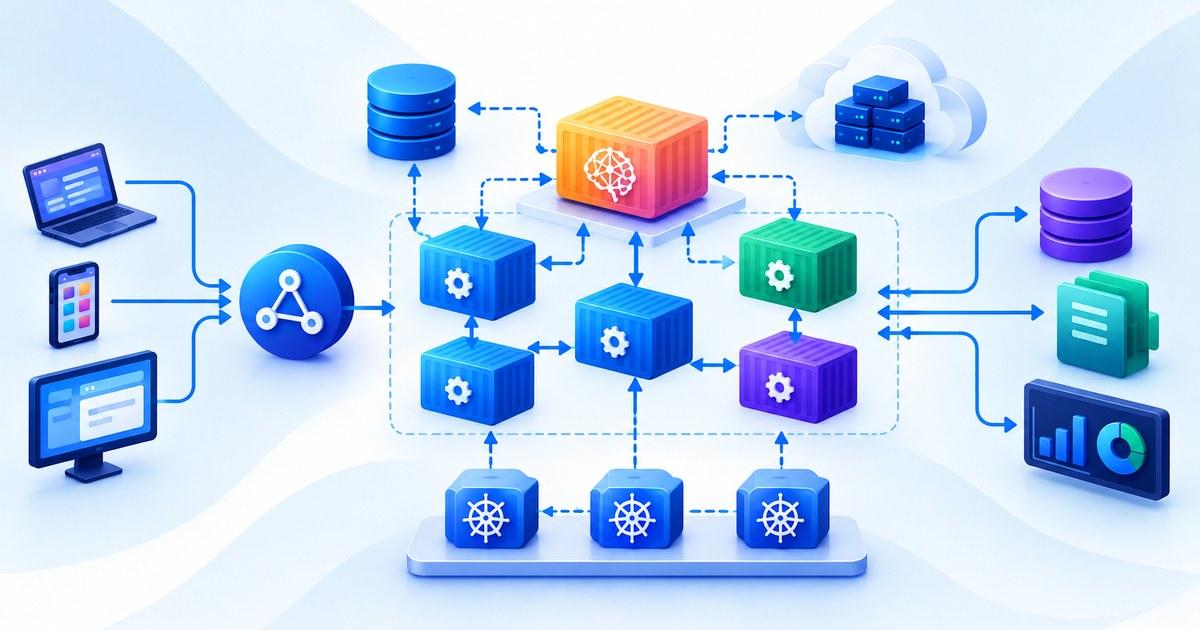
But in production environments, the model is only one component of a broader system that includes:
- Data ingestion
- Feature computation
- Serving infrastructure
- Logging
- Feedback collection
- Alerting systems
When candidates ignore those components, hiring managers assume limited exposure to real-world ML systems.
Trap #2: Over-Indexing on Offline Metrics
Another failure pattern is metric tunnel vision.
Candidates often focus entirely on:
- Accuracy
- F1 score
- ROC-AUC
But they neglect to mention:
- Calibration
- Stability across segments
- Latency constraints
- Cost per inference
- Business alignment
Hiring managers interpret this as academic orientation rather than product orientation.
In many real-world systems, small metric improvements can introduce unacceptable side effects:
- Increased inference time
- Higher infrastructure costs
- Worse user experience
- Increased false positives
Sophisticated interviewers intentionally probe for these tradeoffs.
If you cannot articulate them, it signals incomplete system thinking.
Trap #3: Ignoring Drift and Decay
A powerful interview question often appears late in the discussion:
“What happens after deployment?”
Weak answer:
“We retrain periodically.”
Strong answer:
- How drift is detected
- Which metrics are monitored
- What thresholds trigger retraining
- How rollback works
- How versioning is managed
Accuracy-obsessed candidates rarely think beyond initial deployment.
Hiring managers see this as a high operational risk.
In real-world ML systems, performance decay is inevitable. Data distributions shift. User behavior evolves. Edge cases emerge. Engineers who do not anticipate this create long-term instability.
Trap #4: Over-Complexity as a Flex
Some candidates attempt to impress interviewers by escalating model sophistication:
- Switching to larger architectures
- Adding ensemble layers
- Increasing parameter counts
- Introducing unnecessary deep learning components
Without clear justification.
This often backfires.
Hiring managers are trained to ask:
- Why was this complexity necessary?
- What business constraint justified it?
- What was the marginal improvement?
- Did infrastructure costs increase?
If complexity is not clearly tied to iteration outcomes, it signals ego rather than engineering judgment.
In senior interviews, simplicity with controlled improvement is often more impressive than architectural ambition.
Trap #5: No Structured Experimentation Narrative
Accuracy-focused candidates frequently describe experimentation like this:
“We tried several models and selected the best one.”
This suggests random exploration.
Hiring managers expect structured iteration:
- Clear hypothesis
- Controlled experiment
- Defined success metrics
- Documented learnings
- Repeatable pipeline
Without that structure, interviewers infer that improvements may have been accidental rather than engineered.
Why Accuracy Obsession Signals Junior Thinking
Junior engineers often equate technical performance with success.
Senior engineers equate system sustainability with success.
Accuracy obsession suggests:
- Short-term focus
- Limited exposure to production systems
- Minimal involvement in monitoring
- Little ownership beyond modeling
Hiring managers extrapolate future behavior from interview answers.
If you present yourself as someone who optimizes models but does not own outcomes, they assume you will require supervision in production environments.
That assumption costs offers.
The Subtle Interview Dynamic
There is a psychological dimension to this trap.
When candidates emphasize accuracy aggressively, they signal defensiveness, as if the metric must justify their contribution.
Strong candidates speak calmly about performance but quickly pivot to:
- What they learned
- What failed
- How they improved the system
- What tradeoffs they navigated
This shift conveys confidence.
How to Avoid the Trap
To avoid accuracy obsession during interviews:
- Mention accuracy once.
- Immediately contextualize it.
- Discuss tradeoffs.
- Describe deployment strategy.
- Explain monitoring.
- Highlight next iteration.
For example:
“The model improved precision by 2%, but latency increased slightly. We mitigated that through feature caching. After deployment, we monitored segment-level drift and scheduled retraining when distribution shift exceeded threshold values.”
That answer signals lifecycle thinking.
Accuracy becomes one element of a broader engineering story, not the centerpiece.
The Hiring Manager’s Mental Checklist
When evaluating ML candidates, hiring managers implicitly ask:
- Does this engineer think in systems?
- Can they manage uncertainty?
- Do they anticipate degradation?
- Can they iterate safely?
- Will they improve our product continuously?
Accuracy does not answer those questions.
Iteration does.
The Core Lesson
Accuracy obsession is not impressive, it is incomplete.
Hiring managers are not hiring models.
They are hiring engineers who improve systems over time.
In Section 5, we will synthesize everything into a practical interview blueprint, including how to structure answers, what phrases to use, and how to position yourself as an iteration-first ML engineer.
Section 5: The Iteration-First Interview Blueprint (How to Position Yourself as a High-Impact ML Engineer)
At this point, the pattern should be clear:
Accuracy proves competence.
Iteration proves long-term value.
Now we convert that principle into a repeatable interview blueprint.
This section gives you a practical framework to use in real ML interviews, especially in product companies where system ownership is heavily weighted.
The Iteration-First Answer Structure
Whenever you’re asked:
- “Tell me about an ML project.”
- “Describe a challenging modeling problem.”
- “How did you improve performance?”
- “What impact did your model have?”
Use this 7-step structure:
- Business Objective
- Baseline
- Constraint Identification
- Hypothesis-Driven Iteration
- Deployment Strategy
- Monitoring & Drift Handling
- Next Iteration Roadmap
This format immediately elevates your answer from model-focused to system-focused.
We’ve seen this structure consistently differentiate successful candidates in From Interview to Offer: InterviewNode's Path to ML Success, where lifecycle clarity often separates near-hires from strong hires.
Step 1: Start With Business Framing (Signals Strategic Thinking)
Avoid starting with:
“We trained a model to…”
Instead start with:
“The goal was to reduce false positives in fraud detection because customer support costs were increasing.”
Or:
“The objective was to improve search relevance for high-intent queries to increase conversion rate.”
This signals that you understand ML as a business tool, not a research exercise.
Hiring managers evaluate alignment first. Technical sophistication without business clarity feels misdirected.
Step 2: Describe the Baseline (Signals Engineering Discipline)
Next:
- What existed before?
- Why was it insufficient?
- What did you learn from it?
Example:
“We began with a rule-based system. It was interpretable but had high manual maintenance overhead.”
Or:
“We deployed a logistic regression baseline to establish performance floor and identify feature leakage risks.”
This step signals maturity. It shows you don’t jump to complexity.
Step 3: Explicitly Call Out Constraints (Signals Real-World Awareness)
Mention at least one constraint:
- Latency
- Cost
- Data sparsity
- Regulatory compliance
- Class imbalance
For example:
“Inference latency had to remain under 50ms due to API SLAs.”
Or:
“We were constrained by limited labeled data.”
This is critical.
In interviews, constraints separate academic answers from production answers.
Industries emphasis on responsible AI and lifecycle governance reinforces this mindset. Frameworks like the NIST AI RMF emphasize continuous risk evaluation rather than isolated performance wins.
Hiring managers increasingly expect engineers to operate within constraints.
Step 4: Walk Through Iteration Cycles (Signals Learning Velocity)
Now present 1–2 structured iteration cycles.
Format:
- Observation
- Hypothesis
- Experiment
- Result
- Learning
Example:
“We observed high false positives in a specific demographic segment. Hypothesized feature imbalance. Introduced segment-weighted loss adjustment. Precision improved 2% while maintaining recall.”
That shows disciplined improvement.
Avoid:
“We tried different models.”
That signals randomness.
Structured iteration signals leadership potential.
Step 5: Frame Deployment as Controlled Experimentation (Signals Risk Management)
Do not end at offline validation.
Instead explain:
- Rollout percentage
- A/B testing
- Guardrail metrics
- Rollback strategy
Example:
“We deployed to 20% of traffic, monitored conversion rate and latency, and expanded gradually.”
This language communicates production maturity.
Step 6: Discuss Monitoring and Drift (Signals Ownership)
Most candidates stop at deployment. Strong candidates continue.
Mention:
- Distribution monitoring
- Performance decay detection
- Alert thresholds
- Retraining cadence
- Version tracking
Example:
“We monitored prediction confidence calibration weekly. When performance dropped below threshold for two consecutive periods, retraining was triggered.”
This shows long-term accountability.
Hiring managers trust engineers who anticipate degradation.
Step 7: End With Forward-Looking Improvement (Signals Growth Mindset)
Conclude your answer with:
“The next iteration would focus on…”
This is powerful.
It communicates that:
- You never consider the system finished.
- You continuously identify improvement opportunities.
- You think in compounding cycles.
That is exactly what hiring managers want.
The Language Upgrade That Changes Perception
Avoid static phrases:
- “The model achieved…”
- “We improved accuracy…”
- “We selected the best algorithm…”
Replace with:
- “The system evolved…”
- “We reduced uncertainty through controlled experiments…”
- “We improved business metrics while respecting latency constraints…”
Language shapes perception.
Iteration language signals seniority.
How to Prepare Using This Blueprint
Before interviews:
- Rewrite 2–3 past ML projects using the 7-step structure.
- Practice explaining tradeoffs clearly.
- Quantify impact beyond accuracy.
- Prepare one example of handling drift.
- Prepare one example of rolling back a change.
The Senior-Level Signal Stack
When interviewers evaluate strong ML candidates, they subconsciously look for:
- Systems thinking
- Controlled experimentation
- Risk awareness
- Business alignment
- Compounding improvement
Accuracy alone checks only one box.
Iteration checks all five.
The Final Synthesis
Hiring managers don’t hire models.
They hire engineers who:
- Reduce uncertainty
- Improve systems predictably
- Operate safely at scale
- Align with business outcomes
- Learn continuously
Iteration is the clearest observable signal of those qualities.
If you internalize this blueprint, your ML interviews will feel fundamentally different. Instead of defending metrics, you will demonstrate engineering ownership.
Conclusion: Iteration Is the Hiring Signal That Predicts Long-Term Impact
Across this entire discussion, one pattern should now be unmistakable:
Accuracy is an output.
Iteration is a capability.
Hiring managers are not optimizing for the most impressive model snapshot. They are optimizing for engineers who can build adaptive systems that improve reliably over time.
In modern ML environments, especially in the United States, production systems are:
- Dynamic
- Data-dependent
- Revenue-impacting
- Risk-sensitive
- Continuously evolving
A candidate who emphasizes a 95% accuracy score is communicating competence.
A candidate who explains how they built a system that improved 1% every quarter while managing risk is communicating ownership.
That difference determines offers.
The shift toward lifecycle evaluation is also reflected in the growing emphasis on system thinking in ML interviews, as discussed in Mastering ML System Design: Key Concepts for Cracking Top Tech Interviews. The model is no longer the center of the conversation. The system is.
If you remember nothing else from this guide, remember this:
Hiring managers ask about accuracy.
But they decide based on iteration.
Your goal in interviews is to signal:
- Structured experimentation
- Tradeoff awareness
- Deployment discipline
- Monitoring rigor
- Business alignment
- Learning velocity
When you consistently frame your ML projects as evolving systems rather than static achievements, you change how interviewers perceive your seniority.
That perception changes outcomes.
Now let’s address the most common questions software engineers have about this shift.
Frequently Asked Questions
1. If accuracy doesn’t matter most, should I stop optimizing for it?
No. Accuracy (or task-appropriate metrics) is still foundational. However, hiring managers treat it as baseline competence. What differentiates candidates is how they improved performance over time and managed tradeoffs. Think of accuracy as necessary but not sufficient.
2. How do FAANG companies evaluate iteration differently from startups?
At companies like Amazon and Google, iteration is formalized:
- A/B testing frameworks
- Guardrail metrics
- Canary releases
- Long-term monitoring dashboards
Startups may move faster and with less formal process, but iteration velocity is often even more critical because product-market fit evolves rapidly. In both environments, lifecycle thinking is highly valued.
3. What if my previous role didn’t involve deployment?
Then demonstrate conceptual ownership.
Even if you worked on research or modeling:
- Describe how you would monitor drift.
- Explain how you would structure rollout.
- Discuss retraining cadence design.
Interviewers evaluate reasoning, not just past job titles.
4. How do I quantify iteration impact without revealing confidential data?
Use percentage improvements and relative metrics:
- “Reduced false positives by 18%.”
- “Improved retention among target segment by 3.2%.”
- “Reduced inference cost by 25%.”
Avoid absolute numbers if restricted. Interviewers care about magnitude and reasoning, not proprietary specifics.
5. Is iteration more important for senior roles?
Yes.
Junior roles focus more on modeling correctness.
Mid-level roles evaluate system integration.
Senior roles prioritize iteration strategy, risk management, and business alignment.
6. What metrics matter more than accuracy in interviews?
Depends on the problem, but commonly:
- Precision / Recall tradeoffs
- Calibration
- Latency
- Cost per inference
- Revenue impact
- User engagement
- False positive cost
Always tie technical metrics to business metrics.
7. How do I prepare iteration stories effectively?
For each ML project:
- Identify baseline.
- List 2–3 structured iterations.
- Note deployment strategy.
- Document monitoring approach.
- Quantify business impact.
Then rehearse using the structured lifecycle narrative described in this guide.
8. What are red flags that signal “accuracy obsession” in interviews?
- Focusing only on model architecture.
- Ignoring deployment.
- Not discussing drift.
- No mention of tradeoffs.
- No monitoring strategy.
- No experimentation structure.
These signals often cause rejections at strong companies.
9. How do hiring managers detect whether iteration was truly structured?
They ask follow-ups:
- “What was your hypothesis?”
- “What failed?”
- “What tradeoff did you accept?”
- “How did you detect degradation?”
Vague answers reveal shallow involvement.
10. Does iteration thinking apply to LLM systems too?
Even more so.
LLM-powered systems introduce:
- Prompt iteration
- Evaluation drift
- Safety monitoring
- Latency-cost tradeoffs
- Human feedback loops
11. How do I show iteration if my project was short-term?
Focus on what you learned per cycle.
Even in a 3-month project, you likely:
- Adjusted features
- Refined labels
- Tuned thresholds
- Changed evaluation metrics
Explain those refinements clearly.
Iteration doesn’t require years, it requires structured improvement.
12. Is business alignment always required in ML interviews?
For product-focused roles, yes.
In hiring environments, especially post-2023 market tightening, ML investments must justify ROI. Engineers who cannot connect modeling to measurable outcomes appear disconnected from product impact.
13. What’s the best one-sentence shift I can make in interviews?
Replace:
“The model achieved X accuracy.”
With:
“We improved business metric Y through structured iterations while maintaining constraint Z.”
That single shift changes perceived seniority dramatically.
14. How do compensation and iteration capability relate?
Higher compensation correlates with:
- Ownership
- Risk management
- Cross-functional impact
- Long-term system improvement
Engineers who drive sustained iteration are often promoted faster and paid more because they compound business value.
15. What is the ultimate mindset shift I need?
Stop thinking like a model builder.
Start thinking like a system owner.
Model builders optimize performance.
System owners optimize learning velocity.
Hiring managers invest in the latter.
Final Thought
The ML interview landscape in 2026 is not harder because algorithms are harder.
It is harder because expectations are higher.
You are no longer being evaluated as someone who can train a model.
You are being evaluated as someone who can improve a system responsibly, repeatedly, and measurably.
If you internalize that shift and communicate it clearly you won’t just pass interviews.
You’ll stand out.