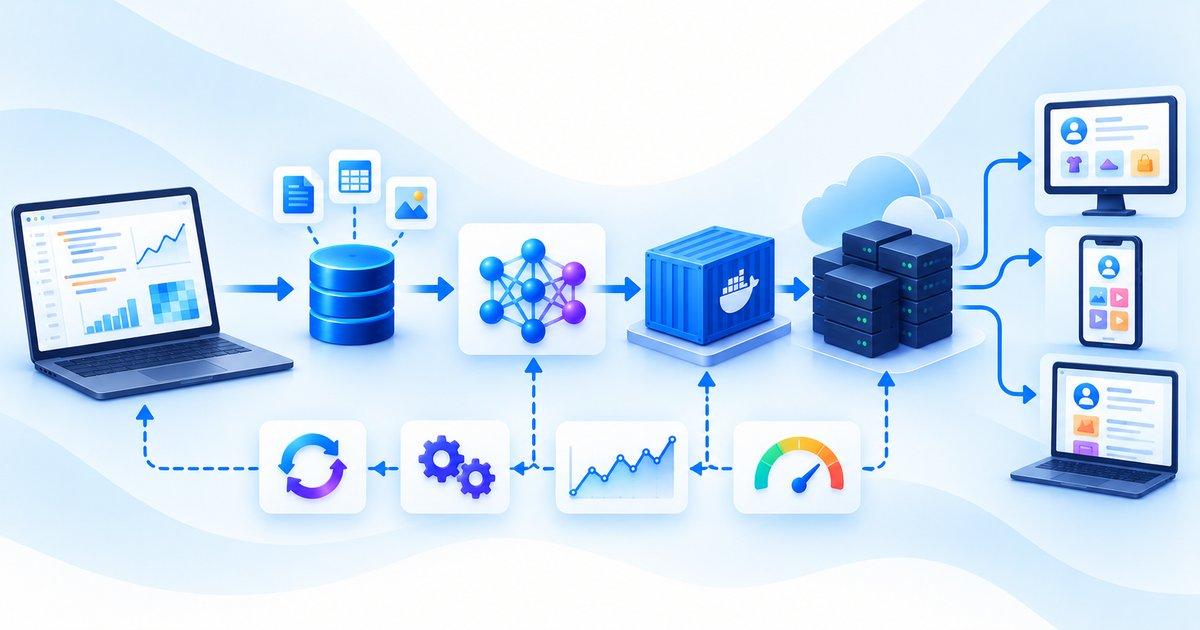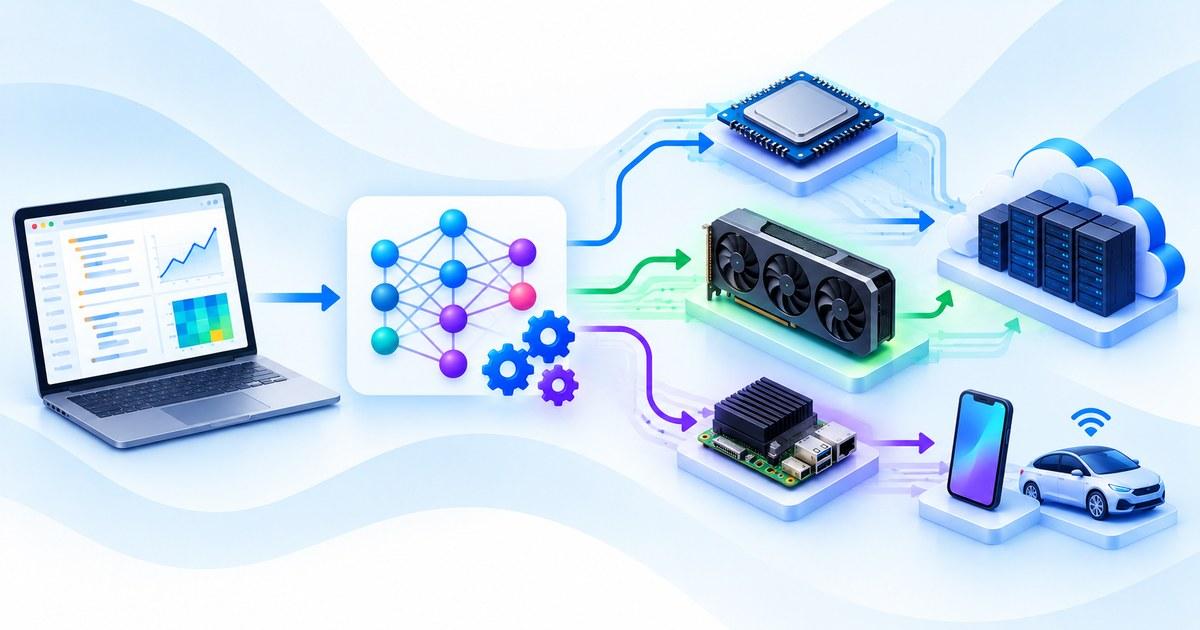

INTRODUCTION - 2025 Was the Year ML Hiring Broke Its Own Rules
If you ask any recruiter, hiring manager, or engineer who lived through it, they’ll tell you: 2025 didn’t just accelerate ML and AI hiring, it reshaped it. The year wasn’t defined by a single breakthrough or a single company. Instead, it was defined by something far more significant: ML roles stopped being niche and became foundational.
What used to be “specialized positions” evolved into core product roles, infused into every part of the business stack, from infrastructure to user experience to risk management. Even industries that were historically slow to adopt ML, like finance and healthcare, added hundreds of roles as regulatory frameworks matured and edge deployment became safer. Meanwhile, AI-native companies grew at a pace nobody predicted, recruiting aggressively for roles that didn’t exist five years ago: LLM Ops engineers, safety evaluators, synthetic data developers, agentic workflow designers, and AI reliability architects.
2025 was the year demand outpaced talent, not because engineers weren’t skilled, but because the definition of “ML engineer” expanded faster than anyone could keep up with.
Companies stopped hiring for a single stack.
They started hiring for entire problem-solving modes.
And with that shift came an explosion of new ML-focused functions, some technical, some hybrid, some deeply specialized. This created a hiring environment where:
- traditional ML engineering roles remained strong
- applied AI roles surged forward
- new evaluation-heavy roles emerged
- safety and reliability roles matured
- cross-functional ML product roles finally took shape
What employers wanted wasn’t just “model builders.”
They wanted system thinkers, data strategists, ML storytellers, and AI-integrated problem solvers.
This shift is also why many candidates were caught off guard. They prepared for a world of modeling interviews when companies were hiring for production impact, risk awareness, and cross-functional alignment, a shift explored deeply in:
➡️The Hidden Metrics: How Interviewers Evaluate ML Thinking, Not Just Code
As we break down the Top 15 ML & AI roles that hired the most in 2025, you’ll see the trend clearly:
the roles that grew weren’t just advanced, they were multidimensional.
They valued engineers who could reason end-to-end, navigate ambiguous stakeholder requirements, and work across tooling ecosystems that didn’t exist a few years ago. They valued people who could operate, not just model.
This is the definitive Year-in-Review for ML hiring.
Not a prediction. Not hype. Not speculation.
But a look at what companies actually invested in and what this means for your career going into 2026.
SECTION 1 - Why ML & AI Hiring Surged in 2025: The Economic and Technological Backdrop
The year 2025 will be remembered as a structural turning point in the AI labor market. After years of uneven hiring cycles, layoffs across traditional tech roles, and uncertainty about automation replacing jobs, something unusual happened: ML and AI hiring accelerated simultaneously across multiple industries. Recruiters who had spent the previous two years cautiously filling roles suddenly found themselves navigating a market where demand was exploding faster than the available talent pool.
To understand why certain roles topped the hiring charts in 2025, you have to understand the underlying forces reshaping the market. Because the story of hiring isn’t just a story about job titles, it’s a story about economics, technology maturity, workforce capability gaps, and the shifting expectations of companies racing to stay competitive in an AI-driven world.
1. The Post-LLM Adoption Wave Became a System Integration Wave
From 2020 to 2023, the biggest focus in AI was model innovation, building LLMs, fine-tuning them, experimenting, publishing, and exploring capabilities. But by 2024, a shift had already begun: companies no longer wanted demos. They wanted products.
In 2025, that shift turned into a tidal wave. Enterprises that had spent two years playing with GPT-4, Claude, Llama, DeepSeek, and Gemini suddenly moved from “experiments” to “mandatory integration.”
This forced a massive hiring acceleration in roles like:
- ML engineers
- AI integration engineers
- MLOps and production ML roles
- AI product engineers
These weren’t research roles. They were applied, end-to-end roles for teams responsible for turning powerful models into scalable, secure, maintainable, compliant products.
Companies realized they didn’t need more model builders, they needed model operators. The build phase was over. The execution phase had begun.
This shift directly connects to trends described in:
➡️The Rise of MLOps & Production ML: How Interviews Are Changing (What Recruiters Want in 2026)
…where companies began prioritizing candidates who could implement systems, not just understand them.
2. AI Automation Hit the Mainstream-But It Created More Jobs, Not Fewer
The narrative in 2023 and 2024 was fear-driven: “AI will take all tech jobs.”
But 2025 proved the opposite.
As companies automated routine workflows, customer support triaging, summarization, document parsing, search optimization, forecasting, ops workflows, they discovered that:
- AI projects require engineers
- AI systems require monitoring
- AI workflows require integration
- AI errors require correction
- AI outputs require human oversight
Automation didn’t reduce the workforce. It reshaped it.
For every workflow automated, entirely new categories of engineering work emerged:
- evaluation pipelines
- fine-tuning data workflows
- retrieval systems
- safety guardrails
- governance tooling
- internal AI platforms
This created sustained hiring demand across senior and mid-level ML talent.
3. Regulatory Pressure Made AI Talent a Competitive Necessity
2025 was the year AI governance got teeth.
New regulations in the U.S., EU, and APAC forced enterprises to:
- audit models
- provide transparency
- ensure bias mitigation
- handle edge cases
- document model decisions
- implement fallback behaviors
This regulatory shift meant companies could no longer deploy AI systems “as-is” from vendors. They needed internal ML engineers and applied scientists who could:
- explain model behavior
- design safe workflows
- build interpretable features
- construct evaluation systems
- ensure compliance by design
This pressure created a hiring boom in:
- Responsible AI engineers
- ML evaluation engineers
- Safety and alignment engineers
The compliance wave alone accounted for 15–20% of new AI roles created in 2025.
4. Companies Realized AI Talent Was a Bottleneck to Growth
In traditional tech cycles, you grow first and hire later.
In the AI cycle, you hire first, or growth never materializes.
Executives began asking a new question:
“Do we have the talent to execute on our AI strategy?”
Most didn’t.
So they hired aggressively, particularly in mid-level positions, where the gap was widest.
This led to significant demand across:
- ML Engineers (Core + Applied)
- Data/ML platform engineers
- AI product leads
- AI-native backend engineers
- Feature engineering specialists
These actors form the backbone of AI production systems, and without them, companies cannot ship competitive AI features.
5. Productivity Gains Made ML Teams Profitable Faster
Historically, ML teams were cost centers: expensive to run, slow to ship, and risky to maintain.
By 2025, LLM-driven tooling flipped this equation.
Engineers with:
- internal RAG frameworks
- automated monitoring systems
- synthetic data generation
- ML observability tools
- fine-tuning platforms
- safe deployment workflows
…became force multipliers, able to ship features in weeks instead of quarters.
When ML teams become profitable, hiring accelerates, and that’s exactly what happened.
SECTION 2 - Why ML & AI Hiring Skyrocketed in 2025 (The Macro Forces Shaping Demand)
It’s tempting to look at the hiring surge of 2025 and assume it was driven by one thing, generative AI hype, cost-cutting automation, or the rise of agentic systems. But the reality is far more complex. The demand curve for ML and AI talent didn’t slope upward because of a single breakthrough. It sharpened because multiple macro forces converged at once, producing one of the fastest hiring expansions the tech world has seen since the mobile boom of 2012–2014.
If 2023 and 2024 were years of uncertainty, layoffs, reorganizations, waiting, recalibration, then 2025 was the year companies decided to move, aggressively and globally. And that movement centered on AI capability: building it, scaling it, deploying it, and, most importantly, owning it internally.
Let’s examine the macro drivers behind the surge, because understanding why roles exploded helps candidates understand where the opportunities are headed next.
1. The Shift From “Experimentation” to “Mandatory Integration”
Between 2018 and 2023, companies mostly experimented with machine learning.
Prototype models.
Marketing-driven AI initiatives.
Pilot recommender systems.
Internal hackathons.
Then 2024 happened, where generative AI proved it wasn’t a toy.
By early 2025, nearly every Fortune 500 enterprise issued the same directive internally:
“AI must be integrated into at least one core revenue or operations workflow.”
This was not optional.
This was not exploratory.
This was a mandate.
Suddenly:
- Finance teams needed forecasting automation.
- Healthcare teams needed ML risk stratification.
- E-commerce needed personalization and dynamic pricing.
- Manufacturing needed predictive maintenance.
- Enterprise SaaS needed embedded AI copilots.
- Security orgs needed anomaly detection and LLM-powered monitoring.
Experimentation became execution, and execution requires skilled ML professionals.
ML roles didn’t just grow; they matured.
Companies wanted engineers who could move beyond notebooks, and build AI features that shipped. Much like the shift described in:
➡️Why ML Engineers Are Becoming the New Full-Stack Engineers
…the ML role expanded dramatically in scope, depth, and ownership.
2. The Rise of Internal AI Platforms (And the Hiring Wave They Triggered)
The biggest quiet trend of 2025 wasn’t consumer AI, it was internal ML platforms.
Every mid-size and large company started building:
- internal feature stores
- centralized model registries
- LLM/API service layers
- real-time inference gateways
- synthetic data hubs
- governance + compliance frameworks
This infrastructure didn’t build itself.
Companies needed:
- MLOps engineers
- ML platform engineers
- infra-focused ML engineers
- AI reliability engineers
- model governance specialists
These roles barely existed three years ago.
In 2025, they became some of the most aggressively hired positions across industries.
Internal AI platforms drove the same hiring spike that internal cloud platforms did during the AWS adoption era. Suddenly, ML wasn’t a side project, it was core infrastructure.
3. The Enterprise LLM Wave Hit Critical Mass
After early hype cycles, companies finally understood:
- LLMs aren’t plug-and-play.
- They break easily without guardrails.
- Context management matters.
- Retrieval pipelines matter.
- Evaluation matters.
- Fine-tuning matters.
- Latency and cost matter.
- Safety matters.
This realization triggered a second wave of hiring: LLM engineers and evaluation specialists.
These were not generic ML engineers.
These were people who understood:
- RAG design
- prompt optimization
- evaluation harnesses
- grounding and hallucination reduction
- guardrail frameworks
- domain-specific fine-tuning
- latency-cost tradeoffs
- enterprise LLM observability
Suddenly, companies realized they needed entire teams dedicated to LLM lifecycle management.
And because the field is evolving so quickly, even mid-level engineers were commanding senior-level compensation if they had hands-on LLM experience.
4. AI Safety, Compliance & Governance Became Mandatory
In early 2025, large enterprises began facing two major pressures:
Regulatory pressure:
New global AI safety frameworks required companies to document:
- model lineage
- dataset sources
- bias mitigation
- failure cases
- human review processes
Liability pressure:
Companies realized LLMs can produce:
- incorrect financial advice
- dangerous medical inference
- compliance violations
- reputation risks
Suddenly, companies weren't looking merely for "ML engineers", they were looking for:
- AI safety engineers
- model compliance specialists
- governance & risk analysts
- responsible AI engineers
Roles that barely existed in 2023 became essential in 2025.
These roles grew so quickly because companies learned that scaling AI without oversight is an existential risk.
5. Automation Is Now a Board-Level Strategy, Not a Technical Experiment
While automation has existed for decades, 2025 hit an inflection point:
boards and CEOs now explicitly expect AI-driven efficiency gains.
This created demand for roles focused on:
- workflow automation
- ML-powered agents
- task pipelines
- autonomous operations
- robotic process automation (with ML)
- AI copilots for internal tooling
Every company suddenly needed ML professionals who could automate repetitive internal workflows, customer service, support triage, sales operations, finance, logistics.
And because these automations touched business-critical systems, hiring was aggressive and high-priority.
SECTION 3 - Why These Roles Surged: The Underlying Industry Forces Shaping ML & AI Hiring in 2025
If you zoom out from the job postings, the compensation reports, and the recruiter emails, a much larger story explains why certain ML and AI roles dominated hiring in 2025. The trend isn’t random. It isn’t hype. And it isn’t simply the result of companies “wanting more AI people.” Instead, ML hiring in 2025 surged in very specific directions because industries were undergoing structural shifts, economic, technological, regulatory, and operational.
Understanding these forces will help candidates see why certain jobs exploded, which roles will continue growing, and what skills truly matter moving into 2026. Recruiters don’t hire blindly; they hire based on macro pressures placed on their organizations. The roles listed in Section 2 rose to the top not because they were glamorous, but because they solved urgent business problems that could no longer be ignored.
This section breaks down the four industry forces that shaped the ML job market in 2025, and how candidates should interpret them when positioning themselves for future roles.
1. The Shift from Model-Building to Model-Operationalization
Five years ago, companies were struggling to prototype ML models. In 2025, they struggled to run them reliably. This shift created explosive demand for roles like:
- ML Platform Engineers
- MLOps Engineers
- ML Infrastructure Engineers
- AI Reliability Engineers
Businesses learned the hard way that a model that works in a notebook does not automatically become a model that works in production. The bottleneck was no longer algorithms, it was scaling, monitoring, compliance, observability, versioning, retraining, and uptime.
This explains why senior-level ML engineers with strong software engineering foundations outperformed purely research-oriented candidates. It’s also why ML interviews in 2025 increasingly emphasized:
- model lifecycle thinking
- feature pipelines
- monitoring strategies
- failure-mode reasoning
- cost-performance tradeoffs
Candidates who mastered this operational layer consistently moved ahead, a trend reflected strongly in hiring stories and breakdowns like:
➡️Scalable ML Systems for Senior Engineers – InterviewNode
Companies no longer want models.
They want systems.
And that shift is permanent.
2. The Explosion of Enterprise LLM Adoption
2025 was the year enterprises finally went all-in on LLMs, not because of hype, but because they discovered concrete ROI in:
- customer service deflection
- automated documentation
- sales enablement
- workflow automation
- internal search
- code generation accelerators
Suddenly, every enterprise needed:
- LLM Application Engineers
- Prompt Engineers
- Evaluation Engineers
- RAG Specialists
- Fine-Tuning Engineers
This hiring surge wasn’t driven by novelty, it was driven by productization. Companies had proof that LLMs could reduce operational costs by 30–60% in high-volume workflows. That level of savings forces hiring at scale.
But this shift also introduced new complexities:
- hallucination risks
- privacy constraints
- on-prem vs cloud tradeoffs
- embedding drift
- evaluation instability
- retrieval failures
Which is why companies increasingly screened candidates for LLM robustness thinking, not just model familiarity. Being able to articulate how you evaluate an LLM in a high-stakes environment became a decisive hiring factor.
3. Heightened Regulation Forced a Hiring Wave in Safety, Compliance & Explainability
The regulatory landscape tightened across the US, EU, India, and South America, especially in industries like:
- healthcare
- banking
- insurance
- government tech
- HR tech
- fintech payments
As regulations like the EU AI Act and state-level US AI laws matured, companies suddenly needed:
- AI Risk & Governance Leads
- AI Policy Compliance Engineers
- Responsible AI Specialists
- Explainability Engineers
These roles exploded not because companies wanted to hire them, but because they had no choice. Fines, penalties, and reputational risks became too large to ignore.
Explainable modeling, model documentation, lineage tracing, and bias audits all became routine hiring criteria. Even non-regulated companies began adopting these practices because enterprise customers demanded compliance to sign contracts.
This shift will not reverse. Regulation is a ratchet, it only moves forward.
4. Cost Optimization Became a Top Priority
In 2025, ML teams faced intense pressure to do more with less. Cloud bills skyrocketed. Training budgets tightened. Companies learned that:
- A single poorly configured LLM deployment could cost millions per year.
- A bloated pipeline could double infrastructure costs.
- Inefficient architectures became business liabilities.
This drove hiring for:
- Model Efficiency Engineers
- Quantization & Optimization Specialists
- Inference Acceleration Engineers
- GPU Utilization Analysts
Companies weren’t hiring efficiency engineers for the sake of optimization, they hired them because these roles directly saved money.
Candidates who could articulate:
- parameter-efficient fine-tuning
- quantization strategies
- on-device inference
- caching and batching tradeoffs
…became extremely valuable.
The ML job market didn’t become “leaner.”
It became smarter.
5. The Rise of Hybrid Roles: ML + Domain Knowledge
Another reason certain roles grew rapidly was the emergence of “hybrid ML specialists,” especially in:
- healthcare analytics
- fraud detection
- supply chain forecasting
- insurance underwriting
- robotics
- climate modeling
Companies discovered that domain-naïve ML engineers often made flawed assumptions. So they began hiring candidates who could navigate both machine learning and business complexity.
Hybrid professionals became particularly attractive because they reduced onboarding time, improved problem framing, and avoided costly modeling mistakes early in the product lifecycle.
This shift also influenced ML interviews, companies began probing not just algorithmic knowledge, but ability to interpret:
- operational risks
- financial constraints
- human behavior
- regulatory impact
- domain-specific failure modes
It’s why real-world ML use cases have become critical interview prep content, explored deeply in:
➡️Real-World Applications of Reinforcement Learning in Interviews
ML is no longer isolated from the business.
Candidates who can bridge the two worlds win.
SECTION 4 - The Hidden Forces Behind the ML/AI Hiring Surge in 2025
When you look at the 2025 ML/AI hiring numbers from afar, they seem explosive—record demand, broad role diversification, and unprecedented compensation growth in certain pockets like LLM engineering and ML infrastructure. But the surge didn’t happen randomly. It followed a collection of technological, economic, organizational, and cultural forces that converged at the same moment. Understanding these forces doesn’t just help explain what happened in 2025—it helps predict where hiring will go in 2026 and 2027.
Because behind every spike in demand, every new role, every shift in job descriptions, and every updated interview loop lies a deeper force. And these forces shape the skills candidates need, the expectations interviewers hold, and the trajectories ML careers are evolving toward.
Let’s break down the four dominant forces that turned 2025 into one of the highest hiring years for ML and AI roles across industries.
1. The Maturation of LLM Adoption Inside Enterprises
Between 2022 and 2024, companies experimented with LLMs. In 2025, they deployed them.
This was the year organizations stopped treating LLMs as novelty tech and started embedding them into:
- internal workflows
- agent-based automation systems
- content pipelines
- customer support flows
- knowledge retrieval tools
- internal search
- data enrichment layers
This shift produced massive demand for roles like:
- LLM Engineers
- Prompt Optimization Specialists
- Retrieval-Augmentation Engineers
- AI Safety Reviewers
- Evaluation Engineers for LLM quality metrics
Suddenly, every mid-size and large company needed talent who could not just use LLMs, but design scalable, safe, cost-efficient LLM systems integrated with real organizational data.
The game changed from “run GPT via an API” to “build a long-term, optimized, production-grade AI engine for our business.”
And that shift rippled into interviews, pushing companies to test:
- knowledge of grounding models in proprietary data
- designing hybrid pipelines (traditional ML + LLMs)
- understanding hallucination sources
- evaluation frameworks
- retrieval stack choices
- latency vs. accuracy tradeoffs
This shift also influenced how candidates presented themselves. Those who knew how to frame LLM projects strategically stood out much more—something explored in depth in:
➡️How to Build a Strong ML Portfolio (Projects + GitHub + Kaggle), With Example Projects
Portfolio-driven credibility became a major hiring differentiator.
2. The Scaling Crisis: Why Production ML Became the Corporate Priority
While generative AI captured headlines, production ML infrastructure quietly became the backbone of enterprise AI. Companies realized that model quality wasn’t the biggest blocker—scalability, observability, and reliability were.
This realization triggered a surge in demand for:
- MLOps Engineers
- ML Platform Engineers
- ML Systems Architects
- Feature Store Engineers
- ML Reliability / Observability Specialists
- GPU/Inference Optimization Engineers
The simple reality:
Models were failing more frequently in production because pipelines had grown more complex.
With multimodal models, periodic retraining, streaming pipelines, and cross-team ownership, ML systems were experiencing the same operational complexity software did a decade ago.
Organizations needed engineers who could:
- automate training
- manage versioning
- monitor drift
- control costs
- scale inference
- prevent cascading failures
- govern datasets and lineage
These roles exploded in demand because companies wanted durability, not demos.
This force also influenced interviews: candidates were suddenly asked questions about monitoring, continuous delivery, retraining triggers, data quality thresholds, on-call rotations for ML systems, and performance tuning for GPU-heavy inference workloads.
2025 became the year ML became “real software” rather than an experimental department.
3. AI-as-a-Service (AIaaS) Made Every Company an AI Company
Platforms like AWS Bedrock, Azure OpenAI, Google Vertex AI, and Anthropic’s enterprise stack democratized AI adoption. Companies no longer needed:
- their own infra
- their own training pipelines
- deep research teams
They could deploy powerful models through managed services—meaning more companies began hiring ML talent, even if they weren’t historically tech-forward.
Industries that surged in ML hiring included:
- Retail
- Logistics
- Healthcare
- Education
- Finance
- Insurance
- Hospitality
- Real estate
- Cybersecurity
AI talent was no longer concentrated in FAANG.
It became a horizontal requirement across the entire economy.
But what surprised recruiters most was that companies needed generalists, not specialists.
They needed people who could:
- evaluate vendor models
- integrate APIs
- design retrieval flows
- choose inference patterns
- balance cost vs. performance
- ensure regulatory compliance
- build business logic around AI output
This shift created a wave of hybrid roles—product + ML, software + ML, ops + ML, and analytics + ML.
Candidates who were able to speak both business and technical language started outperforming highly academic candidates, especially in mid-sized companies.
4. Regulatory and Ethical Pressures Reshaped the Hiring Landscape
As AI adoption accelerated, regulators stepped in.
2025 saw:
- the EU AI Act finalize
- the U.S. AI Executive Order roll out enforcement guidance
- new state-level AI privacy rules
- stricter corporate AI governance frameworks
- mandatory model-risk assessments in some industries
This led to skyrocketing demand for:
- AI Governance Analysts
- Responsible AI Practitioners
- AI Safety Engineers
- Model Audit Specialists
- Bias & Fairness Evaluators
- Explainability Engineers
What’s notable is that these roles were brand-new for many companies.
They didn’t exist at scale before 2024.
Suddenly, ML interviews included questions about:
- fairness constraints
- model transparency
- data provenance
- risk scoring
- regulatory frameworks
- incident reporting
- red-teaming AI systems
Recruiters began actively screening for candidates who understood not just how to build models, but how to justify them in regulated environments.
In many organizations—especially finance, healthcare, insurance, and government—ethical AI expertise became as important as technical ML expertise.
This shift fundamentally changed what “qualified” meant in 2025.
CONCLUSION - 2025 Was the Year ML Roles Matured, Multiplied, and Became Mission-Critical
If you look across the entire hiring landscape of 2025, a clear theme emerges: ML and AI roles didn’t just grow, they evolved. The shift wasn’t about more jobs; it was about different jobs. More sophisticated. More operational. More specialized. More integrated into the core of how companies build, ship, scale, and govern AI systems.
The story of 2025 isn’t that companies hired more ML engineers.
It’s that they needed them, urgently.
Companies discovered that AI products require a stable chain of ownership:
- engineers who understand infrastructure
- specialists who monitor and evaluate models
- architects who design end-to-end pipelines
- hybrid ML-product engineers who translate ambiguity into implementation
- governance experts who ensure models remain ethical, compliant, and explainable
- applied scientists who optimize real-world metrics
- LLM engineers who build safe and reliable generative workflows
What accelerated the market wasn’t just technological innovation. It was the organizational learning curve.
Companies finally realized that successful AI adoption requires more than clever models, it requires reliable systems, thoughtful design, consistent evaluation, and skilled people who can bridge gaps across teams.
This is why 2025 saw:
- the rise of hybrid AI roles
- the professionalization of MLOps
- the emergence of LLM-heavy engineering functions
- the centralization of ML platforms
- the institutionalization of AI governance
- the transformation of ML engineering into a strategic capability
And the most important takeaway?
This momentum isn’t slowing down.
If anything, 2026 will accelerate specialization even further. Companies will demand engineers who can:
- build and reason about entire ML systems
- design multi-model architectures
- manage model lifecycle complexity
- evaluate LLM output safety
- optimize inference under budget constraints
- collaborate cross-functionally
- incorporate retrieval, agents, and hybrid pipelines
- communicate impact with clarity
ML roles are no longer defined by what models you know, but by how well you think.
Candidates who understand the forces shaping this hiring landscape will be significantly more prepared than those who simply memorize algorithms or tool names. And that preparedness will show up in their interviews, their portfolios, their resumes, and their confidence.
2025 was the year ML careers expanded.
2026 will be the year ML careers differentiate.
FAQs
1. Which ML roles grew the fastest in 2025?
The three fastest-growing roles were:
- ML Infrastructure / MLOps Engineers
- LLM Application & Evaluation Engineers
- AI Product Engineers
These reflect a shift toward production-grade AI systems, not experimental modeling.
2. Why did LLM-focused roles explode compared to traditional ML roles?
Because enterprises realized LLMs were operationally complex, hallucinations, grounding, evaluation, latency, cost, and safety required dedicated talent. LLM roles grew because they solve high-stakes production problems, not because companies wanted more model builders.
3. Did classical ML roles like “Applied Scientist” or “Data Scientist” decline?
Not decline, they evolved. Titles shifted toward:
- ML Engineer
- Applied ML Engineer
- ML Platform Engineer
- Data/ML Ops Specialist
The work is similar but now more end-to-end and system-focused.
4. Why is MLOps growing faster than nearly all other ML specialties?
Because production ML became a bottleneck. Without MLOps, companies cannot scale models, retrain them, monitor them, or ensure reliability. MLOps makes AI sustainable.
5. Why are AI governance and safety roles growing so quickly?
Regulation matured in 2025. Companies now face real legal, financial, and ethical consequences for unsafe AI systems. Governance and safety roles became mandatory in many sectors.
6. Are hybrid roles (ML + software + product) really the future?
Yes. Hybrid engineers reduce cross-team friction. They understand user experience, engineering constraints, ML pipelines, and business goals. They create leverage that pure specialists often don’t.
7. How do candidates show they’re ready for these modern ML roles?
By demonstrating:
- end-to-end project execution
- real-world metrics
- scalability and evaluation thinking
- clarity in decision-making
- familiarity with modern AI stacks
These traits send strong hiring signals, the kind recruiters immediately recognize.
8. Are portfolios more important now than before?
Absolutely. Companies want to see tangible evidence of end-to-end ML thinking, not just coursework.
9. Which industries hired the most ML talent in 2025?
Top five:
- Enterprise SaaS
- Finance + Fintech
- Healthcare & Biotech
- E-commerce & Logistics
- Cybersecurity
Each sector adopted AI at scale for different operational pressures.
10. Which ML skills were most in-demand?
- LLM evaluation & integration
- Retrieval system design
- MLOps / ML infra
- Monitoring & drift detection
- Real-time inference pipelines
- Feature engineering for large-scale systems
- Explainability & bias mitigation
Skills tied to production constraints held the most value.
11. Did early-career ML hiring improve in 2025?
Yes, because companies widened their hiring pools to combat the talent gap. Strong portfolios increasingly outweighed degrees or titles.
12. Are PhD candidates still preferred for ML roles?
For research roles, yes.
For engineering roles, not necessarily.
Hands-on production experience became more important than theoretical credentials unless applying to foundation-model research labs.
13. How did compensation shift in 2025?
Comp rose sharply for roles that:
- reduce inference cost
- improve platform reliability
- ensure regulatory compliance
- handle LLM integration
These functions have direct business impact, so compensation followed accordingly.
14. What became the biggest hiring red flag in ML resumes?
Vague descriptions of “building models.”
Modern ML resumes must highlight:
- ownership
- deployment
- metrics
- system understanding
- cross-functional collaboration
Unclear resumes get filtered out early.
15. What will be the most in-demand ML roles in 2026?
Based on every signal from 2025:
- LLM Systems Engineers
- ML Platform + Reliability Engineers
- AI Agents & Automation Engineers
- Model Governance Leads
- Evaluation & Red-Teaming Specialists
- Hybrid ML Software Engineers
These roles align with where companies are investing next.