Section 1: Why AI Systems Fail in Production
Artificial intelligence has reached a level of sophistication that allows it to solve problems once considered exclusive to human intelligence. Large Language Models generate software code, recommendation engines personalize customer experiences, computer vision systems detect manufacturing defects, and predictive models help businesses make critical operational decisions. During development and testing, these systems often achieve impressive accuracy, giving organizations confidence that they are ready for production deployment. However, the transition from a controlled development environment to real-world operations frequently exposes challenges that were impossible to anticipate during training. The conditions under which AI operates in production are constantly changing, making failure not an exception but an expected part of the system's lifecycle.
This distinction between laboratory performance and production reality is one of the most important lessons in modern AI engineering. A model trained on carefully curated historical data performs well because the training environment is controlled, consistent, and predictable. Production environments, on the other hand, are dynamic ecosystems influenced by changing customer behavior, evolving business priorities, infrastructure fluctuations, external services, regulatory changes, and unpredictable user interactions. As these variables change, AI systems inevitably encounter situations that differ from the conditions under which they were originally developed. Even the most advanced models cannot anticipate every possible scenario, which means occasional mistakes become unavoidable.
Recognizing this reality has fundamentally changed the philosophy of AI engineering. Organizations are no longer attempting to eliminate every possible failure because doing so is practically impossible. Instead, they focus on designing AI systems capable of detecting when something has gone wrong, understanding why it happened, and recovering quickly before users experience significant disruption. This engineering mindset resembles the evolution of distributed computing, where architects stopped assuming hardware would never fail and instead built systems capable of recovering automatically whenever failures occurred. Enterprise AI is undergoing a similar transformation, with resilience becoming just as important as intelligence.
Understanding the Sources of AI Failure
One of the most common causes of production failure is data drift. Machine learning models are trained using historical datasets that represent specific patterns existing at a particular point in time. As organizations continue collecting new information, those patterns gradually change. Customer demographics evolve, purchasing habits shift, market trends fluctuate, and operational processes improve. Although the model itself remains unchanged, the incoming production data becomes increasingly different from the data used during training. As this gap widens, prediction quality naturally begins to decline because the AI system is making decisions based on outdated assumptions.
Closely related to data drift is concept drift, where the relationship between input data and expected outcomes changes over time. Unlike data drift, where the characteristics of the data evolve, concept drift changes the meaning of the problem itself. Fraud detection provides a clear example. Criminals continuously modify their attack strategies to bypass existing security systems. A model that accurately identified fraudulent transactions last year may struggle against new fraud techniques introduced today. Similar challenges appear in cybersecurity, healthcare diagnostics, financial forecasting, and recommendation systems, where the rules governing successful predictions evolve continuously. Without mechanisms to identify these changes, AI systems gradually become less effective even though they continue operating exactly as designed.
Generative AI applications face an additional challenge in the form of hallucinations. Large Language Models occasionally produce responses that appear convincing despite containing inaccurate or fabricated information. These hallucinations become particularly problematic in enterprise environments involving legal documentation, financial reporting, software development, or medical decision support. Since users often trust confident AI responses, inaccurate outputs may propagate through downstream workflows before errors are discovered. Building self-healing AI therefore requires mechanisms that continuously validate outputs, assess confidence levels, and identify unreliable responses before they influence business operations.
Production AI systems are also vulnerable to infrastructure failures that have little to do with model quality. Cloud services may experience outages, databases may become temporarily unavailable, network latency can increase unexpectedly, GPUs may fail, and storage systems can encounter operational issues. Even when machine learning models function correctly, failures within the surrounding infrastructure can significantly reduce system reliability. Enterprise AI therefore depends on resilient engineering architectures that monitor infrastructure health alongside model performance, ensuring that operational issues are detected and resolved before affecting users.
Readers interested in understanding the engineering disciplines that support reliable production AI should also explore "The Hidden Layers of AI Engineering Nobody Talks About," which examines the infrastructure, monitoring strategies, and operational practices that quietly determine whether enterprise AI systems succeed at scale.
Key Takeaway
AI systems fail in production because real-world environments are constantly changing. Data drift, concept drift, hallucinations, infrastructure failures, API disruptions, edge cases, model degradation, and evolving user behavior all contribute to declining performance over time. Rather than attempting to eliminate every possible failure, modern AI engineering focuses on detecting problems early, understanding their root causes, and building resilient systems capable of recovering automatically. These principles form the foundation of self-healing AI, enabling intelligent systems to remain reliable even in unpredictable production environments.
Section 2: Building Self-Healing AI Through Continuous Monitoring
Deploying an artificial intelligence model into production is often viewed as the culmination of months of research, data preparation, feature engineering, model training, validation, and testing. In reality, deployment marks the beginning of an entirely new engineering challenge. Once an AI system starts interacting with real users, processing live data, and supporting business operations, its performance begins to evolve continuously. Customer behavior changes, infrastructure workloads fluctuate, data quality varies, and external dependencies introduce uncertainty that cannot be fully simulated during development. Without mechanisms to observe these changes in real time, even highly accurate AI models gradually become unreliable, often without engineers realizing that performance has deteriorated until business outcomes are affected.
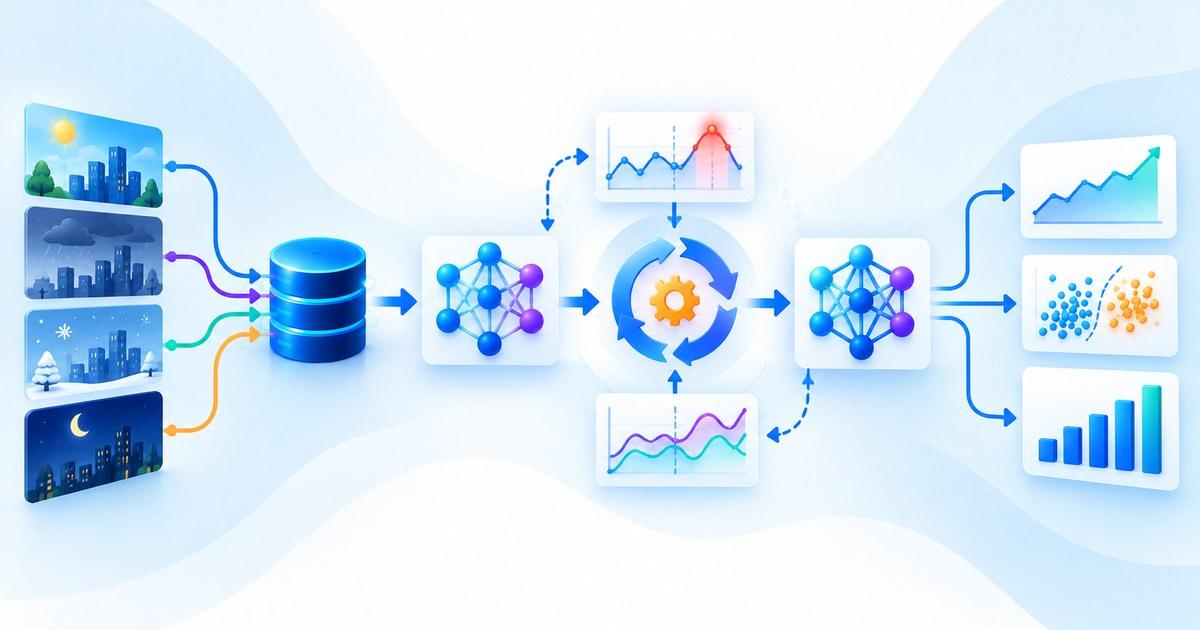
This is why modern AI engineering increasingly emphasizes continuous monitoring rather than static deployment. Organizations no longer treat AI models as software components that remain unchanged after release. Instead, production AI systems are viewed as living services whose health must be monitored continuously throughout their operational lifecycle. Every prediction, response, infrastructure event, and user interaction provides valuable signals about whether the system continues to function as expected. Collecting and analyzing these signals enables engineers to identify abnormalities before they escalate into customer-facing failures.
Continuous monitoring represents the foundation of self-healing AI because recovery is only possible after problems are detected. An AI system cannot correct inaccurate predictions, recover from infrastructure disruptions, or adapt to changing environments if it lacks visibility into its own operational state. Consequently, enterprise AI platforms increasingly incorporate observability frameworks capable of measuring model behavior, identifying anomalies, diagnosing failures, and triggering automated recovery workflows without requiring immediate human intervention.
AI Observability: Giving Intelligent Systems Operational Awareness
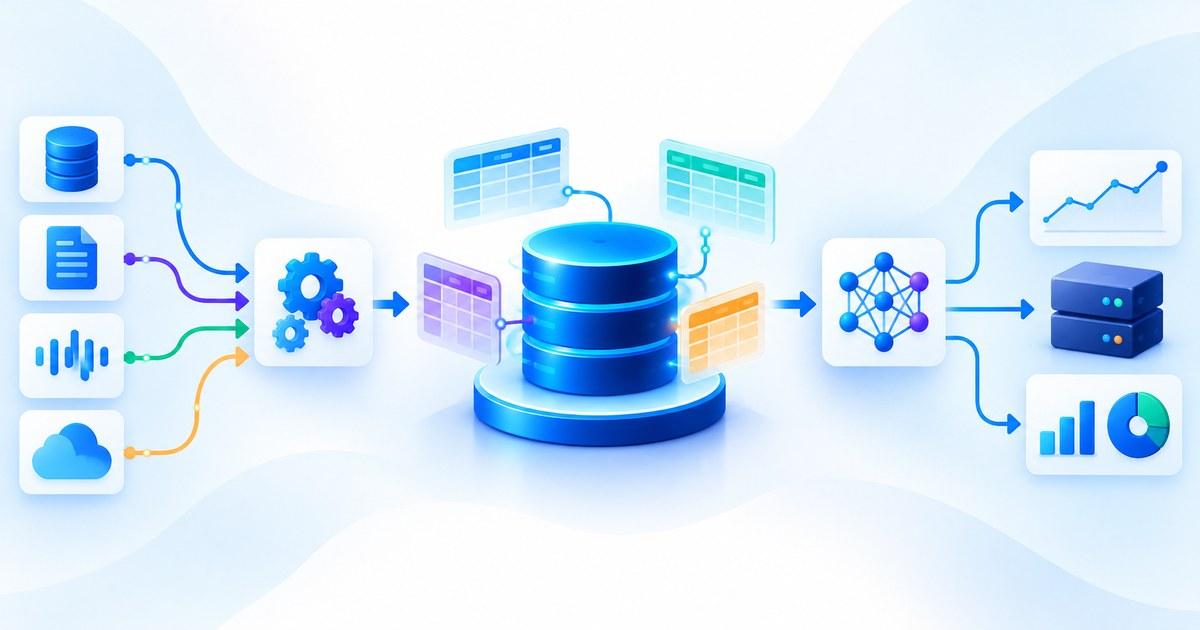
The first step toward self-healing AI is establishing comprehensive AI observability. Traditional software monitoring focuses primarily on infrastructure metrics such as CPU utilization, memory consumption, disk usage, and network latency. While these measurements remain important, they provide only a partial understanding of AI system health. Machine learning introduces additional layers of complexity because model quality depends not only on infrastructure but also on data quality, prediction confidence, feature distributions, inference latency, business outcomes, and user interactions. AI observability therefore extends beyond infrastructure monitoring by providing complete visibility into every component influencing production performance.
A well-designed observability platform continuously tracks model performance metrics that indicate whether predictions remain accurate over time. Depending on the application, these measurements may include classification accuracy, precision, recall, F1 score, recommendation quality, response relevance, hallucination frequency, customer satisfaction, conversion rates, or other business-specific indicators. By comparing current performance against historical baselines, engineering teams can quickly recognize when models begin deviating from expected behavior. Rather than discovering declining accuracy weeks later through manual analysis, continuous monitoring enables organizations to respond within minutes or hours.
Observability also includes monitoring data quality, which often provides the earliest indication that production conditions are changing. Missing values, unexpected feature distributions, duplicate records, corrupted inputs, unusual traffic patterns, or sudden changes in user demographics frequently precede measurable declines in model accuracy. Detecting these anomalies early allows engineering teams to investigate potential issues before customers experience degraded service. Instead of reacting after predictions become unreliable, organizations proactively address the underlying causes responsible for declining performance.
From Detection to Automated Recovery
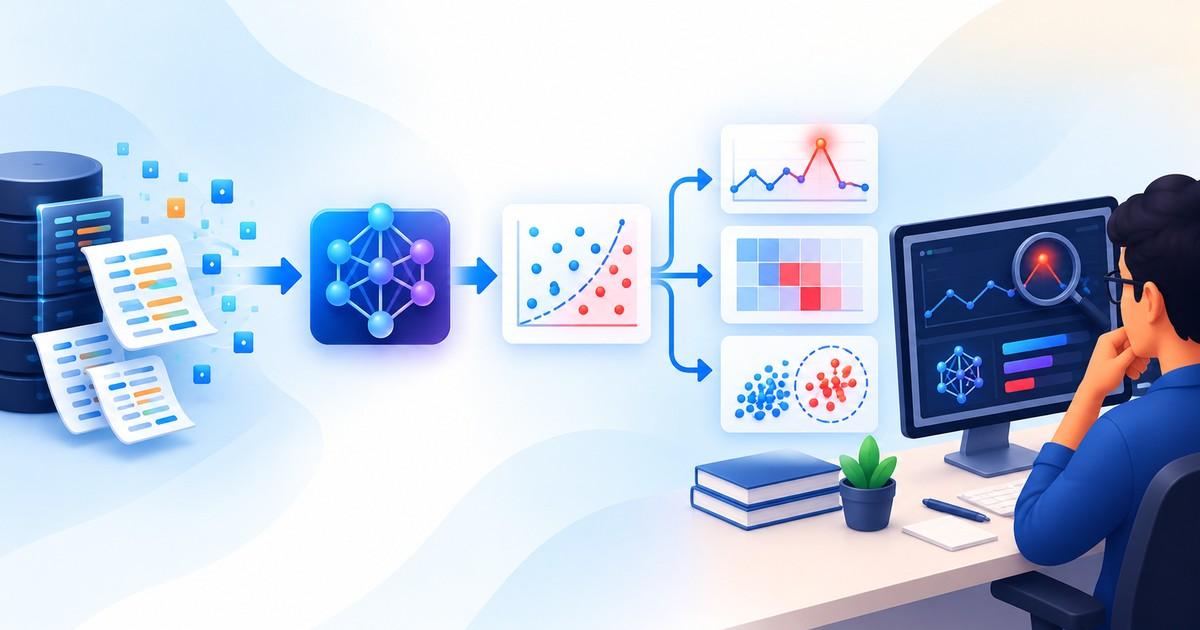
One of the most powerful capabilities of modern AI platforms is anomaly detection. Instead of relying exclusively on manually defined thresholds, advanced monitoring systems learn normal operational patterns and automatically recognize unusual behavior. Unexpected increases in hallucinations, declining recommendation quality, abnormal prediction confidence, spikes in inference latency, sudden changes in customer engagement, or irregular feature distributions all indicate that something within the AI ecosystem requires attention. Detecting these deviations rapidly prevents minor operational issues from evolving into large-scale production failures.
Once abnormalities are identified, alerting systems ensure that the appropriate response occurs immediately. Not every issue requires direct human intervention. Minor infrastructure fluctuations may resolve automatically, while temporary API failures can often be handled through retry mechanisms. More significant incidents, however, may require notifying engineering teams, pausing deployments, rerouting traffic, or activating contingency workflows. Intelligent alerting systems prioritize incidents based on severity, allowing engineers to focus on problems with the greatest business impact while reducing unnecessary operational noise.
After detecting an issue, self-healing AI platforms perform automated diagnostics to determine its underlying cause. Instead of requiring engineers to manually examine logs from multiple services, observability platforms correlate information across infrastructure, model performance, feature distributions, application telemetry, and external dependencies. This holistic analysis accelerates root cause analysis, enabling organizations to distinguish between data drift, infrastructure failures, model degradation, software bugs, or third-party service disruptions. Faster diagnosis significantly reduces recovery time while minimizing business disruption.
Readers interested in learning how automated orchestration supports resilient AI operations should also explore "The Engineering Behind Autonomous AI Workflows," which explains how intelligent automation, orchestration pipelines, and production engineering enable AI systems to operate reliably at enterprise scale.
Key Takeaway
Self-healing AI begins with continuous monitoring because systems cannot recover from problems they cannot detect. AI observability provides comprehensive visibility into model performance, data quality, infrastructure health, latency, user behavior, and business outcomes, enabling organizations to identify operational issues before they become critical. Combined with anomaly detection, intelligent alerting, automated diagnostics, root cause analysis, rollback strategies, and recovery workflows, continuous monitoring transforms production AI from a passive prediction engine into a resilient platform capable of recognizing, diagnosing, and recovering from its own mistakes with minimal human intervention.
Section 3: Engineering Resilience into Enterprise AI Systems
As artificial intelligence becomes deeply embedded in enterprise operations, system reliability is no longer measured solely by prediction accuracy or response quality. Organizations now depend on AI to process financial transactions, detect cybersecurity threats, recommend medical treatments, optimize supply chains, automate customer support, and assist with mission-critical decision-making. In these environments, even brief periods of downtime or incorrect predictions can lead to significant financial losses, operational disruptions, regulatory violations, and damaged customer trust. Consequently, the objective of AI engineering has expanded beyond building intelligent models to designing resilient systems capable of maintaining dependable performance despite failures, uncertainty, and constantly changing operating conditions.
Resilience differs fundamentally from reliability. A reliable AI model performs well under expected conditions, whereas a resilient AI system continues operating effectively even when unexpected problems occur. Production environments rarely behave exactly as anticipated. Hardware failures, software defects, malicious attacks, corrupted data, network disruptions, and unexpected user behavior introduce continuous uncertainty into enterprise systems. Instead of assuming these events can be eliminated entirely, modern AI engineering accepts them as inevitable and focuses on minimizing their impact through fault-tolerant architectures, governance frameworks, security controls, and continuous validation mechanisms.
This philosophy has become increasingly important as organizations adopt autonomous AI capable of making decisions with limited human supervision. The greater the autonomy granted to AI systems, the greater the responsibility engineers have to ensure those systems remain trustworthy under adverse conditions. Building resilience therefore requires designing multiple layers of protection that detect failures, contain their impact, recover safely, and continuously improve the system's ability to withstand future incidents. These engineering principles enable AI platforms not only to recover from mistakes but also to prevent isolated failures from escalating into large-scale business disruptions.
Building Fault-Tolerant AI Architectures
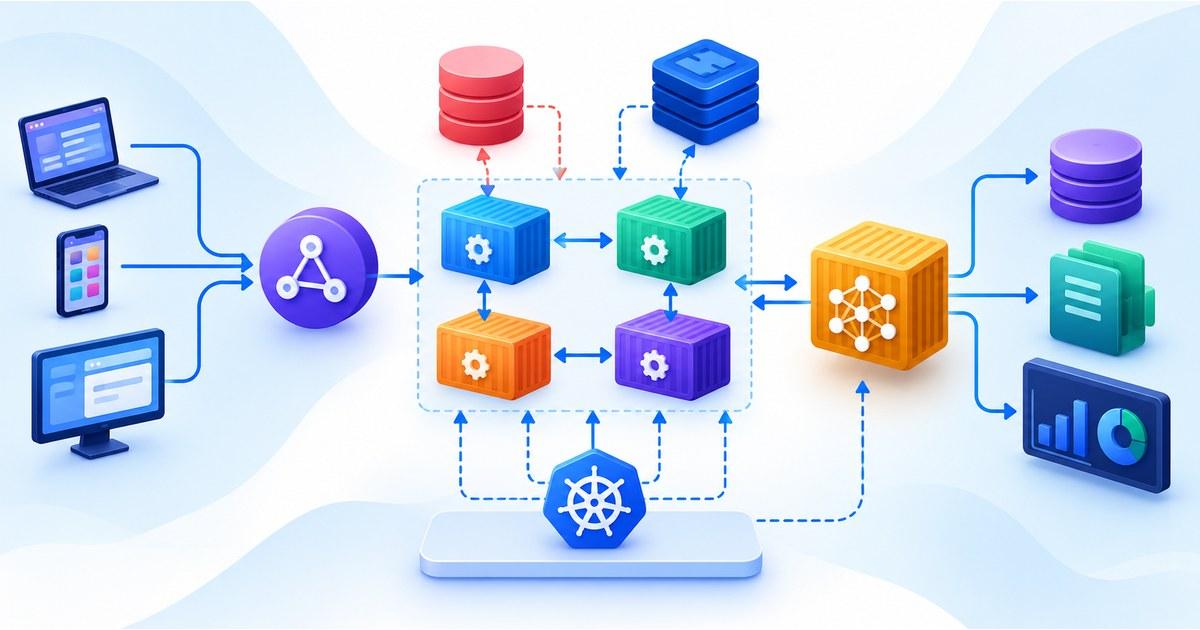
One of the fundamental principles of resilient AI is fault tolerance. Traditional software systems often fail because they rely on a single component whose malfunction disrupts the entire application. Enterprise AI avoids this vulnerability by introducing redundancy throughout the architecture. Multiple inference servers, replicated databases, backup APIs, redundant storage systems, and distributed cloud infrastructure ensure that individual failures do not interrupt business operations. If one component becomes unavailable, another immediately assumes responsibility, allowing AI services to continue functioning without noticeable disruption for end users.
Fault tolerance extends beyond infrastructure into the AI models themselves. Organizations increasingly deploy multiple models simultaneously to improve reliability. For example, a lightweight model may handle routine requests while more complex models evaluate ambiguous or high-risk scenarios. Ensemble approaches combine predictions from multiple models to improve accuracy and reduce the likelihood of individual errors influencing final decisions. In Generative AI applications, fallback models can provide responses when primary models become unavailable or experience excessive latency. This layered approach ensures that AI services remain operational even when individual components encounter unexpected problems.
Another critical element of resilience is maintaining human-in-the-loop recovery. While automation accelerates recovery, not every situation should be resolved autonomously. High-impact decisions involving healthcare, finance, legal compliance, cybersecurity, or public safety often require human expertise before corrective actions are implemented. Modern AI platforms therefore incorporate escalation mechanisms that recognize uncertainty and transfer responsibility to qualified professionals whenever confidence falls below acceptable thresholds. Human oversight serves as a safeguard against automated decisions that could introduce unacceptable business or ethical risks while also providing valuable feedback that strengthens future system performance.
Continuous Validation for Long-Term Reliability
While fault-tolerant architecture provides operational stability, long-term resilience depends on continuous testing. AI systems evolve continuously as data changes, software updates are deployed, and business requirements expand. Testing conducted before deployment cannot guarantee future reliability because production environments differ significantly from laboratory conditions. Modern AI engineering therefore adopts continuous validation strategies that evaluate system performance throughout its operational lifecycle. Every deployment, retraining event, prompt modification, infrastructure update, and configuration change undergoes automated testing before being fully released into production. These validation pipelines identify regressions early, preventing small defects from affecting large user populations.
One increasingly valuable practice supporting resilience is chaos engineering. Rather than waiting for unexpected failures to occur naturally, engineering teams intentionally introduce controlled disruptions into production-like environments to evaluate how AI systems respond under stress. Infrastructure outages, API failures, network latency, corrupted datasets, unavailable services, and resource limitations are deliberately simulated to verify that recovery mechanisms function correctly. By exposing weaknesses before real incidents occur, organizations improve their confidence that production AI can withstand unpredictable operating conditions without compromising business continuity.
Resilience also depends on comprehensive risk management. Every AI application introduces operational, financial, regulatory, reputational, and ethical risks that must be evaluated continuously. Engineering teams assess the likelihood and potential impact of different failure scenarios before deploying new capabilities, ensuring that recovery plans exist for each identified risk. These assessments influence infrastructure design, monitoring priorities, governance policies, security controls, and incident response procedures. Effective risk management transforms resilience from a reactive activity into a proactive engineering discipline focused on preventing failures before they occur.
Readers interested in understanding how engineering decisions influence business success beyond model development should also explore "The Business of AI: What Every ML Engineer Should Know Beyond Coding," which explains how operational excellence, governance, scalability, and engineering strategy contribute to successful enterprise AI deployments.
Key Takeaway
Engineering resilient AI systems requires much more than developing highly accurate models. Fault-tolerant architectures, redundant infrastructure, human-in-the-loop recovery, AI governance, cybersecurity, continuous testing, chaos engineering, risk management, and high-availability design collectively enable AI platforms to remain dependable despite operational uncertainty. By combining these engineering principles with automated recovery mechanisms, organizations can build self-healing AI systems that maintain reliability, protect business operations, and earn long-term user trust even as production environments continue to evolve.
Section 4: The Future of Self-Healing AI Engineering
Artificial intelligence is rapidly evolving from systems that simply respond to inputs into platforms capable of managing increasingly complex operational responsibilities with minimal human intervention. Today's production AI can already detect anomalies, trigger alerts, automate retraining, and recover from certain infrastructure failures, but these capabilities represent only the beginning of a much broader transformation. The next generation of enterprise AI will not merely identify problems after they occur; it will anticipate failures before they happen, reason through multiple recovery options, coordinate with other intelligent systems, optimize its own infrastructure, and continuously improve its operational performance throughout its lifecycle. In other words, AI systems will gradually become capable of engineering their own resilience.
This shift is being driven by the growing complexity of enterprise software ecosystems. Modern organizations operate thousands of interconnected applications, cloud services, APIs, databases, machine learning pipelines, and business workflows. Human engineers alone cannot monitor every component continuously or respond instantly to every operational event. As AI becomes more deeply integrated into these environments, resilient engineering increasingly depends on intelligent automation that supervises, diagnoses, and optimizes the entire ecosystem in real time. Future self-healing AI will therefore function not only as an intelligent application but also as an intelligent operations platform capable of maintaining its own health while supporting broader business objectives.
The engineering challenge is no longer limited to building accurate machine learning models. Instead, engineers must design AI systems that understand their operational environments, evaluate their own performance, collaborate with other intelligent services, and adapt proactively to changing conditions. These capabilities will fundamentally redefine how enterprise AI platforms are designed, deployed, and maintained over the coming decade.
Organizations that invest in these technologies today will gain significant advantages in reliability, scalability, operational efficiency, and customer trust. Rather than reacting to failures after they disrupt business operations, future AI platforms will prevent many problems from occurring altogether through continuous learning, predictive reasoning, and autonomous optimization. This represents one of the most significant transformations in the history of AI engineering.
Autonomous Recovery Will Become Standard Practice
One of the most important developments shaping future AI systems is the rise of Agentic AI. Unlike conventional AI applications that simply respond to user requests, AI agents are designed to pursue objectives independently by planning tasks, selecting appropriate tools, retrieving information, executing workflows, and evaluating the success of their actions. As these systems mature, they will also become increasingly capable of managing operational incidents. Instead of merely reporting that a service has failed, an AI agent will investigate logs, identify the root cause, restart affected services, validate system health, and confirm successful recovery before notifying engineering teams. Human engineers will increasingly supervise these autonomous processes rather than performing every recovery step manually.
This evolution depends heavily on advances in AI reasoning. Traditional machine learning models excel at recognizing statistical patterns but often struggle when solving complex operational problems requiring multiple logical steps. Reasoning models address this limitation by evaluating different recovery strategies, considering dependencies across multiple systems, estimating potential risks, and selecting the safest corrective action before execution. Rather than blindly following predefined automation rules, future AI platforms will make context-aware decisions that balance system availability, security, business priorities, and operational risk. This capability significantly reduces the likelihood of automated recovery actions introducing additional problems.
Another major advancement will be multi-agent coordination. Enterprise AI ecosystems increasingly consist of multiple specialized AI services rather than one large monolithic model. Separate agents may manage infrastructure monitoring, cybersecurity, software deployment, customer support, resource optimization, compliance validation, and business analytics simultaneously. During operational incidents, these intelligent agents will collaborate by sharing information, distributing responsibilities, and coordinating recovery efforts across multiple systems. Instead of isolated automation scripts working independently, organizations will deploy collaborative AI ecosystems capable of resolving highly complex failures through coordinated decision-making.
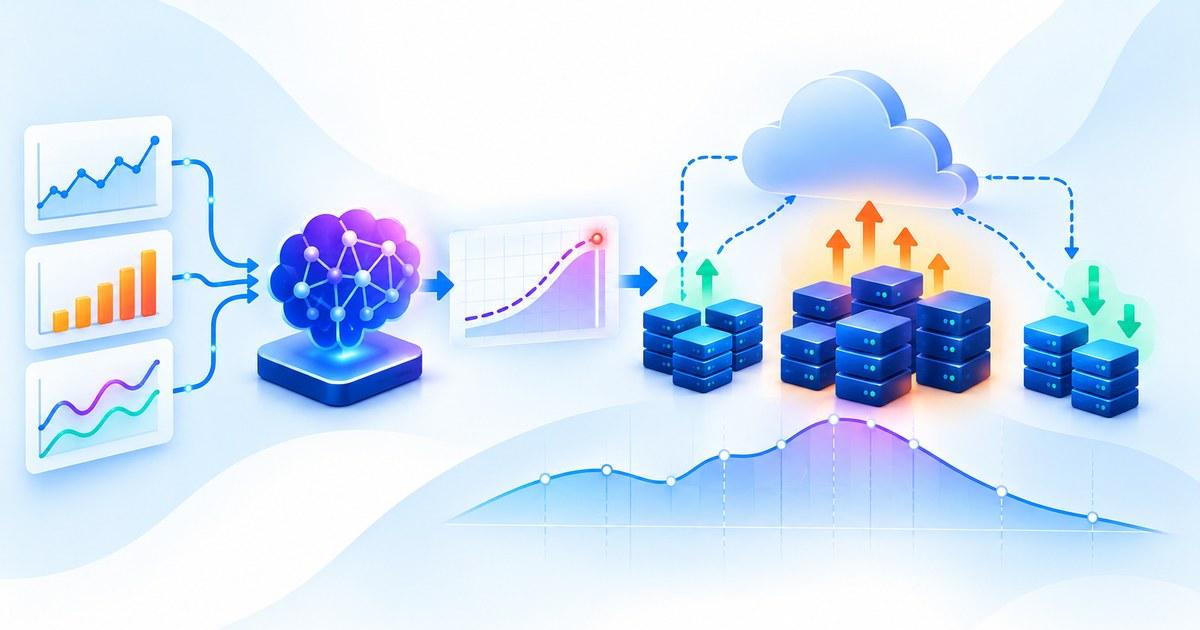
Future resilience will also depend on predictive maintenance for AI systems. Current monitoring platforms primarily identify problems after measurable performance degradation occurs. Predictive maintenance extends this capability by analyzing long-term operational trends to forecast failures before they impact production. By continuously evaluating infrastructure metrics, model behavior, hardware utilization, data quality, and historical incident patterns, AI systems will recognize subtle warning signs indicating that components require attention. Engineers will increasingly prevent outages through proactive maintenance rather than reacting to failures after they occur, significantly improving service reliability while reducing operational costs.
Building Self-Optimizing AI Ecosystems
As AI platforms become more autonomous, infrastructure itself will evolve toward self-optimizing architectures. Today's cloud environments already automate resource allocation to some extent, but future AI infrastructure will dynamically optimize computational resources, storage, networking, inference workloads, and deployment strategies based on continuously changing demand. During periods of increased traffic, systems will automatically allocate additional GPUs, optimize inference pipelines, rebalance workloads across regions, and adjust latency-sensitive services without manual intervention. When workloads decline, infrastructure will intelligently reduce resource consumption while maintaining required performance levels. These adaptive capabilities improve both operational efficiency and business scalability.
Supporting these increasingly autonomous environments is the growing discipline of Artificial Intelligence for IT Operations (AIOps). AIOps combines machine learning, observability, automation, and operational analytics to manage large-scale technology environments. Rather than requiring engineers to analyze millions of infrastructure logs manually, AIOps platforms continuously correlate events across servers, applications, databases, cloud services, and AI models to identify patterns indicating emerging operational issues. As these platforms mature, they will progress from providing operational recommendations to executing recovery actions autonomously while maintaining complete audit trails for governance and compliance. This transformation will significantly reduce operational complexity while improving the speed and consistency of incident resolution.
These technological developments also redefine the capabilities future engineers must develop. Building self-healing AI systems requires expertise extending well beyond machine learning algorithms. Engineers will increasingly combine knowledge of distributed systems, cloud-native architecture, MLOps, AI observability, cybersecurity, software reliability engineering, governance, infrastructure automation, and systems design. Equally important will be understanding how autonomous AI interacts with business operations, regulatory requirements, and human decision-makers. Future AI engineers will therefore function as architects of intelligent operational ecosystems rather than simply developers of predictive models.
Readers interested in understanding how cutting-edge AI research evolves into production-ready engineering solutions should also explore "Research to Real-World ML Engineering: Bridging the Gap," which examines how emerging AI innovations can be transformed into scalable, reliable, and enterprise-ready systems through disciplined engineering practices.
Key Takeaway
The future of self-healing AI lies in autonomous systems capable of predicting failures, reasoning through recovery strategies, coordinating with multiple AI agents, optimizing infrastructure, and continuously improving their own operational performance. Technologies such as Agentic AI, AI reasoning, predictive maintenance, multi-agent collaboration, self-optimizing infrastructure, and AIOps will redefine how enterprise AI systems are engineered and maintained. Engineers who master these disciplines will build the resilient, scalable, and trustworthy AI platforms that power the next generation of intelligent enterprises.
Conclusion
Artificial intelligence has reached a stage where achieving high model accuracy is no longer enough to guarantee success in production. Enterprise AI systems operate in constantly changing environments where data evolves, infrastructure experiences failures, user behavior shifts, and external services become unavailable without warning. Under these conditions, occasional mistakes are inevitable. The defining characteristic of next-generation AI platforms will therefore not be the absence of failures but the ability to detect, diagnose, and recover from them quickly while maintaining business continuity. This shift marks the emergence of self-healing AI as a core engineering discipline rather than an optional capability.
Throughout this article, we explored why AI systems fail after deployment and how production environments introduce challenges such as data drift, concept drift, hallucinations, infrastructure disruptions, API failures, and model degradation. We then examined how continuous monitoring and AI observability provide the operational visibility required to identify problems before they affect users. By combining anomaly detection, intelligent alerting, automated diagnostics, root cause analysis, and rollback mechanisms, organizations can transform reactive maintenance into proactive resilience. We also discussed how fault-tolerant architectures, governance, cybersecurity, human oversight, continuous testing, and chaos engineering strengthen enterprise AI systems, ensuring they remain dependable even under unpredictable conditions. Looking ahead, technologies such as Agentic AI, AI reasoning, predictive maintenance, AIOps, and multi-agent collaboration will enable intelligent systems to anticipate failures, optimize infrastructure, and recover autonomously with minimal human intervention.
For organizations, investing in self-healing AI is no longer simply about improving operational efficiency; it is about protecting business continuity, maintaining customer trust, and ensuring AI remains reliable as it becomes central to mission-critical operations. As enterprises increasingly depend on autonomous systems, resilience engineering will become just as important as model development.
For software and ML engineers, the future extends far beyond building sophisticated algorithms. Success will require expertise in MLOps, distributed systems, observability, cloud infrastructure, security, governance, and production engineering. Engineers who combine these disciplines with a deep understanding of AI resilience will lead the development of intelligent systems that not only perform exceptionally but also recover gracefully from inevitable failures. Ultimately, the future of enterprise AI belongs to systems that can learn from their mistakes, strengthen themselves after every incident, and deliver reliable value throughout their entire operational lifecycle.
Frequently Asked Questions (FAQs)
1. What is a self-healing AI system?
A self-healing AI system can detect operational issues, diagnose their causes, and recover automatically with minimal human intervention.
2. Why do AI systems fail in production?
They encounter changing data, infrastructure failures, evolving user behavior, API disruptions, and unforeseen edge cases that differ from training environments.
3. What is AI observability?
AI observability provides visibility into model performance, data quality, infrastructure health, latency, and business metrics throughout production.
4. How does continuous monitoring improve AI reliability?
It identifies performance issues early, enabling faster diagnosis and automated recovery before users are affected.
5. What is data drift?
Data drift occurs when production data gradually differs from the data used to train the machine learning model.
6. What is concept drift?
Concept drift happens when the relationship between input data and expected outcomes changes over time.
7. What are rollback strategies in AI?
Rollback strategies automatically restore previously stable models or configurations when new deployments introduce performance issues.
8. What is fault-tolerant AI architecture?
It is an architecture designed with redundancy and failover mechanisms so AI services continue operating despite component failures.
9. Why is anomaly detection important?
It identifies unusual behavior that may indicate declining model performance, infrastructure issues, or security threats.
10. What role does human oversight play?
Human experts review high-risk decisions, validate automated recovery actions, and ensure AI remains safe and compliant.
11. What is AIOps?
AIOps uses artificial intelligence to automate IT monitoring, incident detection, diagnostics, and operational management.
12. How does chaos engineering improve AI systems?
Chaos engineering intentionally introduces controlled failures to verify that recovery mechanisms function correctly under real-world conditions.
13. Which skills should AI Engineers develop?
They should master MLOps, cloud computing, distributed systems, AI observability, cybersecurity, governance, and software reliability engineering.
14. How will self-healing AI impact enterprise software?
It will reduce downtime, improve operational resilience, automate incident recovery, and deliver more reliable AI-powered business applications.
15. What is the future of self-healing AI engineering?
The future lies in autonomous AI systems that combine reasoning, predictive maintenance, multi-agent collaboration, and self-optimizing infrastructure to recover from failures proactively and operate reliably at enterprise scale.