
Section 1: Why Ranking Models Determine What Users See First
From Retrieval to Ranking: Understanding the Difference Between Finding and Ordering Results
Modern applications frequently need to search through thousands or millions of possible results and present a small collection that best satisfies a user's request, whether those results represent products in an online marketplace, documents in an enterprise search platform, videos in a streaming application, or posts in a social feed. Solving this problem involves two related but distinct tasks: retrieval identifies a set of potentially relevant candidates, while ranking determines the order in which those candidates should appear. Although retrieval establishes which items can be considered, the ranking stage strongly influences which results users encounter first and how effectively the application satisfies their underlying intent.
Consider an enterprise search platform that retrieves hundreds of documents containing terms related to an employee's question about database performance. A retrieval system may identify documentation pages, incident reports, troubleshooting discussions, and architectural proposals because they share relevant keywords, but presenting those documents in an arbitrary order would force the employee to examine many results before finding the most useful explanation. A ranking model improves this experience by evaluating additional signals, such as semantic similarity, document freshness, historical usefulness, and contextual relevance, to estimate which candidates are most likely to satisfy the current request.
In large-scale production systems, ranking also has to operate within strict computational and response-time constraints because evaluating every possible item with an expensive model may be impractical. Engineers commonly separate candidate generation from subsequent ranking stages, allowing relatively efficient retrieval mechanisms to identify a manageable subset before more sophisticated models evaluate its members. The architectural principles discussed in “Machine Learning for Search Systems: How Engineers Build Intelligent Retrieval Pipelines” provide useful context for understanding this separation, since reliable search experiences depend on coordinating retrieval, feature processing, and ranking rather than treating the model as an isolated component.
Defining Relevance: Why the Best Result Is Not Always the Most Popular One
A ranking system must translate the broad concept of relevance into measurable signals, but determining what makes a result useful is considerably more complicated than sorting items by popularity, recency, or a single similarity score. The best result depends on the user's intent, the application's purpose, and the context in which the result will be consumed, meaning that an item with strong historical engagement may still be inappropriate for a specific query. A popular product, for example, may be a poor recommendation when it does not match the requested specifications, while an older technical document may provide a more accurate solution than a newer page containing only a superficial explanation.
Machine learning ranking models address this complexity by combining multiple signals that describe relationships between a query, a candidate item, and the surrounding context. Depending on the application, these features may include textual similarity, semantic relevance, historical interactions, item quality, freshness, user preferences, and indicators of task completion, with the model learning how these signals relate to a defined ranking objective. However, the quality of the resulting order depends not only on which features are available but also on whether the training data accurately represents useful outcomes, since optimizing for clicks alone can favor attention-grabbing content rather than results that genuinely help users accomplish their goals.
Relevance is therefore an engineering objective that must be defined in terms of the behavior the application should encourage, rather than assumed to be a universal property shared by every ranking system. A search engine may prioritize whether a result answers the user's question, a recommendation service may emphasize long-term engagement or satisfaction, and an e-commerce platform may need to balance product suitability with availability and delivery constraints. By translating these requirements into training labels, evaluation criteria, and explicit business rules, engineering teams can build ranking systems whose definition of a good result aligns more closely with the application's actual purpose.
Turning Business Objectives and User Intent Into Ranking Signals
Ranking models connect technical predictions with business objectives by using training data and engineered features to estimate which candidates should receive higher positions for a particular request. The first challenge is to represent user intent in a form that the ranking pipeline can process, which may involve query terms, semantic embeddings, user history, session context, item attributes, or the immediate purpose of the interaction. Engineers must then combine these signals with suitable feedback, such as relevance judgments, successful task completion, qualified engagement, or purchase outcomes, to construct training examples that represent the desired relationship between inputs and ranking decisions.
Business objectives often introduce competing priorities because maximizing one metric does not necessarily improve the overall user experience or produce the most valuable outcome. A recommendation system that exclusively optimizes immediate clicks may over-promote familiar items, reducing exposure to new products, while a marketplace that emphasizes revenue without sufficient relevance constraints may rank expensive products above better-matched alternatives. Ranking architecture should therefore reflect the intended objective through model training, carefully defined features, and any necessary eligibility, diversity, freshness, or safety constraints, ensuring that business considerations influence results without unintentionally overriding relevance.
The signals used during training must also remain representative of how the system will behave after deployment, because historical interaction data can reflect the ranking decisions that were already in place. Items displayed prominently often receive more clicks simply because users are more likely to see them, so naïvely treating every click as an unbiased relevance label can reinforce the existing ordering and disadvantage candidates that previously received little exposure. By recording impressions, positions, contextual features, and downstream outcomes, engineering teams can better understand how users respond to rankings and reduce the risk of treating exposure-driven behavior as definitive evidence of item quality.
Key Takeaway
Production ranking systems do more than retrieve potentially relevant candidates because they must determine which results best satisfy user intent while accounting for business objectives, contextual signals, computational constraints, and operational requirements. Machine learning models can capture relationships that static sorting rules struggle to represent, but their effectiveness depends on meaningful ranking objectives, representative training data, reliable features, and careful handling of feedback biases. By separating retrieval from ranking and combining learned relevance with appropriate deterministic controls, engineering teams can build systems that deliver more useful results without compromising performance or production reliability.
Section 2: How Ranking Models Learn to Score and Order Candidates
Learning-to-Rank Fundamentals: Pointwise, Pairwise, and Listwise Approaches
Learning to rank is a machine learning approach that trains models to order candidate items according to their estimated relevance to a query, user, or application context. Unlike conventional classification, which predicts a category, or regression, which estimates a numerical value, ranking focuses on the relative ordering of multiple candidates, making the training objective particularly important when users primarily interact with the first few results. Engineering teams typically encounter three broad approaches to learning to rank: pointwise, pairwise, and listwise methods, each of which represents relevance differently and introduces distinct trade-offs in training complexity and ranking effectiveness.
Pointwise learning treats each candidate independently by predicting a relevance score or label from its features, allowing engineers to use familiar regression or classification techniques to estimate how suitable an individual result may be. For example, a search-ranking model might estimate the probability that a document satisfies a query based on textual relevance, document quality, and historical engagement, after which the system sorts candidates by their predicted scores. Although this approach is relatively straightforward to implement and evaluate, it does not directly optimize relationships between candidates, meaning that individually reasonable predictions may still produce an ordering that is less effective according to the application's ranking objective.
Pairwise learning addresses this limitation by training a model to prefer one candidate over another when the available judgments indicate that one result should rank higher. A training example might teach the model that a documentation page resolving a technical issue should appear above a page that merely mentions the same topic, helping it learn relative preferences instead of relying solely on independent relevance estimates. Listwise learning goes further by optimizing objectives associated with entire ranked lists, allowing the training process to consider how ordering errors affect the quality of a result set, particularly when the highest-ranked positions contribute disproportionately to user satisfaction. The principles covered in “Learning to Rank: The Machine Learning Behind Modern Search” provide further context for understanding how these learning objectives influence ranking behavior and evaluation.
Engineering Ranking Features From Queries, Users, Items, and Context
Ranking quality depends heavily on the information available to the model, because the model can only distinguish between candidates using the signals represented in its input features. Search systems may derive features from query-document similarity, token overlap, semantic embeddings, document freshness, and content quality, while recommendation systems can incorporate user preferences, item attributes, historical interactions, and contextual information associated with a particular session. By combining query-level, user-level, item-level, and interaction-level signals, engineers can give ranking models a richer representation of why a candidate might be useful in a specific situation.
Feature engineering also requires careful attention to how these signals are calculated and retrieved during production inference, since a model trained using historical features may behave differently when the serving system provides values computed through inconsistent logic. For example, a ranking model that uses a user's recent engagement may depend on an aggregation over a particular time window, and discrepancies between the offline training pipeline and the online feature service can change the model's score even when the user and candidate remain unchanged. Maintaining consistent feature definitions, explicit data contracts, and reliable retrieval interfaces helps reduce these discrepancies while making feature dependencies easier to test and maintain across multiple ranking models.
Not every potentially useful feature should be included automatically, because some features may introduce excessive serving latency, unavailable data dependencies, unwanted bias, or information leakage that makes offline performance appear better than real-world performance. Engineers should evaluate features according to their predictive value, availability at ranking time, computational cost, freshness requirements, and compatibility with the application's objectives, while monitoring how their contribution changes as user behavior and candidate distributions evolve. This process helps produce ranking models that rely on signals that are both informative and operationally practical, rather than maximizing model complexity without considering the production environment in which scores must be generated.
Choosing Between Linear Models, Tree-Based Rankers, and Neural Networks
Ranking architectures range from relatively simple linear models to sophisticated neural networks, with the appropriate choice depending on the complexity of relevance relationships, available training data, inference latency, and the operational budget of the application. Linear models can provide useful baselines because their scoring functions are relatively easy to inspect and their inference cost is generally low, making them suitable when the available features already capture most of the relationships needed to order candidates. However, their limited ability to represent complex nonlinear interactions may reduce their effectiveness when relevance depends on combinations of signals that vary substantially across queries, users, and items.
Tree-based approaches, including gradient-boosted decision trees, are widely useful for ranking problems involving heterogeneous numerical, categorical, and engineered features because they can learn nonlinear relationships and interactions without requiring every dependency to be specified manually. A ranking model may learn, for example, that document freshness matters more for rapidly changing technical topics than for foundational reference material, or that a product's relevance depends on an interaction between user preferences, price range, and availability. These approaches often provide a practical balance between ranking quality, inference efficiency, and compatibility with conventional feature pipelines, although their suitability must still be established through application-specific evaluation.
Neural ranking models become attractive when relevance depends on richer representations of queries, documents, items, or user behavior, particularly when semantic understanding or interactions across large feature spaces are important. Models using learned embeddings or transformer-based representations can capture similarities that simple lexical or manually engineered features may miss, but they can also introduce higher inference costs, more demanding serving requirements, and additional complexity when updating or monitoring the model. Engineering teams therefore commonly compare candidate architectures against a simple baseline using ranking metrics and production constraints together, selecting the model that provides meaningful relevance improvements without exceeding the latency, throughput, and infrastructure budgets of the application.
Key Takeaway
Production ranking models learn to order candidates through pointwise, pairwise, or listwise objectives, using features that capture relevance, user intent, item characteristics, and application context. Choosing the right architecture requires balancing the expressive power of linear, tree-based, or neural models against feature availability, inference costs, and measurable ranking improvements. By combining efficient candidate generation with learned scoring and carefully controlled re-ranking, engineering teams can deliver useful results at scale without allowing computational complexity to overwhelm production latency and reliability requirements.
Section 3: Engineering Ranking Models for Low-Latency Production Serving
Designing the Online Ranking Request and Inference Pipeline
Deploying a ranking model in production requires an inference architecture that can retrieve candidate items, assemble the required features, generate relevance scores, and return an ordered result set within the application's response-time budget. Unlike an offline evaluation pipeline that can process datasets in batches without directly affecting user interactions, an online ranking service must coordinate multiple operations during a live request, with delays in retrieval, feature fetching, model execution, or post-processing potentially affecting the entire user experience. Engineering teams must therefore define clear responsibilities for each component while minimizing unnecessary communication between services and ensuring that every stage contributes meaningful information to the final ranking decision.
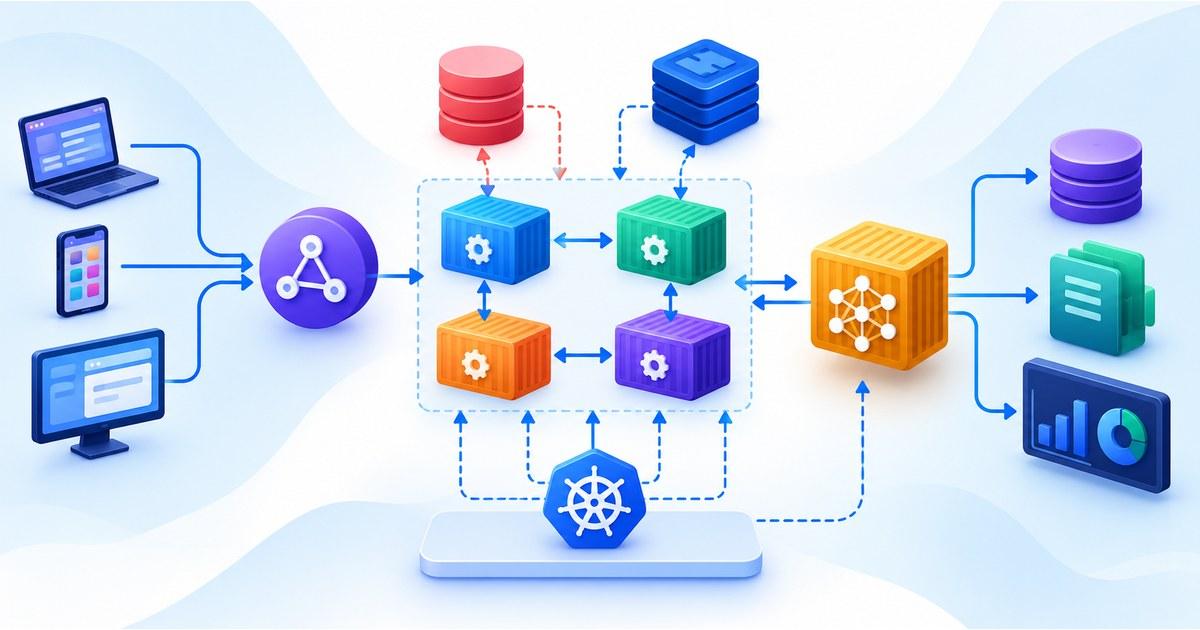
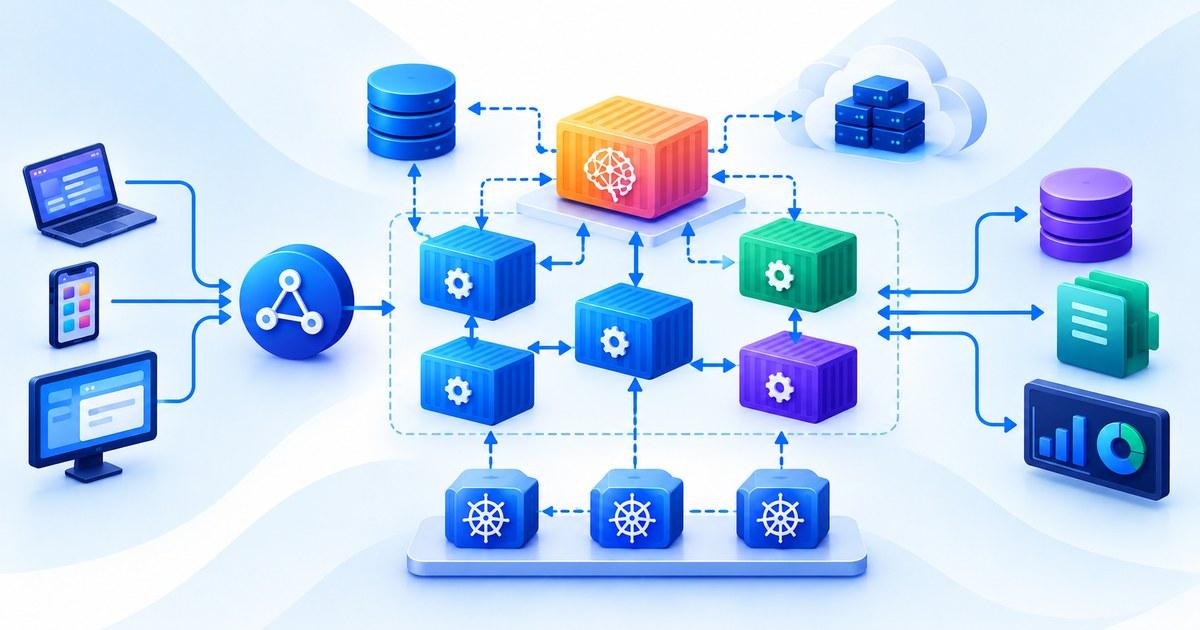
A typical online ranking request begins when an application receives a search query, recommendation request, or other interaction that requires ordered results, after which a retrieval service identifies eligible candidates using an index, database query, or candidate-generation model. The ranking service then combines query context, candidate attributes, user information, and any required historical signals into feature representations that the model can process, returning scores that allow the application to order the candidates before applying any final business or presentation constraints. Separating retrieval from ranking makes it possible to optimize each stage independently, although the overall design must still account for candidate coverage, feature availability, model-serving latency, and the time required to assemble the final response.
Service boundaries should be selected according to the operational needs of the application rather than by dividing every ranking operation into a separate microservice, since excessive network calls can increase tail latency and complicate incident investigation. For example, a ranking service that requires several sequential calls to retrieve user context, item metadata, and aggregate engagement features may introduce substantial overhead even when the model itself executes quickly, making parallel retrieval, request-level aggregation, or carefully chosen service boundaries more effective. The architectural principles discussed in “Building ML-Driven APIs: Design Patterns for Prediction Services” are relevant because production ranking requires a reliable interface between application requests, feature retrieval, inference execution, and response handling.
Managing Feature Freshness, Missing Data, and Training-Serving Consistency
Ranking quality depends on whether the features available during production inference accurately represent the information the model was trained and evaluated to use, making feature freshness and training-serving consistency important operational requirements. A model may depend on recent user interactions, current item availability, document metadata, or engagement statistics, and the usefulness of those features can decline when updates are delayed or when serving pipelines calculate values differently from training pipelines. Engineers should therefore establish explicit definitions for feature semantics, aggregation windows, update frequencies, and missing-value behavior, allowing the ranking service to retrieve compatible inputs across offline and online environments.
Feature freshness becomes particularly important when rankings depend on rapidly changing conditions, such as product availability, trending search topics, recent account activity, or user interactions during an active session. If a recommendation model continues using outdated engagement signals after a user's preferences have changed, it may repeatedly prioritize items that no longer match the user's current interests, while stale inventory information could cause a marketplace to rank unavailable products prominently. By monitoring the age of feature values, tracking materialization delays, and aligning update schedules with ranking requirements, teams can determine which features need near-real-time updates and which can safely rely on periodic processing without introducing unnecessary infrastructure costs.
Missing or invalid features create another production challenge because the ranking service must decide how to proceed when an expected value cannot be retrieved or does not satisfy its defined data contract. Consistent defaults, trained missing-value representations, alternative feature sources, or a simpler fallback ranker may be appropriate depending on the model's design, but ad hoc substitutions can create inputs that differ significantly from those seen during training. Automated feature validation, explicit schema contracts, and monitoring of missingness rates help detect these conditions before they become widespread, while testing the model with realistic missing-data scenarios can reveal whether the ranking pipeline degrades gracefully when individual dependencies become unavailable.
Meeting Latency and Throughput Requirements With Batching, Caching, and Model Optimization
Production ranking systems must balance ranking quality with inference latency and request throughput because more sophisticated models can improve relevance while increasing computational demands. A neural ranking model that generates strong relevance predictions in an offline benchmark may become impractical if its execution time consumes most of the application's response-time budget, particularly when each request requires scoring hundreds of candidates. Engineers should measure the complete request path, including candidate retrieval, feature assembly, inference, and post-processing, and use those measurements to identify whether the primary constraint lies in model execution, network communication, or the quantity of candidates being processed.
Batch inference can improve computational efficiency when a ranking request contains multiple candidates that can be scored together, allowing models and hardware accelerators to process groups of inputs with less repeated execution overhead. However, increasing batch size may raise memory consumption or introduce additional waiting time when a service must accumulate requests before processing them, making batch configuration dependent on candidate volume, traffic patterns, and latency requirements. Candidate filtering, efficient feature representations, optimized model runtimes, and suitable CPU or GPU configurations can further improve throughput, provided that the changes preserve acceptable ranking quality and remain reliable under representative production workloads.
Caching can also reduce ranking latency by reusing information that does not need to be recomputed for every request, although the cached object must be selected carefully because complete ranking results often depend on query context, user state, and rapidly changing candidate attributes. Reusing item embeddings, stable item metadata, or suitable precomputed features may reduce repeated computation, while caching full result lists may be appropriate only when request equivalence and freshness requirements can be established. In every case, engineers should measure cache hit rates, invalidation behavior, memory overhead, and the effect of stale values on ranking quality, ensuring that performance optimizations improve the end-to-end system rather than simply shifting computational costs to another component.
Key Takeaway
Production ranking requires an inference architecture that coordinates retrieval, feature assembly, model execution, and result ordering within strict latency and reliability constraints. Engineers must preserve training-serving consistency, monitor feature freshness, optimize inference and retrieval costs, and define appropriate fallback behavior when dependencies fail or resource limits are reached. By evaluating the complete request path rather than the ranking algorithm alone, engineering teams can deliver relevant results efficiently while maintaining predictable performance under real production workloads.
Conclusion: Engineering Ranking Systems That Deliver the Best Results
Ranking models play a critical role in modern applications because they determine how information, products, recommendations, and other candidates are presented to users when multiple results could satisfy the same request. Although retrieval systems identify potentially relevant candidates, ranking systems determine their relative order using signals that represent relevance, user intent, contextual information, and application objectives. Building an effective production ranking system therefore requires more than selecting a suitable machine learning algorithm, since the quality of the final results also depends on candidate coverage, feature engineering, training objectives, inference architecture, and the reliability of the surrounding application infrastructure.
Learning-to-rank techniques provide a foundation for modeling these relationships through pointwise, pairwise, and listwise approaches, allowing engineering teams to select training objectives according to the characteristics of their applications. Linear models, tree-based rankers, and neural networks offer different trade-offs between ranking effectiveness, computational cost, and operational complexity, making empirical evaluation essential when deciding which architecture to deploy. Multi-stage ranking pipelines extend these capabilities by combining efficient candidate generation with more sophisticated scoring and optional re-ranking, enabling systems to balance relevance, diversity, business constraints, and response-time requirements across large collections.
Production serving introduces additional engineering challenges because ranking requests must retrieve candidates, assemble features, execute model inference, and return results within a defined latency budget. Feature freshness, missing values, model optimization, caching, batching, and service reliability all influence the quality of the final result set, making end-to-end monitoring more informative than evaluating inference speed in isolation. By establishing explicit service boundaries, maintaining training-serving consistency, and defining appropriate fallback mechanisms, engineering teams can preserve useful ranking behavior even when individual dependencies experience delays or failures.
Evaluation must also extend beyond offline ranking metrics because a model that performs well on historical datasets may not necessarily improve user satisfaction or business outcomes after deployment. Metrics such as NDCG, MAP, MRR, and Recall help diagnose different aspects of ranking quality, while A/B testing and production outcome measurements reveal how changes affect actual user interactions. Position bias, feedback loops, changing user preferences, and differences between predicted relevance and real-world usefulness must be considered when collecting training signals, ensuring that models do not simply reinforce previously visible results or optimize superficial engagement at the expense of meaningful outcomes.
The most effective ranking systems evolve through a controlled engineering process that combines measurable objectives, reliable features, suitable model architectures, production safeguards, and continuous evaluation. Teams should establish a baseline, identify where the current pipeline limits result quality, test targeted improvements, and deploy validated changes through staged releases with monitoring and rollback capabilities. By treating ranking as an end-to-end production system rather than an isolated prediction model, software engineers can build applications that consistently present more relevant results while balancing user experience, computational efficiency, reliability, and business objectives.
Frequently Asked Questions
1. What Is a Ranking Model in Machine Learning?
A ranking model is a machine learning model that assigns relevance scores or relative preferences to candidate items so that they can be presented in a useful order for a query, user, or application context. Ranking models are commonly used in search engines, recommendation systems, online marketplaces, advertising platforms, and enterprise search applications where the order of results strongly influences which information users encounter first.
2. How Is a Ranking Model Different From a Classification Model?
A classification model predicts a category or class for an input, whereas a ranking model determines the relative order of multiple candidates according to their estimated relevance or suitability. Although a ranking system can use classification probabilities or regression scores as inputs, its overall objective is to produce an effective ordering rather than simply assign an independent label to each item.
3. What Is the Difference Between Retrieval and Ranking?
Retrieval identifies a manageable set of potentially relevant candidates from a much larger collection, while ranking evaluates those candidates and determines their order for presentation. Production systems often separate these stages because efficient retrieval methods can narrow the candidate set quickly, allowing more computationally expensive ranking models to focus on the candidates most likely to satisfy the user's request.
4. What Are Pointwise, Pairwise, and Listwise Learning-to-Rank Methods?
Pointwise methods predict a relevance score or label for each candidate independently, pairwise methods learn which of two candidates should rank higher, and listwise methods optimize objectives associated with the ordering of an entire result list. The appropriate approach depends on available training judgments, the desired ranking objective, computational constraints, and how the quality of the final ordered results will be evaluated.
5. Which Algorithms Are Commonly Used for Ranking Models?
Ranking systems can use linear models, gradient-boosted decision trees, neural networks, and transformer-based approaches, depending on the complexity of the relevance signals and the operational requirements of the application. Tree-based models can perform well with heterogeneous engineered features, while neural approaches may be useful when ranking requires richer semantic representations, with model selection guided by measured ranking quality, inference latency, and maintenance costs.
6. What Features Are Used in a Production Ranking Model?
Production ranking features can describe the query, the candidate item, the user, and the context in which the request occurs, including textual similarity, semantic representations, item quality, freshness, historical interactions, and user preferences. Engineers must ensure that these features are available at inference time, calculated consistently between training and serving, and aligned with the application's intended definition of relevance.
7. What Is a Multi-Stage Ranking Architecture?
A multi-stage ranking architecture separates candidate retrieval, relevance scoring, and optional re-ranking into distinct stages that progressively refine a result set. This design allows an application to use efficient methods to retrieve candidates from a large collection, apply more sophisticated models to a smaller subset, and enforce additional requirements such as diversity, eligibility, or freshness before returning the final results.
8. Which Metrics Are Used to Evaluate Ranking Models?
Common ranking metrics include Normalized Discounted Cumulative Gain (NDCG), Mean Average Precision (MAP), Mean Reciprocal Rank (MRR), and Recall, with each measuring a different aspect of retrieval or ordering quality. NDCG emphasizes the placement of highly relevant results near the top, MAP evaluates precision across relevant positions, MRR emphasizes the position of the first relevant result, and Recall measures how effectively relevant candidates are retrieved.
9. Why Is Low Latency Important for Ranking Models?
Ranking latency affects how quickly an application can return search results, recommendations, or other ordered candidates, particularly when model inference occurs synchronously during a user request. Engineers must account for candidate retrieval, feature access, inference, and post-processing when optimizing response times, since a fast model can still produce a slow ranking pipeline if its surrounding dependencies introduce excessive delays.
10. How Can Engineers Reduce Ranking Inference Costs?
Ranking inference costs can be reduced through efficient candidate selection, feature retrieval optimization, batching, caching, model compression, and suitable compute-resource allocation, provided that these changes preserve acceptable ranking quality. Engineers should measure end-to-end latency, throughput, memory usage, and infrastructure expenditure to determine whether an optimization improves the complete pipeline rather than merely reducing the model's execution time.
11. How Can Training-Serving Skew Affect Ranking Models?
Training-serving skew occurs when the feature values or transformations used during production inference differ from those used to train the ranking model, potentially changing scores and result ordering unexpectedly. Versioned feature definitions, consistent preprocessing logic, schema validation, and automated tests can reduce this risk by ensuring that the information supplied to the production model remains compatible with its training assumptions.
12. How Do Position Bias and Feedback Loops Affect Ranking Quality?
Position bias occurs when candidates displayed prominently receive more engagement because they are easier for users to notice, while feedback loops emerge when those interactions reinforce the ranking decisions that produced the exposure. If these effects are ignored, a model may repeatedly favor previously prominent candidates rather than learning an unbiased measure of relevance, making impression logging, exposure-aware evaluation, and carefully designed feedback collection important parts of production ranking.
13. How Should Ranking Models Be Evaluated Before Production Deployment?
Ranking models should be evaluated offline using representative datasets and appropriate metrics, then compared against the existing production baseline under realistic workload and feature conditions. Depending on the application, teams can follow offline testing with shadow evaluation, staged rollouts, and A/B experiments to determine whether the candidate improves user outcomes while maintaining acceptable latency, error rates, and operational costs.
14. How Can Ranking Models Adapt to Changing User Preferences?
Ranking models can adapt to changing preferences through updated training data, refreshed features, controlled retraining, and evaluation of recent user interactions alongside longer-term behavior. However, because clicks and engagement can be influenced by previous rankings and exposure, adaptation should account for feedback bias and changes in the user population rather than assuming that every observed interaction directly represents an unbiased preference.
15. When Should a Company Build a Custom Ranking Model?
A custom ranking model becomes valuable when rule-based sorting or general-purpose retrieval fails to meet measurable relevance requirements, particularly when the application must combine many interacting signals or support context-dependent results. Before investing in a custom model, teams should establish a reliable baseline, determine whether sufficient training and evaluation data are available, assess the costs of production serving and ongoing maintenance, and confirm that a learned ranking approach offers meaningful benefits over simpler alternatives.