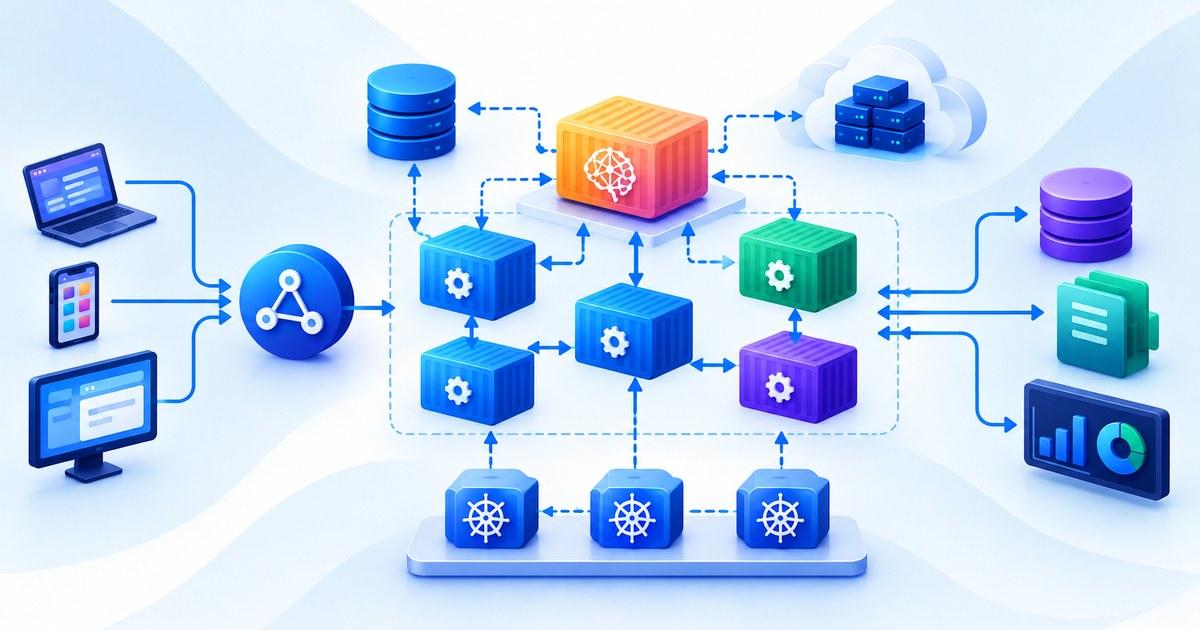

Section 1: Why Static ML Models Struggle in Continuously Changing Environments
Production Data Changes Faster Than Traditional Retraining Cycles
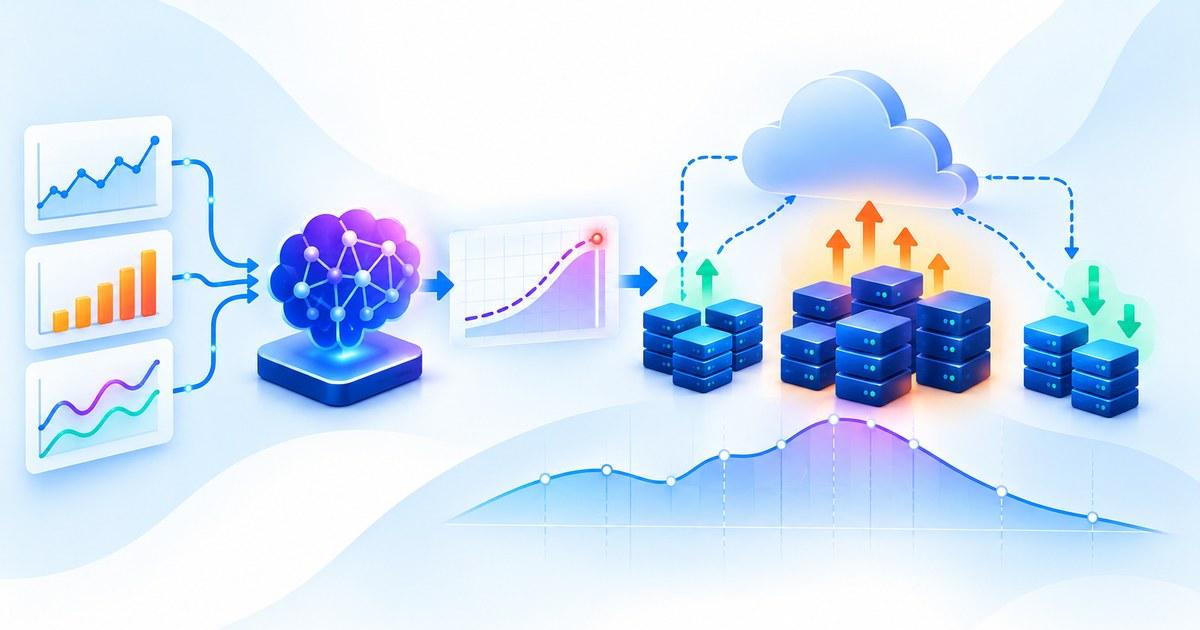
Traditional machine-learning systems are usually built around a lifecycle in which historical data is collected, transformed, used to train a model, and then frozen into a production artifact until a future retraining cycle begins. This approach is effective when the environment remains reasonably stable, because the statistical relationships learned during training continue to resemble the conditions encountered after deployment. Modern production systems increasingly violate that assumption because user behavior, transaction patterns, operational workloads, sensor measurements, and external conditions can change continuously while the deployed model remains unchanged.
A recommendation model can encounter rapidly changing preferences, a fraud model can face new attack strategies, and an industrial prediction system can observe equipment behavior that evolves as machines age or operating conditions change. In each case, the model can continue functioning technically while its relationship with incoming data gradually becomes less accurate. The issue is therefore not that the model has stopped running, but that the environment it was designed to understand is no longer represented adequately by its learned parameters.
Traditional retraining cycles can introduce a significant delay between recognizing this problem and deploying a response. Teams may need to collect sufficient new data, validate its quality, construct training datasets, launch a new experiment, compare candidate models, complete validation, and then schedule deployment. Depending on the application, this process can take days or weeks, during which the production model continues operating under increasingly different conditions. Continuous learning addresses this gap by treating adaptation as an ongoing capability rather than waiting for a complete retraining event.
Static Models Can Become Outdated Even When They Still Run Correctly
A static model can remain computationally healthy while becoming statistically outdated, which makes model monitoring more complicated than checking whether inference requests succeed. A deployed classifier can continue returning valid predictions even when feature distributions have shifted, while a forecasting model can generate plausible numerical outputs despite relationships between variables changing. Because the model itself has not necessarily encountered a software failure, conventional infrastructure monitoring may report that everything is functioning normally while predictive quality quietly deteriorates.
The distinction becomes important when model behavior changes gradually rather than through an obvious failure. A small change in customer behavior may have limited impact during the first week but accumulate into substantial degradation over several months. Similarly, a new fraud pattern may initially affect only a small segment before becoming common enough to alter the overall distribution of transactions. Static models are particularly vulnerable to these situations because their parameters represent historical relationships that are not automatically updated when the world changes.
This challenge is closely connected to the principles discussed in “Adaptive Machine Learning: How Models Respond to Changing Environments,” where model reliability depends on recognizing that the environment generating production data is dynamic rather than fixed. Continuous learning extends that idea by creating mechanisms through which models can incorporate evidence of meaningful change instead of depending exclusively on periodic replacement.
Continuous Learning Changes the Meaning of a Model Lifecycle
When a model can adapt continuously, the traditional idea of a model version as a single immutable artifact becomes more nuanced because learning, validation, deployment, and monitoring can become recurring processes. The model in production may evolve through incremental updates, lightweight parameter changes, updated calibration, refreshed representations, or other controlled forms of adaptation without rebuilding the entire system from the beginning.
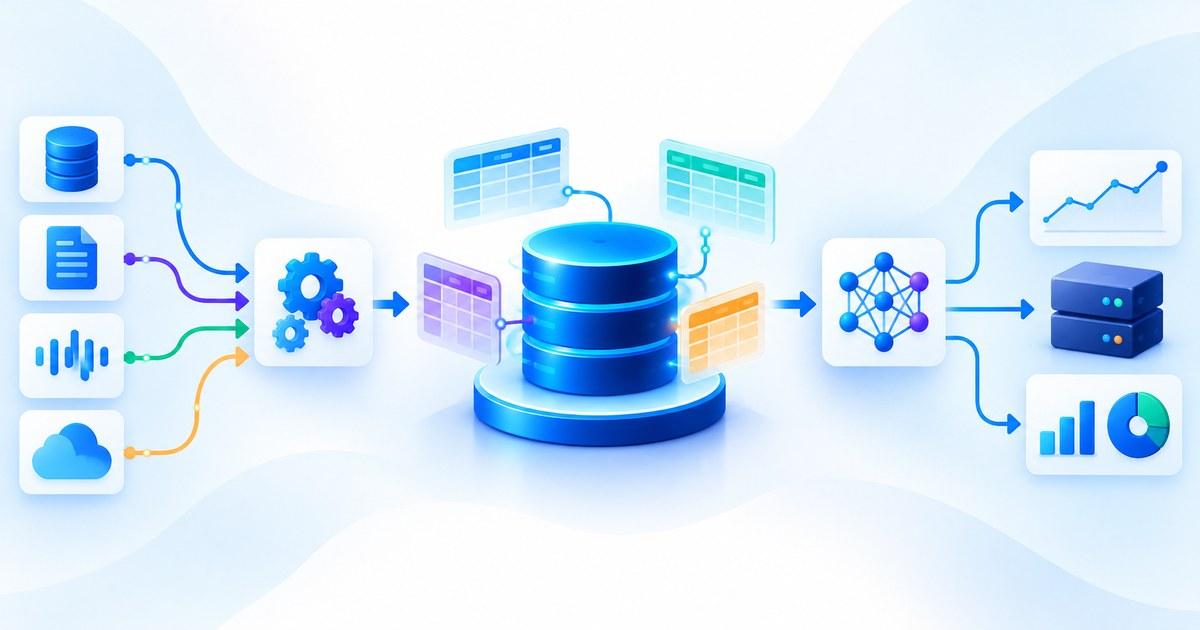
This creates a lifecycle in which the data pipeline and model pipeline are closely connected. Incoming observations must be evaluated for quality, monitored for distributional changes, and made available to adaptation mechanisms under explicit rules. The system must also retain enough historical context to determine whether an apparent improvement is real or simply a temporary response to unusual observations. Continuous learning therefore requires more than an online training algorithm because the surrounding platform must determine what information is trustworthy, when an update is warranted, and whether the resulting model should be promoted.
The lifecycle also becomes more experimental because multiple candidate states may need to coexist. A current production model can continue serving predictions while an updated version learns from recent data in a shadow environment. Engineers can compare the candidate against the incumbent using recent observations and historical evaluation sets before allowing the new version to take over production traffic. This creates a controlled bridge between continuous adaptation and conventional model governance.
Key Takeaway
Static ML models can become outdated even while their software remains fully operational because production environments continuously change in ways that fixed model parameters cannot automatically absorb. Continuous learning addresses this limitation by making adaptation part of the production lifecycle, but successful systems must balance responsiveness with stability through controlled data selection, monitoring, validation, and deployment so that genuine environmental changes influence the model without allowing transient noise to destabilize it.
Section 2: How Continuous Learning Systems Adapt Without Full Retraining
Incremental Learning Updates Models From New Observations
Continuous learning becomes practical when a model can incorporate new information without reconstructing its entire training process from the beginning. Incremental learning provides one approach by allowing model parameters or selected model components to be updated as new observations become available. Instead of creating a completely new training dataset and repeating a full optimization cycle, the system can process recent observations and adjust the existing model, reducing computational cost and shortening the time between environmental change and model adaptation.
The effectiveness of incremental learning depends strongly on the model architecture because some algorithms naturally support sequential updates while others depend on computationally expensive retraining. Traditional online algorithms can update parameters efficiently as observations arrive, while more complex neural architectures may require specialized adaptation strategies that preserve previously learned capabilities. The underlying objective is to incorporate useful new information without allowing recent observations to erase patterns that remain relevant.
A critical challenge is deciding how much influence new data should have. Giving every new observation equal importance can make the model slow to adapt when the environment changes significantly, while giving recent observations too much influence can cause temporary noise to dominate the learned representation. Engineers can address this through learning-rate schedules, observation weighting, replay buffers, regularization, or carefully selected adaptation windows that preserve a balance between historical knowledge and current conditions.
Incremental learning can be particularly valuable when the data stream is large and continuously expanding because repeatedly reconstructing the complete training dataset can become expensive. The principles discussed in “Online Machine Learning: How Models Learn From Data as It Arrives” are especially relevant because continuous learning extends the idea of updating predictive behavior as new evidence becomes available, while adding stronger controls around validation, deployment, and long-term stability.
Partial Fine-Tuning Can Adapt Selected Model Components
Full-model retraining is not always necessary because different parts of a machine-learning architecture may respond differently to changing environments. Some representations can remain relatively stable while other parameters need to adapt quickly to new conditions. Partial fine-tuning provides a way to update only selected components, reducing computation while preserving portions of the model that continue to provide valuable general knowledge.
This strategy can be useful for large neural networks because updating every parameter for every environmental change can require substantial compute and memory. Engineers can instead adapt a smaller subset of parameters, specialized layers, calibration components, or other lightweight mechanisms while leaving the broader representation unchanged. This creates a controlled compromise between a completely static model and full retraining, allowing the system to respond to local changes without rebuilding everything.
The approach also helps reduce catastrophic forgetting because the model retains parameters responsible for patterns that remain relevant outside the newly observed environment. For example, a recommendation model can maintain broad representations of user behavior while adapting smaller components to recent preferences, while an industrial model can preserve general machine relationships while updating parameters associated with a specific operating regime. The effectiveness of partial adaptation depends on identifying which parts of the model contain reusable knowledge and which parts need to respond to changing conditions.
Engineers must still validate candidate updates because selective adaptation can introduce unexpected interactions between changed and unchanged components. A small parameter update may improve recent performance while degrading behavior on older but still important segments. Evaluation therefore needs to include both recent data and representative historical cases so that adaptation improves responsiveness without sacrificing capabilities the production system still requires.
Sliding Windows and Weighted Data Emphasize Recent Behavior
Continuous learning systems frequently use temporal data-selection strategies because the newest observations often contain the strongest evidence about the current environment. A sliding window limits adaptation to a recent portion of the data stream, allowing the model to focus on current behavior rather than giving equal influence to observations that may no longer represent production conditions. The window can contain hours, days, weeks, or longer periods depending on how quickly the underlying environment changes.
Short windows allow rapid adaptation but can make the model sensitive to temporary events, sampling noise, or unusual workload conditions. Longer windows provide greater stability but can slow the model's response when a genuine distribution shift occurs. Engineers therefore need to choose window sizes based on the expected rate of environmental change, the cost of incorrect predictions, and the availability of reliable labels.
Weighted learning provides another strategy in which recent observations receive greater influence without completely discarding historical information. A gradual weighting function can allow the model to respond progressively to changing conditions while preserving older examples as a stabilizing reference. This can be particularly useful when the environment evolves continuously rather than switching abruptly from one stable regime to another.
Data-selection policies can also incorporate quality and relevance signals because not every recent observation should automatically become part of the adaptation set. Engineers may exclude corrupted records, incomplete events, known anomalous periods, or observations generated under conditions that should not influence the long-term model. This makes data selection a core part of continuous learning rather than a simple preprocessing step.
Key Takeaway
Continuous learning can reduce the need for full retraining by updating models incrementally, adapting selected components, emphasizing recent observations, and separating stable representations from lightweight adaptive layers. The most effective approach depends on the rate of environmental change, the model architecture, the reliability of incoming data, and the cost of adaptation errors, making controlled partial updates a practical bridge between static models and fully retrained systems.
Section 3: Designing Reliable Continuous Learning Pipelines
Drift Detection Determines When Adaptation Should Begin
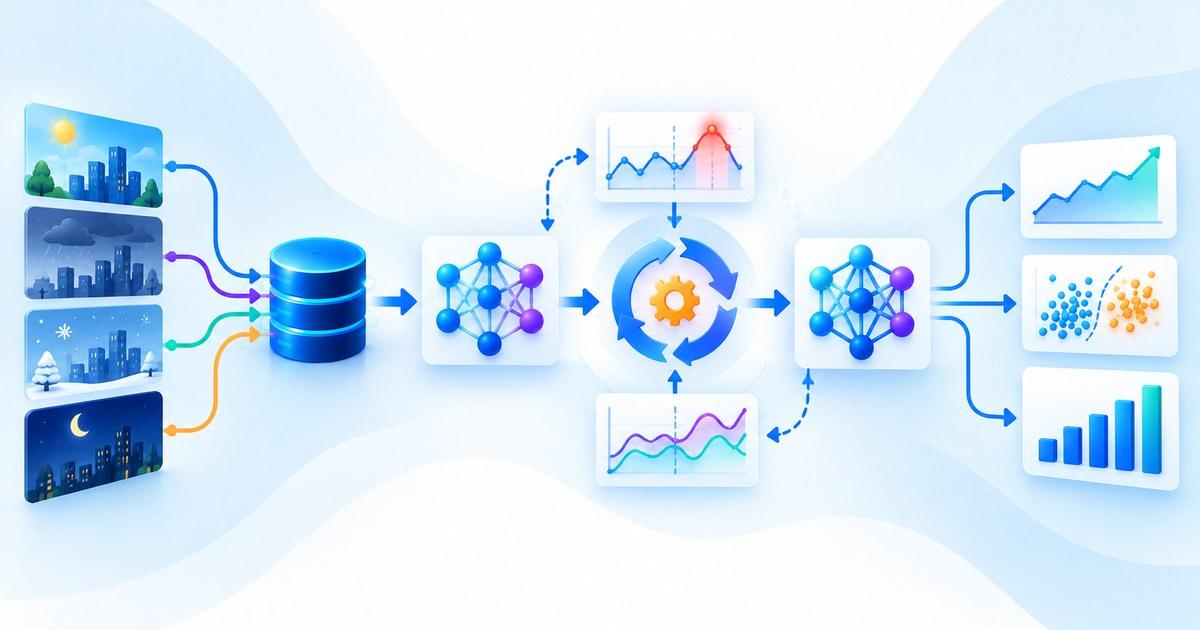
A continuous learning system should not treat every change in incoming data as a reason to modify the production model because real-world streams contain temporary fluctuations, scheduled events, measurement errors, and unusual observations that may disappear before they become relevant. Drift detection therefore becomes the first control point in the adaptation pipeline, providing evidence that the environment has changed enough to justify further investigation. Engineers can monitor feature distributions, prediction behavior, label-based performance, segment-level outcomes, and temporal patterns to identify whether the current model is operating under assumptions that no longer match production reality.
The distinction between detecting change and deciding to adapt is particularly important because drift can have different meanings depending on the application. A sudden increase in transaction values during a seasonal event may represent expected behavior, while a persistent change in fraud patterns may indicate a genuine concept shift. Similarly, a temporary increase in sensor readings during a maintenance operation should not necessarily cause an industrial model to relearn the machine's normal behavior. Engineers therefore need persistence criteria, contextual information, and business impact thresholds that prevent the learning system from reacting too aggressively to short-lived deviations.
Reference windows can provide additional stability by comparing recent observations with historical periods that represent trusted operating conditions. Engineers may also monitor multiple windows with different durations so that short-term changes and long-term trends are visible simultaneously. When several indicators consistently suggest that the current environment has changed, the system can initiate a controlled adaptation workflow rather than immediately modifying the production model. This separation creates a safer architecture in which drift detection identifies a possible problem while subsequent validation determines whether model adaptation is justified.
The principles described in “How ML Teams Decide When to Retrain a Model” are especially relevant because continuous learning does not eliminate the need for retraining decisions; instead, it changes when and how those decisions are made. Engineers still need evidence that the current model is becoming inadequate, but they now have more granular options between doing nothing and rebuilding the entire training pipeline.
Candidate Models Need Validation Before Reaching Production
Once a continuous learning system determines that adaptation is warranted, the resulting model should not automatically replace the current production version because the update may improve recent performance while degrading behavior in other important conditions. Candidate validation creates a controlled boundary between learning and deployment, allowing engineers to test whether adaptation has produced a meaningful improvement before changing the production state.
A strong validation strategy should compare the candidate against the incumbent model using both recent observations and representative historical datasets. Recent data reveals whether the model has adapted to current conditions, while historical evaluation helps determine whether important capabilities have been lost. This is particularly important when the environment changes incrementally because the candidate may appear better on a recent window simply because it has overfit to temporary behavior. Segment-level evaluation can reveal similar problems when one population improves while another experiences degradation.
Shadow evaluation provides a useful production-oriented mechanism because the candidate model can receive live traffic and generate predictions without influencing actual decisions. Engineers can then compare candidate and incumbent outputs, analyze performance when delayed labels become available, and identify differences in latency, confidence, resource consumption, and business outcomes. This approach allows continuous learning to benefit from real production context without immediately exposing users or downstream systems to an unvalidated model.
Validation should also include operational constraints because an adaptation that improves predictive metrics but substantially increases inference cost, memory consumption, or latency may not be appropriate for deployment. Continuous learning therefore requires a broader definition of model quality in which predictive performance and operational behavior are evaluated together. The resulting workflow can promote the candidate only when it satisfies predefined thresholds, making adaptation measurable and reversible rather than an uncontrolled change to production behavior.
Versioning, Rollbacks, and Shadow Evaluation Control Risk
Continuous learning creates more frequent model changes than conventional retraining cycles, which makes model versioning and lineage particularly important. Every production state should be traceable to the training data, adaptation window, feature definitions, configuration, evaluation results, and deployment decision that produced it. Without this information, engineers may struggle to determine why performance changed or reproduce the conditions under which a problematic update was introduced.
Versioning also enables controlled rollback because an adaptive system needs to recover quickly when a candidate model performs unexpectedly after deployment. A previous version can provide a known-good state that allows the system to return to a stable configuration while engineers investigate the cause of the degradation. Automated rollback thresholds can be useful when severe performance regressions, confidence changes, latency increases, or infrastructure failures appear immediately after an update, provided those thresholds are designed carefully enough to avoid unnecessary reversions.
Canary deployment extends this protection by exposing a new model to a limited portion of traffic before expanding its use across the full population. Engineers can compare the candidate and incumbent under real operating conditions and progressively increase the candidate's exposure when performance remains within acceptable limits. This makes deployment itself part of the validation strategy and is particularly valuable when continuous learning produces frequent updates.
The governance process should also define how candidate models are created and who or what is authorized to promote them. A fully automated pipeline may be appropriate for low-risk applications with strong validation, while higher-impact systems may require human approval before changes reach production. Continuous learning therefore becomes a controlled software delivery process in which model updates follow explicit promotion, rollback, and audit rules rather than bypassing conventional production safeguards.
Key Takeaway
Reliable continuous learning pipelines require more than an incremental training algorithm because the complete system must decide when adaptation is justified, validate candidate models, control deployment risk, preserve version lineage, and protect the learning process from corrupted data and feedback loops. By separating drift detection, adaptation, validation, deployment, and rollback into explicit stages, engineers can create models that evolve with their environments while maintaining the stability and traceability expected of production machine-learning systems.
Section 4: The Future of Continuously Adaptive Machine Learning
Models Will Adapt at Different Speeds for Different Environments
The future of continuous learning will likely move away from the idea that every model should update at the same frequency because different applications experience environmental change at very different rates. A fraud-detection model may encounter new attack strategies within hours, while an industrial maintenance model may need months of observations before a meaningful change in equipment behavior becomes apparent. A recommendation system may respond to changing preferences within minutes, while a demand-planning model may need to preserve seasonal patterns across many months. Continuous learning architectures therefore need adaptation policies that reflect the dynamics and risk profile of each environment rather than applying one universal update schedule.
This creates the possibility of multi-speed learning systems in which different components of the same model adapt at different rates. A rapidly changing feature representation may update frequently, while broader model parameters remain stable and are adjusted only after stronger evidence of persistent change. Calibration layers can respond to recent operating conditions without modifying deeper representations, while long-term parameters preserve knowledge accumulated across years of historical data. Such architectures provide a more controlled form of adaptation because the system can respond quickly where change is expected while protecting stable knowledge from unnecessary updates.
The approach also allows organizations to allocate computational resources more intelligently because expensive adaptation does not need to occur uniformly across every production workload. High-value applications with rapidly changing data can receive more frequent evaluation and adaptation, while stable workloads can continue using longer update intervals. This makes continuous learning not only a modeling strategy but also a resource-management strategy in which adaptation frequency becomes another production parameter.
Continuous Learning Will Connect Prediction With Real-Time Context
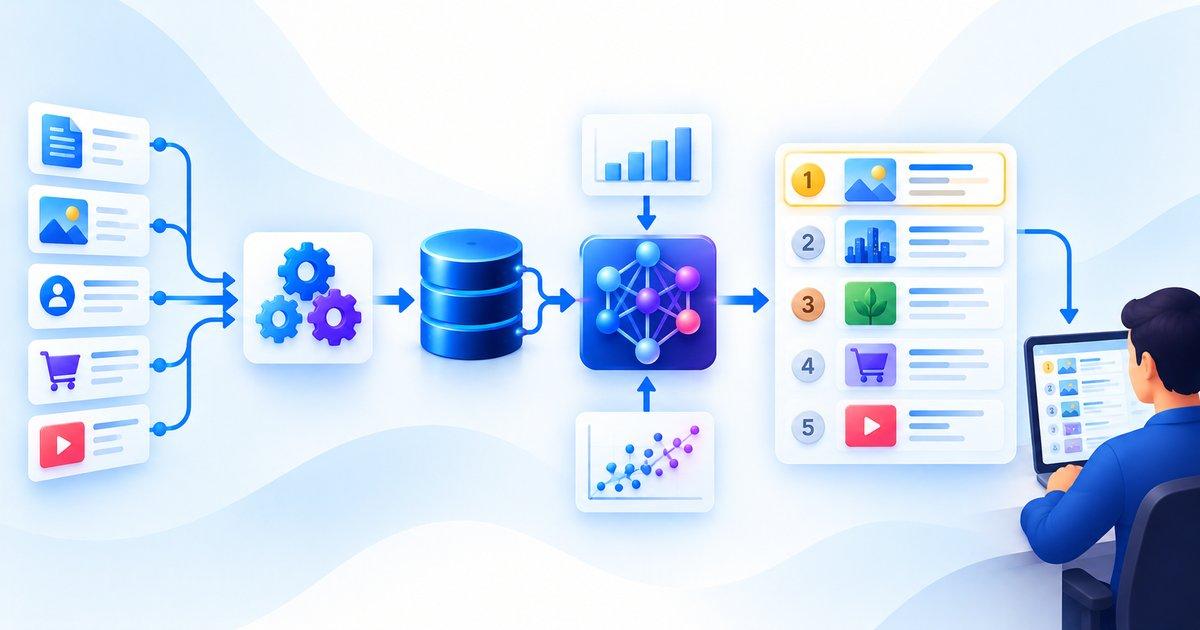
As continuous learning becomes more integrated into production platforms, models will increasingly combine long-term knowledge with short-term context rather than treating the latest observations as the sole source of adaptation. A model can retain stable representations learned from historical data while incorporating recent information through stateful features, adaptive components, contextual embeddings, or lightweight updates. This allows predictions to respond to current conditions without discarding patterns that remain relevant over longer time horizons.
Such architectures are particularly useful when the environment contains both persistent structure and temporary states. A retail system may preserve knowledge about long-term customer behavior while adjusting predictions during a short promotional period, while an industrial model may maintain general knowledge about machine behavior while responding to a temporary operating regime. The model therefore becomes capable of distinguishing between what should be learned permanently and what should influence predictions only while a particular context remains active.
This movement toward context-aware prediction also changes the relationship between inference and adaptation because the system can use recent observations to improve current predictions without immediately modifying the underlying model. A temporary context representation can influence inference while remaining separate from the long-term learned parameters, allowing the system to respond quickly while reducing the risk of permanently encoding transient behavior. Such separation can provide an important safety mechanism for environments in which rapid changes are common but not necessarily persistent.
The broader value of this architecture is that continuous learning no longer needs to mean constant parameter modification. Instead, learning can occur at multiple layers, with short-term context influencing immediate predictions and slower adaptation mechanisms changing the model only when there is sufficient evidence that the environment itself has shifted.
Adaptive Systems Will Combine Global Models With Local Intelligence
Another important direction is the development of hierarchical adaptive systems in which a shared global model provides broadly reusable knowledge while local components adapt to specific users, devices, regions, products, or operational environments. A single model may capture general relationships that apply across a large population, while lightweight local adaptations account for differences that cannot be represented efficiently through a completely global architecture. This can reduce the need to maintain entirely independent models while still allowing predictions to respond to local behavior.
For example, a global recommendation model can learn broad patterns of user interaction while smaller adaptation mechanisms account for individual preferences, and a predictive-maintenance platform can maintain shared knowledge across an equipment fleet while incorporating machine-specific behavior. The architecture can therefore separate common knowledge from local variation, making continuous learning more scalable as the number of entities increases.
Local adaptation also creates an opportunity to reduce centralized retraining because changes can sometimes be handled close to the point where they occur. Edge devices, regional services, or specialized processing layers can maintain small adaptive components while the broader global model remains unchanged. This approach can reduce data movement, lower update costs, and allow systems to respond more quickly to localized changes.
The challenge is maintaining consistency and preventing local adaptations from diverging in ways that reduce reliability. Engineers need mechanisms for deciding when local updates are useful, how successful adaptations should be incorporated into global knowledge, and how to prevent noisy or biased local data from influencing the shared model. Continuous learning therefore becomes a coordination problem as well as a modeling problem, particularly when thousands or millions of local environments are adapting simultaneously.
Key Takeaway
The future of continuous learning will involve multi-speed adaptation, context-aware prediction, global models combined with local intelligence, and platform-level infrastructure that governs how models evolve. Rather than retraining entire models whenever new information appears, organizations will increasingly use layered adaptation strategies that preserve stable knowledge, respond quickly to meaningful changes, and apply continuous learning through controlled, observable, and reversible production workflows.
Conclusion
Continuous learning systems represent a significant evolution in production machine learning because they change the model from a static artifact into a component that can adapt as the environment around it changes. Traditional machine-learning workflows generally separate training from serving, with a model trained on historical data and deployed until a future retraining cycle produces a replacement. That approach remains appropriate for relatively stable environments, but many modern applications operate under conditions in which user behavior, transaction patterns, sensor readings, market conditions, and operational workloads can change faster than conventional retraining cycles can respond.
The central value of continuous learning is therefore not that a model should update constantly, but that the machine-learning system should have a controlled mechanism for responding to meaningful change without requiring the entire model-development lifecycle to restart every time new information arrives. Incremental learning, selective fine-tuning, recent-data weighting, sliding windows, adaptive layers, and localized updates provide different ways to incorporate new information while preserving knowledge that remains valuable.
This makes continuous learning fundamentally different from simply scheduling retraining more frequently.
A frequent batch process still treats each model update as a separate replacement event, while a continuous-learning architecture treats adaptation as an integrated production capability. Data arrives continuously, monitoring evaluates how the environment is changing, adaptation mechanisms incorporate appropriate information, candidate models are validated, and deployment systems determine when a new version is safe enough to become the production model.
The quality of this lifecycle depends heavily on drift detection.
Not every statistical change represents a meaningful shift in the environment, and not every performance fluctuation should trigger model adaptation. A temporary promotional event, unusual sensor condition, infrastructure incident, or short-lived traffic spike can create observations that differ substantially from historical data without representing a new long-term regime. If the model learns from those observations too aggressively, it may encode temporary behavior as though it were permanent.
Continuous learning therefore requires a distinction between detecting change and responding to change.
Drift detection provides evidence that the environment may have changed, while validation and adaptation policies determine whether that evidence justifies a model update. This separation is essential because it prevents the model from responding automatically to every unusual observation and creates a more disciplined path from incoming data to production behavior.
The same principle applies to incremental learning.
A model that updates too slowly can become outdated, while a model that updates too quickly can become unstable. Recent observations often deserve greater attention because they contain information about the current environment, but historical observations still provide valuable context and prevent temporary events from dominating the model. Sliding windows, weighted observations, replay buffers, regularization, and selective parameter updates allow engineers to balance responsiveness with stability.
Frequently Asked Questions
1. What is a continuous learning system?
A continuous learning system is a machine-learning architecture designed to incorporate new information over time and adapt model behavior without requiring a complete retraining and redeployment cycle for every meaningful change in the production environment.
2. How is continuous learning different from traditional model retraining?
Traditional retraining typically rebuilds a model periodically using a refreshed training dataset, while continuous learning can update selected parameters, components, representations, or adaptation layers incrementally as new information becomes available. The difference is primarily in how adaptation is integrated into the production lifecycle.
3. Is continuous learning the same as online learning?
Online learning is one technique that can support continuous learning by updating a model incrementally from incoming observations. Continuous learning is broader because it also includes drift detection, validation, deployment, monitoring, versioning, rollback, and governance around how model adaptation occurs.
4. Why do machine-learning models need continuous adaptation?
Models can become outdated when user behavior, transaction patterns, market conditions, sensor characteristics, operational processes, or other parts of the data-generating environment change. A static model may continue producing predictions successfully while the assumptions behind those predictions gradually become less accurate.
5. Does a continuously learning model update after every new observation?
Not necessarily. Production systems can update models using batches of recent data, sliding windows, weighted observations, periodic adaptation cycles, or event-triggered updates. Updating after every observation can be risky when individual observations contain noise or temporary anomalies.
6. What is drift detection in continuous learning?
Drift detection identifies evidence that the statistical properties of incoming data or the relationship between inputs and outcomes have changed. It helps determine whether the current production model is operating under conditions that differ materially from those represented during training or previous adaptation cycles.
7. Why should drift detection not automatically trigger retraining?
A detected change may be temporary, expected, caused by poor-quality data, or unrelated to model performance. Automatically adapting to every detected change can make a model unstable, so engineers typically combine drift signals with persistence, performance measurements, business context, and data-quality checks before changing the model.
8. What is incremental learning?
Incremental learning allows a model to update its parameters or selected components using new observations without rebuilding the complete model from scratch. It can reduce training cost and shorten the time required for a model to incorporate meaningful new information.
9. What are sliding windows in continuous learning?
A sliding window limits the data used for adaptation to a recent period of observations. This gives the model greater sensitivity to current behavior while preventing very old observations from dominating updates, although the window must be chosen carefully so that temporary events do not overwhelm longer-term patterns.
10. What is partial fine-tuning?
Partial fine-tuning updates only selected portions of a model while leaving other components unchanged. This approach can reduce computational cost and help preserve stable knowledge while allowing the model to adapt to new environments or specific domains.
11. How can continuous learning prevent catastrophic forgetting?
Systems can preserve historical knowledge through techniques such as replay buffers, regularization, weighted historical data, protected model components, or evaluation against reference datasets. These mechanisms help ensure that adapting to recent behavior does not eliminate capabilities that remain important for older but still relevant cases.
12. How should candidate models be validated?
Candidate models should be compared with the incumbent model using recent data, historical reference datasets, important segments, operational metrics, and business outcomes where available. Shadow evaluation and canary deployment can provide additional evidence before a candidate receives full production traffic.
13. Why are rollback mechanisms important for continuous learning?
Continuous adaptation increases the frequency of model changes, which increases the probability that an update can introduce unexpected behavior. Rollback mechanisms provide a way to return quickly to a previously validated model version when performance, latency, cost, or reliability deteriorates after an update.
14. How do feedback loops affect continuous learning?
A model can influence the environment that generates its future training data, meaning subsequent observations may partly reflect previous model decisions. Without tracking interventions and outcomes, the learning system can mistake its own effects for natural environmental change and reinforce undesirable behavior.
15. What is the future of continuous learning in machine learning?
Continuous learning is likely to become a shared ML platform capability that combines drift detection, incremental adaptation, validation, model versioning, staged deployment, monitoring, and rollback. Future systems will increasingly use different adaptation speeds and combine stable global knowledge with local or temporary context so that models can respond to meaningful change without continuously relearning from noise.