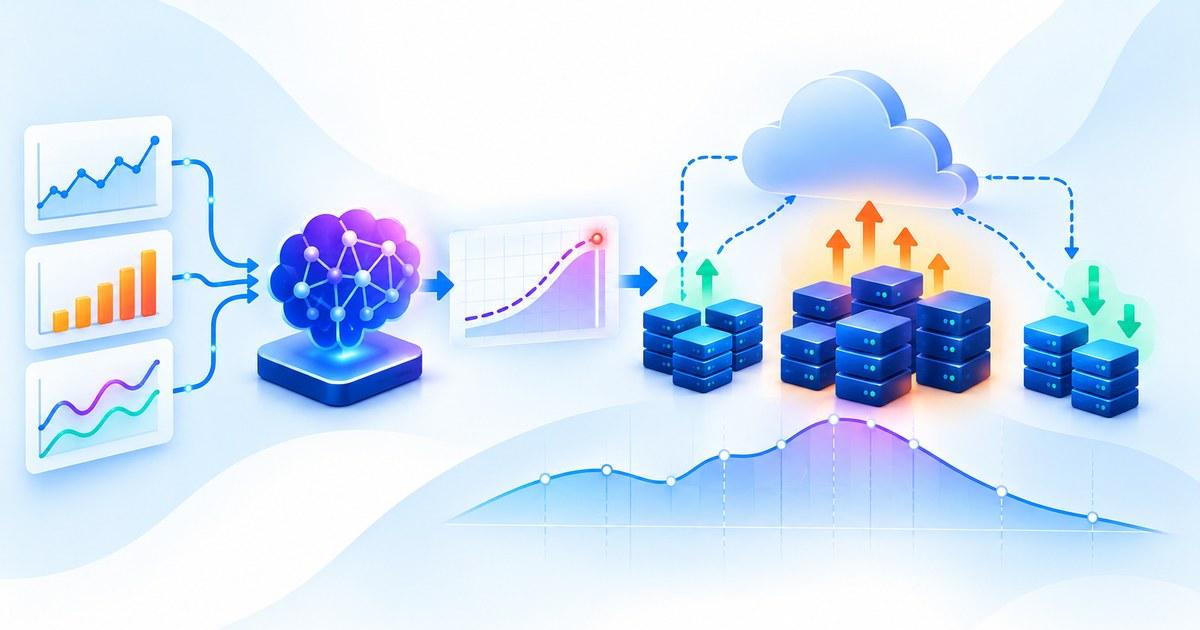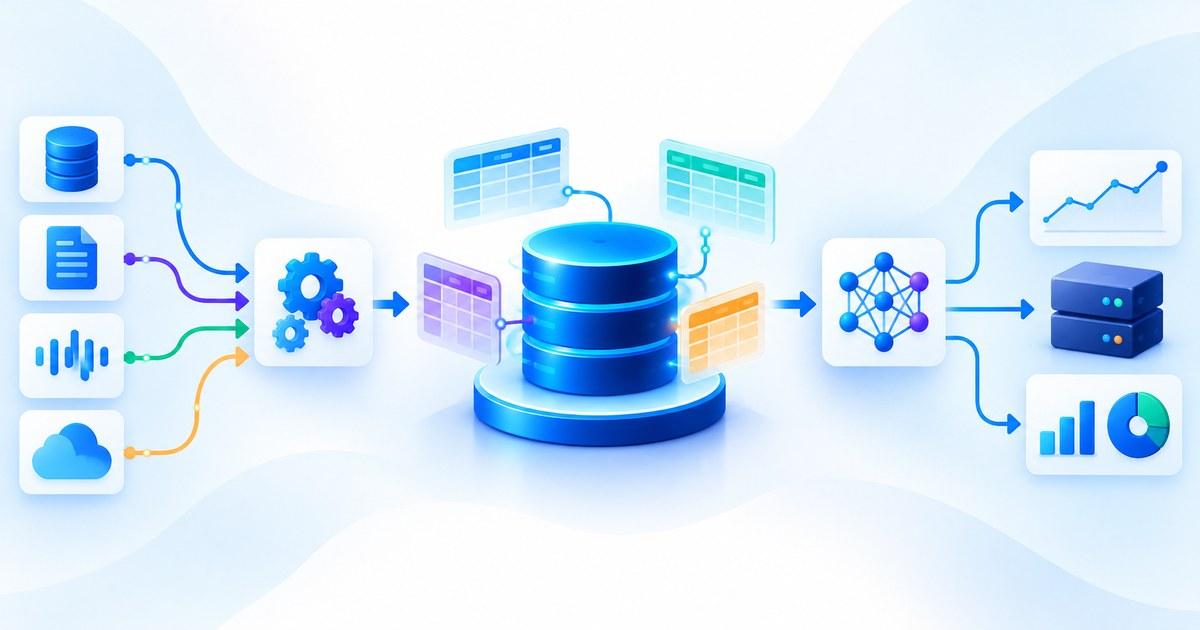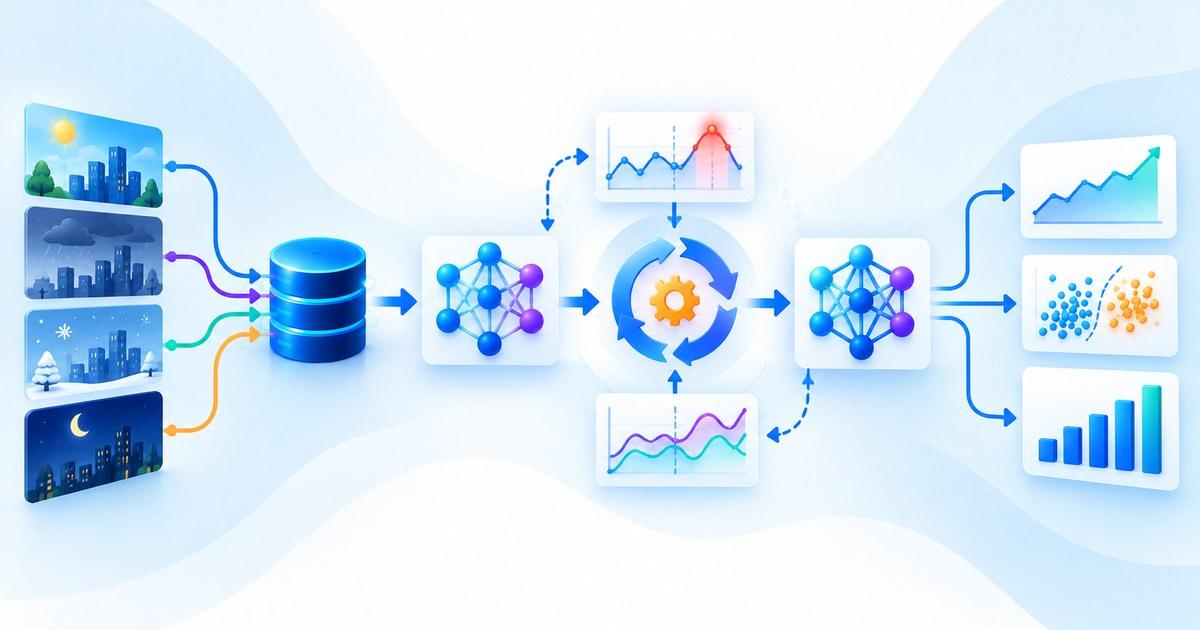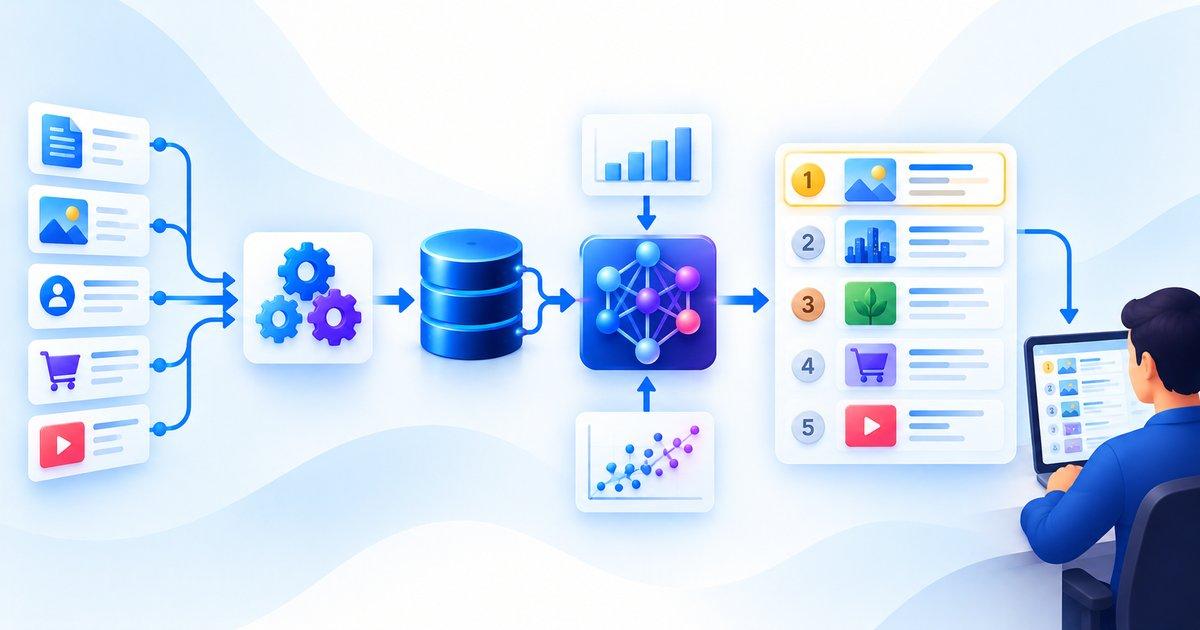
Section 1: Understanding Online Machine Learning
Traditional machine learning generally follows a batch-learning workflow. Engineers collect a historical dataset, clean and prepare it, train a model, evaluate its performance, deploy it, and eventually retrain it when enough new data has accumulated. This approach is effective when data changes relatively slowly and periodic model updates are sufficient.
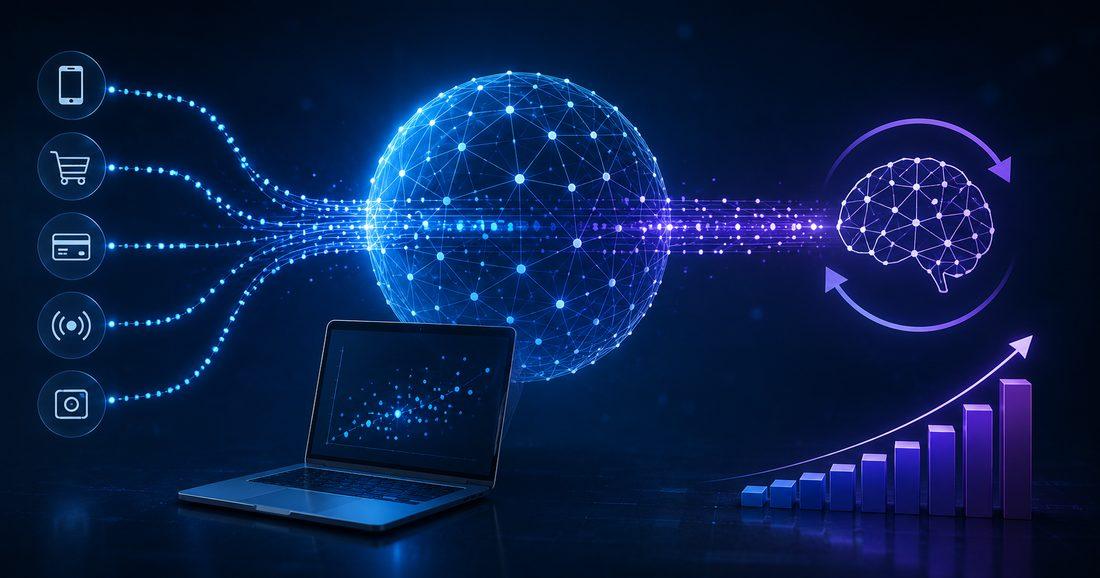
But many modern systems operate continuously. Financial transactions arrive every second, recommendation systems receive new interactions constantly, industrial sensors produce ongoing measurements, and cybersecurity platforms process streams of network activity. In these environments, waiting for the next scheduled training cycle can leave a model increasingly disconnected from current conditions.
Online machine learning addresses this problem by allowing models to incorporate new observations incrementally as they arrive. Instead of treating training as an occasional large operation, the system can update model parameters continuously or in small batches.
The goal is not simply to make models update faster. It is to determine when continuous adaptation provides enough value to justify the additional complexity and operational risk.
Batch Learning Versus Online Learning
In batch learning, the model is trained using a fixed dataset. New observations typically accumulate separately until the organization creates a new training dataset and starts another training cycle.
For example, an e-commerce company might retrain its recommendation model once per month using the previous month's interactions. The model remains unchanged between training cycles even though new customer behavior continues to arrive.
Online learning changes this workflow. As new observations become available, the model can incorporate them into its learned parameters. A recommendation model might update as users interact with products, while a fraud model might learn from newly confirmed transactions as labels become available.
This creates a more dynamic model lifecycle:
Batch learning:
Collect → Train → Deploy → Monitor → Retrain
Online learning:
Observe → Update → Evaluate → Continue learning
The distinction is not always binary. Many systems use mini-batch or incremental learning, where the model updates periodically using small groups of recent observations rather than processing every example individually.
The appropriate approach depends on the problem. If the environment is stable and training is expensive, batch learning may remain the better option. If information becomes stale quickly and new observations contain valuable signals, online learning can provide a significant advantage.
How Models Learn as Data Arrives
Online learning typically updates a model using single-example updates, small batches, or another incremental optimization strategy.
A new observation arrives, the system evaluates it, and, when the appropriate target information is available, the model adjusts its parameters based on that example. Over time, thousands or millions of small updates can gradually modify the model.
Stochastic gradient descent (SGD) is a classic example of an optimization approach that naturally supports online learning. Instead of calculating a gradient over an entire training dataset, the model can update its parameters using individual observations or small groups of examples.
The key advantage is responsiveness. A model does not necessarily need to wait until a large dataset has accumulated before incorporating new information.
Mini-batch learning provides a compromise between individual-example updates and full batch training. A system may collect a small number of observations and update the model periodically. This can improve computational efficiency and reduce the instability that may result from reacting to every individual observation.
The update frequency therefore becomes an important engineering parameter. Updating every second may provide freshness but create unnecessary computational overhead or instability. Updating once per day may be cheaper but too slow for a rapidly changing environment.
Online learning requires balancing adaptation speed against model stability.
When Online Learning Makes Sense
Online learning becomes particularly valuable when the system processes high-velocity data and the value of information decreases rapidly with age.
Financial systems provide a common example. Transaction patterns can change quickly, and models may benefit from incorporating recent information rather than relying exclusively on historical training data.
Rapidly changing environments are another strong candidate. Fraud patterns, cybersecurity threats, user preferences, and market behavior can evolve quickly. A model that remains unchanged for months may gradually lose relevance.
Personalization is also well suited to online learning. Recommendation systems can learn from new interactions to update their understanding of individual users. A customer who recently changed interests can potentially receive more relevant recommendations without waiting for a large scheduled retraining cycle.
Real-time detection provides another application. Systems monitoring sensors, network traffic, or operational events may need to adapt as new patterns emerge.
However, high data velocity alone does not justify online learning. The organization should first determine whether recent observations actually contain useful information and whether the model needs to adapt at the same rate at which data arrives.
The Tradeoffs of Continuous Learning
Online learning provides greater freshness, but that benefit comes with additional engineering complexity.
A continuously updating model can become more responsive to new patterns, but it can also become overly sensitive to temporary changes. A short-lived anomaly may influence the model and cause it to perform poorly once conditions return to normal.
Stability is therefore a central concern. Teams must determine how quickly the model should adapt and how much historical information should continue influencing its behavior.
Computation is another consideration. Updating a model after every event can require significant processing resources, particularly at high data volumes. Mini-batches, efficient algorithms, and event aggregation can help manage this cost.
Data quality becomes especially important because online systems can incorporate errors rapidly. A corrupted data stream, incorrect label, or malicious input can influence the model before engineers have an opportunity to intervene.
Model control is also more complicated. In a traditional batch system, a trained model can be evaluated extensively before deployment. With online learning, the production model itself is continuously changing. Organizations therefore need versioning, monitoring, checkpoints, safeguards, and rollback mechanisms.
This means online learning should not be viewed as "automatic retraining." It is a different operating model in which learning becomes part of the production system.
The decision should therefore depend on the rate of environmental change, the value of fresh information, the quality of incoming data, the cost of model updates, and the consequences of incorrect adaptation.
This is closely connected to distribution shift because online learning is often used precisely when production conditions change faster than periodic retraining can accommodate. "Machine Learning Under Distribution Shift: What Happens When the World Changes" examines how changing environments can affect production models and why systems need mechanisms for detecting and adapting to those changes.
Key Takeaway
Online machine learning allows models to learn incrementally as new data arrives, providing faster adaptation than traditional batch training. It is especially useful for high-velocity data, rapidly changing environments, personalization, and real-time detection. However, continuous learning introduces tradeoffs involving stability, computation, data quality, and model control. The key engineering decision is not whether a model can learn continuously, but whether the value of rapid adaptation is large enough to justify the additional complexity and risk.
Section 2: Algorithms and Architecture for Online ML
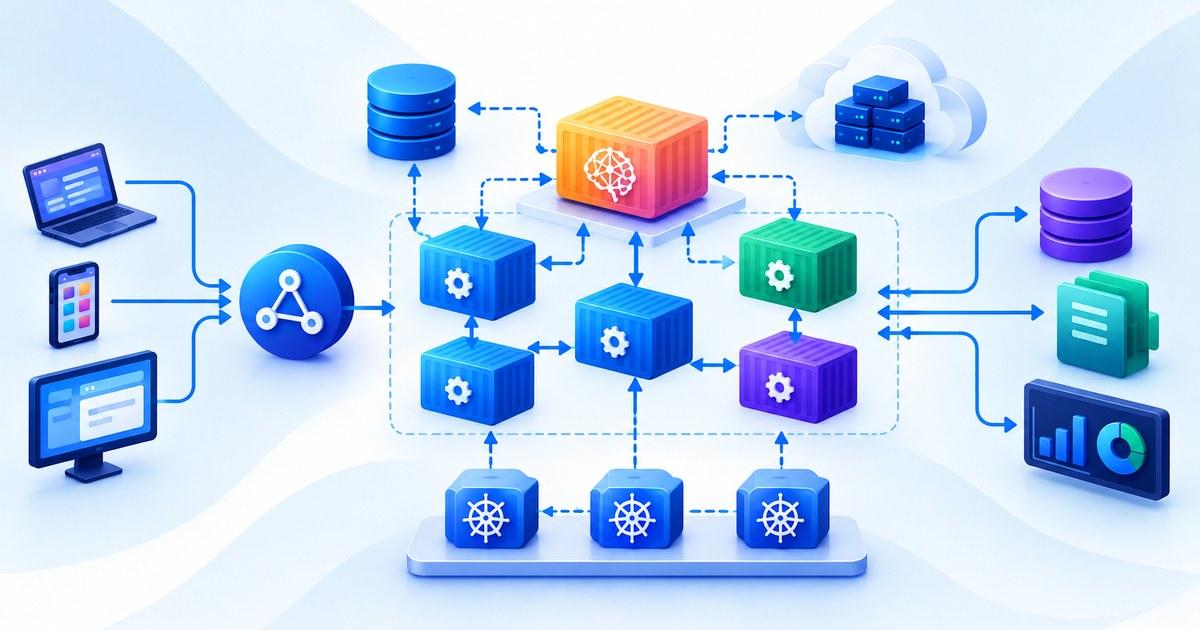
Online machine learning requires both an algorithm capable of incremental updates and an architecture capable of delivering new data to that algorithm reliably. Unlike traditional batch training, where a model can be trained against a fixed dataset and evaluated before deployment, online learning makes model updates part of the production lifecycle.
This creates a fundamentally different engineering requirement. Teams must decide how frequently models should update, how much historical information should influence the current model, how model state should be stored, and how new versions can be recovered if an update causes problems.
Online Learning Algorithms
Many online learning algorithms are designed to update model parameters incrementally as observations become available. Rather than requiring the entire training dataset to be loaded into memory, these methods can learn from individual observations or small groups of observations.
Stochastic gradient descent (SGD) is one of the best-known approaches. Instead of calculating parameter updates using the complete dataset, SGD can update parameters using individual training examples or mini-batches. This makes it naturally compatible with streaming environments.
For classification problems, incremental linear models can also be effective. Linear regression, linear classification, and related algorithms can update their parameters as new labeled observations become available. These models can be particularly attractive when low latency, interpretability, and computational efficiency matter more than extremely complex representations.
Online logistic regression is another example. It can continuously adjust classification parameters as new observations arrive, making it useful for applications where the relationship between features and outcomes evolves over time.
More generally, adaptive algorithms can modify how strongly recent observations influence the model. Some approaches emphasize recent data to respond quickly to changing environments, while others retain greater influence from historical observations to preserve stability.
This creates an important tradeoff. If the model learns too aggressively from recent data, it may overreact to temporary fluctuations. If it learns too slowly, it may fail to adapt when the environment genuinely changes.
Algorithm selection should therefore depend on the rate of environmental change, data volume, computational constraints, and the consequences of incorrect updates.
Streaming and Mini-Batch Training
Online ML is often associated with processing a continuous data stream, but not every system needs to update the model after every individual event.
In a true streaming architecture, events may arrive continuously through systems such as transaction streams, application events, sensor feeds, or user interactions. The ML system consumes these events and updates model state according to predefined rules.
However, processing every observation individually can be inefficient or unstable. This is where micro-batches become useful. Instead of updating the model after each event, the system accumulates a small number of observations and performs an incremental update periodically.
Micro-batching provides a practical compromise between fully online and traditional batch learning. It allows models to adapt relatively quickly while improving computational efficiency and reducing the effect of individual noisy observations.
The appropriate update frequency depends on the application. A fraud system may need updates within minutes or hours, while a recommendation system may update user-specific representations more frequently. A slower-moving forecasting problem may only require daily or weekly updates.
Update frequency should therefore be determined by the value of fresh information rather than by technical capability alone.
The architecture must also account for throughput. High-volume systems may process millions of events during a short period. The learning infrastructure must be capable of ingesting and processing that data without creating an ever-growing backlog.
This means online ML architecture must coordinate data ingestion, feature computation, model updates, and inference without allowing the training process to interfere with the prediction service.
Building the Streaming ML Pipeline
A production online-learning system typically contains several connected components.
The first is event ingestion. New observations must be captured reliably from applications, databases, sensors, transaction systems, or other sources. Streaming platforms can buffer and distribute these events to downstream consumers.
Next comes feature computation. Some features can be calculated directly from the incoming event, while others require recent historical context. For example, a fraud model may need the number of transactions associated with an account during the previous hour.
The system must then support online inference, where the current model generates predictions while continuing to receive new information.
Separately, the learning component performs model updates using observations for which appropriate training signals are available. This distinction is important because an event may be available for prediction immediately but its true label may not become available until later.
The architecture therefore needs to handle delayed labels, asynchronous learning, and potentially different time scales for inference and training.
A robust pipeline might operate as:
Event ingestion → Validation → Feature computation → Inference → Outcome collection → Incremental training → Evaluation → Model checkpoint
Each stage should be observable and independently monitored.
Data quality controls are particularly important because online learning can incorporate new information rapidly. An upstream error that would affect one batch-training cycle could instead influence thousands of incremental updates if it is not detected quickly.
Online ML therefore requires a carefully designed architecture in which data streams, model state, inference, training, evaluation, and recovery mechanisms operate together.
"The Evolution of AI Deployment: From APIs to Intelligent Platforms" provides broader context for this shift toward production AI platforms that integrate data, inference, deployment, monitoring, and model lifecycle management.
Key Takeaway
Online ML requires more than an incremental algorithm. Production systems need streaming data pipelines, appropriate update strategies, model-state management, checkpoints, versioning, reliable feature computation, delayed-label handling, and recovery mechanisms. Algorithms such as SGD and online linear models can support incremental learning, while mini-batch approaches provide a practical balance between freshness and efficiency. The strongest architectures treat online learning as an integrated production lifecycle rather than simply adding continuous updates to an existing batch-training workflow.
Section 3: Keeping Continuously Learning Models Reliable
Online machine learning provides the ability to adapt rapidly, but continuous adaptation introduces a fundamental risk: the model can learn the wrong thing just as quickly as it can learn the right thing. A batch-trained model is typically evaluated extensively before deployment, while an online model continues changing after it reaches production.
A noisy observation, incorrect label, faulty data pipeline, temporary anomaly, or adversarial input can therefore influence future predictions. Online ML requires a strong reliability layer that monitors model behavior, controls updates, detects instability, and evaluates whether learning from new information is actually improving the system.
Monitoring Online Model Performance
The first requirement is continuous model performance monitoring. Teams need visibility into whether the model remains accurate and whether incremental updates are improving or degrading its behavior.
Relevant metrics depend on the application. Classification systems may monitor accuracy, precision, recall, F1 score, calibration, or ranking quality. Forecasting systems may track prediction error, while recommendation systems may monitor engagement or conversion outcomes.
However, online models introduce an additional challenge: performance can change immediately after an update. Teams should therefore monitor the relationship between model updates and subsequent performance.
For example, if a model is updated every hour and performance consistently declines after particular update batches, that pattern may indicate problems in the incoming training data or an inappropriate update strategy.
Latency is also important. An online model may remain accurate while its update process consumes resources needed by the inference service. This can increase prediction latency or reduce system availability.
Stability should be monitored as well. Large changes in model parameters or prediction distributions after small amounts of new data can indicate that the learning process is overly sensitive.
Production monitoring should therefore cover both predictive quality and the behavior of the learning mechanism itself.
Handling Data Quality and Noisy Updates
Online models are particularly vulnerable to poor-quality information because new observations can influence the model soon after they arrive.
Invalid records can arise from upstream application failures, schema changes, corrupted events, or incomplete transactions. If these observations enter the learning pipeline without validation, they can alter model behavior.
Outliers create another challenge. Some unusual observations represent genuine new patterns, while others are errors. A naive online-learning system may treat every unusual observation as valuable information and adapt unnecessarily.
Label quality is equally important. Many online systems receive labels asynchronously, and those labels may be generated by human reviewers, downstream outcomes, or heuristic processes. Incorrect labels can gradually push model parameters in the wrong direction.
Teams should therefore introduce data-quality gates before observations are allowed to influence model updates. Validation may check schemas, ranges, missingness, consistency, and other application-specific requirements.
There is also a security concern involving data poisoning. If an attacker can influence the observations or labels entering an online learning pipeline, they may intentionally manipulate model behavior. Systems that continuously learn from external inputs require controls to detect suspicious patterns and restrict untrusted updates.
The critical principle is that online learning should never mean "learn from everything immediately." New information should pass through appropriate quality and trust controls before influencing production model state.
Evaluating Before and After Updates
Continuous learning does not eliminate the need for controlled evaluation. In fact, evaluation becomes more important because model changes happen repeatedly.
A champion-challenger approach can compare the current production model with a candidate model or model state generated from recent data. The challenger can be evaluated before becoming the new production state.
Shadow evaluation is another useful technique. The updated model can process live inputs without controlling production decisions, allowing teams to compare its behavior with the current model.
For some applications, a holdout stream can provide an ongoing evaluation sample that is not used for training. This creates a more reliable measurement of whether the continuously updated model is generalizing to unseen observations.
Online experimentation can also be useful. When appropriate, organizations can compare different learning strategies or model versions across controlled traffic segments and measure downstream business outcomes.
The evaluation process must guard against feedback loops. If the model's predictions influence which data is later collected, the training stream may increasingly reflect the model's own decisions. This can create self-reinforcing behavior and reduce the diversity of future training information.
Online ML therefore requires continuous validation not only of the model's predictions but of the learning process itself.
A production system should be able to answer questions such as: Which data changed the model? How much did the update change its behavior? Did performance improve? Did any important segment deteriorate? Can the previous model state be restored?
These controls transform continuous learning from an uncontrolled process into a managed production capability.
The challenges are closely related to model lifecycle management and retraining. "How ML Teams Decide When to Retrain a Model" explores how teams use performance, data, feedback, and business signals to determine when model updates are justified.
Key Takeaway
Reliable online machine learning requires continuous performance monitoring, data-quality controls, drift management, update safeguards, and post-update evaluation. Teams must prevent noisy or malicious data from immediately altering production behavior, balance adaptation speed with stability, and maintain checkpoints for rapid recovery. The strongest online systems do not simply learn continuously; they learn under controlled conditions with evidence that each update improves or preserves the model's intended behavior.
Section 4: Building Production-Grade Online Learning Systems
Online learning becomes genuinely valuable only when the surrounding production infrastructure can support continuous adaptation safely. A model that updates every few minutes is not useful if data arrives late, feature computation is unreliable, model state can be lost, or engineers cannot determine why the model changed.
Production online ML therefore requires an architecture that connects streaming data, feature computation, inference, model updates, monitoring, evaluation, and governance. The objective is to enable rapid adaptation without sacrificing reliability or control.
Online Learning Infrastructure
The foundation is streaming infrastructure capable of delivering new observations reliably. Applications, transactions, sensors, user interactions, and operational systems can produce large numbers of events that need to reach both inference and learning pipelines.
A production architecture may use a streaming platform to ingest and distribute these events. The system must handle ordering, duplication, retries, failures, and delayed events because online models can be particularly sensitive to incorrect event sequencing.
A feature store or equivalent feature infrastructure can provide consistent feature computation for both inference and learning. This is important because an online model may depend on recent context, for example, the number of transactions associated with an account during the last hour. Features must be computed consistently and with appropriate time boundaries.
A model registry provides another critical component. Every significant model state or approved model version should be identifiable. Even when learning happens continuously, organizations need checkpoints that allow teams to determine which version was active and restore a previous state when necessary.
Separate training services may consume labeled or otherwise validated events and update the model asynchronously. This allows inference to continue serving users while the learning process operates independently.
The overall architecture can be represented as:
Event Stream → Feature Computation → Online Inference → Outcome Collection → Incremental Training → Evaluation → Model Checkpoint
Each stage requires monitoring and failure-handling mechanisms.
Balancing Freshness and Stability
The central tradeoff in online ML is between freshness and stability.
A model that adapts extremely quickly can respond to genuine environmental changes, but it can also overreact to temporary anomalies or noisy observations. A model that adapts slowly is more stable but may become outdated.
The update frequency should therefore reflect how quickly the underlying environment changes. There is little benefit in updating a model every second if meaningful relationships change only once per day. Conversely, a rapidly changing fraud environment may require much more frequent adaptation.
Teams can also use historical versus recent data strategically. Instead of training only on the newest observations, an update can combine recent data with a representative sample of historical information. This can prevent the model from forgetting useful long-term patterns.
Decay mechanisms provide another option. Older observations can receive progressively lower weights while still influencing the model. This lets recent information have greater influence without completely eliminating historical knowledge.
Adaptive learning can dynamically adjust how quickly the model responds based on observed conditions. During stable periods, updates may be conservative. When strong evidence of distribution change appears, the system may increase adaptation.
The correct balance depends on the business cost of stale predictions versus the cost of unstable predictions. High-frequency adaptation is not automatically better; it is valuable only when freshness generates enough additional business value to justify the operational risk.
The Future of Continuous Learning
The long-term direction of online ML is toward increasingly autonomous model adaptation. Systems may continuously monitor incoming data, identify environmental changes, update models, evaluate performance, and determine whether an update should be retained.
Real-time personalization is a natural application. Recommendation systems can adapt to individual behavior as new interactions occur, potentially producing increasingly relevant experiences without waiting for periodic batch training.
More advanced systems may combine online learning with adaptive AI agents. An agent could learn from interaction outcomes, update decision policies, and adjust behavior as the environment changes.
However, autonomous adaptation creates additional risks. A system that learns continuously can reinforce incorrect feedback, respond to temporary anomalies, or become vulnerable to malicious inputs. Strong validation, isolation, monitoring, and rollback remain essential.
This points toward continuous ML platforms that provide standardized services for streaming ingestion, online features, model state management, evaluation, governance, and deployment. Instead of allowing every application team to build its own online-learning infrastructure, centralized platforms can provide common controls and operational capabilities.
The future will therefore likely involve a combination of batch and online approaches rather than a complete replacement of batch learning. Batch training can provide stable foundational models, while online mechanisms adapt those models to recent information where appropriate.
This evolution is closely connected to the broader development of AI control infrastructure. "The Rise of AI Control Planes: Managing Intelligence at Scale" examines how centralized platforms can coordinate increasingly dynamic AI systems, including model management, monitoring, governance, and intelligent operations.
Key Takeaway
Production-grade online ML requires more than an algorithm that can update incrementally. Organizations need streaming infrastructure, reliable feature computation, model registries, controlled model-state management, adaptive update strategies, monitoring, governance, and rapid rollback. The strongest systems balance fresh information against stability and use automation within clearly defined boundaries. Online learning is therefore best viewed as a controlled production capability that allows models to adapt continuously while preserving reliability, traceability, and business oversight.
Conclusion
Online machine learning changes the traditional model lifecycle by allowing models to incorporate new information as it arrives rather than waiting for periodic batch retraining. This capability is particularly valuable when data arrives continuously, user behavior changes rapidly, or the value of fresh information is high.
The central advantage of online ML is adaptation. A model can learn from recent transactions, user interactions, sensor measurements, security events, or other production signals and adjust its behavior as the environment evolves. This can be particularly useful for recommendation, fraud detection, personalization, streaming analytics, and other applications where yesterday's patterns may not adequately represent today's conditions.
However, continuous learning is not automatically better than batch learning. Online models introduce additional risks because the production system itself becomes part of the learning process. A noisy observation, incorrect label, temporary anomaly, upstream data failure, or malicious input can influence the model. The model can therefore become unstable or learn undesirable patterns unless updates are carefully controlled.
The first requirement is a strong streaming architecture. Production systems need reliable event ingestion, feature computation, inference, outcome collection, incremental training, model-state management, and evaluation. These components must operate together while handling failures, delayed labels, duplicate events, and changing data volumes.
Algorithm selection is equally important. Techniques such as stochastic gradient descent, online linear models, mini-batch learning, and adaptive algorithms provide different mechanisms for updating models incrementally. The appropriate approach depends on how quickly the environment changes, how much computation is available, and how much responsiveness the application requires.
A major engineering challenge is balancing freshness against stability. Updating too slowly can leave the model outdated. Updating too aggressively can cause it to overreact to temporary conditions or noisy observations. Learning rates, update windows, recency weighting, historical data, and adaptive strategies can help organizations find the appropriate balance.
Frequently Asked Questions (FAQs)
1. What is online machine learning?
Online machine learning is an approach in which a model updates incrementally as new data becomes available instead of being retrained only on large, periodically collected datasets.
2. How is online learning different from batch learning?
Batch learning trains a model using a relatively fixed dataset and typically updates it periodically. Online learning incorporates new observations continuously or in small batches, allowing faster adaptation to changing conditions.
3. How do ML models learn from streaming data?
A streaming system delivers new observations to an incremental learning algorithm. The model uses individual observations or small batches to update its parameters while continuing to generate predictions.
4. What is incremental machine learning?
Incremental machine learning is the process of updating an existing model with new data without retraining it entirely from scratch on the full historical dataset.
5. When should a company use online learning?
Online learning is most useful when data arrives continuously, the environment changes rapidly, recent information is valuable, and the benefits of faster adaptation justify the additional engineering complexity.
6. What algorithms support online machine learning?
Common approaches include stochastic gradient descent, online linear models, online logistic regression, mini-batch learning, and adaptive incremental algorithms.
7. What is stochastic gradient descent in online ML?
Stochastic gradient descent updates model parameters using individual observations or small batches rather than calculating updates across an entire dataset. This makes it suitable for incremental learning.
8. How often should an online model be updated?
There is no universal frequency. Updates may happen after individual observations, in micro-batches, hourly, daily, or according to adaptive triggers. The appropriate frequency depends on how quickly the environment changes and how costly instability is.
9. How can organizations prevent noisy data from corrupting an online model?
Organizations can validate incoming data, check schemas and ranges, detect anomalous inputs, validate labels, restrict untrusted updates, and place quality gates between event ingestion and model updates.
10. How does online learning handle distribution shift?
Online learning can adapt to changing distributions by incorporating recent observations into model updates. However, adaptation must be controlled so the model does not overreact to temporary or unreliable changes.
11. What is the difference between online learning and continuous learning?
The terms are closely related. Online learning generally refers to incremental updates from arriving data, while continuous learning is a broader concept that can include ongoing data collection, evaluation, retraining, adaptation, and deployment.
12. How should continuously updating models be monitored?
Teams should monitor model performance, data quality, drift, prediction distributions, update behavior, latency, stability, and business outcomes. They should also track the effects of individual or grouped model updates.
13. What are the risks of online machine learning?
Key risks include noisy or incorrect data, unstable updates, overreaction to temporary changes, feedback loops, data poisoning, model degradation, computational costs, and difficulty reproducing rapidly changing model states.
14. How can online ML models be rolled back?
Teams can periodically create model checkpoints or versioned states. If an update causes degradation, the system can restore a previously validated model state and investigate the problematic data or update.
15. What is the future of online and adaptive machine learning?
The future is likely to combine batch training, streaming data, incremental updates, adaptive models, automated monitoring, and controlled continuous learning platforms. The strongest systems will adapt quickly where necessary while maintaining strong safeguards around evaluation, governance, reliability, and rollback.