Section 1: Why Machine Learning Is Moving From the Cloud to the Edge
Cloud Inference Creates Latency and Connectivity Constraints
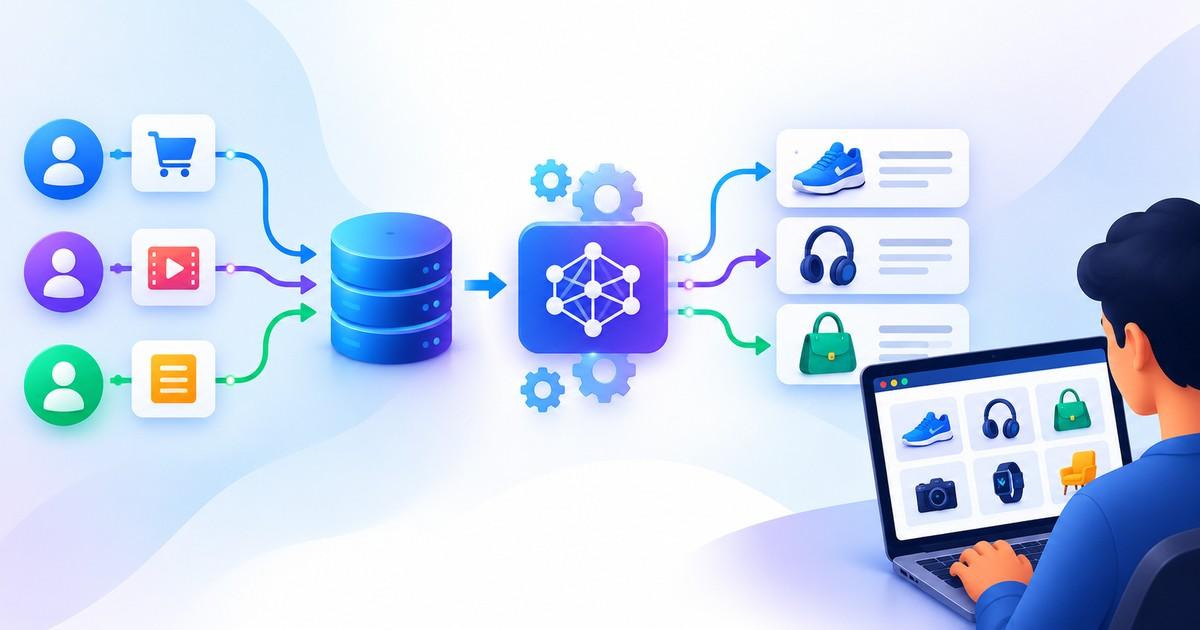
For much of the modern machine-learning era, the cloud has been the default location for inference because centralized infrastructure provides access to powerful processors, scalable storage, managed services, and sophisticated deployment platforms. A device can capture an image, sensor reading, audio signal, or user interaction and transmit it to a cloud endpoint where a machine-learning model generates a prediction before returning the result. This architecture is effective for applications that can tolerate network latency and maintain reliable connectivity, but it becomes increasingly restrictive when decisions must happen immediately or when devices operate in environments where connectivity cannot be assumed.
Edge machine learning changes the location at which inference occurs by placing the model closer to the source of the data. A camera can identify an object locally, a vehicle can interpret sensor information without contacting a remote server, and an industrial controller can detect an abnormal operating condition directly on the machine. The reduction in network round trips can substantially improve responsiveness because the system no longer depends on the time required to transmit data, process a request remotely, and receive the result. This becomes particularly important for applications involving robotics, industrial automation, autonomous systems, interactive devices, and real-time monitoring, where even modest delays can affect how effectively the system responds to changing conditions.
Latency is only one consideration because connectivity itself can become a system dependency. A machine operating inside a factory, a vehicle moving through areas with inconsistent coverage, or a remote monitoring device deployed in an isolated environment may not always have access to a dependable network. Edge inference allows the application to continue making local predictions when connectivity is unavailable, while synchronization with centralized systems can occur when communication becomes possible again. This creates a more resilient architecture in which the device does not need to treat the cloud as a prerequisite for every prediction.
Data Movement Is Becoming a Major Engineering Problem
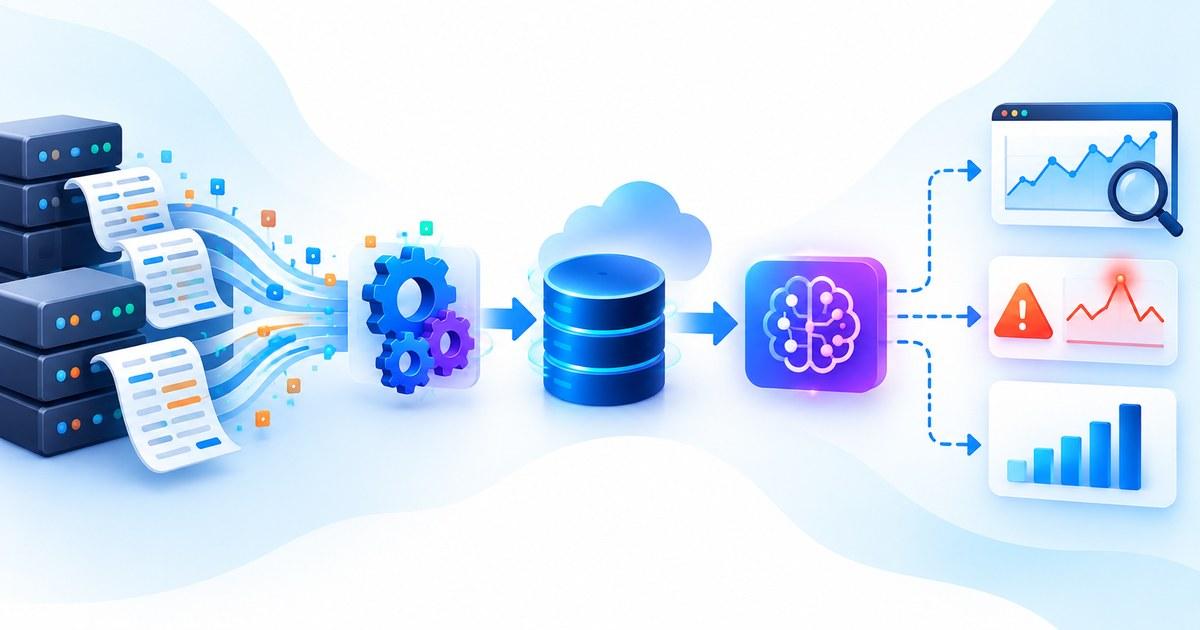
The rapid growth of connected devices has created another reason to move machine learning closer to the edge: the amount of data generated at the source can become too large or too expensive to transmit continuously to centralized infrastructure. Industrial sensors, high-resolution cameras, connected vehicles, smart appliances, and wearable devices can produce enormous streams of information, much of which may have limited value after the relevant event has been detected or summarized. Sending every raw observation to the cloud can increase bandwidth consumption, storage requirements, network dependency, and infrastructure cost without necessarily improving the final application.
Running inference locally allows engineers to filter, transform, summarize, or selectively transmit information rather than treating every observation as cloud-bound data. A vision system can identify relevant objects locally and send only metadata or selected frames for additional analysis. An industrial device can detect an unusual sensor pattern and transmit the event together with a compressed representation of the relevant context. A mobile application can perform language, vision, or personalization tasks locally and synchronize only the information needed by centralized services.
This architectural approach changes the role of the network because the edge device no longer exists purely as a data collection point. It becomes an intelligent computing node capable of deciding which information requires further processing and which information can remain local. This can be particularly valuable for large fleets of devices where even small reductions in transmitted data become significant when multiplied across thousands or millions of endpoints.
The shift also reinforces a broader engineering principle discussed in “When Machine Learning Should Not Be Used: A Guide to Better Technical Decisions,” because the decision to run inference at the edge should be based on the actual requirements of the application rather than on the assumption that machine learning or cloud infrastructure is automatically the appropriate solution. Some workloads may benefit from local intelligence, while others may still be better served by centralized processing when the model is too large, the data volume is manageable, or centralized computation provides clear operational advantages.
Edge Intelligence Can Improve Privacy and Local Decision-Making
Privacy is another important factor influencing the movement of machine learning toward edge environments because local inference can reduce the need to send sensitive raw data to centralized infrastructure. Applications involving audio, video, personal behavior, biometric signals, or operational information may have legitimate reasons to minimize how much raw data leaves the device on which it is generated. Processing information locally does not automatically guarantee privacy, but it can reduce the amount of sensitive information that must cross organizational or network boundaries.
This becomes particularly useful when the system only needs a decision rather than permanent access to the underlying raw input. A device may need to determine whether an event occurred, whether an object is present, or whether a particular operating condition requires attention, without continuously transmitting the complete source data. Local inference can therefore support architectures in which the raw information remains close to its point of generation while only the derived result, event, or aggregated telemetry is shared with centralized services.
Edge intelligence can also make applications more responsive because the model can operate directly alongside the software that consumes its prediction. Instead of treating inference as a remote API dependency, engineers can integrate the model into the device's local decision loop. This is important for systems where the prediction and the action must happen within a tightly constrained time window. The architecture becomes closer to a control system in which sensing, inference, and response form a continuous local pipeline.
Key Takeaway
Edge machine learning is gaining importance because centralized inference can introduce latency, connectivity dependence, data-transfer costs, and unnecessary movement of sensitive information. By placing appropriate models closer to where data is generated, engineers can create faster and more resilient systems while using the cloud for centralized training, analytics, coordination, and computationally intensive workloads, resulting in distributed AI architectures that assign intelligence to the location where it creates the most practical value.
Section 2: How Engineers Make Machine Learning Models Small Enough for Edge Devices
Model Compression Reduces Memory and Compute Requirements
Deploying a machine-learning model on an edge device requires engineers to work within hardware constraints that are very different from those of cloud infrastructure. A data-center accelerator can provide substantial memory bandwidth, parallel computation, and power, while a camera, mobile processor, microcontroller, industrial gateway, or embedded device may have strict limits on memory, storage, compute capacity, and energy consumption. A model that performs well in a cloud environment can therefore become impractical when deployed locally, even when its predictive accuracy is appropriate for the application. Edge machine learning begins by treating resource consumption as part of the model-design problem rather than as an optimization considered only after training.
Model compression provides several techniques for reducing these requirements while preserving the capability that matters for the target task. Knowledge distillation allows a smaller student model to learn from a larger teacher model, transferring useful behavior without requiring the edge device to reproduce the full computational structure of the original system. Pruning can remove parameters, channels, or connections that contribute relatively little to the final prediction, reducing unnecessary computation and potentially lowering memory requirements. Architectural simplification can also produce models designed from the beginning around efficient execution rather than compressing a large model after training.
The engineering objective is not simply to create the smallest possible model because excessive compression can remove information that is important for difficult or rare cases. A model may maintain average accuracy while becoming significantly less reliable under unusual lighting, noisy sensor readings, changing environmental conditions, or uncommon input patterns. Engineers therefore need to define the acceptable trade-off among model size, accuracy, latency, robustness, and energy consumption, with the deployment environment determining which constraint receives the greatest weight.
Quantization and Pruning Improve Edge Inference Efficiency
Quantization is one of the most widely used techniques for making machine-learning models more practical on constrained hardware because it reduces the numerical precision used to represent model parameters and, in some cases, intermediate activations. Instead of relying exclusively on high-precision representations, an edge model may use lower-precision formats that require less memory and can execute more efficiently on hardware designed to accelerate them. Reducing numerical precision can also decrease memory movement, which matters because data transfer between memory and compute units can become a significant part of inference cost.
The challenge is maintaining sufficient predictive quality after quantization. Some models tolerate reduced precision well, while others are more sensitive because particular layers or operations depend heavily on numerical accuracy. Engineers can therefore evaluate different quantization strategies and identify where precision can be reduced safely. Calibration, representative datasets, and hardware-aware testing become important because a model that looks acceptable in an abstract software environment may behave differently on the actual processor used in production.
Pruning provides another mechanism for reducing unnecessary computation by eliminating parameters or structures that contribute relatively little to the target task. Structured pruning can be particularly useful for edge deployment because removing complete channels or blocks can translate more directly into real hardware savings than creating sparse patterns that the target processor cannot exploit efficiently. The practical benefit therefore depends not only on how much theoretical model complexity is removed but also on whether the underlying hardware and inference runtime can take advantage of the resulting structure.
TinyML and Specialized Models Expand Where Machine Learning Can Run
The most constrained edge environments extend beyond smartphones and industrial gateways into microcontrollers and other devices with extremely limited memory and compute resources. TinyML represents an approach to deploying machine-learning capabilities within these environments by using highly compact models and carefully optimized inference runtimes. The objective is not to reproduce the capabilities of large cloud models but to perform focused tasks locally, such as detecting a sound pattern, recognizing a gesture, identifying a sensor anomaly, or triggering an event from a continuous signal.
This changes how engineers define model requirements because the model may need to perform one narrow function extremely efficiently rather than provide broad general-purpose intelligence. A small classifier that detects a particular machine state can be more valuable than a significantly larger model that offers capabilities the device does not need. Task specialization therefore becomes an important source of efficiency, allowing engineers to remove unnecessary capacity while preserving the predictive behavior relevant to the application.
Resource-aware design becomes especially important in these environments because memory, compute, energy, and latency are interconnected constraints rather than separate optimization targets. As discussed in “Resource-Aware Machine Learning: Designing Models Around Compute and Energy Limits,” efficient AI requires engineers to design around the resources actually available instead of assuming that additional computation is always affordable. Edge systems make this principle unavoidable because hardware limitations are visible immediately in model size, response time, energy usage, and device reliability.
Key Takeaway
Making machine learning practical at the edge requires engineers to optimize the entire model-runtime-hardware combination rather than simply reducing parameter count. Compression, pruning, quantization, hardware-aware architecture design, and TinyML techniques can significantly reduce memory, compute, latency, and energy requirements, but successful deployment depends on preserving the capabilities that matter for the target application and validating performance on the actual device where inference will run.
Section 3: Designing Reliable Edge ML Systems in Production
Edge Inference Requires More Than Deploying a Model
Deploying a compact machine-learning model to an edge device is only the beginning of building a reliable edge ML system because production environments introduce constraints that do not appear during model development or cloud-based experimentation. Engineers must account for hardware variability, limited memory, intermittent connectivity, software dependencies, local storage, power consumption, device failures, and the possibility that thousands or millions of distributed devices may need to run the same model simultaneously. A model can perform well in a controlled benchmark while the overall application fails because the device cannot sustain the required workload, an upstream sensor produces corrupted values, or the inference runtime behaves differently under real operating conditions.
Edge systems therefore need a carefully defined execution pipeline in which data collection, preprocessing, inference, post-processing, and application logic operate reliably within the constraints of the device. Engineers must understand how much memory the model consumes during initialization and inference, how long each prediction takes under realistic workloads, and how performance changes when the device is simultaneously handling other software processes. Thermal limitations and battery consumption can become important as well, particularly when inference occurs continuously rather than only in response to specific events.
This makes observability essential because engineers need visibility into both model behavior and device health. Metrics such as inference latency, memory usage, processor utilization, temperature, battery consumption, input quality, and prediction frequency can reveal problems that conventional model metrics cannot identify. The model may maintain its expected accuracy while the device experiences increasing latency or thermal throttling, creating a production failure that exists outside the traditional machine-learning evaluation framework.
Engineers Must Design for Offline Operation and Intermittent Connectivity
One of the strongest advantages of edge machine learning is that inference can continue when the device cannot communicate with centralized infrastructure, but this capability creates additional architectural requirements because the application must be able to operate independently for meaningful periods of time. Engineers need to determine which functionality must remain available offline, which information can be temporarily stored locally, and which operations can safely wait until the network becomes available again. These decisions are especially important for vehicles, industrial systems, remote monitoring devices, and field equipment where connectivity may be intermittent rather than permanently unavailable.
Local buffering becomes an important component of this design because the device may need to retain selected events, predictions, or telemetry until synchronization becomes possible. Engineers must define what information is worth preserving, how long it should remain locally, and what happens when available storage is exhausted. Synchronization also needs to handle duplicate transmissions, out-of-order events, interrupted transfers, and version differences between the edge device and centralized services.
Graceful degradation provides another important reliability mechanism because an intelligent device should not necessarily fail completely when its primary model, sensor, network, or supporting service becomes unavailable. A system can be designed to fall back to simpler models, deterministic rules, cached results, reduced functionality, or safe operating states depending on the application.
Monitoring and Model Updates Become Distributed-System Problems
Cloud-based machine-learning systems can often centralize model monitoring and deployment because the infrastructure is controlled within a relatively small number of environments, whereas edge ML systems distribute the model across potentially thousands or millions of devices with different hardware conditions and software states. Updating those devices therefore becomes a distributed-systems problem involving version control, rollout strategies, compatibility, rollback mechanisms, and network reliability. Engineers need to know which model version is running on each device and whether an update was successfully installed before considering the deployment complete.
Staged deployment can reduce risk by introducing new models to a subset of devices before expanding the rollout. Engineers can compare performance between versions, detect unexpected resource consumption, and stop distribution when a problem emerges. Rollback mechanisms are particularly important because a faulty model can affect physical processes or large numbers of users simultaneously when deployed across a fleet.
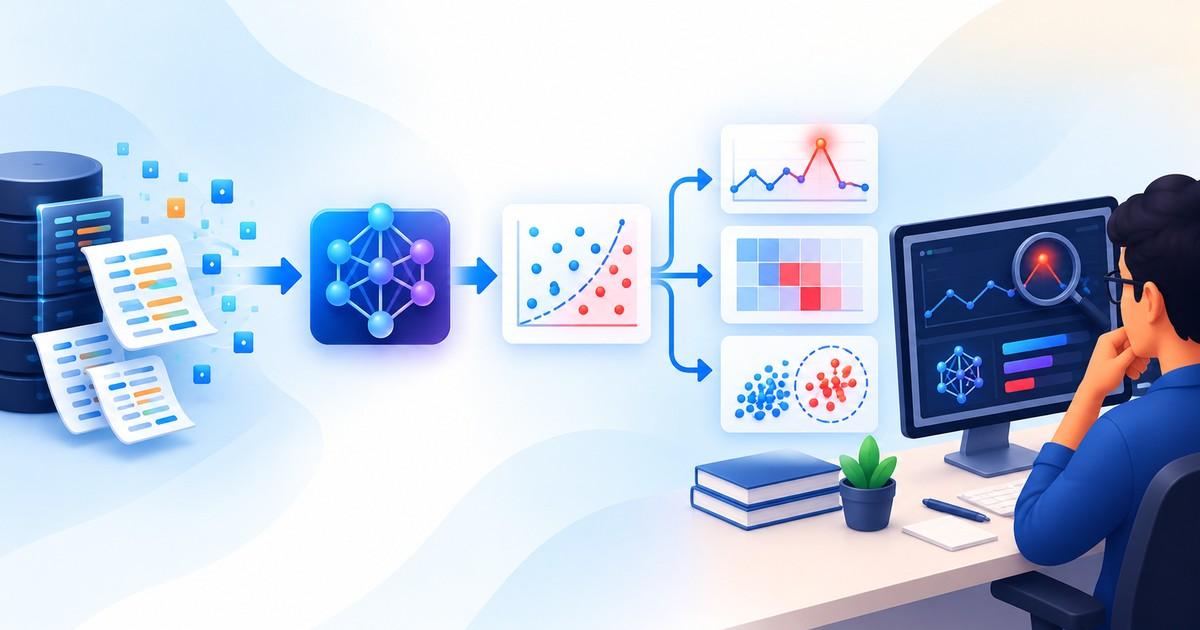
Monitoring must also consider model drift because edge devices may encounter environments that differ substantially from those represented during training. A camera deployed outdoors may experience seasonal lighting changes, an industrial sensor may behave differently after equipment wear, and a mobile application may observe changing user behavior. In many edge scenarios, obtaining immediate ground-truth labels is difficult, which makes indirect monitoring especially important. Engineers can track changes in input distributions, confidence patterns, event frequencies, sensor quality, and downstream outcomes to identify signs that the model may no longer be operating within familiar conditions.
These challenges connect directly with “Machine Learning Under Distribution Shift: What Happens When the World Changes,” because edge devices often operate in dynamic physical environments where data distributions can evolve continuously. A successful deployment therefore requires mechanisms for identifying meaningful changes and determining whether they require recalibration, retraining, replacement, or simply continued observation.
Key Takeaway
Reliable edge ML requires engineers to treat model inference as part of a distributed production system rather than as an isolated deployment task. Offline operation, local buffering, graceful degradation, staged model updates, drift monitoring, security controls, hardware diversity, and fleet management all become essential because edge intelligence must continue operating under changing connectivity, device, and environmental conditions.
Section 4: Why Edge Machine Learning Could Reshape the Future of AI Applications
Intelligence Will Move Closer to the Point of Action
The long-term importance of edge machine learning comes from a fundamental architectural shift in where intelligence is executed. Instead of treating devices as passive sources of information that continuously send data to centralized infrastructure, engineers can increasingly turn those devices into active computational systems capable of interpreting their environments and responding locally. This matters because many real-world applications are naturally organized around a physical point of action, where a sensor detects an event, a model interprets it, and software or machinery must respond within a limited amount of time. When inference is performed close to that point, the system can reduce communication delays and make decisions without depending on a remote service for every individual prediction.
This architectural pattern can support increasingly sophisticated applications across robotics, transportation, industrial automation, consumer electronics, healthcare devices, and smart infrastructure. A vehicle can analyze sensor information locally while using centralized systems for broader fleet analytics, an industrial machine can recognize abnormal operating conditions before transmitting a summarized event, and a mobile device can process selected speech or vision workloads without continuously sending raw data to a cloud endpoint. The resulting systems are not necessarily independent from centralized infrastructure, but they become capable of maintaining a useful level of intelligence even when network conditions, bandwidth, or response-time requirements make remote inference impractical.
The broader software architecture is therefore moving toward systems in which computation is distributed according to where information is generated and where decisions need to happen.
Edge AI Will Create New Hybrid Cloud-Edge Architectures
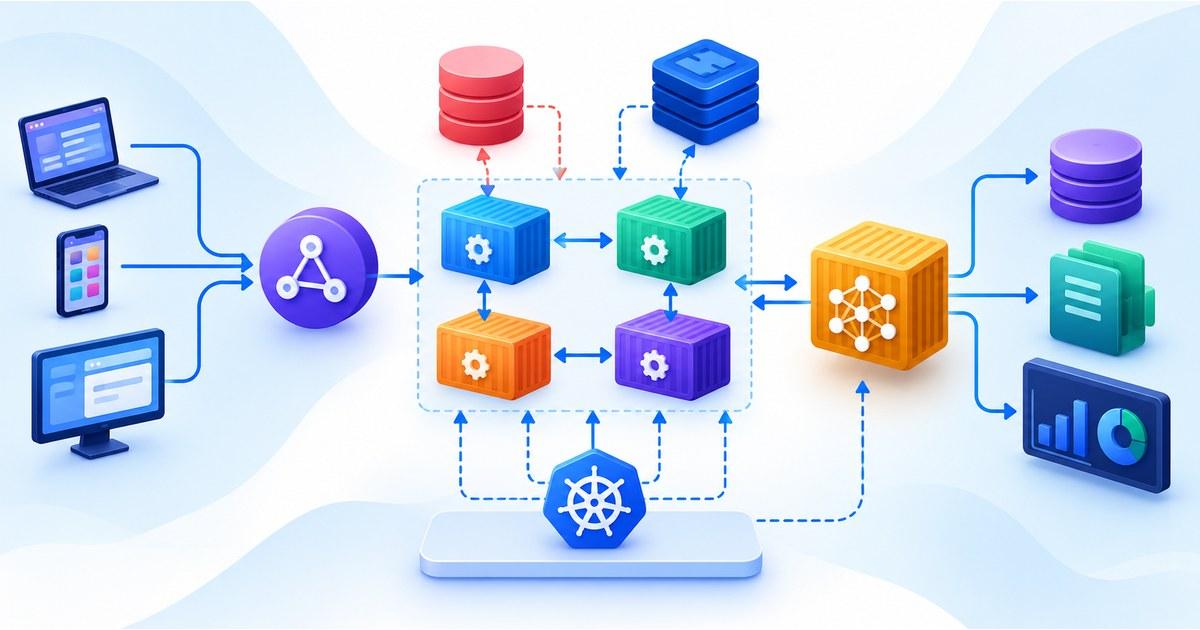
The future of edge machine learning is unlikely to involve moving every model entirely away from the cloud because centralized infrastructure remains extremely valuable for tasks that require large amounts of computation, long historical context, global analytics, or centralized coordination. A more practical architecture distributes responsibilities between edge devices and cloud systems, allowing each environment to perform the workloads for which it is technically and economically appropriate. The edge can execute frequent, latency-sensitive inference, while centralized infrastructure can perform model training, large-scale experimentation, data aggregation, fleet management, and computationally expensive analysis.
This division creates an increasingly important distinction between where a model is trained and where it is executed. A model can be trained or fine-tuned using centralized infrastructure and then compressed or optimized for deployment across a fleet of edge devices. Those devices can generate predictions locally while transmitting selected telemetry, difficult cases, model-health information, or aggregated statistics back to central systems. Engineers can then use that information to evaluate performance and develop new model versions without requiring every raw observation to leave the edge environment.
Such architectures can also support hierarchical inference in which a lightweight model handles routine inputs locally and a more capable cloud model is invoked only when additional reasoning is required. A device might recognize that an input is familiar and process it locally, while ambiguous or high-complexity cases are forwarded for deeper analysis. This approach can reduce average cloud usage while preserving access to more powerful models when the application actually needs them. It also reinforces the principles of selective computation described in “Sparse Machine Learning: Why Doing Less Computation Can Produce Better AI Systems,” because efficient AI increasingly depends on allocating computational resources according to the complexity and value of each individual workload rather than processing every input identically.
Specialized Hardware Will Expand the Edge ML Ecosystem
The growth of edge machine learning will also be shaped by specialized hardware because general-purpose processors alone cannot efficiently support every emerging inference workload under strict power, latency, and thermal constraints. Mobile neural processing units, embedded GPUs, digital signal processors, application-specific accelerators, and increasingly specialized inference chips can execute particular classes of machine-learning operations more efficiently than conventional CPUs. This gives engineers new opportunities to design models specifically around the computational characteristics of the hardware on which they will run.
Hardware specialization can influence model architecture from the beginning of the development process. Engineers may choose particular operators because they map efficiently to an accelerator, design models around supported numerical formats, reduce memory movement, or structure inference to take advantage of available parallelism. The result is a tighter relationship among model architecture, compiler or runtime behavior, and physical hardware, making edge ML optimization increasingly similar to systems engineering rather than conventional model tuning alone.
This ecosystem can also expand the range of applications that become economically viable at the edge. As hardware becomes more capable while remaining comparatively efficient, devices can support richer computer vision, speech, sensor fusion, anomaly detection, and predictive workloads without requiring constant access to large centralized processors. The improvement does not need to come exclusively from more powerful hardware because better compilers, optimized runtimes, quantization, pruning, model distillation, and efficient architectures can collectively increase the amount of useful intelligence produced by a constrained device.
The Future of AI Will Depend on Distributed Intelligence
The most important long-term consequence of edge machine learning may be the emergence of AI systems in which intelligence is distributed across many layers rather than concentrated in a single centralized model. A complete application may contain compact models on devices, intermediate intelligence on gateways, larger models in regional infrastructure, and highly capable foundation models in centralized data centers. Each layer can perform a different function, allowing the overall system to balance latency, privacy, cost, resilience, and computational capability.
This distributed architecture changes the role of the software engineer because building AI systems increasingly requires reasoning about placement rather than only prediction quality. Engineers must determine which computations should occur locally, which information should cross network boundaries, how models should be updated, how devices should behave during connectivity failures, and how the entire system should remain observable as thousands of independent inference environments evolve at different rates. The resulting challenge is closer to distributed-systems engineering than to conventional model deployment because model state, data, hardware, and software versions all become part of an interconnected operational environment.
The most effective systems will therefore treat edge and cloud infrastructure as complementary rather than competing destinations for machine learning. Local inference can provide immediate responses and reduce unnecessary data transfer, while centralized infrastructure can deliver broader context, stronger models, large-scale learning, and coordinated management. This creates an architecture in which intelligence exists wherever it is most useful, with software dynamically determining where computation should happen according to the requirements of the workload.
Key Takeaway
Edge machine learning could reshape AI applications by turning devices into intelligent computing nodes while creating hybrid architectures that distribute inference, training, analytics, and decision-making across edge and cloud environments. The combination of specialized hardware, efficient model architectures, selective computation, and distributed system design will allow engineers to place intelligence closer to the point of action without abandoning the scalability and computational power of centralized infrastructure, making distributed intelligence a defining architectural pattern for future AI systems.
Conclusion
Edge machine learning represents a significant change in how engineers think about deploying intelligence because it moves inference closer to the environment where data is generated and decisions need to occur. For years, centralized cloud infrastructure provided the simplest way to run increasingly sophisticated machine-learning models, allowing applications to rely on powerful processors, scalable storage, and centralized model-serving systems. That architecture remains highly valuable, but the growth of connected devices, real-time applications, privacy-sensitive workloads, and bandwidth-intensive data streams is creating situations in which sending every observation to the cloud is no longer the most efficient architectural choice.
The strongest case for edge ML is not that the cloud is becoming obsolete, but that intelligence can now be distributed according to the requirements of the application. A camera can identify relevant events locally, a vehicle can interpret sensor information without waiting for a remote response, and an industrial controller can detect abnormal conditions directly at the machine. Local inference reduces dependence on network connectivity and can improve responsiveness because the prediction happens near the source of the data and the point where action is required.
This architectural shift also changes the economics of data movement. Many edge devices generate continuous streams of information, but only a small proportion of that information may ultimately require centralized processing. Sending every raw frame, sensor reading, audio sample, or telemetry record to the cloud can increase network usage, storage requirements, and infrastructure costs. Edge inference allows devices to interpret information locally and transmit only events, summaries, selected samples, or difficult cases that require deeper analysis.
Privacy creates another important reason for local intelligence. When applications process personal, environmental, or operational information, keeping more of that data on the device can reduce the amount of sensitive information that needs to cross network boundaries. Local processing does not automatically eliminate privacy or security risks, but it can support architectures in which raw information remains close to its point of generation while centralized services receive only the outputs necessary for broader analytics or coordination.
Frequently Asked Questions
1. What is edge machine learning?
Edge machine learning is the deployment of machine-learning inference directly on or near the device where data is generated, allowing predictions to be produced locally instead of sending every request to centralized cloud infrastructure.
2. How is edge ML different from cloud ML?
Cloud ML generally performs inference in centralized infrastructure, while edge ML performs inference on devices, embedded systems, gateways, or other infrastructure close to the data source. Many real-world systems combine both approaches rather than using only one.
3. Why do companies use machine learning at the edge?
Edge ML can reduce inference latency, limit network dependency, reduce data-transfer costs, support offline operation, and keep certain sensitive information closer to where it is generated. These benefits can be particularly useful for real-time and resource-constrained applications.
4. Does edge machine learning eliminate the need for the cloud?
No. Cloud infrastructure remains useful for model training, large-scale analytics, data storage, fleet management, experimentation, and computationally intensive workloads. A hybrid architecture can assign latency-sensitive or privacy-sensitive inference to the edge while keeping heavy centralized workloads in the cloud.
5. What types of devices can run edge machine learning?
Edge models can run on smartphones, cameras, industrial gateways, vehicles, embedded computers, specialized accelerators, wearables, IoT devices, and microcontrollers, with the appropriate model size and runtime depending on the available hardware resources.
6. Why do edge devices need smaller models?
Edge devices generally have more constrained memory, compute, storage, energy, and thermal capacity than centralized servers. Models therefore need to be optimized so that inference fits within the actual resource limits of the target device.
7. What techniques are used to optimize models for edge deployment?
Common approaches include quantization, pruning, knowledge distillation, architectural simplification, operator optimization, efficient preprocessing, and hardware-aware model design. The appropriate combination depends on the device and the requirements of the application.
8. What is TinyML?
TinyML refers to machine-learning systems designed to operate on extremely resource-constrained devices such as microcontrollers. These systems typically perform narrowly defined tasks using highly compact models and efficient inference runtimes.
9. Does edge ML improve privacy?
Edge ML can reduce the amount of raw data that must be transmitted to centralized infrastructure, which can support privacy-oriented architectures. However, local processing does not automatically guarantee privacy because device security, model protection, data retention, access controls, and communication security still need to be addressed.
10. Can edge ML work without an internet connection?
Yes, provided the required model, data-processing pipeline, and application logic are deployed locally. Systems can continue to perform inference offline and synchronize selected results or telemetry with centralized infrastructure when connectivity becomes available again.
11. How are edge ML models updated?
Models can be updated remotely through controlled deployment mechanisms that distribute new versions to edge devices. Production systems often use staged rollouts, version tracking, compatibility checks, monitoring, and rollback capabilities to reduce the risk of large-scale deployment failures.
12. How do engineers monitor edge ML systems?
Monitoring can include inference latency, memory consumption, processor utilization, temperature, battery usage, input-data quality, prediction distributions, confidence behavior, model versions, connectivity status, and downstream outcomes. These signals help engineers detect both model degradation and device-level failures.
13. What is the biggest challenge in managing edge ML at scale?
Fleet management becomes difficult because large numbers of devices can have different hardware, software versions, connectivity conditions, and environmental conditions. Engineers need centralized visibility into device health, model versions, updates, failures, and performance while allowing local inference to remain operational.
14. Can edge ML models drift over time?
Yes. The data distribution encountered by an edge device can change because of environmental conditions, user behavior, equipment aging, seasonal effects, or changes in operating processes. Engineers therefore need monitoring and controlled adaptation mechanisms to identify when a deployed model no longer represents its operating environment effectively.
15. What is the future of edge machine learning?
The likely direction is a distributed AI architecture in which compact models handle low-latency inference at the edge, gateways provide intermediate processing, and centralized cloud systems perform large-scale training, analytics, coordination, and complex reasoning. This combination can allow intelligence to operate close to the point of action while still benefiting from the scale and computational capacity of centralized infrastructure.