Section 1: Understanding Distribution Shift
Machine learning models are trained using historical data, but production systems operate in an environment that continues to change. Customers modify their behavior, products evolve, competitors react, markets shift, regulations change, and new types of events appear. As a result, the data a model encounters after deployment may no longer resemble the data it learned from during training.
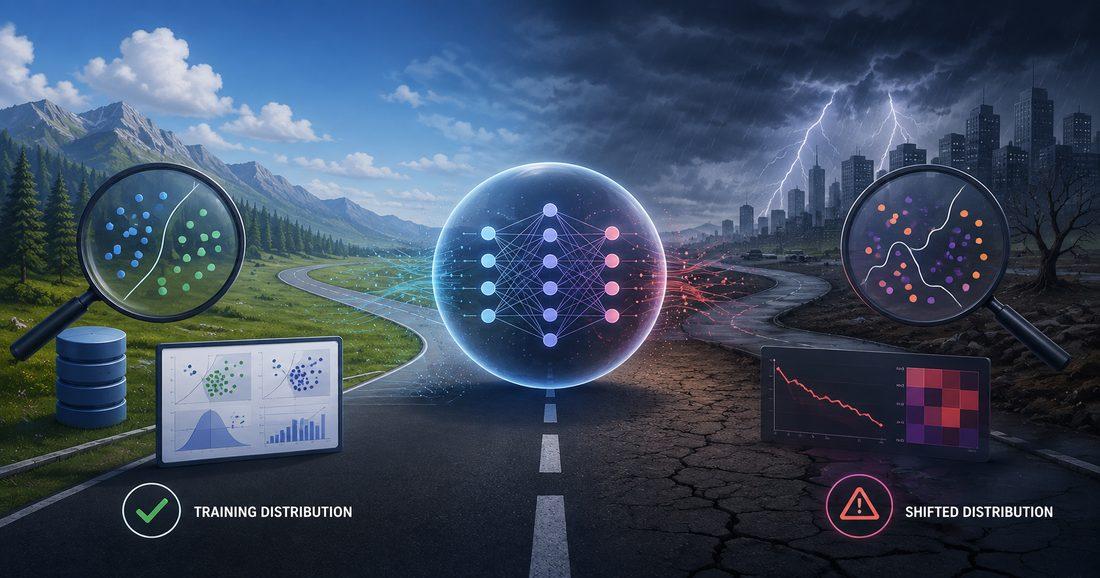
This phenomenon is known as distribution shift. It is one of the most fundamental challenges in production machine learning because it challenges a core assumption behind many ML systems: that the future will be sufficiently similar to the past.
A model can therefore continue running successfully from an infrastructure perspective while becoming increasingly unreliable from a predictive perspective. The software may be healthy, the API may return predictions, and latency may remain within its service-level objectives, yet the model's business performance can decline because the underlying environment has changed.
What Distribution Shift Means
Every machine learning model is trained against a particular training distribution. This distribution describes the characteristics of the data used during model development, including the inputs, relationships between variables, and target outcomes.
After deployment, the model encounters a production distribution generated by the real-world environment. Ideally, the production data resembles the training distribution closely enough that the learned relationships continue to generalize.
Distribution shift occurs when these distributions differ in a meaningful way.
The difference can be minor and harmless. Customer activity may fluctuate naturally from one week to another without affecting model performance. Alternatively, the change can be substantial enough to invalidate assumptions learned during training.
This creates a distinction between static and changing environments. In a static environment, the patterns learned from historical data may remain relatively stable. In a changing environment, the relationship between inputs and outcomes can evolve continuously.
Most real-world business systems operate somewhere between these extremes. Some characteristics remain stable while others change gradually or abruptly. Production ML engineering therefore requires teams to understand not only what the model learned but also how the underlying environment behaves over time.
Major Types of Distribution Shift
Distribution shift can take several forms, and distinguishing them helps engineers determine how to respond.
Covariate shift occurs when the distribution of input features changes. For example, a customer model may have been trained on one distribution of customer demographics, usage patterns, and transaction behavior, but the production population may later contain substantially different characteristics.
The input data has changed, but the relationship between inputs and the target may remain relatively stable.
Label shift occurs when the distribution of target outcomes changes. Imagine a classification system trained when 5% of cases belonged to a particular class. If that class later represents 15% of production cases, the target distribution has changed even if the relationship between features and the target remains similar.
Concept drift is more fundamental. It occurs when the relationship between inputs and the outcome changes. A fraud detection model may learn that certain transaction patterns are associated with fraud, but attackers can change their behavior. The same input patterns may no longer carry the same meaning.
Domain shift describes broader changes between the environment represented in training data and the environment encountered during deployment. A model trained on data from one geographic region, customer population, device type, or operating environment may perform differently when applied to another domain.
These categories can overlap. A real-world system may experience multiple types of shift simultaneously, making diagnosis more difficult.
Why Models Fail When the World Changes
Distribution shift creates several mechanisms through which models can fail.
One is exposure to out-of-distribution inputs. A model may encounter combinations of features that were rare or completely absent during training. Even if each individual feature appears familiar, the joint combination may be unusual.
Another issue is broken assumptions. The model has learned statistical relationships from historical data. If the mechanisms that generated those relationships change, the model may continue applying outdated patterns.
Feature changes can also create unexpected problems. An upstream system may change how a variable is measured, a sensor may be replaced, or a business process may alter how information is recorded. The data may still pass technical validation while meaning something different from what the model encountered during training.
The most serious problem is changing input-output relationships. When the underlying world changes, the features that were once predictive may no longer be predictive in the same way.
This is why simply monitoring whether the software is functioning is insufficient. A production ML system must monitor whether the assumptions underlying its predictions remain valid.
Examples From Real-World Systems
Changes in customer behavior provide a common example. A recommendation model trained on historical shopping patterns may become less effective when consumer preferences, product categories, or purchasing habits change.
Fraud patterns can change even more quickly. Fraudsters actively adapt to detection systems, creating an environment where the very patterns a model learned can become less effective once deployed.
In healthcare, models may encounter new patient populations, treatment protocols, measurement devices, or clinical practices. A model trained in one environment may not generalize automatically to another.
Demand forecasting is particularly sensitive to economic conditions, seasonality, pricing changes, supply constraints, and unexpected events. Historical patterns may provide useful information while still becoming less reliable after a major market change.
Cybersecurity presents another extreme case. Attackers continuously develop new techniques, meaning the distribution of malicious behavior can evolve faster than a conventional retraining schedule.
These examples demonstrate why distribution shift is not an exceptional edge case. It is a structural property of many production environments.
The appropriate response is therefore not to assume that the original model will remain valid indefinitely. Teams must continuously evaluate whether the data and relationships observed in production remain consistent with the assumptions under which the model was developed.
This is closely related to the decision of when to retrain a production model. Distribution change can provide an important signal, but a change in input data does not automatically mean retraining is necessary. Teams need to determine whether the shift has actually affected model performance or business outcomes. "How ML Teams Decide When to Retrain a Model" explores this broader model-lifecycle decision and the signals teams use to determine when retraining is justified.
Key Takeaway
Distribution shift occurs when the environment represented by production data differs meaningfully from the environment used to train a model. Covariate shift changes input distributions, label shift changes target distributions, concept drift changes input-output relationships, and domain shift reflects broader environmental differences. Because production environments continuously evolve, robust ML systems must detect these changes and determine whether they affect model reliability rather than assuming that historical performance will remain valid indefinitely.
Section 2: Detecting and Measuring Distribution Shift
Identifying distribution shift is only the first challenge. The more difficult question is determining whether a change in production data is meaningful enough to affect model performance. A production system can experience statistical variation every day without requiring intervention. Conversely, a relatively subtle change can create a major degradation if it affects a feature or relationship that the model relies on heavily.
ML teams therefore need a combination of input monitoring, performance analysis, out-of-distribution detection, and business-aware thresholds. The objective is not to eliminate every difference between training and production data, but to distinguish harmless variation from changes that threaten model reliability.
Monitoring Input Distributions
The first layer of detection focuses on the characteristics of production inputs. Teams can continuously monitor feature statistics such as means, variances, ranges, frequencies, missing-value rates, and category distributions.
Suppose a model was trained on customer transaction data where the average transaction amount and distribution of transaction categories were relatively stable. If the production system suddenly observes a major increase in transaction values or a new category that was absent during training, the change may indicate distribution shift.
Teams can perform distribution comparisons between historical training data and recent production windows. Different statistical methods can quantify how closely the two distributions resemble each other. However, statistical significance alone does not determine whether a shift is operationally important. With extremely large datasets, even tiny differences can become statistically significant.
Monitoring should also track missingness. A sudden increase in missing values may indicate an upstream data problem rather than genuine environmental change. Similarly, unexpected changes in categorical values can reveal changes in data collection or business processes.
Feature monitoring should include data freshness as well. A model may receive technically valid information that is simply too old to remain useful. A recommendation model using stale customer activity, for example, may appear statistically normal while its predictions become less relevant.
The goal is therefore to establish a continuously observed picture of the production data and compare it against the conditions under which the model was developed.
Detecting Concept Drift
Input monitoring cannot detect every important change. A model may encounter input values that remain statistically familiar while the relationship between those inputs and the outcome changes. This is the problem of concept drift.
Concept drift is more difficult to detect because teams generally need reliable outcome labels to determine whether the model's predictions remain accurate.
Performance degradation is therefore one of the strongest indicators. If precision, recall, forecasting error, ranking quality, calibration, or another task-specific metric deteriorates consistently, the team has evidence that something in the prediction environment may have changed.
Error analysis can provide additional insight. Suppose overall accuracy declines only slightly, but errors increase dramatically for a particular customer segment or product category. That pattern may indicate a localized concept change that aggregate metrics would hide.
Delayed labels create a practical challenge. In many systems, the true outcome becomes known only weeks or months after the prediction. Teams may therefore need to combine immediate input monitoring with delayed performance measurement.
Outcome monitoring can also reveal changes at the business level. A model may maintain relatively stable predictive metrics while downstream outcomes such as conversion, retention, or fraud losses deteriorate. This can indicate that the relationship between model predictions and business actions has changed.
Concept drift should therefore be treated as a diagnosis problem rather than a simple threshold alert. Engineers need to determine whether observed performance changes originate from the model, the data, the business process, or external environmental factors.
Out-of-Distribution Detection
Distribution shift can sometimes introduce observations that are substantially different from anything encountered during training. These are referred to as out-of-distribution (OOD) inputs.
An OOD example may not contain a single obviously invalid feature. Instead, its combination of values may be unfamiliar. A model trained on common customer behavior, for example, may encounter an entirely new usage pattern that falls outside the training distribution.
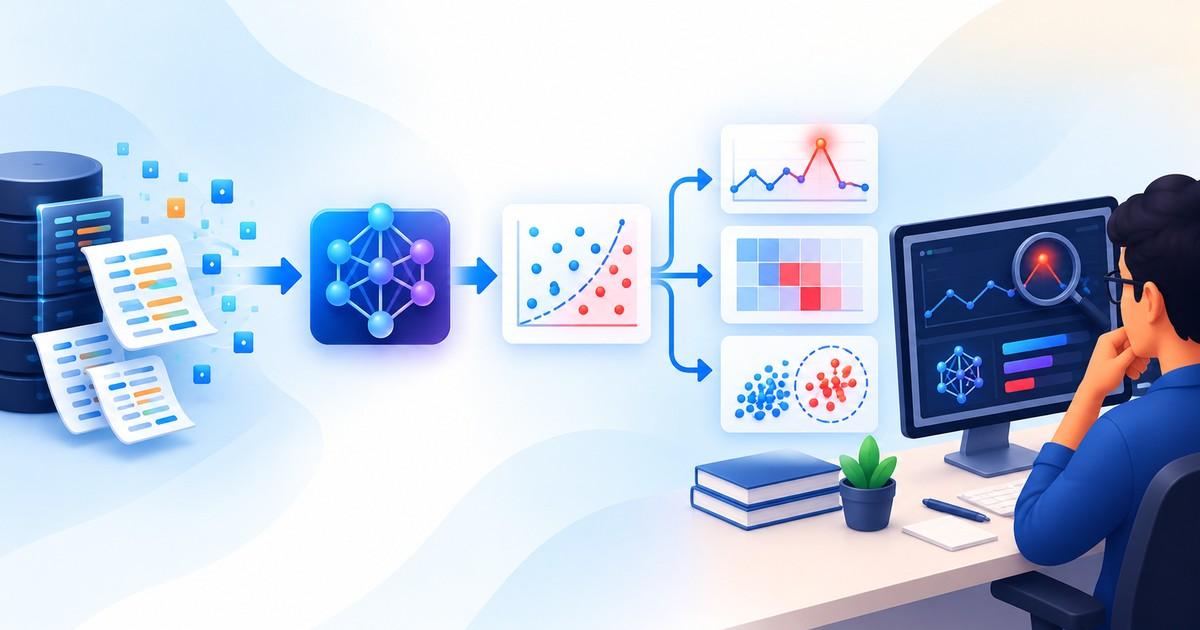
Novel-example detection can identify observations that differ significantly from known training patterns. Depending on the model and application, teams can analyze distance in feature space, embedding space, or other representations.
Confidence estimates can provide another signal. A model that is uncertain about a prediction may be encountering a situation unlike those represented in training. However, raw confidence should not automatically be interpreted as a reliable probability of correctness.
Embedding-based detection can be particularly useful for complex inputs such as text, images, and high-dimensional data. Production representations can be compared with historical training representations to identify emerging clusters or regions of the input space that were previously rare.
Out-of-distribution detection can support safer production behavior. Instead of forcing a model to make a confident prediction in an unfamiliar situation, the system can route the case to a fallback model, apply a deterministic rule, request human review, or defer the decision.
This is particularly important in high-impact applications where unexpected inputs may carry significant consequences.
Separating Harmless Change From Dangerous Shift
Not every statistical change requires action. Real-world systems naturally experience fluctuations, so ML teams need drift thresholds that reflect both statistical evidence and business impact.
A useful approach is to classify changes according to risk. A small shift in a low-impact feature may require observation but no immediate action. A similar shift in a feature that strongly influences a high-stakes decision may warrant immediate investigation.
Teams should also examine whether the change affects business performance. A statistically significant distribution difference that has no measurable impact on model performance may not justify retraining.
Conversely, a relatively small distribution shift can be dangerous if it affects a critical portion of the input space.
This creates a practical distinction between statistical drift and operational drift. Statistical drift describes what changed in the data; operational drift describes whether that change creates a meaningful problem for the model or business.
Effective monitoring systems therefore combine feature statistics, performance metrics, OOD signals, and business KPIs rather than relying on a single drift score.
The process can be summarized as:
Detect change → Measure magnitude → Assess model impact → Assess business risk → Decide whether intervention is required.
This prevents teams from treating every difference between training and production data as an emergency while still allowing them to respond quickly when meaningful degradation occurs.
The broader production challenge is closely related to turning ML prototypes into reliable operating systems. "From Proof of Concept to Production: Why Most ML Projects Never Make the Leap" examines why production ML requires monitoring, data validation, operational controls, and continuous evaluation rather than treating deployment as the end of development.
Key Takeaway
Detecting distribution shift requires more than comparing two datasets. Teams should monitor feature distributions, data quality, model performance, outcomes, and out-of-distribution inputs while distinguishing statistical change from meaningful business impact. The strongest systems use risk-based thresholds to determine whether a change is harmless variation, an engineering problem, or evidence that the model needs adaptation. The objective is not to eliminate drift, but to detect and respond to the changes that materially threaten model reliability.
Section 3: Building Models That Survive Change
Detecting distribution shift is only useful when an organization can respond effectively. Once an ML team determines that the production environment has changed, the next question is how to build or adapt models so that they remain useful under new conditions.
A robust model does not need to perform perfectly under every imaginable future scenario. That is unrealistic. Instead, the goal is to build systems that generalize across plausible conditions, adapt when important changes occur, and degrade gracefully when they encounter situations they have never seen before.
This requires better training data, appropriate adaptation strategies, feedback loops, and fallback mechanisms.
Robust Training Strategies
The first defense against distribution shift is creating diverse training datasets. If training data represents only a narrow range of customers, environments, time periods, or operating conditions, the model may learn relationships that work well only within that narrow domain.
Adding data from different populations and conditions can improve robustness. For example, a demand forecasting model trained across multiple seasons and market conditions may generalize better than one trained on a short historical period.
Data augmentation can also expose models to plausible variations. In computer vision, images can be transformed through changes in scale, orientation, or lighting. For text and other modalities, controlled transformations can help models become less dependent on superficial patterns.
However, robustness should not be confused with simply adding more data. Training examples must represent conditions that are realistically expected in production. Adding large quantities of irrelevant data may provide little benefit.
Regularization can also improve generalization by discouraging models from relying too heavily on idiosyncratic patterns in training data. Simpler or appropriately constrained models may sometimes be more robust than highly complex architectures, particularly when the available training data does not represent the full production environment.
Another strategy is domain generalization, where models are deliberately trained across multiple environments so they learn patterns that remain stable across domains. This can be useful when teams know that production conditions will vary across regions, devices, customer groups, or operational settings.
The central objective is to make the model less dependent on accidental characteristics of the training environment.
Adaptation and Retraining
Even robust models cannot remain accurate indefinitely in a changing environment. At some point, adaptation and retraining may become necessary.
The simplest strategy is periodic retraining using newer data. This allows the model to incorporate recent behavior and gradually adapt to changes in the production environment.
However, incremental learning can be useful when conditions evolve continuously. Instead of retraining from scratch using the entire historical dataset, models can update using newly observed information. This can reduce computational requirements and allow faster adaptation.
Fine-tuning is another option, particularly for models that already contain useful general representations. A model can be adapted to new customer behavior, domains, or tasks without rebuilding its entire representation from scratch.
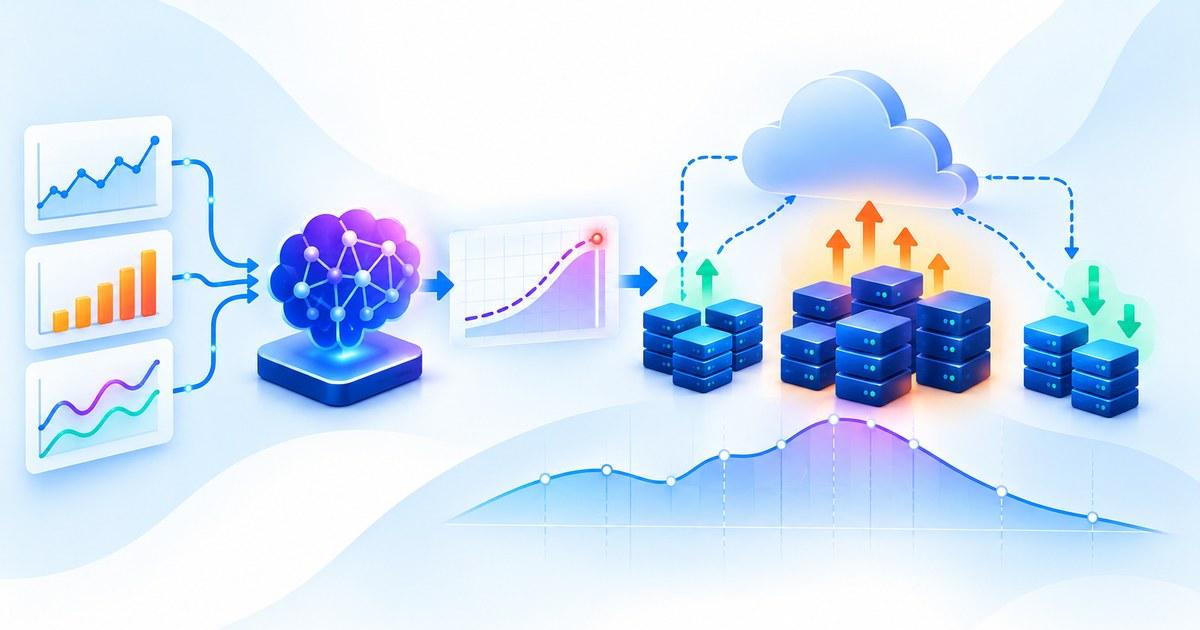
The appropriate adaptation strategy depends on the type and speed of distribution shift. Slow-moving environments may support periodic batch retraining, while rapidly changing environments may require incremental updates or other adaptive approaches.
Teams should also avoid assuming that newer data is automatically better. If recent observations reflect temporary anomalies, poor data quality, or a short-lived business event, retraining exclusively on that data can cause the model to overreact.
Adaptation should therefore be based on validated evidence about how the environment has changed.
Model Ensembles and Fallback Strategies
Sometimes the safest way to handle distribution shift is not to rely on a single model. Model ensembles can provide additional robustness by combining predictions from multiple models trained under different conditions or using different approaches.
For example, a system might combine a general-purpose model with a model specialized for recent data. If their predictions diverge substantially, that disagreement can become a signal that the input is unusual.
A robust baseline can provide another safety mechanism. If the primary ML model becomes unreliable, the system can temporarily fall back to a simpler model or deterministic strategy.
Rules plus ML is particularly useful in operational systems. Explicit business rules can handle known high-risk conditions while ML handles more complex patterns. This provides a predictable fallback when the model encounters unfamiliar situations.
The concept of graceful degradation is critical. A production ML system should not assume that every input can be handled confidently. When a model encounters out-of-distribution data, low confidence, or a detected system anomaly, it may be better to defer the decision, use a fallback approach, or request human review.
This is particularly important in high-impact systems where an incorrect automated decision can be more costly than a slower manual process.
Building models that survive distribution shift is therefore not simply a modeling problem. It is a system-design problem involving data collection, adaptation, monitoring, fallback behavior, and operational controls.
"Machine Learning Under Data Constraints: Building Models When Data Is Limited" provides relevant perspective because robust adaptation often depends on extracting maximum value from limited or newly available data while maintaining reliable generalization.
Key Takeaway
Models can become more resilient to distribution shift through diverse training data, augmentation, regularization, domain generalization, retraining, incremental learning, fine-tuning, feedback loops, ensembles, and fallback strategies. The objective is not to build a model that never encounters change. It is to build an ML system that can recognize when conditions have changed, incorporate reliable new information, and continue operating safely when the environment no longer resembles the original training distribution.
Section 4: Operating ML Systems in a Changing World
Distribution shift is unavoidable in production machine learning. Even a carefully trained and thoroughly evaluated model will eventually encounter conditions that differ from its original training environment. The real engineering challenge is therefore not preventing change but creating systems that can detect change, evaluate its impact, adapt safely, and remain reliable as the environment evolves.
This requires continuous monitoring, controlled model updates, safe deployment practices, and an organizational operating model that treats adaptation as a normal part of ML lifecycle management.
Continuous Model Monitoring
The foundation of an adaptive ML system is continuous monitoring. Once a model enters production, teams need visibility into both the data it receives and the outcomes it generates.
Drift dashboards can track changes in feature distributions, missing values, category frequencies, prediction distributions, and other indicators of environmental change. These signals help engineers identify potential shifts before they become major performance problems.
Performance monitoring provides a second layer. When reliable labels are available, teams can track metrics such as precision, recall, forecasting error, ranking quality, or calibration. For systems where labels are delayed, organizations can monitor leading indicators until definitive outcomes become available.
Alerting should be designed around meaningful thresholds rather than every statistical fluctuation. Excessive alerts can create operational fatigue and cause teams to ignore important signals. A useful alert should indicate that a change is sufficiently large, persistent, or consequential to warrant investigation.
Monitoring should also incorporate business KPIs. A model may maintain stable statistical metrics while its commercial or operational value declines. Changes in conversion, revenue, retention, investigation volume, customer satisfaction, or operational efficiency can reveal problems that purely technical monitoring misses.
The objective is to connect three layers:
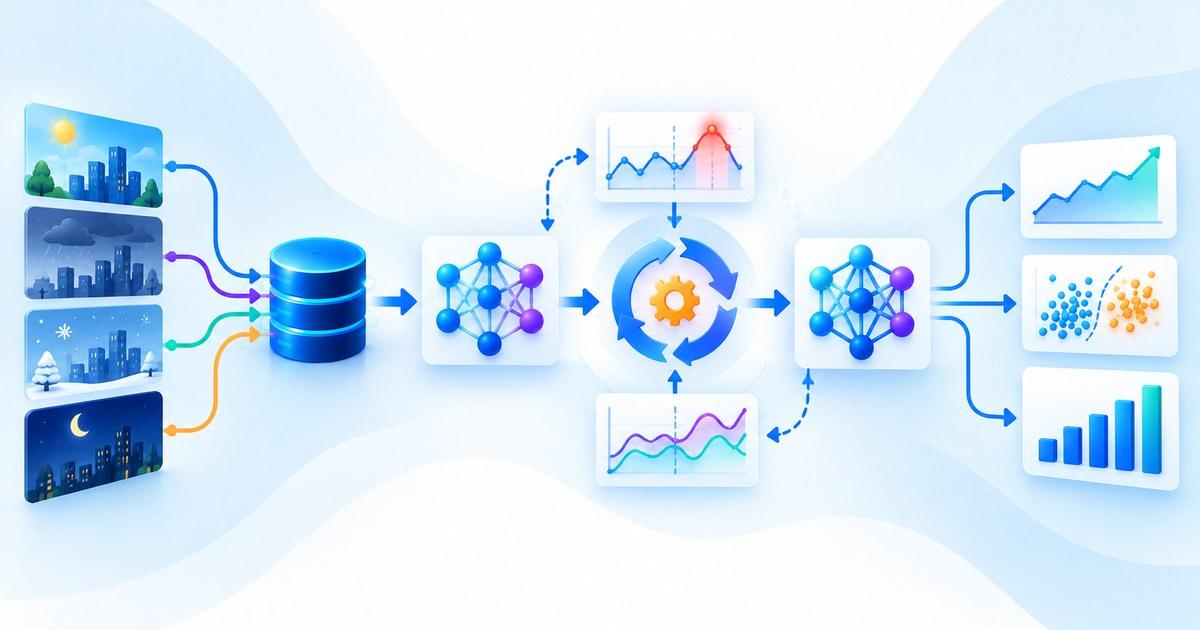
What changed in the data? → What changed in model behavior? → What changed in the business outcome?
This makes distribution-shift monitoring more actionable.
Safe Model Adaptation
Once monitoring indicates that adaptation may be necessary, teams should avoid immediately replacing the production model. A new model must first demonstrate that it performs better under realistic conditions.
The champion-challenger approach is useful here. The current production model remains the champion, while a newly trained or adapted model becomes the challenger. The challenger must satisfy predefined evaluation criteria before it can replace the existing system.
Shadow deployment provides another safeguard. The candidate model receives real production inputs but does not influence live decisions. Teams can compare its predictions with the production model and observe how it behaves under current conditions without exposing users to untested changes.
A canary release goes one step further by allowing a small proportion of real traffic to use the new model. Engineers can monitor performance, latency, error rates, prediction distributions, and business outcomes before expanding deployment.
Rollbacks are essential whenever model adaptation can introduce operational risk. If the new model behaves unexpectedly, the organization should be able to restore the previous version quickly.
This approach is particularly important when distribution shift is sudden. A team may identify a significant environmental change and feel pressure to adapt immediately, but rapid deployment without validation can introduce new errors while attempting to solve existing ones.
Safe adaptation therefore requires balancing speed against evidence.
Building Adaptive ML Organizations
Managing distribution shift at scale requires more than model-monitoring tools. It requires an organizational model built around continuous evaluation and adaptation.
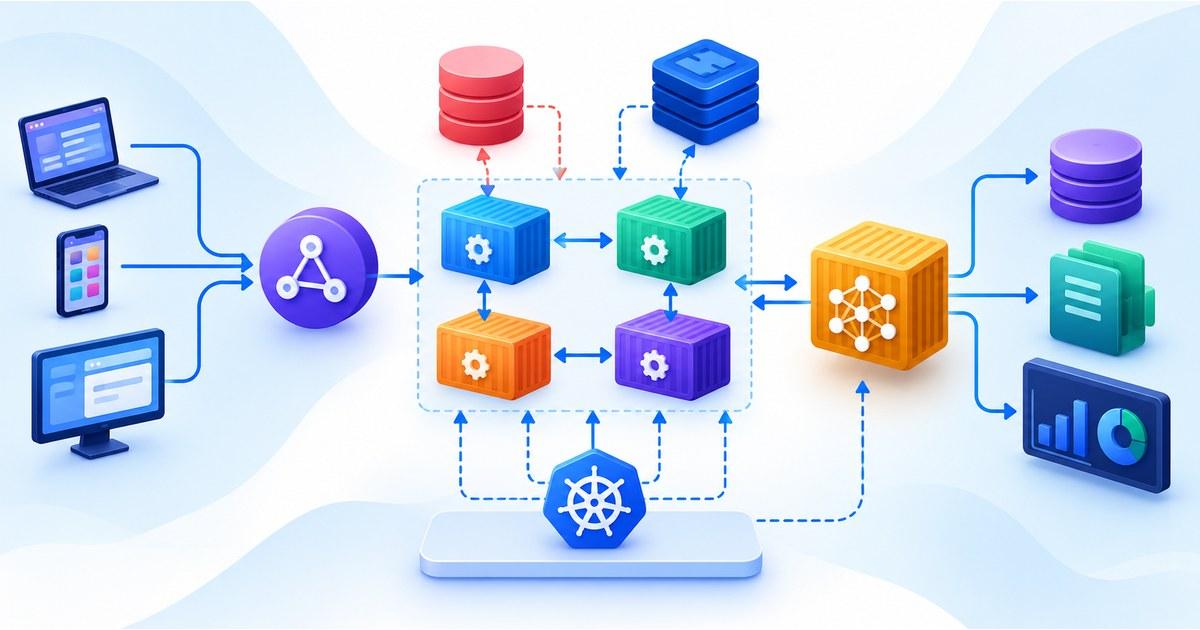
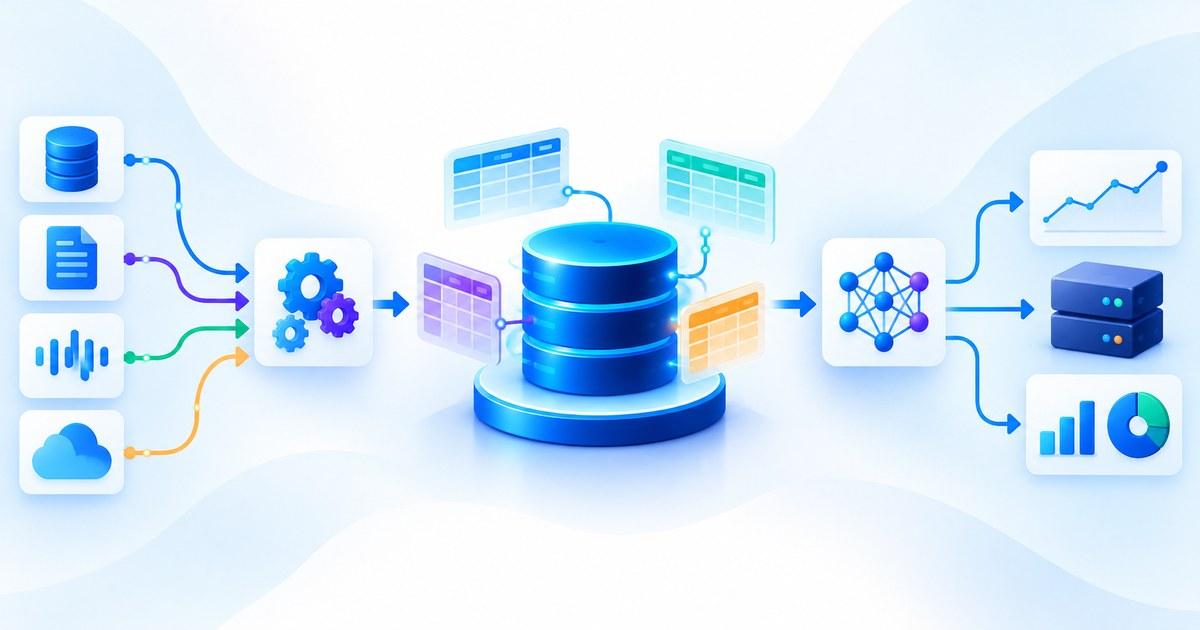
MLOps provides much of the technical foundation. Data pipelines, experiment tracking, model registries, monitoring systems, retraining workflows, deployment automation, and rollback mechanisms should operate as an integrated lifecycle.
Strong data infrastructure is equally important. Teams cannot adapt models quickly if new production data is difficult to access, poorly labeled, or impossible to trace back to its source.
Clear ownership is also essential. Someone must be responsible for investigating drift alerts, evaluating candidate models, approving changes, and determining when a model should be retired or redesigned.
Continuous evaluation should become part of normal ML operations rather than something performed only when a model fails. This allows teams to identify gradual deterioration before it becomes severe.
Governance provides the final layer. Model changes should be documented, versioned, evaluated, and deployed according to risk-appropriate controls. High-stakes models may require stronger approval and audit processes than low-risk applications.
This creates a mature operating cycle:
Monitor → Detect → Diagnose → Adapt → Validate → Deploy → Monitor again
The cycle does not have a permanent endpoint because the underlying environment continues to evolve.
The broader evolution of production AI is moving toward platforms that make this lifecycle increasingly automated and observable. "The Evolution of AI Deployment: From APIs to Intelligent Platforms" explores how AI infrastructure is evolving beyond simple model APIs toward platforms capable of managing deployment, monitoring, and intelligent operations.
Key Takeaway
Operating ML systems in a changing world requires continuous monitoring, safe model adaptation, controlled deployment, and strong organizational ownership. Retraining is only one possible response to distribution shift; some changes require new features, domain adaptation, architectural redesign, or even a different ML problem formulation. The strongest organizations build ML systems around a continuous cycle of detection, diagnosis, adaptation, and validation so that models can evolve safely as the world changes.
Conclusion
Machine learning models are trained on historical representations of the world, but the world does not remain static. Customers change their behavior, markets evolve, products are redesigned, competitors respond, regulations shift, and entirely new situations emerge. Distribution shift is therefore not an unusual edge case in production ML; it is a fundamental property of many real-world systems.
A model can continue operating normally from an infrastructure perspective while becoming progressively less useful from a business perspective. APIs can remain available, latency can remain stable, and predictions can continue to be generated, yet the underlying assumptions supporting those predictions may no longer hold.
The first step in managing distribution shift is understanding what actually changed. Covariate shift changes the distribution of inputs, label shift changes the distribution of outcomes, and concept drift changes the relationship between inputs and outcomes. Broader domain shifts can occur when a model is deployed into an environment substantially different from the one represented in its training data.
These changes require continuous observation. Production ML systems should monitor feature distributions, missing values, data freshness, prediction behavior, model performance, out-of-distribution inputs, and business outcomes. However, not every statistical difference is dangerous. A mature system distinguishes harmless variation from changes that materially affect prediction quality or business value.
This makes risk-based monitoring essential. Statistical significance alone is not enough. A small shift in an unimportant feature may require no action, while a modest change in a critical input can have significant consequences. The goal is therefore to connect data changes to model impact and ultimately to business risk.
Frequently Asked Questions (FAQs)
1. What is distribution shift in machine learning?
Distribution shift occurs when the data or relationships encountered by a production model differ meaningfully from the conditions represented in its training data.
2. Why does distribution shift cause ML models to fail?
Models learn patterns from historical data. When the production environment changes, those learned relationships may no longer accurately represent current conditions, causing predictive performance to decline.
3. What is the difference between data drift and concept drift?
Data drift occurs when the distribution of input data changes. Concept drift occurs when the relationship between the inputs and the target outcome changes.
4. What is covariate shift?
Covariate shift occurs when the distribution of input features changes between training and production while the underlying relationship between inputs and outcomes may remain relatively stable.
5. What is label shift?
Label shift occurs when the distribution of target classes changes between the training and production environments.
6. What is domain shift in machine learning?
Domain shift occurs when a model is applied to an environment that differs meaningfully from the environment represented in its training data, such as a different population, geography, device, or operating condition.
7. How can organizations detect distribution shift?
Organizations can monitor feature distributions, missingness, data freshness, prediction distributions, model performance, out-of-distribution signals, and business outcomes, then compare production behavior with appropriate historical or training baselines.
8. How is distribution shift related to model drift?
Distribution shift describes changes in the data-generating environment. Model drift generally refers to the resulting decline or change in model effectiveness as those environmental conditions evolve.
9. What is out-of-distribution detection?
Out-of-distribution detection identifies inputs that differ substantially from the data patterns represented during model development. It can help systems recognize unfamiliar situations before making potentially unreliable predictions.
10. Should every distribution shift trigger retraining?
No. Some changes are harmless and do not affect model performance. Teams should determine whether the shift materially affects predictions or business outcomes before deciding whether retraining is necessary.
11. How can ML models be made more robust to distribution shift?
Useful approaches include diverse training data, appropriate regularization, data augmentation, domain generalization, continuous feedback, incremental learning, careful retraining, ensembles, and fallback strategies.
12. How does active learning help under distribution shift?
Active learning can prioritize new or uncertain production examples that are especially informative for improving the model. This allows teams to use limited expert-labeling capacity more efficiently as the environment changes.
13. When is retraining not enough to solve distribution shift?
Retraining may be insufficient when the feature set has changed, the business objective has changed, important relationships have fundamentally shifted, the production domain is substantially different, or the original ML formulation is no longer appropriate.
14. How should distribution shift be monitored in production?
Monitoring should combine data drift, model performance, out-of-distribution signals, data quality, and business KPIs. Alerts should be risk-based so that meaningful changes receive attention without overwhelming teams with harmless statistical fluctuations.
15. What is the best strategy for operating ML systems when the world changes?
The strongest strategy is a continuous lifecycle: monitor → detect → diagnose → adapt → validate → deploy → monitor again. Organizations should combine reliable data infrastructure, continuous evaluation, controlled retraining, safe deployment, clear ownership, and governance so models can evolve as the environment changes.