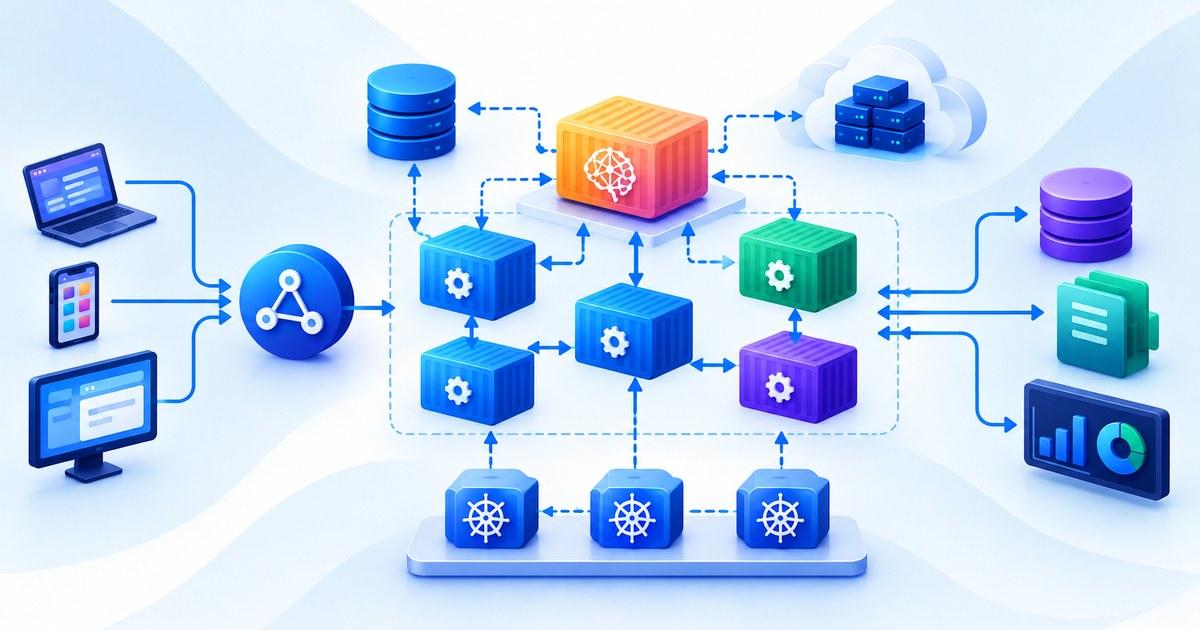

Section 1: Why Streaming Data Changes the Machine-Learning Problem
Batch Machine Learning Assumes Stability That Streaming Systems Cannot Guarantee
Traditional machine-learning pipelines are designed around a stable dataset that can be collected, processed, and used to train a model periodically. Engineers can study historical distributions, engineer features, train a model, validate performance, and deploy it with an expectation that future observations will remain sufficiently similar to the training environment. Streaming systems weaken that assumption because new observations arrive continuously while the process generating those observations can change at the same time.
Consider an online marketplace where a model predicts fraudulent transactions. The system may receive thousands of events every minute, while attackers change their behavior in response to detection mechanisms. A model trained on historical behavior can therefore encounter patterns that were absent during training even when the model itself has not changed. This creates a fundamental distinction between batch and streaming machine learning because batch systems can treat data as a periodically refreshed artifact, while streaming systems must treat data as an evolving process. The model, feature pipeline, monitoring layer, and feedback mechanisms therefore need to be designed around change instead of assuming that fixed retraining intervals will always maintain reliability.
Continuous Data Creates New Challenges Around Latency and Ordering
Streaming machine learning introduces requirements because predictions often need to be generated while events are still arriving. A system may need to score a transaction before approval, detect an abnormal sensor reading within seconds, recommend content in a session, or identify suspicious network behavior before additional events arrive. The system must balance model quality with end-to-end latency across ingestion, feature computation, inference, and delivery.
Event ordering creates another challenge because distributed streams do not always arrive in the order in which events occurred. A model that depends on temporal context can therefore receive an inconsistent sequence unless the architecture preserves event-time semantics and handles late data explicitly.
Feature freshness becomes part of model quality because a fast inference can still be based on stale information. A recommendation model may score a user without their latest activity, while a fraud model may miss recent transactions associated with an account. Streaming ML therefore requires engineers to reason about event time, processing time, state, freshness, and inference latency as one connected problem rather than treating feature engineering as entirely offline.
Streaming ML Requires Models and Infrastructure to Evolve Together
The defining characteristic of streaming machine learning is that the model and pipeline form a continuously operating loop. Events must be ingested, validated, transformed into fresh features, scored, monitored, and eventually considered as inputs to future training or adaptation. A failure in any part of this chain can influence the reliability of the system because a model cannot compensate for missing observations, stale features, corrupted state, or incorrect temporal ordering.
Online learning becomes especially relevant when the environment changes quickly because models can potentially update incrementally as new observations arrive rather than waiting for batch retraining. The principles discussed in “Online Machine Learning: How Models Learn From Data as It Arrives” illustrate why continuous adaptation can reduce the gap between changing data and model behavior, although temporary anomalies or unrepresentative bursts can destabilize the model.
Engineers therefore need controls around when adaptation occurs, which observations are eligible for learning, and how new versions are evaluated, allowing the system to respond to genuine change without letting every fluctuation redefine normal behavior.
Key Takeaway
Streaming machine learning changes the predictive problem from learning against a stable historical dataset to operating continuously against data that can arrive out of order, shift statistically, and increase suddenly in volume. Reliable systems must therefore combine low-latency inference, temporal integrity, burst management, and disciplined adaptation so that both infrastructure and predictive behavior remain dependable as the environment evolves.
Section 2: How Engineers Detect and Handle Drift in Streaming Machine Learning
Data Drift and Concept Drift Require Different Detection Strategies
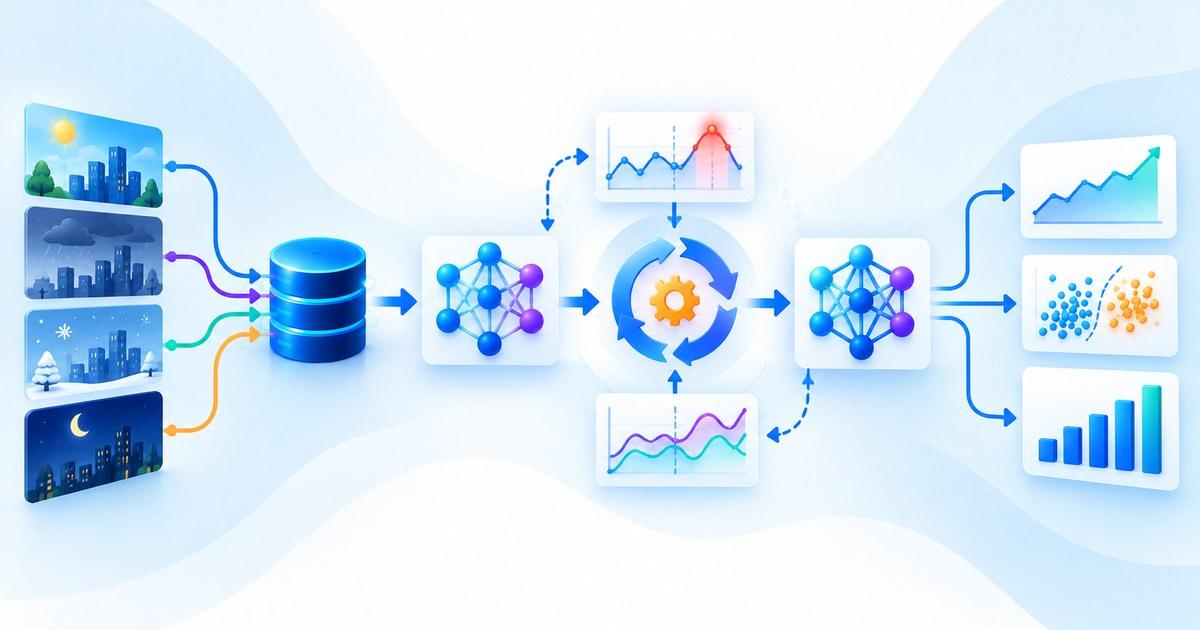
Streaming machine-learning systems face drift because the data-generating environment can change while the model continues producing predictions. Data drift occurs when the statistical properties of incoming features change, such as a shift in transaction size, request frequency, sensor values, or user activity patterns, while concept drift occurs when the relationship between the inputs and the target itself changes. The distinction matters because a model can continue receiving data that looks superficially similar while its predictive assumptions become less reliable, making feature-level monitoring alone insufficient for detecting every meaningful change.
Engineers can monitor incoming streams for changes in distributions, frequencies, ranges, correlations, and categorical composition, while also evaluating prediction behavior and eventual outcomes when labels become available. A sudden shift in one feature may represent a genuine change in the operating environment, a measurement problem, or a temporary event, so the detection system needs enough context to distinguish persistent drift from normal volatility. Concept drift can be harder to identify because the feature distribution may remain relatively stable while the relationship between inputs and outcomes changes, requiring delayed labels, performance tracking, or proxy signals to reveal that the model's assumptions are becoming outdated.
The challenge becomes particularly important when the stream contains multiple populations or operating modes because a global drift measurement can hide localized changes. A fraud model, for example, may perform normally for most transactions while encountering a new attack pattern within a smaller segment, and a predictive maintenance model may remain stable across most machines while a specific equipment family begins producing unfamiliar sensor behavior. Engineers therefore need monitoring strategies that examine aggregate and segment-level behavior without turning every small deviation into a retraining event.
Statistical Monitoring Identifies Changes Before Model Accuracy Collapses
Because ground-truth outcomes in streaming systems may arrive with delays, engineers often need to detect distribution changes before they can directly measure whether prediction accuracy has deteriorated. Statistical monitoring provides a way to compare recent observations with historical or reference distributions using measures that quantify how substantially the stream has changed. The specific technique can vary by data type, but the objective remains the same: identify evidence that the current input environment is becoming materially different from the conditions under which the model was developed.
Monitoring can operate over sliding windows, allowing the system to compare recent data with older observations while continuously updating the reference context. Engineers can track numerical distributions, categorical frequencies, missing-value rates, feature correlations, prediction distributions, and other signals that indicate whether the data pipeline or operating environment is changing. A sudden increase in missing values may indicate an upstream failure rather than genuine drift, while a gradual change in user behavior may represent a legitimate evolution that the model eventually needs to learn.
The important engineering principle is that drift detection should provide evidence rather than automatic conclusions. A statistical change does not necessarily mean the model should be retrained, because some changes are temporary, harmless, or caused by data-quality issues. Teams therefore need policies that combine drift magnitude, persistence, business impact, prediction behavior, and available labels before initiating adaptation. This approach aligns with the broader principles described in “Machine Learning Under Distribution Shift: What Happens When the World Changes,” where changing environments are treated as an ongoing production concern rather than a one-time modeling problem.
Incremental Learning Lets Models Adapt Without Full Retraining
When streaming data changes continuously, retraining an entire model from scratch after every meaningful shift may be computationally expensive and operationally disruptive. Incremental learning provides an alternative by updating the model gradually as new observations become available, allowing the system to incorporate recent information without rebuilding the complete training pipeline each time. This can be particularly useful when the environment evolves faster than conventional batch retraining schedules can accommodate.
The adaptation strategy depends on the model and the application because some systems can update parameters directly, while others may refresh components such as feature statistics, calibration layers, embeddings, or lightweight adaptation modules. Engineers must also decide how much historical information the model should retain because giving equal influence to very old observations can make the system slow to respond, while relying too heavily on recent data can cause temporary events to dominate future predictions.
A common strategy is to use controlled windows or weighted observations so that recent data has greater influence while a broader historical context prevents abrupt changes from destabilizing the model. Validation remains important because incremental updates can gradually degrade performance without a clear failure point. Engineers therefore need checkpoints, rollback mechanisms, shadow evaluation, and version tracking so that adaptation improves the model without making the production system impossible to diagnose.
Key Takeaway
Reliable streaming machine learning requires engineers to detect data and concept drift, monitor changing distributions before labels arrive, adapt models incrementally when appropriate, and distinguish persistent environmental change from temporary events. The strongest systems combine statistical evidence, temporal context, performance monitoring, controlled updates, and rollback mechanisms so that models remain responsive to genuine change without becoming unstable whenever the stream behaves unusually.
Section 3: Designing Streaming ML Systems for Bursts, Scale, and Reliability
Event-Driven Architectures Help ML Systems Process Continuous Data
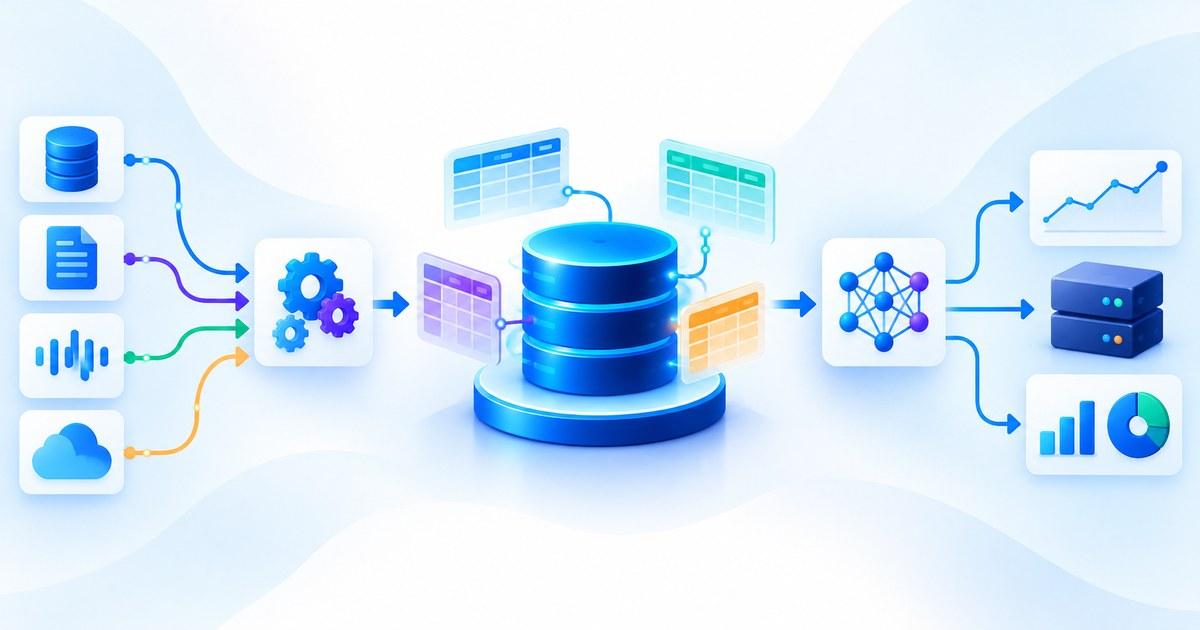
Streaming machine-learning systems need an architecture that can process events continuously rather than waiting for periodic batches to accumulate, making event-driven design an important foundation for real-time prediction. In a typical streaming pipeline, events are generated by applications, sensors, transactions, or user interactions and then routed through messaging infrastructure before reaching feature computation and inference services. This architecture allows the system to process observations as they arrive while decoupling producers from downstream machine-learning components, which becomes essential when event rates fluctuate or individual services need to scale independently.
Partitioning is particularly important because a high-volume stream cannot always be processed efficiently by a single consumer. Events can be divided across partitions according to attributes such as customer, device, geographic region, or another key that preserves the state needed by the model. This allows multiple workers to process the stream concurrently while maintaining ordering where it matters. State management becomes equally important when features depend on recent history because the inference service may need to maintain rolling counts, recent transactions, moving statistics, or other temporal context for each entity.
The architecture must also define how events are handled when processing fails or when downstream services become temporarily unavailable. Replayable event streams can allow engineers to recover from failures and reconstruct feature state, while idempotent processing can prevent duplicate events from producing inconsistent predictions. These design choices make streaming ML closely related to distributed-systems engineering because reliability depends on how data moves through the entire pipeline rather than on the prediction model alone.
Feature Computation Must Keep Pace With Incoming Events
Real-time prediction depends on features that are current at the moment inference occurs, which makes feature computation one of the most difficult parts of streaming ML architecture. Batch systems can calculate complex aggregates over large historical datasets before training or prediction, while streaming systems must maintain those statistics continuously as new events arrive. A fraud model may need the number of transactions associated with an account over the previous few minutes, while a recommendation model may depend on the user's most recent interactions, and an industrial model may require rolling sensor statistics computed over a recent time window.
Maintaining these features requires stateful stream processing because the system must remember relevant information without repeatedly scanning the entire historical dataset. Windowing strategies can define fixed, sliding, or session-based periods over which events are aggregated, allowing the system to calculate features that reflect current behavior. The choice of window can affect model quality significantly because a feature that is too short may miss meaningful context, while a feature that is too long may become slow to update or less representative of the current state.
Consistency between training and serving is also critical because a streaming feature pipeline can unintentionally create training-serving skew if the offline implementation calculates features differently from the online system. Engineers therefore need shared definitions, clear timestamp semantics, validation, and reproducible transformations so that the model sees comparable representations during development and production. This requirement connects directly with “The Rise of Data Contracts: Bringing Software Engineering Discipline to ML Data,” because well-defined contracts can specify freshness, schema, timing, completeness, and acceptable ranges for streaming features before those values reach a production model.
Backpressure and Load Management Prevent Streaming Pipelines From Collapsing
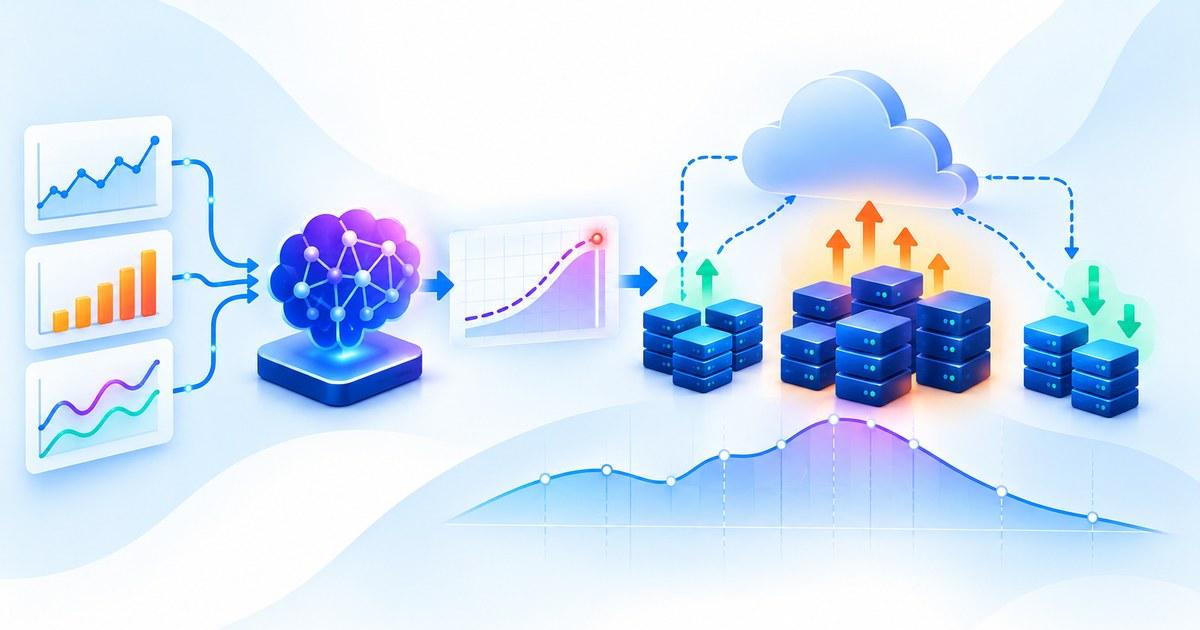
Streaming systems must be designed for bursts because incoming event rates can change dramatically within short periods, creating situations in which producers generate data faster than downstream components can process it. A system that performs well under average traffic may become unstable when a sudden spike fills queues, exhausts memory, overloads feature stores, or increases inference latency beyond acceptable limits. Backpressure provides a mechanism for preventing this collapse by allowing downstream components to communicate their processing limits and encouraging the broader pipeline to regulate the rate at which work is accepted.
Scaling strategies can complement backpressure by adding processing capacity when workload increases, but simple autoscaling is not always enough because model inference, feature computation, and storage systems can scale at different rates. A sudden increase in events may overwhelm a feature service before the inference layer reaches its own capacity, creating a bottleneck upstream of the model. Engineers therefore need to monitor queue depth, processing latency, throughput, resource utilization, and dropped or delayed events across the entire pipeline rather than optimizing only the inference service.
Graceful degradation can provide another level of resilience when demand exceeds available capacity. A system may temporarily reduce feature complexity, prioritize high-value events, use a smaller model, serve cached predictions, or process lower-priority events asynchronously depending on the application's requirements. Such mechanisms prevent temporary overload from becoming a complete outage, while preserving the ability to recover when the event rate returns to normal.
The distinction between data loss and delayed processing is also important because some workloads require every event to be processed while others can tolerate bounded staleness. Engineers should therefore define explicit service-level objectives for event freshness, inference latency, and processing completeness rather than assuming that every streaming application requires identical guarantees.
Key Takeaway
Reliable streaming ML requires an event-driven architecture, continuously updated feature computation, explicit backpressure and load-management strategies, and end-to-end monitoring that connects infrastructure health with model behavior. The goal is not merely to produce predictions quickly, but to ensure that those predictions remain based on fresh, correctly ordered data and continue to arrive reliably even when event rates, system load, and operating conditions change unexpectedly.
Section 4: The Future of Adaptive Machine Learning on Streaming Data
Continuous Learning Will Become a Core Production Capability
As software systems generate increasingly large volumes of real-time data, machine-learning models will need to become more responsive to changing environments rather than depending entirely on fixed training and deployment cycles. Continuous learning provides a potential foundation for this transition by allowing models or selected components of the ML pipeline to incorporate recent information without requiring a complete retraining process each time the environment changes. This approach can be especially valuable for applications in which user behavior, transaction patterns, sensor conditions, or operational workloads evolve faster than conventional model-refresh schedules can accommodate.
Continuous learning does not necessarily mean updating model parameters after every incoming event because unrestricted updates can make a system unstable and allow temporary noise to influence long-term behavior. A more practical architecture can separate real-time prediction from controlled adaptation, allowing new observations to accumulate in evaluation windows while monitoring determines whether the evidence is strong enough to justify a model update. Engineers can then compare candidate versions against the currently deployed model, test them using recent and historical data, and promote changes only when the expected improvement satisfies defined reliability and performance requirements.
This approach creates a more sophisticated production lifecycle in which data ingestion, monitoring, experimentation, model validation, deployment, and rollback become closely connected.
Streaming ML Will Combine Prediction With Real-Time Decision-Making
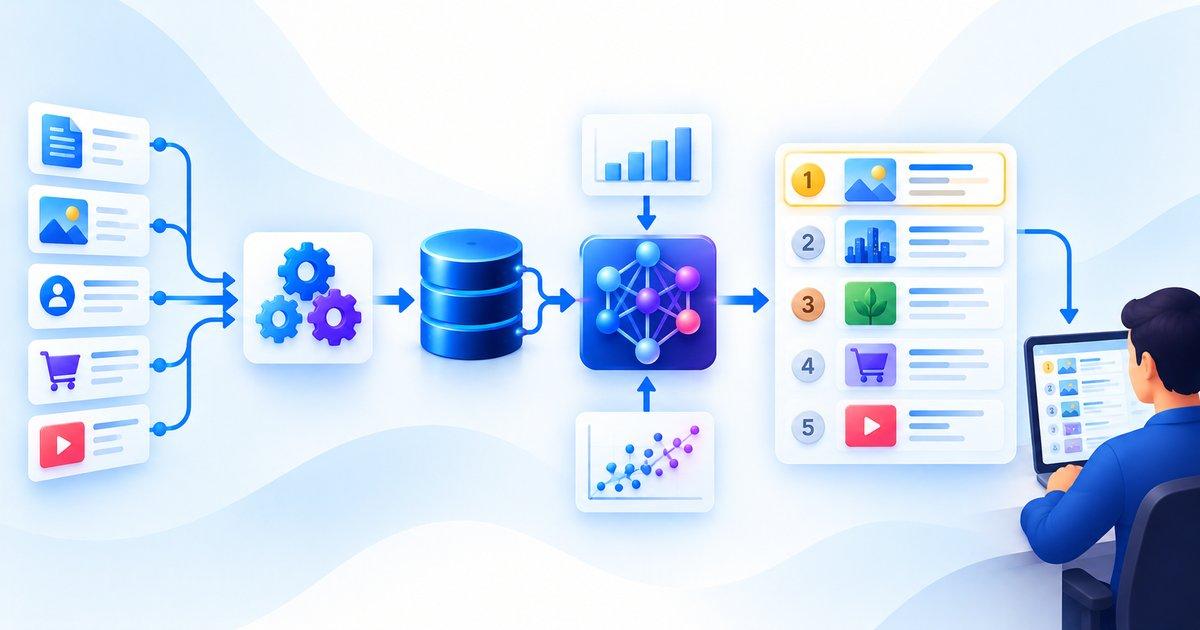
The value of streaming machine learning increasingly extends beyond generating predictions because many real-time applications need those predictions to trigger decisions while the relevant context is still current. A fraud system may need to approve or reject a transaction immediately, a recommendation system may need to select content during an active user session, and an industrial monitoring system may need to determine whether equipment should continue operating based on the latest sensor information. In each case, prediction is part of a larger decision pipeline in which timing can be as important as predictive accuracy.
This creates additional requirements for streaming architectures because a useful prediction may become less valuable if the decision arrives too late. Engineers therefore need to optimize the entire path from event arrival to action, including ingestion, feature computation, model inference, business rules, downstream execution, and feedback. The resulting system may combine machine-learning predictions with deterministic constraints so that the model provides a probability or score while business logic determines whether the system should actually act.
Streaming decision systems can also use context that exists only briefly, making temporal state a critical part of the architecture. A user may generate a sequence of events that collectively indicates intent, while an isolated event may be ambiguous. A machine may display a sensor pattern that becomes meaningful only when considered alongside observations from the previous several minutes. Streaming ML can preserve that context and update predictions continuously as new evidence arrives, allowing decisions to respond to the current state rather than relying exclusively on static historical representations.
The distinction between prediction and action becomes increasingly important as systems become more autonomous because a model can be statistically accurate while still producing undesirable business outcomes if the decision layer ignores uncertainty, constraints, or downstream consequences. Streaming architectures therefore need to connect predictions with decision policies deliberately, ensuring that fast inference contributes to reliable real-time behavior rather than simply producing more frequent model outputs.
Models Will Become More Adaptive to Local and Temporary Context
One future direction for streaming machine learning is greater personalization and localized adaptation, where models respond not only to global changes but also to differences among individual users, devices, regions, assets, or operating environments. A single global model can be effective when behavior is relatively homogeneous, but streaming data often reveals that different entities evolve at different rates. An industrial machine may develop characteristics that distinguish it from other machines of the same type, while a user may exhibit interaction patterns that differ substantially from the broader population.
Localized adaptation can allow the model to preserve general knowledge while responding to entity-specific behavior. Engineers can maintain shared model parameters while updating smaller components, recent state representations, or calibration layers based on local observations. This can reduce the risk of creating completely separate models for every entity while still allowing predictions to respond to meaningful local variation.
Temporary context also matters because many streaming environments contain short-lived states that should influence predictions without permanently changing the underlying model. A major event can alter traffic behavior for several hours, a promotional campaign can temporarily change purchasing patterns, or a system incident can create unusual telemetry until recovery. Streaming models can incorporate these temporary conditions through contextual features, adaptive baselines, or stateful representations without necessarily treating the event as evidence that the long-term data-generating process has changed permanently.
This distinction becomes important because adaptive systems need to avoid overreacting to transient conditions. The architecture must determine whether a recent pattern represents a stable new regime, a temporary contextual state, or simply noise. Strong monitoring, time-aware evaluation, and controlled adaptation can allow the system to benefit from recent information without continuously rewriting its understanding of normal behavior.
Reliable Streaming Intelligence Will Require Stronger Feedback Controls
As streaming models become more adaptive, the relationship between predictions, actions, and future data will become increasingly important because decisions made by the system can directly influence the observations used for subsequent learning. A recommendation engine can change what users see, a fraud model can change attacker behavior, and a dynamic pricing model can influence future demand. This creates feedback loops in which the model is no longer observing an independent environment but is participating in the process that generates new data.
These feedback loops can create both positive and negative effects. A successful prediction may improve system performance and generate cleaner future data, while an incorrect intervention can amplify an existing error or create conditions that did not exist in the original training data. Streaming ML systems therefore need explicit mechanisms for recording decisions, interventions, overrides, and outcomes so that future learning processes can distinguish naturally occurring patterns from model-induced behavior.
The challenge becomes even greater when adaptation is automated because a model can otherwise learn from its own consequences without adequate controls. Engineers need safeguards such as delayed learning for high-impact outcomes, human review for sensitive adaptations, shadow evaluation of new models, and rollback capabilities when a change produces unexpected behavior. The broader principles in “The Challenge of Feedback Loops in Production Machine Learning” become increasingly important as the distance between prediction and action shrinks and models participate more directly in operational decision-making.
The future of streaming intelligence will therefore depend on balancing responsiveness with stability. Models need to adapt quickly enough to remain useful when the environment changes, but slowly enough to avoid being destabilized by temporary anomalies, corrupted data, adversarial behavior, or their own interventions. Achieving that balance requires a combination of online learning, statistical monitoring, stateful architectures, controlled deployment, and strong observability, creating adaptive systems that can learn continuously without losing predictable operational behavior.
Key Takeaway
The future of streaming machine learning will center on controlled continuous learning, real-time decision-making, localized adaptation, and stronger feedback mechanisms that allow models to respond to changing environments without becoming unstable. The most effective systems will not update blindly whenever new data arrives, but will combine fresh information with monitoring, contextual state, validation, and governance so that adaptation remains responsive, measurable, and reliable in continuously changing production environments.
Conclusion
Machine learning for streaming data represents a fundamental change in how predictive systems are designed because the model is no longer operating against a relatively stable dataset that can be periodically refreshed. Instead, the system receives a continuous flow of observations while the environment generating those observations can simultaneously change, accelerate, or temporarily behave in unexpected ways. This creates a machine-learning problem in which prediction quality depends not only on the model architecture but also on the ability of the surrounding system to preserve temporal context, process events reliably, detect drift, absorb bursts, and adapt without becoming unstable.
Traditional batch machine learning remains valuable for many applications, particularly when data changes gradually and predictions can tolerate periodic updates. Streaming systems introduce a different set of requirements because events arrive continuously and the most recent information may be disproportionately important. A fraud model, recommendation system, industrial monitoring model, or real-time risk engine can lose predictive value when the environment changes faster than the model is updated. The resulting challenge is not simply to make inference faster, but to create an architecture capable of remaining useful while its input distribution evolves.
Drift becomes one of the central concerns.
Data drift occurs when the distribution of incoming features changes, while concept drift occurs when the relationship between features and outcomes changes. These two forms of change can occur independently, and a model may encounter one without immediately exhibiting obvious prediction errors. This makes streaming ML monitoring more sophisticated than checking a conventional accuracy metric after each batch. Engineers need to observe distributions, prediction behavior, feature freshness, segment-level performance, and eventual outcomes while accounting for delayed labels and temporary changes.
Statistical monitoring can provide early evidence that the operating environment is shifting, but a detected distribution change should not automatically trigger model retraining. A sudden change may come from a temporary event, an upstream data-quality problem, a scheduled operational activity, or a genuine long-term shift in behavior. The engineering challenge is therefore to distinguish meaningful persistent change from short-lived variation.
Frequently Asked Questions
1. What is machine learning for streaming data?
Machine learning for streaming data refers to systems that process continuously arriving events and generate predictions, classifications, or decisions while the data is still being produced. Unlike conventional batch ML, these systems must account for changing distributions, event timing, feature freshness, and continuously changing workloads.
2. How is streaming machine learning different from batch machine learning?
Batch ML generally trains and evaluates models using collected datasets and updates them periodically, while streaming ML operates continuously against incoming events. Streaming systems therefore need mechanisms for real-time ingestion, state management, drift detection, burst handling, and potentially incremental model adaptation.
3. What is concept drift?
Concept drift occurs when the relationship between input variables and the target outcome changes over time. A model may continue receiving similar-looking inputs while the behavior it is trying to predict has changed, causing predictive performance to deteriorate without an obvious feature-distribution shift.
4. What is data drift?
Data drift occurs when the statistical distribution of input data changes over time. Changes in transaction volumes, user behavior, sensor measurements, traffic patterns, or other feature distributions can indicate data drift, although the change does not automatically mean that the model must be retrained.
5. Why are bursts difficult for streaming ML systems?
Bursts can cause event volumes to increase dramatically in a short period, overwhelming message queues, feature services, inference infrastructure, storage systems, or downstream applications. A system designed around average traffic may therefore become unstable during short periods of unusually high demand.
6. What is online learning?
Online learning is a machine-learning approach in which a model or part of a model can incorporate new observations incrementally rather than requiring complete retraining on the entire historical dataset. It can help models respond more quickly to evolving environments when used with appropriate safeguards.
7. Does online learning mean a model updates after every event?
Not necessarily. Production systems may accumulate observations into windows, evaluate drift, apply update thresholds, or use controlled adaptation schedules. Updating after every event can allow noise, temporary events, or corrupted observations to destabilize the model.
8. How do engineers detect drift in streaming systems?
Engineers can monitor changing feature distributions, missing-value rates, prediction distributions, correlations, segment-level behavior, and eventually observed model outcomes. Sliding windows and statistical comparison methods can provide signals that the current environment differs materially from the reference environment.
9. What is backpressure in a streaming ML system?
Backpressure is a mechanism that prevents downstream components from being overwhelmed when incoming events arrive faster than they can be processed. It allows the system to regulate processing rates, buffer work, or apply controlled load-management strategies rather than allowing queues and resources to grow without limits.
10. Why is feature freshness important in streaming machine learning?
Real-time predictions often depend on recent events, such as recent transactions, user activity, device measurements, or operational statistics. A model can execute quickly while still producing a poor prediction if the features it receives are stale, delayed, incomplete, or incorrectly synchronized with the current event.
11. How do streaming systems handle events that arrive out of order?
Streaming architectures can use event-time semantics, timestamps, watermarks, buffering, and state-management strategies to account for delayed or out-of-order observations. The appropriate approach depends on how much lateness the application can tolerate and whether exact event ordering is essential for prediction quality.
12. How do engineers make streaming ML systems reliable during traffic spikes?
Common approaches include partitioning, buffering, autoscaling, backpressure, workload prioritization, resource isolation, and graceful degradation. The architecture should also define how the system behaves when capacity is exceeded, including whether events are delayed, dropped, sampled, or processed using a simpler prediction path.
13. When should a streaming model be retrained?
Retraining should be based on evidence that the deployed model is no longer appropriate for its operating environment rather than on every detected distribution change. Persistent drift, sustained performance degradation, significant business impact, or meaningful changes in the data-generating process can provide stronger evidence for retraining than isolated anomalies.
14. What are feedback loops in streaming machine learning?
Feedback loops occur when model predictions influence actions that subsequently change the data observed by the system. For example, a recommendation model changes what users see, which can influence future user behavior and therefore alter the data used for subsequent predictions or learning.
15. What is the future of machine learning for streaming data?
The future is likely to involve increasingly adaptive systems that combine real-time inference, continuous monitoring, controlled online learning, stateful feature computation, event-driven infrastructure, and feedback-aware governance. The strongest systems will respond quickly to genuine environmental changes while remaining stable enough to avoid learning temporary noise, corrupted data, or the unintended effects of their own interventions.