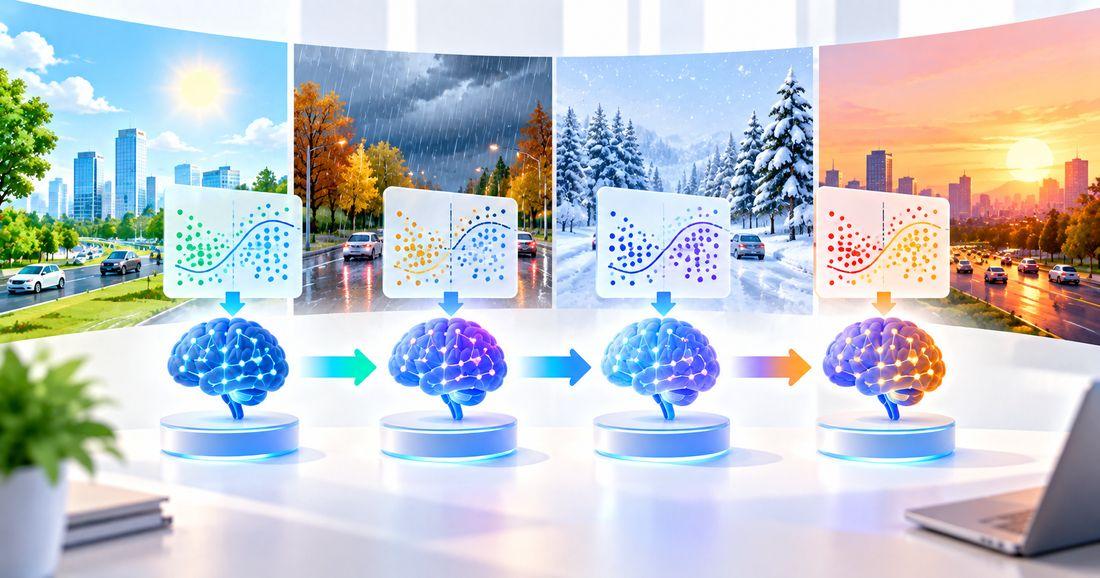
Section 1: Understanding Why Machine Learning Models Need to Adapt
Machine learning models are trained on historical data, but the environments in which those models operate rarely remain unchanged. A model may be highly accurate when it is first deployed because the production data closely resembles the information used during training. Over time, however, users change their behavior, products evolve, markets shift, new devices appear, and previously rare events become more common. The relationship between an input and the predicted outcome can also change. When this happens, a model that once performed reliably may gradually become less effective even though its code and parameters have not changed.
This is the fundamental reason adaptive machine learning matters. Instead of treating a trained model as a finished artifact, adaptive ML treats model performance as an ongoing alignment problem between a learning system and a changing environment.
The Assumption of a Stable Environment
Traditional supervised learning generally assumes that the patterns learned from historical data will remain useful when the model encounters future observations. Training and validation datasets are intended to represent the conditions under which the model will eventually operate.
That assumption is reasonable for some applications, particularly when the underlying process changes slowly. But many production environments are inherently dynamic.
A recommendation system may encounter changing customer preferences. A fraud model may face new attack strategies. A demand-forecasting system may experience changes in purchasing patterns, supply conditions, or seasonality. An industrial model may observe equipment whose behavior changes as components age.
In each case, the data-generating process evolves.
The important point is that model degradation does not necessarily happen because the original model was badly designed. The model may have been correct for the environment represented by its training data. The problem is that the environment itself has changed.
Adaptive machine learning begins by recognizing this limitation of static models.
Data Drift and Concept Drift
Two forms of change are particularly important: data drift and concept drift.
Data drift occurs when the distribution of input variables changes. Suppose a fraud-detection model was trained when most transactions originated from desktop devices, but production traffic later shifts heavily toward mobile devices. The distribution of the input data has changed even if the underlying relationship between transaction characteristics and fraud has not.
Concept drift is more fundamental. It occurs when the relationship between inputs and the target changes.
Imagine that a fraudster previously used a specific transaction pattern that strongly indicated fraudulent behavior. Once that pattern becomes widely detected, attackers may change their strategy. The same input pattern may no longer have the same relationship with fraud.
The distinction matters because the model's response should depend on what has actually changed.
A change in input distribution may not necessarily require a new model. The model might remain accurate despite the shift. A change in the relationship between inputs and outcomes is more likely to require adaptation to preserve predictive performance.
This is why monitoring the data alone is not enough.
Adaptive ML Is a Production Architecture
The need to detect, evaluate, and respond to change means adaptive ML extends beyond the model-training algorithm.
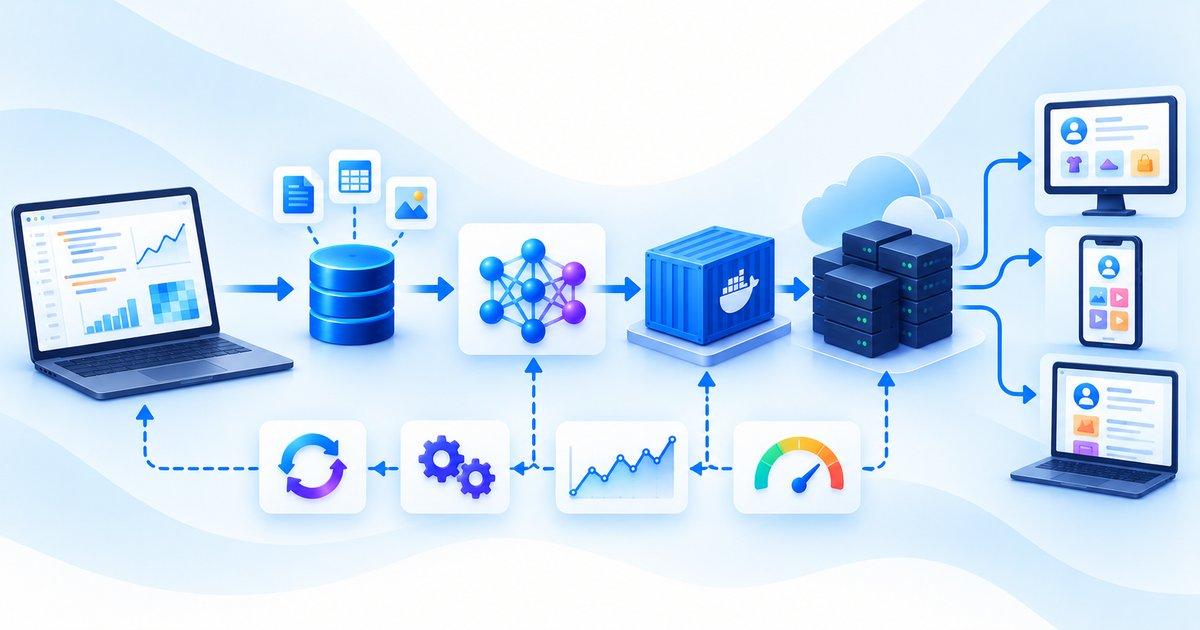
A production adaptive system requires reliable data pipelines, drift monitoring, model evaluation, versioning, deployment controls, rollback mechanisms, and safeguards against corrupted or misleading data.
This is why adaptive machine learning should be treated as a production lifecycle architecture rather than simply a different training technique.
The model is one component within a larger feedback system.
“The Hidden Engineering Work Behind Every Successful Machine Learning Product” is relevant to this perspective because long-term model performance depends heavily on the engineering systems responsible for data, monitoring, deployment, and operational feedback.
Key Takeaway
Machine learning models need to adapt because production environments are not static. Input distributions can shift, relationships between features and outcomes can change, new entities can appear, and temporary events can alter observed behavior. Adaptive ML treats these changes as a continuous engineering concern, using monitoring and controlled adaptation to keep models aligned with the environments in which they operate while preserving valuable historical knowledge.
Section 2: How Adaptive Machine Learning Detects and Responds to Change
An adaptive machine learning system cannot respond to environmental change unless it can first recognize that change is occurring. This makes change detection and response selection two of the most important components of adaptive ML. A model may receive millions of new observations, but those observations do not automatically tell the system whether its existing assumptions remain valid. Engineers need mechanisms to distinguish normal variation from meaningful distribution shifts and then determine whether the appropriate response is recalibration, incremental learning, retraining, model replacement, or another adaptation strategy.
Detecting Changes in Production Data
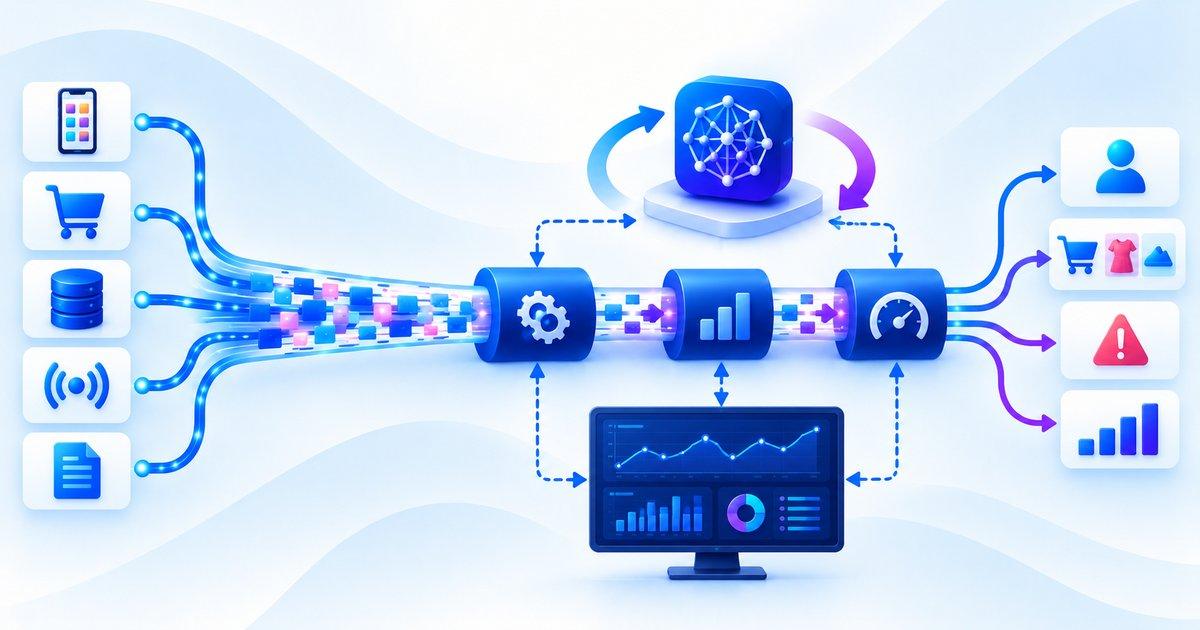
The first layer of an adaptive system is usually data monitoring. Engineers continuously compare production data with historical or training distributions to identify changes in numerical features, categorical frequencies, missing-value patterns, or other statistical properties.
For example, a recommendation system may suddenly receive a much larger percentage of interactions from mobile devices. A fraud model may observe a new geographic distribution of transactions. A manufacturing model may encounter operating temperatures that were uncommon during training.
These observations indicate data drift.
However, drift detection should not automatically trigger retraining. A model can remain accurate even when its input distribution changes. The purpose of data monitoring is therefore to provide evidence that the environment has changed, not to decide automatically that the model is wrong.
Monitoring Model Performance
The second layer is outcome monitoring.
When reliable labels or downstream outcomes become available, engineers can evaluate whether production performance is changing. Depending on the application, this may involve accuracy, precision, recall, calibration, ranking metrics, forecasting error, or business-level measures.
Performance monitoring is particularly important for detecting concept drift because the input distribution may remain relatively stable while the relationship between inputs and outcomes changes.
Suppose customer behavior looks similar to historical data, but a product redesign changes which behaviors lead to churn. Individual feature distributions may remain stable while the model's predictive performance declines.
This is why adaptive systems benefit from monitoring both what the model receives and how well it performs.
Incremental Learning
Incremental learning provides a related approach in which models are updated using new data without necessarily retraining from the beginning.
This can reduce computational cost when datasets are large or continuously growing.
The challenge is determining how much historical knowledge should remain influential.
If the model focuses too strongly on recent observations, it may forget useful patterns that remain relevant. If historical observations dominate, adaptation may become too slow.
Engineers can address this through replay buffers, historical sampling, regularization, or carefully designed update strategies that balance recent and older information.
Sliding Windows
A sliding-window strategy trains or updates the model using a recent period of observations.
The idea is straightforward: recent data is often more representative of the current environment than very old data.
This can work well when the environment changes relatively quickly.
However, the choice of window length creates a trade-off.
A short window makes the model highly responsive but can increase variance and discard useful historical information. A long window improves stability but may preserve patterns that are no longer relevant.
The right window therefore depends on the rate and structure of environmental change.
Weighted Learning
Another approach is to retain historical data while giving greater importance to recent observations.
Recent examples receive higher weights, while older examples continue contributing to the model.
This can create a gradual adaptation mechanism.
For example, a demand-forecasting system may use historical seasonal patterns but give greater weight to recent customer behavior. The model retains long-term knowledge while becoming responsive to current conditions.
Weighted learning is particularly useful when the environment changes continuously rather than through abrupt regime shifts.
Dynamic Model Selection
Adaptation can also occur without changing any model parameters.
A system may maintain multiple models and dynamically select among them according to current conditions.
For example, one model may perform well under normal demand while another performs better during high-demand periods. A recommendation system may maintain models optimized for different user populations. A fraud system may use different detectors depending on transaction type.
This creates a connection between adaptive ML and model routing.
“Model Cascades: How AI Systems Combine Multiple Models to Reduce Cost” describes how systems can dynamically select models according to request characteristics. Adaptive systems can extend the same principle by allowing model selection policies to evolve as the environment changes.
Key Takeaway
Adaptive machine learning detects environmental change through production-data monitoring, model-performance evaluation, and drift analysis, then responds through online learning, incremental updates, sliding windows, weighted training, automated retraining, or dynamic model selection. The key is to match the adaptation mechanism to the type and speed of change while validating every significant update before it becomes the new production behavior.
Section 3: Designing Adaptive Models That Remain Reliable as the World Changes
Adaptation is necessary when the environment changes, but allowing a machine learning system to change continuously creates a new engineering problem: how can a model remain responsive without becoming unstable? A model that adapts too slowly may become outdated, while a model that reacts too aggressively can learn temporary noise, corrupted observations, or unusual events that disappear quickly. Reliable adaptive machine learning therefore requires a deliberate balance between responsiveness, stability, historical knowledge, and controlled deployment.
Balancing Adaptation Speed and Stability
Every adaptive system operates on a particular timescale. A manufacturing process may change gradually as equipment wears, while a recommendation system can shift within hours as user preferences evolve. Fraud and cybersecurity environments can change even faster because adversaries actively modify their behavior.
The adaptation strategy should match that timescale.
Updating a model every few minutes may be unnecessary for a stable industrial process, while updating a fraud model only once a year could leave the system exposed to emerging patterns. The important decision is therefore not simply how frequently to retrain, but how quickly the model should respond to meaningful environmental change.
Adaptation speed should be evaluated against both the rate of change and the cost of making an incorrect update.
Avoiding Overreaction to Temporary Events
Not every distribution shift represents a permanent change.
A retailer may observe unusual purchasing behavior during a holiday period. A manufacturing sensor may temporarily produce abnormal readings because of a calibration issue. A recommendation system may experience a short-lived spike caused by a viral event.
If the model immediately incorporates these observations as the new normal, it can become poorly calibrated when the environment returns to its previous state.
Reliable adaptive systems therefore need persistence checks and smoothing mechanisms. Instead of responding to one unusual observation, the system can look for sustained changes across a meaningful period.
This distinction between persistent change and temporary variation is essential because adaptation itself can become a source of model degradation.
Preserving Historical Knowledge
Adaptive learning should not mean forgetting everything that happened in the past.
Historical observations can contain rare but important patterns that may disappear temporarily from recent data. A fraud system, for example, may need to retain knowledge of an attack pattern even when that pattern has become uncommon. A demand model may need historical seasonal behavior that is not visible in a short recent window.
Engineers can preserve this knowledge through replay buffers, representative historical samples, weighted training, regularization, or ensembles containing models trained across different periods.
The objective is to give recent information greater influence when appropriate without allowing historical knowledge to disappear completely.
Guardrails Around Automatic Model Updates
An adaptive system should also establish explicit boundaries around model changes.
A candidate update may appear strong on recent data but perform poorly on critical historical scenarios. It may improve overall accuracy while degrading performance for an important customer segment.
A reliable promotion process can therefore follow:
Detect → Train → Evaluate → Compare → Approve → Deploy → Monitor
The current production model should remain the reference point. A new model should replace it only when predefined criteria demonstrate that the update provides sufficient benefit without unacceptable regression.
“Failure Modes of Modern AI Systems and How Engineers Prevent Them” is relevant to this principle because adaptive systems introduce additional production failure modes, including unstable updates, noisy learning signals, and unexpected behavior following environmental changes.
Key Takeaway
Reliable adaptive machine learning requires a careful balance between responsiveness and stability. Engineers must distinguish persistent environmental change from temporary variation, preserve important historical knowledge, validate incoming data, establish guardrails around automated updates, use shadow or canary deployment, and maintain complete model lineage. The objective is not to make models change as quickly as possible, but to make them change for the right reasons without sacrificing reliability.
Section 4: Why Adaptive Machine Learning Matters for the Future of Production AI
As machine learning becomes embedded in systems that operate continuously, the assumption that a model can be trained once and remain effective indefinitely becomes increasingly difficult to maintain. Production environments evolve because users change behavior, products are redesigned, markets shift, physical systems degrade, and new threats emerge. In these environments, model reliability depends not only on how accurately the system learned from historical data but also on how effectively it can respond when those historical relationships begin to change. This makes adaptive machine learning increasingly important for the future of production AI.
Machine Learning Is Moving Into Non-Stationary Environments
Many of the most valuable machine learning applications operate in non-stationary environments, where the underlying data-generating process changes over time.
Recommendation systems encounter changing preferences and newly introduced products. Fraud-detection systems face adversaries that deliberately modify their behavior. Demand-forecasting models respond to changing customer patterns and market conditions. Industrial systems operate equipment that gradually changes as components age or operating conditions vary.
In these environments, model degradation is not necessarily evidence that the original model was poorly trained. The model may have captured the relationships that existed during development correctly. The problem is that those relationships may no longer describe the current environment.
Adaptive machine learning provides a way to make environmental change part of the model lifecycle rather than treating it as an unexpected failure.
Adaptive AI for Recommendation Systems
Recommendation systems are naturally dynamic because users continuously generate new behavioral signals. Preferences change, products enter and leave catalogs, seasonal events alter demand, and platform experiences influence what users choose to interact with.
A model trained on historical behavior can gradually become less representative of current preferences.
Adaptive techniques can emphasize recent observations, update user and item representations, or incrementally adjust ranking models as new interactions arrive.
The challenge is finding the right balance between recent and historical behavior.
A user may develop a temporary interest in a trending topic without permanently abandoning previous preferences. An adaptive system that reacts too strongly can overfit to short-lived behavior, while one that reacts too slowly can continue recommending outdated content.
This makes adaptation speed and stability critical design considerations.
Adaptive AI for Fraud and Cybersecurity
Fraud and cybersecurity represent even more challenging environments because they are often adversarial.
Attackers can observe existing detection mechanisms and change their strategies to avoid them. A pattern that was highly predictive in the past may become less useful once criminals change how attacks are executed.
Adaptive ML can incorporate new observations and update models as emerging patterns become visible.
However, automated adaptation also creates vulnerabilities. Adversaries may attempt to inject misleading examples into the data stream or exploit weaknesses in the adaptation process.
Strong validation, anomaly detection, controlled retraining, model comparison, and rollback mechanisms are therefore essential.
In adversarial environments, adaptation must be fast enough to respond to new behavior without becoming so aggressive that the model learns from manipulated or unreliable signals.
Adaptive AI for Enterprise Systems
Enterprise environments are also continually changing.
Organizations introduce new products, modify policies, reorganize workflows, adopt new technologies, and change customer processes.
A machine learning model embedded in an enterprise workflow can therefore become outdated even if its original training process was technically sound.
Adaptive systems can respond by incorporating recent data, updating feature representations, retraining models, or changing model-selection policies.
However, enterprise adaptation requires strong governance.
Organizations need to know which model produced a particular decision, what data influenced it, which version was active, and why an update occurred.
Adaptation therefore increases the importance of model lineage, versioning, auditability, and deployment controls.
Continual Learning for Long-Lived AI Systems
One of the most important directions in adaptive machine learning is continual learning.
A continually learning system is designed to incorporate new knowledge over time without repeatedly rebuilding the entire learning process from scratch.
This is attractive for AI systems expected to operate for years because the environment can evolve continuously.
However, continual learning introduces difficult problems around memory, forgetting, stability, and evaluation.
The system must determine which information should remain influential and which historical patterns can safely become less important.
This creates a fundamental question:
What should the model remember, and what should it adapt away from?
Successful continual-learning systems need mechanisms that balance new information with retained knowledge rather than simply favoring the newest data.
Adaptive Systems and Model Portfolios
Adaptation does not always require changing a model's parameters.
An organization can maintain multiple models trained for different environments or purposes and dynamically select among them as conditions change.
For example, one model may perform well during normal operating conditions while another is optimized for unusual traffic patterns. A recommendation platform may maintain models for different user populations. A fraud system may use specialized models for different transaction types.
This creates a connection between adaptive ML and model routing.
A model-cascade architecture can determine which model should process a particular request, while adaptive monitoring can determine whether the routing strategy itself remains appropriate as workload characteristics change.
“Model Cascades: How AI Systems Combine Multiple Models to Reduce Cost” provides a useful perspective on dynamic model selection. Adaptive systems extend that idea by allowing the model portfolio and routing policy to evolve as production conditions change.
Key Takeaway
Adaptive machine learning matters because production AI increasingly operates in environments where data distributions, user behavior, adversarial strategies, physical conditions, and business processes continuously evolve. The future of reliable AI will depend on systems that can detect these changes, adapt at the appropriate layer, preserve valuable historical knowledge, and validate updates under strong governance. The goal is not continuous change for its own sake, but continuous alignment between AI behavior and the environment in which the AI operates.
Conclusion
Adaptive machine learning addresses one of the most important limitations of traditional ML systems: the world does not remain stationary after a model is trained.
A machine learning model learns from historical observations and makes assumptions about the relationships represented in that data. When those relationships remain sufficiently stable, a static model can perform effectively for long periods. But when users change their behavior, markets evolve, products are redesigned, machines age, attackers change tactics, or new entities appear, those original assumptions can gradually become outdated.
Adaptive ML treats this changing environment as part of the system's design rather than as an unexpected exception.
The central objective is not to retrain a model continuously. It is to maintain alignment between the model and the environment in which the model operates.
That alignment begins with monitoring.
Production data can reveal changes in feature distributions, missing-value patterns, category frequencies, and other characteristics of incoming observations. Model-performance monitoring can reveal whether those changes are actually affecting predictive quality. Together, these signals help distinguish ordinary variation from meaningful environmental change.
This distinction is particularly important because not every distribution shift requires model adaptation.
A temporary holiday effect, sensor problem, unusual event, or short-lived traffic spike can look dramatically different from historical data without representing a permanent change. Automatically adapting to every temporary event can make a model less stable when normal conditions return.
Reliable adaptive systems therefore need evidence before changing.
When adaptation is justified, organizations have several possible strategies. Online learning can incorporate observations continuously. Incremental learning can update models without rebuilding them from scratch. Sliding windows can emphasize recent data, while weighted training can increase the influence of new observations without completely discarding historical knowledge. Ensemble approaches can balance long-term and short-term patterns. Automated retraining can generate new candidate models when predefined conditions are met.
These approaches provide different balances between responsiveness, computational cost, and stability.
One of the most important engineering principles is that adaptation should happen at the cheapest effective layer.
A small shift might be addressed through recalibration or threshold adjustment. A changing feature distribution may require updating preprocessing. A significant behavioral change may justify retraining. In some environments, changing the model selected for a particular workload may be more effective than continuously updating one model.
Frequently Asked Questions
1. What is adaptive machine learning?
Adaptive machine learning refers to approaches that allow ML systems to respond to changes in their operating environment. The system may update model parameters, retrain, recalibrate, change features, or select a different model as production conditions evolve.
2. Why do machine learning models need to adapt?
Real-world environments are rarely static. User behavior, markets, products, physical systems, attack strategies, and business processes can change over time, causing relationships learned during training to become less representative of current conditions.
3. What is data drift?
Data drift occurs when the distribution of input variables changes over time. For example, the proportion of mobile versus desktop users may change significantly after a product update.
4. What is concept drift?
Concept drift occurs when the relationship between model inputs and the target outcome changes. A pattern that historically predicted a particular outcome may no longer have the same predictive meaning in the current environment.
5. Is adaptive machine learning the same as online learning?
No. Online learning is one approach to adaptation in which models are updated incrementally as new data arrives. Adaptive ML is a broader concept that can include online learning, retraining, recalibration, model selection, sliding windows, ensembles, and other techniques.
6. Does adaptive ML require continuous retraining?
No. Some environmental changes can be addressed through threshold adjustments, recalibration, feature updates, dynamic model selection, or incremental learning. Full retraining should be used when the evidence indicates that a more substantial model update is necessary.
7. What is incremental learning?
Incremental learning updates a model using new observations without necessarily rebuilding it from the entire historical dataset. It can reduce retraining costs and allow models to respond more quickly to new information.
8. What is a sliding-window approach in adaptive ML?
A sliding-window approach trains or updates a model using a recent period of data. It emphasizes current behavior and can be useful in rapidly changing environments, although excessively short windows can cause instability or loss of valuable historical information.
9. Can adaptive machine learning forget important historical patterns?
Yes. If a model places too much emphasis on recent observations, it can lose knowledge of rare or recurring historical patterns. Replay buffers, historical samples, weighted training, regularization, and ensemble methods can help reduce this problem.
10. How can engineers detect when a model needs adaptation?
Engineers can monitor changes in input distributions, model predictions, ground-truth performance, business outcomes, error rates, and other drift indicators. Persistent changes combined with measurable performance degradation provide stronger evidence for adaptation than isolated anomalies.
11. Can adaptive ML systems automatically retrain themselves?
Yes. Production pipelines can trigger retraining when predefined drift or performance conditions are satisfied. However, a newly trained model should generally be evaluated against the current production version before being promoted.
12. Why is human oversight important in adaptive ML?
Automatic adaptation can learn from noisy, corrupted, or manipulated data. Human oversight and governance are particularly important for high-impact applications where incorrect model changes could create financial, operational, security, or safety consequences.
13. What is catastrophic forgetting in adaptive machine learning?
Catastrophic forgetting occurs when a model learns new information but loses previously learned capabilities or patterns. It is particularly relevant to continual and incremental learning systems that update models repeatedly over time.
14. How does adaptive ML relate to model cascades?
Model cascades dynamically select among multiple models based on request characteristics such as difficulty or confidence. Adaptive ML can extend this concept by allowing the preferred models, routing policies, or thresholds to change as the production environment evolves.
15. What is the biggest challenge in adaptive machine learning?
The central challenge is balancing responsiveness with stability. The system must adapt quickly enough to remain relevant while avoiding overreaction to temporary changes, noisy data, adversarial inputs, or short-lived events. Successful adaptive ML requires monitoring, controlled updates, validation, versioning, and reliable rollback mechanisms.