Section 1: Why Feature Management Becomes a Production Engineering Problem
From Raw Data to Features: Understanding the Data Transformation Lifecycle
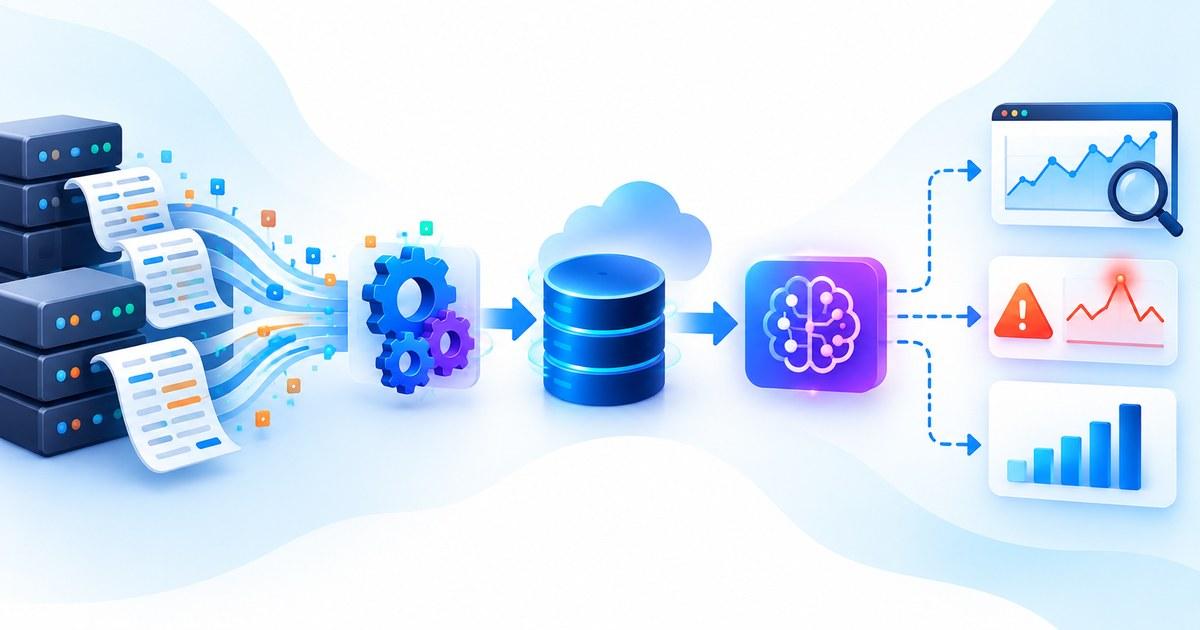
Machine learning systems rarely consume raw application data directly because most production models depend on transformed inputs that represent meaningful characteristics of users, transactions, products, or operational events. These inputs, known as features, are generated by applying transformations to source data, such as calculating a customer's average transaction value, measuring the number of API requests received during a time window, or deriving the number of days since a user last interacted with an application. Although these calculations may initially appear to be ordinary data-processing operations, they become critical dependencies when multiple models and applications rely on the same definitions to generate consistent predictions.
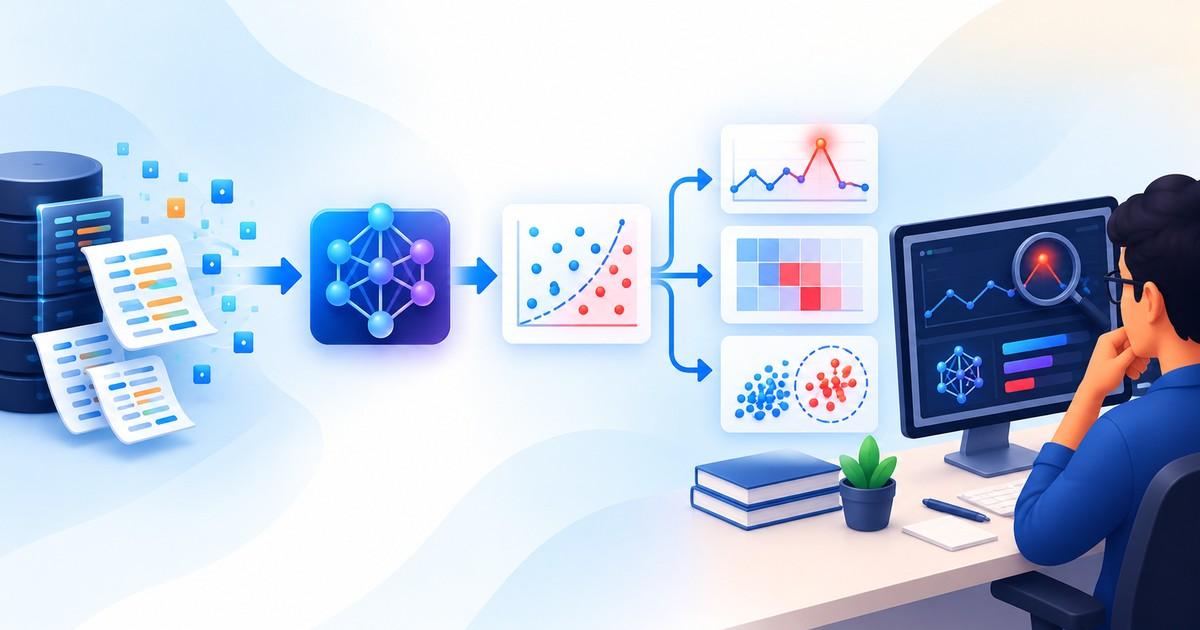
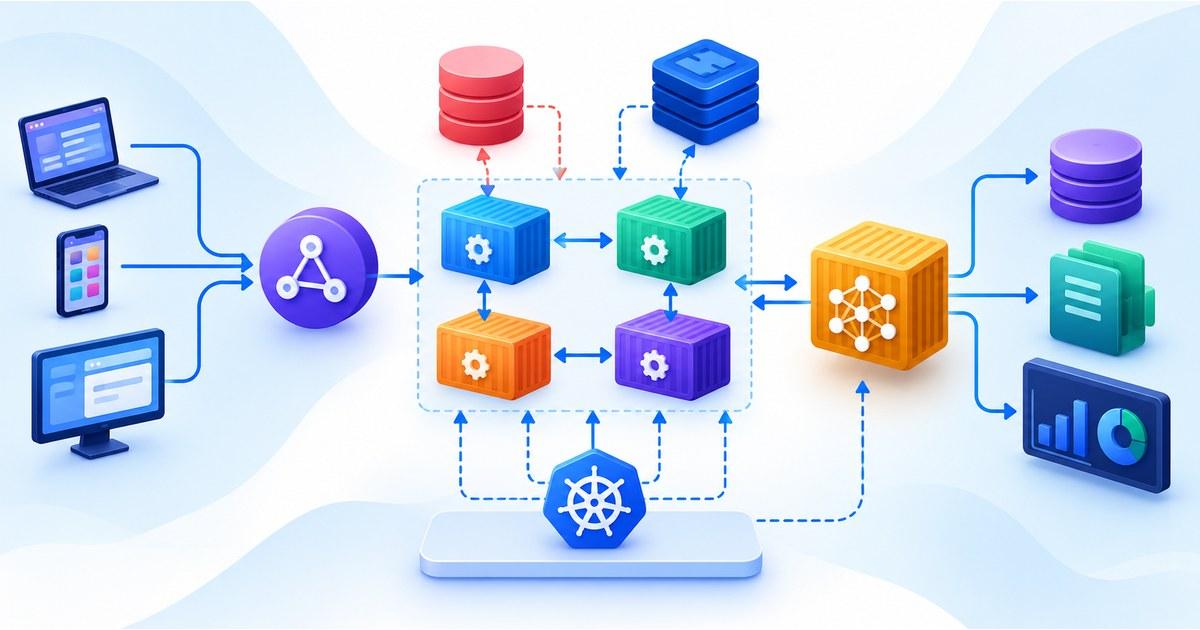
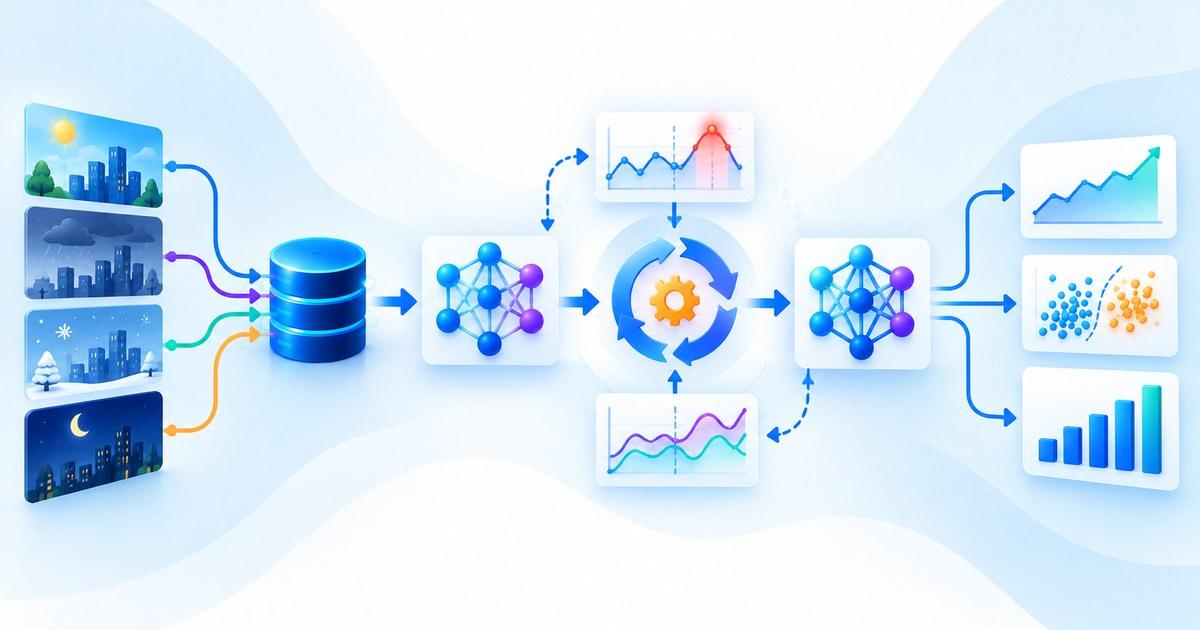
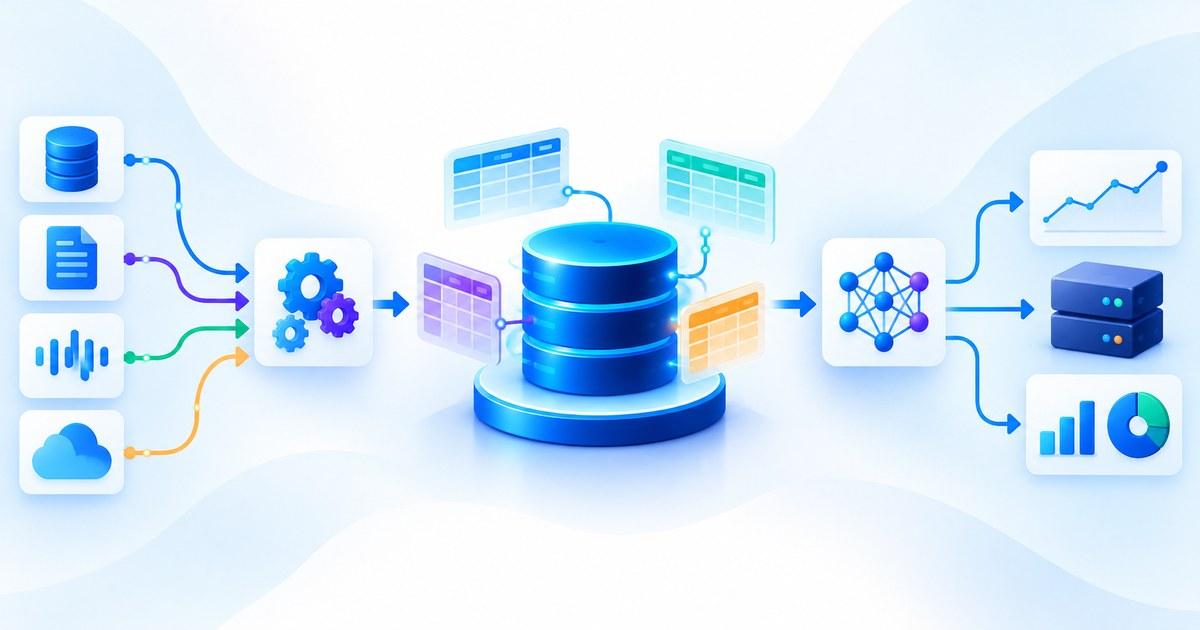
In a typical engineering workflow, raw data originates from databases, event streams, application logs, external APIs, or data warehouses before passing through ingestion and transformation pipelines that produce model-ready features. During model development, data scientists and ML engineers use these features to train and evaluate models, while production applications must retrieve or calculate compatible feature values whenever predictions are requested. As systems grow, feature generation may become distributed across batch-processing jobs, streaming applications, backend services, and inference pipelines, creating additional maintenance work when transformations are duplicated or implemented differently across environments.
Feature stores address this problem by providing infrastructure and organizational practices for defining, managing, discovering, and serving features across the ML lifecycle. Instead of treating every feature as a temporary output of an individual modeling project, engineering teams can manage feature definitions as reusable data assets with clear ownership, documented transformations, and predictable retrieval interfaces. The principles explored in “ML Data Pipelines for Software Engineers: From Event Streams to Model-Ready Data” provide useful context for understanding how reliable data ingestion and transformation form the foundation of this feature management process.
Why Duplicate Feature Logic Creates Training-Serving Skew
One of the most important challenges in production machine learning occurs when the feature transformations used during model training differ from those applied when the same model receives real-world requests. This problem, commonly known as training-serving skew, can appear even when the underlying source data is identical because separate implementations may use different aggregation windows, normalization rules, missing-value handling, or timestamp interpretation. A model can therefore perform well during evaluation but produce less reliable predictions after deployment because its production inputs do not represent the same information in the same way as its training inputs.
Consider a fraud detection system that uses a customer's transaction frequency over the previous 24 hours as a feature. During training, a batch-processing pipeline may calculate the feature using a precisely defined time window, while the production inference service independently implements the calculation using a different timezone, boundary condition, or event timestamp. These differences can cause the offline and online feature values to diverge, potentially changing model predictions without producing an obvious application error. Similar problems emerge when teams independently implement categorical encoding, numerical scaling, account-level aggregates, or missing-value defaults across multiple services.
Centralizing feature definitions and standardizing their transformations can reduce the likelihood of these inconsistencies, especially when training pipelines and production services use shared definitions or retrieve values generated through compatible processing logic. A feature store does not automatically eliminate training-serving skew, since teams must still manage transformation versions, timestamps, data types, and serving behavior correctly, but it provides a more systematic foundation for validating consistency across environments. By treating feature computation as a shared production dependency instead of repeatedly rebuilding it within individual projects, engineering teams can reduce duplication and make discrepancies easier to detect and resolve.
Managing Feature Freshness, Consistency, and Dependencies Across Applications
Feature management becomes more complicated when different models require different update frequencies, historical windows, and latency guarantees, because a feature that is sufficiently fresh for one application may be unsuitable for another. A recommendation model may tolerate profile attributes updated every few hours, whereas a fraud detection model may require recent transaction activity to reflect events that occurred only seconds earlier. Engineering teams must therefore define freshness requirements according to the business purpose of each feature, ensuring that the storage and materialization strategy provides sufficiently current values without introducing unnecessary processing costs.
Consistency also becomes important when features depend on multiple source systems that update at different rates or expose different representations of the same entity. For example, a customer risk score might combine recent transaction activity, account information, and historical dispute records, so differences in update timing or identifier mapping could cause the model to receive a combination of values that does not accurately reflect the customer's current state. Feature management systems can help teams document these dependencies, establish consistent entity keys, monitor update delays, and define acceptable behavior when individual inputs are unavailable, although the underlying pipelines still need appropriate processing and validation logic.
Reusing features across applications introduces an additional dependency-management challenge because a change intended for one model may affect other consumers that rely on the same feature definition. If an aggregation window changes or a source field is reinterpreted, downstream models may experience behavioral changes even when their own code has not been modified. Clear ownership, dependency metadata, versioned definitions, and compatibility checks allow engineering teams to assess the potential impact of these changes before rollout, reducing the risk of breaking multiple ML applications through an apparently small data transformation update.
Key Takeaway
Feature management becomes a production engineering problem when model inputs are duplicated across pipelines, data freshness requirements vary, and multiple applications depend on consistent feature definitions. Feature stores provide a structured way to manage reusable features, improve discoverability, and coordinate the data used in training and inference, while shared transformations, explicit ownership, and versioned definitions help reduce inconsistencies as systems scale. Their greatest value emerges when feature reuse, serving performance, and training-serving consistency become difficult to maintain through isolated pipelines and application-specific implementations.
Section 2: How Feature Stores Organize Data for Model Training and Production Inference
Offline Feature Stores for Historical Data and Model Training
An offline feature store manages historical feature values used to train machine learning models, evaluate experiments, analyze past behavior, and generate datasets for batch prediction workflows. These values are typically stored in systems optimized for large-scale data access, such as data warehouses, data lakes, or distributed storage platforms, allowing ML engineers to retrieve substantial volumes of historical observations without placing unnecessary pressure on latency-sensitive production services. By maintaining historical feature data in a centralized environment, teams can reuse established feature definitions across training projects instead of repeatedly reconstructing similar datasets from separate application tables and processing pipelines.
Consider a recommendation system that predicts which products a customer is likely to purchase based on previous interactions, purchase frequency, and product preferences. During training, engineers may need months of historical customer activity to calculate the features associated with each training example, while ensuring that the values represent the information available at the relevant point in time. An offline feature store can organize these historical values around entity identifiers and timestamps, enabling training pipelines to retrieve the appropriate feature values for customer interactions recorded at different moments. This approach improves consistency across experiments and makes it easier to reproduce datasets when model performance needs to be investigated.
Offline feature stores also support operational workflows beyond conventional model training, including feature analysis, historical backfills, large-scale scoring, and evaluation of alternative feature definitions. However, the reliability of these workflows depends on preserving relevant timestamps, transformation logic, and feature metadata because historical values can become misleading when they are reconstructed from information that was unavailable at the time of the original observation. As discussed in “The Journey of a Dataset: From Raw Data to Production ML,” the process of turning source data into dependable model inputs requires careful management of transformations and data provenance, making the offline feature store an important part of a reproducible ML data pipeline.
Online Feature Stores for Low-Latency Production Predictions
An online feature store serves feature values that production applications need to retrieve quickly when requesting predictions, typically using storage technologies optimized for low-latency lookups by entity identifiers or feature keys. Unlike offline systems that prioritize efficient access to large historical datasets, online stores are designed for individual or small groups of feature retrieval operations within real-time request paths, where additional network or storage delays can directly affect application responsiveness. This distinction becomes particularly important when a model is invoked synchronously during a customer interaction, transaction authorization, search request, or recommendation query.
For example, a fraud detection service may need a customer's recent transaction count, spending velocity, and account risk indicators before determining whether a new transaction should trigger further verification. Instead of calculating every feature from historical transaction records for each incoming request, an online feature store can provide precomputed values that have been updated by upstream processing pipelines. The inference service retrieves the required features using the relevant customer or account identifier, combines them with request-specific inputs, and passes the resulting feature vector to the model, allowing prediction logic to remain separate from the infrastructure that maintains and serves those feature values.
Online feature serving introduces constraints that engineers must account for when designing the storage layer, including latency targets, availability requirements, update frequency, key design, memory usage, and the behavior expected when values are missing or stale. Some features can be materialized continuously or in scheduled batches, while others require rapid updates from streaming pipelines to remain useful for decisions involving recent events. An online store therefore does not automatically guarantee fresh or correct features, since those properties depend on the upstream ingestion, transformation, and materialization workflows that maintain the values; teams must define acceptable freshness limits and monitor serving behavior to ensure that fast retrieval does not come at the expense of prediction quality.
Feature Entities, Keys, Timestamps, and Point-in-Time Correctness
Feature stores organize feature values around entities, which represent the objects described by the data, such as customers, accounts, products, devices, or individual transactions. Each entity requires a well-defined identifier that allows the feature store to associate related observations consistently across source systems, training datasets, and production requests. For example, a customer identifier may connect account attributes, purchase history, and customer activity metrics, while a transaction identifier may identify request-specific information used by a fraud detection model. Poorly designed entity keys or inconsistent identifier mapping can cause incorrect feature retrieval, making key management a fundamental data modeling decision rather than a minor implementation detail.
Timestamps are equally important because a feature's value may change over time, and model training must generally use the information that would have been available when a particular prediction was made. Point-in-time correctness ensures that historical training examples use feature values from the appropriate period instead of accidentally incorporating future observations that would not have been available in a real production scenario. For instance, a model trained to predict whether a transaction will be fraudulent should not use a customer's final dispute status if that information became available only after the transaction occurred, since doing so could create data leakage and make offline performance appear stronger than the model's genuine predictive ability.
Maintaining point-in-time correctness requires careful treatment of event timestamps, feature update timestamps, late-arriving data, backfills, and time-windowed aggregations, particularly when multiple data pipelines process the same entity at different speeds. Engineers should ensure that the historical retrieval process applies the correct temporal constraints and that source data preserves enough timestamp information to distinguish when an event occurred from when the system received or processed it. When these requirements are handled consistently, offline feature retrieval becomes more useful for reproducible training and evaluation, while the same entity definitions and feature semantics can guide online retrieval during production inference.
Key Takeaway
Feature stores organize ML data through complementary offline and online storage, consistent entity identifiers, timestamp-aware retrieval, and materialization pipelines that make feature values available to training and production systems. Offline stores support historical analysis and reproducible model development, while online stores enable low-latency inference through precomputed feature values, provided that freshness, data quality, and transformation consistency are managed across the entire data pipeline. By combining these capabilities with point-in-time correctness and reliable batch or streaming processing, engineering teams can make features more reusable and dependable throughout the machine learning lifecycle.
Section 3: Managing Feature Definitions Like Production APIs
Defining, Documenting, and Versioning Reusable Features
As machine learning systems expand across multiple applications and engineering teams, feature definitions should be managed with the same discipline used for production APIs, because changes to feature logic can affect model behavior even when application code remains unchanged. A feature definition should describe the business meaning of a value, the entity it represents, its source data, the transformation logic used to calculate it, and the expected update frequency, allowing engineers to understand precisely what a model consumes rather than relying on undocumented assumptions embedded in individual pipelines. For example, a feature called average_transaction_value should specify the aggregation window, eligible transaction types, currency normalization rules, and treatment of reversed transactions so that different teams do not unknowingly implement incompatible interpretations of the same concept.
Versioning becomes essential when an existing feature definition must evolve without immediately disrupting every model that depends on it. Changing a seven-day activity window to a thirty-day window, for instance, may produce a meaningful change in the feature distribution and alter model predictions even when the feature retains its original name. Instead of silently replacing the existing definition, engineering teams should record the change, evaluate its compatibility with downstream consumers, and introduce a new version when the semantics or expected behavior are no longer equivalent. This approach allows models to migrate deliberately, supporting controlled releases and making it easier to reconstruct the feature definitions associated with earlier experiments or production predictions.
Documentation and versioning are most effective when integrated into the feature development lifecycle rather than maintained as separate administrative tasks, with automated validation checking schemas, transformation dependencies, and compatibility requirements before changes reach production. By recording definitions, owners, transformation versions, and relevant metadata in a discoverable registry, teams can establish a reliable interface for feature consumption while reducing the risk that an apparently minor data change introduces an unexpected model behavior change.
Feature Discovery, Ownership, and Reuse Across Engineering Teams
Feature stores become increasingly valuable when multiple teams work with overlapping business entities and repeatedly need similar information for different prediction tasks, because a discoverable catalog can prevent every project from rebuilding common transformations independently. A fraud detection team might use recent transaction frequency, while a customer analytics team might need a similar activity measure for segmentation, allowing both groups to reuse an existing feature when its definition, freshness, and quality meet their requirements. This reuse can reduce duplicated processing logic and maintenance effort, although teams must verify semantic compatibility rather than selecting features solely because their names appear similar.
Clear ownership helps preserve feature quality as shared definitions become dependencies for multiple applications, since someone must be responsible for investigating source-data changes, managing transformation updates, addressing pipeline failures, and communicating compatibility risks. Feature metadata can identify the team responsible for a definition, the datasets and transformations on which it depends, the models that consume it, and the conditions under which it should be used. Such information becomes especially important when a source table is deprecated, an upstream schema changes, or a shared transformation becomes too expensive to maintain, because the responsible engineers need to understand the potential downstream impact before modifying the feature.
Effective feature reuse also requires practical discovery mechanisms that help developers search by business meaning, entity, source, availability, freshness, and operational constraints, rather than forcing them to inspect implementation code across multiple repositories. A feature catalog can support this process by presenting definitions alongside documentation, access permissions, lineage, and usage information, allowing engineers to assess whether an existing feature is appropriate for a new model. When combined with ownership and controlled change management, this approach turns features into shared engineering assets instead of isolated outputs belonging to individual data science projects.
Data Contracts, Schema Validation, and Feature Quality Testing
Feature pipelines depend on source data whose structure and meaning may change over time, making explicit data contracts important for detecting incompatibilities before they propagate into training datasets or production predictions. A contract can define required fields, data types, permitted values, nullability expectations, and other structural constraints, while semantic rules can validate assumptions such as nonnegative transaction amounts or valid timestamps. These checks help identify problems early when upstream systems introduce a breaking schema change, omit a required field, or begin producing values that violate the assumptions embedded in feature transformations.
The engineering principles described in “The Rise of Data Contracts: Bringing Software Engineering Discipline to ML Data” are particularly relevant because reliable feature management requires coordination between data producers and consumers, rather than relying on downstream model teams to discover every upstream change after deployment. Automated tests should validate not only whether feature pipelines execute successfully, but also whether their outputs remain compatible with defined schemas, expected value ranges, freshness requirements, and historical behavior. For example, a sudden increase in missing values may indicate an upstream ingestion failure, while an unexpected change in category frequency may signal a source-system modification that requires investigation before the affected features continue to drive production decisions.
Feature validation should also distinguish between structural correctness and statistical quality, since a feature can satisfy its schema while exhibiting a significant change in distribution or business meaning. Monitoring value distributions, missingness, outliers, update delays, and other relevant indicators can reveal changes that ordinary schema checks cannot detect, although alerts must be interpreted in context because legitimate business changes can produce genuine shifts in feature behavior. By combining contract validation with statistical monitoring and controlled deployment practices, teams can reduce the likelihood that defective or incompatible data silently affects the performance of downstream models.
Key Takeaway
Managing feature definitions like production APIs requires explicit documentation, versioning, clear ownership, automated data contracts, and lineage that connects source data with downstream model consumers. These practices improve feature discovery and reuse while helping engineering teams detect incompatible changes before they affect training pipelines or production predictions. By combining semantic definitions with structural validation, statistical monitoring, and controlled migrations, organizations can make features safer to share and easier to maintain as their machine learning infrastructure grows.
Section 4: Operating Feature Stores Reliably at Production Scale
Monitoring Feature Freshness, Materialization, and Pipeline Failures
Operating a feature store reliably requires continuous monitoring of the pipelines that generate, update, and deliver feature values, because a feature can remain accessible while becoming outdated or inconsistent with the underlying application data. A successful storage operation does not necessarily indicate that a feature contains the latest information, particularly when upstream events arrive late, scheduled processing jobs fail, or streaming consumers fall behind their input streams. Engineering teams should therefore monitor feature freshness, materialization completion, ingestion delays, missing-value rates, and processing errors to identify situations in which models receive values that no longer represent the intended business state.
Freshness requirements should be defined according to the purpose of each feature rather than applying a universal update interval across the entire feature store. A customer profile attribute may remain useful when refreshed periodically, whereas a feature representing recent transaction activity may become unreliable if its update pipeline falls behind during periods of heavy traffic. By establishing freshness thresholds, tracking the timestamps of the latest successful updates, and alerting when important features exceed their permitted delays, teams can distinguish acceptable processing latency from failures that may affect production predictions.
Materialization failures also require recovery procedures that preserve consistency between historical and online feature values, particularly when a pipeline must replay events, rebuild aggregates, or backfill missing observations. Idempotent processing, checkpointing, retry policies, and validation after recovery can help prevent duplicate events or incomplete updates from creating inconsistent feature state, while lineage and processing records make it easier to identify the affected features and downstream models. These controls become especially important when online feature retrieval supports time-sensitive decisions, because restoring pipeline execution alone does not guarantee that the resulting feature values are complete, current, or suitable for inference.
Optimizing Feature Retrieval Latency and Serving Performance
Feature retrieval introduces an additional dependency into the model-serving request path, making serving performance an important consideration when online features are retrieved during latency-sensitive application operations. Even when a model executes inference quickly, repeated network calls, inefficient key lookups, large feature payloads, and excessive preprocessing can increase end-to-end response time. Engineers should therefore measure retrieval latency alongside model inference time, API response time, throughput, and error rates to determine whether the feature store is becoming a bottleneck as request volume grows.
Serving architecture should reflect how features are accessed and how frequently their values change, since retrieving every feature through an independent request may introduce unnecessary communication overhead when a prediction requires multiple related values. Grouping compatible lookups, retrieving independent features concurrently, minimizing payload sizes, and caching suitable information can improve request efficiency, provided that these optimizations preserve the freshness and consistency requirements of the application. For example, a recommendation service may retrieve several customer and product attributes together when those features are needed for the same prediction, reducing communication overhead without requiring each feature to be maintained in a separate request path.
Capacity planning must also account for traffic spikes, storage performance, concurrency, and the operational constraints of the underlying serving infrastructure, particularly when many models share the same online feature store. Load testing with representative traffic patterns helps identify saturation points and latency bottlenecks before deployment, while monitoring p95 and p99 retrieval latency reveals performance degradation that averages may conceal. By evaluating these metrics against application service-level objectives, engineering teams can decide whether optimization, additional capacity, a different storage configuration, or a redesign of the feature retrieval path offers the most practical improvement.
Choosing Between a Dedicated Feature Store and Simpler Alternatives
Although feature stores provide structured mechanisms for feature discovery, shared transformations, historical retrieval, and online serving, they are not automatically necessary for every machine learning application. A small project with one model, a straightforward batch pipeline, and limited feature reuse may operate effectively with well-maintained SQL transformations, version-controlled processing code, and an existing data warehouse. Introducing a dedicated feature store into such an environment can add operational responsibilities, another infrastructure dependency, and additional maintenance costs without delivering enough value to justify the complexity.
The case for a dedicated feature store becomes stronger when multiple models share feature definitions, production inference requires low-latency retrieval, training datasets must preserve historical feature values, or independently maintained pipelines repeatedly introduce inconsistent transformations. In these situations, centralized definitions, reusable materialization workflows, online serving interfaces, and feature lineage can reduce duplicated engineering effort while improving consistency across teams. However, the benefits still depend on implementation quality, because an under-maintained feature store with incomplete metadata, unreliable pipelines, or unclear ownership can create as many operational problems as the duplicated feature logic it was intended to replace.
Engineering teams should therefore evaluate feature-store adoption against concrete requirements, including feature reuse, training-serving consistency, retrieval latency, historical reproducibility, governance, and the cost of operating the supporting infrastructure. A gradual implementation can begin with a shared feature registry or standardized transformation library before introducing online storage and centralized serving when production requirements make those capabilities necessary. As emphasized in “The Hidden Engineering Work Behind Every Successful Machine Learning Product,” the long-term success of an ML system depends on dependable engineering practices surrounding the model, so the appropriate feature management architecture is the one that solves demonstrable operational problems while remaining proportionate to the organization's scale and requirements.
Key Takeaway
Operating feature stores at production scale requires reliable materialization pipelines, measurable freshness guarantees, efficient feature retrieval, appropriate access controls, and disciplined infrastructure cost management. A dedicated feature store is most valuable when feature reuse, historical consistency, and low-latency serving become difficult to maintain through isolated pipelines and existing data systems, whereas simpler alternatives may remain sufficient for smaller workloads. By selecting infrastructure according to measurable requirements and combining it with clear ownership, observability, and governance, engineering teams can manage ML features as dependable production data throughout the model lifecycle.
Conclusion: Managing ML Features as First-Class Production Data
Feature stores help engineering teams address one of the fundamental challenges of production machine learning: ensuring that the data used to train a model remains consistent, accessible, and reliable when that model operates in real-world applications. Although feature engineering often begins as a collection of transformations created during experimentation, these transformations become long-term production dependencies as models are deployed, reused, and integrated into multiple services. Managing features independently within individual projects can introduce duplicated logic, inconsistent definitions, data freshness problems, and difficult-to-trace failures, making structured feature management increasingly important as machine learning systems grow.
A well-designed feature store provides a common framework for defining, discovering, storing, and serving features throughout the ML lifecycle. Offline feature stores support historical data retrieval, model training, and reproducible evaluation, while online feature stores provide low-latency access to precomputed values during production inference. When combined with consistent entity identifiers, timestamp-aware retrieval, point-in-time correctness, and dependable materialization pipelines, these capabilities help engineering teams maintain compatible feature definitions across training and production environments. However, the benefits depend on the quality of the surrounding data pipelines and operational controls, since a feature store cannot independently guarantee fresh, correct, or semantically consistent values.
Feature management also benefits from established software engineering practices that treat feature definitions as versioned interfaces with explicit ownership, documentation, validation, and dependency tracking. Data contracts can detect incompatible source changes, automated tests can validate feature schemas and expected values, and lineage can help engineers investigate failures by tracing downstream predictions to their underlying data transformations. These practices become especially valuable when several models share the same features, because a change intended for one application can otherwise introduce unexpected behavior across multiple consumers that rely on the same data.
Operating a feature store in production requires continued attention to freshness, serving latency, pipeline reliability, access controls, and infrastructure expenditure. Engineering teams should monitor the complete feature lifecycle, from source ingestion and transformation through storage and retrieval, while measuring whether centralized feature management improves consistency and reduces duplicated effort. A dedicated feature store is not necessary for every ML project, since conventional data-processing tools and well-maintained transformation code may adequately support simpler applications, but the value becomes more compelling when multiple models share features, real-time inference requires fast retrieval, or historical feature consistency is difficult to maintain.
Ultimately, the goal of a feature store is not merely to centralize data or introduce another infrastructure component, but to make machine learning features dependable, reusable, discoverable, and manageable throughout their lifecycle. By combining appropriate storage architecture with versioned definitions, reliable pipelines, automated validation, and clear operational ownership, software engineering teams can reduce the complexity of production ML systems and establish a stronger foundation for building, deploying, and maintaining data-driven applications at scale.
Frequently Asked Questions
1. What Is a Feature Store in Machine Learning?
A feature store is a data management system that helps engineering teams define, organize, store, discover, and serve the features used by machine learning models. It supports the movement of feature data from source systems and transformation pipelines into model training and production inference workflows, helping teams reuse consistent feature definitions rather than implementing similar transformations independently across applications.
2. Why Do Software Engineers Need a Feature Store?
Software engineers benefit from feature stores when feature transformations are duplicated across services, multiple models depend on shared data, or production inference requires consistent and low-latency feature retrieval. A feature store can centralize definitions, improve feature discoverability, support historical data retrieval, and simplify dependency management, reducing the engineering effort involved in maintaining reliable ML data pipelines.
3. What Is the Difference Between a Feature Store and a Data Warehouse?
A data warehouse primarily supports analytical queries, reporting, and structured data management, whereas a feature store focuses on making ML features available consistently across model development and production serving workflows. A feature store may use a data warehouse or data lake as its offline storage layer, but it also provides feature-oriented capabilities such as reusable definitions, online retrieval, feature metadata, and integration with model-serving systems.
4. What Is the Difference Between an Offline and an Online Feature Store?
An offline feature store stores historical feature values for model training, experimentation, batch scoring, and reproducible evaluation, typically using storage systems optimized for large-scale data access. An online feature store provides low-latency feature lookups for production inference, where models need to retrieve relevant values quickly during application requests, with the two stores often receiving compatible feature values from shared or coordinated materialization pipelines.
5. What Is Training-Serving Skew, and How Does a Feature Store Help Prevent It?
Training-serving skew occurs when the feature transformations or values used during model training differ from those available when the model makes predictions in production. A feature store can reduce this risk by promoting shared feature definitions, compatible transformations, and consistent retrieval interfaces, although teams must still validate timestamp handling, feature versions, data quality, and preprocessing behavior to ensure that offline and online values remain compatible.
6. What Is Point-in-Time Correctness in a Feature Store?
Point-in-time correctness ensures that a historical training example uses only feature information that would have been available when the corresponding prediction was made. This prevents future information from leaking into training data and artificially improving evaluation results, requiring feature retrieval systems to account for relevant timestamps, event ordering, aggregation windows, and the availability of source data at each historical prediction time.
7. How Are Features Stored and Retrieved in a Feature Store?
Feature values are commonly organized around entities such as customers, accounts, transactions, or products, with identifiers and timestamps connecting each value to the relevant object and observation period. Offline retrieval supports historical analysis and training datasets, while online retrieval typically uses entity keys or other defined lookup keys to provide the feature values required for individual production predictions.
8. Can a Feature Store Support Real-Time Machine Learning Applications?
Yes, a feature store with an appropriate online serving layer can support real-time ML applications by providing low-latency access to precomputed feature values during inference. However, real-time capability also depends on the speed and reliability of upstream ingestion, streaming transformations, materialization, and storage operations, since fast retrieval does not guarantee that the underlying features are sufficiently fresh for the application.
9. How Are Features Updated in a Feature Store?
Feature values are updated through materialization pipelines that calculate features from source data and publish them to the relevant storage systems. Batch pipelines are commonly used for historical aggregates and attributes that change relatively infrequently, while streaming pipelines support features derived from continuously arriving events, with update schedules and processing guarantees determined by the freshness requirements of each feature.
10. How Can Engineering Teams Maintain Feature Quality?
Engineering teams can maintain feature quality through schema validation, data contracts, automated transformation tests, freshness monitoring, and checks for missing values, unexpected distributions, invalid ranges, or inconsistent identifiers. These controls should operate across ingestion, transformation, materialization, and serving workflows so that teams can identify problems before defective or outdated feature values affect training datasets or production predictions.
11. What Is Feature Versioning, and Why Is It Important?
Feature versioning records changes to feature definitions, transformation logic, schemas, and semantics so that models can continue using compatible feature values and engineers can reproduce earlier experiments. When a meaningful change alters a feature's behavior, introducing a new version or following an explicit migration process helps prevent existing models from receiving unexpected inputs and allows teams to evaluate compatibility before updating production consumers.
12. What Is Feature Lineage?
Feature lineage describes how a feature is derived from source datasets, transformation logic, processing pipelines, and intermediate data assets, as well as which models or applications consume the resulting values. This visibility helps engineers investigate data-quality incidents, identify downstream dependencies affected by upstream changes, reconstruct feature-generation processes, and determine whether a problem requires pipeline recovery, a feature correction, or model retraining.
13. How Does a Feature Store Improve Collaboration Between Data Scientists and Engineers?
A feature store creates a shared framework in which data scientists and engineers can discover existing features, understand their definitions, reuse transformations, and agree on the data requirements of training and serving workflows. Clear metadata, documentation, feature ownership, and validation practices reduce ambiguity between experimentation and production implementation, helping teams spend less time recreating data transformations and more time improving the reliability of ML applications.
14. What Are the Main Challenges of Implementing a Feature Store?
Common challenges include integrating multiple source systems, maintaining training-serving consistency, controlling feature freshness, handling historical data correctly, and operating low-latency serving infrastructure. Teams must also manage feature ownership, schema evolution, access permissions, storage costs, and pipeline reliability, making it important to establish clear operational responsibilities and validate that the feature store solves real problems rather than simply adding another layer of infrastructure.
15. When Should a Company Adopt a Dedicated Feature Store?
A dedicated feature store becomes valuable when several models share features, feature transformations are duplicated across teams, production inference requires low-latency lookups, or historical consistency and feature lineage are difficult to maintain. Smaller projects with one model and straightforward batch processing may be adequately served by existing data infrastructure and version-controlled transformation code, so companies should evaluate feature reuse, reliability requirements, operational complexity, and total cost before committing to a dedicated platform.