
Section 1: Why Predictive Backend Systems Are Different From Traditional Software
Deterministic Logic Becomes Probabilistic Behavior
Traditional backend systems are generally built around explicit rules that define how inputs should be transformed into outputs. A request containing a valid account identifier can retrieve a known record, a transaction exceeding a configured limit can trigger a predefined rule, and an authorization service can evaluate permissions according to logic written directly by engineers. Although distributed systems can be highly complex, the business logic itself is usually explicit enough that engineers can reason about expected behavior for a given input.
Machine learning introduces a different computational model because the relationship between input and output is learned from historical data rather than fully specified through deterministic rules. Instead of returning a guaranteed answer, a model may produce a probability, ranking, score, or predicted class based on patterns it learned during training. Two nearly identical inputs can therefore receive different outputs when small changes affect the learned decision boundary, and apparently valid inputs can produce incorrect predictions even when the system is functioning exactly as designed.
This changes how backend engineers think about correctness because a successful API response no longer guarantees a correct business decision. A model endpoint can return HTTP 200, complete within its latency budget, and consume the expected resources while still producing a poor prediction. The system therefore needs separate notions of software health and model quality, with operational monitoring addressing whether the service is available and ML monitoring addressing whether its predictions remain useful.
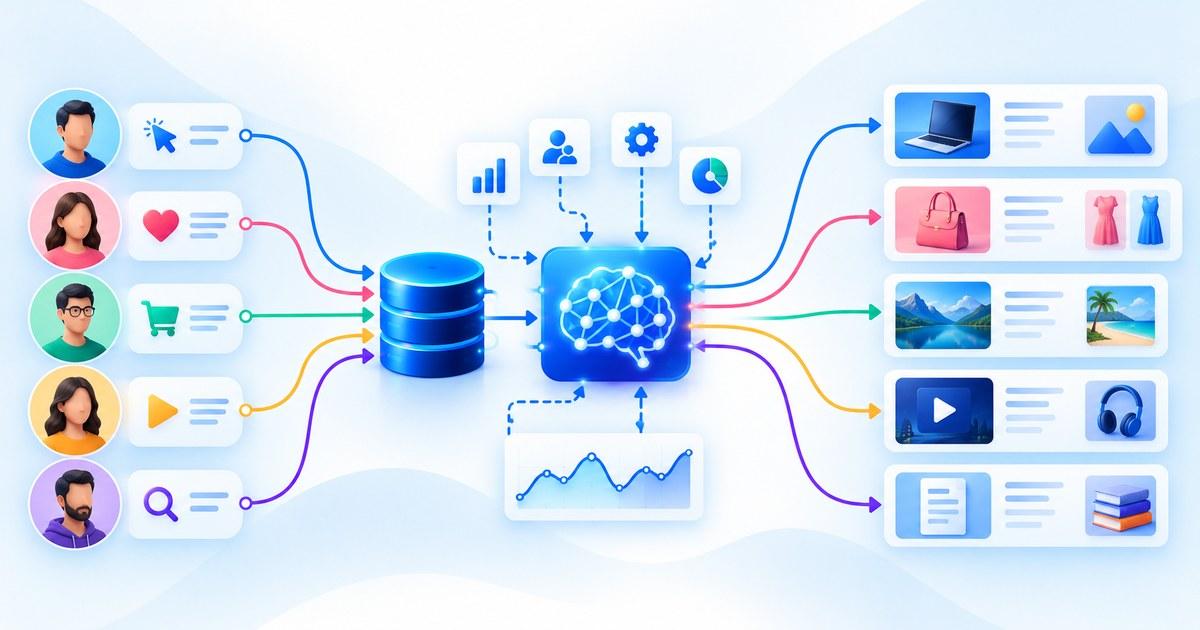
The distinction becomes particularly important when predictions influence downstream actions. A recommendation model can alter what a user sees, a fraud model can influence whether a transaction is challenged, and a ranking model can determine which results are surfaced first. In each case, the model becomes part of the product's decision-making path, which means backend engineers must reason about probabilistic behavior as carefully as they reason about deterministic business logic.
Uncertainty Becomes Part of the API Contract
Backend APIs traditionally expose inputs, outputs, status codes, and error conditions, but predictive systems often need to expose or internally manage uncertainty as another part of the contract. A classification model may produce both a predicted class and a confidence score, while a ranking model may assign scores to multiple candidates rather than returning one objectively correct result. The consuming application therefore needs a strategy for interpreting model outputs rather than treating them as unquestionable facts.
This changes API design because downstream services may need to distinguish between high-confidence predictions, ambiguous predictions, and cases where the model should not make a decision at all. A fraud system, for example, might use a model score to determine whether a transaction should be approved automatically, reviewed, or subjected to additional verification. The backend architecture consequently needs decision thresholds and fallback behavior that translate probabilistic outputs into operational actions.
Confidence also does not automatically mean correctness because model probabilities can be poorly calibrated, especially when production inputs differ from training data. Backend engineers integrating ML systems therefore need to understand what the model's outputs represent and which assumptions are safe to make. Treating a prediction as equivalent to a database lookup can create fragile architectures because the prediction may change after retraining, drift as data evolves, or behave differently for inputs outside the training distribution.
This distinction reinforces the principles in “Why Machine Learning Models Behave Differently in the Real World,” because production behavior depends not only on the model itself but also on the conditions under which predictions are generated. API consumers need predictable contracts around schemas, latency, failure handling, and output semantics even when the prediction itself remains probabilistic.
Changing Data Creates New Failure Modes
Traditional backend failures often have relatively clear technical causes, such as database outages, invalid requests, deployment defects, or network failures. Machine-learning systems introduce another category in which every infrastructure component can remain healthy while model quality silently deteriorates. A model may have been trained on one representation of user behavior, market conditions, or operational data, while production traffic gradually evolves into something different.
This phenomenon makes data quality and distribution changes part of backend reliability. A new application release can alter event formats, a product change can change user behavior, or an upstream data source can begin sending different values without immediately causing technical errors. The inference service may continue receiving valid JSON and returning predictions while the underlying feature distribution has shifted enough to reduce model performance.
Training-serving consistency creates another important failure mode because the transformations used to create production features must remain aligned with those used during model development. Differences in preprocessing, missing-value handling, encoding, aggregation windows, or feature definitions can cause the deployed model to receive data that does not resemble the data on which it was trained. The resulting failure may not appear as an exception, making it especially difficult to diagnose through conventional application monitoring.
Key Takeaway
When backend code starts making predictions, the fundamental engineering challenge shifts from managing only deterministic execution to managing systems whose outputs can be uncertain, data-dependent, and capable of changing over time. Backend engineers must therefore extend familiar practices around APIs, reliability, monitoring, versioning, and failure handling to include model quality, data consistency, prediction uncertainty, and evolving production behavior, creating a software architecture that can remain dependable even when the underlying logic is learned rather than explicitly programmed.
Section 2: What Backend Engineers Need to Change in Data, APIs, and Architecture
Data Pipelines Become Part of the Application Architecture
When backend systems begin depending on machine-learning predictions, data stops being merely something the application stores and starts becoming an active input to software behavior. Traditional services often retrieve records and apply business logic directly, whereas ML-powered services may require multiple features derived from historical events, aggregated behavior, real-time signals, or external sources before a prediction can be generated. This means backend engineers need to understand where model inputs originate, how they are transformed, and how reliably those transformations occur in production.
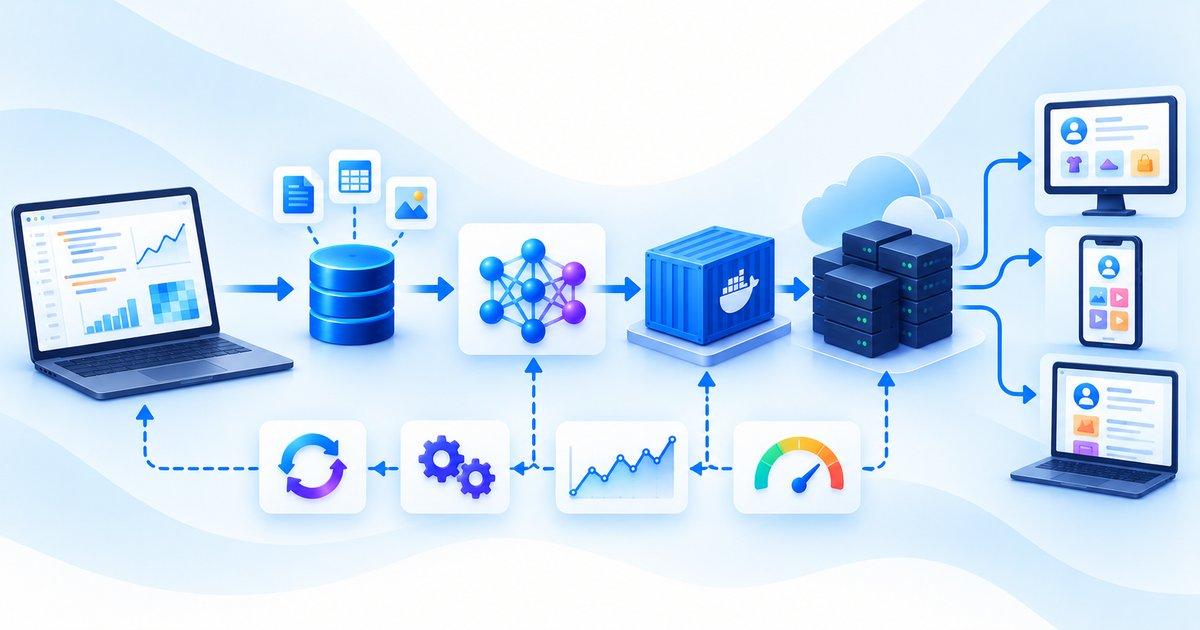
Feature pipelines therefore become an architectural dependency rather than an isolated data-science concern. A model might require a user's recent activity, transaction frequency, account attributes, or interaction history, and each of these signals may originate from different systems with different update frequencies. Engineers need to determine whether features should be computed synchronously during inference, precomputed through batch pipelines, maintained through streaming systems, or retrieved from a dedicated low-latency feature layer. The correct choice depends on freshness requirements, latency constraints, computational complexity, and operational reliability.
Data contracts become especially important because small changes in upstream schemas or feature definitions can alter model behavior without producing conventional application errors. A renamed field may break a service immediately, but a changed aggregation window can quietly modify predictions while every API continues returning successful responses. Backend engineers therefore need explicit ownership, validation, compatibility rules, and monitoring around data entering ML systems.
APIs Need to Expose Predictive Behavior Safely
ML-powered APIs require many of the same engineering principles as conventional APIs, but their contracts must account for the fact that outputs represent predictions rather than deterministic facts. A prediction endpoint may return a class, score, ranking, probability, recommendation, or generated result, and downstream consumers need clear definitions of what each output means and how it should be used. API contracts should therefore describe not only schemas but also assumptions around confidence, missing features, supported inputs, and model behavior.
Versioning becomes more important because changing a model can alter application behavior even when the request and response schemas remain unchanged. A new model version may produce different rankings, risk scores, classifications, or recommendations, which means deployment decisions need to consider behavioral compatibility rather than checking only whether the API contract remains valid. Techniques such as versioned endpoints, model identifiers, canary traffic, controlled rollout, and rollback procedures can help engineers manage these changes safely.
Backend systems should also avoid making inference services unnecessarily synchronous when the workload does not require an immediate prediction. Some applications can submit events asynchronously, process them through queues, and store predictions for later retrieval, reducing pressure on latency-sensitive APIs. Other applications genuinely require synchronous inference, making model execution, feature retrieval, and network communication part of the request's critical path. Architecture should therefore reflect the business requirement rather than assuming every ML workload belongs behind a conventional request-response endpoint.
The same principle applies to model failures because an inference dependency can fail or become too slow just like a database or external API. Timeouts, retries with appropriate limits, fallback models, cached predictions, and deterministic alternatives can prevent ML services from becoming single points of failure. The backend engineer's responsibility is to ensure that predictive functionality enhances the application without compromising its basic reliability.
Training and Serving Must Use Consistent Logic
One of the most important changes for backend engineers is understanding that the code used to prepare data during training must remain compatible with the transformations applied during production inference. A model may have been trained using normalized values, encoded categories, carefully defined aggregation windows, and specific missing-value handling, but the deployed service can produce very different predictions when even one of these assumptions changes.
Training-serving skew can occur when data-processing logic exists separately in notebooks, training pipelines, and backend services. Engineers may unintentionally implement similar transformations in multiple languages or codebases, creating subtle differences that are difficult to detect through ordinary testing. Centralizing feature definitions, reusing transformation logic where practical, validating schemas, and monitoring feature distributions can reduce this risk.
Feature freshness also becomes a design consideration because some predictions depend on information that changes rapidly. A recommendation model may need recent interactions, while a credit-related model may depend on updated financial attributes. Engineers must therefore distinguish between features that can safely be cached or precomputed and features that need near-real-time updates. The resulting architecture can combine batch computation, streaming pipelines, and online retrieval rather than forcing every feature through the same processing model.
These requirements reinforce the importance of disciplined data engineering in ML because feature logic effectively becomes part of the model's interface. “The Rise of Data Contracts: Bringing Software Engineering Discipline to ML Data” captures this broader shift toward explicit contracts between data producers and ML consumers, which becomes increasingly important as backend systems and ML pipelines evolve independently.
Key Takeaway
When backend systems incorporate machine-learning predictions, data pipelines, API contracts, training-serving consistency, and model-serving infrastructure become tightly connected to application architecture. Backend engineers can build reliable ML-powered systems by treating features as production dependencies, versioning models as behavioral components, preserving consistency between training and inference transformations, and designing serving layers that isolate computational complexity without compromising the reliability and scalability of the broader application.
Section 3: Reliability Changes When Predictions Become Part of the Product
System Health and Model Health Are Different Signals
Traditional backend monitoring focuses heavily on infrastructure and service health because an application is generally considered healthy when requests succeed within expected latency limits, dependencies remain available, and error rates stay within acceptable ranges. Machine-learning systems require an additional layer of observability because a prediction service can remain technically healthy while the quality of its outputs deteriorates. An inference endpoint may return successful responses, maintain normal CPU utilization, and meet its latency objective while the underlying model becomes less useful because production inputs no longer resemble the data used during training.
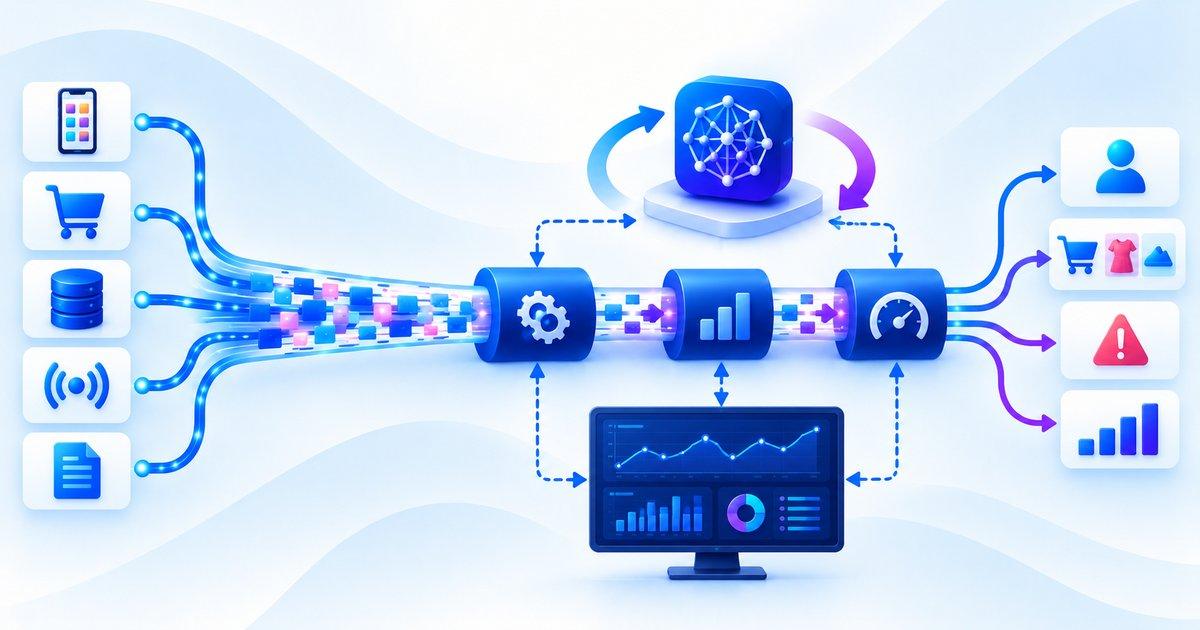
This distinction means ML-powered backend services need separate indicators for operational health and predictive health. Infrastructure metrics can reveal whether the service is running correctly, while prediction distributions, confidence patterns, feature statistics, quality measurements, and business outcomes can provide evidence about whether the model is still behaving appropriately. Backend engineers need to connect these two perspectives because a model issue may begin with an upstream data change rather than an application failure.
Data drift is one important example because production feature distributions can gradually change as users, products, markets, or operating conditions evolve. A feature that historically remained within a narrow range may begin receiving significantly different values, causing the model to operate outside the environment in which it was validated. The service can continue functioning normally while prediction quality declines, making drift detection an important extension of conventional observability.
Latency and Resource Behavior Become Part of Reliability
Inference latency is not simply a performance metric when predictions sit directly inside a user-facing or transactional backend workflow because excessive delay can affect the reliability of the entire application. A model that occasionally requires significantly more compute can create request queues, increase resource contention, and consume the latency budget available to downstream services. Backend engineers therefore need to understand not only average inference time but also tail latency, concurrency limits, memory consumption, and behavior under traffic spikes.
A model can also behave differently as request characteristics change. Larger inputs, longer sequences, more retrieved features, or increased concurrency can increase execution time and memory pressure even when the underlying model artifact remains unchanged. Production testing should therefore reproduce realistic workload patterns rather than relying exclusively on static benchmarks generated with idealized inputs.
Resource management becomes especially important when inference shares infrastructure with conventional backend services. A memory-intensive model can compete with application processes, while accelerator-heavy inference can become a bottleneck during traffic bursts. Separating workloads, controlling concurrency, autoscaling inference capacity, and defining resource limits can prevent predictive components from destabilizing unrelated application functionality.
Fallback mechanisms provide another layer of reliability because not every prediction request needs to depend completely on the highest-capacity model. A system can sometimes use a simpler model, a cached result, a deterministic rule, or a delayed workflow when the primary inference path is unavailable or too slow. The appropriate fallback depends on the business consequences of an incorrect or missing prediction, but the architectural objective remains to prevent model inference from automatically becoming a single point of failure.
Graceful Degradation Requires ML-Aware Failure Handling
Backend engineers are familiar with graceful degradation, but predictive systems introduce additional cases where degraded functionality may be preferable to complete failure. A model may become unavailable, a feature dependency may fail, confidence may be unusually low, or the current input may fall outside the model's supported operating range. In each situation, the application needs a defined response that reflects the business consequences of making or withholding a prediction.
Fallback behavior should be designed before deployment rather than introduced only after an incident occurs. A recommendation service might display a previously generated ranking, a fraud system might send uncertain cases for manual review, and a classification workflow might return a deterministic default when confidence is insufficient. These strategies provide resilience while making the limitations of predictive components explicit.
Model confidence can also participate in reliability decisions because the system does not always need to treat every prediction as equally trustworthy. Requests with unusual inputs or low-confidence outputs can be escalated to another model, routed for additional processing, or excluded from automated decisions. This creates a controlled boundary between cases where automation is appropriate and cases where additional safeguards are necessary.
The broader principles in “Failure Modes of Modern AI Systems and How Engineers Prevent Them” demonstrate why ML reliability requires anticipating behavioral failures in addition to technical failures. A robust backend architecture should therefore define what happens when the model is unavailable, when its inputs become questionable, when its confidence is low, and when its outputs may have unacceptable downstream consequences.
Key Takeaway
When predictions become part of a backend product, reliability must cover both the software infrastructure and the statistical behavior of the model. Engineers need to monitor latency and resource consumption alongside data drift, prediction quality, feedback loops, and confidence behavior, while designing fallbacks and graceful degradation paths that prevent uncertain or unavailable predictions from becoming single points of failure and allow the broader application to remain dependable as real-world conditions change.
Section 4: How Backend Engineers Can Become Effective ML Systems Engineers
Distributed Systems Skills Transfer Directly Into ML Engineering
Backend engineers already possess many of the skills required to build production machine-learning systems because modern ML applications depend heavily on the same distributed-systems foundations used by conventional software. API design, databases, caching, asynchronous processing, queues, service discovery, load balancing, observability, deployment automation, and fault isolation remain essential when predictions become part of the application architecture. The difference is that ML introduces an additional computational component whose behavior is learned from data rather than completely specified by application code.
Understanding distributed systems becomes particularly valuable when inference services need to scale independently from the rest of the application. A backend engineer can apply familiar principles to separate model serving from business logic, isolate resource-intensive inference workloads, control concurrency, and design reliable communication between services. The same architectural reasoning used to prevent one backend dependency from destabilizing an application can be applied to model-serving systems where inference latency or accelerator exhaustion can create similar cascading effects.
Data engineering skills also transfer strongly because production ML depends on reliable pipelines connecting raw events to usable features. Backend engineers who understand schemas, storage systems, event streams, data validation, and service contracts already have much of the foundation required to work effectively with ML data. The additional step is understanding how changes in those data flows can change model behavior rather than merely causing application errors.
Engineers Need a Mental Model for Data, Features, and Models
The most important new concepts for backend engineers involve understanding how data becomes model input and how model behavior depends on that data. A production ML system generally contains a lifecycle that begins with data collection, continues through transformation and feature generation, moves into training and evaluation, and eventually reaches deployment and inference. Engineers need to understand the relationships between these stages because inconsistencies between them can create subtle production failures.
Feature engineering is particularly important because models rarely consume raw business records directly. Features may represent aggregates, historical behavior, categorical encodings, embeddings, temporal signals, or normalized numerical values, and each feature carries assumptions about how it should be generated and interpreted. A backend engineer does not necessarily need to become a specialist in every modeling technique, but should understand enough about feature semantics, freshness, missing values, leakage, and distribution changes to recognize when a data pipeline can affect model quality.
Model evaluation also requires a different mental model from conventional unit testing because predictive systems are judged statistically across datasets rather than through a finite collection of expected outputs. Metrics such as precision, recall, calibration, ranking quality, or error distributions may provide more useful evidence than checking whether individual predictions match a predefined answer. Engineers need to understand which metric reflects the actual business objective and how changes in data or model versions influence those metrics.
This expands the definition of testing because ML systems need validation across data, models, pipelines, and serving behavior. A service can pass every traditional API test while a model silently receives incorrectly transformed features, making integration and data validation critical parts of the overall engineering discipline.
Backend Engineering Is Evolving Toward ML Systems Engineering
As intelligent functionality becomes embedded in more products, the boundary between backend engineering and ML engineering is becoming less rigid. Backend engineers increasingly interact with inference services, feature stores, model APIs, streaming data, experimentation platforms, and model observability systems, while ML engineers increasingly need strong distributed-systems and production engineering skills. The resulting role is centered on building reliable systems in which learned behavior operates alongside conventional application logic.
This evolution does not require every backend engineer to become a research-oriented machine-learning specialist. The more practical requirement is the ability to understand core ML concepts well enough to make sound system decisions, including how models are trained, what features they require, how predictions are evaluated, what causes model degradation, and how inference behaves under real production workloads. Engineers who combine these concepts with existing backend expertise can become especially effective at building ML-powered services because they understand both the predictive component and the infrastructure surrounding it.
Over time, ML-aware backend engineering will increasingly involve designing systems that can learn, adapt, and remain reliable under changing conditions. Model monitoring, retraining policies, experimentation, feedback loops, and data quality controls will become integrated into normal service operations rather than treated as specialized activities performed by separate teams. The broader ideas in “The Future of Software After the AI Revolution” point toward this convergence, where software increasingly combines deterministic engineering with systems that learn from data and adapt their behavior.
The resulting skill set is therefore not simply backend engineering plus machine learning, but a broader discipline focused on reliable intelligent systems. Engineers who can reason across APIs, distributed infrastructure, data pipelines, model behavior, inference performance, and production feedback loops will be positioned to design applications in which predictive capabilities become dependable parts of the software architecture rather than fragile additions layered onto it.
Key Takeaway
Backend engineers already possess much of the foundation required for effective ML systems engineering because distributed systems, APIs, databases, observability, deployment, and reliability remain central to production machine learning. The major shift is learning to incorporate data dependencies, probabilistic behavior, feature pipelines, model lifecycle management, and predictive monitoring into those existing engineering practices, enabling backend engineers to design intelligent systems that remain scalable, observable, and reliable as both the software and the underlying data evolve.
Conclusion
Machine learning changes backend engineering not because the foundations of software development disappear, but because learned behavior introduces a new layer of uncertainty, data dependency, and operational complexity into systems that were traditionally built around deterministic logic. APIs, databases, queues, caching, distributed services, observability, deployment pipelines, and fault tolerance remain essential, but they now operate alongside models whose outputs are probabilistic and whose behavior can change as the underlying data evolves.
For backend engineers, the most important shift is learning to treat predictions as production components rather than simple function results. A successful inference request does not necessarily represent a successful business outcome because the model can return a technically valid prediction that is inaccurate, poorly calibrated, outdated, or inappropriate for the input. This requires engineers to think about model quality, confidence, feature freshness, data drift, and behavioral changes alongside conventional metrics such as availability, throughput, and latency.
Data also becomes part of the runtime architecture. Features may depend on streaming events, historical aggregations, external systems, or dedicated feature-serving layers, and changes in these dependencies can alter model behavior without triggering conventional application failures. Training-serving consistency, data contracts, feature versioning, and pipeline observability therefore become essential engineering concerns rather than optional additions.
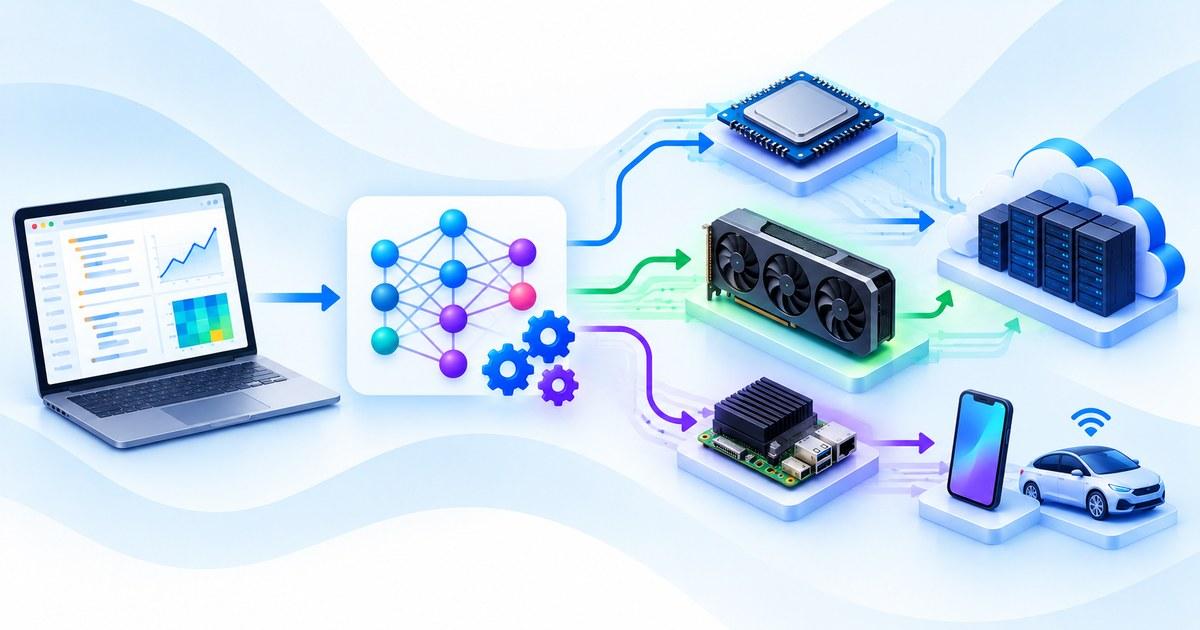
Model serving introduces another architectural dimension because inference workloads can have very different computational characteristics from ordinary backend services. Large models may require specialized hardware, independent scaling, controlled concurrency, and optimized runtimes, while latency-sensitive applications may require caching, lightweight models, asynchronous processing, or carefully designed fallback strategies. Backend engineers can apply familiar distributed-systems principles to these challenges while adding an understanding of model lifecycle and predictive behavior.
Reliability must also expand beyond infrastructure health. A service can be available while model quality deteriorates because user behavior has changed, upstream data has shifted, or feedback loops have altered the environment from which new training data is collected. Effective ML systems therefore require monitoring that connects application health, data quality, model performance, prediction distributions, and business outcomes.
The transition toward ML systems engineering is consequently less about abandoning backend expertise and more about extending it. Engineers who combine strong software architecture with an understanding of data pipelines, features, inference, model evaluation, drift, and feedback loops can build intelligent applications that remain reliable as their models and operating environments evolve.
Ultimately, machine learning becomes most valuable in backend systems when predictive capabilities are treated as first-class production components with explicit contracts, observability, failure handling, and lifecycle management. The strongest ML-powered applications are not simply systems with a model attached to an API; they are carefully engineered software systems in which deterministic infrastructure and learned intelligence work together.
Frequently Asked Questions
1. Why should backend engineers learn machine learning?
Backend engineers increasingly work on applications that depend on recommendations, ranking, fraud detection, personalization, forecasting, search, and other predictive capabilities. Understanding ML helps engineers design reliable architectures around these models and reason about how data, inference, model quality, and production behavior affect the wider application.
2. How is machine learning different from traditional backend logic?
Traditional backend logic is usually expressed through explicit rules that engineers define, while ML models learn patterns from historical data and apply those patterns to new inputs. This means model outputs are probabilistic and can be incorrect even when the software executes exactly as intended.
3. Does a backend engineer need to become a machine-learning researcher?
No, because production ML engineering requires a practical understanding of models, features, evaluation, inference, monitoring, and data pipelines rather than deep specialization in every research technique. Strong backend fundamentals remain highly valuable when building and operating ML-powered systems.
4. What changes when a backend API returns a prediction?
A predictive API needs to account for uncertainty, model versions, confidence, data dependencies, and behavioral changes in addition to conventional API concerns such as schemas, authentication, latency, and availability. Consumers may also need rules for handling low-confidence or unavailable predictions.
5. Why are features important to backend engineers?
Features are the inputs that connect production data to model behavior, and they may depend on databases, event streams, aggregations, external services, or feature-serving systems. Errors or inconsistencies in feature generation can change predictions even when the model artifact itself has not changed.
6. What is training-serving skew?
Training-serving skew occurs when the data transformations or feature definitions used during model training differ from those used during production inference. Even small differences in normalization, encoding, aggregation, missing-value handling, or feature freshness can cause the deployed model to behave differently from its offline evaluation.
7. Should ML inference always be implemented as a separate service?
Not necessarily, because the appropriate architecture depends on model size, latency requirements, resource consumption, deployment frequency, and scaling needs. Lightweight models may run directly within an application, while larger or accelerator-dependent models may benefit from independent inference services.
8. How should backend engineers monitor ML systems?
Monitoring should cover conventional service metrics such as availability, errors, latency, throughput, and resource utilization together with ML-specific signals such as prediction distributions, confidence, feature distributions, model quality, drift, and relevant business outcomes.
9. Can an ML service be healthy while the model is failing?
Yes, because infrastructure health and predictive health are different concepts. An inference endpoint can return successful responses with normal latency while the model's quality declines because of distribution changes, data problems, training-serving inconsistencies, or evolving user behavior.
10. What is model drift?
Model drift generally describes degradation or change in model behavior or predictive performance as the production environment evolves. Changes in user behavior, data relationships, upstream systems, or the target phenomenon can cause a previously effective model to become less suitable for current production conditions.
11. How should backend systems handle model failures?
Production systems can use timeouts, fallback models, cached predictions, deterministic rules, asynchronous processing, or graceful degradation depending on the business requirements. The appropriate strategy depends on whether an incorrect prediction, a missing prediction, or additional latency represents the greater risk.
12. Why is model versioning different from normal code versioning?
A code change can alter system behavior, but a model change can also alter predictions while leaving the API interface unchanged. Model releases therefore require behavioral validation, controlled rollout, quality monitoring, and rollback mechanisms in addition to conventional deployment checks.
13. What role does observability play in ML systems?
Observability helps engineers connect infrastructure behavior with data and model behavior so they can identify whether a problem originates from the application, feature pipeline, model, hardware, or changing production conditions. This is particularly important because many ML failures do not produce explicit application errors.
14. How do feedback loops affect backend ML systems?
A model can influence the environment from which future training data is collected, meaning its predictions can change the behavior that the next model learns from. Recommendations can affect clicks, ranking can affect exposure, and automated decisions can influence future labels, making the relationship between model outputs and training data more complex than in conventional applications.
15. What skills should a backend engineer develop to move into ML engineering?
Backend engineers should build practical knowledge of supervised learning, model evaluation, feature engineering, data pipelines, inference, model serving, drift, experimentation, and ML monitoring while continuing to strengthen distributed systems, APIs, databases, observability, and production reliability. The combination of these disciplines provides the foundation for building dependable ML systems rather than merely deploying individual models.