
Section 1: Why Strict Latency Changes the Machine-Learning Engineering Problem
Prediction Quality Is Not Enough When Timing Matters
Machine-learning systems are traditionally evaluated through predictive metrics such as accuracy, precision, recall, ranking quality, or forecast error, but real-time applications introduce another requirement because a prediction can lose much of its value when it arrives after the decision window has closed. A fraud model that returns an excellent risk score after a transaction has already been authorized cannot provide the same operational value as one that responds before authorization, while a recommendation generated after a user has left a page may be technically accurate but practically irrelevant. Real-time ML therefore treats latency as part of model quality because the usefulness of a prediction depends on both what the system predicts and when the prediction becomes available.
Latency requirements can vary significantly across applications because a system supporting an interactive user experience may tolerate tens or hundreds of milliseconds, while a control loop for robotics, autonomous systems, or high-frequency infrastructure may require substantially tighter response times. The constraint is not simply a desire for speed because the system must meet a defined response budget consistently enough to satisfy the application's reliability requirements. Engineers therefore need to establish latency targets before selecting a model architecture, because a highly accurate model that consistently exceeds the application's time budget may be unsuitable regardless of its predictive quality.
This changes the optimization objective from maximizing model performance in isolation to balancing predictive quality, response time, reliability, and resource consumption together. A more computationally expensive model may provide better accuracy but reduce throughput or increase tail latency, while a smaller model may respond faster but introduce unacceptable errors on important inputs. The engineering task is to determine where the trade-off produces the strongest overall system behavior rather than assuming that the highest offline accuracy automatically represents the best production model.
The broader production principles discussed in “From Experiment to Production: The Decisions That Shape an ML System” are relevant because model selection becomes a systems decision once deployment constraints are introduced. Real-time ML requires engineers to consider not just what a model can learn but whether its predictions can arrive predictably enough to influence the application at the moment they are needed.
End-to-End Latency Is More Than Model Inference Time
One of the most common mistakes in real-time ML engineering is treating model inference time as equivalent to application latency because the model may represent only one stage of the request path. A typical prediction request can involve network routing, authentication, feature retrieval, database queries, preprocessing, serialization, model execution, post-processing, business rules, and downstream service calls before the final response reaches the user or machine. A model that executes in a few milliseconds can therefore exist inside a system whose total response time is several times larger.
Feature retrieval is often a major source of delay because real-time models depend on current contextual information that may need to be fetched from a feature store, database, cache, or streaming state service. A fraud detector may need recent account activity, a recommendation model may require current session information, and an operational model may depend on recent telemetry. If these features are computed or retrieved synchronously during the request, the model may remain computationally efficient while the overall prediction path becomes latency-bound by data access.
Serialization and network communication can create additional overhead, particularly when model services are distributed across multiple machines or regions. Transferring large feature vectors or intermediate representations between components can consume more time than the inference operation itself, making data locality and service topology important parts of latency engineering. Engineers can therefore improve performance by moving computation closer to data, reducing payload sizes, caching frequently used information, or combining tightly coupled components when network overhead becomes significant.
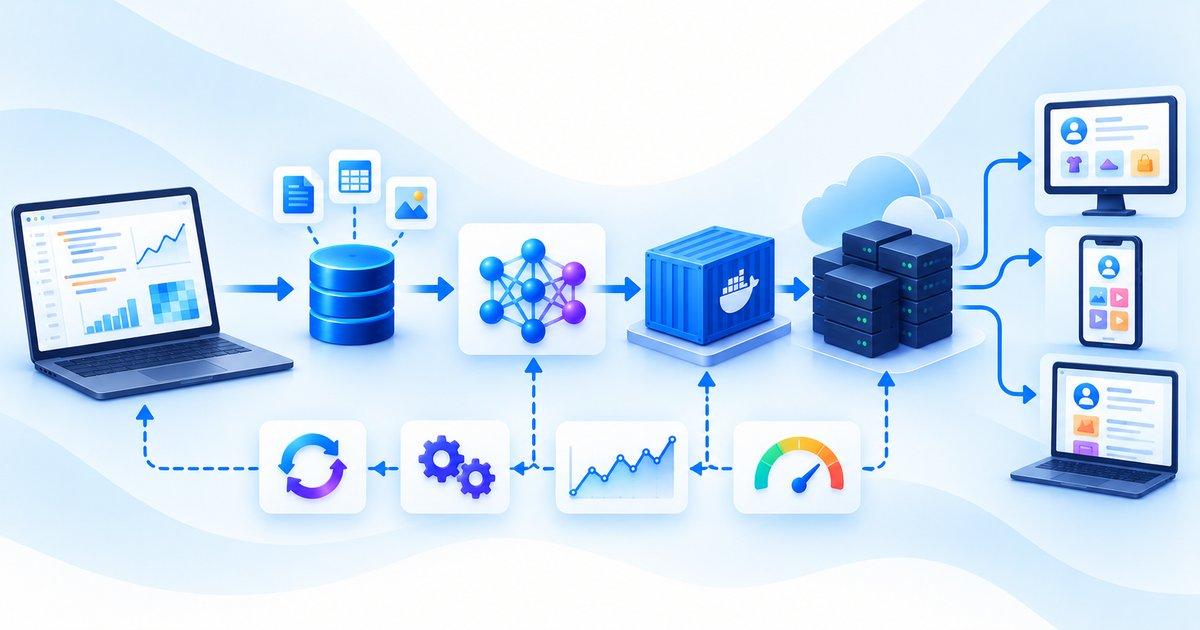
End-to-end measurement is consequently essential because optimizing only the model can miss the real bottleneck. Profiling should identify the time spent in every stage of the request path and reveal whether the dominant constraint comes from feature retrieval, preprocessing, model execution, communication, or downstream processing. This systems-level perspective allows engineers to spend optimization effort where it produces the greatest reduction in actual response time.
Tail Latency Matters More Than Average Latency in Critical Systems
Average latency can provide a useful summary of model performance, but it can hide the slow requests that determine whether a real-time system meets its service-level objectives. A model with an average response time of 30 milliseconds can still produce a significant fraction of requests that take hundreds of milliseconds when traffic spikes, input sizes increase, hardware becomes contended, or downstream dependencies slow down. For latency-sensitive applications, those slow responses can matter more than the average because user experience and operational correctness are often determined by the worst part of the distribution.
Engineers therefore monitor percentile-based measures such as p95, p99, and higher tail-latency statistics to understand how the system behaves under demanding conditions. Tail latency can increase when requests wait in queues, when accelerators become saturated, when garbage collection occurs, or when feature services experience temporary contention. A model that is fast under low concurrency can consequently become unpredictable when production traffic increases, making concurrency testing and load testing essential before deployment.
Batching introduces an important trade-off because combining multiple requests can improve accelerator utilization and overall throughput while adding waiting time before a request is executed. Large batches may reduce average compute cost but increase response latency, while single-request inference may provide lower waiting time but underutilize hardware. Engineers must therefore tune batch behavior according to the application's latency budget, traffic pattern, and hardware characteristics rather than optimizing exclusively for throughput.
Tail latency can also be affected by external dependencies that the model does not control directly. If a real-time prediction depends on a database or feature service with variable response times, the model's own performance may remain stable while end-to-end tail latency deteriorates. This means reliability targets need to be defined for the complete inference path, with explicit budgets for each major component so that one slow dependency does not consume the entire response window.
Real-Time ML Requires Predictable Resource and Execution Behavior
Meeting strict latency targets consistently requires more than making the model fast on average because resource contention, workload variability, and hardware behavior can change execution time from one request to another. Engineers therefore need predictable serving environments in which CPU and accelerator capacity, memory usage, concurrency, and request scheduling are controlled sufficiently to keep latency within acceptable bounds. This can involve dedicated inference capacity, resource isolation, carefully chosen autoscaling policies, and workload prioritization when multiple applications share the same infrastructure.
Model architecture directly influences predictability because highly variable computational paths can produce inconsistent execution times. Conditional computation can reduce average cost by allocating more work to difficult inputs, but the serving architecture must account for the resulting variation if strict response deadlines exist. Similarly, dynamic batching can improve utilization but introduce request-dependent waiting periods. The goal is therefore not always to minimize average computation but to create a system whose latency distribution remains predictable under realistic operating conditions.
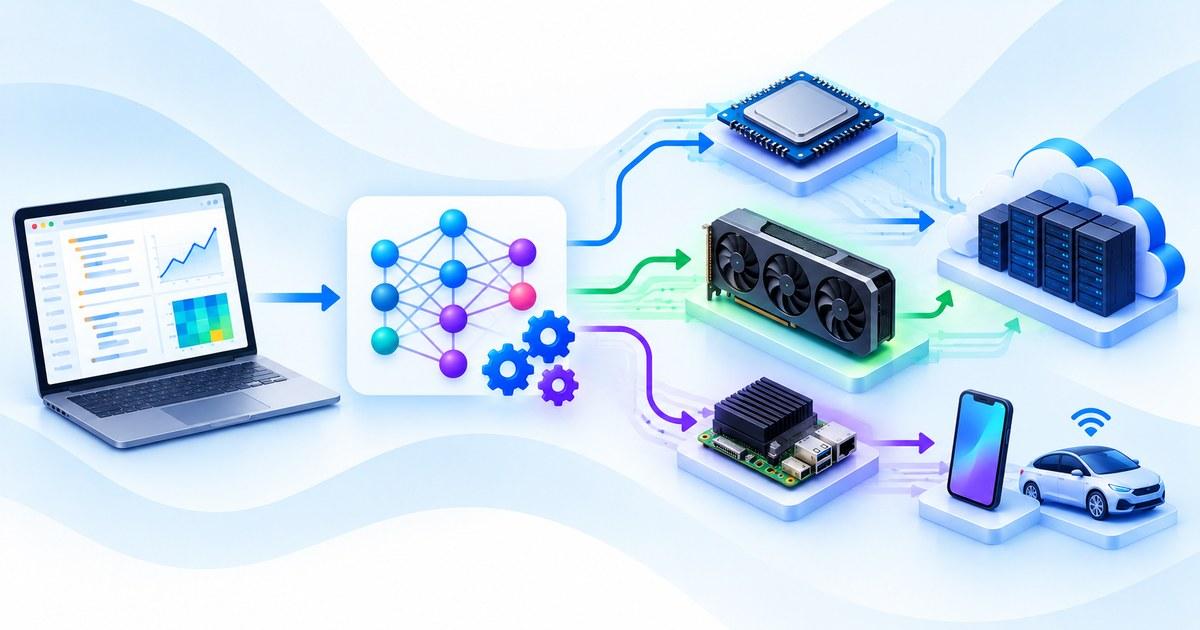
Hardware selection also becomes important because processors, GPUs, specialized accelerators, and edge devices have different execution characteristics. Memory bandwidth, cache behavior, kernel support, numerical precision, and accelerator utilization can all affect response time, making hardware-aware profiling essential for high-performance deployments. A model that executes quickly in a development environment may behave differently in production when concurrency, memory pressure, or input dimensions change.
This makes resource management part of ML model engineering rather than a separate infrastructure concern. Engineers need to understand the relationship among model architecture, request volume, hardware capacity, feature pipelines, and serving policies so that the system can maintain its latency commitments even as workloads evolve.
Key Takeaway
Strict latency constraints transform machine-learning engineering from a problem of predictive accuracy into a systems problem involving response time, tail behavior, data retrieval, hardware utilization, concurrency, and resource predictability. Real-time ML succeeds when the entire inference path is engineered to deliver sufficiently accurate predictions within a reliable time budget, making end-to-end profiling and latency-aware architecture essential from model development through production serving.
Section 2: How Engineers Build Models That Meet Tight Latency Budgets
Model Architecture Determines a Large Part of Inference Cost
Meeting a strict latency budget begins with model architecture because every operation contributes to prediction time. Engineers need to evaluate parameter count, operation types, depth, sequence length, attention complexity, tensor dimensions, and memory movement before selecting a model for a latency-sensitive workload. A model with higher offline accuracy can become unsuitable when its computation exceeds the available response window.
Architectural efficiency comes from reducing unnecessary work rather than shrinking every component indiscriminately. Efficient attention mechanisms, factorized operations, lightweight encoders, reduced depth, and conditional computation can lower inference cost while preserving capability. A conditional architecture can route straightforward inputs through a cheaper path while reserving deeper computation for difficult cases, reducing average resource use without eliminating higher-capacity processing.
Architecture must also match the serving scenario because interactive applications, streaming services, batch scoring systems, and embedded devices have different latency requirements. A model optimized for large batches may perform poorly for single-request inference, while a model tuned for minimum latency may sacrifice throughput under high concurrency. Engineers need to define the production workload before optimizing the architecture. This matters most when latency budgets are measured in milliseconds, because even small delays in preprocessing, communication, or scheduling can consume the time available for the model itself under real production traffic.
Compression, Quantization, and Distillation Reduce Execution Overhead
Compression techniques can reduce latency by decreasing computation and memory requirements. Pruning removes low-value structures, distillation transfers useful behavior from a larger model into a smaller student, and architectural simplification eliminates components that add little predictive value. These methods help when an accurate model is too expensive to serve at scale.
Quantization reduces the numerical precision used for weights and activations, which can lower memory consumption and improve execution on hardware that supports lower-precision arithmetic. The benefit depends on processor and runtime support. Engineers therefore need to test quantized models on target hardware rather than assuming that fewer bits automatically produce proportional latency improvements.
Distillation can move computational expense from production inference into offline training by using a larger teacher model to train a smaller student. The student can then serve routine requests faster while retaining much of the teacher's useful behavior. Engineers still need to evaluate difficult inputs because compression can hide capability loss.
Caching and Selective Computation Avoid Unnecessary Inference
Some of the strongest latency improvements come from avoiding computation altogether. Caching can reuse stable predictions, embeddings, feature values, or intermediate results so repeated requests do not trigger identical work. This is useful for recurring inputs when freshness and invalidation rules prevent stale outputs.
Selective computation reduces average latency by assigning different amounts of model capacity to different requests. A lightweight model can process routine cases, while uncertain inputs are routed to a larger model or deeper reasoning stage. Confidence thresholds or request metadata can determine when expensive computation is justified, allowing advanced capability to remain available without applying its full cost to every request.
Caching and selective routing can complement model compression because a smaller model can handle common cases while a larger model is reserved for ambiguous cases. This creates a layered serving architecture in which computational resources are allocated according to request complexity. The principles in “Caching for AI Applications: The Overlooked Technique for Reducing Inference Costs” illustrate why eliminating repeated work can be as important as accelerating individual operations.
Hardware-Aware Optimization Improves Real-Time Throughput
A model can fail its latency target when it is executed inefficiently on the production hardware, making accelerator-aware optimization essential for real-time ML. CPUs, GPUs, neural processing units, and custom AI accelerators differ in memory hierarchy, supported operations, numerical formats, and execution behavior, so the same computational graph can produce very different latency across platforms. Engineers need to profile the actual production hardware.
Memory movement can become a major bottleneck because processors may execute arithmetic faster than data can be supplied. Repeated tensor copies, inefficient layouts, and large activations can increase latency. Operator fusion, efficient layouts, reduced precision, and careful memory management can reduce these transfers and improve hardware utilization.
Concurrency also affects latency because multiple requests compete for compute and memory resources. A model that performs well for isolated requests may develop high tail latency under production traffic. Engineers should therefore measure p95 and p99 latency alongside throughput and utilization, testing realistic concurrency, input sizes, and workload bursts.
The strongest real-time systems consequently optimize architecture, compression, caching, routing, runtime behavior, and hardware utilization together, allowing teams to meet latency budgets without sacrificing more predictive capability than necessary.
Key Takeaway
Real-time ML requires a combination of efficient architecture, compression, quantization, distillation, caching, selective computation, and hardware-aware execution rather than a single optimization. Engineers must measure the complete serving path under realistic concurrency and tail-latency conditions so computational savings translate into predictable production response times without removing capabilities the application needs.
Section 3: Designing Low-Latency ML Serving and Feature Pipelines
Feature Retrieval Can Become the Real Latency Bottleneck
Even when model inference takes only a few milliseconds, an ML system can still miss its latency target because the model is waiting for features. Production predictions frequently depend on user profiles, recent transactions, historical behavior, inventory information, application state, or continuously updated signals, which means the prediction service must retrieve and transform data before inference can begin. When these dependencies involve multiple network calls, remote databases, or complex transformations, feature retrieval can consume more of the latency budget than the model itself.
Real-time feature engineering therefore needs to be designed as part of the serving architecture rather than treated as a separate data-processing concern. Engineers often precompute expensive aggregations, store frequently accessed features in low-latency systems, and minimize the number of synchronous dependencies required for a prediction. Feature representations should also remain consistent between training and production because a faster pipeline is not useful when it produces features that differ from those used during model development.
Network distance matters as well because every remote dependency introduces communication overhead and additional sources of variability. Keeping frequently accessed features physically close to the inference service, reducing serialization costs, and avoiding unnecessary service-to-service calls can make latency more predictable. These decisions become particularly important in systems where a strict end-to-end deadline leaves only a small amount of time for feature retrieval before model execution begins.
Streaming and Precomputed Features Reduce Online Processing
Real-time ML systems cannot afford to perform every transformation from raw data during the prediction request. Instead, engineers can move computationally expensive operations into streaming or batch pipelines, allowing production inference to consume already-prepared features. Recent events can be processed continuously as they arrive, while slower-changing characteristics can be refreshed periodically, creating a layered feature pipeline that balances freshness with performance.
Streaming architectures are especially useful when predictions depend on signals such as recent clicks, purchases, sensor readings, application events, or operational metrics. Rather than querying a large historical dataset during every request, the system can maintain compact state that represents the latest relevant information. This approach reduces both computation and data-access latency while allowing the model to react quickly to changing conditions.
Precomputation also improves predictability because the online path becomes smaller and easier to profile. Feature transformations that require joins, aggregations, window calculations, or expensive parsing can be executed before the request arrives, leaving only lightweight retrieval and model execution for the critical path. The challenge is maintaining freshness and consistency, because aggressive precomputation can create stale features while overly frequent updates can increase infrastructure complexity.
These concerns connect closely with “The Journey of a Dataset: From Raw Data to Production ML,” because the path from raw events to production features ultimately determines how quickly useful information can reach the model. A real-time prediction system therefore depends not only on model optimization but also on how efficiently data moves through the feature lifecycle.
Batching, Concurrency, and Parallelism Require Careful Trade-Offs
Serving infrastructure must balance throughput against response-time requirements because techniques that increase overall utilization can sometimes increase individual request latency. Batching is a common example: processing several requests together can improve hardware efficiency, but waiting to accumulate a batch introduces queueing delay. For applications with strict latency budgets, dynamic batching must therefore use carefully bounded windows that provide efficiency without allowing requests to wait excessively.
Concurrency creates a similar trade-off because multiple requests can share available compute resources, but contention for memory, CPU cycles, accelerator capacity, or network bandwidth can increase tail latency. Engineers need to test realistic traffic patterns rather than evaluating inference under a single-request benchmark. A service that appears extremely fast at low utilization may behave differently when thousands of requests arrive simultaneously.
Parallel execution can reduce critical-path time when independent operations are available, such as retrieving multiple feature groups concurrently or running preprocessing stages in parallel. However, parallelism introduces synchronization points, additional resource consumption, and potential contention. Effective latency engineering therefore focuses on shortening the critical path rather than maximizing parallelism indiscriminately.
Monitoring average latency is also insufficient because queueing and contention often affect a small fraction of requests disproportionately. Measuring p95, p99, and higher tail percentiles helps engineers identify situations where most users receive fast responses while a meaningful minority experiences delays large enough to violate the system's service objective.
Serving Architectures Must Protect Latency During Traffic Bursts
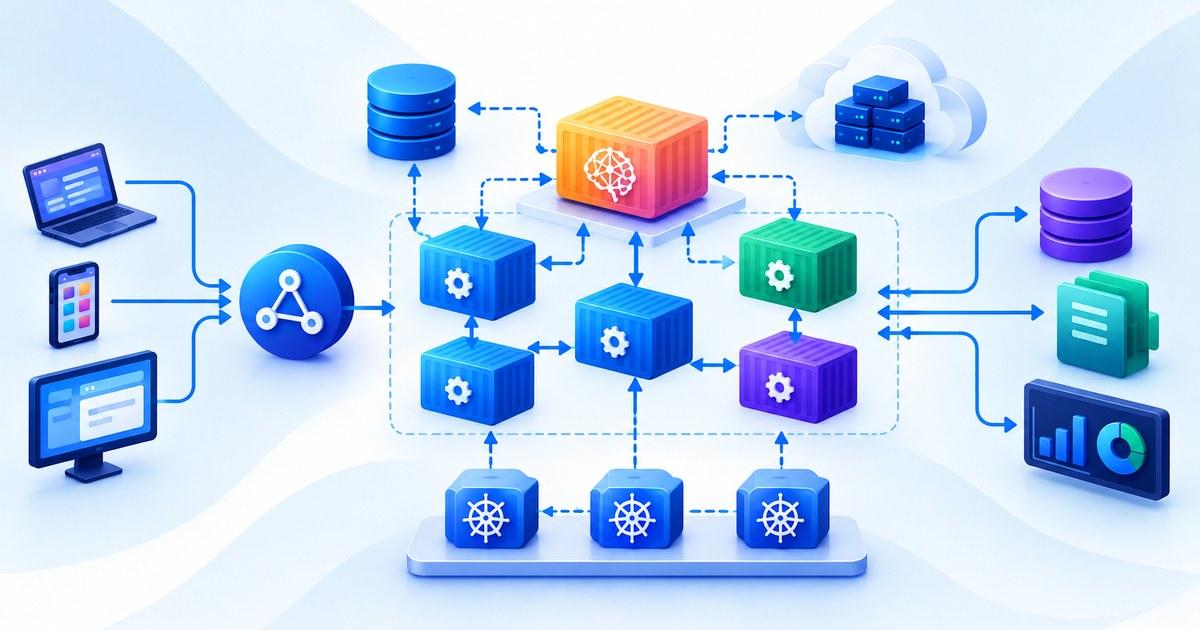
A low-latency design must remain responsive when traffic changes unexpectedly because real production workloads rarely remain perfectly stable. Sudden demand increases can exhaust compute capacity, create request queues, and cause cascading latency increases across dependent services. Engineers therefore need serving architectures that isolate workloads, provide controlled admission, and preserve critical inference capacity during bursts.
Horizontal scaling can add serving replicas as traffic increases, but scaling decisions themselves require time, and rapidly changing workloads can outpace infrastructure response. Capacity planning, warm instances, intelligent load balancing, and reserved resources can reduce the likelihood that a sudden demand spike causes severe latency degradation. Some systems also use prioritization so latency-sensitive requests receive resources before background workloads.
Fault tolerance must be considered alongside performance because failed dependencies can otherwise cause requests to wait until timeouts expire. Timeouts, fallbacks, cached features, degraded models, and graceful degradation paths can prevent one slow component from consuming the entire latency budget.
Key Takeaway
Low-latency ML serving depends on controlling the entire prediction path, from feature retrieval and streaming pipelines to batching, concurrency, scaling, and failure handling. The model is only one component of the system, and predictable response times require engineers to minimize synchronous dependencies, precompute expensive work, control queueing, monitor tail latency, and design serving infrastructure that remains responsive during traffic variation and partial failures.
Section 4: The Future of Real-Time Machine Learning
Adaptive Inference Will Allocate Compute Based on the Request
Future real-time ML systems will treat inference compute as a dynamic resource rather than a fixed cost applied equally to every request. Not every input requires the same depth, so systems can reduce latency by adapting execution according to confidence, complexity, or business importance. A lightweight path can handle routine inputs quickly, while uncertain cases trigger deeper processing, a larger model, or additional verification when the latency budget permits.
Adaptive inference can use contextual signals to determine how much computation is justified. A recommendation request with strong historical evidence may require less processing than a new-user request, while an unusual fraud transaction may justify deeper analysis. The challenge is keeping routing decisions inexpensive enough that their overhead does not erase latency savings.
This changes optimization from benchmarking into a resource-allocation problem. Engineers must measure request distribution across computational paths, the proportion routed to expensive models, and the resulting tail latency. Such systems can preserve predictive capability while keeping common cases fast because expensive computation is reserved for inputs where it provides measurable value.
Specialized Hardware Will Push Latency Lower
Hardware evolution will continue to influence real-time inference performance. CPUs remain useful for flexible workloads, while GPUs, neural processing units, inference accelerators, and specialized silicon can execute ML workloads more efficiently. The important change is hardware designed around numerical operations, memory patterns, and tensor workloads used by modern models.
Lower-precision computation will remain important because specialized hardware can execute formats such as FP16, BF16, and INT8 efficiently when the workload supports them. Engineers therefore need to consider hardware capabilities during model development rather than optimizing a model first and selecting infrastructure afterward. The same architecture can produce different latency depending on accelerator design, memory bandwidth, runtime support, and available operators.
Compilation and runtime optimization will also matter through operator fusion, graph compilation, kernel optimization, and memory planning. These methods can eliminate overhead not visible from architecture alone, making performance profiling part of model development. This direction connects with “Resource-Aware Machine Learning: Designing Models Around Compute and Energy Limits,” because latency-sensitive systems must treat compute, energy, hardware capacity, and operating cost as connected engineering constraints.
Edge and Cloud Systems Will Share Real-Time Intelligence
Real-time ML will increasingly distribute inference across cloud and edge devices. Applications involving robotics, industrial monitoring, connected vehicles, mobile experiences, and interactive devices can benefit from local inference because remote requests introduce network latency, bandwidth requirements, and connectivity dependencies. Compact models can therefore execute locally for time-sensitive decisions while larger models remain in the cloud.
Hybrid architectures can divide computation according to latency and complexity. Edge systems can handle immediate decisions, while cloud services perform deeper analysis, centralized coordination, model management, or periodic refinement. The challenge is maintaining consistency across model versions, features, policies, and fallback behavior.
Edge deployment also introduces constraints such as limited memory, power consumption, hardware diversity, and intermittent connectivity. These conditions increase the importance of quantization, compact architectures, efficient features, and reliable degradation.
Latency Engineering Will Become a Core ML Platform Capability
As real-time ML becomes embedded in more products, latency management will become a shared ML platform capability. Serving platforms will need standardized mechanisms for profiling, latency budgets, autoscaling, routing, caching, hardware selection, observability, and controlled model rollouts. This makes latency a measurable engineering objective rather than an isolated concern handled separately by every model team.
End-to-end observability will be essential because latency problems can originate in model execution, feature retrieval, network communication, queueing, resource contention, or downstream services. Platform teams will therefore need tracing that connects request behavior with model versions, feature pipelines, infrastructure conditions, and hardware utilization. Optimizing inference alone will not solve problems when another component dominates the critical path.
Future systems will treat latency budgets as design constraints. Model architecture, feature computation, deployment location, hardware target, caching strategy, and fallback behavior can all be evaluated against the same end-to-end objective. The question will shift from whether a model is fast to whether the complete product experience remains predictable under realistic load, making latency engineering a core discipline spanning algorithms, data, infrastructure, and product requirements.
Key Takeaway
The future of real-time machine learning will be shaped by adaptive inference, specialized hardware, edge-cloud cooperation, and platform-level latency engineering working together. Engineers will increasingly design around explicit latency budgets, allocate computation according to request complexity, deploy intelligence where response time requires it, and use shared infrastructure to maintain predictable performance, making responsiveness a core property of production ML rather than a late optimization.
Conclusion
Machine learning for real-time systems requires a fundamentally different engineering mindset from conventional offline modeling. A model can achieve excellent predictive performance during experimentation and still fail in production when every prediction must be generated within a strict and predictable time window. In latency-sensitive applications, model quality, inference speed, feature availability, network communication, hardware utilization, concurrency, and failure handling all contribute to the final user experience.
The first priority is establishing an explicit end-to-end latency budget and understanding where that budget is consumed. Model architecture is an important component, but inference time represents only part of the critical path. Feature retrieval, preprocessing, serialization, network communication, queueing, scheduling, and downstream dependencies can introduce substantial overhead, making system-level profiling essential. Engineers can then apply architectural simplification, quantization, distillation, pruning, caching, selective computation, and hardware-aware optimization where they produce measurable improvements.
Real-time performance also depends on how the surrounding serving system behaves under realistic workloads. Precomputed and streaming features can reduce online processing, while carefully designed batching and concurrency can improve infrastructure efficiency without allowing queueing delays to dominate response time. Autoscaling, load balancing, timeouts, fallbacks, and graceful degradation become equally important when traffic increases or individual services experience failures. These decisions transform low-latency ML from a model optimization exercise into a complete distributed-systems engineering problem.
The next generation of real-time ML will increasingly use adaptive inference, specialized accelerators, compact models, and hybrid edge-cloud architectures. Instead of applying maximum computational capacity to every request, systems can dynamically allocate resources according to request complexity, confidence, business importance, and available latency budget. This approach can make real-time intelligence more responsive while controlling compute and infrastructure costs.
Ultimately, successful real-time ML systems are not defined simply by how quickly a model executes in isolation. They are defined by whether the complete system can consistently produce useful predictions within the required response window under realistic traffic, changing data, hardware constraints, and partial failures. Treating latency as a first-class design requirement from the beginning allows ML engineers to build systems that are not only accurate, but also responsive, predictable, scalable, and reliable in production.
Frequently Asked Questions
1. What is ML for Real-Time Systems?
ML for Real-Time Systems refers to machine-learning applications where predictions must be generated within strict response-time requirements. These systems commonly support interactive applications, fraud detection, recommendation systems, industrial monitoring, robotics, and other workloads where delayed predictions can reduce system effectiveness.
2. Why is latency important in real-time machine learning?
Latency determines how quickly an ML system can respond to an event or request. When an application has a strict response deadline, even a highly accurate model becomes unsuitable if feature retrieval, inference, networking, or queueing causes the total response time to exceed that deadline.
3. Is model inference latency the only source of delay?
No, inference is only one component of end-to-end latency. Feature retrieval, preprocessing, serialization, network communication, request queueing, resource contention, and downstream services can all contribute significantly to the final response time.
4. What is a latency budget in ML systems?
A latency budget is the maximum amount of time available for the complete prediction workflow. Engineers typically divide that budget across components such as feature retrieval, preprocessing, model inference, communication, and response generation so that individual services do not consume more time than the overall system can tolerate.
5. Why does tail latency matter for real-time ML?
Average latency can hide slow requests that occur during traffic spikes, resource contention, or unusual workloads. Metrics such as p95 and p99 latency reveal the behavior of slower requests and help engineers determine whether a system consistently meets its production response-time objectives.
6. How can model architecture reduce inference latency?
Engineers can reduce inference latency by using smaller architectures, reducing unnecessary layers or operations, simplifying computational graphs, controlling sequence lengths, and using architectures designed for efficient execution on the target hardware. Architectural decisions should be evaluated using the actual production workload rather than offline accuracy alone.
7. How does quantization improve real-time inference?
Quantization reduces the numerical precision used by model weights and activations, which can decrease memory requirements and accelerate computation on compatible hardware. Its actual latency benefit depends on the model, runtime, hardware platform, and supported numerical formats, so production benchmarking is necessary.
8. How does knowledge distillation help low-latency ML?
Knowledge distillation trains a smaller student model to reproduce useful behavior learned by a larger teacher model. The resulting student can require substantially fewer computational resources during production inference while retaining much of the predictive capability needed for the application.
9. Can caching reduce ML inference latency?
Yes, caching can eliminate repeated computation by reusing previously generated predictions, embeddings, features, or intermediate results. Effective caching requires appropriate freshness and invalidation rules because stale information can reduce prediction quality even when response times improve.
10. Why are feature pipelines important for real-time ML?
Features can consume a significant portion of the latency budget before model inference even begins. Precomputing expensive transformations, maintaining streaming state, reducing remote dependencies, and storing frequently accessed features in low-latency systems can make the prediction path faster and more predictable.
11. Does batching always improve real-time ML performance?
No, batching can increase hardware efficiency and throughput but may introduce waiting time while requests accumulate. For strict latency workloads, engineers must carefully balance batch size and batching windows against the application's maximum acceptable response time.
12. What role does hardware acceleration play in real-time ML?
Specialized hardware can execute ML operations more efficiently through optimized numerical formats, parallel computation, memory architectures, and dedicated acceleration capabilities. Engineers should optimize models for the hardware on which they will actually run because the same model can exhibit significantly different performance across platforms.
13. What is selective computation in real-time ML?
Selective computation means allocating different amounts of computational resources to different requests. A lightweight model or processing path can handle routine inputs, while uncertain or complex requests can be routed to a larger model or deeper processing stage, reducing unnecessary computation for common cases.
14. How does edge inference reduce latency?
Edge inference executes models closer to the source of the data, reducing network round trips and dependence on remote cloud services. It can be particularly useful for applications requiring immediate responses, although edge deployments introduce constraints involving memory, compute capacity, power consumption, hardware diversity, and model management.
15. How should engineers monitor latency in production ML systems?
Engineers should monitor end-to-end latency together with inference time, feature retrieval time, queueing delays, throughput, resource utilization, and tail-percentile metrics such as p95 and p99. Distributed tracing and model-aware observability can help identify which component is responsible when production latency exceeds the system's defined budget.