
Section 1: The Engineering Foundation Beneath the Model
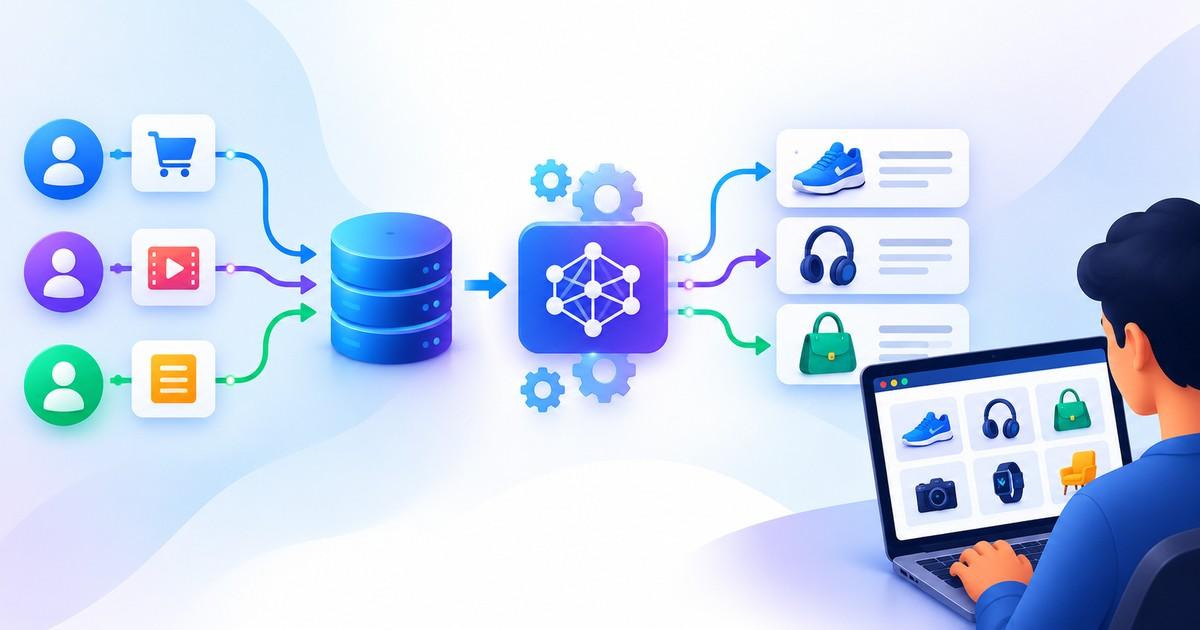
When people think about a machine learning product, the model is usually the first component that comes to mind. A recommendation model selects products, a fraud model identifies suspicious transactions, a search model ranks results, and a language model generates responses. Because the model produces the visible output, it can appear to be the central and sometimes even the only, technical component that matters.
In production, that assumption quickly breaks down.
A model cannot operate independently. It requires data to train, infrastructure to execute, features to consume, software interfaces to communicate with other systems, and operational processes to ensure that its inputs and outputs remain trustworthy. A model that achieves excellent performance in a development environment can still become unusable if the data pipeline fails, a feature changes definition, training cannot be reproduced, or the production system generates inputs that differ from what the model saw during development.
This is why successful machine learning products begin with an engineering foundation beneath the model. The foundation determines whether the model can be trained reliably, deployed consistently, reproduced when necessary, and maintained as the surrounding system evolves.
Data Pipelines Are Part of the Product
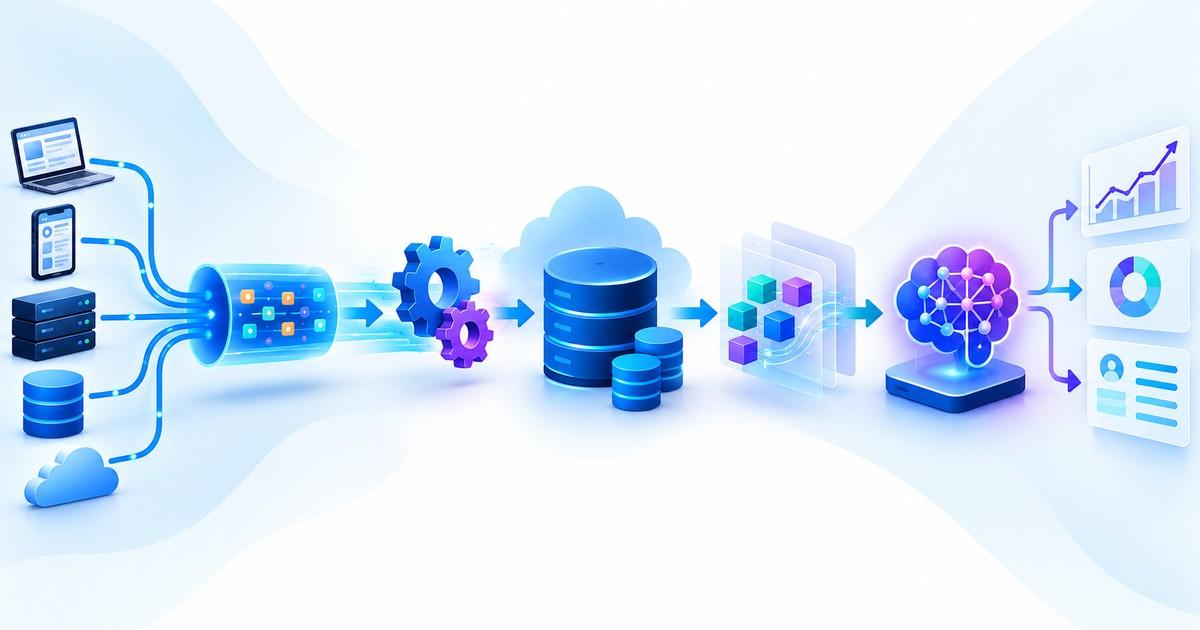
Every machine learning model depends on data, which means the systems responsible for collecting, transporting, transforming, validating, and storing that data are effectively part of the ML product.
Training data may originate from application databases, event streams, transaction systems, sensors, third-party APIs, logs, or manually created datasets. Before that information can be used by a model, it often needs to pass through multiple stages of ingestion and transformation.
Each stage introduces potential failure modes.
A source system may change its schema. An event may stop being generated. A transformation may accidentally alter a field's meaning. A pipeline may process duplicate records. A scheduled data job may fail and leave a downstream training process working with incomplete information.
None of these problems necessarily appear as model-code failures.
The training script may execute successfully and produce a model, even though the underlying dataset is no longer representative of the intended population. This makes data validation a critical engineering responsibility.
Production ML pipelines need mechanisms for checking whether incoming data conforms to expected schemas, ranges, formats, completeness levels, and other assumptions. Data quality should therefore be treated as an operational property rather than something that is guaranteed once during initial model development.
This also means that data lineage matters. Engineers should be able to determine where important datasets originated, which transformations were applied, when they were generated, and which model versions consumed them.
Without that traceability, diagnosing unexpected model behavior becomes significantly harder.
Feature Engineering and Feature Availability
Feature engineering occupies the boundary between data engineering and machine learning.
During development, engineers may create features from historical transactions, user activity, application events, text, images, or other raw inputs. These features can dramatically improve model performance because they transform raw information into representations that are more useful for prediction.
However, a feature is only useful in production if it can be generated reliably at inference time.
This creates one of the most important engineering constraints in machine learning: the information available during training must be consistent with the information available when predictions are generated.
Suppose a model is trained using a feature derived from a future event that would not exist at prediction time. The model may achieve excellent offline performance, but that performance is based on information unavailable in the actual production scenario. This is a form of data leakage.
Other problems can occur even when there is no leakage. A feature may depend on a batch process that runs only once each day while the production model requires predictions every few seconds. A feature may be calculated differently between training and serving environments. A feature may depend on an upstream service that occasionally becomes unavailable.
The engineering challenge is therefore not simply to design predictive features. It is to design features that are accurate, reproducible, observable, and operationally available when the model needs them.
This is one reason feature pipelines deserve the same level of engineering discipline as application code.
Building Reliable ML Development Workflows
A mature ML development environment connects the preceding pieces into a repeatable workflow.
Data should be validated before it enters training. Feature transformations should be tested and versioned. Training configurations should be reproducible. Models should be evaluated using consistent validation procedures. Artifacts should be stored so that successful experiments can be promoted to later stages without reconstructing them manually.
Testing is particularly important because ML systems combine conventional software behavior with statistical behavior.
Traditional software tests can verify whether data transformations produce the expected output, whether APIs behave correctly, and whether pipeline components handle known failure conditions. Model-oriented validation can then determine whether the resulting predictions meet required performance criteria.
This creates a distinction between software correctness and model quality.
A pipeline can be technically correct while producing a poor model. Conversely, a strong model can be embedded inside an unreliable software system.
Successful ML engineering therefore requires both dimensions to be addressed.
The importance of this foundation becomes clearer when considering the complete lifecycle of data. "The Journey of a Dataset: From Raw Data to Production ML" examines how information progresses from its original source through preparation, transformation, feature engineering, training, deployment, and ongoing operation. That lifecycle illustrates why the model cannot be separated from the systems responsible for preparing and delivering the information it depends on.
The hidden engineering work begins long before the model generates its first production prediction.
It begins with creating a trustworthy path from raw data to reliable model inputs, and with ensuring that every important step along that path can be understood, reproduced, and maintained.
Key Takeaway
The foundation of a successful ML product is not the model alone. Data pipelines, feature systems, reproducible experimentation, validation, and reliable development workflows form the infrastructure that makes the model usable in the real world. When these underlying systems are engineered well, teams can build on top of the model with confidence rather than constantly debugging failures caused by everything around it.
Section 2: Turning a Trained Model Into a Production System
Training a machine learning model is only one milestone in the journey toward building an ML product. A model sitting inside a notebook or training environment does not automatically become a production capability. It must be integrated with application infrastructure, exposed through reliable interfaces, tested under realistic conditions, and operated within constraints such as latency, throughput, availability, and cost.
This transition is where much of the hidden engineering work becomes visible.
A model that takes several minutes to load, requires a specialized environment, consumes excessive memory, or produces predictions too slowly may be technically impressive but practically unusable. Similarly, a model that works correctly when called manually may fail when thousands of requests arrive simultaneously. Production machine learning therefore requires engineers to treat inference as a software system with measurable operational requirements.
The central challenge is transforming a trained artifact into a dependable production service.
Model Deployment Is More Than Exporting Weights
After training, a model is often saved as an artifact containing learned parameters and configuration. Exporting that artifact is necessary, but it is only the beginning of deployment.
The production environment must reproduce the assumptions under which the model was trained. This includes the correct preprocessing logic, feature transformations, dependencies, runtime libraries, model configuration, and input schema.
A mismatch between training and serving environments can create subtle failures. A preprocessing operation may behave differently between development and production. A dependency update may alter numerical behavior. A feature may be calculated using a different definition. A model may load successfully but receive inputs in a format it was never designed to handle.
Containerization and controlled runtime environments can reduce some of these risks by packaging the model together with its dependencies and serving logic. Versioning is equally important because teams need to know exactly which model artifact and supporting code are currently serving production traffic.
Deployment also requires a strategy for introducing model versions safely. Teams may use staged deployments, shadow traffic, canary releases, or controlled rollouts before directing all production requests to a new model. These mechanisms reduce the risk that an unexpected issue will affect every user simultaneously.
The important distinction is that model deployment is a systems problem, not a file-transfer problem.
Model Serving, APIs, and Inference
Once a model is deployed, applications need a reliable way to request predictions.
For many ML products, this means exposing the model through an API or integrating it into an inference service. The serving layer must handle requests, validate inputs, execute preprocessing, invoke the model, format outputs, and return responses within defined service-level expectations.
Latency becomes particularly important for interactive applications.
A recommendation request occurring during a page load may need to return within milliseconds or a small number of seconds. A conversational application may need to stream responses to maintain an acceptable user experience. A batch scoring system, by contrast, may prioritize throughput rather than extremely low individual-request latency.
These differences influence architecture.
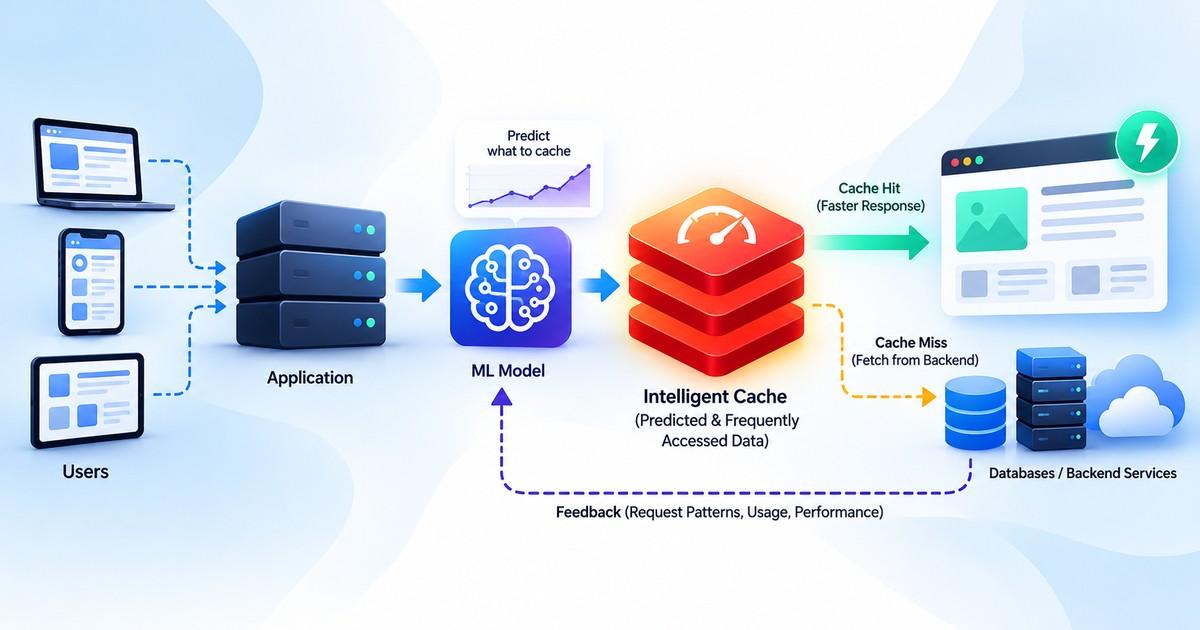
Engineers may need to consider batch inference, online inference, asynchronous processing, caching, parallelism, model compression, and hardware acceleration depending on the workload.
Throughput is another concern. A model that handles ten requests per second in a development environment may behave very differently when exposed to thousands of concurrent requests. Memory utilization, CPU or accelerator usage, connection handling, queueing, and autoscaling become part of the ML engineering problem.
The model must therefore be evaluated not only by predictive metrics but also by operational metrics such as latency, throughput, resource consumption, and availability.
Managing Cost, Latency, and Scalability
Model quality is only one dimension of production performance.
A model that delivers a small improvement in predictive performance may require significantly more computational resources. Larger models can increase inference cost, infrastructure requirements, memory consumption, and operational complexity.
This trade-off becomes especially visible when ML systems operate at scale.
Suppose a new model improves a business metric by a modest amount but increases inference cost several times over. The improvement may still be worthwhile, but the decision should be based on the value created relative to the additional operating cost.
Latency introduces another trade-off. A highly accurate model may require complex computation that delays the application's response. In a user-facing product, that latency can reduce engagement or degrade the overall experience.
Engineers therefore need to optimize the system objective, not simply the model metric.
Techniques such as model distillation, quantization, pruning, caching, batching, and hardware-specific optimization can sometimes reduce serving costs while preserving most of the model's predictive capability. However, each optimization introduces its own engineering considerations and should be evaluated against actual production requirements.
Scalability must also be designed explicitly.
A production ML service may experience predictable daily traffic patterns, sudden traffic spikes, or workloads that change significantly over time. The infrastructure should be able to scale appropriately without creating unnecessary costs during periods of low demand.
This is why ML engineering increasingly overlaps with distributed systems and platform engineering. A model may have been developed by a small research-oriented team, but serving that model reliably to millions of users requires the same operational discipline expected from other critical production services.
The transition from experimentation to production therefore changes the definition of success.
A successful ML system is not merely one that produces accurate predictions. It must produce those predictions reliably, quickly enough, at acceptable cost, and in a way that fits cleanly into the surrounding software architecture.
"From Experiment to Production: The Decisions That Shape an ML System" explores this transition in greater depth, particularly the engineering decisions required when taking an ML experiment into a real production environment.
Key Takeaway
Turning a trained model into a production system requires far more than exporting model weights. Engineers must solve deployment consistency, serving architecture, testing, latency, scalability, reliability, and cost while ensuring that the production environment preserves the assumptions behind the model. The model becomes a product capability only when it can operate dependably within the larger software system.
Section 3: The Invisible Work of Keeping ML Systems Reliable
Deploying a machine learning model is not the end of engineering work. In many ways, it marks the point at which a different class of problems begins. A model that performed well during development can encounter unfamiliar data, changing user behavior, unexpected inputs, upstream failures, and operational conditions that were never present in the training environment.
This creates a fundamental difference between building an ML model and operating an ML product.
A conventional software service can often be monitored by checking whether processes are running, APIs are responding, and infrastructure resources remain within expected limits. Machine learning systems require these checks as well, but they also need teams to understand whether the data entering the system and the predictions being generated still resemble the conditions under which the model was developed.
A production ML system can therefore be technically healthy while becoming increasingly less useful.
Keeping such systems reliable requires continuous monitoring, careful diagnosis, controlled retraining, and mechanisms for recovering when model or data behavior deviates from expectations.
Monitoring Data and Model Behavior
The first layer of production ML reliability is observability.
Engineers need visibility into what enters the system, what the model produces, and how those outputs translate into downstream outcomes. Monitoring the application infrastructure alone is insufficient because a model can continue returning predictions even when the quality of those predictions is deteriorating.
Data monitoring can track characteristics such as feature completeness, value ranges, distributions, category frequencies, schema changes, and freshness. These signals help teams identify whether production inputs are beginning to differ from historical expectations.
Model monitoring adds another dimension. Teams can track prediction distributions, confidence or probability behavior, error rates where ground-truth outcomes become available, and application-specific performance metrics.
Business metrics can provide an additional layer of evidence. A recommendation model may continue generating technically valid recommendations while engagement declines. A fraud model may produce predictions normally while the number of missed fraudulent transactions increases. A ranking model may maintain stable infrastructure metrics while search success rates decline.
The important point is that system health and model health are different things.
A production ML platform therefore needs monitoring across the entire chain: data, features, predictions, model performance, and business outcomes.
Monitoring should also establish expected ranges rather than simply collect raw measurements. Without historical context, engineers may see that a feature distribution changed but have no clear way to determine whether the change is unusual or operationally important.
Effective observability turns these measurements into signals that can support timely diagnosis.
Retraining, Rollbacks, and Continuous Improvement
Once a model begins to degrade, the natural reaction may be to retrain it. But retraining is not automatically the correct response.
A model may require retraining because the underlying data distribution has changed, because new labeled examples are available, or because a meaningful performance decline has been observed. In other cases, the problem may be an upstream data failure that should be fixed without changing the model.
Retraining should therefore be treated as an engineering decision rather than a routine activity performed without investigation.
When a new model is trained, it needs to be evaluated against the existing production model and other established benchmarks. The candidate should demonstrate meaningful improvement under relevant evaluation conditions before being promoted.
This is especially important because retraining can introduce new failures. A model trained on recently collected data may improve performance for current users while becoming worse for historically important segments. A new dataset may also contain labeling inconsistencies or changes in feature availability.
Production systems therefore need rollback mechanisms.
If a new model causes unacceptable behavior after deployment, engineers should be able to return to a known-good model version rather than attempting to repair the issue while users continue receiving degraded predictions.
Safe deployment strategies can reduce this risk by gradually introducing new models and observing their behavior before full rollout.
Continuous improvement then becomes a controlled cycle rather than an endless sequence of model updates: observe production behavior, identify meaningful problems, investigate the cause, modify the appropriate system component, validate the change, deploy carefully, and continue monitoring.
This operational discipline is closely related to the broader challenge of handling failures in modern AI systems. "Failure Modes of Modern AI Systems and How Engineers Prevent Them" explores why production AI failures can originate at multiple layers and why prevention requires engineering controls around the model rather than relying entirely on model quality.
The hidden engineering effort behind ML reliability is therefore continuous. Engineers are not simply maintaining a static model. They are maintaining the assumptions, data pathways, operational dependencies, and feedback mechanisms that allow the model to remain useful in an environment that is constantly changing.
Key Takeaway
Production ML reliability depends on continuous observability, drift detection, systematic debugging, controlled retraining, and reliable rollback mechanisms. A model can remain technically operational while becoming less accurate or less valuable, so teams must monitor data, predictions, model performance, and business outcomes together. Successful ML engineering treats reliability as an ongoing lifecycle rather than a one-time deployment milestone.
Section 4: The Engineering Discipline Behind Long-Term ML Success
Building a machine learning system that works in production is difficult. Keeping that system reliable, efficient, and valuable over months or years is even harder. The environment in which an ML product operates is rarely static. User behavior changes, data sources evolve, business priorities shift, application architectures are redesigned, and new model architectures become available.
This means that long-term ML success cannot depend on a model remaining unchanged.
Successful teams build an engineering discipline around the model that allows the entire system to evolve without sacrificing reliability. That discipline includes clear ownership, controlled complexity, systematic maintenance, thoughtful system design, and continuous measurement of whether the technology is producing meaningful outcomes.
The most mature organizations understand that machine learning is not a one-time implementation. It is an operational capability that must continuously adapt to the environment around it.
ML Reliability Is a Cross-Functional Responsibility
A production ML system typically spans multiple engineering and business teams.
Data engineers may own pipelines and storage systems. ML engineers may own training workflows, feature pipelines, and model development. Software engineers may integrate inference services into applications. Platform engineers may manage the infrastructure used to deploy and scale the models. Product managers and domain experts may determine what the model is ultimately expected to accomplish.
No single team can reliably operate the entire system in isolation.
This becomes particularly important when something goes wrong.
A sudden decline in model performance may initially appear to be an ML problem, but the underlying cause could be an application change that altered event generation, a broken upstream pipeline, an infrastructure configuration change, or a shift in user behavior. Resolving the issue therefore requires people who understand different parts of the system.
Clear ownership is critical in this environment.
Teams need to know who owns the data source, who maintains feature definitions, who is responsible for the model, who responds to production alerts, and who decides whether a degraded model should be rolled back or retrained. Without this clarity, failures can remain unresolved while teams assume another group is responsible.
Cross-functional collaboration also improves model quality because domain experts can provide context that purely technical teams may not possess. A statistical outlier may represent a legitimate business event. A sudden change in user behavior may be the intended result of a product launch rather than a data-quality problem.
Machine learning reliability is therefore not simply an algorithmic responsibility. It is a systems and organizational responsibility.
Measuring Business Impact, Not Just Model Metrics
A machine learning system ultimately exists to support a product, customer experience, operational process, or business objective.
That means technical metrics are necessary but not sufficient.
Accuracy, precision, recall, ranking quality, calibration, or regression error can tell engineers how the model behaves under a particular evaluation methodology. They do not automatically tell the organization whether the product is delivering value.
A recommendation model might improve offline ranking metrics while failing to increase customer engagement. A fraud model might increase detection rates while generating too many false positives and frustrating legitimate customers. A forecasting model might reduce prediction error without improving inventory decisions.
This is why successful ML teams establish a connection between model metrics and product outcomes.
The relationship does not need to be perfectly direct. A model can improve an intermediate metric that contributes to a broader business outcome. What matters is that the team understands the chain from model behavior to system behavior to user or business impact.
Cost must also be included in this equation.
An expensive model that produces a small business improvement may be less attractive than a cheaper model that produces most of the same benefit. A technically superior system may not be the economically superior one.
"The Economics of Machine Learning: Measuring the True Cost of a Model" examines this broader perspective, including why infrastructure, inference, maintenance, and operational costs should be considered alongside model performance when evaluating ML systems.
This mindset changes how teams define success.
The objective is no longer simply to maximize a model metric. It is to build the most valuable reliable system within the constraints of the product.
That is ultimately what separates an impressive machine learning experiment from a successful machine learning product.
The hidden engineering work continues after every release. Engineers maintain pipelines, investigate anomalies, monitor system behavior, optimize infrastructure, evaluate new models, respond to failures, and adapt the system as the surrounding environment changes.
None of this work may be visible to the end user.
Yet it is precisely this discipline that allows users to experience an ML product as something stable and dependable rather than as an experimental system that happens to work today.
Key Takeaway
Long-term ML success requires more than strong models. It requires cross-functional ownership, controlled system complexity, architectures that can evolve, and continuous measurement of business impact. The strongest ML products are engineered as living systems that can adapt to changing data, users, infrastructure, and business requirements without sacrificing reliability or value.
Conclusion
Successful machine learning products are often presented as stories about models. A new architecture achieves better accuracy, a feature set improves predictive performance, or a sophisticated algorithm reaches a new benchmark. But the model is only one component of the system that users ultimately experience.
The real engineering work begins before the model is trained and continues long after it is deployed.
Reliable data must be collected and transformed. Features must be available consistently during both training and inference. Experiments need to be reproducible so that teams can understand what changed and why. Models must be deployed into production environments, exposed through reliable serving infrastructure, tested under realistic conditions, and operated within latency, scalability, and cost constraints.
Once the system is live, the engineering challenge becomes continuous.
Production data can change. User behavior can shift. Upstream services can fail. Features can become unavailable. Model performance can decline. Business requirements can evolve. Each of these changes can affect the behavior and value of the ML product even when the underlying model code has not changed.
This is why production machine learning is fundamentally a systems engineering discipline.
The strongest ML teams understand that model quality and system quality are inseparable. A highly accurate model cannot compensate for a broken data pipeline. A powerful model is not useful if it cannot meet latency requirements. A successful training workflow does not guarantee production reliability. An offline metric improvement does not automatically translate into better business outcomes.
The engineering challenge is therefore to build the surrounding system with the same discipline applied to the model itself.
That requires observability across data, features, predictions, infrastructure, and business outcomes. It requires controlled model releases, versioning, rollback capabilities, and well-defined ownership. It requires engineers to investigate whether a problem originates in the model, the data, the pipeline, or the broader production environment before deciding how to respond.
It also requires resisting unnecessary complexity.
Frequently Asked Questions
1. What is the hidden engineering work behind a machine learning product?
The hidden work includes data ingestion and validation, feature engineering, experiment tracking, reproducible training, model deployment, inference serving, testing, monitoring, infrastructure management, retraining, rollback, debugging, security, scalability, and cost optimization. The model is only one component of this broader system.
2. Why is machine learning engineering different from simply training a model?
Training a model focuses primarily on learning predictive patterns from historical data. Production ML must additionally address data availability, software integration, inference behavior, reliability, latency, scalability, monitoring, changing environments, and operational maintenance.
3. Why are data pipelines so important for ML products?
Models depend on data for both training and inference. Problems in ingestion, transformation, schema, completeness, or freshness can directly affect model behavior. A reliable ML product therefore requires dependable data pipelines and data-quality validation.
4. What is feature availability in production ML?
Feature availability refers to whether the information required by a model can be generated reliably at prediction time. A feature that is available during training but unavailable, delayed, or calculated differently during inference can make the production model unreliable or unusable.
5. Why is reproducibility important in machine learning?
Reproducibility allows engineers to understand how a model was produced and determine why different experiments or training runs produced different results. Data versions, code, configurations, dependencies, features, and model artifacts all contribute to reproducibility.
6. What makes model deployment difficult?
Deployment requires more than moving a trained model into production. Engineers must ensure consistency between training and serving environments, integrate the model with application infrastructure, handle requests reliably, manage dependencies, and satisfy requirements for latency, throughput, availability, and security.
7. Why does an ML system need monitoring after deployment?
Model behavior can change as data distributions, user behavior, upstream systems, and business conditions evolve. Monitoring helps teams identify data-quality problems, drift, prediction changes, performance degradation, infrastructure issues, and business-impact changes before they become larger failures.
8. What is the difference between data monitoring and model monitoring?
Data monitoring examines the characteristics and quality of inputs, such as missing values, ranges, distributions, schema, and freshness. Model monitoring examines outputs and predictive behavior, such as prediction distributions, error rates, calibration, and other performance indicators. Both are needed because a model can remain operational while its inputs or predictions become problematic.
9. Why can a highly accurate model still fail in production?
Offline accuracy does not guarantee production reliability. A model may depend on unavailable features, experience distribution shift, produce excessive latency, consume too many resources, behave poorly on important edge cases, or fail to generate meaningful business value.
10. What role does MLOps play in successful machine learning products?
MLOps provides engineering practices and infrastructure for managing machine learning throughout its lifecycle. This can include automation, experiment tracking, model versioning, deployment workflows, monitoring, validation, retraining, and operational controls that make ML systems more reproducible and reliable.
11. How do ML teams decide when to retrain a model?
Retraining decisions should be based on evidence such as meaningful performance degradation, changes in the underlying data or prediction task, availability of valuable new labeled data, or changes in business requirements. Retraining should not automatically occur simply because some statistical drift is detected.
12. Why are rollback mechanisms important for ML systems?
A new model can introduce unexpected regressions even when it performs well during development. A rollback mechanism allows engineers to quickly return to a known-good version when a production deployment causes unacceptable behavior.
13. How do engineers balance model accuracy with system complexity?
Engineers evaluate the incremental value of improved predictive performance against additional costs such as infrastructure requirements, inference latency, operational complexity, maintenance effort, and reliability risk. The best model is often the one that provides sufficient performance within the product's practical constraints.
14. Who is responsible for a production ML system?
Responsibility is usually shared across multiple teams. Data engineers, ML engineers, software engineers, platform engineers, product managers, and domain experts may each own different parts of the system. Clear ownership and collaboration are necessary because ML failures can originate across multiple layers.
15. What is the most important principle for building successful ML products?
The most important principle is to treat the model as one component of an engineered product system. Reliable data, reproducible experimentation, dependable deployment, monitoring, controlled model evolution, and measurement of business impact are all essential. The goal is not simply to build a model that works in a notebook, but to build a system that continues to work reliably in the real world.